Category: DTH

  • Dishtv selects Scopus Video Networks to increase transponder capacity

    Dishtv selects Scopus Video Networks to increase transponder capacity

    MUMBAI: Subhash Chandra’s Dishtv has expressed serious intent to increase its channel offerings on the direct-to-home (DTH) platform. The company has selected Scopus Video Networks, a provider of digital video networking products, to support this expansion.

    The technology will help Dishtv pack up 28 channels per transponder, eight more than its current capacity. “We will be implementing this technology within a month. It is a better compression system without sacrificing the quality,” Essel Group director technology Amitabh Kumar tells Indiantelevision.com.

    Dishtv has seven transponders on NSS-6, offering a total of 130 channels. “We are building up the capability to offer more channels on our DTH platform,” Kumar says.

    Dishtv will use Scopus products to enhance its transponders’ utilization and expand its already fast growing DTH market share throughout the Indian subcontinent. The decision to tie up with Scopus comes ahead of Tata Sky’s DTH launch expected in July.

    The deal brings to Dishtv’s headend Scopus’ full line of products including E-1200 encoders, IRD-2900 decoders, IVG-7100 intelligent video gateway (IVG) platforms and network management system software. Scopus is a Nasdaq-listed company.

    Scopus’ IVG platform will provide advanced video processing capabilities including joint transrating, grooming and bit rate shaping. 

    India is beginning its transition to digital TV in which the number of digital subscribers is expected to grow ten-fold within the next five years.

    Says Kumar commented, “We operate in a complex web of multiple satellites and multiple carriers and the unique capabilities offered by Scopus’ product line such as the Intelligent Video Gateway will help us optimize operations while minimizing cost and enhancing reliability in our operations. Scopus has also helped Dish TV achieve very high satellite utilization and bring down costs on a per channel basis.”

    Scopus VP sales Eitan Koter stated, “We are honoured and delighted to continue doing business with the Essel Group, India’s leading media conglomerate. This achievement is a testimony to our on-going commitment to our customers’ success. Scopus is the only vendor that offers a full product portfolio under one roof, enabling us to provide simple solutions to complex requirements such as the ones posed by Dishtv.”

  • Mobile TV is creating a new demographic appeal in the US: Study

    Mobile TV is creating a new demographic appeal in the US: Study

    MUMBAI: Telephia, a measurement information provider to the mobile industry in the US, has announced a research undertaken shows that more than two million, or 1.4 percent, of the US wireless user base subscribed to a mobile video plan during the first quarter of 2006.

    The average U.S. mobile TV subscriber spends $40 a month more on wireless services than non-TV subscribers.

    Telephia president and CEO Sid Gorham says, “Mobile TV represents a huge revenue opportunity for companies in all parts of the communications and entertainment value chain.”

    Telephia research shows that the Hispanic and Black/African-American demographic groups made up 23 and 19 per cent of the mobile TV subscriber base in the US during the first quarter of this year, respectively. This is approximately double the share these groups represent of the broader mobile user population.

    “The early popularity of mobile TV with these groups continues the demographic trend we see in the adoption of all advanced mobile data services. Mobile TV will allow marketers to reach this audience with a wide range of innovative advertising and commerce approaches. To execute successfully on this exciting opportunity, the industry needs detailed research that tracks the evolving behavior and preferences of the mobile TV user. Our clients are particularly interested in using audience measurement data to target advertising and interactive commerce” adds Gorham.

    Telephia, had launched the industry’s first mobile television user panel last month. This longitudinal research panel will provide the mobile industry with detailed measurement of the attitudes and behaviours among the rapidly growing mobile TV audience.

    Telephia will begin by tracking users of the current unicast-based services (e.g. the MobiTV-based offerings on Sprint and Cingular Wireless, and Verizon’s V Cast service). The panel will expand to include subscribers of multicast mobile TV networks when they launch in late 2006 and 2007. Telephia is currently building its panel in the US and the UK and will expand coverage to the rest of Europe and parts of Asia in 2007.

  • Internet TV broadcaster JumpTV adds 11 channels to lineup

    Internet TV broadcaster JumpTV adds 11 channels to lineup

    MUMBAI: The Toronto based JumpTV which provides ethnic television over the Internet, announced that it has signed 11 new exclusive internet broadcast agreements with channels from Pakistan, Thailand, Lebanon, Nigeria and Benin, expanding its network to 270 channels under license.

    Channels signed include: ORTB (Benin), Channels TV, Lagos TV and MiTV (Nigeria), Zam TV and Rung TV (Pakistan), Popper, Rak Thai TV, Panorama 07 and Thai Cable Channel (Thailand) and Mlive (Lebanon).

    The 11 new channels are expected to be individually priced at $9.95 per month when launched commercially, and some will become part of country/region-specific channel bundles at later dates. The addition of the three Nigerian, four Thai and two Pakistani channels brings JumpTV’s Nigerian, Thai and Pakistani channel lineup to seven channels, nine channels and 12 channels respectively, and bundles will be launched for each of these countries soon. The additional Lebanese channel is to be included in JumpTV’s Pan Arab Package, which currently includes 23 top Arab channels for $29.95 per month.

    Commenting on the partnership with JumpTV, ORTB general director M. Julien Pierre Akpaki said, “JumpTV is enabling ORTB to grow from a number one national channel that is available in Benin only to a global channel overnight. Since a majority of our programming is in French, we believe there is a real market for our content not only among the people of Benin, but anyone interested in West African television.”

    JumpTV head of content acquisition and global operations Sila Celik says, “JumpTV is thrilled to announce the addition of 11 channels from countries like Nigeria, Thailand, Pakistan and Lebanon. We understand that our subscribers want an array of content from their country or region of origin and these channels add substantially to our offerings.”

    JumpTV International CEO and president Kaleil Isaza Tuzman says, “The first phase of JumpTV’s business strategy has always been to aggregate the most television content from around the globe. Now with 270 channel partnerships, JumpTV continues to solidify itself as the largest broadcaster of ethnic programming, providing its subscribers with live television, when and where they want it.”

  • Tariffs for CAS areas: Trai seeks industry feedback

    Tariffs for CAS areas: Trai seeks industry feedback

    NEW DELHI: The broadcast regulator is at it again — issuing another set of consultation paper on cable TV prices for CAS areas.

    The Telecom Regulatory Authority of India (Trai) today floated a paper on amendments to the tariff order for CAS areas asking stakeholders whether the regulator should fix the maximum retail prices (MRPs) of TV channels, amongst other things.

    The last date for the industry to give feedback is 5 July 2006, the day when the government is supposed to revert to the Delhi High Court on the status of CAS rollout in Kolkata, Delhi and Mumbai.

    Pointing out that the latest initiative is at he behest of the industry, Trai said, “Several stakeholders (had) suggested fixation of ceilings for individual channels. Since this is at variance with the earlier decision of Trai, it was considered appropriate to undertake a fresh consultation on the specific issues of regulation of tariff in CAS areas.”

    A Trai, official, however, denied that these consultation papers would any way affect a court case on CAS or that it would give the government some breathing space when it updates the judiciary on CAS’ rollout plans.

    “The issue of consultation papers and government’s stand on CAS are different matters,” the official stressed, refusing to expand any further.

    On 10 March 2006, the Delhi High Court had directed that CAS be implemented in three cities within a month’s time after being petitioned by a group of MSOs.

    Subsequently, the I&B ministry had held a series of meetings with industry stakeholders and consumer groups and had submitted to the court that for an effective rollout of CAS an additional 265 days were needed.

    The court, after making clear its disapproval of such suggestions and penalizing the ministry Rs. 100,000 (RS 1 lakh) for delay, asked the government to come back with a final implementation plan by 5 July.

    The regulator’s fresh consultation paper covers the following issues:

    i) Should Trai fix the maximum retail price for each individual channel?

    ii) If so, what should be the methodology and principles to be adopted for the same?

    iii) Should Trai promote individual choice of channels by fixation of the maximum price as a percentage of the average price of a channel in a bouquet and, if so, what should be this percentage?

    (iv) If the individual MRPs are fixed by Trai, along with a formula as indicated, should TRAI also regulate the maximum permissible discount for the bouquet of channels? If so what should be the discount and what are the principles on which this should be calculated?

    (v) The choice of the precise option out of the several alternatives to regulate prices in a CAS environment.

  • VSNL to set up cyber cafes at railway stations

    VSNL to set up cyber cafes at railway stations

    MUMBAI: Videsh Sanchar Nigam Ltd (VSNL) is setting up cyber cafes at major railway stations across the country to create user-friendly public internet access points.

    The company, which has been awarded franchisee rights for running of cyber cafes at 68 locations, plans to make all of them operational in the next few weeks. The first of this was inaugurated at the Bangalore railway station by VSNL president of broadband and retail business Shashi Kalathil.

    Speaking on the occasion, Kalathil said, “This effort will enable VSNL implement the promise made in the Union Railway budget of setting up such cyber cafes across the leading railway stations in the country. We are keen on making internet easily available so that passengers can stay connected even while on the move.”

    All Tata Indicom dial-up internet and broadband subscribers can use this facility by using their existing accounts. “Each of these cybercafes will be equipped with 10-20 high end multimedia PCs with flat panel monitors and will be open 24 X 7. Travellers can now avail Internet browsing and gaming facilities at very affordable rates. We also plan to offer other value added services like printing, scanning, mobile charging and CD writing through these cafes. Passengers can also use the cyber cafes for making onward bookings, checking their bank statements, tracking their investment portfolio and making ISD calls at affordable prices,” VSNL said.

    Tata Indicom will also create select areas in the railway station that are Wi Fi enabled, allowing passengers to experience the internet on their laptop or Wi-Fi enabled PDAs.

  • Reliance, Orbit target Middle East hospitality industry with RiTV

    Reliance, Orbit target Middle East hospitality industry with RiTV

    MUMBAI: Telecom service provider Reliance Communications in association with Orbit Communications Company (OCC) has launched RiTV, which is an interactive television, broadband and media solution.

    OCC and Reliance Communications have introduced a “Go to Market Strategy” that offers a variety of interactive TV services. RiTV was demonstrated at the three-day ‘The Hotel Show’ held at the World Trade Centre, Dubai.

    The new multi media solution delivers on-demand entertainment, internet access and information services through an intuitive interface. It is said to be compatible with a variety of television screens including Plasma and LCD screens and through a remote and keyboard multiple service offerings can be accessed.

    RiTV is believed to present opportunities to develop a new revenue stream for Hotels.

    RiTV CEO Gurjeet Sandhu has been quoted in media reports as saying, “The cutting edge guest room media solution offers new incremental revenue streams for hoteliers. We look forward to tap the tremendous potential of RiTV to all existing hotels as well as thousands of hotels scheduled for construction in the Middle East.”

    The latest Hotel Interactive system, is expected to enhance the customer value proposition for the hospitality industry in the Middle East. Through an interface with a hotel’s Property Management System, it also has the ability to extract data relating to customer behaviour and preferences.

    OCC business development manager Fadi Ghazzaoui added, “RiTV is a powerful interactive guest room solution offering high quality experience for guests. The system can be customised as per the need of hoteliers and has capabilities to be scaled up to meet the future needs of hotels and their guests. We will also offer integrated solutions encompassing a gamut of TV Channels, movies, Internet via Satellite and VOIP (Voice over Internet Protocol) solutions to the Hospitality market.”

  • DoCoMo & Hutchison partner for i-mode deal

    DoCoMo & Hutchison partner for i-mode deal

    MUMBAI: Japan’s NTT DoCoMo, Inc. and Hutchison Telecom Hong Kong, have jointly announced a partnership to bring i-mode services to Hong Kong and Macau by the end of the year, thus, extending Hutchison Telecom’s outreach in Asia.

    The parties also agreed to launch an IC card technology service, often referred to as the wallet-phone in Japan, on i-mode enabled handsets.

    According to a release, DoCoMo will provide the technology and marketing expertise to the partnership, enabling Hutchison Telecom Hong Kong to offer i-mode services. Hutchison phone customers would be able to download credit onto their cell phones, swipe and use it whenever required. However, the financial details of the agreement were not disclosed.

    First introduced in 1999 by NTT DoCoMo, i-mode allows mobile phone users to access the Internet and provide for facilities such as emailing, web surfing, paying bills and shopping.

    Stating that the service will be available within a few months, Hutchison Telecom CEO Dennis Lui, added, “We are delighted by this partnership. In addition to providing cutting-edge services for our customers, it consolidates our position as Hong Kong’s most forward-looking mobile operator, as we continue to lead innovative developments in the mobile industry and seek to shape the communications market into the future.”

    NTT DoCoMo senior VP and MD of Multimedia Services, Takeshi Natsuno commented, “We are confident that this strategic partnership will bring multiple synergies for both companies as well as other member operators. We are also proud to announce our common strategy in bringing our wallet-phone experience from Japan to the region. This new partnership will certainly drive further expansion of i-mode in the global arena.”

    “With its proven business model and unique service platform, i-mode creates an open gateway for content providers. They will be able to immediately tap into the vast potential of one of the largest mobile customer bases in Hong Kong supported by one of the most advanced mobile networks in the world. We will work with content providers to spearhead the next generation of mobile Internet development in Hong Kong,” added Lui.

    In addition to DoCoMo in Japan, the signing of this agreement, will have licensed 16 i-mode operators in 24 countries around the world. Also, SMART Communications, Inc. is currently preparing to launch the service in the Philippines, adds the release.

  • Dish moves court against Star

    Dish moves court against Star

    NEW DELHI: Court cases are buzzing all over the place in the media sector as deadlines for various guidelines, including adhering to downlink norms, near.

    In its first direct salvo against the Hong Kong-based Star Group, the Subhash Chandra-promoted ASC Enterprises, owners of the Dish TV DTH service in India, has moved the disputes tribunal against the former’s reluctance to make available Star channels to its platform.

    “It is respectfully submitted that the present petition has been filed due to the refusal on the part of the respondent (Star Group through Star India) to supply its bouquet one channels to the petitioner on reasonable and non-discriminatory terms,” the petition states.

    Filed today at the Telecom Disputes Redressal and Settlement Tribunal (TDSAT), the ASC petition adds, “The unreasonableness on the part of the respondent is evident from the fact that the respondent has laid down impracticable and unreasonable terms and conditions for supply of its bouquet one channels.”

    Contacted by indiantelevision.com, a Star India spokesperson said, “Negotiations are on with Dish TV. Beyond that we cannot comment as we have not heard from TDSAT yet.”

    The petition has been filed as Telecom Regulatory Authority of India (TRAI) in an order has mandated that all content should be made available to all delivery platforms on a non-discriminatory basis.

    Justifying its action of approaching the TDSAT, the petition seeks “appropriate directions against the acts of omission and commission” of Star, including its failure to provide on request the signals of the channels of its first bouquet “on reasonable and non-discriminatory terms.”

    Bouquet one of Star consists of channels like Star Plus, Star Movies, Star News, Star World, Star Gold, Channel [V], National Geographic Channel, The History Channel and Vijay TV.

    The second bouquet — the formation of which was necessitated owing to certain directions from the sector regulator in an effort to control cable TV prices — comprises Star One, Hungama, The Disney Channel and Toon Disney.

    What is interesting is that the Chandra company has decided to take on one time ally-turned-competitor with a vengeance.

    The petition not only states that discussions with Star were initiated by Dish TV in December 2005, but also insinuates that the delay in concluding a commercial agreement is deliberate as the respondent is a joint venture partner in another DTH service, Tata Sky, proposing to start operations later this year.

    Interestingly, Dish TV has won a favourable direction from TDSAT in a similar case involving MTV.

    Discovery-Sony distribution joint venture One Alliance, which comprises MTV and sibling channel Nick, is said to be close to striking a deal with Dish TV for its channels that include the likes of SET, MAX, Discovery and AXN.

  • Dish not about to let DTH first mover headstart go Sky way

    At Zee‘s office in Noida Film City, on the outskirts of Delhi, which also houses the news, DTH and sports operations with a state-of-the-art playout facility, the atmosphere these days is electric. Meetings are being held all over the place with senior management discussing restructuring, business strategies and increments in hushed tones.

    DTH business head and a younger brother of Essel Group chairman Subhash Chandra, Jawahar Goel, despite the surface cool is unable to contain the excitement even as he rushes back for an appointment with Indiantelevision.com from a management meeting.

    “These are exciting times,” he says, settling down in his plush wood-paneled office. Even as he quickly checks his e-mails on the wi-max enabled laptop, he shoots back with confidence, “In spite of Star and Sony channels‘ absence on Dish TV, we are selling 3,000 connections per day these days. This augurs well for us, though the regulatory environment could have been better.”

    Concurring with Goel is another senior executive of Essel Group, which is the parent of Zee and sister concern ASC Enterprise that holds the licence for DTH service in India.

    “We do expect competition in the middle of (calendar year) 2006, but I feel there‘s space for all players in the immediate future as DTH stands to take away some market share from cable,” says Rajiv Garg, chief executive, finance and corporate strategy, Essel.

    It is this confidence that a business could be built up even against odds and with looming competition that pumps up the adrenalin of the crack team at Dish TV, the brand name under which the DTH service is marketed.

    According to Hong Kong-based media research firm Media Partners Asia (MPA), India is set to emerge as Asia‘s leading revenue generating pay-TV market by 2015 with multichannel video industry (cable, DTH and IPTV) turnover growing from $3.6 billion in 2005 to $7.2 billion by 2010 and $10.5 billion by 2015.

    However, projections on DTH vary and depend a lot on progress (or the lack of it) made on the regulatory front (Dish‘s Goel bookmarks this as an important aspect).

    For example, MPA feels the Indian DTH market is likely to grow to Rs 45 billion ($ 1 billion) by 2015 on a base of slightly over 11 million subscribers and 7.8 million customers by end 2010.

    Contrast this against what others say. According to Sanjeev Prasad, head of equity research at Kotak Securities, the DTH market could grow to only 4 million “pay” homes or $300 million by FYE March 2010, while KPMG projects 8.6 million subscribers by 2010.

    But what most agree on is that digital television, driven more by DTH in India, has the potential of changing the electronic media landscape. In such a scenario, Dish TV, the country‘s first private sector DTH platform, stands to have a beginner‘s advantage. That‘s what most people feel.

    THE DISH STORY SO FAR
    Dish TV was launched in October 2003 by Essel Group after the Subhash Chandra-promoted ASC Enterprise Ltd, the licence holder, got all necessary permissions.

    Since DTH allows users to access a variety of digital television channels directly from the satellite without a local cable service provider, the initial thrust of Dish was in rural areas and those places, like the hilly regions of Himachal Pradesh and interiors of the desert state Rajasthan, where cable TV was a rarity and the terrestrial transmission of pubcaster Doordarshan was fuzzy.

    Thus, providing a superior viewing experience to subscribers who had not viewed anything of the sort, Dish TV built up its subscriber base; albeit slowly. The focus now has broadened to encompass urban areas where the spending power is high.

    Over a period of time, the penetration of Dish TV has increased significantly in the country. It has close to 1 million subscribers presently and is adding approximately 100, 000 subscribers every single month, says Goel. “I am quite happy with the (monthly) rate of growth. Such a ramp has been witnessed only in few top DTH platforms in the world,” he points out.

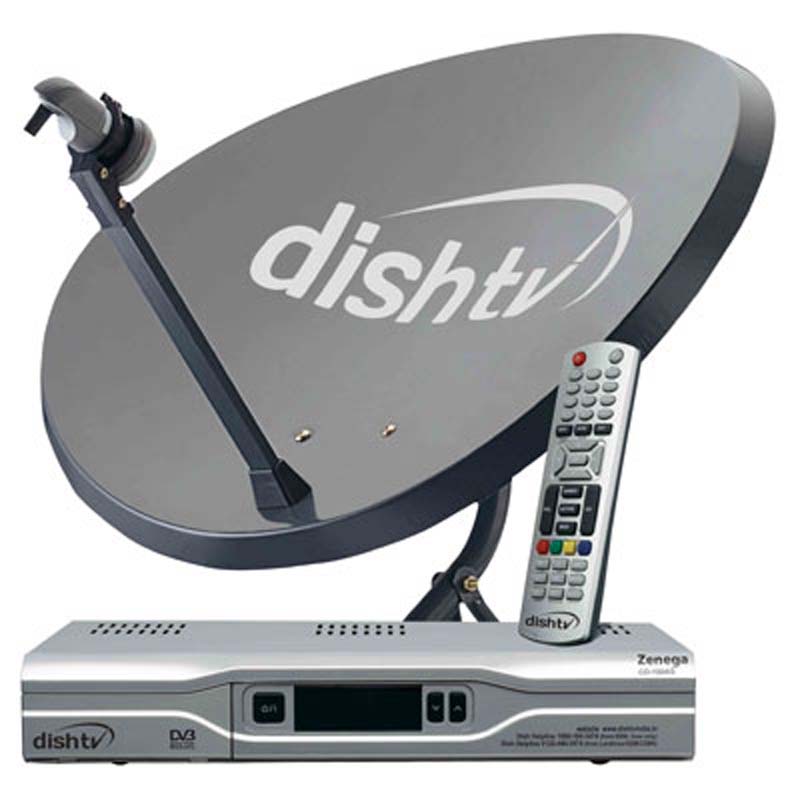
    With existing features like decent quality boxes, which support features like electronic programme guide, parental lock system and multiple audio feed (at the moment FM radio) Dish TV boasts of a capacity of carrying up to 400 channels and also giving the gaming freaks an opportunity to play video games.

    However, at the moment, technical constraints and uncertainty on the regulation front has compelled Dish to keep the offering to modest levels at conservative prices. Goel admits that channel capacity cannot be expanded at the moment, partly because of lack of transponder space and partly because selecting niche content for a DTH platform from the global market is not easy.

    “If we want to turn into a premium service, we should also have premium content. But clarity on that can only come from the sector regulator (that frowns down upon exclusive content on a delivery platform presently),” he adds.

    THE CHALLENGE AHEAD
    But from this point onward the task of Dish TV becomes that much more difficult as Tata Sky, a 80:20 joint venture between the Tatas and Rupert Murdoch, gears up to unleash its DTH service in the second half of 2006, signaling stiff competition.

    Though Tata Sky, in true Tata style of functioning, is keeping things close to its chest, reports filtering out do indicate that the service would focus on niche content, quality of service and aggressive marketing — some of which might be innovative like supplying one master DTH connections to high-rise residential complexes that can be then split up as per the local need.

    Tata Sky also hasn‘t given up the proposal of heavily subsidizing the set-top box, which will help the service gain entry into households quickly.

    Competition certainly there would be, though Dish TV CEO Sunil Khanna puts up a brave front by saying, “Competition? What competition?

    On a more pragmatic note, he goes on to point out that a change is taking place in the C&S dynamics in India where slowly analog is giving way to digital mode of delivery and transmission that will be primarily driven by DTH and to a lesser extent by broadband and IPTV.

    “If DTH is to play such a big role (in the change), all players have to grow as it‘ll help create market awareness about such a service. Tata Sky or other players‘ entry would only help Dish TV‘s growth,” Khanna surmises.

    There‘s certain logic behind such utterances. The entry of another DTH player is also likely to coerce sector regulator Telecom Regulatory Authority of India (Trai) to revisit an earlier mandate on making available all content to all platforms.

    This mandate has been openly flouted by some broadcasters who have delayed making available their channels to Dish TV on the pretext that continued commercial negotiations
    are yet to be concluded. This also means that Dish TV‘s subscribers are unable to get all the content available on cable services at present.

    “Trai‘s initiatives have been challenged in the court, while the government has its own reasons to be non-committal on issues like CAS and must provide. It is my belief that for the broadcasting industry to grow exponentially over the next five years, more government and self -regulation is needed,” Goel says.

    Consumer acquisition and investment on programming and packaging is another aspect that Dish TV needs to address as it‘s going to play a vital role in the Indian scenario.

    “The next 12-18 months and beyond will see a land grab in the distribution area, initially kick started by DTH and the launch of Tata Sky. So clearly Dish TV will require more investment in the future, particularly as STB subsidies and programming acquisition costs scale up,” says MPA executive director Vivek Couto.

    And, Goel partly agrees that customer acquisition and box subsidisation would take a toll on any DTH player as unlike in the DTH‘s developing stages in countries like the US and the UK, exclusive content is unlikely to be THE driving force of such a service in India.

    A unique market in every sense, in India it has to be combination of quality of service, good packaging of available and niche content, clever pricing of this content and pushing it into customers‘ homes by absorbing part of the cost of the box or the total hardware needed for a DTH service.

    The proverbial beginner‘s advantage may play its role up to an extent in Dish TV‘s growth. Take, for example, the cost of the box itself. While the imported boxes from Korean vendors is costing Dish TV on an average $ 38 (the average price might come down as the demand increases), industry sources say a box is likely to cost Tata Sky between $ 60-$ 65.

    “There‘s always a price advantage to the first mover. We had acquired the customer in the beginning when we paid lower satellite space rates. Though we did not experience negative cost of acquisition, things have changed now. Even Insat is unable to provide enough space to all the DTH probables now,” Goel points out.

    A Dish TV set-up box is now available in the market at an entry price of Rs 2,990 for 75 channels for three months, which also includes the monthly subscription fee for the period. The scheme was started in April.

    After this the customer has the option of paying Rs 107 per month for around 75 channels. The prices go up to Rs 300 per month for more than 100 channels, including the radio services. The company had priced its services initially in such a way as to leave some room for manoeuvring later.

    It‘s tactics like these that have kept the competition on the edge, compelling it also to review its options. Says MPA‘s Couto, “Dish‘s pricing structure has made Tata Sky revise its own plans. I‘m sure Dish will scale it (the price war) up further and then Tata Sky may respond.”

    Aware that what the likes of MPA are saying that intelligent packaging of content has some merit, Dish TV has devised various tiers also like Dish Welcome (introductory offer), Dish Bioscope (specially categorized movie channels like Zee Action and Zee Classic) and Dish Goal (for fans of European football).

    So, Dish Plus package, for example, comes packed with a wide selection of national and international channels at Rs 125 per month and offers channels like Zee Studio, HBO, TCM, MCM, Reality TV. Dish Bioscope, featuring Zee Premier, Zee Action, Zee Classic and Pakistani film channel Filmazia, costs Rs. 55 per month. News is packaged in Dish News with Zee Business, Euro News, Euro Sports News, NDTV 24×7, CNBC TV18, Awaaz and CNN Headlines News. The cost: Rs 60 per month.

    Dish Pick is an a-la-carte package that allows subscribers to pick and choose extra regional channels. Two channels come for Rs 30 per month, five channels for Rs 50 per month and all regional channels come for Rs 100 per month. (All the prices listed here are exclusive of taxes.) Channels included in this package include Zee TV, Sahara One Zee Punjabi, ETV- Rajastan, ETV – UP, ETV – Bihar, Geo TV, Zee Telugu, Jaya TV, Jeevan TV, Akash Bangla, Zee Bangla, Zee Gujarati and Marathi, India TV and NDTV India.

    NEW DISH INITIAIVES
    Knowing fully well that it has to continue reinvent itself, not only prices of Dish TV service has been dropped, but the retail networks too are being strengthened, apart from pushing digital video recorders (DVR) as a value added service.

    Dish, which presently has about 6,000 dealers around the country, is beefing up its network with an additional 3,000 dealers of HCL, the computer hardware company that is also a distributor of Nokia handsets in India.

    As per a yet-to-be-announced pact with HCL 3,000-odd HCL dealers would be responsible for selling, installing and servicing Dish TV hardware at customer end.

    “We expect that such non-exclusive deals will help us reach out to more customers and service them better,” Goel says, hinting that in the near future other such pacts may be concluded.

    Apart from this, the company is also in the process of launching anew its DVR service with focus on Delhi and Pune. Selling at Rs 16,000, a DVR will allow a subscriber to download up to 200 movies, apart from other Dish programming, to be watched at leisure.

    “We want to focus on some select cities like Delhi with the DVR offering before making it nationally available. This is a new concept and we want to do some sampling with subscribers,” Dish CEO Khanna says.

    Towards the end of June, Dish will launch its gaming and middleware facility that will allow DTH subscribers to play not only with games, but also while watching traditional television.

    With the help of technology partner Open TV, Dish plans to introduce middleware tech wherein a viewer can access background information about a cricketer, for example, who‘s playing in a match telecast on TV at that moment. (pix-Courtesy DishTV)

    However, one of the most exciting things explored by Dish TV is the introduction of pay-per-view concept in India in the real sense where subscribers of pay television have the option of watching a programme for a particular period of time after making payment for the same.

    Hoping that the Discovery-Sony Entertainment joint venture One Alliance will come on board soon, Dish is exploring whether exclusive Discovery programming (like excavation of Titanic or a famed Egyptian tomb) can be made available to Dish subscribers on selective payment basis.

    “Pay per view is a concept that‘s yet to mature in India. For that content is most important. But we are examining whether we can try out this concept with Discovery once it joins the Dish platform,” Goel informs with excitement written all over his place.

    It‘s quite apparent that Dish TV is far from being complacent. And, the announcement that at a later stage the whole DTH operation, restructured as part of an over all Zee Telefilms rejig, might be listed on the stock exchange has given the company an impetus to ramp up its activities.

    While Khanna is effusive that in the coming months Dish TV will become “more aggressive” on all fronts, MPA‘s Couto feels the restructuring has come at the right moment. “…a spin off could well be the ideal way to induct strategic and/or private equity financing in DTH.” After all, investments have to be made if the Dish operations are to be ramped up.

    (Rs 45 = 1US$)
  • MTS Allstream partners with SPTV International for MTS Video On Demand library

    MTS Allstream partners with SPTV International for MTS Video On Demand library

    MUMBAI:MTS Allstream signs on Sony Pictures Television International to further expand MTS Video On Demand library Stock Symbol: MBT

    Canada based communication solutions provider MTS Allstream has inked a a multi-year distribution deal with Sony Pictures Television Canada.

    In a bid to expanding the quality and selection of its MTS Video On Demand movie library, MTS Allstream air titles such as Rent, Zathura, The Legend of Zorro, The Exorcism of Emily Rose, and The Fog, as well as MGM’s Into the Blue.

    “MTS has always been committed to delivering the best choice and the best value to its customers,” said MTS Allstream Inc president consumer markets Kelvin Shepherd.

    “By signing this agreement with Sony Pictures Television Canada, we can now give MTS TV customers more choice from an expanded MTS Video On Demand library. With new MTS TV features being rolled out on an ongoing basis, MTS TV continues to be recognized as one of the best digital television services in North America.”

    “We’re very pleased to partner with MTS TV and to bring this huge catalogue of television entertainment to more than 50,000 MTS TV subscribers in Winnipeg,” said Sony Pictures Television International (SPTI) senior VP, pay television Mike Wald.

    “MTS TV is widely recognized as setting the standard for quality of service and delivering choice and flexibility to customers, and we’re proud to be part of the exciting growth of MTS Video On Demand.”

    With MTS Video On Demand, customers can use their remote control to order from a great selection of movie titles and other programs with the ability to watch them as many times as they want, whenever they want within a 24-hour
    period.