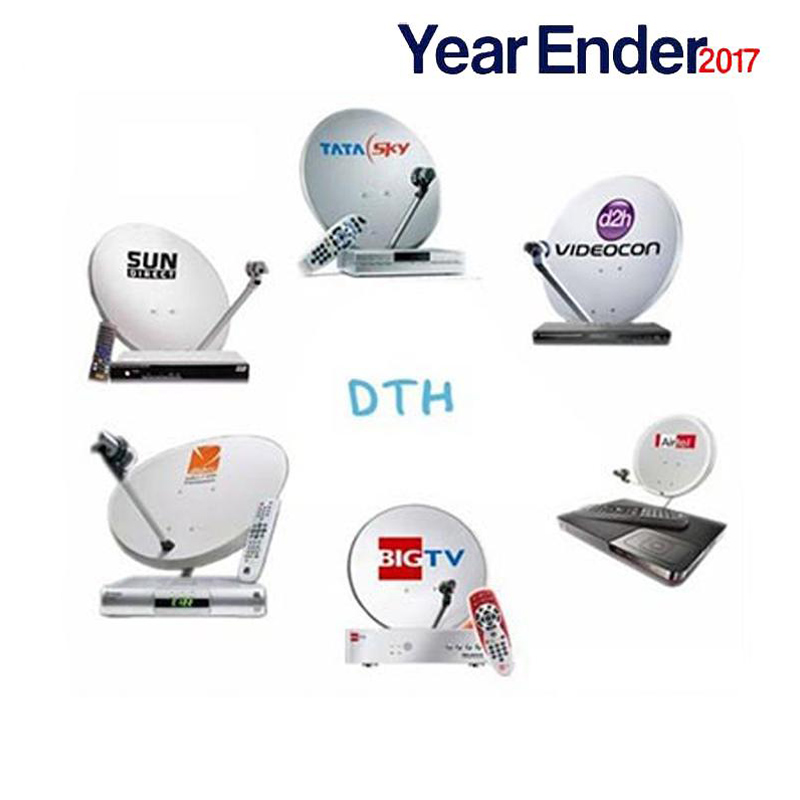
Category: DTH Services

  • Sun Direct re-introduces regional packs under TRAI tariff order

    Sun Direct re-introduces regional packs under TRAI tariff order

    MUMBAI: Amid the new TRAI tariff regime, with consumers getting the power to choose their channels, many DTH providers are emphasising on long-term plans to viewers in a bid to attract them. Likewise, Sun Direct has joined the bandwagon by reintroducing its Jodi plans for subscribers.

    It has listed eight new Jodi plans for regional language channel viewers, by allowing the viewers to add channels to their already existing subscription much similar to other DTH providers’ add-on packs. Sun Direct is offering Tamil Jodi pack for Rs 50, which includes 13 channels to subscribers like Jaya TV, Discovery Tamil, Sony Yay and more.

    The second plan in this list is the Telugu Jodi pack, priced at Rs 70 which has 14 channels. More packs under the Sun Direct Jodi packs list include the Kannada Jodi pack for Rs 60, Malayalam Jodi pack for Rs 45, Odia Jodi pack for Rs 40.

    The pack for Rs 99 consists mostly of Hindi GEC channels and English Jodi pack that bundles 14 channels including few movie channels and sports channels and is available for Rs 120.

  • Dish TV re-launches duration packs with special benefits

    Dish TV re-launches duration packs with special benefits

    MUMBAI: Amid the ongoing change in the cable and broadcasting sector, direct-to-home (DTH) operators are coming up with new plans to keep subscribers satisfied. Major DTH operator Dish TV has introduced new offers which will provide extra days of subscription with long duration packs.

    The subscribers of three months or more long duration packs will get seven extra days to their credit whereas on purchasing a long-term subscription of six months or more, they will get to enjoy 15 additional days of subscription. Moreover, users who buy a long-term plan of 11 months or more will get 30 extra days on their plan.

    Its other brand d2h had previously also introduced similar benefits on buying long-term plan but with more choices. Along with these mentioned three slabs of Dish TV, d2h users will get 60 extra days on 22 months subscription, 90 days on 33 months subscription, 120 days on 44 months subscription and 150 days on a long-term subscription of 55 months.

  • Tata Sky ventures into curated short content with Shorts TV

    Tata Sky ventures into curated short content with Shorts TV

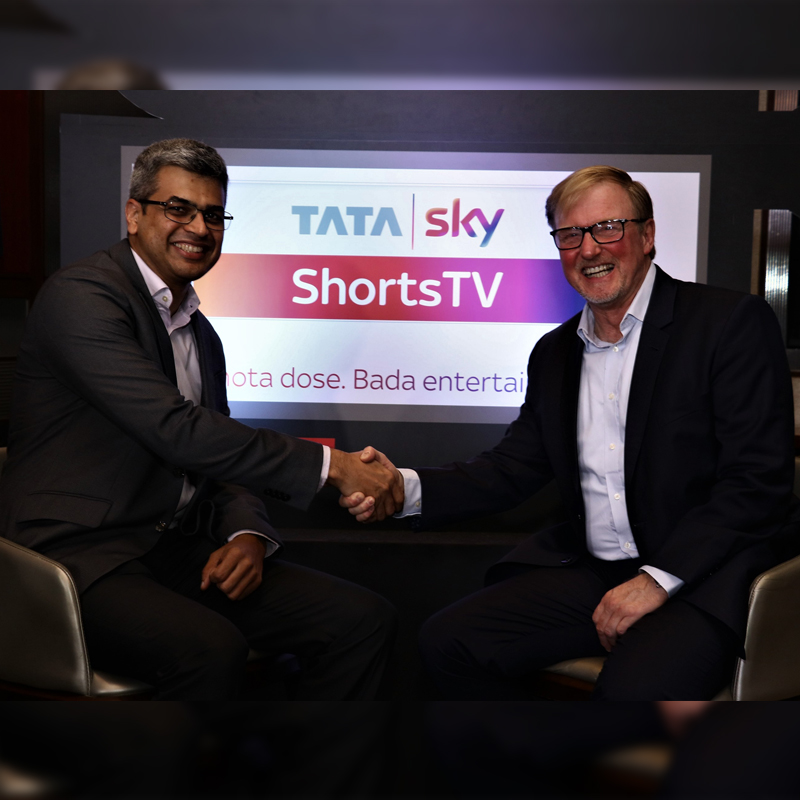
    MUMBAI: India’s leading DTH player Tata Sky has entered into a partnership with a London-based television channel Shorts TV for its new platform Tata Sky ShortsTV.

    The newly launched platform is one of a kind in the country, dedicated to curated short stories and films. The subscription price for this service has been fixed at Rs. 75 per month. Along with availability on the telly screen, the service is also available on the mobile app as well as the DTH operator’s website.

    “We were always keen to bring beautiful short form content on our platform, but we needed to find the partner who did it right. That’s how we found Shorts TV team who really knew how to curate short films properly,” Tata Sky chief content officer Arun Unni said, announcing the launch of the new service here yesterday.

    Shorts International Ltd chief executive Carter Pilcher, who mentioned they had scouted for other Indian partners, said, “We are thrilled to partner with Tata Sky. They’re India’s cutting-edge content distributor and as their launch of Tata Sky ShortsTV proves, they’re way ahead of the crowd.”

    Pilcher added that the new Tata Sky ShortsTV service was a good addition to the DTH operator’s value-added services portfolio and will be a “huge success with millennial audiences”.
    ShortsTV has also partnered with Royal Stag Barrel Select Large Short Films to bring a flood of India’s most original and powerful short films to the Tata Sky platform.

    The curated platform will feature a line-up of ,2000 premium titles, including the best of Oscars, Cannes, etc. apart from a comprehensive collection of recent Indian short stories and films. There will be original content in regional languages also. Interestingly, there are also collaborations with some of the Indian film schools, including Hindi film director-producer Subhash Ghai-promoted Whistling Woods.

    “Tata Sky ShortsTV aims to be that destination where a curated selection of 2000+ of the world’s best short films can be enjoyed on a 24×7 basis. Our partner has worked hard for more than a year to localize the proposition with 500+ Indian short films,” Unni explained.

    Though Unni did not mention the targeted subscriber number, he did admit a good service goes to 10-15 per cent of the relevant base as experience has shown them. “Hence, these statistics guide us for this particular service and its growth potential,” he added.

    For promoting the content, Tata Sky will use every available medium to talk to consumers.

    Some of the international offerings include God of Love, Bear Story, Atlantic, Henry, Borrowed Time, Curfew, Blood Money, A Sense of History, Neighbours, Walls, Blue Season, Midnight of My Life and Picture Paris. Also featured will be the likes of Chutney, Ahalya, Shunyata, Aamad, Kheer, Arre Baba, Urmi’s Cat, Naughty Amelia Jane, all critically acclaimed films.

    Shorts International is headquartered in London and is represented in the US by Shorts Entertainment Networks, a wholly owned subsidiary located in Los Angeles. The company is led by CEO Carter Pilcher, and is owned by Shorts Entertainment Holdings with AMC Networks as a significant minority shareholder.

  • Tata Sky to launch Telugu and Tamil cinema

    Tata Sky to launch Telugu and Tamil cinema

    MUMBAI: Tata Sky recently launched value-added services – Tata Sky Telugu Cinema and Tata Sky Tamil Cinema, priced at Rs 45 per month. The ad-free services are affordable by people of all age groups, geographical and socio-economic boundaries.

    With this, Tata Sky not only increases the plethora of offerings in Southern markets but also caters to movie buffs across the country. With its customer-centric approach and aim to provide the best of content to its subscribers, the two new services will provide Telugu and Tamil Cinema at the comfort of people’s home.

    Tata Sky CCO Arun Unni said, “Telugu and Tamil film industries today have a fan following that transcends the state boundaries and captures the interest of viewers across the country. To cater to the ever-increasing demand for regional cinema, Tata Sky has partnered with Star Maa for Telugu films and Star Vijay for Tamil films to offer the best of content in an ad-free format to all movie lovers.”

    South market, with the highest TV viewership across the country along with a large appetite for movies in regional language provides Tata Sky an opportunity to offer high quality regional movies on medium of choice. The content library ranges from the latest blockbuster movie premieres, before their screening on television, to classic movies – with movie options for all age groups.

    Tata Sky's bouquet of regional cinema services now includes Tata Sky Telugu, Tata Sky Tamil, Tata Sky Bangla, Tata Sky Punjab De Rang, Tata Sky Marathi and Tata Sky Kids Cinema.

  • Irdeto Partners with Airtel to Secure Content on Airtel’s Digital TV Platform

    Irdeto Partners with Airtel to Secure Content on Airtel’s Digital TV Platform

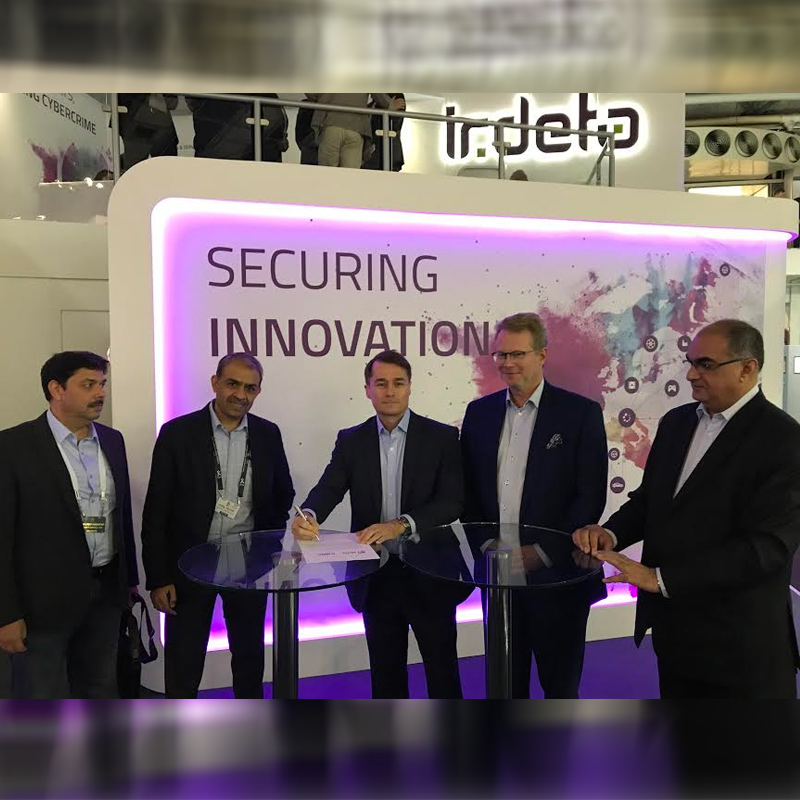
    AMSTERDAM: Irdeto has partnered with Bharti Airtel (“Airtel”), India’s largest telecommunications service provider, to secure all content offered on Airtel’s Digital TV services. As part of the strategic partnership, Irdeto will deploy its security solutions to secure the linear channels offered on the set-top-box and the content offered on Airtel’s hybrid Android TV platform.

    Irdeto will implement its state-of-the-art security solutions – Irdeto Armor for Android TV, Irdeto Cloaked CA and Middleware – on Airtel’s set-top-boxes to deliver the utmost safety for all its valuable content and also provide an improved customer experience.

    “To succeed in today’s ever-evolving pay TV landscape, operators need to offer innovative and secure platforms,” said Doug Lowther, CEO, Irdeto. “Operators must also balance the needs of consumers while maintaining full control of security on their platform. As a security-savvy organization that recognizes the needs of its customers, Airtel is providing a future-proof offering that gives consumers the content they desire and the flexibility they require. This forward-looking approach gives Airtel a competitive edge by delivering secure, premium and innovative pay TV services.”

    Sunil Taldar, CEO – Airtel Digital TV, said, “Customers are at the heart of everything we do at Airtel and delivering a secure platform to them is our top priority. We are delighted to have Irdeto as our partner and bring their expertise to ensure complete security of all content on our platforms.”

    Open platforms like hybrid set-top-boxes offer customers a vast choice of content and a premium user experience. Customers can enjoy flexibility and convenience as they experience content on-demand. While these platforms offer service providers an immense opportunity to meet unique customer demand for content, securing the content is imperative to ensure data protection. Under the partnership, Irdeto will work with Airtel on a robust content protection strategy that also ensures a premium user experience for customers.

    Irdeto will provide advanced security services to Airtel to help the company manage a variety of threats while ensuring an optimal viewing experience. Designed to protect the device, data and services built on Android TV, Irdeto Armor provides Airtel with the ability to securely manage this open platform to better address consumer demand now and in the future. 

  • Merged Dish TV reports maiden numbers for fiscal 2018

    Merged Dish TV reports maiden numbers for fiscal 2018

    BENGALURU: The merged entity comprising of two Indian DTH players – Dish TV India Ltd reported its maiden fourth quarter and fiscal numbers for the periods ending 31 March 2018 (Q4 2018, quarter under review, FY 2018 year or fiscal under review). The two entities of the new behemoth Dish TV India Ltd were – Dish TV India Ltd and Videocon d2h Ltd before the merger. Dish TV and Videocon d2h had reported profit after tax (PAT) of Rs 82.12 crore and Rs 30.44 crore respectively for fiscal 2017. Individual revenues in fiscal 2017 were Rs 3,014.38 crore and Rs 3,071.73 crore for Dish TV and Videocon dh2 respectively. On 22 March 2018, Videocon d2h had merged with and into Dish TV India Ltd with the appointed date of the merger being 1 October 2017, or for the latter half of financial year 2018. The post merger consolidated operating revenue of Dish TV post merger for FY 2018 was Rs 4.634.16 crore and consolidated net loss was Rs 84.50 crore. Subscription revenue was Rs 4,216.7 crore. Consolidated total comprehensive loss (TCL) for FY 2018 was Rs 81.33 crore.

    Dish TV’s fiscal 2018 numbers are not comparable with FY 2017 in the form presented by the company for FY 2018. Financials of Dish TV India Ltd for the quarter ended 31 March 2018 thus represent three months’ financial performance each of Dish TV India Ltd and Videocon d2h Ltd. Similarly, financials of Dish TV India Ltd for the year ended 31 March 2018 represent 12 months’ financial performance of Dish TV India Ltd and six months financial performance of Videocon d2h Ltd. Both companies had reported separate financials for the quarter ended 31 December 2018 (Q3-2018, immediate trailing quarter, previous quarter).

    Subscriber numbers

    The merged company – Dish TV India Ltd had a subscriber base of 2.3 crore with a market share of about 37 per cent at the end of Q4 2018. This makes it the largest private DTH player in the country. ARPU (average revenue per user) of the merged entity for Q4 2018 was Rs 201. For Q3 2018, individually Dish TV had reported ARPU of Rs 144, while Videocon d2h had individually reported ARPU of Rs 208.

    Let us look at the other numbers reported by the merged Dish TV

    Simple consolidated EBIDTA for fiscal 2018 was Rs 1316.02 crore (28.4 per cent of operating revenue). Total expenditure for FY 2018 was Rs 4,786.23 crore. Employee benefit expense during the year under review was Rs 209.61 crore. Operational cost in fiscal 2018 was Rs 2,476.60 crore. Finance costs were Rs 396.37 crore. Other expenses were Rs 620.82 crore.

    Dish TV’s numbers for the fourth quarter

    Since the Dish TV-Videocon d2h merger happened in the third quarter of fiscal 2018, a year on year (y-o-y) comparison would not be an apples-to-apples comparison. We have compared how it fared in the fourth and third quarters (quarter over quarter or q-o-q) of 2018.

    The merged Dish TV India Ltd consolidated revenue from operations reduced 5.1 q-o-q in the quarter under review to Rs 1,532.37 crore from Rs 1,614.33 crore in Q3-2018. Consolidated total revenue reduced 5.7 per cent q-o-q to Rs 1,545.11 crore from Rs 1,638.50 crore.

    The merged entity reported consolidated PAT of Rs 118.21 crore (7.7 per cent of operating revenue) as compared to a loss of Rs 118.21 crore in the immediate trailing quarter Q3 2018. Consolidated simple EBITDA in Q4 2018 was 19.5 per cent lower q-o-q at Rs 400.65 crore (26.2 per cent of operating revenue) as compared to Rs 497.84 crore (30.8 per cent of operating revenue). Adjusted consolidated EBITDA (Dish TV claims that a onetime merger expense of Rs 60 crore was accounted for in Q4 2018) was 7.5 per cent lower q-o-q in Q4 2018 at Rs 460.65 crore (30.1 per cent of operating revenue) as compared to Rs 497.84 crore). Consolidated TCI in Q4 2018 was Rs 119.86 crore as compared to a consolidated TCL (total comprehensive loss) of Rs 166.31 crore in the previous quarter.

    The merged Dish TV’s consolidated total expenditure was almost the same at Rs 1,611.80 crore in Q4 2018 as compared to Rs 1,612.36 crore in Q3 2018. Operational cost in Q4 2018 increased 2.2 per cent q-o-q to Rs 866.36 crore from Rs 847.74 crore. Employee benefit expense during the quarter under review reduced 0.7 per cent to Rs 66.856 crore from Rs 67.30 crore in Q3 2018. Finance cost in Q4 2018 reduced 7.3 per cent q-o-q to Rs 132.94 crore from Rs 143.38 crore. Other expenses in Q4 2018 reduced 1.5 per cent q-o-q to Rs 195.97 crore from Rs 198.92 crore.

    Company speak

    In Dish TV’s earnings release, the company’s CMD Jawahar Goel said, “There is significant growth potential both in the short and the long term when it comes to acquiring new subscribers. While in the short term, digitisation will continue to feed subscriber additions, government schemes focused on bridging the urban/rural divide, increasing farm incomes and electricity connection to rural households will create demand for new televisions and pay-tv connections in the years to come.”

    On the merged Dish TV, Goel said, “It’s time to now put all thoughts to action and deliver what is expected from two leading platforms when they come together. I am happy to share that merger integration across functions has been successfully completed and new roles, responsibilities and key deliverables have been well received by our team.”

    “I see a new sense of passion and urgency all around in the company and believe that we have everything we need to surge ahead,” added Goel.

    Three well recognised and powerful brands- Dish TV, d2h and Zing are now being marketed under the Dish TV India Ltd umbrella. Dish TV group CEO Anil Dua said, “Revenue would be further fortified through Value Added Services, some of which have already been cross rolled-out on all three brands. With demonetization, poor rural demand and merger related distractions behind us, we are confident of a sharp turnaround in our operating and financial performance in this fiscal.”

    Also Read :

    Videocon d2h, Dish TV merger comes to fruition

    Dish TV-Videocon d2h to bank on economies of scale

    Videocon d2h delists from NASDAQ, merger with Dish TV likely on 22 March
  • Afghanistan asks India for transponder for DTH

    Afghanistan asks India for transponder for DTH

    MUMBAI: After being allocated a transponder from the South Asia Satellite, Afghanistan has requested India for another one that it could use for direct-to-home (DTH) television services, the Press Trust of India quoted an official from the Department of Space anonymously.

    However, unlike the South Asia Satellite or G SAT-9, which was a “gift” from India to its neighbours and one transponder was allocated to the participating SAARC countries for free, Afghanistan may have to pay for the services this time, the official said.

    “They have asked for another transponder and we are looking into it. Unlike in the case of the South Asia Satellite, Afghanistan may be charged for the second transponder. However, no decision has been made in this regard,” the official said, requesting anonymity.

    The second transponder may not be from the South Asia Satellite.

    In 2014, Afghanistan had launched its satellite AFGHANSAT-1 for wide-ranging services including DTH, broadcasting and internet services. The satellite was launched by a French company. But as demand increases, it looks to augment its supply side.

    During the 2014 SAARC Summit in Kathmandu, Prime Minister Narendra Modi had announced India would be launching a satellite as a gift to its South Asian Association for Regional Cooperation (SAARC) neighbours. Pakistan did not join the project, stating it was working on its own satellite, but offered monetary and technical support, which was rejected by India.

    The Indian Space Research Organisation (ISRO) launched the South Asia Satellite in 2017. The 2,230-kg communication spacecraft, with a mission life of 12 years, will support effective communication, broadcasting and internet services in a region that is geographically challenging, economically lagging and has limited technological resources.

    The satellite provides significant capability to each of the participating countries in terms of DTH services, besides linking the countries for disaster information transfer.

    The satellite has 12 Ku band transponders that the six nations—Afghanistan, Maldives, Sri Lanka, Bangladesh, Nepal and Bhutan—could utilise to enhance communications. Each South Asian country will get access to one transponder through which it will be able to beam its own programming.

    As part of its commitment, India also assisted several countries to build ground stations and other infrastructure-related work to receive signals sent from transponders.

  • DTH subscriber growth muted in CY-2017

    DTH subscriber growth muted in CY-2017

    BENGALURU: DAS, especially phases 3 and 4, was supposed to be a great growth opportunity for television direct-to-home (DTH) service providers. Has that been the case? Not if one were to go by data released by the Telecom Regulatory of India (TRAI) and three of the six private DTH players in India.

    The status quo
         
    At present, there are six private pay-TV players (five active in the true sense of the word) and one government free-TV player DD FreeDish. The five players are: Airtel Digital TV or Airtel DTH, Dish TV, Sun Direct, TataSkyand Videocon DTH–the sixth player being Reliance Digital TV or Big TV.

    Reliance Big TV has been acquired by Pantel Technologies and Veecon Media. Normal operations have to recommence as yet. A number of Big TV customers were acquired by other players and the true status of its operations and current subscriber numbers are still unclear at the time of writing.

    Please refer to the figure below for subscriber share of the six private players at the end of 30 September 2017 (Q2-18 or Q2-2108).

    public://11_0.jpg

    DTH subscriber acquisition seems to have petered down in calendar year 2017 (CY2017, 1 January 2017 to 31 December 2017) as compared with CY 2016. Please refer to the chart below for active subscribers addedas per TRAI data until 30 September 2017 (Q2-2018) and data reported by the three private players – Airtel DTH, Dish TV and Videocon d2h until 31 December 2017. It may be noted that these three players had almost 63 percent share of subscribers according to the above-mentioned Dish TV investor presentation.

    The continuous blue curved line in the chart below represents the total number of net active subscribersaddedfor each quarter – this number has been obtained by deducting the number of active subscribers in a quarter from the number of subscribers in the previous quarter. The combined total number of the three subscribers has been obtained by addition of net subscribers added by each of the three players – Airtel DTH, Dish TV and Videocon d2h – as declared by them in their financial/other releases and presentations. Thesecombined subscriber additions are represented by the continuous maroon line in the figure. The broken grey line represents the percentage of the combined net subscriber additions by the three players of the total subscriber additions as per TRAI data.

    public://2_6.jpg

    The chart below indicates the subscriber base of the three players and all private DTH players as per quarterly data released by TRAI. TRAI data for the October-December 2017 quarter has not been released at the time of writing. Subscriber data for each of the three players mentioned below has been obtained from their respective financial releases and presentations. The numbers have been rounded off to the nearest lakh by the author.

    As is obvious, Dish TV is the biggest player in the country in terms of subscribers followed by Airtel DTH and Videocon d2h in that order. It may be noted that Tata Sky subscriber base could be higher than Airtel’s subscriber base. Tata Sky data is not available in the public domain, and hence this cannot be verified.

    public://3_2.jpg

    Overall, the players are faced with declining monthly average revenue per user (ARPU). In absence of complete ARPU data, the author has taken the liberty to calculate ARPUs of each of the three players by using quarterly operating revenue/subscription revenue of the players and dividing it by the subscriber base at the end of that quarter and then calculating the ARPU per month. Similarly, the quarterly operating/subscription revenues of the three players have been added and then divided by the combined subscriber base of the three players at the end of that quarter and then the average monthly average ARPU has been arrived at. In each case calculated ARPU numbers have been rounded off to the nearest rupee.

    The combined four quarter average monthly ARPU of the three players across four quarters of 2017 has declined by Rs 9 to Rs 183 from Rs 192 in CY-2016. Airtel DTH is the premium player – its four quarter average monthly ARPU in 2017 increased by Rs 2 to Rs 230 from Rs 228 in 2017. Dish TV is a value player, its average declined by Rs 18 in 2017 to Rs 143 from Rs 161 in 2016. Videocon d2h four quarter average monthly ARPU in 2017 declined by Rs 9 to Rs 186 from Rs 195 in 2017. It must be reiterated here that the ARPU numbers mentioned in this paper have been calculated by the author and may vary from the actual numbers. The numbers in the graph below are just indicative numbers.

    public://4_1.jpg

    Besides the six private pay DTH players, FreeDish is a major player in terms of subscribers with an estimated 2.2 crore as per the numbers available in the public domain. It must however be noted that an exact number for registered or active subscribers is not available even with DD, since this is a free DTH service. If and when the announced Dish TV Videocon d2h merger happens, the merged entity will probably be one of the largest DTH players in the world in terms of subscriber numbers.

    According to an E&Y report titled ‘India’s Free TV’ released in July 2017, among the DTH operators in India, FreeDish has grown to become the largest with its estimated 2.2 crore subscribers which E&Y predicted could cross 4 crore over the next two to three years.

    A number of reasons can be attributed to this dismal performance–two of the chief ones that have been touted over the recent past by most players in media and entertainment industry are demonetisation in November 2016 and the implementation of the new GST regime. Given that most of India faced a cash crunch for a few months post demonetisation, money spends for entertainment took the least priority for the common man.Subscriber acquisition seems to have picked up in the April-June 2017 quarter, only to be dampened in the July-September 2017 – the quarter in which the new GST regime was implemented. The glitches of the new GST are slowly being ironed out. In the absence of TRAI data for the October-December 2017 quarter, numbers reported by the three players seem to indicate that DTH subscriber acquisition should have improved. Despite this, it seems unlikely that the industry was able to surpass or even match subscriber growth of CY-2016.

    Another important reason could be that DTH is considered a premium service – by all the stakeholders in carriage ecosystem with the resulting perception that procurement as well as monthly subscription will be premium and hence a deterrent for the consumer. While some players such as Dish TV have been making attempts to come up with packages that it perceives should attract the masses, but, results as per TRAI data seem to indicate otherwise. Yes, Dish TV is the largest private player in the country that has come up with different pricing models under different brands, whether unwittingly or not, most of the other players present themselves as premium players and seem to have done little in that direction.

    Also Read :

    DTH’s year of consolidation

    Recalibrating India’s DTH sector after Airtel DTH-Warburg Pincus deal

    Veecon Media acquires Reliance Big TV

  • Tata Sky ties up with Ola Sunburn Festival 2017 to bring the biggest EDM extravaganza to small screens

    Tata Sky ties up with Ola Sunburn Festival 2017 to bring the biggest EDM extravaganza to small screens

    MUMBAI: Tata Sky, India’s leading content distribution platform, tied up with Ola Sunburn Festival 2017, one of the largest music festivals in the world, to bring its eclectic mix of music, entertainment, experiences, celebration and lifestyle straight to the small screens. Apart from live streaming Ola Sunburn Festival 2017, Tata Sky Mobile App will showcase nearly 500 hours of music fest content from over the years too, which will be open to all users, including non-subscribers.

    Performances by the headliners of Ola Sunburn Festival – Dimitri Vegas and Like Mike, DJ Snake, Clean Bandits, Martin Garrix, Afrojack and KSHMR – will be live-streamed on Tata Sky Mobile App. Over and above the 4 days of live streaming, prior to the event there will be a rich library of content available on demand on the app. This includes official after movies, artist interviews, exclusive backstage footage and performances from the world’s top EDM acts such as KYGO, NUCLEYA, Hardwell, David Guetta, Tiesto, Armin Van Burren and many more as well as an archive of all the past events from Sunburn season 10.

    This is the first time ever that Ola Sunburn festival, which kicks off on December 28th, will be live streamed on the Tata Sky Mobile app making it the only OTT platform covering the festival live.

    The sheer depth of content on offer, which will be archived on the app for viewing after the festival ends, will allow EDM fans to fully immerse themselves in the 11th edition of Asia’s largest music festival on-the-go wherever and whenever they like. Moreover, Tata Sky will broadcast snippets of Ola Sunburn Festival 2017 on Channel 100 too.

    Tata Sky’s Chief Communication Officer, Malay Dikshit said, “With increasing screens and the appetite of millennials to experiment with content, it is essential to reach the entertainment needs of consumers, just the way they like it. To create endearing and impactful engagement with millennials and to bring alive content across all types and sizes of screens, the Tata Sky Mobile App has partnered with the hugely popular music festival – Sunburn.”

    The Sunburn Festival, the highlight of a year-long calendar of Sunburn events, has established itself as one of the annual ‘go-to’ events for EDM fans, drawing crowds of hundreds of thousands from India and around the world every year.

    To cater to these fans, Tata Sky has lined up a number of ground-breaking experiences:

    – A breath-taking 360-degree virtual reality experience that will let fans see what the DJ sees as he cranks out his tunes, putting them at the heart of the action like never before.

    – A Graffiti Wall where fans can get their photographs clicked and jazz them up by drawing over them with personalised messages, quirky costumes or spray paint.

    – A 3D hologram of the company’s logo at various points at the venue, in order to make fans’ engagement with India’s leading content distribution platform an even more experiential one.

  • Punjab govt to levy entertainment tax on cable, DTH

    Punjab govt to levy entertainment tax on cable, DTH

    MUMBAI: The Punjab government is cracking down on errant cable ops by getting them to be accountable. It has added entertainment tax to cable and DTH connections. All local gram panchayats and state bodies will collect Rs 5 per month on a DTH connection and Rs 2 a month on cable TV from operators.

    The cabinet has approved the move. Once the governor gives the nod, the charges will begin from the date of notification.

    The state government aims to make Rs 9.6 crore via the DTH tax from 16 lakh connections and Rs 36.96 crore through 44 lah cable connections.

    Interestingly, no entertainment tax will be levied on other sources of entertainment such as cinemas, multiplexes, and amusement parks.

    The government is cracking down on cable mafias by getting them to clearly account their subscriber base. In the limelight is Fastway Transmission which is the mega player in the state and had the support of the previous Punjab government.

    When GST was introduced on 1 July, the power to collect entertainment tax was withdrawn from the state governments. This has now been given to the panchayats and municipalities by amending the seventh schedule of the constitution. Instead of requiring the centre to approve, The Punjab Entertainment and Amusements Taxes (Levy and collection by local bodies) Act 2017 was amended to get approval at the state level itself.

    Also read: 

    Supreme Court stays order on entertainment tax by LCOs

    M&E items get GST relief from 15 November 2017

    Entertainment tax: MSOs & LCOs must collect & pay, HC halts Delhi ‘action’