Category: DTH Operator

  • Videocon d2h’s Saurabh Dhoot: HD, big driver of ARPUs

    Videocon d2h’s Saurabh Dhoot: HD, big driver of ARPUs

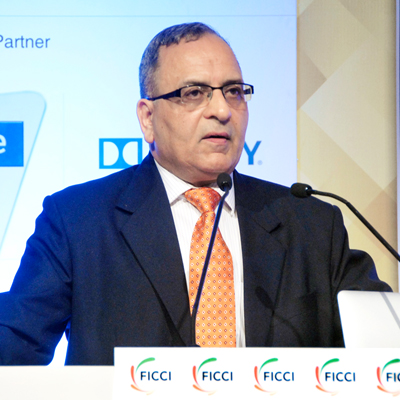
    BALI: He is young, but the young Dhoot scion’s debut on the Asian stage at the Asia Pacific Operators Summit (APOS) in Bali was pretty impressive by most yardsticks. Dhoot dismissed any suggestions about DTH operators getting together to bring down content costs. “We at Videocon d2h have very good relations with broadcasters. We don’t have a single court case against any of them; we don’t have any contentious disagreements over packages. And we don’t want to get into any complex arrangements,” he said.


    He revealed that the newest DTH player has about 11 million gross subs out of which about seven million plus are active.  “It’s all about how everything is being executed,” he said. “And we are doing it right. The top two or three players have almost 70-80 per cent of active subs. India is a land of opportunities; there is space for everyone even for a FreeDish.”


    The next phase for the DTH players is going to be about HD, he emphasised.  “We embraced HD from day one.  HD is a game changer in our plan. HD sub base will treble—that will make a great difference to ARPUs.”


    Additionally, he said that packaging of products such as kid’s packs will make a difference. “We need to work with our broadcast partners to work out new packages,” he highlighted.


    He revealed that the company was generating cash from operations, excluding finance costs, depreciation and amortization.


    One of the big impediments to growth of the DTH business is regulatory is Saurabh Dhoot’s view. “The 30 per cent entertainment tax in some states almost equals to the tax on alcohol and cigarettes. We as an industry need to come together to raise our voice. It is archaic and needs to be changed,” he concluded.

  • Videocon d2h and MStar Semiconductor tie up for MPEG-4 HD STBs

    Videocon d2h and MStar Semiconductor tie up for MPEG-4 HD STBs

    MUMBAI: Videocon d2h has decided to go one step further to strengthen its technology by tying up with Taiwan based MStar Semiconductor for its new HD MPEG-4 DVB-2 set top boxes (STB) that will be provided to the Indian market.


    The new STB with MStar’s technology provides features such as PVR that allows users to watch content of their interest at their own time. It also allows for watching TV channels with functions such as title/time based recording, rewind and forward, auto serial recording, pause live TV and mark-skip-watch.


    “Having a 10 million subscriber base in a very short time in India is a strong testimony of Videocon d2h’s success. It is our honor and pleasure to be the partner with Videocon d2h. Leveraging our cutting-edge set-top box platform, we will continue to support Videocon d2h to further build upon their success,” says MStar Semiconductor chairman Wayne Liang.


    Videocon d2h CEO Anil Khera said “We have partnered with MStar, global leader in integrated chips. The ease of user experience, best in class integration and performance provide a significant edge for our cutting edge high definition set-top box. We are hopeful that MStar technology will provide better experience to our consumers as we are looking at consolidating our leadership position.”
     

    Currently Videocon d2h is offering its SD STBs at Rs 1990 the HD ones cost Rs 2000. In an earlier interview Khera had told indiantelevision.com that the DTH operators’ current number of HD subscribers is 8 per cent of the total that has the potential to rise to 20 per cent in the coming few years.
     

    In 2014, the DTH platform’s parent company Videocon group is planning to set up a one million STB plant that will provide STBs for people in phases III and IV of digitisation.

  • Tata Sky expands its news channel offerings in Odisha

    Tata Sky expands its news channel offerings in Odisha

    MUMBAI: This election season, Tata Sky – the leading Direct-to-Home service provider announced the addition of three news channels in Odisha – Kanak TV, Zee Kalinga and MBC TV.

    Along with the Dhamal Mix pack at Rs.220/- pm, subscribers also get 2 free regional packs giving them access to over 100 channels including popular Hindi channels such as Colors, Star Plus,Sony and Zee. Tata Sky subscribers can now enjoy the free Odia regional pack that comprises of 10 popular Odia channels providing entertainment, regional and national news.

    Zee Kalinga, a 24×7 news channel will bring in deep election analysis, live discussion programs, current affairs on the table for subscribers. Kanak TV and MBC TV on the other hand will keep the subscribers informed about news not only from the region but also across the country.

    On the latest addition to the Tata Sky family, Mr. VikramMehra, Chief Commercial Officer, Tata Sky said, “Expanding our offering with the three news channels is a part of our endeavor to increase our spread of channels across all genres for our Odia subscribers. One of the largest states in the East and an important market for digitization, Odisha has been witnessing positive digital growth over the last few months.”

    Apart from Odia channels, Tata Sky also offers 10 Bengali and 20 Telugu channels. With the addition of the Odia channels, Tata Sky continues to reinforce its focus on the Odisha market, further strengthening its position in the east of India.


  • Videocon d2h expands its regional channel portfolio

    Videocon d2h expands its regional channel portfolio

    MUMBAI: The direct to home (DTH) operator, Videocon d2h has taken a step forward in strengthening its regional channel profile. The operator has now added a Tamil channel ‘Vendhar TV’ and a Punjabi channel ‘Chardikala Time TV’ on its platform.


    While ‘Vendhar TV’ is a Tamil general entertainment channel and will be available in the basic pack South Silver, ‘Chardikala Time TV’ is a Punjabi News channel, and will be available in the basic pack Super Gold.


    With this addition Videocon d2h will now offer 53 Tamil and 12 Punjabi channels and services.


    ‘Vendhar TV’ will be available on channel number:  817 and ‘Chardikala Time TV’ on channel number: 762.

  • DTH operators to challenge I&B Ministry’s notice on arrears

    DTH operators to challenge I&B Ministry’s notice on arrears

    NEW DELHI: Operators of private direct-to-home (DTH) platforms, who recently received a notice from the government with regard to licence fee dues amounting to Rs 2,066 crore, plan to challenge the notice on the ground that the matter is subjudice and is pending in the Supreme Court.


    However, the DTH Operators Association of India is yet to decide whether the challenge will be in the form of a reply to the Ministry or an application in Court.


    According to the notice sent earlier this week, the six private operators have been asked to pay the amount within fifteen days.


    However, most of the operators contacted by indiantelevision.com said they had cleared the dues of licence fee.


    The operators say the licence fee as demanded under the rules is on gross revenue (GR) whereas they have been asked to pay the fee on the basis of actual gross revenue (AGR). The operators have said the fee should be only on subscription revenue and not on allied earnings such as dividend and interest income.


    When the operators insisted that they had been paying the licence fee on the GR, the government went to the Supreme Court on the issue and the matter has been pending for the past four years and is now expected to come up early next month.


    However, Information and Broadcasting Ministry secretary Bimal Julka told indiantelevision.com that the Ministry was justified in sending the notices since the apex court had not levied a stay order in the matter. Asked about possible action after 15 days, he said this would be done according to the provisions of the licensing rules.


    Tata Sky MD & CEO Harit Nagpal said that the demand of Rs 2,066 crore is the differential between the GR and the AGR.


    He also said that I&B Ministry had itself asked the Finance Ministry to reduce the fee from 10 per cent to six per cent but the latter had not taken a decision on this so far.


    According to the notices sent to the operators, Dish TV has to pay Rs 625 crore while Tata Sky has been told to pay Rs 620 crore. Airtel Digital TV has to pay Rs 298 crore, while Sun Direct has to clear Rs 230 crore. The Videocon-owned d2h has to pay Rs 157 crore while Reliance Digital TV has to pay Rs 136 crore.


    While DTH companies provide for 10 per cent licence fee on overall revenue in their profit and loss account, they pay less (only on subscription revenue net of content cost) at about five per cent of overall revenue. The rest is booked as a provision in the balance sheet, along with applicable interest.


    As of 31 March 2013, Dish TV’s closing provision pertaining to regulatory dues (including interest) stood at Rs 653.66 crore.


    Some of the DTH operators were hopeful that the Telecom Regulatory Authority of India would bring down the licence fee from 10 per cent to six per cent, as proposed by the I&B Ministry to the Finance Ministry. TRAI itself had recommended last year that the actual gross revenue should be brought down to eight per cent.


    Meanwhile, the Parliament was told in April last year that the six private DTH operators paid Rs 307.8 crore as licence fee to the government for the year 2011-12, compared to Rs 177.8 crore in 2010-11 and Rs 126.2 crore in 2009-10.


    The revenue in 2008-09 was Rs 89.3 crore from four operators, since both Airtel Digital TV (Bharti Telemedia) as well as Videocon d2h (Bharat Business Channel) had not commenced services.


    The other DTH players are Dish TV, Tata Sky, Sun Direct TV, and Reliance Big TV.    


    Under the agreement with the government, the platforms pay a non-refundable entry fee of Rs 10 crore and an annual fee equivalent to 10 per cent of its gross revenue every financial year. Thus, the platforms have paid Rs 60 crore as one-time entry fee.


    According to figures furnished in the reply to the Parliament, Tata Sky paid licence fee of Rs 79.3 crore in 2011-12 as against Airtel Digital’s Rs 61.87 crore and Dish TV’s Rs 30 crore. Sun Direct paid Rs 36 crore, Reliance Big TV paid Rs 9.5 crore, and Videocon d2h paid Rs 5 crore.


    DTH services are governed by the DTH guidelines and terms and conditions issued by the I&B Ministry on 15 March 2001 and amended from time to time.    


    The seven DTH players in the country including Doordarshan’s free-to-air Freedish cover around 3.5 crore TV homes. Freedish currently has 59 slots including 22 of its own and which it hopes to increase to 97 by the end of this year and ultimately to 250 slots over the next two years.
  • Videocon d2h adds Focus Odisha on its platform

    Videocon d2h adds Focus Odisha on its platform

    MUMBAI: The direct to home (DTH) operator Videocon d2h, has expanded its channel portfolio. The operator has now added another regional news channel of Odisha “Focus Odisha” on its platform.


    Focus Odisha is a popular 24/7 news and current affairs channel catering to the state. With this channel addition, Videocon d2h now offers 10 Oriya channels and services.


    Videocon d2h offers 489 channels and services, 27 Asli “HD” channels and services and 10 Oriya channels and services. Focus Odisha will be available on channel number:  796.


    The addition of the news channel will keep the consumers of Videocon d2h updated about the latest happenings in the region, current affairs, news analysis and much more.

  • DTH operators wooing subscribers into HD

    DTH operators wooing subscribers into HD

    MUMBAI: A recent study in the US revealed that nearly 60 per cent of homes in the country have one or more high-definition (HD) TV sets; a significant rise from just 35 per cent five years ago.


    In India too, HD TV viewing is on the upswing – though not as big as in the US yet – with two DTH operators having recently added a slew of HD channels to their bouquet to take the total tally of HD channels to over 25. So much so, DTH operators are confident that the demand for HD TV will only grow from here onward.


    “More than 50 per cent of new customers are buying HD TVs and the other 50 per cent, who are buying SD boxes, will after a while come and say that they have upgraded to HD TV sets. Would you have thought of this scenario two years ago?” says Tata Sky CEO Harit Nagpal.


    Videocon d2h CEO Anil Khera echoes similar thoughts. “Close to 8 per cent of our subscribers have taken HD packs. Interestingly, almost double of these have taken our HD boxes in anticipation of their future transition to HD services,” he says.


    Not so long ago, Videocon had declared it crossed 10 million subscribers.


    To leverage the growing interest in HD, DTH operators have come up with innovative techniques including advertisements, pricing and packaging of HD channels to make customers opt for their HD service packs


    For instance, Dish TV ensures it does not have floating subscribers, so only if a customer opts for an HD pack will he/she be provided with an HD set top box (STB). Customers are not allowed to jump between SD and HD packs.


    On the other hand, Tata Sky subscribers have to pay just Rs 125 above the pack price to avail both SD channels and the channels in the pack which have an HD version. From 1 November, 2013, Tata Sky has stopped ordering SD boxes and is offering HD boxes at the same price as SD boxes at Rs 2,000 per piece. Currently, it has about 2 million subscribers with an HD connection.


    Like Tata Sky, Videocon d2h too is offering SD and HD boxes at almost the same price. While an SD box costs Rs 1,990 with a one month free view, the HD box costs Rs 2,000 without a free view. “Subscribers are taking to HD viewing very well. They are increasingly opting for bigger screens at home and HD feeds for a better viewing experience. We expect that in the next few years, HD viewing will account for almost 20 per cent of the total viewership,” says Khera.


    For Airtel Digital TV, it is about striking a balance between the HD and SD consumers. 


    More importantly, HD subscribers imply more revenue. “Revenue from an HD subscriber today is almost 10 per cent. However, this has potential to grow up to 35 to 40 per cent of our revenue base in a few years’ time,” says Khera.


    According to Nagpal, as and when regional channels start broadcasting in HD, the subscriber base may go up. “HD packs increase as channels get added. Initially, only knowledge and sports channels were available in HD. The next level will be with regional channels. Sun Network has already taken the initiative,” he says.


    With Dish TV, currently, 7 per cent of its revenues come from HD subscribers. However, Dish TV CEO RC Venkateish feels that the price of an HD TV set, which is nearly three times that of an SD TV set, could be a deterrent.


    While it’s a long road ahead, DTH operators anticipate that the future will see HD TV viewing increase by a substantial amount, thus also increasing Average Revenue per User (ARPU). Khera feels it is possible that in a few years from now, Videocon (like Tata Sky) may stop selling SD boxes altogether.

  • The One Alliance threatens to switch off channels to Reliance BIG TV

    The One Alliance threatens to switch off channels to Reliance BIG TV

    MUMBAI: The subscribers of direct-to-home TV services provider Reliance Big TV may stop receiving 26 channels that form part of the The One Alliance bouquet about three weeks from now.


    The One Alliance through a public notice has informed subscribers of Reliange Big TV that the channels it aggregates can go off in the next three weeks, if the DTH player doesn’t clear outstanding dues.


    “We have issued a public notice as per the guidelines. The outstanding is huge and we are hoping that the matter is resolved soon,” says The One Alliance EVP sales and strategy Makarand Palekar.


    The channels that come in The One Alliance bouquet are: Sony Entertainment Television, MAX, MIX, SAB, PIX,SIX,Aath, Animal Planet, AXN, Animax, Discovery Channel, Discovery Channel Tamil, TLC, Discovery Science, Discovery Turbo, Aaj Tak, Headlines Today, Times Now, Tez, Discovery Kids, ET Now, Zoom, Movies Now, Discovery HD World, SIX HD and SET HD.


    “Talks are on with Reliance Big TV,” informs Palekar.


    The One Alliance is getting tough against all distribution platforms. The aggregator had switched off channels given to IndusInd Media and Communications (IMCL) on 5 March, after issuing a 21 day notice to the multi system operator (MSO) for non-payment of huge outstanding.


    “We met the officials from IMCL and resolved the matter on Friday, 7 March. The channels from the bouquet (to IMCL) have been restored,” says Palekar.

  • Tata Sky not to take legal action against ISRO for now

    Tata Sky not to take legal action against ISRO for now

    NEW DELHI: The Direct to Home (DTH) operators are going through a major capacity constraint. While Tata Sky was one of the first players to bring to the fore the need for availability of more transponders, it is now a major concern for all the DTH players.


    Tata Sky had in 2013 said it would initiate legal action against Indian Space Research Organisation (ISRO) if its demand for more transponders was not met.


    It should be noted that Tata Sky for the past four years has been waiting to get its contracted space on an ISRO satellite.


    “While I had said that earlier, for now, we have given a pause to that. We are not taking any legal course against ISRO, for now,” said Tata Sky CEO Harit Nagpal today while participating in the discussion on DTH at CASBAA India Forum 2014.


    Nagpal said, “There is a growing demand of channels. And soon there will be a time when the expectation will go up to providing 1,000 channels. Capacity will be needed to serve this demand. While for now, with 12 transponders and moving from MPEG 2 boxes to MPEG 4 boxes, we are sorted for next two years. But, after that, as demand grows, we will need more capacity.”  Tata Sky has invested huge sums in moving from MPEG 2 Set Top Boxes to MPEG 4 boxes.


    The satellite policy in India is being questioned the world over. “There is sufficient demand for investing in satellite. Also, we are ready to invest, but if the current policy bottleneck doesn’t cease to exist, satellites will stop dedicating capacity for India,” opined SES SVP commercial – Asia Pacific and the Middle East, Deepak Mathur.


    SES is a Luxembourg-based global satellite owner and operator.


    The session also brought to the fore a key point that while cable TV can carry 500 channels, DTH television providers cannot.


    Non-availability of transponders has caused a capacity constraint for DTH television providers and as a result unable to offer 500 channels. “This is distorting the playing field,” concluded SES’ Mathur.

  • Dish TV launches Zing brand for regional markets; to also launch Dish Box Office

    Dish TV launches Zing brand for regional markets; to also launch Dish Box Office

    KOLKATA: Direct-to-home TV services provider Dish TV has embarked on a content strategy that differentiates its services from competitors.


    Dish TV today launched a brand called Zing for targeting regional markets where Phase III and Phase IV digitisation has opened up significant opportunity.


    The DTH TV provider would also soon launch Dish Box Office, an expanded movie-on-demand service.


    Starting with West Bengal, the DTH TV provider will start offering Zing in Odisha later this week and subsequently extend it to Gujarat and Maharashtra.


    Zing is part of Dish TV’s strategy to search for newer ways of reaching out to specific viewers and engaging with them through relatable content. With Zing, a customer in West Bengal will be able to choose from a number of packs which will include all available Bangla channels.


    The Zing packages are priced at Rs 175, Rs 249 and Rs 349. The company plans to spend Rs 7 crore on a 360 degree brand awareness and marketing campaign.


    “With more than 10 to 12 million analogue television homes in West Bengal to be digitised in phase III and IV, we would like to grow our business here,” said Dish TV CEO R C Venkateish.


     “Besides the content, all above-the-line (ATL) and below-the-line (BTL) advertising, packaging and other marketing activities will be available in Bangla,” said Dish TV India COO Salil Kapoor.


    As part of Dish Box Office, Dish TV would offer half-a-dozen movies through the day instead of just one movie on demand now. “As the reach of this offering is comparable to any movie channel, we hope to reach at least 50 per cent of our active subscriber base,” Kapoor said.


    Talking about phase 1 digitisation in Kolkata, Kapoor said DTH has a market share of around 30 per cent, of which Dish TV’s share of around 28 per cent. Dish TV has a subscriber base of around 11.8 million in India.