Category: DTH Operator

  • Airtel to transfer 25% stake in DTH arm to Nettle

    Airtel to transfer 25% stake in DTH arm to Nettle

    According to a BSE filing, Bharti Airtel will transfer its 25 per cent stake in DTH arm Bharti Telemedia to wholly owned subsidiary Nettle Infrastructure Investments.

    The transaction has been approved by the Bharti Airtel board. The date of sale of the transaction is subject to regulatory approvals. The company will receive cash as consideration for the sale.

    “We wish to inform you that the Board in its meeting held on January 18, 2018, has approved the transfer of 25 per cent equity shares of Bharti Telemedia Limited (Subsidiary Company) to its wholly owned subsidiary, Nettle Infrastructure Investments Limited,” Bharti Airtel said in a filing to the BSE.

    Airtel in December signed agreement to sell 20 per cent stake in Bharti Telemedia to private equity firm Warburg Pincus for about $350 million (around Rs 2,310 crore).

    A company official said that the stake transfer to Nettle does not include equity to be sold to Warbug Pincus. Upon closing of the transaction with the equity firm, Airtel was left with 80 per cent equity stake in Bharti Telemedia.

    In a separate filing, Airtel said that the company’s board on the same day also approved acquisition of 5 per cent stake in its subsidiary Indo Teleports (also known as Bharti Teleports) for Rs 2.3 crore. Bharti Airtel already holds 95 per cent stake in Indo Teleports.

  • Airtel Digital TV revenue, PAT and EBITDA up in Q3 2018

    Airtel Digital TV revenue, PAT and EBITDA up in Q3 2018

    MUMBAI: Bharti Airtel’s DTH arm Airtel Digital TV has seen a 10.4 per cent revenue growth in the quarter ending 31 December 2017 (Q3-2018) compared with Q3 2017 (y-o-y). Earnings before interest, taxes, depreciation and amortisation (EBITDA) grew by 22 per cent y-o-y in Q3 2018. Airtel DTH’s contribution to the overall Airtel revenue and EBITDA has stayed the same at 6 per cent.

    Airtel Digital TV’s revenue for Q3 2018 saw revenue rise to Rs 964.2 core from Rs 936.9 crore in Q2 2018 and higher than the Rs 873.5 crore y-o-y. EBITDA rose to Rs 370.8 crore from Rs 351.7 crore in Q2 and Rs 302.6 crore y-o-y.

    Earnings before interest and taxes (EBIT) saw a huge jump from Rs 123 crore in Q2 2018 to Rs 150 crore this quarter, a 22 per cent rise. This was 2.2 times than Rs 68.4 crore reported in the year ago quarter.

    The DTH segment assets were Rs 2,659.1 crore, up from Rs 2,590.7 crore in the previous quarter and Rs 2,399.3 crore in Q3 2017. The segment’s liabilities increased to Rs 33,19.3 crore from Rs 3,279.8 crore in the previous quarter and Rs 3,030.8 in Q3 2017.

    Airtel Digital TV’s capex during the quarter under review was Rs 236 crore, 11 per cent lower y-o-y from as against Rs 265 crore spent in the corresponding year ago quarter. Cumulative investments increased by 8 per cent y-o-y to Rs 7,799.3 crore from Rs 7,212.7

    Subscribers grew by 3.1 per cent to 1.3937 crore, up from 1.3521 crore in the previous quarter and a 10.7 per cent increase y-o-y from 1.2588 crore. A total of 416,000 subscribers were added in the corresponding quarter. Average revenue per user (ARPU) remained flat at Rs 233 (just 0.4 per cent growth from the corresponding quarter a year ago). Monthly churn reported for Q3 2018 stood at 1.2 per cent (1.4 per cent reported in the previous quarter; 1.3 per cent in Q2 2017).

    The DTH business saw no additions of districts this quarter and the number remained at 639 numbers.

    Airtel’s overall revenue dropped by 12.9 per cent y-o-y to Rs 20,319 crore from Rs 23,336 crore. Its revenue dropped to Rs 15,294 crore, 11.3 per cent y-o-y and down from the Rs 16818.3 crore in the previous quarter. This was mainly due to mobile drop of 17.6 per cent. Mobile broadband customers increased by 64.9 per cent to 6.21 crore from 3.77 crore in the corresponding quarter last year. Mobile data traffic grew by more than 6 times to 110,600 crore MBs in the quarter as compared with 172,000 crore MBs in the corresponding quarter last year. Total India mobile subscribers increased by 2.9 per cent from the previous quarter to 29.0 crore, which is also 9.1 per cent growth y-o-y.

    Airtel’s profit before tax stood at Rs 838.1 crore, lower than the Rs 1298.8 crore reported in the previous quarter. Net income also dropped to Rs 305.8 crore from Rs 343 crore.

    Airtel India and South Asia MD and CEO Gopal Vittal said. “Regulatory fiat in the form of a cut in domestic IUC rates has exacerbated the industry ARPU decline in Q3 18. The recent announcement of reduction in international termination rates will further accentuate this decline and benefit foreign operators with no commensurate benefit to customers. Continued investments in data capacities, strategic partnerships with content and handset providers and focus on customer friendly innovations like data rollover has led to healthy customer additions of 0.81 crore during the quarter. Q3 2018 has also seen the highest ever broadband site deployment of 32K in any quarter, complementing the robust data and voice traffic growth of 544 per cent and 50 per cent respectively on a y-o-y basis. We are committed to remaining the operator of choice for all customers in this rapidly consolidating industry.”

    Also Read :

    Airtel Digital TV revenues, op profits rise in Q2 FY 2018

    Airtel Digital TV sub base expands, even as ARPUs dip

  • Sun Direct adds Sun NXT free with DTH subscription

    Sun Direct adds Sun NXT free with DTH subscription

    MUMBAI: Sun Direct is finding ways to hold on to its subscriber base amidst the hordes of consolidation and shutdowns happening in the industry. Strengthening its hold in the South, which forms the largest chunk of its territory, it has announced a free membership of its video-on-demand (VOD) platform Sun NXT for active Cinema Plus, Mega Pack and World Pack subscribers.

    The subscription-based VOD platform offers three plans–monthly for Rs 50, quarterly for Rs 130 and annually for Rs 490. The first 30 days constitute the free trial period after which the payment kicks in. Offline download and viewing are available in the app as well.   

    Sun TV Network’s Sun NXT, which was launched in mid 2017, offers over 50,000 hours of live TV content, movies, originals, kid’s content, music across four South Indian languages–Tamil, Telugu, Kannada and Malayalam. It also streams movies from Kollywood, Tollywood, Mollywood and Sandalwood.

    Sun NXT being a screen-agnostic platform is also available on Smart TVs and streaming devices like Amazon Fire TV, Google Chromecast, Apple TV etc.

    Sun Direct has six packs, which include Mega Pack with 204+ channels, Tamil Super Value with 179+ channels, Tamil Cinema + Sports with 174+ sports, Tamil World Pack with 172+ channels, Tamil Value with 128+ channels and Tamil Economy Pack with 82+ channels, for one month, three months, six months and twelve months. Sun Direct packages start from Rs 1499 (Tamil Economy Pack for 96 months) and go up to Rs 5290 (Mega Pack for 12 months).

    Also Read:  Regional viewers ‘catch-up’ Sun TV’s new VoD

    Sun Direct partners Harmonic to add 80 HD channels

  • Dish TV re-evaluating Videocon d2h merger

    Dish TV re-evaluating Videocon d2h merger

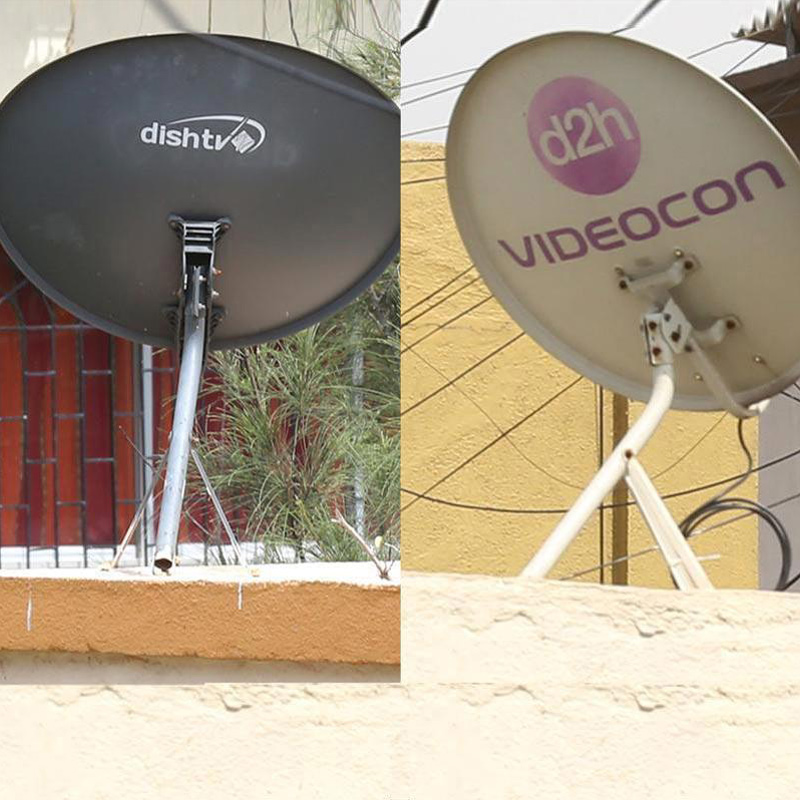
    MUMBAI: The Dish TV-Videocon d2h merger had reached the final stage with the Ministry of Information and Broadcasting (MIB) giving it the green signal. Then, suddenly on 22 December, Dish TV announced that the union would be delayed beyond 27 December 2017 citing technical reasons. Now those reasons–it basically is revaluating the deal–are likely to hold up the fusing of the two DTH operators even further.

    Dish TV yesterday informed the BSE that it had told its advisors–which include financial advisor Morgan Stanley, E&Y, SR Batliboi & Co and Luthra & Luthra Law Offices-to re-examine the deal terms within 60 days.

    It said that it was taking this step as “it has come to our knowledge that certain entities belonging to the Videocon group, including the promoters of Videocon D2h Ltd, have become subject to insolvency and/or enforcement proceedings by lenders. The company is evaluating as to whether there is any impact of the same on its rights and obligations under the definitive agreements, and consequential effects on the transactions contemplated.”

    The companies had announced a merger in November 2016 tom-tomming the benefits that would accrue to the two if they went ahead. And both companies went about the process getting the various regulatory approvals required. In early March 2017, the merger got the NOC from the BSE and the NSE, Competition Commission of India clearance on 4 May 2017, shareholder approval through a meeting convened by the National Company Law Tribunal (NCLT) on 12 May 2017, and the NCLT green flag on 27 July 2017, and the MIB go ahead on 15 December 2017.

    As per the terms of the merger Dish TV Videocon d2h was to issue 857.79 million fresh shares. Shareholders of Videocon d2h were to get 2.02 shares of Dish TV Videocon for every share of Videocon d2h. D Dish TV shareholders would own 55.4 per cent shares of the merged entity while Videocon d2h would own the remaining 44.6 per cent.

    Dish TV is pressing the pause and review button at a time when at least two transactions in the direct-to-home segment have been completed.  Late last year, private equity firm Warburg Pincus picked up a 20 per cent piece of Airtel DTH for a handsome price of $350 million valuing the entire operation at $1.7 billion. Then Delhi-based Pantel Technologies and Veecon Media bought out all the losses, debt, and liabilities of Reliance Big DTH from the Anil Ambani group, bringing to a close a long struggle by the latter to exit the DTH business.

    Also Read :

    Dish TV-Videocon d2h merger date postponed

    DTH’s year of consolidation

    DTH subscriber growth down in second quarter


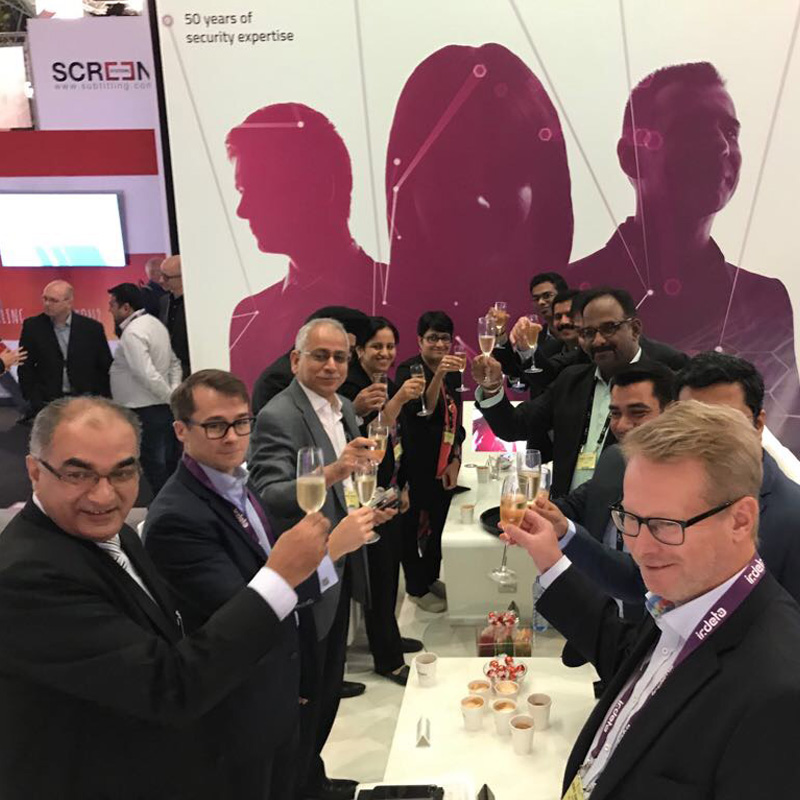
  • Tata Sky partners Irdeto to secure content

    Tata Sky partners Irdeto to secure content

    MUMBAI: Tata Sky has signed a deal with Irdeto to ensure the safety of the DTH operator’s content relayed to any device across its satellite and over-the-top (OTT) platforms. The company will be implementing Irdeto’s Cloaked CA and middleware technologies for better customer experience.

    Tata Sky MD and CEO Harit Nagpal said, “At Tata Sky, we are committed to providing our customers with the most innovative video services across satellite and online platforms in India. To provide consumers with greater choice and convenience, we need a security partner that gives us the freedom to innovate without fear. In Irdeto, we are working with a strong security partner with a forward-looking approach and future-proof solutions. This enables us to continue innovating our solutions and services while giving us the peace of mind that our content is secure.”

    Irdeto will manage the planning and deployment of the project for Tata Sky to seamlessly integrate security technology with third-party solutions. Cloaked CA is a conditional access system for broadcast and IPTV operators. It reduces the need for a smart card and reduces cost and complexity.

    “We are honoured to be selected by Tata Sky as their long-term security partner for Conditional Access and Middleware,” said Irdeto CEO Doug Lowther.“This deal further reinforces Irdeto’s commitment to the dynamic and fast-growing media market in India and we are excited to continue working with Tata Sky to help them meet their business goals.”

    Also Read :

    Tata Sky and Irdeto tie up, OTT service launched on Android devices

    Tata Sky offers Reliance DTH consumers migration deal, Dish TV too in play

    Tata Sky deploys DataMiner to improve customer experience

  • Sun Direct may add 20 HD, 100 SD channels

    Sun Direct may add 20 HD, 100 SD channels

    MUMBAI: Sun Direct, the DTH service from Sun Network, is likely to add 20 new high definition (HD) and 100 new standard definition (SD) channels and has been allocated 144 MHz of spectrum on the recently launched Measat-3B satellite.

    A social media user by the name of ‘Raja Chennai‘ shared a screenshot of the application made by the company informing the Department of Telecommunications (DoT) about the allocation of the new satellite capacity, according to an article on Ultra News.

    Once these channels find a home on the new Measat satellite, Sun Direct will be able to add an extra 20 HD channels to take its total HD channel count to 80 while increasing total SD channel list to 320.

    The company was forced to halt its HD channel expansion on GSAT 15 two months ago due to the termination of its channel-sharing deal with Reliance Digital TV and divert some of the HD capacity to handle the fallout.

    public://inside_1.jpg

    In the application, the company is shown informing the DoT that four new transponders of 36 MHz each have been allocated to it by the Department of Space for use on its DTH service.

    Sun Direct has been facing a severe spectrum crunch due to a fire on an ISRO satellite that knocked out most of its satellite capacity in 2010. The fire forced the company to move satellite to Malaysian-owned Measat 3A, and manually realign the dish antennae of millions of its customers.

    Some relief was in sight when Measat launched a second satellite at the same location in 2014, boosting capacity.

    Sun Direct was widely expected to book extra capacity on the new satellite, particularly after it lost a sharing deal two months ago with Reliance Digital TV. Reliance Digital TV changed hands when the Anil Ambani Group sold it to another group as part of a fire sale.

    The DTH service is expected to start adding new channels in a matter of days.

    The new capacity is expected to lead to the addition of around 100 new SD channels while another 50 channels are expected to be moved to it from GSAT 15—the HD satellite for Sun Direct.

    Also Read:

    The growth of DTH in India

    Sun Direct partners Harmonic to add 80 HD channels

  • The party continues on Tata Sky Mobile app

    The party continues on Tata Sky Mobile app

    MUMBAI: The Tata Sky Mobile App streamed every pulsating beat  spinning out from the turntables of the EDM scene’s biggest stars to smartphones around  the country, as the second day of the Ola Sunburn Festival 2017 turned the volume up on the year’s biggest party.

    DJ Snake and the increasingly popular female DJ, Teri Miko, were among the local and international acts performing on the second day of the festival, as track after track of crowd rousing music was pumped out at Pune’s Oxford Golf Resort and on phones around India.

    At the Ola Stage, things kicked off with Kash Trivedi, a house music producer dropping his best tracks. He was followed by Krosses, Paratara, Hollaphonic and the final act by Sartek, the first Indian DJ to be featured by Hardwell’s Revealed Recordings.

    As the sun set at the Empire of the Sun 2.0 stage, Teri Miko was getting the party started by playing some of her best tracks. Swedish producer Salvatore Ganacci took over from Teri, and then made way for Kayzo, who set the stage for the final act by DJ Snake who got the crowd grooving with his wildly popular track, ‘Lean On’.

    Every throbbing beat from the opening day of Ola Sunburn 2017 was streamed live on Tata Sky’s mobile app. India’s leading content distribution platform has tied up with the festival, one of the largest in the world, to bring its eclectic mix of music, entertainment, experiences, celebration and lifestyle straight to the smartphone.

    Apart from streaming every second of the action from each of the festival’s four days live, the app, open to all users including non-subscribers, will also showcase nearly 500 hours of additional content, including after movies, artist interviews and exclusive backstage footage.

    The sheer depth of content on offer, which will be archived on the app for viewing after the festival ends, will allow EDM fans to fully immerse themselves in the 11th edition of Asia’s largest music festival on-the-go, wherever and whenever they like.

    The third day of Ola Sunburn 2017 kicks off Saturday afternoon and will feature 23 acts, including KSHMR, Nucleya and Clean Bandits.

    Fans can watch every second of it live on the Tata Sky Mobile App. So, don’t miss out. Download the app now and be a party of the biggest party of the year.

  • DTH subscriber growth down in second quarter

    DTH subscriber growth down in second quarter

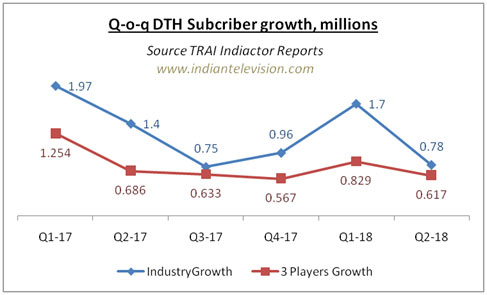
    BENGALURU: The carriage industry and more specifically the direct to home or DTH industry had a disappointing fiscal year 2017 (FY-17, year ended 31 March 2017) in terms of subscriber growth. Going by the subscriber numbers data of the six private DTH players in India provided by the Telecom Regulatory Authority of India (TRAI) in its Indicator Reports of the Indian Telecom Sector. This dismal performance seems to have spilled over to the second quarter of financial year 2017 (FY-18, year commenced on 1 April 2017 until 31 March 2018) as per TRAI data for the quarter ended 30 September 2017 (Q2-18, quarter under consideration). The industry could add just 2.47 million subscribers during the first six months (first 2 quarters, 1 April 2017 to 30 September 2017) as compared to the 3.37 million subscribers it added during the corresponding year six-month period the year before. Active DTH subscribers added in Q2-18 were just 0.78 million as compared to 1.4 million in Q2-17.

    Further, as reported by us earlier, despite the sunset date for DAS IV having passed, the DTH industry had not been able to leverage the opportunity that it was presented with. Earlier, TRAI numbers for the six private players in the DTH industry showed a very poor growth rate of just 0.96 million and 5.08 million during the quarter and year ended 31 March 2017 (Q4-17, FY-17) respectively. This figure is far lower – less than one-third of the 17.38 million active DTH subscribers that were added in fiscal 2016 by the six.

    Please refer to the figure below – The three players whose numbers are available in the public domain and whose combined q-o-q subscriber growth has been represented in the figure are Dish TV, Airtel DTH and Videocon d2h

    public://1_6.jpg

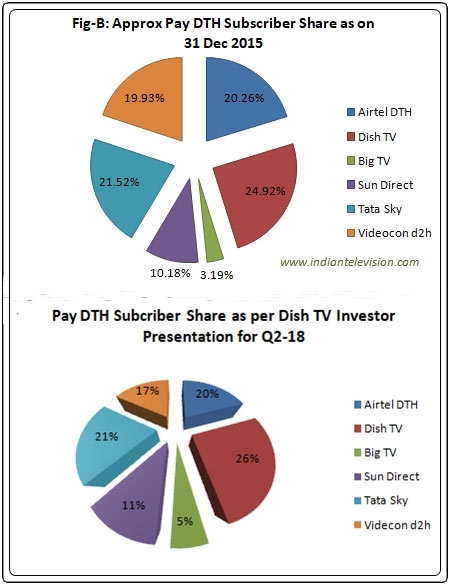
    Let us understand the status of the DTH industry at the end of September 2017. The six private DTH players are – Dish TV, Tata Sky, Airtel Digital Services (Airtel DTH), Videocon DTH, Sun Direct, and the Anil Ambani-led Reliance Big TV (Big TV). It may be noted that Big TV announced closure of its operations since November 2017. The three players – Dish TV, Airtel DTH and Videocon d2h represented approximately 63 to 65 percent of the active pay-TV DTH subscribers at the end of September 2017. Please refer to figure below for subscriber share of the private DTH players as per data in the public domain:

    public://2_1.jpg

    Besides the six private pay DTH players, Doordarshan’s (DD) Free Dish DTH service is a major player in terms of subscribers with an estimated 22 million as per the numbers available in the public domain. It must however be noted that an exact number for registered or active subscribers is not available even with DD, since this is a free DTH service. When the announced Dish TV Videocon d2h merger happens, the merged entity will probably be one of the largest DTH players in the world in terms of subscriber numbers.

    According to an E&Y report titled ‘India’s Free TV’ released in July 2017, among the DTH operators in India, DD Free Dish has grown to become the largest with its estimated 22 million subscribers which E&Y predicted could cross 40 million over the next two to three years.

    A number of reasons can be attributed to this dismal performance – two of the chief ones that are touted over the recent past by most players in media and entertainment industry – demonetisation in November 2016 and the implementation of GST. Another important reason could be that DTH is considered a premium service – by all the stakeholders in the carriage ecosystem with the resulting perception that procurement as well as monthly subscription will be premium and hence a deterrent for the consumer. While some players such as Dish TV have been making attempts to come up with packages that it perceives should attract the masses, but, results as per TRAI data seem to indicate otherwise. Yes, Dish TV is the largest private player in the country that has come up with different pricing models under different brands. Whether unwittingly or not, most of the other players present themselves as premium players and seem to have done little in that direction.


  • Dish TV-Videocon d2h merger date postponed

    Dish TV-Videocon d2h merger date postponed

    MUMBAI: The official date for the amalgamation of Videocon d2h into Dish TV has been moved ahead from the earlier decided 27 December 2017.

    In a release to the Bombay Stock Exchange, Dish TV said that the company would be unable to file the relevant intimation forms with the authorities, such as the Registrar of Companies and the Ministry of Corporate Affairs, by 27 December. The new date will be notified soon, the release added.

    A week ago, Dish TV and Videocon d2h were given the final nod by the Ministry of Information and Broadcasting to merge and create the world’s second-largest DTH company with 29 million customers. It was in November 2016 that the companies first announced their decision.

    The combined entity is expected to provide better after sales, distribution, and technology services.

    For the quarter ended 30 September 2017, Videocon d2h posted profit after tax (PAT) of Rs 168 million and an addition of 0.21 million subscribers. Dish TV’s PAT for the quarter was Rs 689 million and its subscriber base increased by 0.188 million.

    Also read:

    MIB clears path for Dish TV Videocon

    Dish TV reports improved operating profits for second quarter

    Recalibrating India’s DTH sector after Airtel DTH-Warburg Pincus deal

  • Recalibrating India’s DTH sector after Airtel DTH-Warburg Pincus deal

    Recalibrating India’s DTH sector after Airtel DTH-Warburg Pincus deal

    MUMBAI: For long, investors have given India’s DTH sector a pass-by saying the TV distribution sector (read cable TV) is rickety and has been digitised in a hurry to meet government mandates without too much thought and planning of the back end. Often times, DTH players have been bundled with the cable TV lot and considered a not-a-very-attractive investment.

    That was until last week.  The announcement that Warburg Pincus was picking up 20 per cent stake in Airtel Digital TV (DTH) -with around 14 million subscribers – for a staggering $350 million at a valuation of $1.75 billion or Rs 11,204-odd crore should surely come as a shot in the arm for those distributing TV and running DTH platforms.

    Right now, there are six of them: Tata Sky, Dish-Videocond2h, Airtel Digital TV, Sun Direct, DD Free Dish, and the floundering-now-waiting-to-be-resuscitated Reliance Big TV.

    Most of them have been burning cash. Folks have been saying there are too many DTH operators in India. They have pointed towards the UK that has one, the US that has just two.  And questions have been asked if India has too many vanity plays in both television and distribution.

    A senior investment analyst unwilling to be identified says last week’s Warbug Pincus vote of confidence in DTH highlights how upbeat the sector looks as an investment destination and how different it is from India’s cable TV scattered majors.

    It also raises questions around whether the Videocon management could have got a better deal when it decided to merge Videocon d2h with DishTV.  Was Videocon d2h a tad undervalued? After all, the difference in EBITDA between Airtel and Videocon d2h alone runs into Rs 170-odd  crore only. For FY 2016-17, Videocon d2h had an EBITDA of Rs 1018.1 crore as against Airtel DTH’s Rs 1222 crore. For fiscal 2017-18, Videocon d2h’s half yearly EBITDA stood at Rs 529.5 crore as against Airtel’s Rs 681.7 crore. Dish TV’s EBITDA for FY 2016-17 was Rs 972.8 crore, while it’s half yearly EBITDA for fiscal 2017-18 was  Rs 417.3 million.

    At the time of the merger, the combined entity’s valuation was placed at $2.7 billion for around 27 million subscribers of Dish TV and Videocon d2h. Combined the two would account for 16 per cent of the total 175 million hoseholds in India with around 2.80 million HD household and a combined proforma  EBITDA of  Rs 1826.2 crore. Going by the Airtel-Warburg numbers, the value of Dish TV-Videocon d2h should have been closer to $4 billion.

    Another senior industry observer opines that the Airtel-Warburg Pincus deal has opened up investors’ eyes all over the world about the growth potential in India’s DTH vertical.  The deal is probably one of the first-ever major large-ticket private equity placement deals in Indian DTH.

    What has changed in the past one year? And what is exciting investors to look at the sector differently?

    FreeDish to go away

    Indications are that the DD Free Dish threat is dissipating with the implementation of the new policy that the government has put in place with no renewals of slots taking place for private players. Industry professionals point out that the government is seeking to enhance the reach of its own channels on Free Dish.

    “It had deviated from its mandate–which was to reach out to all the rural areas where there are no transmitters and make the government’s voice reach those people. DD National was hurt because they gave slots to private GEC channels. The national channel’s viewership and revenue have since plummeted,” says one of them. “From Rs 1,400 crore in ad revenue, the figures came down to Rs 500-600 crore, out of which Rs 400 crore is from government enforced spending on the pubcaster. Its ad revenue is a measley Rs 200 crore and no private producer wants to produce for DD as it does not have the reach. With DD FreeDish likely to stop trading in bandwidth and not airing GECs, a window of opportunity for private DTH players to offer another option to rural and smaller town audiences will open.”

    Cord cutting – a hyped-up phenomenon

    Another senior industry researcher says that the phenomenon of cord-cutting has been hyped up by new entrants in the OTT space such as Netflix and their backers from the analyst community and investors in both the US and India.

    “Comparing the US and India is absolutely fraught with disaster. Even in cord cutting,” she says. “India has a very deep urban population and a very deep rural populace. The TV in the living room is still the centre piece of Indian homes; it is also moving into the bedroom. There will be no cord cutting; we will have both in India, the Netflixes as well as TV subscriptions.  Jio, too, has expanded the consumption of mobile bandwidth and nowhere is it posing a threat of cord cutting.”

    The impact of TRAI’s tariff order, GST and introduction of transparency

    The DTH industry has an estimated 90 million subscribers; the net figure is 65 million and the active is 52-55 million. The net sub number includes those subs who have been suspended for up to 120 days for non-payment; whereas actives are those who have subscribed and paid to for between zero and 30 days.

    Industry veterans point out that DTH operators are better placed to implement the TRAI’s new tariff regime which has been held up in courts.  One of them points out that the higher content costs that they have been paying to broadcasters will simply go away. “Our infrastructure allows us to permit millions of subscribers to unsubscribe online very easily and watch the channels and the shows they want to,,” says he. “Because of transparency our costs will go down with the execution of the tariff order.”

    Cable TV content costs, however, he points out are set to go up as under declarations of sub numbers to the tune of 50-60 per cent by LCOs to MSOs have been rampant. “After digitisation and GST, every connection is being reported to the MSO as everybody in the chain has to pay taxes. With this, the broadcaster will understand how many subscribers are actually there and he will charge transparently per sub basis. Based on that the fixed deals will happen,” he says.

    That should be good news for industry observers and naysayers who have been waiting like Godot for India’s TV content and distribution to unlock its true potential and value.

    Also Read:

    Warburg Pincus to buy 20% in Airtel’s DTH arm

    Reliance Big DTH to take FTA route under new management?

    STB import duty doubled to 20%