Category: DTH Operator

  • Rakesh  Jhunjhunwala picks up Dish TV shares worth Rs 93 crore

    Rakesh Jhunjhunwala picks up Dish TV shares worth Rs 93 crore

    MUMBAI: Indian billionaire investor Rakesh Jhunjhunwala-owned Rare Enterprises on Wednesday picked up 1.30 crore shares in the direct to home service provider Dish TV. Following the move, the Dish TV India’s share price rallied as much as 3.5 per cent on Thursday morning.

    According to bulk deals data on the National Stock Exchange (NSE) website, the shares were purchased at Rs 71.30 per share. Total value of the deal stands at Rs 92.69 crore.

    Last month, Dish TV reported a consolidated net profit of Rs 118.21 crore for the quarter ending in March. In 2017’s first quarter, the company suffered a net loss of Rs 29.49 crore.

    However, the merger of Dish TV and Videocon was completed on March 22.

    “Financial numbers for the fourth quarter and fiscal 2018 are thus not comparable with the corresponding periods of the last year,” the company had said in a statement.

    Also Read:

    Merged Dish TV reports maiden numbers for fiscal 2018

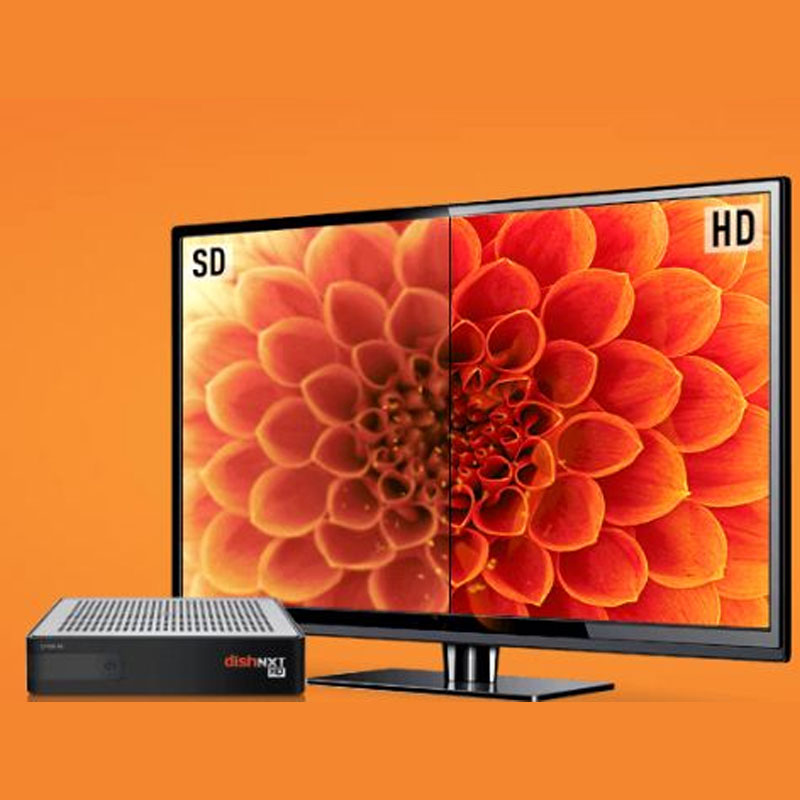
    Dish TV offers SD channels at Rs 8.5 per month

  • Impending tariff order implementation pushes Dish TV to sign short-term contracts

    Impending tariff order implementation pushes Dish TV to sign short-term contracts

    MUMBAI: Keeping in mind the recent Madras High Court judgement in regard to tariff order and interconnect regulation, India’s largest direct to home (DTH) brand Dish TV India is now focussin on short-term deals. As the recent judgement brought tariff-order closer to the reality, the DTH brand’s move has factored in the impending  tariff order implementation.

    The recent judgement upheld the order of Chief Justice Indira Banerjee, giving a green signal to  TRAI’s powers to frame tariff for the broadcasting sector. It has helped TRAI move forward to create a transparent and non-regulatory framework.

    According to media reports, Dish TV chairman and managing director Jawahar Goel spoke about the short-term contracts while talking to analysts. “We will get the content at the same cost as a cable operator in Chennai like Arasu Cable. The same price will be applicable to us,” Goel said on an optimistic note hoping the tariff order would remove discrimination.

    He also mentioned that the recent merger of Dish TV and Videocon d2h has managed to reduce content costs in some cases. “I can say the broadcasters have recognised the combined entity. Earlier we used to give 7%, 8%, 5% increase. This is no longer the case rather. In some of the cases, we have reduced the content costs while some agreements are still pending,” he said.

    Another face of the company, Dish TV India Group CEO Anil Dua emphasised on the importance of the unity in industry to implement the tariff order. He termed the Mera Apna Pack as a predecessor to the implementation of the Tariff Order.

    “We are the only one I guess in any of the DPO including cable or the DTH industry who are geared up to sell the pay channel based on the Tariff Order and the customer demand,” Dua said.

    Also Read:

    Third Madras high court judge gives TRAI tariff order thumbs up

    Dish TV offers SD channels at Rs 8.5 per month

  • Reliance BIG TV joins hands with 50,000 Indian Post Offices for HD DTH set top boxes

    Reliance BIG TV joins hands with 50,000 Indian Post Offices for HD DTH set top boxes

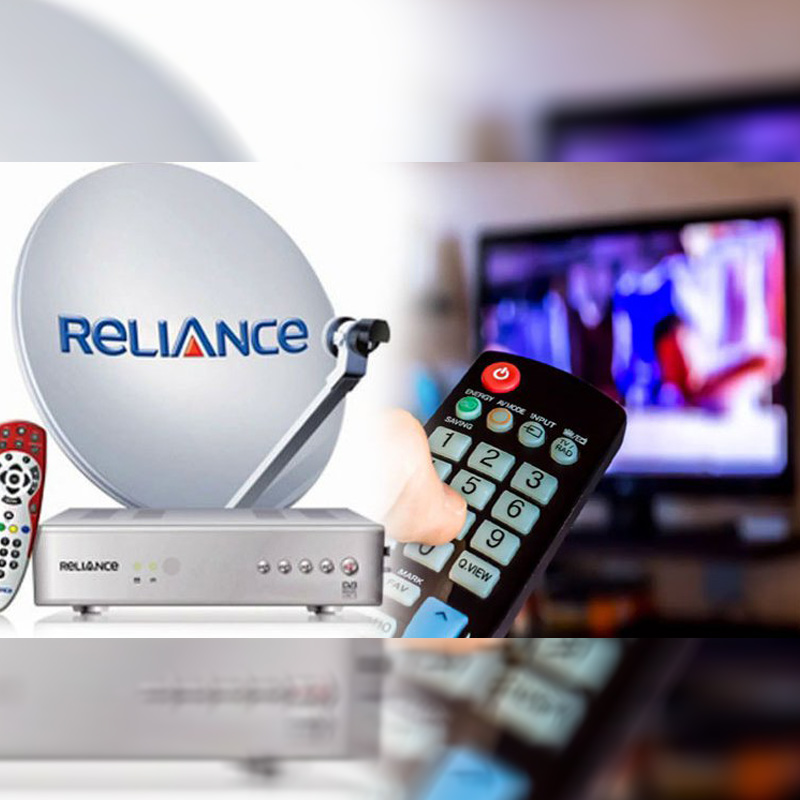
    MUMBAI: DTH player, Reliance Big TV, after announcing zero cost entertainment to 130 crores Indians, has partnered with 50,000 Indian Post Offices across Rajasthan, Punjab, Uttarakhand, Andhra Pradesh, Karnataka, Arunachal Pradesh, Assam, Manipur, Meghalaya, Mizoram, Nagaland and Sikkim for consumers to do an initial booking by making a payment of Rs 500 through post offices.

    The FREE HD HEVC Set-Top-Boxes, as promised by Reliance Big TV, can now be booked through India Post Offices all across India. This initiative will support digital India campaign by bringing urban & rural India on the same platform for entertainment and education with unified consumer offer.

    Vijender Singh director Reliance Big TV says,“With its latest offering, Reliance Big TV has disrupted the digital entertainment space in India. Now, every Indian household can have our HD HEVC Set Top Boxes at their disposal. This will give an access to free and high-quality entertainment and even more, every aspiring student can enjoy complimentary access to educational content, with our HD HEVC Set Top Boxes, which can be booked listed Indian Post Offices”. 

    The company will be starting the installation soon and all pre-booked customers will get their set-top boxes installed in their houses before 30 July and delivery of set-top boxes will start from 15 of June. The bookings for the post office will be commencing from 20 June.

    “With this tie-up, Reliance Big TV will have a wider reach since Indian Post Office has an incredible reach, which is unrivalled by any other logistics partner and the same would help the customers to book this incredible offer by paying Rs 500 at any of the post offices in the stipulated states” adds Singh.

    Reliance Big TV is further extending its Pan-India network to fully support its customers and provide an enriching content spanning Entertainment, Movies, Sports, News, infotainment, Education, Kids content and more. Its latest, cutting-edge HD HEVC device is all set to offer superior digital quality viewing.

    Furthermore, the HD HEVC Set-Top-Box by Reliance Big TV comes fully loaded with latest features, such as scheduled recording, USB port, HDMI port, recording & viewing channels simultaneously. The latest offer includes, a plethora of pay channels absolutely free for 1 year including HD channels and up to 500 FTA channels free of cost for 5 years.

    The pre-booking of the latest offer by Reliance Big TV has already commenced from 1 March 2018. Users can avail the latest offer on Reliance Big TV website (www.reliancebigtv.com) with booking amount of Rs 500 at a post office. On the receipt of Set-top-Box and outdoor unit (ODU), buyers have to pay the balance amount of Rs 1500 and enjoy a plethora of pay channels absolutely free for 1 year including HD Channels and up to 500 FTA channels free of cost for 5 years.

  • Dish TV offers SD channels at Rs 8.5 per month

    Dish TV offers SD channels at Rs 8.5 per month

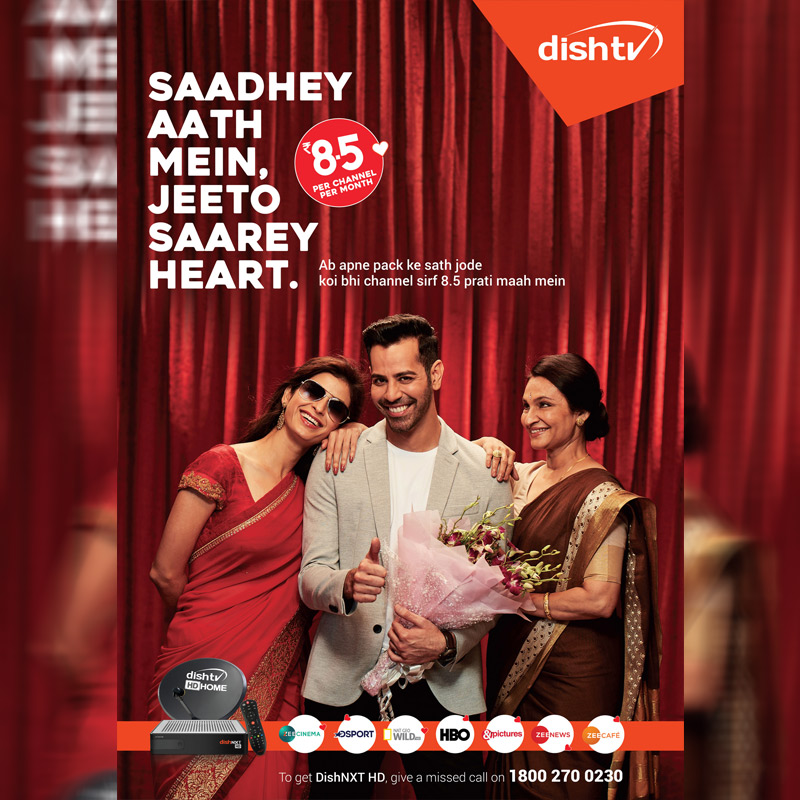
    MUMBAI: After an intense merger time with Videocon d2h, Dish TV is back with a new solution for its customers and this time it is offering SD channels at just Rs 8.5 a month. The DTH operator has even launched a 360-degree campaign to make people aware of it.

    Entitled “Saadhey aath mein jeeto saare heart”, the campaign amplifies the benefit of having the choice of hand-picking channels based on customers entertainment needs and how that ultimately leads to keeping everyone at home happy.

    The campaign, conceptualised by Enormous Brands, aims to connect both rationally and emotionally with customers who are managing delicate relationship balances at home. Aimed to reiterate Dish TV’s flexible and customisable entertainment packs and offerings, this campaign solidifies Dish TV’s position in the industry and showcases how its innovative offering of Rs 8.5 per channel per month is set to create a new benchmark in television entertainment.

    In the form of a TVC, the campaign showcases how a young man is being felicitated for having achieved an impossible feat – that of keeping his mother and wife happy by getting their favourite channels added on Dish TV. This unique superpower is available to all its customers and gives them the ability to choose the entertainment of their choice at a minimal price of Rs 8.5 per SD channel per month on their base pack.

    The seed of the idea came from the insight that today’s customers are often left wanting as most operators tie them down to a pre-bundled pack. Upgrading to a new pack becomes heavy on the pocket without the freedom to choose their favourite channel.

    Dish TV group CEO Anil Dua says, “DishTV has always leveraged relevant customer insights to launch and communicate new innovative offerings to its subscribers. Our product “Mera Apna Pack” under the DishTV brand is aimed at offering value, affordability and customer empowerment. We have just launched its new campaign that is aimed at showcasing the benefit of providing customers with the choice of watching entertainment that they want.”

    Dish TV corporate head of marketing Sukhpreet Singh adds, “With family TV viewing at the core of our business, our new ad campaign is here to win everyone’s heart with its creative jingle and quirky ad campaign tagline. To connect with customers, we will roll out the campaign on TV, print and digital platforms. Additionally, all our POS will have a dedicated space to showcase it.”

    Enormous Brands managing partner Ashish Khazanchi mentions that the agency’s endeavour is to make the brand more inclusive and charming. With this campaign they wanted to bring this promise alive in the context of families in a fun and enjoyable way.

  • How Harit Nagpal plans to keep Tata Sky ahead

    How Harit Nagpal plans to keep Tata Sky ahead

    MUMBAI: The DTH sector. What once seemed a lucrative arena has now seen companies getting acquired and merging, the competition being intense . Today, India is the largest DTH market in the world by number of subscribers. As on 30 September 2017, there were 66.99 million active pay DTH subscribers in the country. This does not include subscribers of free DTH services.

    A recent report published in Livemint sees Tata Sky CEO and MD Harit Nagpal stating that DTH has become a completely commoditised industry, like selling coal or steel, as everyone has access to everything today. He said, “If I drop prices, everybody will drop prices. So, there is really no differentiation. The only sustainable differentiation is process-centred, which is largely service. So, your boxes should fail less often, your picture quality should be good, your user interface should be better than anyone else’s, wherever there’s a failure, your response time should be the fastest.”

    Nagpal also revealed that Tata Sky’s current revenue is in the region of Rs 6000 crore where the current run rate (everyday recharge) is worth Rs 20 crore per day. Its revenue and profitability are increasing by 15-20 per cent y-o-y. The DTH player is witnessing subscribers mushrooming by 15-20 per cent every year. 

    Dismissing the general perception that Tata Sky is a premium service, he says that it isn’t so. However, the company has a higher proportion of high definition subscribers who pay Rs 500-600 every month. In the past five years, Tata Sky recorded 60 per cent new subscribers coming in from smaller towns and villages who pay Rs 200-220 per month, which is also a huge amount for them. For a business to be successful there has to be a balance of low, medium and high paying subs, Nagpal told Mint. Too many low-end customers will hamper profit and too many high-end ones will curb growth.

    The merger of Dish TV and Videocon to become India’s number one DTH entity has been of the key highlights of 2018 but Nagpal does not view the situation as a challenge and rather thinks Tata Sky’s numbers are equal to theirs or higher. 

    Cord cutting is a rage in the US with subscriber after subscriber giving up traditional TV services for OTT platforms like Amazon Video, Hulu, Netflix and Youtube. The internet content is either free or significantly cheaper than the same content provided via cable.

    In the US, cable costs $100 per month whereas in India it’s a mere $5. So, when Netflix or other OTT platforms are available at $10 each, a consumer would rather prefer watching the latter. But this won’t be the case in India due to the low pricing. Nagpal is of the opinion that India will never give up on TV even if people get on to watching OTT.

    Tata Sky recently tied up with OTT platforms Netflix, Hotstar, Youtube and Amazon Prime Videos in order to make them available to its subscribers. The DPO  says simply changing the customer premise equipment will allow Tata Sky subs to  receive both the signals—from the satellite and from  broadband, enabling viewers to watch on TV screen, live TV via satellite whenever they want to, and OTT via broadband whenever they want to.

    Nagpal concluded by saying that he does not feel pressure from OTTs since he is in the content business. “My life depends on the customer. I was buying content from broadcasters earlier and supplying it to the customer via satellite. The customer sometimes wants to watch the content of his choice, my job is to fetch that content for him. I am not wedded to the satellite,” he stated.

  • Tata Sky, Airtel DTH gain market share in 2017

    Tata Sky, Airtel DTH gain market share in 2017

    BENGALURU: Tata Sky and Airtel Digital TV (Airtel DTH) have reason to rejoice as they saw market share rise in calendar year 2017 as compared to a year ago. Both saw an increase by one per cent each at the end of December 2017 as compared to at the end of December 2016 according to Telecom Regulatory Authority of India (TRAI) data.

    Tata Sky had 24 per cent market share at the end of 2017 (CY-2017) as compared to 23 per cent at the end of 2016 (CY-2016), while Airtel DTH had 21 per cent share as compared to 23 per cent during the same period. Hence, the market share of Tata Sky and Dish TV, which lost one per cent market share in 2017, was the same. The other player that lost market share was Videocon d2h – its market share fell by a percentage point to 19 per cent in 2017 as compared to 20 per cent in 2016. 

    We had mentioned earlier that the share of the three major players whose numbers are available in the public  domain –(in order of number of subscribers – Dish TV, Airtel DTH and Videocon d2h) has been declining –  from about 65 per cent to 64 per cent in the Jun-Sep17 quarter to an even lower 63 per cent in the Oct- Dec 2017 quarter. 

    Please refer to the market shares of the six private DTH players at the end of 2017 and 2016 according to TRAI data:

    public://pic_1.jpg

    According to TRAI data, the overall private DTH active subscriber base grew by 4.19 million or 0.419 crore (7.8 per cent) in CY-2017 to 67.56 million or 6.756 crore from 62.65 million or 6.256 crore in CY- 2016. Comparatively, in 2016, the overall private DTH active subscriber base grew by 6.67 million or 0.667 crore (11.9 per cent) from 55.98 million or 5.598 crore in CY- 2015.

    As also mentioned by us earlier, quarterly data released by TRAI indicates that the industry added net 2.25 million or 0.225 crore subscribers for the quarter ended 31 December 2017 (Oct-Dec17 quarter), hence the final quarter of CY-2017 accounted for about 46 per cent of the net subscribers added during the year. The Oct-Dec17 quarter had the highest quarter-on-quarter pay-TV DTH subscriber growth in CY- 2017 at 3.45 per cent.

    We’d said that CY-2017 saw muted pay-TV DTH subscriber growth. Those numbers were based on the results declared by the above mentioned three private DTH players.

    It must also be mentioned that the government’s FreeDish DTH service is the largest DTH player by far in terms of subscribers with an estimated 22 million or 2.2 crore subscribers in 2016 as per the KPMG-FICCI Indian Media and Entertainment Industry Report 2017 (KPMG-FICCI M&E Report 2017) titled Media for the Masse: The Future Unfolds. It must however be noted that an exact number for registered or active subscribers is not available since this is a free DTH service. Also, the merger of Videocon d2h with Dish TV has created the largest private television carriage player in India and quite likely the second largest in the world, be it cable, internet television or DTH or any other.

  • Tata Sky coughs up Rs 561 crore as licence fee for FY 2017-18

    Tata Sky coughs up Rs 561 crore as licence fee for FY 2017-18

    MUMBAI: Direct-to-home operator Tata Sky has paid Rs 561 crore as licence fee to the government for 2017-18 financial year, according to a statement released by the company.

    The company paid a total of Rs 2,200 crore in the last fiscal year ended on 31 March 2018. This amount includes GST, state entertainment taxes and some other taxes.

    Commenting on the development, TataSky MD & CEO Harit Nagpal said: “With the payment made today, we have paid licence fee, past and current as per specified rates, regardless of pending litigations between the government and the platforms.”

    The Ministry of Information & Broadcasting (I&B) rules mandate DTH operators to pay 10 per cent of their gross revenue as their annual fee to the government. DTH operators, however, contend that the MIB should charge licence fee based on adjusted gross revenue left after paying several taxes and others.

    In 2014, the DTH operator had paid Rs 383 crore to the government as licence fee for the previous fiscal and arrears.

    In the same year, the MIB had sent notices asking them to pay licence fee totalling Rs 2,066 crore within 15 days. DTH operators had challenged the licence fee demand in the Telecom Disputes Settlement and Appellate Tribunal (TDSAT) in 2014.

    Tata Sky, a joint venture between Tata Sons and 21st Century Fox, has presence across 1.5 lakh towns with over 18 million connections.

    The Telecom Regulatory Authority of India (TRAI) has in its recommendations to the MIB said that the DTH licence period should be increased to 20 years while the licence fee should be charged as 8 per cent of adjusted gross revenue (AGR) where AGR is calculated taxes paid to the government.

    Also Read :

    Tata Sky brings Netflix content for customers

    Dish TV-Videocon d2h to bank on economies of scale


  • Dish TV-Videocon d2h to bank on economies of scale

    Dish TV-Videocon d2h to bank on economies of scale

    MUMBAI: The  long-awaited fusion of Dish TV and Videocon d2h  finally saw the light of day  on 22 March 2018. The pioneer in the direct-to-home (DTH) sector, Dish TV, and the fast-growing Mumbai-hqed and Dhoot family promoted service came together making Dish TV Videocon  d2h the largest pay TV operator in India and among  the top three in the world.

    The merged TV distirbution platform  will benefit from economies of scale while leveraging the individual strengths of the two services. One of the biggest attractions for the Jawahar Goel and Essel group promoted Dish TV as the acquirer was Videocon’s significantly higher average revenue per user (ARPU) as compared to Dish TV. While the former had an ARPU  of Rs 210, the latter’s ARPU stood at Rs 155-160. The combined ARPU is expected to be Rs 180. Owing to competition from Free Dish and other operational roadblocks, Dish TV had a lower ARPU but things are on the upswing, according to Dish TV CFO Rajeev Dalmia.

    Going forward, the acquirer, Dish TV, plans to keep the two brands independent in order to explore the regional opportunities as stated by Dish TV group CEO Anil Dua in an interaction with Indiantelevision.com.

    For any merger of this magnitude, integration is a big challenge and Dish TV is no exception. To ease matters, the company is concentrating on cultural integration in a bid to get the ship in order. The management undertook a cultural survey with 2000 participants so as to ease the pain of integration. Though still it has only been more than a month since the merger, the two operators’ office premises, logistics and warehouses have already been combined. Dua reiterated that the combined entity would draw synergies to the tune of Rs 510 crore through revenue aggregation and cost savings.

    In case of geographical capability, both brands bring different strengths to the table. The consolidated entity is expected to become a pan-India behemoth with its combined 29 million subscribers with Dish TV contributing with 16 million subscribers and Videocon d2h pitching in with  13 million users as on 31 March 2018.

    “Dish TV’s has always had benchmark content cost in the industry while Videocon’s content cost has been on the higher side,” said Dua acknowledging the disparity. Dish TV’s cost of content is 30-31 per cent of subscription revenue currently while the number for Videocon is higher at 36 per cent. He pointed out that the combined cost of content will be lower and hover around 30 per cent. “We want to maintain the cost of content as a percentage of total revenue—including advertising, carriage fees, value-added services along with other income—for the combined entity at 28 per cent,” added Dalmia.

    One of the key blocks of the merger is restructuring and assigning promising personnel to important positions. The management, which conspicuously does not feature anyone from Videocon, has appointed two marketing heads—one for each brand. Dish TV has put in place a common business head for North India and East India for the brands while also having a common business head for South India and West India.

    “We have one national service head for a common model of service across the country. Moreover, Ranjit Singh will continue to be the legal head for both brands,” Dua pointed out.

    Post merger, Dish TV wants to exploit the regional strengths without limiting the strength of the individual brands. The DTH operator has retained two independent brands as they have two marketing heads and two separate sales teams for each brand.

    Also Read:

    Videocon d2h, Dish TV merger comes to fruition

    Dish TV announces fresh Videocon d2h Nasdaq delisting date

  • Videocon d2h adds comedy VAS service from Shemaroo

    Videocon d2h adds comedy VAS service from Shemaroo

    MUMBAI: To add a pinch of fun, Dish TV has added a new value-added service on its Videocon d2h platform. Comedy Active service is being offered in partnership with Comedywalas, a division of Shemaroo Entertainment.

    Comedy Active service is being offered to the subscribers with a free preview of two months after which they can continue to enjoy at a nominal subscription price of Rs 35 + GST.

    “We are thrilled to extend Comedy Active service on our Videocon d2h platform after having received a positive response from our viewers on Dish TV Platform. With this announcement, Comedy Active service is now available to our entire subscriber base of 29 million. We have always focused on enhancing our product portfolio and value-added services to bring uninterrupted 24×7 entertainment to our viewers. Our partnership with Shemaroo to launch Comedy Active Service on Videocon d2h platform reiterates our commitment to providing unique content and best TV viewing experience for our viewers,” Dish TV India group CEO Anil Dua said.

    Along with original content created especially for this service, Comedy Active will also offer most popular comedy shows of all times like Tu Tu Main Main, Chamatkar, and Ye Jo Hai Zindagi.

    “We are very excited to launch Comedy Active service with Dish TV on its Videocon d2h platform. Comedy shows on television are a way for audiences to de-stress from the otherwise hectic life. Comedywalas is an initiative by Shemaroo to bring together high-quality comedy content by curating and creating, rib-tickling programmes. We also use our exceptional programming expertise and associate with stalwarts in comedy to produce some original comic gems. We are sure that this right mix of classic and new comedy shows will be loved by the audience,” Shemaroo Entertainment CEO Hiren Gada said.

    “We have always focused on delivering the best value proposition to our customers along with novel entertainment initiatives. The launch of Comedy Active service on our Videocon d2h platform reiterates our commitment to bring handpicked quality content for our viewers of all age groups. Taking ahead our existing partnership with Shemaroo, we are sure this new offering will add to the fun and laughter amongst our viewers across the country,” Videocon d2h marketing head Sugato Banerji said.

    Also Read :

    Dish TV sharpens focus on Tamil Nadu

    Dish TV announces fresh Videocon d2h Nasdaq delisting date

  • Netflix deal will help in customer retention, revenue enhancement: Tata Sky’s Harit Nagpal

    Netflix deal will help in customer retention, revenue enhancement: Tata Sky’s Harit Nagpal

    Tata Sky MD and CEO Harit Nagpal has been a bit of an early mover in terms of innovation and building a world-class satellite TV operation. Whether it has been in the case of HD or VAS or top-notch customer services, Tata Sky has been driving many of the path-breaking initiatives in the DTH sector. Nagpal announced a major strategic partnership with Netflix under which Tata Sky subscribers will be able to watch the world-class streamer’s on-demand content, including TV shows, films and documentaries, in the coming months through the direct-to-home operator’s platforms.

    Nagpal was in APOS Bali and was on stage for a conversation with MPA’s Vivek Couto. He openly spoke about the reasons behind the Netflix partnership, how it will benefit customers, what it means for Tata Sky and how does he see the satellite TV leader continuing with its leadership status. Sources indicate that Tata Sky is generating close to a billion dollars in revenue from about 15 million subscribers. Excerpts from the conversation:

    Why the Netflix tie-up?

    We don’t look at us as satellite TV platforms, we look at ourselves as the equivalent of grocers in this industry that produce and distribute content. We are a distributor part of the content, depending on the customer, whenever he wants to buy wherever he wants to watch we are privileged to provide him that—that was our thinking.

    Some customers of ours—not all, a very small fraction in India—are having access to good quality broadband, which can carry video. Also, they have the capability of paying for the broadband. And third, they don’t have the time to watch when it is broadcast; they’d rather watch it at their time.

    Who are these customers?

    Unlike the western world, where almost everybody falls in this category, in our country, a very small fraction falls in this group. Fortunately, we are providing linear television services to this kind of customers and today there are about 3.5 million such customers who are paying about $10 plus per month on content in a country whose ARPU is much lower. We have two million of these customers. So, it’s been our endeavour to create a platform. Because the lunch is lying in front of me, I would rather eat it rather than wait for someone else to come and eat it. We met Reed (Hastings) and Bill two years ago at their villa in Bali during APOS. And the rest is history.

    How will you differentiate from other service providers and mobile companies?

    We are going to distribute almost everything but not on-demand content like the mobile guys did. Mobile guys could best take a phone and put in five, six, seven eight apps. We were distributing television very differently. We were going to Sony, Star, Zee, Colors and buying content in bulk but providing it to the customer by genres making content discovery easy. That means if a linear TV customer says I don’t have kids, I like music, I don’t like sports, and I speak Malayalam, then I see no reason why he should not be watching on-demand content in the same way.

    It is my job to get all the content from various sources or on demand platforms and make the content discovery as easy as I have made it on the TV screen. We are giving him probably seven days catch-up TV for what he is subscribing on linear. To that you add Netflix, Amazon, Hotstar, YouTube, and whatever else become the prominent apps. You distribute that content via genre and offer it to him for a little over what he is willing to pay for linear TV.

    Is the Netflix addition mostly about ARPU enhancement in India?

    It’s retention and revenue enhancement. We have noticed that a customer when he gets into one of our services, his inclination to churn reduces. To the extent of around 75 per cent. The moment he gets dependent on a DVR, the 12 per cent churn becomes three per cent churn.

    So one more dependency for another service which is OTT will drive down the churn or deactivation even if it is for a short duration. The premium segment which accounts for 15-20 per cent of our base, there is no more price increases you can take on them and hence grow revenue.

    They are also consuming almost every single genre of content that is there. There is no genre to go into and select. We can lure in these guys by giving him additional services.

    Will the tie-up work against Tata Sky? Don’t you fear competition?

    Competitive intensity is good for the industry especially at the stage we are in. We need more high-quality competition to come into this business. I don’t want to run a monopoly because monopolies become very lethargic and they don’t feed the customer and they don’t grow the industry. At this stage, the more, the larger number of good quality competition that comes in it will keep us on our toes it should be there. It will help get good quality of product to the customer and is welcome.

    It’s not going to be a single platform. It’s going to be a combination. Just like a set top box is HD, DVR, SD and all those kinds of things. It’s going to be low cost to high cost. Even the customer price models will be different. You pay upfront a lot and don’t make me subsidise, you pay less per month. You make me subsidise the equipment, you pay me more per month.

    Has not the pay TV market slowed down in India? What about free to air?

    Deceleration is not happening. First of all the pay TV mass in India was not growing. What was happening was the transition from analog cable to digital platforms. If you look at the last five or six years, the pay TV base has not grown tremendously. 50 million people we have migrated from cable TV to DTH. That was growing at a pretty fast pace earlier. In the last two years, it slowed down. First year was because of free to air (FTA). We licked that problem in May last year. And since that the FTA growth has been curbed.

    There has been a lack of competitive intensity amongst the DTH competitors in the last one year. Primarily because a couple of them were busy panning out the merger and they were not participating in the competition in the market. Which has probably led to the slowing down of migration from cable TV to DTH. It’s a momentary thing, I guess. It’s going to come back.

    We don’t treat FTA as competition. FTA is a good thing. FTA provides me a pool from which I can source customers from. Because the customer does not buy a TV and decide to pay subscription simultaneously. He first buys it as subscription is going to be free. Then some of them upgrade to a paid service and that’s the pool we can tap into.

    Where do you see growth coming from?

    I see growth coming from phase IV. Two thirds of India lives in phase IV. They

    live in small villages which have 50 and 100 households. Drawing a cable to that village is uneconomical. If the cable operator who was serving those 150 households, if he loses 50 households then serving the balanced left-over subs become uneconomical.

    Will the march of the telcos like airtel, Jio, Idea Vodafones into content and distribution also impact your business?

    I welcome the telcos getting into the content business because it will keep the addiction to content alive. Compare it to the time when we only had land lines, we talked for 200 minutes a month. And we added mobiles, we are talking for 600 minutes a day. Because I am not restricted to my sofa and talking. I can be in the car, on the road, in the loo, wherever. Similarly, if I am restricted to my living room, then there are chances of addiction not become addictive enough.

    If I have the option I am watching something on the phone then I come back and again watching it on the TV, the addiction will stay. So, it’s additive not subtractive. And nobody has watched content on a six-inch screen if a 42-inch was available in front of him. You will watch it if the remote is taken from you by your wife or the kid, you will watch it on the mobile sitting in the same room: I am not deprived of the content I want to watch.