Category: DTH Operator

  • Gaming firm Electronic Arts extends deal with Fifa

    Gaming firm Electronic Arts extends deal with Fifa

    MUMBAI: With a view to increasing its presence in the gaming arena football’s governing body Fifa has announced that it has secured a long-term commitment from Electronic Arts (EA).

    The deal extends far beyond existing ventures with a licensee. EA has signed up with world football’s governing body from 2007 to 2014 as the worldwide exclusive Fifa Licensee in the product category of interactive football/soccer player, manager and fantasy software games for all delivery methods including consoles, mobile phones and online formats.

    EA says that it has had a close association with the game of football for more than a decade, having developed the very successful range of FIFA games launched in 1993 and currently with the 2006 Fifa World Cup game, which enables fans to experience the 2006 FIFA World Cup matches on a unique playing field.

    Fifa says that in the early 1990s, it pioneered the industry as the first major sports governing body to endorse a video game. In 2004, Fifa continued this pioneering spirit by launching the first officially sanctioned worldwide video gaming tournament, the FIFA Interactive World Cup. EA will pursue its support for this event and join forces with the new FIFA Partner Sony, as of 2007, to provide the gaming solution and further develop the ambitious virtual football tournament.

    Fifa adds that in the interactive world, there is a wealth of opportunities to fulfill its mission of developing football on a global level and fostering the passion of players and fans. With this renewed partnership, Fifa and EA will continue to take their combined passion for football on and off the pitch and for interactive sports entertainment to millions of fans all around the world.

  • 74 per cent Americans use mobile phones in emergency situations: Study

    74 per cent Americans use mobile phones in emergency situations: Study

    MUMBAI: Usage of cell phones has become an internal part of today’s life all around the globe. According to Americans, their cell phones aid them during emergencies and fill in their free time. It is interesting to note that around eight per cent had used their cells to vote in contests that had appeared on television, such as American Idol.

    The findings emerge in a national survey of cell phone owners by the Pew Research Center’s Pew Internet & American Life Project, the Associated Press and AOL.

    The result indicated that many also report driving unsafely while on their cells and they say they don’t like the new intrusions and public annoyances cell phones bring to their lives – not to mention their monthly bills.

    The cell phone has become an integral and, for some, essential communications tool that has helped owners gain help in emergencies. Fully 74 per cent of the Americans who own mobile phones say they have used their hand-held device in an emergency and gained valuable help.

    Another striking impact of mobile technology is that Americans are using their cell phones to shift the way they spend their time. Some 41 per cent of cell phone owners say they fill in free time when they are traveling or waiting for someone by making phone calls.

    While 44 per cent say they wait to make most of their cell calls for the hours when they do not count against their “anytime” minutes in their basic calling plan.

    At the same time, there are new challenges associated with cell phone use. More than a quarter of cell phone owners (28 per cent) admit they sometimes do not drive as safely as they should while they use their mobile devices. Among cell phone users, men (32 per cent) are more likely than women (25 per cent) to admit they sometimes don’t drive as safely as they should.

    Furthermore, 82 per cent of all Americans and 86 per cent of cell users report being irritated at least occasionally by loud and annoying cell users who conduct their calls in public places. Indeed, nearly one in ten cell phone owners (eight per cent) admit they themselves have drawn criticism or irritated stares from others when they are using their cell phones in public.

    For some, the cell phone has become so central to their communications needs that they lose track of the expenses associated with their phones. Some 36 per cent of cell owners say they have been shocked from time to time at the size of their monthly bills.

    When it comes to the features Americans would like to add to their cell phones, the desire for maps tops the charts by a clear margin. Fully 47 per cent of cell owners say they would like this feature and 38 per cent say they would like to have instant messages from select friends sent to their cells. Some 24 per cent of cell owners say they would like to use their phones to conduct searches for services such as movie listings, weather reports, and stock quotes. And a similar 24 per cent of cell owners would like to add email to their mobile-phone functionality.

    A third of cell owners (35 per cent) already use text messaging features on their phones and another 13per cent would like to add that capacity to their phone.

    Some 19 per cent of cell owners say they would like to add the capacity to take still pictures to their cells.

    The findings provide a detailed picture of the role of the cell phone in modern life, including how the use of cell phones has helped people become more spontaneous and prolific in their communication patterns. Half the survey was conducted among cell phone owners on their cell phones – one of the largest such samples ever conducted.

    In all, 1,503 people were surveyed between March 8 and March 28 – 752 of them on their landline phones and 751 on their cell phones. Some 1,286 cell phone users were interviewed in the sample. The overall sample and the cell-phone user sample have a margin of error of plus or minus three percentage points.

    It is likely that many of the behaviors reported here will intensify in coming years as more people become attached to and reliant on their mobile phones informs the official release.

    Indeed, 23 per cent of those who currently have landline phones say they are very likely or somewhat likely to convert to being only cell phone users.

    Other overall findings – interruptions, deception, texting spam and “American Idol” In this survey of adult cell users, more than a third say their cell phones have enabled some type of unwelcome intrusion in their lives.

    24 per cent of cell-using adults report they often feel like they have to answer their cell phones even when it interrupts a meeting or a meal.
    22 per cent believe that “too many” people try to get in touch with them because others know they have a cell phone.

    The reasons for this become clear when cell owners describe how they use their phones: Fully 52 per cent of all cell owners say they keep their phone on all the time and 81 per cent of cell-only users say the device is always on. At times, mobile phones are used abet some white lies: 22 per cent of cell owners say they are not always truthful about exactly where they are when they are on the phone. Younger users are much more likely to say they are not always honest about where they are: 39 per cent of cell users ages 18-29 say that.

    Spam has invaded cell phones, too. About one in six cell owners (18 per cent) report receiving unsolicited text messages on their phones from advertisers.

    Asked if they had used their cells to vote in contests that had appeared on television, such as “American Idol,” 8 per cent of cell owners said they had done that.

    Cell phone users are split in how attuned they are to making calls at times when it is less expensive to do so. Some 41 per cent say they try to place most of their phone calls when they know the minutes they use won’t cost them extra money, while 58 per cent report they don’t concentrate the use of their phones to those off peak hours.

  • Adlabs to buy out Mukta stake in JV, pump in Rs 2 billion in twin-screen theatres

    Adlabs to buy out Mukta stake in JV, pump in Rs 2 billion in twin-screen theatres

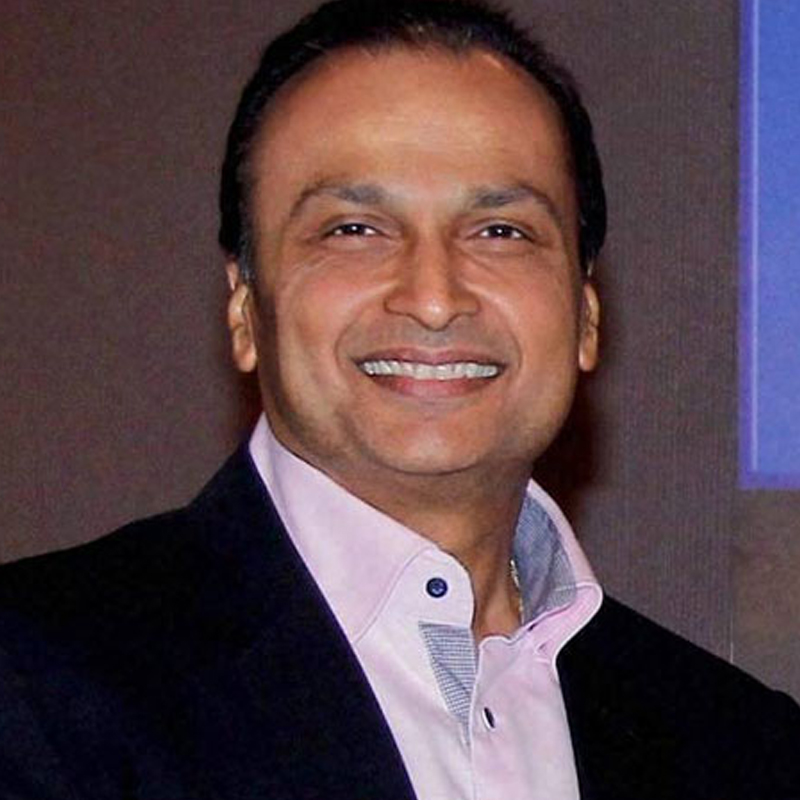
    MUMBAI: Anil Ambani-controlled Adlabs Films Ltd is buying out Mukta Arts’ 50 per cent stake in the joint venture company, Mukta Adlabs Digital Exhibition.

    As a step up in the plan, Adlabs is earmarking an investment of Rs two billion towards acquisition of 50 old cinema theatres for conversion into “twin screens.” Part of this investment will include the installation of digital projectors in these theatres.

    “We are acquiring the entire stake of Mukta Arts. We will be investing Rs two billion to upgrade 50 cinema theatres and install digital delivery systems in them,” Adlabs Films chairman and managing director Manmohan Shetty tells Indiantelevision.com.

    Adlabs and Subhash Ghai-promoted Mukta Arts had floated a joint venture company in 2003 for digital delivery of movies. Mukta Adlabs Digital Exhibition had invested around Rs 100 million but the company had been unable to make much headway with its technology which required a server and projectors to be installed in the theatres.

    For buying out the stake, Adlabs has not paid any premium. “We have paid a little less than Rs 50 million which is the actual investments made by Mukta Arts. We didn’t want any partners as we were planning to integrate the twin-screen converted cinema threatres with the installation of digital projectors. We plan to have the 50 twin screen theatres in B-class stations over 3-4 years,” says Shetty.

    Mukta Arts, however, is not abandoning the digital delivery of movies project. “We decided to part ways with Adlabs as our plans were different. Digital distribution of movies will be very much part of our plans as we are committed to technologies of the future,” says Mukta Arts CEO Ravi Gupta.

    The new technology of digital projection through hard discs avoids the use of film prints, which costs between Rs 50,000 and Rs 60,000 to the distributor. It also enables audiences of “B” and “C” class centres to watch their favourite films on the first day itself, thereby making simultaneous worldwide release a possibility. The technology also combats against piracy.

    Anil Ambani has big plans to deliver movies to cinema theatres through Reliance Infocomm’s fibre optic network. Having designs on launching a direct-to-home (DTH) service, he may also take the satellite delivery route for distribution of movies. “Even if the current delivery sytems are changed, digital projectors will be required in the fibre or the satellite system. Our plan is to aggressively install these projectors in the theatres which we are taking up for converting into twin screens,” says Shetty.

  • TWI comes out with podcast show on golf on iTunes

    TWI comes out with podcast show on golf on iTunes

    MUMBAI: Former golf pros and Sky pundits Richard Boxall and Robert Lee will be sharing their expertise with golf fans in a podcast show on iTunes.

    Golf ‘n Around, a half-hour weekly show hosted by the duo, produced by TWI and sponsored by The Royal Bank of Scotland Group, will provide listeners with an insightful and light hearted look at the world of Golf.

    The first edition of the show will provide a look back at the Volvo China Open and discuss the Verizon Heritage on the PGA Tour, as well as previewing this week’s European Tour event in Shanghai and the BMW Asian Open. Regular features will also include golf tips and miscellaneous items of interest.

    As well as having unparalleled access to the players and back-up personnel, Richard and Robert also promise to share anecdotes previously recounted amongst the close-knit golfing community. They joke, ‘What we know about golf you could write on a postage stamp with a paint brush. That’s why we’re pooling our knowledge to share it with the world.’

    Golf ‘n Around is produced by TWI who has agreed a distribution contract with Audible, the leading distributor of spoken-word content on iTunes.

    TWI head of audio sales and distribution Miles Palmer said, “TWI is delighted to work with key broadcasting talent such as Robert and Richard to produce unique content for the downloading public. TWI intends to set the bar for sport content in the podcasting world and this is a great start.”

  • Lockheed Martin launches DTH satellite system Astra for Europe

    Lockheed Martin launches DTH satellite system Astra for Europe

    MUMBAI: A European direct-to-home television satellite Astra -1KR launched into space yesterday atop an Atlas 5 rocket.

    The satellite which has been built by Lockheed Martin is a high-power Ku-band satellite that features 32 transponders. It will provide distribution of DTH services across Europe. It will be located at 19.2° East, European satellite operator SES Astra’s prime orbital position for delivering broadcast services to Europe, and will also transmit HDTV channels. With its satellite fleet Astra claims to reach 107 million homes in Europe.

    SES Astra is relying on the satellite to become a critical replacement in its space network, which provides more than 1,600 television and radio channels to 107 million households using a fleet of spacecraft.

    The cost of the mission is estimated to be about $200 million. Lockheed Martin Commercial Space Systems president Ted Gavrilis says, “Our long-standing relationship with SES Astra spans a period of nearly 20 years beginning with the launch of SES Astra’s first satellite, Aatra 1A, in 1988.

    “We are pleased once again to deliver to SES Astra, a state-of-the-art satellite using our flight-proven spacecraft architecture. I also commend our launch team and our SES Astra and ILS partners for their joint efforts and total dedication to Mission Success, which culminated in a textbook launch.”

    SES Astra president and CEO Ferdinand Kayser says, “We are very proud and satisfied that the Astra 1KR mission has been a success. Astra 1KR will benefit our customers, further strengthen our unique inter-satellite back-up scheme and provide replacement capacity for our Astra 1B and Astra 1C satellites. The success of the Astra 1KR mission is a milestone in our company history and shows that we have strengthened the fruitful cooperation with our launch partners, Lockheed Martin Commercial Space Systems and International Launch Services.”

    The satellite will use an onboard engine over the next week to circularise its transfer orbit. Once in geostationary orbit, the solar array and antenna appendages will be deployed and then a week spent testing onboard systems.

    The handover of the satellite to SES Astra is expected early next month. This will allow controllers in Betzdorf, Luxembourg to perform an extensive checkout of the communications payload and positioning of the craft at its final orbital slot over the equator at 19.2 degrees East longitude.

    The Lockheed Martin A2100 geosynchronous spacecraft series is designed to meet a wide variety of commercial and government telecommunications needs ranging from Ka-band/broadband services and fixed satellite services in C-band and Ku-band payload configurations, to high-power direct broadcast services using the Ku-band frequency spectrum and S-band mobile satellite services. The A2100’s modular design features a reduction in parts, simplified construction, increased on-orbit reliability and reduced weight and cost.

    SES Astra’s satellite is expected to enter commercial service in June, expecting to last at least 15 years. It will replace the aging Astra 1B and Astra 1C spacecraft which had been launched in 1991 and 1993 respectively.

    The Astra Satellite System is a DTH satellite system in Europe, delivering services to some 107 million Direct-to-Home and cable households. The Astra satellite fleet currently comprises 13 satellites, transmitting in excess of 1600 analogue and digital television and radio channels as well as multimedia and Internet services.

    Astra’s two prime orbital positions for DTH services are 19.2° East and 28.2° East. Professional services such as Direct-to cable (DTC), Satellite Newsgathering (SNG) and Occasional Use are offered from the orbital position of 23.5° East.

  • Tata Sky targets 1 July for DTH launch

    Tata Sky targets 1 July for DTH launch

    MUMBAI: Rumours of delays may be rife in the market but Tata Sky – the 80:20 joint venture between the Tata Group and Star India – is targeting a 1 July commercial launch of its direct-to-home (DTH) service, informed industry sources aver.

    Tata Sky CEO Vikram Kaushik, while speaking to Indiantelevision.com, was however quite categorical that any talk of a date of launch was premature at this stage and therefore purely speculative. Kaushik would only confirm that his company was on target for a mid-year launch for its DTH service.

    Tata Sky will begin the “test run” of India’s third DTH service after Zee Group’s DishTV and Prasar Bharati’s DD direct from 15 May, the sources say. It has marked out a 45-day window period till 30 June during which time all technical and channel and programme related issues will have been ironed out.

    According to the sources, the preparatory work for the launch has been ratcheted up several gears in the last three weeks after the company collected from the information and broadcasting ministry the final licence clearing the way for the $500-million DTH service to take off.

    It was in December last that the telecommunication ministry gave its green signal for the vexed matter of setting up an uplinking base in Delhi by Videsh Sanchar Nigam Ltd, an issue that was under government scanner on technical grounds of land use by VSNL of its Chattarpur facility. The telecom ministry nod was seen as crucial for obtaining the final licence from the I&B ministry.

    Tata Sky has three operational centres in the country. Its technical set-up is headquartered in the capital, its complete back-up systems, including call centre operations, is out of Bangalore while its commercial activities are managed from Mumbai.

    One big priority of course is getting all popular channels onto its platform, a matter that rival DishTV has still to resolve with the Star network and the Sony-Discovery One Alliance. Here, like in the case of the Subhash Chandra-promoted DTH service, ESPN Star Sports has already worked out a carriage deal with Tata Sky.

    Queried about this, Kaushik would only say, “We are in ongoing discussions with all major broadcasters. More than this I cannot comment at this stage.”

    Speaking of channels, a key function of all addressable systems is the electronic programme guide (EPG). Tata Sky has exchanged letters with all broadcasters on use of logos and such in regards to how the programming highlights in its EPG will be displayed. The operator has reportedly requested all channels to provide these details ahead of the 15 May week.

    Another aspect that Tata Sky has to confront is of how to get around the last mile roadblock. One strategy that it is going with is to introduce pre-paid cards, which Kaushik believes would make subscription payment easier for the consumer. This differs from the DishTV strategy, which offers new customers its services for Rs 3,990 that includes one year’s subscription. After a year, DishTV subscribers pay a monthly subscription fee.

    Secondly, Tata Sky plans to take the responsibility of directly installing the hardware in every subscriber’s home and servicing it whenever needed. This again differs from DishTV which has a distribution network of about 5,000 dealers / distributors across the country.

    On the hardware side, Tata Sky, like DishTV has done, will be offering its boxes through consumer durable outlets.

    As regards subscriber acquisition, Tata Sky is following a two-pronged strategy of targeting individual consumers as well as institutions, for which there is a separate head of institutional sales.

    Industrial townships, hospitals, hotels, etc. are where the operator is directly negotiating to set up a central dish antenna through which it can connect individual installations.

    Where it has come into direct confrontation with last mile operators has been when it approached housing societies in various cities with the institutional model to offer its services.

    In fact, one of the reasons for a majority of cable networks in Kolkata blacking out the Star group of channels has been this issue. The protest against carriage of the Star channels in Kolkata is being led by the Forum of Cable Operators and Cable Operators Sanjukta, two association bodies of the last mile operators in the city. “Star was asking for a hike, which we couldn’t have passed on to the consumers. Besides, Tata Sky, where Star is a partner, is wanting to grab subscribers by offering housing societies free cabling from a single central antenna,” Cable Operators Sanjukta spokesperson Papi Banerjee told Indiantelevision.com recently.

    Be that as it may, Tata Sky has set itself some ambitious goals. The major one reportedly being to acquire around one million subscriptions by this year.


    Tata Sky CEO Vikram Kaushik, while speaking to Indiantelevision.com, was however quite categorical that any talk of a date of launch was premature at this stage and therefore purely speculative. Kaushik would only confirm that his company was on target for a mid-year launch for its DTH service.

    Tata Sky will begin the “test run” of India’s third DTH service after Zee Group’s DishTV and Prasar Bharati’s DD direct from 15 May, the sources say. It has marked out a 45-day window period till 30 June during which time all technical and channel and programme related issues will have been ironed out.

    According to the sources, the preparatory work for the launch has been ratcheted up several gears in the last three weeks after the company collected from the information and broadcasting ministry the final licence clearing the way for the $500-million DTH service to take off.

    It was in December last that the telecommunication ministry gave its green signal for the vexed matter of setting up an uplinking base in Delhi by Videsh Sanchar Nigam Ltd, an issue that was under government scanner on technical grounds of land use by VSNL of its Chattarpur facility. The telecom ministry nod was seen as crucial for obtaining the final licence from the I&B ministry.

    Tata Sky has three operational centres in the country. Its technical set-up is headquartered in the capital, its complete back-up systems, including call centre operations, is out of Bangalore while its commercial activities are managed from Mumbai.

    One big priority of course is getting all popular channels onto its platform, a matter that rival DishTV has still to resolve with the Star network and the Sony-Discovery One Alliance. Here, like in the case of the Subhash Chandra-promoted DTH service, ESPN Star Sports has already worked out a carriage deal with Tata Sky.

    Queried about this, Kaushik would only say, “We are in ongoing discussions with all major broadcasters. More than this I cannot comment at this stage.”

    Speaking of channels, a key function of all addressable systems is the electronic programme guide (EPG). Tata Sky has exchanged letters with all broadcasters on use of logos and such in regards to how the programming highlights in its EPG will be displayed. The operator has reportedly requested all channels to provide these details ahead of the 15 May week.

    Another aspect that Tata Sky has to confront is of how to get around the last mile roadblock. One strategy that it is going with is to introduce pre-paid cards, which Kaushik believes would make subscription payment easier for the consumer. This differs from the DishTV strategy, which offers new customers its services for Rs 3,990 that includes one year’s subscription. After a year, DishTV subscribers pay a monthly subscription fee.

    Secondly, Tata Sky plans to take the responsibility of directly installing the hardware in every subscriber’s home and servicing it whenever needed. This again differs from DishTV which has a distribution network of about 5,000 dealers / distributors across the country.

    On the hardware side, Tata Sky, like DishTV has done, will be offering its boxes through consumer durable outlets.

    As regards subscriber acquisition, Tata Sky is following a two-pronged strategy of targeting individual consumers as well as institutions, for which there is a separate head of institutional sales.

    Industrial townships, hospitals, hotels, etc. are where the operator is directly negotiating to set up a central dish antenna through which it can connect individual installations.

    Where it has come into direct confrontation with last mile operators has been when it approached housing societies in various cities with the institutional model to offer its services.

    In fact, one of the reasons for a majority of cable networks in Kolkata blacking out the Star group of channels has been this issue. The protest against carriage of the Star channels in Kolkata is being led by the Forum of Cable Operators and Cable Operators Sanjukta, two association bodies of the last mile operators in the city. “Star was asking for a hike, which we couldn’t have passed on to the consumers. Besides, Tata Sky, where Star is a partner, is wanting to grab subscribers by offering housing societies free cabling from a single central antenna,” Cable Operators Sanjukta spokesperson Papi Banerjee told Indiantelevision.com recently.

    Be that as it may, Tata Sky has set itself some ambitious goals. The major one reportedly being to acquire around one million subscriptions by this year.
  • China begins shift to digital TV; 41 cities targeted in 1st phase

    China begins shift to digital TV; 41 cities targeted in 1st phase

    MUMBAI: China is progressing towards a complete shift to digital signal television. An official from the State Administration of Radio, Film and Television (SARFT) has been quoted in media reports as saying that, all analog signal television programs will be stopped and replaced with digital signals by the year of 2015.

    Currently, 41 cities and regions in the country are shifting from analog signal to digital signal, according to the report.

    The official also said, some cities including Shenzhen, Hangzhou and Qingdao had already completed the conversion, and others including Dalian, Taiyuan and Foshan are expected to complete their switch-over within the year.

    The overall digitalization of cable television will be done in three steps. The first step started in 2003 when the digitalization work began. In the second step which starts in 2006, digitalized satellite live broadcasting technology will be adopted. The third step begins in 2008 when fuller digitalization will be realized.

  • UTStarcom, China Netcom ink largest IPTV deal

    UTStarcom, China Netcom ink largest IPTV deal

    MUMBAI: UTStarcom, Inc., a leader in IP-based, end-to-end networking solutions and services, has signed a contract with China Netcom for the deployment of its RollingStream end-to-end IPTV solution in northeast China. This deal represents the single largest IPTV capacity deployment in China to date.

    “We believe that UTStarcom’s IPTV technology and service epitomizes the evolution of network and service convergence. We believe the Harbin case indicates that a typical business model and value chain for IPTV in China is emerging and that there are large market opportunities and consumer demand throughout many regions. With this contract, UTStarcom continues to prove its position at the forefront of real-world IPTV deployments with the largest number of subscribers,” said UTStarcom China chief executive officer Ying Wu.

    The contract is based on a commercial trial that was launched in May 2005. The initial deployment had a capacity of 100,000 concurrent media streams, covering the major metropolitan areas of the city.

    Currently, the service offers channels of live broadcast television with “time-shifting” capabilities, 48-hour TV-on-demand, and approximate 5,600 hours of video-on-demand. At the same time, there are value-added services, such as on-line weather report, information browsing, and searching services available in the service package as well. The service has accumulated approximately 53,000 subscribers to date.

    UTStarcom has also announced commercial contracts in Shanghai and Fuzhou and Quanzhou in the Fujian Province, with an initial combined capacity of over 50,000 media streams.

  • TSA, IBF launch interactive badminton game

    TSA, IBF launch interactive badminton game

    MUMBAI: The International Badminton Federation (IBF) and its marketing agency Total Sports Asia (TSA) have launched Badminton Manager, an interactive fantasy game.

    IBF executive deputy president Datuk Punch Gunalan says that Badminton Manager allows badminton fans from around the world to become more actively involved in the game, managing their own team of players.

    “Fantasy games are very well known in other major sports like football and formula one. It creates a new level of enjoyment for the badminton fan by giving them an interactive experience of the game.”

    Total Sports Asia CEO Marcus Luer says, “Playing Badminton Manager will bring fans closer to the players, tournaments and the new points system with its fun and educational elements. We want to share this opportunity with as many fans as possible and we are offering this top of the line product at absolutely no cost for the users.”

    Badminton Manager is launched in conjunction with the Thomas & Uber Cup. Gunalan said that “Starting with Thomas & Uber Cup just seems right. It represents a terrific opportunity for badminton enthusiasts to get acquainted with the game. We have plans to extend Badminton Manager to the World Championships in September and continue with a year-long version by the 2007 season.

    “Being a truly global sport, an online presence is increasingly important for the game of badminton. Badminton Manager will be featured on the official IBF and Thomas & Uber Cup websites. It will also have its own dedicated website at www.badmintonmanager.net”.

    Sportdreams, a European fantasy sports company from Europe produced Badminton Manager 2006. The company’s CEO Gerald Smith says, “We believe that the fantasy badminton audience will grow rapidly. We are not only creating a true fun experience for fans around the world, but at the same time build a database with the incredibly dedicated and loyal following that is treasured by commercial partners.

  • BBC Worldwide in content deal with European ISP T-Online

    BBC Worldwide in content deal with European ISP T-Online

    MUMBAI: BBC Worldwide, the BBC’s commercial consumer arm, has concluded an agreement with European ISP T-Online to provide content for its Video on Demand service.

    The agreement will see science, factual and arts programming from BBC Worldwide available to subscribers via T-Online’s Video on Demand portal. Additionally, a selection of the programming will soon be accessible in High Definition (HD) format.

    For the introductory price of €1.95, subscribers can view their chosen programme as often as they like within the 24-hour rental period. All that’s needed is a DSL connection, a T-Online tariff and a PC or, for use on a living room TV, a Media Receiver certified ‘Ready for T-Online Vision’.

    BBC Worldwide head of German Speaking Territories IIsabelle Helle said, “Video on demand is revolutionising the way the world watches television. Today’s agreement will allow Germany’s T-Online customers to view BBC programmes in an exciting and innovative way. It also further emphasises BBC Worldwide’s commitment to this new and important method of content provision.”

    T-Online International’s Burkhard Graßmann, said, “This agreement strengthens T-Online’s place at the forefront of next generation home entertainment, providing our customers with the opportunity to enjoy a range of films and communication services direct to their living rooms. Furthermore, this partnership gives users the possibility to see a number of documentaries in trend-setting high definition quality.”

    The announcement with T-Online follows a number of other agreements which BBC Worldwide has secured to provide content for video on demand services to such international VoD providers as Versatel in Holland, Hot Vision in Israel, Ebismedia in Italy and Telefonica in Spain.