Category: DTH Operator

  • Wise Move by Tata Play as AI Owl and Donkey Bring Smart Savings Home

    Wise Move by Tata Play as AI Owl and Donkey Bring Smart Savings Home

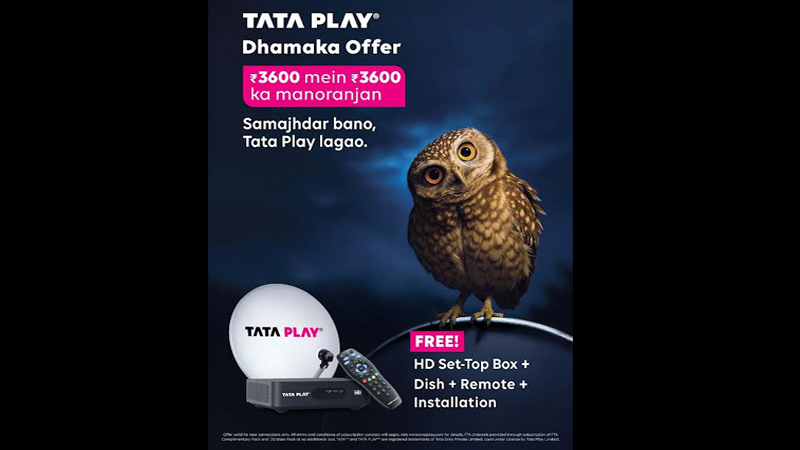
    MUMBAI: Looks like wisdom has feathers and sometimes, long ears. Tata Play’s latest campaign, Samajhdar Bano, Tata Play Lagao, brings a wise owl and a witty donkey to the screen, using humour and AI-powered storytelling to help viewers make smarter entertainment choices this festive season.

    India’s leading content distribution platform has once again flipped the script on conventional advertising, embracing generative AI to create two unforgettable characters who do what humans often fail to simplify DTH pricing with clarity and wit.

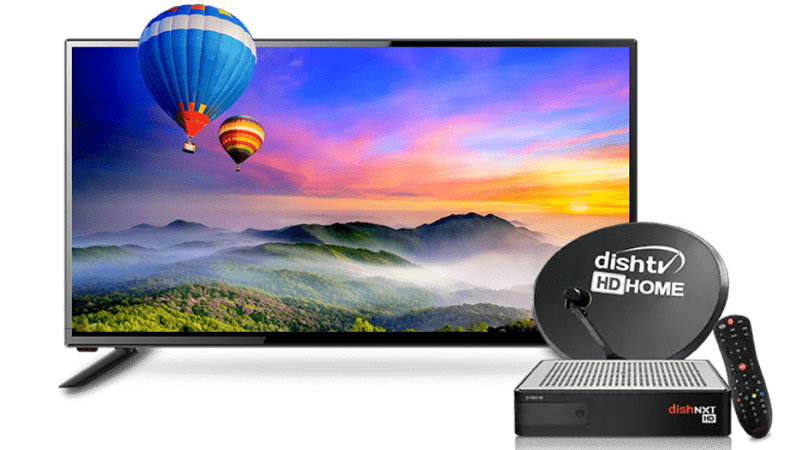
    The campaign focuses on Tata Play’s Dhamaka Offer, which ensures that every rupee of the subscriber’s Rs 3,600 upfront deposit goes entirely towards content consumption. In return, subscribers also receive an HD set-top box, dish antenna, remote, and free installation essentially transforming the deposit into full-value entertainment. The films also spotlight the ease of curating one’s own channel bouquet through the Tata Play Mobile App, giving users complete control over what they watch and pay for.

    Conceptualised and executed by Ogilvy, the brand films use the banter between the owl and the donkey to cut through the clutter of jargon and confusion that often surrounds DTH offers. In their quirky yet relatable exchange, they bust myths around hidden costs, driving home Tata Play’s promise of transparency and unbeatable value.

    Tata Play head of marketing communications Krishnendu Dasgupta said, “This campaign is anchored in a simple yet powerful insight when it comes to entertainment, people crave clarity over clutter. While choices are many, the confusion is even more. Through our witty owl and donkey duo, we’re making decision-making feel effortless and fun. The use of generative AI adds an innovative layer, enhancing the storytelling Tata Play is known for.”

    The nationwide ATL rollout spans key television genres and channels, with special focus on Hindi-speaking markets, Maharashtra, West Bengal, and all four southern states. The campaign also extends across digital and social platforms, ensuring it meets viewers wherever they watch, scroll, or stream.

    Ogilvy India chief creative officer Sukesh Nayak added, “It’s smart to choose Tata Play because it truly delivers the best value for money. Our wise owl and witty donkey serve as unlikely gurus of entertainment, showing that whether you’re brainy or braying, the smart choice is Tata Play.”

    With its smart storytelling, Gen-AI magic, and genuine value proposition, Samajhdar Bano, Tata Play Lagao isn’t just another festive campaign, it’s a reminder that in the age of endless options, clarity and a little humour go a long way.

    Viewers can avail of the offer via tataplay.com, the manage section of the Tata Play Mobile App, or their nearest dealer.

  • Dish TV bets on Bigg Boss to flog its all-in-one smart television

    Dish TV bets on Bigg Boss to flog its all-in-one smart television

    MUMBAI: Dish TV is gambling that Indians will pay for convenience. The satellite broadcaster’s new VZY smart television—which bundles DTH and streaming services into one device—has signed on as sponsor of Bigg Boss in both Hindi and Kannada, hitching itself to two of the country’s most-watched reality franchises.

    The move, announced on October 1st, positions VZY as co-powered sponsor for Bigg Boss Hindi on Colors SD and HD, and co-presenting sponsor for Bigg Boss Kannada on Colors Kannada and JioHotstar. It is a calculated play: Bigg Boss commands fanatical viewership across demographics, making it prime real estate for a brand trying to crack both urban and regional markets.

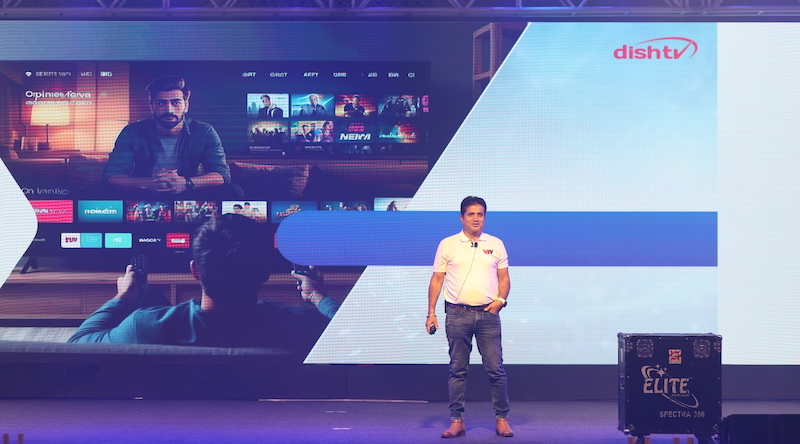
    VZY’s pitch is straightforward. Rather than juggling a set-top box, streaming stick and multiple subscriptions, buyers get everything bundled into the television itself. The company also offers integrated set-top box models for those who prefer that route. It is, Dish TV claims, “India’s first truly integrated smart TV.”

    “Bigg Boss, both in Hindi and Kannada, is a show that unites audiences across regions and languages,” says Dish TV India chief revenue officer Sukhpreet Singh. The association, he argues, positions VZY as the television of choice for “entertainment-first consumers”.

    A JioStar spokesperson described Bigg Boss as “India’s most-watched and talked-about reality series” and welcomed VZY’s “smart TV proposition” as complementing the show’s immersive experience. The language suggests both parties see this as more than a typical sponsorship—it is a bet on convergence.

    Whether Indian consumers will embrace an all-in-one television remains uncertain. The market is crowded with smart TV brands, streaming devices and DTH providers, each vying for living-room dominance. Dish TV is wagering that eliminating complexity—and piggybacking on Bigg Boss’s massive audience—will give VZY an edge. The show’s millions of viewers will soon discover if the pitch holds up.

  • Dish TV dives into smart TVs with VZY range

    Dish TV dives into smart TVs with VZY range

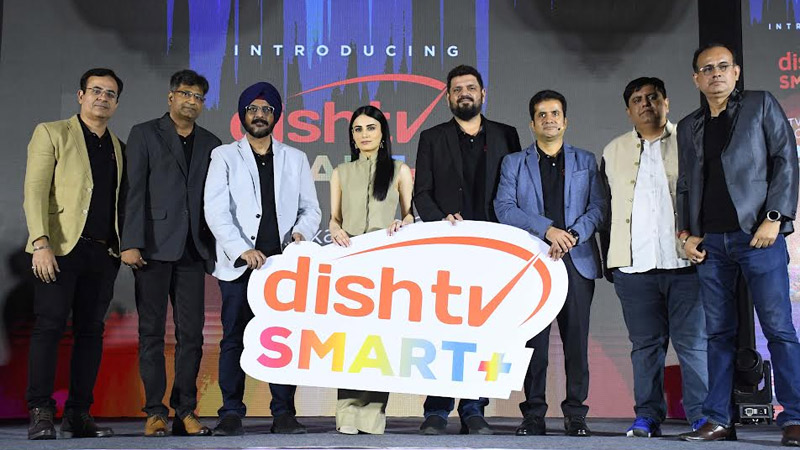
    NEW DELHI: Dish TV India has moved beyond broadcasting into the living room device market, unveiling its first integrated smart TV line, branded VZY. The launch marks a decisive pivot for the country’s largest DTH operator, which has been in Indian homes for more than 22 years.

    VZY—short for Vibe, Zone & You—is pitched not as just another television but as an “entertainment universe”. Select models come with a built-in Dish TV set-top box, fusing live TV with OTT streaming.

    “Entering the integrated Smart TV segment is a bold step into a future where content, technology, and convenience converge. This is more than a television. It is a universe where live TV, OTT, smart features and design converge,” said chief executive and executive director Manoj Dobhal. 

    Added chief revenue officer Sukhpreet Singh: “The modern Indian family is digital-first and experience-driven, seeking a screen that transforms everyday viewing into a curated, immersive experience—one that goes beyond being just a television. VZY delivers exactly that: a integrated entertainment universe that puts choice, convenience, and quality in the consumer’s hands.” 

    The VZY range spans 32-inch HD screens to 55-inch 4K UHD QLEDs, with Dolby Vision, HDR10 and up to 350 nits brightness. All sets run on Google TV 5 (Android 14), with built-in Chromecast, AirPlay, voice remotes and Dolby Audio, with premium models adding Dolby Atmos. Storage goes up to 32GB with 2GB RAM.

    Prices are pitched across segments with sweeteners such as Rs 0 down payment and 0 per cent EMI. 

    Distribution will cover metros as well as tier-2 and tier-3 markets, through both retail and online platforms.
    With VZY, Dish TV is betting on India’s hunger for convergence: a single screen that marries satellite reliability with the streaming age.

  • HGS shines bright as Nxtdigital and One bag top honours at BCS Ratna 2025

    HGS shines bright as Nxtdigital and One bag top honours at BCS Ratna 2025

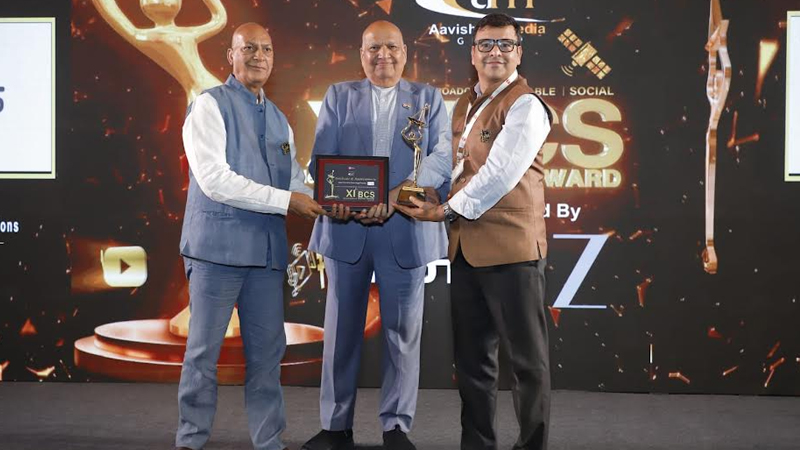
    MUMBAI: When it rains, it pours and for Hinduja Global Solutions (HGS), the shower has been of accolades. Its media and broadband arms, Nxtdigital and Oneott International LTD. (OIL), have walked away with top honours at the 11th BCS Ratna Awards 2025, one of India’s most coveted forums celebrating media and entertainment excellence.

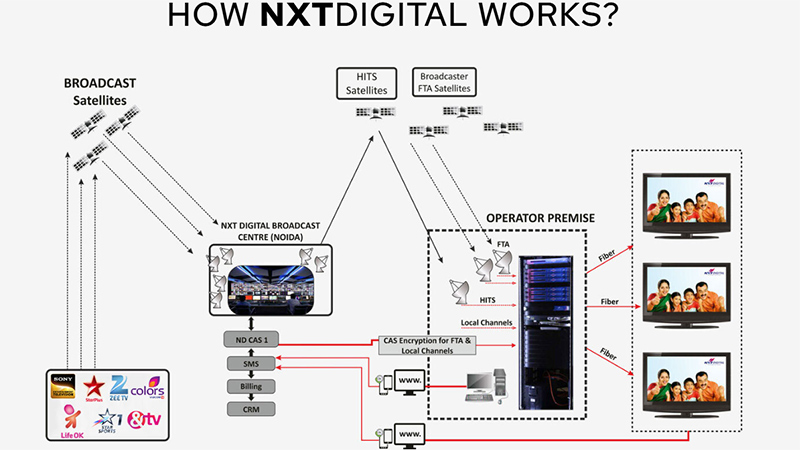
    Nxtdigital, HGS’ digital content distribution platform, snagged the ‘Most Innovative Technology Provider’ trophy. At the heart of its win is the Nxthub model, a first-of-its-kind framework that has reimagined last-mile delivery. From India’s only Headend-in-the-Sky (HITS) platform to broadband and OTT, Nxtdigital has stitched it all into one integrated ecosystem. The result? Satellite-powered digital connectivity that now stretches across 4,500 pin codes, powering Tier 2, Tier 3 and rural India with digital TV and high-speed broadband.

    Meanwhile, One Broadband among India’s top internet service providers was named ‘Best ISP Delivering in Rural India’. Its formula is deceptively simple yet deeply effective: aggregating local cable operators and last-mile owners through its Strategic Alliance Partner (SAP) model. This has enabled the brand “One” to deliver not just broadband, but OTT-ready services and AI-enabled customer support into homes and businesses beyond the metros.

    “This recognition is more than a feather in our cap, it’s a responsibility,” said Nxtdigital media businesses CEO and HGS whole-time director Vynsley Fernandes. “It reaffirms our mission to build platforms that simplify access, scale with ease, and solve real-world challenges through innovation.”

    For HGS, the wins come as it doubles down on customer-first strategies and scalable tech investments, bolstering its footprint across both bustling cities and underserved villages. At BCS Ratna 2025, the message was clear: whether beaming via satellite or streaming via fibre, HGS is scripting a connectivity story that’s as inclusive as it is innovative.

  • Loss signal as Dish TV Q1 net loss widens and revenue falls 27.6 percent

    Loss signal as Dish TV Q1 net loss widens and revenue falls 27.6 percent

    MUMBAI: Dish TV is still buffering and this time, the picture is far from rosy. The DTH operator reported a consolidated net loss of Rs 94.53 crore for the quarter ended 30 June 2025, a sharp plunge from the mere Rs 1.56 crore loss logged in the same period last year. Revenue from operations shrank 27.6 per cent year-on-year to Rs 329.36 crore, down from Rs 455.29 crore, while total income stood at Rs 334.11 crore, aided by Rs 4.75 crore in other income.

    Costs, however, went in the opposite direction. Total expenses climbed to Rs 425.92 crore, led by operating costs of Rs 142.10 crore, employee benefits of Rs 42.16 crore, and finance costs of Rs 64.12 crore. Depreciation and amortisation weighed in at Rs 105.28 crore.

    The company’s balance sheet remains under heavy strain, with accumulated losses now exceeding equity share capital, pushing net worth into the negative. Adding to the pressure is a long-running license fee battle with the Ministry of Information and Broadcasting (MIB) Dish TV has set aside Rs 4,680.24 crore for the dispute, even as the MIB slapped a fresh Rs 8,735.67 crore demand (including interest) in April, which the operator is contesting in court.

    For FY25, Dish TV’s annual loss narrowed to Rs 487 crore from a massive Rs 1,966 crore in FY24, but total revenue slid 15.6 per cent to Rs 1,567.6 crore, hit by falling Pay TV subscriber numbers and stagnant ARPU. EBITDA came in at Rs 529.1 crore, with margins easing to 33.75 per cent from last year’s 40.6 per cent.

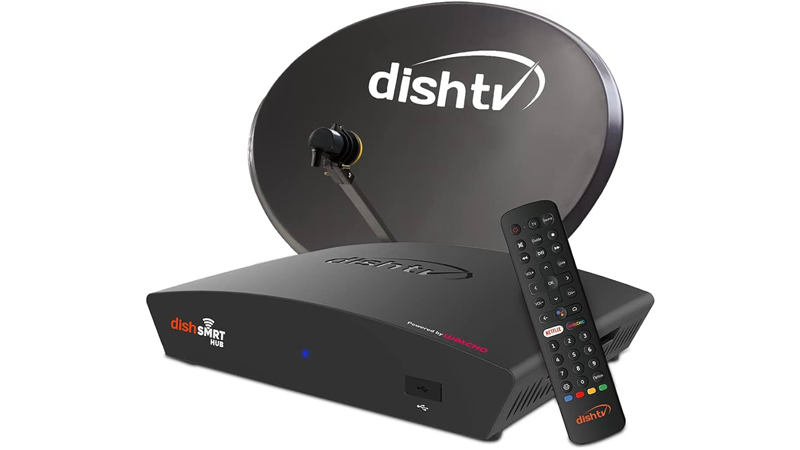
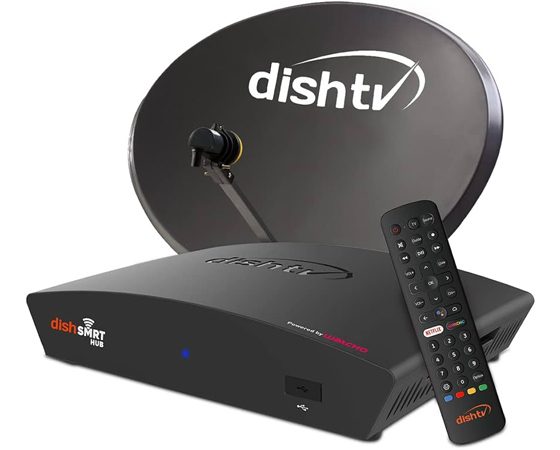
    While exceptional items of Rs 335.4 crore, a pre-tax loss of Rs 152.3 crore, and mounting competition from DTH rivals, cable, telecom, and OTT players dimmed the outlook, the company is leaning on its digital play. Watcho, its OTT arm, crossed the 10 million paid subscriber mark, thanks to premium content aggregation from Jiocinema, Zee5, Sonyliv and others, the launch of Watcho Fliqs for creator-led IP, and smart set-top boxes like the Dish Smrt Hub.

    The strategy now is clear: retain quality subscribers, push regional content, and keep hybrid offerings in the mix because in today’s entertainment market, staying in the game might just be about playing on every screen available.
     

  • GTPL Hathway is gearing up to make a major HIT

    GTPL Hathway is gearing up to make a major HIT

    MUMBAI: In India’s noisy and fragmented cable TV business, where margins are wafer-thin and infrastructure is patchy, a quiet revolution is taking place above our heads. Quite literally. India’s largest cable and broadband heavyweight ) GTPL Hathway is choosing to break free from the grid by betting Rs 100 crore on a satellite-led future—launching a full-scale headend-in-the-sky (HITS) operation designed to reach the parts of India that cable lines and fibre have long ignored.

    This isn’t just an upgrade—it’s a strategic reinvention. One that could upend the rules of TV distribution across Bharat.

    From a sleek new uplink facility in Ahmedabad, GTPL is readying to transmit up to 900 encrypted, multiplexed channels using 12 leased C-band transponders from Indonesian satellite operator Telkomsat. The satellite signal is then beamed directly to local cable operators (LCOs), who deliver the final mile using existing coaxial or fibre lines.

    It’s a model that minimises capital investment on the ground while maximising reach—especially in India’s 130–135 million “TV-dark” homes, a figure larger than the total households of Japan and the UK combined.

    GTPL’s move brings it squarely into competition with the Hinduja-owned Nxt Digital, India’s sole HITS player until now, with a subscriber base of 2.4 million. Nxt has played a steady game—providing shared uplink infrastructure, cost-effective Cope (cable operator premises equipment) units priced between Rs 10.6–14 lakh, and STBs from Chinese OEMs like Changhong and Telesystems.

    Its model helped reduce per-subscriber costs dramatically—from Rs 17 to just Rs 7 in some cases—offering a lifeline to smaller MSOs (multi-system operators) struggling to comply with the regulatory shift to digital. But Nxt’s footprint, while impactful, has remained modest.

    GTPL is playing a different hand: scale. With 9.6 million cable TV subscribers already on its rolls and strongholds in Gujarat, Maharashtra, West Bengal and Bihar, the company intends to transition its entire base to HITS delivery over the next 24–36 months.

    The vision? To be India’s largest HITS network—leapfrogging not only NXT, but also traditional satellite and cable architectures in one swoop.

    This pivot is part of GTPL’s broader Rs 350 crore capex outlay for FY25, which also includes new broadband infrastructure and set-top boxes. The numbers make a compelling case: annual bandwidth costs, currently pegged at Rs 85–90 crore, are expected to drop by half.

    Projected revenues from the satellite platform are equally promising. At 750,000 subscribers, GTPL expects to generate Rs 99 crore annually. That rises to Rs 132 crore with 1 million users. Add Rs 12 crore more from leasing infra services to 50 smaller MSOs (each paying Rs 2 lakh per month), and the business case becomes hard to ignore. Even under conservative adoption rates, the Rs 100 crore investment could be recouped within 12 months.

    GTPL’s HITS play isn’t just about broadcast—it’s also about backend tech. The company is deploying a hybrid business model: retailing bundled TV channel packs to consumers via LCOs while offering platform-as-a-service tools to smaller MSOs. These include uplinking, encryption, conditional access system (CAS) and subscriber management system (SMS) solutions—effectively turning GTPL into a SaaS player for the cable industry.

    In a sector plagued by fragmentation, opaque billing, and outdated infrastructure, this modular model could be just the reset smaller operators need to stay compliant, competitive, and cost-efficient.

    India’s content delivery puzzle has long had three flawed pieces. OTT remains hobbled by poor last-mile broadband in rural areas, with even state-run BharatNet struggling to scale. DTH, while more pervasive, has long suffered from weather interference, installation costs, and churn. Cable TV, once the lifeline of urban India, is now chafing under regulatory pressure and infrastructure bottlenecks.

    Enter HITS—a model that combines the robustness of satellite delivery with the flexibility of LCO-based distribution. It’s weather-resistant, quick to deploy, and doesn’t require laying new wires in hard-to-reach zones.

    As a middle path, HITS may well become the delivery standard for Bharat—the vast, value-driven, and still under-connected expanse of Indian television.

    Surprisingly, GTPL’s skyward expansion has not been met with resistance. The All India Digital Cable Federation (AIDCF) has raised concerns around broader issues like OTT content regulation and fair play by broadcasters—but not specifically about the HITS model. Major networks such as Zee, Sony, and Disney Star have voiced concerns over the pricing dynamics introduced under TRAI’s NTO 3.0 framework, but formal objections to GTPL’s satellite platform are absent.

    The company, for its part, holds a valid grant of permission agreement (GOPA) from the ministry of information & broadcasting (MIB) and has participated in various TRAI and MIB consultations, signalling alignment with the regulatory ecosystem.

    GTPL’s pricing strategy will be region-specific, with affordability and adaptability built in. Final LCO-facing Cope and channel package rates will be finalised once broadcasters declare new pay channel prices. While margins may initially be tight, the long-term play is rooted in volume, retention, and backend monetisation.

    This isn’t a short-term stunt—it’s a structural realignment of India’s content delivery infrastructure.

    GTPL’s satellite push is more than just a tech upgrade—it’s a masterstroke of timing, vision, and market understanding. With one eye on underserved consumers and the other on the backend tech stack, the company is positioning itself as both a broadcaster and a platform.

    As India’s media future heads skyward, GTPL’s HITS move may well become the blueprint for digital inclusion across Bharat.

    (If you are an Anime fan and love Anime like Demon Slayer, Spy X Family, Hunter X Hunter, Tokyo Revengers, Dan Da Dan and Slime, Buy your favourite Anime merchandise on AnimeOriginals.com.)

  • Watcho and Cloud TV switch on seamless entertainment for smart TV viewers

    Watcho and Cloud TV switch on seamless entertainment for smart TV viewers

    MUMBAI: India’s smart TV experience is about to get a major upgrade as Dish TV’s Watcho joins forces with Cloud Walker’s Cloud TV OS to make premium content more accessible than ever. The collaboration aims to redefine home entertainment, integrating Watcho’s vast catalogue with over 200 smart TV brands, eliminating multiple logins and simplifying access for millions of users.

    As the smart TV market in India grows at a CAGR of 13.11 per cent, the demand for seamless, cost-effective entertainment is skyrocketing. This partnership taps into that trend, ensuring Watcho’s content reaches over 18 million users across 6 million devices, bringing together a world of movies, web series, live sports, and more all on one platform.

    With Cloud TV OS, Watcho subscribers can log in once and start streaming instantly, without juggling multiple credentials. The interface will also feature personalised recommendations, a ‘continue watching’ option, and exclusive Cloud TV Bundles, offering bundled subscriptions to leading OTT platforms.

    Dish TV chief revenue officer Sukhpreet Singh said, “At Dish, we recognize that the future of entertainment lies in seamless, integrated experiences. With smart TVs becoming the preferred screen for digital content, our partnership with Cloud Walker is a strategic step toward making Watcho’s vast content library effortlessly accessible to millions. By embedding Watcho into Cloud TV OS, we are not just expanding our reach—we are redefining how India consumes content, making premium entertainment more intuitive, affordable, and frictionless.”

    Cloud TV co-founder & COO Abhijeet Rajpurohit said, “We’re thrilled to partner with DishTV Watcho under CloudTV Bundle, making premium entertainment more accessible than ever. With Watcho’s vast content library now integrated into 200 plus TV brands, over 12 million viewers can seamlessly access to top OTT platforms all through a single subscription.”

    With Cloud Walker serving over 10 million users, this collaboration positions Dish TV Watcho at the forefront of India’s evolving connected TV landscape. As more consumers shift towards Connected TV (CTV), this move ensures that Watcho remains a key player in the industry.
     

  • Tata Sons get CCI nod for additional slice of Tata Play

    Tata Sons get CCI nod for additional slice of Tata Play

    MUMBAI: Tata Sons has secured regulatory approval to tighten its grip on the arguably the country’s best distribution platform operator. The Competition Commission of India (CCI) has given the green light for the conglomerate to acquire a 10 per cent stake in Tata Play from Temasek-owned Baytree Investments. 

    The transaction, valued at an unconfirmed $100 million, boosts Tata Sons’ ownership to 70 per cent, with Walt Disney holding the remaining 30 per cent. Industry insiders note the deal values Tata Play at a modest $1 billion—a significant haircut from its earlier publicly known  $3 billion valuation.

    “Commission approves the acquisition of certain additional shareholding in Tata Play Limited by Tata Sons Pvt Ltd  from Baytree Investments (Mauritius) Pte Ltd,” the CCI declared in Monday’s press release.

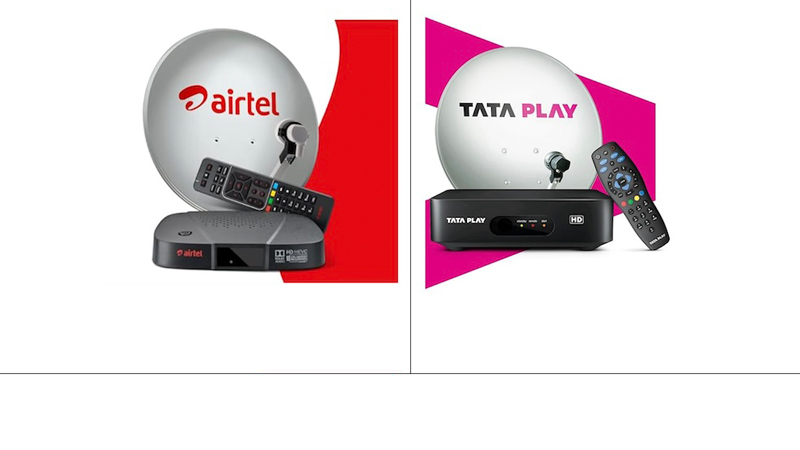
    The move comes as speculation swirls around a potential merger between Tata Play and Bharti Airtel’s rival DTH business. Both companies are reportedly engaged in bilateral talks, with sources suggesting a share-swap arrangement that would make Airtel the majority stakeholder with 52-55 per cent of the combined entity. Tata Play’s stakeholders, including Disney, would retain 45-48 per cent, according to unconfirmed media reports.

    Airtel’s senior management is expected to lead the merged business, with Tata angling for two board seats. 

     For Tata Sons, already registered as a “Systemically Important Non-Deposit Taking Core Investment Company” with the Reserve Bank of India, this represents another strategic tile in its sprawling business mosaic.

    The regulatory approval mirrors last year’s CCI nod for Bharti Airtel’s acquisition of a 20 per cent stake in its DTH arm, Bharti Telemedia, from Warburg Pincus affiliate Lion Meadow Investment Ltd  for Rs 3,126 crore.

  • Tata Play & Airtel Digital TV to Merge in Share Swap Deal – Economic Times report

    Tata Play & Airtel Digital TV to Merge in Share Swap Deal – Economic Times report

    MUMBAI — A major consolidation is underway in India’s television distribution landscape as Tata Play and Airtel Digital TV prepare to merge through a share swap, according to a report by The Economic Times.

    The deal will see Airtel holding over 50 per cent of the combined entity, effectively consolidating India’s direct-to-home (DTH) sector as viewers increasingly shift towards digital streaming platforms.

    Tata Play, formerly known as Tata Sky, is India’s largest DTH provider and was previously a joint venture with Rupert Murdoch’s News Corp, which was later acquired by Disney in 2019. Through this merger, Airtel will gain access to Tata Play’s 19 million subscribers, bolstering its strategy to bundle telecom, broadband, and DTH services.

    The merger follows the 2016 consolidation of Dish TV and Videocon d2h, and comes amid Reliance Industries and Disney combining Star India and Viacom18 to form JioStar, now India’s largest media company with Rs 26,000 crore revenue in FY24.

    First reported by The Economic Times on 8 October 2024, the agreement is expected to be formalised soon. Airtel is likely to control 52-55 per cent of the new entity, while Tata Play’s shareholders, including Disney, will retain 45-48 per cent. Tata Sons is reportedly seeking two board seats, while Airtel’s management is expected to lead operations.

    “This will be a non-binding agreement,” an executive familiar with the deal told the newspaper. “Both parties have been engaged for months and are expected to resolve outstanding issues quickly.”

    Both companies are valued at between Rs 6,000-7,000 crore each. Airtel Digital TV operates under Bharti Telemedia Ltd, a wholly owned subsidiary of Bharti Airtel. Tata Sons owns 70 per cent of Tata Play after acquiring Temasek Holding’s 10 per cent stake in April 2024 for Rs 835 crore, valuing Tata Play at $1 billion, down from its pre-pandemic $3 billion.

    Disney is expected to maintain its stake in the merged entity. As of September 2024, the two DTH providers had a combined 35 million subscribers, generating over Rs 7,000 crore in revenue in FY24. Tata Play also serves 500,000 broadband customers.

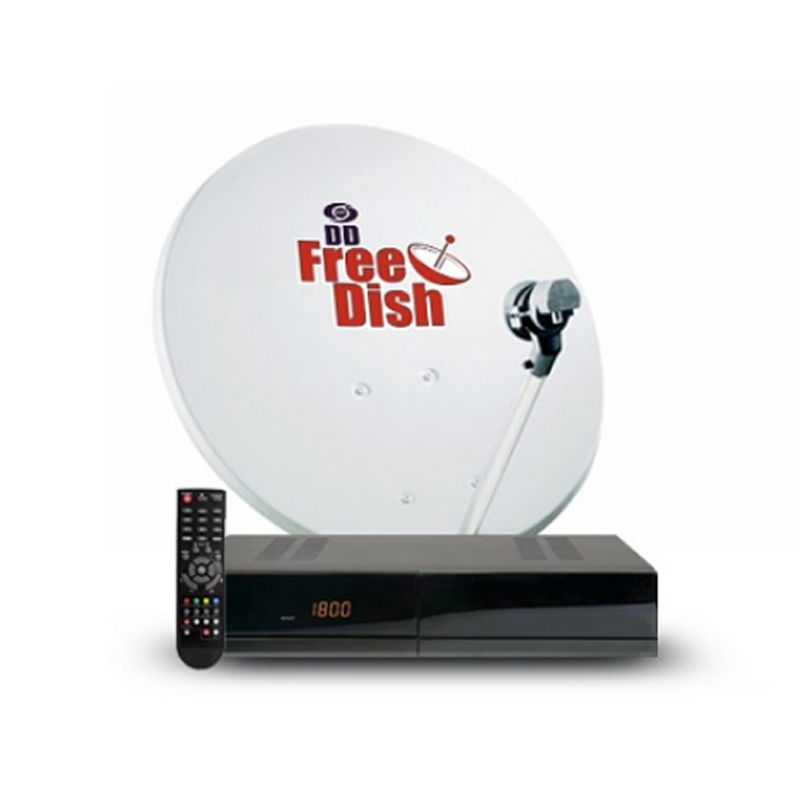
  • DD Free Dish concludes Mpeg 2 e-Auction, securing 60 television channels for 2025-26

    DD Free Dish concludes Mpeg 2 e-Auction, securing 60 television channels for 2025-26

    MUMBAI: Pubcaster Prasar Bharati  has successfully concluded its annual DD Free Dish MPEG-2 slot e-auction, allocating spaces to 60 television channels for the period of 1 April 2025, to 31 March 2026. Major broadcasters securing slots include: Sony, JioStar,  Zee, Sun TV. Some of the prominent channels on FreeDish include  names such as Colors Rishtey, Sony Pal, and several leading news channels including Aaj Tak, ABP News, and Republic TV Bharat.

    The auction process, initiated on 9 January, introduced a structured categoriastion system comprising six distinct buckets, each tailored to specific channel genres and languages. The pricing strategy implemented a two-round system, with initial reserve prices ranging from Rs 3 crore for regional channels to Rs 15 crore for Hindi/Urdu general entertainment channels. The second round saw these figures increase incrementally, with the highest bracket reaching Rs 16 crore.

    To ensure quality content delivery, Prasar Bharati has instituted a new 75 per cent alignment rule, mandating that three-quarters of a channel’s content must align with its declared genre and language. The broadcaster maintained its standard eligibility criteria, requiring participating channels to possess valid ministry of information and broadcasting permits for Indian distribution.
    LIST

    The auction’s participation structure included a Rs 1.50 crore fee for MPEG-2 slots, while MPEG-4 slots commanded Rs 3 lakhs. Notably, the framework extended participation rights to international public broadcasters operating under relevant guidelines.

    This auction follows a successful 2024 edition which generated Rs 1,156 crore through the sale of 64 slots, indicating the platform’s sustained commercial viability in India’s broadcasting landscape. The slight reduction in allocated slots from 64 to 60 suggests a possible strategic recalibration of the platform’s capacity utilisation.
    The successful conclusion of this auction reinforces DD Free Dish’s position as a significant distribution platform in India’s television market, particularly for reaching audiences in regions where paid television penetration remains limited.