Category: Comment

  • Challenges behind setting up BARC India & the way forward

    Challenges behind setting up BARC India & the way forward

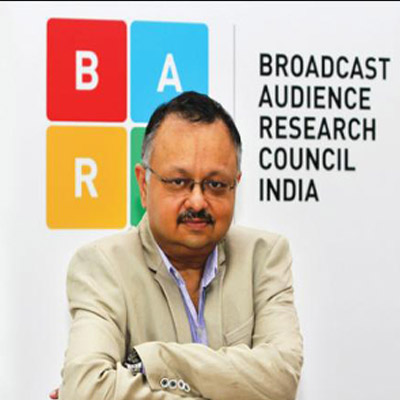
    The launch of Broadcast Audience Research Council (BARC) India, a joint industry body, in 2015 was one of the biggest developments of the year in the media industry. Its launch was proof that the three stakeholders, namely the broadcasters, advertisers and media agencies could come together and set up a robust and transparent system in the quickest possible time.

    The key to BARC India’s successful rollout was in building a strong team along with top-notch vendor partners who understood our needs. The advantage was that we were able to find the right resources who ensured that the smooth ratings rollout happened within the shortest possible time.

    BARC India was formed with an aim to bring in robustness and transparency to the whole television viewership measurement system. This was achieved by introducing the sector to the new Watermarking technology for measuring TV viewing habits and also using the New Consumer Classification System (NCCS) for understanding the lifestyle of the viewer. The sector now gets a more inclusive and fair representation of  “What India Watches.

    BARC India has been set up at the back of huge expectations from the industry that needed a new TV viewership measurement body, which was representative and robust. This meant that we had to ensure that each and every step by BARC India was being taken in the right direction. It was for this that we decided to make technology our differentiator to give precise and high fidelity ratings. We also opted for a multi-vendor model, instead of a single vendor who could do everything. The reason for this was that we wanted to make the system more robust, high integrity and cost efficient. This has worked in our favour. 

    The other big challenge we faced was funding. We innovated here as well and ensured a smooth financial closure without the stakeholders investing cash in the business. 

    2015 was the year for the launch of a new television viewership measurement system in the country and now in 2016, we will only grow better and bigger. The first in the pipeline is the rollout of the meter management company, which we had announced last year as a JV with TAM India. The year will see the industry using television viewership data on the go with our new BARC India app. The work on Universe Estimation Study has begun and the findings will throw relevant insights on the landscape of television viewership measurement in the country.   

    The year 2016 will see the industry try another innovation christened as VAL-ID (Video Asset Linked ID), which will make life easier for the ecosystem for monitoring and measuring commercials.

    After a fruitful 2015, BARC India is all geared up for a great 2016.

    (These are purely personal views of Broadcast Audience Research Council (BARC) India CEO Partho Dasgupta and Indiantelevision.com does not necessarily subscribe to these views.)

  • Scope of Innovation in Print Advertising

    Scope of Innovation in Print Advertising

    On 16 April, 2000, The Times of India arrived on the doorsteps of millions of Indian households with its front page blank! It carried only the masthead, but no editorial. Blank!! That was the surprise of all surprises. It was our way of telling the world that the dot com revolution had arrived with the launch of indya.com. It took the country by shock! It hit newsreaders right between their disbelieving eyes. You couldn’t help but notice it. Unbelievable, even to us! 

    When we thought of the idea, we didn’t use fancy words like ‘innovation in print’. All we wanted to do was dominate the news! Take over everything. To shell-shock the world, to be remembered! Nobody had dared mess with the front page of Times of India until then. It took a great client like Sunil Lulla, the then CEO of Indya.com, to inspire, appreciate and see this idea right through. 

    Today we see a lot of messy stuff on the front pages of most newspapers. These are not innovations, but desperations. If we want to truly break through, we’ll have to do much better than what we currently see. More importantly, we’ll have to have the inventive fire of a madman and the inspired blessing of a visionary client. Else all we’ll get is paper pulp.

    It is getting harder for advertising to stand out in print. Because editorial is so much more exciting. And it’s being generated at the speed of life. So forget about creating print ads like we did before. We are competing with gripping news. And the only way to fight news is to make news. 

    Which explains the work many of us have seen for Benetton a few years ago. The ‘Unhate’ campaign. It dared to create news. A childlike argument for peace and reconciliation, it created huge buzz. The big pictures of world leaders kissing each other in the print ads incited strong reactions. The campaign was withdrawn but the brand’s point was made. The work won worldwide accolades and the Grand Prix at Cannes.

    To truly innovate in print advertising, it’s important to remember that we are not competing with other ads, we are competing with news. What’s your news? If you have inspired guts, you’ll find the answer. Innovation in print is not a topic of discussion. It’s not an ad… it’s an act!

    (These are purely personal views of BBDO India chairman and chief creative office Josy Paul and Indiantelevision.com does not necessarily subscribe to these views.)

  • Changing role of media agencies

    Changing role of media agencies

    2015 rang true with the anticipated digital growth and enthusiasm. 

    Mobile led and ‘download the app’ became an almost expected byline. Popular companies saw fit to do away with the very website that built their brand. And, the viewers that most marketers wanted to tap were multi-screen. Further, media measurement across the multi-screens and the rural customer became legitimate. Year-on-Year the only constant with media has been change, some more disruptive; but nonetheless – it’s change.

    With the changing role of today’s ‘Media Agency’ they can aptly be re-branded -‘Media Brand Smith.’

    Closely aligned to client, brand and their customer, the Brand Smith must blend brand ethos and objective in a compelling story using relevant prevailing media and technology. Drawing from ensuing trends, the Brand Smith must craft unique SMART business solutions – that resonate to the brand’s core, echoing it to its customer perception. A ‘meaningful’ solution will be all the better! The Brand Smith further needs to be unwaveringly consistent in this task. They need to be the brand, the agency, the expert and the customer all rolled into one for a full perspective.

    Media Agencies need to unlearn, learn, re-learn, adapt, collaborate and communicate in a way they have never done before within their own internal teams as well as external stakeholders to sprout ideas and talent, both latent and new. Integration is a tough word and matter does not integrate easily. Integration of people, tech, knowledge and skill on the foundation of an idea, takes time; so does the idea itself.

    The job is to be informed and inform, what to do and when, as well as what not to do. It is not about the razzle-dazzle of data, beacons, 3D printing, Augmented Reality, etc., or the immediate big ticket spend but a deeper articulation of the insights, the technology-devices details, its uses, the brand fit and campaign fit – for the long term.

    We live in exciting times with a flood of opportunities and technologies coming out like from a Pandora’s Box. Channelising this and helping clients navigate through a shifting-sands media-devices landscape to unleash its potential will not only win new customers, build engaging-entertaining content but more so create some memorable brand and client experiences!

    2016 is a year we wholeheartedly look forward to. Undoubtedly it will be interesting with some amazing work and of course a very challenging one.

    (These are purely personal views of Havas Media Group, India & South Asia CEO Anita Nayyar and Indiantelevision.com does not necessarily subscribe to these views.)

  • Media During Deluge in Chennai

    Media During Deluge in Chennai

    MUMBAI: The historic floods of the Century that ravaged Chennai in December 2015 has a few lessons for the media. It was the absence of national media in the initial stages of the deluge and the criticism thereof that brought to fore the relevance of local FM radio to the rescue of the battered people of the flooded plains. The first casualty in the flooded areas was electricity and the hype TV channels wanted to create reached none of the victims who were in dire straits to contact the volunteers for help. It was Chennai Live FM 104.1 that managed an Operational Command post of sorts, connecting the victims and a number of cell phone armed individual volunteers and NGOs. Other FM channels followed suit. All India Radio’s RJs came handy with total service agenda on all days, that followed heaviest dumping of 1605.2 mm by the rain clouds, which accounted for 130 per cent above the average rainfall of the North East monsoons this season in Chennai alone. The rainfall on 2 December in Chennai alone is more than the annual rainfall of some of the wettest European nations.


    The realty greed that respected no water places and flood plains converted most of the storm water courses and marsh lands into posh colonies in the last two decades that turned into watery graves in Chennai this monsoon. People unwittingly removed bamboo bushes and trees along the bunds of ponds and reservoirs that added to the misery of Chennai. The Chemberambakkam lake, the life line of Chennai swelled so perilously forcing release of 34500 cusecs of water or 10 lac litres of water per second through the sluice gates on 2 December, inundating fields, homes, the airport and heavily inhabited areas of Chennai mercilessly that never experienced the fury of floods in the past. The only communication possible was through radio waves when the mobile towers, telephone exchanges and sub stations of electricity got flooded and most of the facilities came under water and crashed. Most of the flooded areas had water reaching the first floor forcing power shut down in the whole city. 


    The mapping of flood plains and the storm water course in all the inundated areas of Chennai would have taken a few years of survey but the Mother Nature has delineated the same in a matter of few days along with pain and misery to the people of Chennai. Such details documented by radio stations and TV channels would be of great use to the policy makers in the near future. 


    But resilience of Chennai was on its best when most of the FM stations started receiving calls from the affected people raising SOS messages. The Radio Jockeys continued without respite to broadcast the distress calls reaching the NGOs and individuals ready to help. Some anchors were checking and telling Chennaiites the rainfall details, road conditions, water level, actual need of the victims from torch light, charge packs, food, milk, blankets medical assistance and so on. An IAF helicopter could evacuate a pregnant woman to labour room with active and accurate information from the spot through cell phone to the studio. The contact details from where the help could reach the affected areas was best done by the FM stations of Chennai when hundreds of land phones with government control rooms could not aid rescue when they went dumb due to gushing waters. One thing was very clear, Muslims, Hindus, Christians, Jains… every one joined hands breaking the divisive barriers of religion, language or the region. Foremost in the minds of the rescuers was safety of human beings and rescue operations by teams and individuals with the tinge of heroism. Humanity was reigning supreme. 


    It was the innovative skills of Radio Jockeys that kept repeating dos and don’ts for the people in the hours of emergency. While the TV channels contributed immensely to show the external world, the gravity of the devastation with a bird’s eye view of affected areas, the Army, Navy and NDRF could do the rescue operations efficiently. The credit for huge resource mobilisation of relief materials and efficient dissemination of information and resultant coordination goes to the electronic media of Chennai especially, the FM Radio. 


    Chennaiites are proud of their media at its best in the cause of relief and rebuilding. 


    (The views expressed here are those of the author and Indiantelevision.com need not necessarily subscribe to the same.)

  • Mobile Video Monetization: The Way Forward

    Mobile Video Monetization: The Way Forward

    Players in the delivery ecosystem must start collaborating to increase the size of the market; Simplified regulatory framework that facilitates content-sharing needed.


    Digivive’ flagship, award-winning application nexGTv offers users entertainment across multi-screen devices, be it mobile, tablets or laptop/PCs. The choice of entertainment is a suite of movies, Live TV, TV shows and videos. Besides ranking among the top 10 entertainment applications in App Stores, nexGTv has also won ‘The Best Digital Experience’ award at the prestigious World Communication Awards 2014, at London. It runs seamlessly across 2G/EDGE/3G/4G and Wi-Fi networks across platforms such as Android, iOS, BlackBerry and Tizen, enabling consumers to remain entertained irrespective of bandwidth limitations and operating platform. Digivive’s General Manager of Marketing Gaurav Sahni shares his perspective about monetizing one of the most exciting mediums  today – mobile video.


    Rise of OTT and Mobile Video


    Wikipedia defines ‘entertainment’ as ‘a form of activity that holds the attention and interest of an audience, or gives pleasure and delight’.That definition is so very apt, but nowadays, another keyword is rapidly becoming part of this definition – i.e. mobile. It’s increasingly becoming the new mass media for information, supplanting traditional media channels, even the internet, which is starting to bring about an inevitable transformation into our social, demographic, and psychological work environment, impacting usage and consumption in varied ways.


    Going forward, mobiles and more especially smartphones are expected to become the main drivers or carriers of all kinds of information including entertainment. Like in the rest of the world, the ongoing digital transformations in India including access to mobile internet are progressively catalysing the move towards rapid penetration of mobile entertainment including audio and video (includes Live TV, Video on Demand, TV Shows, Movies, etc.). However, growth in mobile video is expected to far outstrip the growth in mobile audio. In fact, reports indicate that mobile video is expected to form nearly three quarters of all mobile data traffic by 2019. A recent Ericsson Mobility report highlighted that India showed the fastest growth in net additions to mobile subscriber base followed by China. Current IAMAI and KPMG reports indicate that India will have around 236 million mobile internet users by 2016, and 314 million by 2017 which echoes reports from other sources.


    The explosive growth of smartphones in India over the past couple of years indicates the keenness of Indian audience to stay abreast and embrace the latest digital trends. Social media,  content sharing, e-shopping and permeation of 3G networks together with steps undertaken by  telcos to launch 4G have created an undisputable case for mobile entertainment, fuelling enthusiasm of content players and consumers alike. In fact, a lot of industry experts expect 4G to be an inflection point for mobile video in the coming years. Rising incomes, including a proportionately higher spend on entertainment is expected to be supplemented by an increase in internet-enabled devices, cheaper handsets and availability of affordable data plans.


    According to industry reports, mobile video traffic exceeded 50 percent of traffic for the first time in 2012 globally. With data consumption outstripping voice traffic on networks and growing in an unprecedented manner, demand for content availability over multiple platforms such as mobile, tablets and laptops, is creating new opportunities for content owners, providers, publishers, communication service providers as well as technology providers, all of which are now working to not only understand, but also leverage these radical changes for business growth and consumer benefit.


    With service provider owned data pipelines stabilizing, internet access has revolutionized the entire Over-the-Top (OTT) business ecosystem, not only creating new businesses but also newer ways of working that have opened  up innovative revenue streams even for existing ventures. OTT video – a prime example is growing in leaps and bounds, aided by a growing consumers push to consume video anywhere, at any time and on any device.


    These developments are not just affecting existing industry dynamics and setups but throwing up new challenges that have the power to format entire media, mobile, entertainment, regulatory and content ecosystems. While the Indian OTT market is comparatively nascent, it nevertheless holds substantial promise for both free (ad-supported) and paid (subscription-led) services, given the rising smartphone penetration in most cities, citizen and subscriber mobility, complimented by enhanced data usage on the networks.


    Monetizing Mobile Video: The Way Forward


    Industry participants including providers of services, content, publishers and broadcasters alike have started to realize the potential of mobile TV and video. For content owners and broadcasters, OTT means new distribution opportunities, opening avenues to expand viewership and revenue both via paid and advertising models. For service providers, OTT creates a new revenue generation opportunity by ensuring delivery of entertainment at the last mile, using their data pipes.


    With mobile emerging as one of the most effective and truly personal advertising platforms, companies are devising ever newer strategies to target and engage audiences via innovative and programmatic formats which are increasingly becoming self-learning or intuitive. Aside from social networking, mobile are the ‘media of choice’ for online bookings, financial transactions, shopping, essential services, entertainment and even employee communications. Tech companies are increasingly using such platforms for targeted communication while promoting their apps.


    However, like all industries, the rapidly evolving mobile video domain in India is also facing its own set of emerging challenges. As competition over viewers, advertisers, eyeballs, content, pipelines, hits, and subscriber lifecycles intensifies, lack of consensus over reporting metrics, pricing, formats, network quality of service (QoS) and likely revenue share serve to dampen an otherwise spirited and expanding market. There is also uncertainty over choosing mobile web or in-app channels for meeting advertisement targets.


    In spite of the above concerns, mobile video has proven to be highly successful in several markets, delivering higher user engagement on mobile devices. Of late, advertisers have also started to embrace video advertisements on the mobile as part of their cross-channel strategy.


    The question about having an ideal monetization framework that splits available revenue evenly between all players however, remains. In order to monetize the opportunity, content owners, broadcasters, aggregators, publishers and service providers need to start collaborating to first define and increase the size of the addressable market. With television and cable transmission going digital, there exists tremendous scope of expansion under the framework of the Government’s digital inclusion program especially in Tier 2 and 3 cities and beyond for an entertainment-starved populace.


    Much like the Cable and TV industry, creation of a progressive and simplified regulatory framework that facilitates content-sharing, boosts access to mobile entertainment, and ensures a level playing field for all is also a critical need of the hour. While ‘content’ is increasingly regarded as King, the industry is rapidly realising the role and importance of every other player including aggregators, advertisers as well as bandwidth owners or service providers to ensure the creation, curation and delivery of a complete and immersive mobile entertainment experience.


    Additionally, while advertising has been and remains a proven mechanism to earn revenue or recover cost, players in the digital and mobile ecosystem as well as end-consumers, are increasingly realizing that creation and distribution of quality content is costly. ‘Subscription’ therefore, appears to be a viable mechanism being slowly embraced by industry players.


    To each his own seems to be the short-term mantra and while one can see the entire category being rife with innovative business models, an ideal or near perfect monetization structure seems to be sometime away, given the proliferation and abundance of not just content, but also mobile TV apps, together with a consumer base that is highly fragmented and keen on ‘digital snacking’.


    The information shared, views and opinions expressed in this article are those of the author and do not necessarily reflect the scope of knowledge and views of The Indian Television Group, its affiliates, or its employees.


  • Disney’s theatrical production Beauty and the Beast makes an impressive debut

    Disney’s theatrical production Beauty and the Beast makes an impressive debut

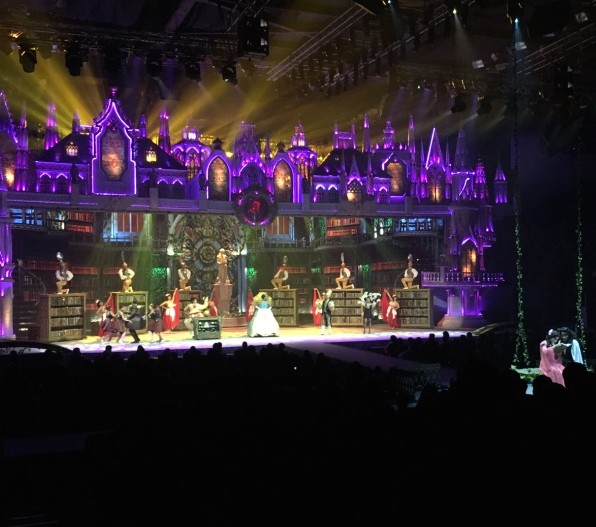
    MUMBAI: When the history of Indian theatre is written sometime in the future, historians will make references to the pre- and the post Beauty and the Beast era. The date: 21 October 2015 will be enshrined as the day that changed the Indian musical theatre world.  That was the day that Disney India had an exclusive premier of its one-year in production international theatrical musical.


    It played to a packed house consisting of Bollywood stars, directors, producers, broadcasters, distributors and a select high net worth client list of Citibank credit cards (apparently it willingly shelled out Rs 5 crore plus to be associated with the musical) at the National Sports Club of India Dome  in Mumbai.


    Disney India MD Siddharth Roy Kapur  was cock-a-hoop with delight about the response to the first performance. “We have made an impression on an audience consisting of entertainers, I think the rest of the journey is going to go well,” he said. “Disney International chairman Andy Bird responded to my wanting to bring Disney’s Theatrical Production to India with Beauty and the Beast. I thank him for that.”


    Watching spell bound were film makers and artistes and industry barons like Subhash Ghai, Vishal Bhardwaj, Emraan Hashmi, Mini Mathur, Ashutosh Goawarikar, Kabir Khan, Vishal Bharadwaj, Rakeysh Omprakash Mehra, Vidya Balan, Soha Ali Khan, Imtiaz Ali, Anurag Basu, Nikhil Advani,Ayan Mukherji, Rajkumar Hirani, Shabhani Azmi, Aditya Roy Kapur, Madhur Bandarkar,  Anil Thadani and Raveena Tandon, Manyata Dutt, Ronnie and Zarina Screwvala, Amol Gupte, Ramesh Taurani, Nikhil Meswani, Sudanshu Vats, Tarun Katiyal, among scores of others.


    It’s not as if attempts at upping the ante for musical theatre have not been made in India before. We had the showman Alyque Padamsee period in the eighties during which shows like Evita (probably the longest running musical in India), Jesus Christ Superstar, Joseph and his Amazing Technicolor Dreamcoat, Greased Lightning,  The Wiz, sold out  in venues like the NCPA, Sophia, Homi Bhabha Auditorium in Mumbai. Then in recent times his daughter Rael Padamsee has been behind the production of  The Sound of Music and Grease. But while their efforts are praiseworthy, they pale in comparison to the scale that Beauty and the Beast was mounted upon.


    Estimates are that Disney India may have signed a cheque of Rs 22 crore for the production which will continue in Mumbai for 10 more shows till end this month. Delhi is slated to follow later. Most of the other Indian efforts at adaptations have budgets which are a fraction of that.


    The “different international” experience commenced at the venue itself with clear signage directing the traffic to the red carpet. And there was Siddharth Roy Kapur to greet his guests along with international Disney executives. Once you got past the gates with your bar coded ticket giving you entry you walked into a spacious dome theatre constructed for the Beauty and the Beast.  Rows upon rows of seats gave it a seating capacity of about 2,000-2,500.


    A half moon shaped lavish and large set (160 ft x 70 ft – normally used only for big budgeted televised awards shows) with ramps bisecting the front audience vertically and horizontally (giving it an H-shape) from those in the middle greeted the fans. Constructed by art director Varsha Jain at a cost of around Rs 1.80 crore, it is the centre-piece of Beauty and the Beast’s Indian production. It probably is the biggest stage ever constructed by Disney for the show anywhere in the world.  Then there is the attention to detail and quality that Varsha has put into the set. You are almost lulled into believing that you are in the village with its marketplace, its main street, the roadside café, the bakery, the vendors, where Belle lives in her small home with her father.


    A few minutes later the stage transforms itself into the dark castle wherein resides the young prince who was cursed to be a beast on account of his arrogance with a beggar. From the dark exterior to a well lit dining room to the dungeon to the balcony to the porch the shifts happen quickly.


    3D Projection mapping, LEDs and large curtains, focused lighting – every trick in the book has been used to make the transitions easy and seamless. Additionally the props too have a sense of realism about them as compared to the shoddy fare that we often see in use in Indian theatrical productions.


    It obviously is director Vikranth Pawar ‘s (he of Jhumroo and Zangaroo fame) vision. And choreographer Terence Lewis has ridden with him and made use of every inch of the stage and beyond for the sequences during the play. And he has adapted the choreography including styles such as ballet, jazz, breakdance and even classical ballroom dance depending on the scene’s requirement.  One of the most memorable ones is the opening act  with the song “Belle” wherein there are more than 60 actors and dancers on stage and you can’t seem to get enough of any of them.  Overall the production has more than 250 dancers back stage through its 130 minute duration.


    The musical  score  – like the original by Alan Menken  – by Leslie Lewis for the Indian edition is flawless. Recorded in Prague with a Philharmonic Orchestra and mastered in Los Angeles, it is  Lewis at his best, something that even Menken has acknowledged.


    The costumes by Gavin Miguel – around 400 of them – for both the lead and support cast  again are a class apart and make the show probably the biggest costumed theatrical show in India so far. The impeccable make up and hair design by Pallavi Devika take us back to the time and the place of the fairy tale. Vocal trainer Suzanne D’Mello  is reported to have put her heart and soul into lifting the singing performances of the cast, and it shows for almost the entire duration of the show.


    The technical production and direction are another highlight of the show and credit for that should go to Vikas and Vevek Menon (from Production Crew). Apparently, the lighting is being technically directed and programmed by foreign crew while it is being manned by Beckett.


    Onto the cast. The deep, grain rich voice of Amitabh Bachchan as he introduces the long-loved fairy taile sets the tone for its quality. Meher Mistry as Belle fits  and plays her part to the T, effortlessly becoming self-assured, vulnerable, loving, distraught and then joyous as she progresses from her ennui with the boor Gaston to meeting up with the Beast and her disgust with him transforming into love. And her singing is near perfect throughout as she easily croons the demanding tracks with lyrics from famed writers such as Howard Ashman and Tim Rice.


    Edwin Joseph essays the role of the Beast with finesse and a gentle touch. His agony at being trapped in an ugly body, his realization of his love for Belle, his heroic battle while saving Belle from the wolves, and then his joy at his transformation into a handsome young prince are emotion-filled scenes. The young 21 year older is someone we will hear a lot more of both for his acting and singing prowess. Veteran actor Bugs Bhargava as Cogsworth and Nichols Brown as Lumiere, Sanjiv Desai as Maurice, and the actors who play Lefou, Gaston, Mrs Potts, Ayudh Jatin Parikh (as Chip) deserve a mention for fabulous performances.


    In summation,  Disney India’s Beauty and the Beast was made in India but better than world class. And that was echoed by almost all those who watched it to the end. Something that should warm the cockles of Narendra Modi’s heart.

  • What the MSM-ESPN deal means

    What the MSM-ESPN deal means

    MUMBAI: When the enemy looks extremely threatening, you bring in allies to help you do battle. And if your ally is a friend-turned-foe of your enemy, it makes the war that much more interesting. And combative.


    We are referring to what’s about to happen in the Indian sports television ecosystem. Multi Screen Media India (Sony Entertainment Television India) has struck a deal with the US-based mega sportscaster ESPN Inc under which it will be helping bring in the brand once again into the country as its partner. 


    ESPN was Star TV’s former mate in Asia until 2012 wherein they ran and distributed channels in several Asian countries jointly including in India.


    The current MSM-ESPN agreement is for the long term and will be for India and the Indian sub-continent. The joint venture will see new co-branded sports channels, a multisport website and an app rolling out over the next few months. The companies will also be working together to develop original sports programs, something which has been sorely lacking in India, with the exception of a couple of them on Star India’s sports channels.

     
    As a first step of the union, MSM’s sports channel Sony Kix is being rebranded as Sony ESPN.


    It’s interesting that the two are exchanging vows at the time they are.


    The IPL bids are slated to take place next year and the buzz is that Star India is likely to take the bidding to close to the $4 billion mark for all rights. With Sony-ESPN combining their resources and putting up a common front, they are quite likely to put up a stiff fight against Star India. (Others who could throw in a bid include Zee Telefilms and Discovery’s Eurosport). And not just at the IPL auctions but also for all the other sports rights when they come up for renewal.


    “However,” a high ranking Sony International Television executive told Indiantelevision.com, “there is no way pricing for the IPL could go up four times. A multiplier of two times or three times over the previous bid is conceivable but above that will make it a big losing proposition.”


    What’s also of interest is how Disney is shaping its presence in India. Its family entertainment initiatives got a leg up when it invested in acquiring Ronnie Screwvala’s UTV a few years ago. This deal gave it access to UTV Motion Pictures as well as channels such as Bindass and Hungama.


    Disney India recently severed its distribution alliance with IndiaCast Media – part of Viacom18 and has been reaching out to satellite and cable TV platforms to strike deals with them directly.


    Now with Disney’s sports offshoot ESPN partnering with MSM, one will have to see whether the latter’s distribution arm MSM Media Distribution resources will be used to shore up the efforts of the distribution team at Disney India. Or will the two work totally independently?


    Sports programming in India is likely to also get a shot in the arm. ESPN is renowned for its studio-based shows and live coverage of events. Live sports content in the deal includes major US college football (including the College Football Playoff and comprehensive coverage of the college football bowl season); major US college basketball (including the March Madness NCAA Championship Tournaments); NCAA college sport championships from baseball, softball, lacrosse, soccer; Boxing (including Premier Boxing Champions and ESPN’s Big Fights Library); X Games; ESPN Films Emmy-Award Winning 30 For 30 documentaries amongst others.


    What’s also relevant is the fact that both ESPN and MSM are going hell for leather after digital content properties too. The duo has its eyes on developing a co-branded localized multi-sport website and app, which will provide coverage of cricket, football, tennis, the NBA, badminton, field hockey and more. The sports content – both video and text – will be delivered on MSM’s OTT platform Sony Liv, and sonyliv.com as well as highly popular cricket portal espncricinfo.com.  


    Each of these websites, television channels and OTT platforms will be used to cross promote each other, giving it tremendous marketing heft.  Additionally, their social media presence is to be beefed up in order to give sports lovers a destination to engage with each other and with their sports stars.


    The whole in this case is going to be greater than the sum of the two parts. With the entry of a rejuvenated ESPN into India, the entire sports broadcasting ecosystem is likely to see rapid improvements as more money will be pumped in by both Star and the American sportscaster along with MSM.


    And this is going to be a win-win for the various administrations, associations, players and professionals,   team owners, and vendors involved in sports and sports broadcasting – and ultimately the sports fan.

  • Mark Zuckerberg on Internet.org and Net Neutrality in India

    Mark Zuckerberg on Internet.org and Net Neutrality in India

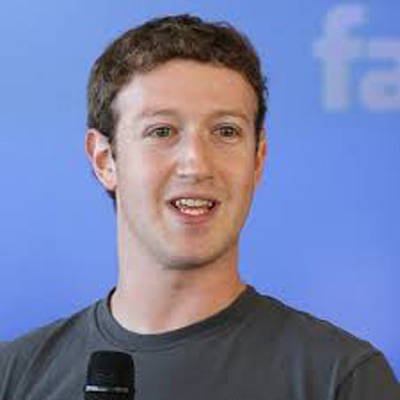
    Over the past week in India, there has been a lot written about Internet.org and net neutrality. I’d like to share my position on these topics here for everyone to see.

    First, I’ll share a quick story. Last year I visited Chandauli, a small village in northern India that had just been connected to the internet.

    In a classroom in the village, I had the chance to talk to a group of students who were learning to use the internet. It was an incredible experience to think that right there in that room might be a student with a big idea that could change the world — and now they could actually make that happen through the internet.

    The internet is one of the most powerful tools for economic and social progress. It gives people access to jobs, knowledge and opportunities. It gives voice to the voiceless in our society, and it connects people with vital resources for health and education.

    I believe everyone in the world deserves access to these opportunities.

    In many countries, however, there are big social and economic obstacles to connectivity. The internet isn’t affordable to everyone, and in many places awareness of its value remains low. Women and the poor are most likely to be excluded and further disempowered by lack of connectivity.

    This is why we created Internet.org, our effort to connect the whole world. By partnering with mobile operators and governments in different countries, Internet.org offers free access in local languages to basic internet services in areas like jobs, health, education and messaging.Internet.org lowers the cost of accessing the internet and raises the awareness of the internet’s value. It helps include everyone in the world’s opportunities.

    We’ve made some great progress, and already more than 800 million people in 9 countries can now access free basic services throughInternet.org. In India, we’ve already rolled out free basic services on the Reliance network to millions of people in Tamil Nadu, Maharashtra, Andhra Pradesh, Gujarat, Kerala and Telangana. And we just launched in Indonesia on the Indosat network today.

    We’re proud of this progress. But some people have criticized the concept of zero-rating that allows Internet.org to deliver free basic internet services, saying that offering some services for free goes against the spirit of net neutrality. I strongly disagree with this.

    We fully support net neutrality. We want to keep the internet open. Net neutrality ensures network operators don’t discriminate by limiting access to services you want to use. It’s an essential part of the open internet, and we are fully committed to it.

    But net neutrality is not in conflict with working to get more people connected. These two principles — universal connectivity and net neutrality — can and must coexist.

    To give more people access to the internet, it is useful to offer some service for free. If someone can’t afford to pay for connectivity, it is always better to have some access than none at all.

    Internet.org doesn’t block or throttle any other services or create fast lanes — and it never will. We’re open for all mobile operators and we’re not stopping anyone from joining. We want as many internet providers to join so as many people as possible can be connected.

    Arguments about net neutrality shouldn’t be used to prevent the most disadvantaged people in society from gaining access or to deprive people of opportunity. Eliminating programs that bring more people online won’t increase social inclusion or close the digital divide. It will only deprive all of us of the ideas and contributions of the two thirds of the world who are not connected.

    Every person in the world deserves access to the opportunities the internet provides. And we can all benefit from the perspectives, creativity and talent of the people not yet connected.

    We have a historic opportunity to connect billions of more people worldwide for the first time. We should work together to make that happen now.


    DISCLAIMER: The author of this article is Facebook Chairman and CEO. The article has been sourced from Mark Zuckerberg’s Facebook page. The views expressed here are purely personal views of the author and Indiantelevision.com does not necessarily subscribe to them.

  • Will Apple’s iOS 9 adblocker kill mobile ads?

    Will Apple’s iOS 9 adblocker kill mobile ads?

    With online privacy becoming a growing global concern, adblocking has risen in popularity among consumers over the past couple of years. To date, adblocking has largely been confined to desktop, but this week it comes to mobile with the release of iOS 9, which will come with integrated options for Content (read ‘advertising’) Blocking built-in.


    The issue of online privacy is not just about brands seeing what consumers are up to online; people are also concerned about their family knowing what they are doing online. Predictably, this is largely about pornography. According to Thinkbox research last year in the UK, 16-34s now spend 15 minutes a day watching porn and don’t want to reveal this private browsing behaviour.


    But it is the issue of advertising personalisation, targeting and retargeting that concerns our industry, and various desktop tools and systems have emerged to counter these activities. ZenithOptimedia’s recent research with GlobalWebIndex across 34 markets and 200,000 panellists highlights the take-up of privacy products:


    1. Almost half the global internet population (46 per cent) has used ‘private browsing’

    2. 40 per cent have deleted cookies so that websites can’t track their behaviour

    3. 27 per cent have used an adblocker so that brands can’t track and serve personalised advertising

    4. 15 per cent have used anti-tracking software that combines all three of the above into one.


    So, adblocking is a clear issue for our industry. iOS 9 will enable people to switch on adblocking at the device level. The effect though will be to block ads that appear within the browser. As well as keeping a person’s mobile web activities private, mobile adblocking will have the added twofold benefit of speeding up page-load times (important on mobile) and reducing data charges (even more important).


    Understandably there is much consternation among the advertising fraternity, particularly on the publisher side. However the concern is somewhat misplaced, certainly from a marketer’s perspective. The reason for this is that the majority of mobile adblockers will work on mobile browsers but not in-app. And 84 per cent of mobile time spent is in-app (source: Flurry). With that in mind the initial impact of iOS9 will be limited. In the longer term, though, we see the impact of iOS9 Content Blocking being threefold:


    1. It will accelerate the demise of the mobile web banner. This no bad thing and it is frankly surprising that the banner (a legacy format of the desktop environment) ever made its way onto mobile devices in the first place.


    2. It will accelerate the growth of native in-app mobile advertising (e.g. newsfeed advertising). This advertising is by definition integrated with the user interface and therefore a better experience, generally yielding better results for advertisers too. We have adjusted our spend forecasts based on the Apple announcement: native to represent 25 per cent of display advertising by 2017 globally (source: ZenithOptimedia).


    3. As a result of points 1 and 2, the creative/production process will need to adapt to take account of the rise of native formats and the move away from standardised formats.


    DISCLAIMER: The author of this article is ZenithOptimedia chief digital officer. The article has been sourced from ZenithOptimedia’s website. The views expressed here are purely personal views of the author and Indiantelevision.com does not necessarily subscribe to them.

  • Why Google’s new structure is good news

    Why Google’s new structure is good news

    Google has announced a major overhaul of its corporate structure. The new structure creates a holding company which is called Alphabet. This will comprise a collection of companies, the largest of which will be Google. Within Google will sit key services such as Search, Maps, Chrome, YouTube and Android. Outside of Google will sit projects such as Fiber and Nest. The full announcement can be seen here on the new Alphabet website https://abc.xyz/ . In addition to the restructure there are several key management changes, the most notable being the elevation Sundar Pichai to Google CEO.


    Google has long been considered part of the fabric of the internet. In many respects it has been the electricity of the web powering many consumer journeys, driving the largest share of advertising experiences globally, and certainly contributing significantly to the digital economy.


    Google Corp itself was constructed like an electrical circuit running in series (rather than in parallel). The challenge with a ‘series’ organisational structure is that if there is a break in one part of the chain, the whole is affected. For example if Google Glass fails it affects Google’s core business (if only in terms of public perception). Similarly, if Google (Search) faces regulatory scrutiny it is likely to negatively impact the development of other areas of the business such as Nest, driverless cars etc.


    The move to operate in parallel (through the creation of Alphabet) rather than in series will have a positive impact in several areas:


    1.    Innovation: Google can take its moonshots and fail without impacting the core business of advertising. Having this structure should therefore enable it to be more agile.


    2.    Regulation: Google has come under significant regulatory scrutiny particularly in Europe where it has already restructured to give a more singular approach to the authorities. The new structure will protect it further from regulatory issues by enabling it to fight one product/company at a time.


    3.    Organisation: With the new structure the Google subsidiary will be better able to focus on the reorganisation of its advertising and technology sales operations which require closer integration if the company is to take full advantage of its market-leading integrated advertising stack approach.


    4.     FaceOff: Facebook has deliberately kept the majority of its operations (FB, Instagram, Oculus) relatively separate from a B2B and consumer point of view, which has resulted in product innovation, advertising success and much less regulatory scrutiny. Although the Alphabet structure doesn’t exactly replicate that of Facebook, it is certainly an implicit acknowledgement of the successful Facebook corporate strategy.


    5.     Investor Relations: Google’s new structure is a clear signal of the arrival of a new finance director. The structural change and the subsequent increase in organisational clarity and transparency will no doubt be a very positive sign to investors.


    (The author of this article is ZenithOptimedia chief digital officer. The article has been sourced from ZenithOptimedia’s website. The views expressed here are purely personal views of the author and Indiantelevision.com does not necessarily subscribe to them.)