Category: Comment

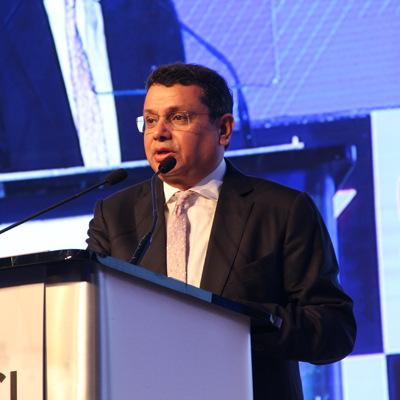
  • Uday Shankar@FICCI Frames 2016: The real digital challenge

    Uday Shankar@FICCI Frames 2016: The real digital challenge

    Good morning.

    Honorable Minister of Communications and Information Technology, Ravi Shankar Prasad Ji, Chairman TRAI R.S. Sharma, Mr. Mukesh Ambani, Ramesh Ji, friends from the world of media and entertainment.

    As co-chair of FICCI’s M&E committee, I have had the opportunity to address you for a few years now. I take this as a rare privilege and hence spend some time thinking through what I should say. A few weeks ago, as I was discussing the theme with some of my colleagues, a young assistant of mine – cocky on youth and his recent admission to Harvard Business School stated rather dismissively that there wasn’t anything new to be said as there wasn’t anything new happening in the M&E sector. While it sounded like a cynical assessment at that time it did set me thinking if there was indeed a grain of truth in what he said. On the surface, it does seem that not much has changed in the last several years except for some incremental growth or decline depending on which vertical you are talking about. Cable TV continues to struggle – struggling to improve its business case, struggling to improve its talent & technology quotient and above all to stay relevant in a rapidly changing world.  DTH, that set out to revolutionize distribution, increasingly seems to be intent on locking its destiny inside an isolated box in a networked world. Even the story of digitalization that started 6 years ago remains incomplete. The advertising revolution of the 90’s when a large number of international and Indian brands were built on television screens, doesn’t seem to be breaking new ground in terms of what I call brand revolution 2.0. Content creators, a community that I belong to, generally seem to be caught in a time warp with the same themes playing in a loop again and again –cursed destinies, rebirth and revenge and deference to elders in public while bickering in private, pretty much sums up what rules national entertainment. The quality of news of course, seems to cause only national consternation, with now even our friendly neighbor taking a pot-shot at our news channels!Over all, it seems the more things change the more they remain the same.  So maybe my colleague was right after all.  

    But then is the picture really as gloomy as this? Because beneath the surface ofentrenched stagnation, quietly – almost stealthily -there is a gigantic disruption playing out. A disruption that’s shifting the ground from beneath our feet.  

    My friends, allow me to recap the year for you.  The creative group to make the most waves last year were 4 youngsters, irreverent enough to take on our entire film industry and then build on that success by putting the entire country under a scanner.  This is a group who has the audacity to have a name so offensive that our news media calls them by their acronym AIB.  Yes, I am talking about All India Bakchod, who are perceived as comedians although this is not a group of people who make imbecile jokes while dressed in a funny manner.  More than once they have set the news agenda for the nation.  They have the gall to take on the combined might of big telcos and Mark Zuckerberg’sFacebook when they felt that the freedom of the internet was being parceled away.  They have used humour to put a spotlight on the state of fire stations in India or for that matter the behavior of the police force. As a group, these four youngsters made more headlines last year than probably all of the creative community put together.

    Very recently one of the pioneers of television entertainment told me that she was so frustrated by the frozen state of traditional media that she was going to create a digital enterprise to tell the stories that traditional media has been too scared to tell.  Of course, I am talking about the totally adorable – Ekta Kapoor.  Think about that for a moment – the person who created the archetype of saas and bahu feels the need to break away from these stifling constraints of the medium that she herself created.  Why?  When that happens, we all need to think hard.

    Friends, the most talked about launch in Indian M&E last year was not a new channel, or a new newspaper or a new production house – actually it was a mobile app that had the gall to ask consumers to go solo.  A call fundamentally at odds with the concept of content consumption in this country, that believes that the entire family watches TV together in the living room. Well, I am talking about the launch of our very own hotstar.  In just about a year, hotstar has been downloaded over 50 million or 5 crore times.  What is the implication of this?  Consider this – more people have watched the English Premier league on hotstar last year than on television.  Yes, EPL was watched by more people on hotstar than on television.  Even for a mass sport like cricket, in the larger cities, hotstar’s watch time is now starting to reach 50% of television.  I urge you to reflect on the potential of that statistic.   This infant service is already becoming a product of habit in India and now this year, my friends, we have set our sight on creating the first global Media & Entertainment product born out of India, when we take hotstar to the rest of the world in a few months.  The numerous and affluent south Asian diaspora which for the longest time has been frustrated by the lack of access to its favourite content will be able to watch cricket, movies and drama through hotstar.  While I am indeed happy for hotstar to be the pioneer, we are very aware that this is a trend that will get replicated again and again, very quickly.

    This colossal shift by no means is limited to television.  At the risk of earning her disapproval, let me share the story of my daughter – she is a serious academic whose job is to analyze the social sector and legislation for a living.  She is always on top of news and opinion articles and yet I have never seen her hold a physical newspaper in her hand.  Her daily dose comes exclusively from the digital universe. Her intake ranges from headlines under 140 characters to ebooks over 14 million characters long. She is a voracious consumer of movies and drama; yet goes to theatres morefor fun than for creative consumption.  Fixed schedule programming sounds as bizarre to her as silent movies to us.  She is obsessed with music but doesn’t own a single CD.  Her near infinite library rests entirely on her iPhone – the same goes for her friends and colleagues who use android devices.

    The world has changed.  There is a tectonic shift happening in our industry right in front of us.And yet, what we see in the world of traditional television is just stagnation. And this stagnation has been made worse by the funny denial that all of us seem to be living in. Even though this change is happening faster than anything we have ever seen, our approach towards it seems to be one of incrementalism.

    I see an even more obsessive desire to protect the antiquated business models that we have painstakingly built over the years and that technology and the youth are decimating like a bull-dozer rolling over glass bottles.  It reminds me of the story of a Japanese soldier who was left stranded and forgotten on a small island in the Pacific. Many years after Japan had lost the war and the world had returned to normal that lone soldier kept guarding that isolated island thinking he was still protecting the Japanese empire.  Herein probably lies the explanation why print companies found it difficult to make the transition to TV and why almost all the digital successes generally come from companies that did not exist even a decade ago.  This is because these are companies and people who are not chained by their legacy businesses.  Just imagine where businesses like Netflix, Twitter and Facebook were a decade ago and what global empires they have created in this short span of time.

    It is pretty clear to me that we are in a battle.  In this battle there are only two options that we have – we can either continue living in denial, hide back in our artificial walled gardens, watching as the bricks crumble down one by one or we can arm ourselves with the sameweapons that our challengers possess, and venture forth into battle, sometimes even against the same businesses that we have created. Change or Perish.

    There is one thing however that will continue to be the same: the power of stories. For those of us who had imagined a world where the so called user generated stories would unseat high quality creativity, the answer comes from the Netflix strategy.  Netflix – the most successful content provider in the US, the challenger to the media behemoths of the west has done so on the back of extremely high quality content, so much so that Netflix’s catalogue today represents the absolute best of American television.

    However there is a twist in the tale here.  No longer is the story enough, within the commoditized consistency of experience.  Technology and creativity are coming together to enhance the experience literally, almost daily.  Indians long used to a life of having to start all over again if the power went for a minute are rapidly getting used to being asked if we want to resume where we left off?

    The new screens have once again highlighted the importance of the story but they have introduced the centrality of the experience at the same time.  Design and engineering can no longer be divorced from the story – this is a radical departure from everything that we were taught all these years.  We learnt this the hard way through hotstar – how small changes even in the browsing experience could lead to dramatic shifts in consumption.  Today I am happy to remark that we at Star probably have more engineers in our team than any other media and entertainment company.  Equally we have more designers and more story tellers than anyone else because those are the three pillars on which we see future M&E companies getting built.  

    Clearly, we need to change the lens with which we look at talent.  In this new world neither technology nor talent will be limited by geographical boundaries.  The best engineers are as likely to be in Berlin as in Bangalore.  We already know that best designers and animators for Hollywood no longer need to be there – because they are already in Goregaon and let’s not forget our very own Priyanka Chopra who is the first home grown star of a truly global show.  We are looking at a truly global world.  But this global world has no patience for traditional forms of reverence.  At Star, we are grappling with this everyday – when we inducted culturally diverse talent we had to create space for that cultural diversity to exist. But that’s easier said than done.  Technology going global, talent going global also means adoption of a new tradition.

    Recently, I just saw amazon.in selling cow dung cakes online.  This humblest of the humble, the most traditional of fuels, being sold at 350 bucks for a small packet.  To me, that is the real power of the world that we are going into.  Power of the idea that someone actually thought that there is a market out there for cow dung cakes and the fact that that market is willing to a pay huge premium for it.  And the fact that the internet has created a market place where ideas and creativity are the only constraints.

    In this context let me draw your attention to the illustrious gathering on this podium today because if India has to make that leap into the new world where everybody can create value for himself or herself by sheer innovation then this group here must deliver.  Minister Ravi Shankar Prasad is not just a senior minister of the Union Cabinet – he holds the key to India’s transition into this digital world.  Chairman R.S.Sharma will have to decide how much can he accelerate that leap, and finally the whole country is looking at Mr. Ambani’s initiative called Reliance Jio to unshackle that truly global, truly democratic dream of 125 crore Indians.  Let’s all hope that they do the right thing, for it is in the best interest of this country they all must succeed.

     

  • Uday Shankar@FICCI Frames 2016: The real digital challenge

    Uday Shankar@FICCI Frames 2016: The real digital challenge

    Good morning.

    Honorable Minister of Communications and Information Technology, Ravi Shankar Prasad Ji, Chairman TRAI R.S. Sharma, Mr. Mukesh Ambani, Ramesh Ji, friends from the world of media and entertainment.

    As co-chair of FICCI’s M&E committee, I have had the opportunity to address you for a few years now. I take this as a rare privilege and hence spend some time thinking through what I should say. A few weeks ago, as I was discussing the theme with some of my colleagues, a young assistant of mine – cocky on youth and his recent admission to Harvard Business School stated rather dismissively that there wasn’t anything new to be said as there wasn’t anything new happening in the M&E sector. While it sounded like a cynical assessment at that time it did set me thinking if there was indeed a grain of truth in what he said. On the surface, it does seem that not much has changed in the last several years except for some incremental growth or decline depending on which vertical you are talking about. Cable TV continues to struggle – struggling to improve its business case, struggling to improve its talent & technology quotient and above all to stay relevant in a rapidly changing world.  DTH, that set out to revolutionize distribution, increasingly seems to be intent on locking its destiny inside an isolated box in a networked world. Even the story of digitalization that started 6 years ago remains incomplete. The advertising revolution of the 90’s when a large number of international and Indian brands were built on television screens, doesn’t seem to be breaking new ground in terms of what I call brand revolution 2.0. Content creators, a community that I belong to, generally seem to be caught in a time warp with the same themes playing in a loop again and again –cursed destinies, rebirth and revenge and deference to elders in public while bickering in private, pretty much sums up what rules national entertainment. The quality of news of course, seems to cause only national consternation, with now even our friendly neighbor taking a pot-shot at our news channels!Over all, it seems the more things change the more they remain the same.  So maybe my colleague was right after all.  

    But then is the picture really as gloomy as this? Because beneath the surface ofentrenched stagnation, quietly – almost stealthily -there is a gigantic disruption playing out. A disruption that’s shifting the ground from beneath our feet.  

    My friends, allow me to recap the year for you.  The creative group to make the most waves last year were 4 youngsters, irreverent enough to take on our entire film industry and then build on that success by putting the entire country under a scanner.  This is a group who has the audacity to have a name so offensive that our news media calls them by their acronym AIB.  Yes, I am talking about All India Bakchod, who are perceived as comedians although this is not a group of people who make imbecile jokes while dressed in a funny manner.  More than once they have set the news agenda for the nation.  They have the gall to take on the combined might of big telcos and Mark Zuckerberg’sFacebook when they felt that the freedom of the internet was being parceled away.  They have used humour to put a spotlight on the state of fire stations in India or for that matter the behavior of the police force. As a group, these four youngsters made more headlines last year than probably all of the creative community put together.

    Very recently one of the pioneers of television entertainment told me that she was so frustrated by the frozen state of traditional media that she was going to create a digital enterprise to tell the stories that traditional media has been too scared to tell.  Of course, I am talking about the totally adorable – Ekta Kapoor.  Think about that for a moment – the person who created the archetype of saas and bahu feels the need to break away from these stifling constraints of the medium that she herself created.  Why?  When that happens, we all need to think hard.

    Friends, the most talked about launch in Indian M&E last year was not a new channel, or a new newspaper or a new production house – actually it was a mobile app that had the gall to ask consumers to go solo.  A call fundamentally at odds with the concept of content consumption in this country, that believes that the entire family watches TV together in the living room. Well, I am talking about the launch of our very own hotstar.  In just about a year, hotstar has been downloaded over 50 million or 5 crore times.  What is the implication of this?  Consider this – more people have watched the English Premier league on hotstar last year than on television.  Yes, EPL was watched by more people on hotstar than on television.  Even for a mass sport like cricket, in the larger cities, hotstar’s watch time is now starting to reach 50% of television.  I urge you to reflect on the potential of that statistic.   This infant service is already becoming a product of habit in India and now this year, my friends, we have set our sight on creating the first global Media & Entertainment product born out of India, when we take hotstar to the rest of the world in a few months.  The numerous and affluent south Asian diaspora which for the longest time has been frustrated by the lack of access to its favourite content will be able to watch cricket, movies and drama through hotstar.  While I am indeed happy for hotstar to be the pioneer, we are very aware that this is a trend that will get replicated again and again, very quickly.

    This colossal shift by no means is limited to television.  At the risk of earning her disapproval, let me share the story of my daughter – she is a serious academic whose job is to analyze the social sector and legislation for a living.  She is always on top of news and opinion articles and yet I have never seen her hold a physical newspaper in her hand.  Her daily dose comes exclusively from the digital universe. Her intake ranges from headlines under 140 characters to ebooks over 14 million characters long. She is a voracious consumer of movies and drama; yet goes to theatres morefor fun than for creative consumption.  Fixed schedule programming sounds as bizarre to her as silent movies to us.  She is obsessed with music but doesn’t own a single CD.  Her near infinite library rests entirely on her iPhone – the same goes for her friends and colleagues who use android devices.

    The world has changed.  There is a tectonic shift happening in our industry right in front of us.And yet, what we see in the world of traditional television is just stagnation. And this stagnation has been made worse by the funny denial that all of us seem to be living in. Even though this change is happening faster than anything we have ever seen, our approach towards it seems to be one of incrementalism.

    I see an even more obsessive desire to protect the antiquated business models that we have painstakingly built over the years and that technology and the youth are decimating like a bull-dozer rolling over glass bottles.  It reminds me of the story of a Japanese soldier who was left stranded and forgotten on a small island in the Pacific. Many years after Japan had lost the war and the world had returned to normal that lone soldier kept guarding that isolated island thinking he was still protecting the Japanese empire.  Herein probably lies the explanation why print companies found it difficult to make the transition to TV and why almost all the digital successes generally come from companies that did not exist even a decade ago.  This is because these are companies and people who are not chained by their legacy businesses.  Just imagine where businesses like Netflix, Twitter and Facebook were a decade ago and what global empires they have created in this short span of time.

    It is pretty clear to me that we are in a battle.  In this battle there are only two options that we have – we can either continue living in denial, hide back in our artificial walled gardens, watching as the bricks crumble down one by one or we can arm ourselves with the sameweapons that our challengers possess, and venture forth into battle, sometimes even against the same businesses that we have created. Change or Perish.

    There is one thing however that will continue to be the same: the power of stories. For those of us who had imagined a world where the so called user generated stories would unseat high quality creativity, the answer comes from the Netflix strategy.  Netflix – the most successful content provider in the US, the challenger to the media behemoths of the west has done so on the back of extremely high quality content, so much so that Netflix’s catalogue today represents the absolute best of American television.

    However there is a twist in the tale here.  No longer is the story enough, within the commoditized consistency of experience.  Technology and creativity are coming together to enhance the experience literally, almost daily.  Indians long used to a life of having to start all over again if the power went for a minute are rapidly getting used to being asked if we want to resume where we left off?

    The new screens have once again highlighted the importance of the story but they have introduced the centrality of the experience at the same time.  Design and engineering can no longer be divorced from the story – this is a radical departure from everything that we were taught all these years.  We learnt this the hard way through hotstar – how small changes even in the browsing experience could lead to dramatic shifts in consumption.  Today I am happy to remark that we at Star probably have more engineers in our team than any other media and entertainment company.  Equally we have more designers and more story tellers than anyone else because those are the three pillars on which we see future M&E companies getting built.  

    Clearly, we need to change the lens with which we look at talent.  In this new world neither technology nor talent will be limited by geographical boundaries.  The best engineers are as likely to be in Berlin as in Bangalore.  We already know that best designers and animators for Hollywood no longer need to be there – because they are already in Goregaon and let’s not forget our very own Priyanka Chopra who is the first home grown star of a truly global show.  We are looking at a truly global world.  But this global world has no patience for traditional forms of reverence.  At Star, we are grappling with this everyday – when we inducted culturally diverse talent we had to create space for that cultural diversity to exist. But that’s easier said than done.  Technology going global, talent going global also means adoption of a new tradition.

    Recently, I just saw amazon.in selling cow dung cakes online.  This humblest of the humble, the most traditional of fuels, being sold at 350 bucks for a small packet.  To me, that is the real power of the world that we are going into.  Power of the idea that someone actually thought that there is a market out there for cow dung cakes and the fact that that market is willing to a pay huge premium for it.  And the fact that the internet has created a market place where ideas and creativity are the only constraints.

    In this context let me draw your attention to the illustrious gathering on this podium today because if India has to make that leap into the new world where everybody can create value for himself or herself by sheer innovation then this group here must deliver.  Minister Ravi Shankar Prasad is not just a senior minister of the Union Cabinet – he holds the key to India’s transition into this digital world.  Chairman R.S.Sharma will have to decide how much can he accelerate that leap, and finally the whole country is looking at Mr. Ambani’s initiative called Reliance Jio to unshackle that truly global, truly democratic dream of 125 crore Indians.  Let’s all hope that they do the right thing, for it is in the best interest of this country they all must succeed.

     

  • Blossoming of a ‘Sunrise’ industry, with help from a ‘Sunshine’ Budget

    Blossoming of a ‘Sunrise’ industry, with help from a ‘Sunshine’ Budget

    Literary purists will expect an op-ed on the media and entertainment sector’s budget wish-list to begin with a reference to Chanakya’s Arthashastra or Manu’s Manusmriti; and rightly so, for they contain priceless public policy principles that hold good even today. However, as someone who is tasked with navigating an innovative organisation that takes pride in its ability to win the hearts of Indians across the world, I will opt for a more recent, relevant and simpler quotation, with a creative twist:

    ‘Kuch to phool khilaye ‘aapne’, aur kuch phool khilane hai Mushkil yeh hai bag me ab tak, kaante ‘kuch’ purane hai’

    Shri Arun Jaitleyji

    Honourable Finance Minister, Government of India

    28 February, 2015, Union Budget Speech

    Last year, the FM listened to two of our industry’s requests. Withholding tax rates on payment of royalty were reduced to 10 per cent and a new, comprehensive foreign trade policy (SEIS) ensured that service sectors are treated at par with their counterparts in manufacturing. This time we have three sets of requests: those that remain from last year, those that are relatively more recent and those that are apply uniformly to all industries.

    Irrespective of which part of the value chain they might represent, all industry stakeholders will agree that consolidation is a much-needed, ongoing business reality that is critical for our sector to flourish. It is only natural that as this trend gathers steam, the regulation should treat our sector at par with other sectors like telecom and software when it comes to the carrying forward of losses in case of a merger or amalgamation. All this needs is an amendment in Section 72A of the IT Act to include the ‘broadcasting, media and entertainment sector.’ The second issue is an oft-repeated one and refers to the treatment of hire charges for transponders as royalty. This leads to an unnecessary tax burden given that there is no transfer of technology taking place. Moreover, even foreign jurisdictions don’t treat these payments as royalty. A simple clarification from the authorities can help resolve this issue.

    Amongst the more recent requests, the first pertains to how we treat payments for content production. These are not ‘fees for technical services’ (u/s 194J) and should instead be treated as ‘work’ (u/s 194C). This will bring clarity regarding the applicability of withholding taxes and help reduce litigation. The other pertains to the sponsorship of ground events. Currently, despite the recipient of the service paying service tax in entirety, set off of CENVAT credit is not available to the sponsorship service provider. This anomaly needs to be corrected.

    The final category pertains to requests that will help industry at large and not just our sector. However, this very aspect makes them even more critical for the M&E sector given our role as a ‘force-multiplier.’ Around $18 billion of investment proposals have been received in electronics manufacturing under the ambitious ‘Make in India’ programme, driven mainly by mobile handset manufacturers. Without high-quality engaging video content, that device with a 5-inch HD screen, 64GB storage and oodles of computing power has practically no use. Media rights are the single largest contributor to almost all sporting leagues in this country. FMCG companies spend a significant portion of their top-line (~10-15 per cent) on advertising because it contributes significantly to their growth. The moot point here is that we power several ecosystems, beyond our own. In keeping with this philosophy the top four requests are (1) reduction in Minimum Alternate Tax (MAT) rate (2) utilisation of credit of Education Cess and Secondary and Higher Education Cess lying in CENVAT balance (3) allowing CENVAT credit on Swachh Bharat Cess (SBC) and (4) removing restrictions on claiming CENVAT Credit.

    While MAT may eventually have lesser relevance (as corporate tax rates and the number of exemptions available to companies reduce), it is in the transitory period that a reduction in the MAT Rate (ideally coupled with the possibility of claiming MAT Credit over an indefinite period of time) can be extremely beneficial. On the issue of Education Cess and Secondary and Higher Education Cess, a simple clarification will suffice. Finally, the Swachh Bharat mission is a unique, much-needed effort that has several positive externalities. So much so, that many organisations are, in their individual capacity, trying their best to support it. At MTV we’ve launched the Junkyard Project, where we are helping with the cleaning and beautification of junkyards. In its current avatar, it is likely that the burden of the SBC will be passed on to the end consumer, after the effects of cascading. Therefore, it will be helpful if CENVAT Credit is allowed on the Swachh Bharat Cess. The government has placed huge emphasis on the ease of doing business. A smooth, seamless flow of tax credits is a critical aim in this regard. As a precursor to the GST regime, it will be helpful if all restrictions on claiming CENVAT credit are removed, including those related to timelines and specific inputs and input services.

    At Viacom18 we take the value of ‘listening deeply’ very seriously. In addition to some of the points above, my op-ed before the last year’s Budget had also argued for a more ‘innovative’ style of dissemination of the budget speech (‘engaging, multi-lingual, audio-visual with info graphics’). I hear that this time around the Finance Ministry has launched an official YouTube channel. Clearly the prashaasan is listening. Now it’s our turn to switch on the TV sets on and grab the popcorn. We’re all ears for Budget 2016.

    (These are purely personal views of Viacom18 group CEO by Sudhanshu Vats and Indiantelevision.com does not necessarily subscribe to these views.)

  • Blossoming of a ‘Sunrise’ industry, with help from a ‘Sunshine’ Budget

    Blossoming of a ‘Sunrise’ industry, with help from a ‘Sunshine’ Budget

    Literary purists will expect an op-ed on the media and entertainment sector’s budget wish-list to begin with a reference to Chanakya’s Arthashastra or Manu’s Manusmriti; and rightly so, for they contain priceless public policy principles that hold good even today. However, as someone who is tasked with navigating an innovative organisation that takes pride in its ability to win the hearts of Indians across the world, I will opt for a more recent, relevant and simpler quotation, with a creative twist:

    ‘Kuch to phool khilaye ‘aapne’, aur kuch phool khilane hai Mushkil yeh hai bag me ab tak, kaante ‘kuch’ purane hai’

    Shri Arun Jaitleyji

    Honourable Finance Minister, Government of India

    28 February, 2015, Union Budget Speech

    Last year, the FM listened to two of our industry’s requests. Withholding tax rates on payment of royalty were reduced to 10 per cent and a new, comprehensive foreign trade policy (SEIS) ensured that service sectors are treated at par with their counterparts in manufacturing. This time we have three sets of requests: those that remain from last year, those that are relatively more recent and those that are apply uniformly to all industries.

    Irrespective of which part of the value chain they might represent, all industry stakeholders will agree that consolidation is a much-needed, ongoing business reality that is critical for our sector to flourish. It is only natural that as this trend gathers steam, the regulation should treat our sector at par with other sectors like telecom and software when it comes to the carrying forward of losses in case of a merger or amalgamation. All this needs is an amendment in Section 72A of the IT Act to include the ‘broadcasting, media and entertainment sector.’ The second issue is an oft-repeated one and refers to the treatment of hire charges for transponders as royalty. This leads to an unnecessary tax burden given that there is no transfer of technology taking place. Moreover, even foreign jurisdictions don’t treat these payments as royalty. A simple clarification from the authorities can help resolve this issue.

    Amongst the more recent requests, the first pertains to how we treat payments for content production. These are not ‘fees for technical services’ (u/s 194J) and should instead be treated as ‘work’ (u/s 194C). This will bring clarity regarding the applicability of withholding taxes and help reduce litigation. The other pertains to the sponsorship of ground events. Currently, despite the recipient of the service paying service tax in entirety, set off of CENVAT credit is not available to the sponsorship service provider. This anomaly needs to be corrected.

    The final category pertains to requests that will help industry at large and not just our sector. However, this very aspect makes them even more critical for the M&E sector given our role as a ‘force-multiplier.’ Around $18 billion of investment proposals have been received in electronics manufacturing under the ambitious ‘Make in India’ programme, driven mainly by mobile handset manufacturers. Without high-quality engaging video content, that device with a 5-inch HD screen, 64GB storage and oodles of computing power has practically no use. Media rights are the single largest contributor to almost all sporting leagues in this country. FMCG companies spend a significant portion of their top-line (~10-15 per cent) on advertising because it contributes significantly to their growth. The moot point here is that we power several ecosystems, beyond our own. In keeping with this philosophy the top four requests are (1) reduction in Minimum Alternate Tax (MAT) rate (2) utilisation of credit of Education Cess and Secondary and Higher Education Cess lying in CENVAT balance (3) allowing CENVAT credit on Swachh Bharat Cess (SBC) and (4) removing restrictions on claiming CENVAT Credit.

    While MAT may eventually have lesser relevance (as corporate tax rates and the number of exemptions available to companies reduce), it is in the transitory period that a reduction in the MAT Rate (ideally coupled with the possibility of claiming MAT Credit over an indefinite period of time) can be extremely beneficial. On the issue of Education Cess and Secondary and Higher Education Cess, a simple clarification will suffice. Finally, the Swachh Bharat mission is a unique, much-needed effort that has several positive externalities. So much so, that many organisations are, in their individual capacity, trying their best to support it. At MTV we’ve launched the Junkyard Project, where we are helping with the cleaning and beautification of junkyards. In its current avatar, it is likely that the burden of the SBC will be passed on to the end consumer, after the effects of cascading. Therefore, it will be helpful if CENVAT Credit is allowed on the Swachh Bharat Cess. The government has placed huge emphasis on the ease of doing business. A smooth, seamless flow of tax credits is a critical aim in this regard. As a precursor to the GST regime, it will be helpful if all restrictions on claiming CENVAT credit are removed, including those related to timelines and specific inputs and input services.

    At Viacom18 we take the value of ‘listening deeply’ very seriously. In addition to some of the points above, my op-ed before the last year’s Budget had also argued for a more ‘innovative’ style of dissemination of the budget speech (‘engaging, multi-lingual, audio-visual with info graphics’). I hear that this time around the Finance Ministry has launched an official YouTube channel. Clearly the prashaasan is listening. Now it’s our turn to switch on the TV sets on and grab the popcorn. We’re all ears for Budget 2016.

    (These are purely personal views of Viacom18 group CEO by Sudhanshu Vats and Indiantelevision.com does not necessarily subscribe to these views.)

  • Straddling the extremes of broadcasting & pointcasting: The coming of age of OOH

    Straddling the extremes of broadcasting & pointcasting: The coming of age of OOH

    It is indeed no more a conjecture that digital is on a growth path and despite it blooming to a large extent in 2015, it has a long way to go! 

    Nevertheless, in the process of its bloom, digital media has pushed media-fragmentation to a new limit of ‘singlecasting,’ arguably completing media fragmentation that travelled from broadcasting to narrowcasting to singlecasting. Yes, mobile is almost a personal media device – to each, her own. 

    The story however does not end here and the media fragmentation has been pushed a tad more by OOH wherein the ‘singlecasting’ – transmission of marketing messages to one person has further been fragmented into ‘Pointcasting’ that is, transmission of marketing messages to a ‘persona’ rather than a person. 

    Persona (Pl. – ‘personae’) is defined as the ‘psychological dimension’ of a person, which in turn is defined as a ‘biological being.’ Because man has emotions and these emotions vary according to time, place and state of mind, which exactly are the elements of the ‘media aperture’, OOH media thin-slices a ‘person’ into personae and creates more adequate situation for message reception and retention.

    There is a new awakening on the exact opposite side of the above argument. Whereas OOH media is capable of pushing the fragmentation further than what digital could achieve, it is dawning on all the professionals that OOH has also emerged as ‘the only broadcast media’ capable of delivering undifferentiated audience as all other media have lost their capacity to deliver the undifferentiated audience because of the increasing complexity of their content and distribution. 

    OOH has no content and has no inherent ‘editorial or content environment’ to provide context to marketing messages. It derives the context from the emotional state of the audience and from her exact psychographic state. The media is always ‘on’ and the message is disseminated indiscriminately to anyone who pays it a fleeting glance! The distinction however, lies in the way the message is received, interpreted and retained. And this totally depends on the prevailing psychographic stage of the person, the role she is playing – of a parent or of a spouse or of an executive or whatsoever. OOH media derives its context from ‘life’.

    It is logical that last year was a great revival year in many senses as we had first begun going beyond 2008 levels. The year didn’t have many remarkable events like the general elections but a lot of things were happening. The industry revenue grew by over 18 per cent in 2015 over that of 2014. The year saw e-commerce blooming to a new high with some very high profile launches like Housing.com. 

    The industry also witnessed a reversing trend in terms of the duration of the OOH campaigns. The years before had witnessed the shrinking of campaign periods and most of the campaigns were 10 – 15 days. There were very few three months or six months campaigns, albeit annual sites remaining in fashion. Last year, we saw emergence of Apple, which brought in long term OOH campaigns and showed that OOH media works surely and every week of exposure results into ‘real volume offtake.’ Maruti Suzuki also resorted to long term campaigns and built brand Nexa from concept to a premium destination. Its galloping success with Baleno and its beating the reigning category leader i20 from Hyundai, a part of the advertising and marketing folklore in recent times. The year’s other notable contributors have been mobile phone brands and government. The categories that remained quite subdued are consumer durable, telecom services, ISPs and real estate. 

    Whole of India contributed to the growth of OOH media revenues but almost 60 per cent of spends still remains directed towards top six cities namely Mumbai, Delhi, Bengaluru, Hyderabad, Kolkata and Chennai. When we get into the next level of detailing we see that in terms of media formats that are the recipients of this revenue, billboards still rule the roost. Their share however has declined from 75 per cent three years back to about 60 per cent now. The media formats that have emerged as clear ‘growth formats’ are ambient and transit. The new metro lines, new malls, corporate parks and world-class airports have given a new boost to OOH advertising. It is no surprise that Airport, transit and ambient together account for 26 per cent of revenue share and this segment is posting steady growth. 

    The growth story was scripted by advertisers from across categories like e-commerce, retail, automobile, mobile handsets, education, consumer banking and media except cinema advertising. The top ten OOH advertisers last year were Airtel, Cadbury, Honda, Housing.com, Hyundai, LIC, Maruti Suzuki, SBI, Samsung and Quikr, not necessarily in that order. 

    I am not a big votary of ‘innovation’ in OOH media segment as OOH advertising is subtle advertising and it must ‘occur’ to the audience. I say this because OOH media is not a ‘conscious and committed consumption.’ It is consumed sub-consciously and almost always in a non-committed mode because the audience consumes this media only when it is ‘out-of-home in order to participate in life’ and as such its principal focus, attention and commitment is elsewhere. OOH media receives ‘fleeting attention’ but in the regime of CPA or ‘Continuous Partial Attention’ where no one is investing complete attention in anything or any medium, this has emerged as a distinctive strength of OOH media. Very loud innovations, demand conscious investment of attention, which is contrary to the inherent strength of this medium. 

    The year however saw some offbeat work where people tried to bring in some elements of surprise, which not only generated some interest but also lots of publicity. Maruti Baleno, LED lit innovation on a billboard in Kalkaji, Delhi was extremely innovative. The movement of light created attractiveness for the billboard and the dynamic illumination highlighted the distinct features of the car. Other innovations that generated interest were done by Oreo, Hanuman by Sony Entertainment Television and an innovation for the serial Sumit Sambhal Lega by Star Plus. Aircel executed an Umbrella branding on a bus shelter whereas Godrej Realty used LED in an innovative way to highlight its projects ‘Sky’ and ‘Trees.’ 

    The industry has not seen many take-overs and mergers though some new entities came into being. Most of these are media agencies, which is a disturbing trend as the business model does not require much capital investment. The industry, which is bereft of measurements and operates still largely in commodity-mode, mushrooming of agencies shift the pivot of the game to pricing alone. This creates an internecine war between the incumbent and the newbie, ensuing only in value-erosion for the industry. 

    The industry has been doing well as we did not see any company in the industry going belly up. Every agency has claimed a growth in billing and people also look much better-off. Despite no institutional investment coming to the industry, there has been quite a bit of expansion and upgradation, which means the internal accruals have been healthy. 

    The year ahead looks like a growth year for the advertising industry as a whole. India is conspicuous in still allowing growth to print media. The macroeconomic data have all been in favour of India and now even sectorial green shoots have started showing. With some big events like cricket World Cup T20 and launch of some 70 new automobile models will create a positive growth environment for OOH also. 

    OOH is now an integral part of the media plan in almost all categories, hence growth of advertising will mean growth in OOH revenues. The decline in overall percentage share of ad revenue of OOH media is a statistical eyesore but in absolute number terms, the OOH media industry remains healthy and finds itself in a growth arena. We hope sectors like real estate, telecom, BFSI, consumer durable, FMCG and e-commerce will find more traction and will enhance their ad spend to post better performance. 

    The OOH media industry is progressing institutionally also with IOAA having been recognised by AAAI. The industry will see new SOP being widely accepted this year and with that a lot of vexatious issues in the regulatory structure will be addressed. Smooth flow of transactions will unlock better values for all concerned. 

    The OOH media is finding a new relevance in the fast urbanising world where people are staying out of home much more – either by compulsion or by choice. Since in this fast-paced world, if one has to ‘participate in life,’ chances are that one will mostly have to step out of ‘home.’ It is only after we have taken care of all the ‘businesses’ of life, and nothing remains to be done or having been pushed to tomorrow, we return ‘home.’ It is no wonder that home has emerged as ‘residual destination’ today. This creates its own opportunities and threats for all media formats, which still get consumed mostly ‘at home.’ No wonder OTT is a fast emerging rival to the TV as we know traditionally!! 

    Even TV steps ‘out of home’!! 

    (These are purely personal views of Laqshya Hyderabad Airport Media CEO Shashi Sinha and Indiantelevision.com does not necessarily subscribe to these views.)

  • Straddling the extremes of broadcasting & pointcasting: The coming of age of OOH

    Straddling the extremes of broadcasting & pointcasting: The coming of age of OOH

    It is indeed no more a conjecture that digital is on a growth path and despite it blooming to a large extent in 2015, it has a long way to go! 

    Nevertheless, in the process of its bloom, digital media has pushed media-fragmentation to a new limit of ‘singlecasting,’ arguably completing media fragmentation that travelled from broadcasting to narrowcasting to singlecasting. Yes, mobile is almost a personal media device – to each, her own. 

    The story however does not end here and the media fragmentation has been pushed a tad more by OOH wherein the ‘singlecasting’ – transmission of marketing messages to one person has further been fragmented into ‘Pointcasting’ that is, transmission of marketing messages to a ‘persona’ rather than a person. 

    Persona (Pl. – ‘personae’) is defined as the ‘psychological dimension’ of a person, which in turn is defined as a ‘biological being.’ Because man has emotions and these emotions vary according to time, place and state of mind, which exactly are the elements of the ‘media aperture’, OOH media thin-slices a ‘person’ into personae and creates more adequate situation for message reception and retention.

    There is a new awakening on the exact opposite side of the above argument. Whereas OOH media is capable of pushing the fragmentation further than what digital could achieve, it is dawning on all the professionals that OOH has also emerged as ‘the only broadcast media’ capable of delivering undifferentiated audience as all other media have lost their capacity to deliver the undifferentiated audience because of the increasing complexity of their content and distribution. 

    OOH has no content and has no inherent ‘editorial or content environment’ to provide context to marketing messages. It derives the context from the emotional state of the audience and from her exact psychographic state. The media is always ‘on’ and the message is disseminated indiscriminately to anyone who pays it a fleeting glance! The distinction however, lies in the way the message is received, interpreted and retained. And this totally depends on the prevailing psychographic stage of the person, the role she is playing – of a parent or of a spouse or of an executive or whatsoever. OOH media derives its context from ‘life’.

    It is logical that last year was a great revival year in many senses as we had first begun going beyond 2008 levels. The year didn’t have many remarkable events like the general elections but a lot of things were happening. The industry revenue grew by over 18 per cent in 2015 over that of 2014. The year saw e-commerce blooming to a new high with some very high profile launches like Housing.com. 

    The industry also witnessed a reversing trend in terms of the duration of the OOH campaigns. The years before had witnessed the shrinking of campaign periods and most of the campaigns were 10 – 15 days. There were very few three months or six months campaigns, albeit annual sites remaining in fashion. Last year, we saw emergence of Apple, which brought in long term OOH campaigns and showed that OOH media works surely and every week of exposure results into ‘real volume offtake.’ Maruti Suzuki also resorted to long term campaigns and built brand Nexa from concept to a premium destination. Its galloping success with Baleno and its beating the reigning category leader i20 from Hyundai, a part of the advertising and marketing folklore in recent times. The year’s other notable contributors have been mobile phone brands and government. The categories that remained quite subdued are consumer durable, telecom services, ISPs and real estate. 

    Whole of India contributed to the growth of OOH media revenues but almost 60 per cent of spends still remains directed towards top six cities namely Mumbai, Delhi, Bengaluru, Hyderabad, Kolkata and Chennai. When we get into the next level of detailing we see that in terms of media formats that are the recipients of this revenue, billboards still rule the roost. Their share however has declined from 75 per cent three years back to about 60 per cent now. The media formats that have emerged as clear ‘growth formats’ are ambient and transit. The new metro lines, new malls, corporate parks and world-class airports have given a new boost to OOH advertising. It is no surprise that Airport, transit and ambient together account for 26 per cent of revenue share and this segment is posting steady growth. 

    The growth story was scripted by advertisers from across categories like e-commerce, retail, automobile, mobile handsets, education, consumer banking and media except cinema advertising. The top ten OOH advertisers last year were Airtel, Cadbury, Honda, Housing.com, Hyundai, LIC, Maruti Suzuki, SBI, Samsung and Quikr, not necessarily in that order. 

    I am not a big votary of ‘innovation’ in OOH media segment as OOH advertising is subtle advertising and it must ‘occur’ to the audience. I say this because OOH media is not a ‘conscious and committed consumption.’ It is consumed sub-consciously and almost always in a non-committed mode because the audience consumes this media only when it is ‘out-of-home in order to participate in life’ and as such its principal focus, attention and commitment is elsewhere. OOH media receives ‘fleeting attention’ but in the regime of CPA or ‘Continuous Partial Attention’ where no one is investing complete attention in anything or any medium, this has emerged as a distinctive strength of OOH media. Very loud innovations, demand conscious investment of attention, which is contrary to the inherent strength of this medium. 

    The year however saw some offbeat work where people tried to bring in some elements of surprise, which not only generated some interest but also lots of publicity. Maruti Baleno, LED lit innovation on a billboard in Kalkaji, Delhi was extremely innovative. The movement of light created attractiveness for the billboard and the dynamic illumination highlighted the distinct features of the car. Other innovations that generated interest were done by Oreo, Hanuman by Sony Entertainment Television and an innovation for the serial Sumit Sambhal Lega by Star Plus. Aircel executed an Umbrella branding on a bus shelter whereas Godrej Realty used LED in an innovative way to highlight its projects ‘Sky’ and ‘Trees.’ 

    The industry has not seen many take-overs and mergers though some new entities came into being. Most of these are media agencies, which is a disturbing trend as the business model does not require much capital investment. The industry, which is bereft of measurements and operates still largely in commodity-mode, mushrooming of agencies shift the pivot of the game to pricing alone. This creates an internecine war between the incumbent and the newbie, ensuing only in value-erosion for the industry. 

    The industry has been doing well as we did not see any company in the industry going belly up. Every agency has claimed a growth in billing and people also look much better-off. Despite no institutional investment coming to the industry, there has been quite a bit of expansion and upgradation, which means the internal accruals have been healthy. 

    The year ahead looks like a growth year for the advertising industry as a whole. India is conspicuous in still allowing growth to print media. The macroeconomic data have all been in favour of India and now even sectorial green shoots have started showing. With some big events like cricket World Cup T20 and launch of some 70 new automobile models will create a positive growth environment for OOH also. 

    OOH is now an integral part of the media plan in almost all categories, hence growth of advertising will mean growth in OOH revenues. The decline in overall percentage share of ad revenue of OOH media is a statistical eyesore but in absolute number terms, the OOH media industry remains healthy and finds itself in a growth arena. We hope sectors like real estate, telecom, BFSI, consumer durable, FMCG and e-commerce will find more traction and will enhance their ad spend to post better performance. 

    The OOH media industry is progressing institutionally also with IOAA having been recognised by AAAI. The industry will see new SOP being widely accepted this year and with that a lot of vexatious issues in the regulatory structure will be addressed. Smooth flow of transactions will unlock better values for all concerned. 

    The OOH media is finding a new relevance in the fast urbanising world where people are staying out of home much more – either by compulsion or by choice. Since in this fast-paced world, if one has to ‘participate in life,’ chances are that one will mostly have to step out of ‘home.’ It is only after we have taken care of all the ‘businesses’ of life, and nothing remains to be done or having been pushed to tomorrow, we return ‘home.’ It is no wonder that home has emerged as ‘residual destination’ today. This creates its own opportunities and threats for all media formats, which still get consumed mostly ‘at home.’ No wonder OTT is a fast emerging rival to the TV as we know traditionally!! 

    Even TV steps ‘out of home’!! 

    (These are purely personal views of Laqshya Hyderabad Airport Media CEO Shashi Sinha and Indiantelevision.com does not necessarily subscribe to these views.)

  • FCC action could stifle TV innovation

    FCC action could stifle TV innovation

    On Wednesday, FCC chairman Tom Wheeler proposed a new technology mandate that would require satellite and cable TV providers to disaggregate or separate their services so that a few companies could repackage them as their own without negotiating for content rights like everybody else in the market does today. While the chairman touts consumer benefits to his proposal, the opposite is the case. 


    The proposal, like prior federal government technology mandates, would impose costs on consumers, adversely impact the creation of high-quality content, and chill innovation. It also flies in the face of the rapid changes that are occurring in the marketplace and benefitting consumers.


    As a member of the technical advisory committee that the FCC formed, I, along with others on the committee, put in an extraordinary amount of time examining these issues. The Report we produced comprehensively discussed the widely-adopted apps-based model. The chairman ignores the less regulatory apps-based approach that is already expanding the array of choices that consumers have to access content on retail devices.  


    In the 21st century, television has been on a tear of innovation. In the 1980s, wanting your MTV became an anthem. The 1990s saw an explosion of channels and diversity of voices on television, and the beginnings of HDTV. Change has been accelerating ever since. 


    Netflix now has more customers in the US than any traditional TV provider; tablets, smartphones, smart TVs, connected devices for accessing video are ubiquitous; and new online video services are announced all the time. There are services from online powerhouses like Amazon; from new entrants like Sony’s Play Station Vue and Dish’s Sling TV that sell packages including linear channels; and from programmers like HBO, Showtime, and CBS. Just this week, we’ve seen the influence of these new services in locking up content at Sundance.


    These changes are bringing enormous consumer benefits — the quantity and variety of high-quality programming is better than ever, and consumers expect access to content anytime, anywhere, and on devices of their choice.


    Comcast is responding with our innovative X1 platform, and enabling access on a growing array of devices. Like other traditional TV distributors, online video distributors, networks, and sports leagues, Comcast is using apps to deliver its Xfinity service to popular customer-owned retail devices.


    These apps are wildly popular with consumers. Comcast customers alone have downloaded our apps more than 20 million times. This apps revolution is rapidly proliferating, and we are working with others in the industry and standards-setting bodies to expand apps to reach even more devices.


    Given these exciting, pro-consumer marketplace developments, it is perplexing that the FCC is now considering a proposal that would impose new government technology mandates on satellite and cable TV providers with the purported goal of promoting device options for consumers. 


    A little background here. Congress enacted “navigation device” legislation twenty years ago that directed the FCC to foster retail alternatives to cable set-top boxes. The FCC responded with a CableCARD mandate. Despite the cable industry’s longstanding and ongoing support for CableCARDs, consumers showed little interest in the technology; it saddled cable operators and their customers with over $1 billion in unnecessary costs; and, it was overtaken by the explosive growth in connected devices and apps. 


    It is strange now that the FCC is ignoring the important lesson of history that intrusive federal governmental regulatory interference in the market just doesn’t work by proposing new mandates at a time when Congress’s goals are being realized in the marketplace and consumers have unprecedented device choices that go well beyond what anyone could possibly have imagined even a decade ago. 


    The proposal would require traditional TV distributors like satellite and cable providers – but not other video distributors – to re-architect their networks and develop an undefined new piece of customer equipment just so device companies can take apart the video service and selectively reassemble it. 


    Consumer costs would rise, content security would weaken, and consumer protections such as privacy would erode. It would undermine intellectual property rights and content licensing agreements. The Chairman has said that his proposal addresses these concerns, but the simple fact is that the proposal strips away the tools that video distributors use to present service in a way that satisfies security, regulatory, and licensing requirements.


    As noted, the FCC’s track record on these types of technology mandates has been less than stellar. CableCARD is just one example. Another is the 1394 output mandate. The FCC required cable operators to include 1394 outputs on their set-top boxes, the mandate went on for years even after it was clear that other outputs had won out in the marketplace.


    Already, a broad range of parties is weighing in to support the innovation that is occurring in the marketplace and raising concerns including Disney, 21st Century Fox, NBCUniversal, and Viacom as well as small, independent, and diverse programmers like TV One, Fuse Media, Crossings TV , Revolt, and Baby First Americas; device manufacturers like Roku, Cisco, and ARRIS; diversity organizations such as the Hispanic Technology and Telecommunications Partnership (HTTP), a coalition of Hispanic organizations; and legislators, including 30 members of the Congressional Black Caucus and the National Black Caucus of State Legislators.


    As the Commission considers taking this initial step to launch a rulemaking proceeding to determine whether to impose new mandates and if so, what those should ultimately be, we look forward to studying the proposal and providing constructive input. We hope the FCC will decide to avoid this major step backward for consumers and video innovation. 


    (Disclaimer: The article has been sourced from Comcast’s website. The views expressed here are purely personal views of the author, who is Comcast Cable SVP – business and industry affairs and chief technology officer Mark Hess and Indiantelevision.com does not necessarily subscribe to them.)

  • FCC action could stifle TV innovation

    FCC action could stifle TV innovation

    On Wednesday, FCC chairman Tom Wheeler proposed a new technology mandate that would require satellite and cable TV providers to disaggregate or separate their services so that a few companies could repackage them as their own without negotiating for content rights like everybody else in the market does today. While the chairman touts consumer benefits to his proposal, the opposite is the case. 


    The proposal, like prior federal government technology mandates, would impose costs on consumers, adversely impact the creation of high-quality content, and chill innovation. It also flies in the face of the rapid changes that are occurring in the marketplace and benefitting consumers.


    As a member of the technical advisory committee that the FCC formed, I, along with others on the committee, put in an extraordinary amount of time examining these issues. The Report we produced comprehensively discussed the widely-adopted apps-based model. The chairman ignores the less regulatory apps-based approach that is already expanding the array of choices that consumers have to access content on retail devices.  


    In the 21st century, television has been on a tear of innovation. In the 1980s, wanting your MTV became an anthem. The 1990s saw an explosion of channels and diversity of voices on television, and the beginnings of HDTV. Change has been accelerating ever since. 


    Netflix now has more customers in the US than any traditional TV provider; tablets, smartphones, smart TVs, connected devices for accessing video are ubiquitous; and new online video services are announced all the time. There are services from online powerhouses like Amazon; from new entrants like Sony’s Play Station Vue and Dish’s Sling TV that sell packages including linear channels; and from programmers like HBO, Showtime, and CBS. Just this week, we’ve seen the influence of these new services in locking up content at Sundance.


    These changes are bringing enormous consumer benefits — the quantity and variety of high-quality programming is better than ever, and consumers expect access to content anytime, anywhere, and on devices of their choice.


    Comcast is responding with our innovative X1 platform, and enabling access on a growing array of devices. Like other traditional TV distributors, online video distributors, networks, and sports leagues, Comcast is using apps to deliver its Xfinity service to popular customer-owned retail devices.


    These apps are wildly popular with consumers. Comcast customers alone have downloaded our apps more than 20 million times. This apps revolution is rapidly proliferating, and we are working with others in the industry and standards-setting bodies to expand apps to reach even more devices.


    Given these exciting, pro-consumer marketplace developments, it is perplexing that the FCC is now considering a proposal that would impose new government technology mandates on satellite and cable TV providers with the purported goal of promoting device options for consumers. 


    A little background here. Congress enacted “navigation device” legislation twenty years ago that directed the FCC to foster retail alternatives to cable set-top boxes. The FCC responded with a CableCARD mandate. Despite the cable industry’s longstanding and ongoing support for CableCARDs, consumers showed little interest in the technology; it saddled cable operators and their customers with over $1 billion in unnecessary costs; and, it was overtaken by the explosive growth in connected devices and apps. 


    It is strange now that the FCC is ignoring the important lesson of history that intrusive federal governmental regulatory interference in the market just doesn’t work by proposing new mandates at a time when Congress’s goals are being realized in the marketplace and consumers have unprecedented device choices that go well beyond what anyone could possibly have imagined even a decade ago. 


    The proposal would require traditional TV distributors like satellite and cable providers – but not other video distributors – to re-architect their networks and develop an undefined new piece of customer equipment just so device companies can take apart the video service and selectively reassemble it. 


    Consumer costs would rise, content security would weaken, and consumer protections such as privacy would erode. It would undermine intellectual property rights and content licensing agreements. The Chairman has said that his proposal addresses these concerns, but the simple fact is that the proposal strips away the tools that video distributors use to present service in a way that satisfies security, regulatory, and licensing requirements.


    As noted, the FCC’s track record on these types of technology mandates has been less than stellar. CableCARD is just one example. Another is the 1394 output mandate. The FCC required cable operators to include 1394 outputs on their set-top boxes, the mandate went on for years even after it was clear that other outputs had won out in the marketplace.


    Already, a broad range of parties is weighing in to support the innovation that is occurring in the marketplace and raising concerns including Disney, 21st Century Fox, NBCUniversal, and Viacom as well as small, independent, and diverse programmers like TV One, Fuse Media, Crossings TV , Revolt, and Baby First Americas; device manufacturers like Roku, Cisco, and ARRIS; diversity organizations such as the Hispanic Technology and Telecommunications Partnership (HTTP), a coalition of Hispanic organizations; and legislators, including 30 members of the Congressional Black Caucus and the National Black Caucus of State Legislators.


    As the Commission considers taking this initial step to launch a rulemaking proceeding to determine whether to impose new mandates and if so, what those should ultimately be, we look forward to studying the proposal and providing constructive input. We hope the FCC will decide to avoid this major step backward for consumers and video innovation. 


    (Disclaimer: The article has been sourced from Comcast’s website. The views expressed here are purely personal views of the author, who is Comcast Cable SVP – business and industry affairs and chief technology officer Mark Hess and Indiantelevision.com does not necessarily subscribe to them.)

  • ‘Some tried roast format well; I don’t know how the society will accept it’ : Anooj Kapoor

    ‘Some tried roast format well; I don’t know how the society will accept it’ : Anooj Kapoor

    The comedy genre on Indian television has witnessed considerable growth over the last few years. While Sony Pictures Networks India’s comedy channel Sab TV has carved a niche for itself in the space, others like Reliance Broadcast Network Limited (RBNL) also saw the potential in it and launched Big Magic. What’s more, even Hindi general entertainment channels dish out their fair share of comedy week on week.

    Sab TV, which has pioneered the daily comedy format in the industry, has given many iconic shows over the last 15 years. 

    From dramedies to stand-up comedy to roast comedy, shows are sprouting left, right and centre across channels. In a competitive scenario, it’s definitely no laughing matter to constantly innovate and dish out content that will tickle the funny bone. And Sab TV senior executive vice president & business head Anooj Kapoor probably has the toughest job of making sure that the channel’s shows are consistently making the audience laugh.

    In conversation with Indiantelevision.com, Kapoor talks about the comedy genre and its growth.

    Excerpts:

    How was 2015 for the comedy genre – fiction & non-fiction – on Indian Television? 

    It’s interesting to see channels beyond Sab trying to emulate our model of daily comedy. It’s a tribute to Sab, which is a pioneer in daily comedy.

    More and more channels are introducing comedy shows and we also have a comedy channel in Big Magic. Do you think that the comedy space is growing or is it just a strategic move? 

    There’s no doubt that the genre has grown and it is poised to grow more sooner or later. Sab has carved out a successful business model for itself since the last seven – eight years of how daily comedy can attract viewers and advertisers. Fortunately, some players in the market have also realised the same and it can only be good for the genre overall.

    Stand-up comedy, family drama comedy or historical comedy, which do you think has more potential?

    Only good content has the potential to make shows successful or unsuccessful. To give you a parallel of comedy in Hindi cinema, there are different kinds of comedy created by different people. The kind of comedy that Hrishikesh Mukherjee created is different from that by David Dhawan or Priyadarshan but at the same time they were all successful, which proves that whenever you create quality content in comedy or in any other genre, it will attract viewers.

    Sab launched a first of its kind reality show called Comedy Superstar. What was the response and what’s the scope of a reality show like that?

    The response was not very good but our intention to launch the show was good. We tried to create a platform for budding stand-up comedians but fortunately or unfortunately the audience are now used to some top level people from the field, who are veterans in the industry now. The audience is used to their peculiar style of humour and obviously new comers would not match up to their standard, so they didn’t do well. But as a format, we would certainly try it again as it gives the industry fresh talent.

    In the fiction and non-fiction space, many international shows have been brought to India. Is there scope of bringing international comedy show formats to India?

    In 2012, Sab TV launched the Indian adaptation of the American sitcom I Dream of Jeannie, which was called Jeannie Aur Juju. Between the 1990s to 2000, many successful sitcom were launched in the west, a lot of which have the scope of being brought to India. 

    Fortunately, at present, we don’t have a shortage of home grown content, which is also more cost effective. However, if a striking show in the comedy genre comes up and if we have a suitable budget, we are open to acquiring it.

    When it comes to ratings, Tarak Mehta Ka Oolta Chasma is the only high rated show on Sab TV. However, the others have not really delivered remarkable ratings. What is holding them back?

    All channels have a flagship show, whether it is Star Plus’ Diya Aur Baati Hum or Sony Entertainment Television.com’s CID. In fact, CID has been Sony’s flagship show for a very long time. So just because channels have a flagship show, it doesn’t mean that their other shows are not successful. On our channel, we had Lapataganj and F.I.R, which ran for 1500 episodes. Now we have shows like Chidya Ghar, which has done more 1000 episodes and Balveer that has completed 800 episodes and are still going strong. These are delivering a threshold for the channel and making it a profitable proposition for us.

    When the channel has four strong running shows, which are doing so well in a difficult daily comedy format, then they are successful. Tarak Mehta Ka Oolta Chashma, which is based on the famous weekly Gujarati series Duniya Na Undha Chasma written by renowned writer Tarak Mehta, who is already a household name in Gujarat, enjoys other benefits that other shows on the channel do not have.

    What growth are you expecting from comedy genre in the coming year?

    It’s difficult to say how the comedy genre will grow. It will depend on what everyone in the market is doing to raise the bar. If they are able to grow themselves, then obviously the overall genre will expand but if not, then I don’t see a market growth.

    Comedy as a genre is spreading its wing to others platform as well. Do you think it as a danger sign for television? 

    Not at all because it simultaneously existed in the west for decades and now it is available on multiple platforms. Everyone has survived and sustained in the market, so I don’t see it as a danger.

    What do you think were the landmarks in the comedy space in 2015 – on-air and off-air?

    Tarak Mehta Ka Oolta Chasma became the world’s longest running show and was named in the Guinness Book of World Record. That is a big landmark on-air. When it comes to off-air, we launched Chai Pe Chutkule where stand-up comedians travelled to various cities in India and Sab viewers were provided with free entertainment by top ten comedians over a cup of tea.

    Colors is now trying the roast format with Comedy Nights Bachao. With the Indian Censor board’s hawk eye on “propah” content, what is the scope of brining the international roast format to India? We saw what happened earlier this year with the Ranveer Singh – Arjun Kapoor roast.

    Some people have tried it successfully but I don’t know to what extend the format will be accepted by our society. We will have to wait and watch for its sustainability.

  • ‘Some tried roast format well; I don’t know how the society will accept it’ : Anooj Kapoor

    ‘Some tried roast format well; I don’t know how the society will accept it’ : Anooj Kapoor

    The comedy genre on Indian television has witnessed considerable growth over the last few years. While Sony Pictures Networks India’s comedy channel Sab TV has carved a niche for itself in the space, others like Reliance Broadcast Network Limited (RBNL) also saw the potential in it and launched Big Magic. What’s more, even Hindi general entertainment channels dish out their fair share of comedy week on week.

    Sab TV, which has pioneered the daily comedy format in the industry, has given many iconic shows over the last 15 years. 

    From dramedies to stand-up comedy to roast comedy, shows are sprouting left, right and centre across channels. In a competitive scenario, it’s definitely no laughing matter to constantly innovate and dish out content that will tickle the funny bone. And Sab TV senior executive vice president & business head Anooj Kapoor probably has the toughest job of making sure that the channel’s shows are consistently making the audience laugh.

    In conversation with Indiantelevision.com, Kapoor talks about the comedy genre and its growth.

    Excerpts:

    How was 2015 for the comedy genre – fiction & non-fiction – on Indian Television? 

    It’s interesting to see channels beyond Sab trying to emulate our model of daily comedy. It’s a tribute to Sab, which is a pioneer in daily comedy.

    More and more channels are introducing comedy shows and we also have a comedy channel in Big Magic. Do you think that the comedy space is growing or is it just a strategic move? 

    There’s no doubt that the genre has grown and it is poised to grow more sooner or later. Sab has carved out a successful business model for itself since the last seven – eight years of how daily comedy can attract viewers and advertisers. Fortunately, some players in the market have also realised the same and it can only be good for the genre overall.

    Stand-up comedy, family drama comedy or historical comedy, which do you think has more potential?

    Only good content has the potential to make shows successful or unsuccessful. To give you a parallel of comedy in Hindi cinema, there are different kinds of comedy created by different people. The kind of comedy that Hrishikesh Mukherjee created is different from that by David Dhawan or Priyadarshan but at the same time they were all successful, which proves that whenever you create quality content in comedy or in any other genre, it will attract viewers.

    Sab launched a first of its kind reality show called Comedy Superstar. What was the response and what’s the scope of a reality show like that?

    The response was not very good but our intention to launch the show was good. We tried to create a platform for budding stand-up comedians but fortunately or unfortunately the audience are now used to some top level people from the field, who are veterans in the industry now. The audience is used to their peculiar style of humour and obviously new comers would not match up to their standard, so they didn’t do well. But as a format, we would certainly try it again as it gives the industry fresh talent.

    In the fiction and non-fiction space, many international shows have been brought to India. Is there scope of bringing international comedy show formats to India?

    In 2012, Sab TV launched the Indian adaptation of the American sitcom I Dream of Jeannie, which was called Jeannie Aur Juju. Between the 1990s to 2000, many successful sitcom were launched in the west, a lot of which have the scope of being brought to India. 

    Fortunately, at present, we don’t have a shortage of home grown content, which is also more cost effective. However, if a striking show in the comedy genre comes up and if we have a suitable budget, we are open to acquiring it.

    When it comes to ratings, Tarak Mehta Ka Oolta Chasma is the only high rated show on Sab TV. However, the others have not really delivered remarkable ratings. What is holding them back?

    All channels have a flagship show, whether it is Star Plus’ Diya Aur Baati Hum or Sony Entertainment Television.com’s CID. In fact, CID has been Sony’s flagship show for a very long time. So just because channels have a flagship show, it doesn’t mean that their other shows are not successful. On our channel, we had Lapataganj and F.I.R, which ran for 1500 episodes. Now we have shows like Chidya Ghar, which has done more 1000 episodes and Balveer that has completed 800 episodes and are still going strong. These are delivering a threshold for the channel and making it a profitable proposition for us.

    When the channel has four strong running shows, which are doing so well in a difficult daily comedy format, then they are successful. Tarak Mehta Ka Oolta Chashma, which is based on the famous weekly Gujarati series Duniya Na Undha Chasma written by renowned writer Tarak Mehta, who is already a household name in Gujarat, enjoys other benefits that other shows on the channel do not have.

    What growth are you expecting from comedy genre in the coming year?

    It’s difficult to say how the comedy genre will grow. It will depend on what everyone in the market is doing to raise the bar. If they are able to grow themselves, then obviously the overall genre will expand but if not, then I don’t see a market growth.

    Comedy as a genre is spreading its wing to others platform as well. Do you think it as a danger sign for television? 

    Not at all because it simultaneously existed in the west for decades and now it is available on multiple platforms. Everyone has survived and sustained in the market, so I don’t see it as a danger.

    What do you think were the landmarks in the comedy space in 2015 – on-air and off-air?

    Tarak Mehta Ka Oolta Chasma became the world’s longest running show and was named in the Guinness Book of World Record. That is a big landmark on-air. When it comes to off-air, we launched Chai Pe Chutkule where stand-up comedians travelled to various cities in India and Sab viewers were provided with free entertainment by top ten comedians over a cup of tea.

    Colors is now trying the roast format with Comedy Nights Bachao. With the Indian Censor board’s hawk eye on “propah” content, what is the scope of brining the international roast format to India? We saw what happened earlier this year with the Ranveer Singh – Arjun Kapoor roast.

    Some people have tried it successfully but I don’t know to what extend the format will be accepted by our society. We will have to wait and watch for its sustainability.