Category: Comment

  • How will Jio’s launch impact the digital ecosystem?

    How will Jio’s launch impact the digital ecosystem?

    MUMBAI: Jio’s launch last week has caused a stir in the telecommunications industry. Calls and messages on the new network are free while mobile data is 3 to 5 times cheaper compared to competitors. For Jio as a disruptor this is a reasonable strategy: Silicon Valley’s leading VC Peter Thiel has said that “[start-ups] have to be 10 times better than second best”.

    But in addition to rattling up the stock market, Jio’s strategy is likely to have a longer and beneficial impact on India’s digital ecosystem.

    Jio has thrown a glove to other mobile operators by slashing service costs for consumers. While Jio’s offering is only available to LTE customers, that is not relevant: consumers on 2G or 3G will ask their carrier, why do they need to pay 3x to 5x more for slower internet speeds? This is likely to create a pricing war between India’s mobile operators. Such price wars have been commonplace across the world, latest example being Singapore just a few months ago.

    As prices go down, more people will switch on their mobile data services for the first time. GSMA Intelligence estimates only 15% of people in India used mobile broadband in Q4 2015, while smartphone ownership would allow much higher rates already today. Cheaper data increases the share of smartphone users who use mobile data but also incentivizes feature phone owners to upgrade to a smartphone as the main benefit (online access) becomes affordable.

    It wouldn’t be an exaggeration to say that this would accelerate the progress of digital democracy or the vision of digital India by breaking the perception barrier among the bottom of the pyramid. “Data is for everybody” would be the new mantra.

    This will also spur the growth of affordable 4G devices and a multi-SIM environment; further reducing the customer loyalty towards the network. Customers will keep on switching for better price or data bandwidth.

    This in turn helps the digital ecosystem grow. While India’s own services like Ditto TV, Hooq and Gaana are already present in the market, a majority of global digital merchants do not have India in their sights yet. Beside few smartphone owners and lack of access to online payment methods, low mobile data penetration has been one of the key roadblocks.

    Globally, average Netflix users watch 133 hours of video per month which translates into roughly 133 gigabytes (GB)  of data consumed. The average Spotify user listens to 28 hours of music (34-35 GB data) per month. In Western markets a large portion of this content is consumed through landline internet, so such data volumes are not an issue. But for a mobile-first market like India, they have so far made such digital services inaccessible to a large part of the population.

    Reduced cost of data will then result in a bigger uptake of digital content services as users can consume more for less. Local providers will be able to increase their audience while international merchants like Netflix, Spotify, Apple and Amazon are going to reconsider their strategy for India in light of the changing ecosystem.

    With the challenges of mobile data considerably reduced, all other factors point to growth and make India one of the most attractive markets for global merchants.

    Another consequence of the data revolution is voice over IP services like Skype, Viber, and others will get more acceptance in the eco-system from the telecom operators; while this will create more opportunities for them we can see many home-grown companies ready to challenge their hegemonies. Obviously, for customers the more means the merrier.

    While the pricing war will create a temporary setback for carriers, in the long run everyone will benefit. Consumers get affordable internet and access to more digital content. Carriers will be able to increase user stickiness (by negotiating and offering exclusive deals and co-promotions with digital service providers) and average revenue per user (from both increased data consumption and from providing carrier billing for these services).

    (The author is the general manager of Fortumo India Mobile Payments. The views expressed are entirely his own and Indiantelevision.com does not subscribe to them)

  • How will Jio’s launch impact the digital ecosystem?

    How will Jio’s launch impact the digital ecosystem?

    MUMBAI: Jio’s launch last week has caused a stir in the telecommunications industry. Calls and messages on the new network are free while mobile data is 3 to 5 times cheaper compared to competitors. For Jio as a disruptor this is a reasonable strategy: Silicon Valley’s leading VC Peter Thiel has said that “[start-ups] have to be 10 times better than second best”.

    But in addition to rattling up the stock market, Jio’s strategy is likely to have a longer and beneficial impact on India’s digital ecosystem.

    Jio has thrown a glove to other mobile operators by slashing service costs for consumers. While Jio’s offering is only available to LTE customers, that is not relevant: consumers on 2G or 3G will ask their carrier, why do they need to pay 3x to 5x more for slower internet speeds? This is likely to create a pricing war between India’s mobile operators. Such price wars have been commonplace across the world, latest example being Singapore just a few months ago.

    As prices go down, more people will switch on their mobile data services for the first time. GSMA Intelligence estimates only 15% of people in India used mobile broadband in Q4 2015, while smartphone ownership would allow much higher rates already today. Cheaper data increases the share of smartphone users who use mobile data but also incentivizes feature phone owners to upgrade to a smartphone as the main benefit (online access) becomes affordable.

    It wouldn’t be an exaggeration to say that this would accelerate the progress of digital democracy or the vision of digital India by breaking the perception barrier among the bottom of the pyramid. “Data is for everybody” would be the new mantra.

    This will also spur the growth of affordable 4G devices and a multi-SIM environment; further reducing the customer loyalty towards the network. Customers will keep on switching for better price or data bandwidth.

    This in turn helps the digital ecosystem grow. While India’s own services like Ditto TV, Hooq and Gaana are already present in the market, a majority of global digital merchants do not have India in their sights yet. Beside few smartphone owners and lack of access to online payment methods, low mobile data penetration has been one of the key roadblocks.

    Globally, average Netflix users watch 133 hours of video per month which translates into roughly 133 gigabytes (GB)  of data consumed. The average Spotify user listens to 28 hours of music (34-35 GB data) per month. In Western markets a large portion of this content is consumed through landline internet, so such data volumes are not an issue. But for a mobile-first market like India, they have so far made such digital services inaccessible to a large part of the population.

    Reduced cost of data will then result in a bigger uptake of digital content services as users can consume more for less. Local providers will be able to increase their audience while international merchants like Netflix, Spotify, Apple and Amazon are going to reconsider their strategy for India in light of the changing ecosystem.

    With the challenges of mobile data considerably reduced, all other factors point to growth and make India one of the most attractive markets for global merchants.

    Another consequence of the data revolution is voice over IP services like Skype, Viber, and others will get more acceptance in the eco-system from the telecom operators; while this will create more opportunities for them we can see many home-grown companies ready to challenge their hegemonies. Obviously, for customers the more means the merrier.

    While the pricing war will create a temporary setback for carriers, in the long run everyone will benefit. Consumers get affordable internet and access to more digital content. Carriers will be able to increase user stickiness (by negotiating and offering exclusive deals and co-promotions with digital service providers) and average revenue per user (from both increased data consumption and from providing carrier billing for these services).

    (The author is the general manager of Fortumo India Mobile Payments. The views expressed are entirely his own and Indiantelevision.com does not subscribe to them)

  • COAI vs. TRAI: Is incumbents’ wrath justified?

    COAI vs. TRAI: Is incumbents’ wrath justified?

    When an industry organisation goes out on a limb to hit out against one of its own members, it raises questions. When the industry body is a powerful one like Cellular Operators’ Association of India (COAI), it should raise eyebrows all round.

    In a rare instance, COAI, an apex body representing Indian and global telecom companies providing telecoms-related converged services (voice, broadband, VAS, content, etc) in the country, went public with its grievances against Telecom Regulatory Authority of India (TRAI) alleging the regulator’s actions (rather proposed ones) were biased against incumbent players.

    What COAI meant is that a discussion paper of  TRAI, which has a possibility of forming basis of a regulation in future, is designed to favour new players in the telecoms convergence arena (read Reliance JIO).

    Oh boy! This industry body-regulator face-off  is not only juicy but is a curious one on many counts too.

    First, it’s rare for an industry organisation comprising companies with  competing business interests to go public with a view that hits out against one of its own members.

    Second, the under-current of panic (or is it arrogance?) amongst existing established telcos at the arrival of  a  newcomer may indicate to lack of self-confidence though it must be admitted that the cash-rich new kid on the block has the potential of starting a pricing bloodbath that can turn the bottomlines of existing players scarlet.

    Third and last, going public accusing the regulator of bias and appealing to the government to intervene may not be the correct way to address the issue of bias, if at all it exists. Simply because getting the government involved as a third umpire could be slippery slope.

    So, why is COAI hitting out at TRAI and insinuating that the regulator’s discussion papers on inter-connects and related issues are drafted to benefit Reliance JIO, which has publicly stated has invested about Rs. Rs. 1,34,000 crore so far in the project?

    COAI’s allegations revolve around  the way  telecoms business is done via inter-connections (where a service provider lets its customer hook on to another network in the absence of its own infrastructure in an area), the charges levied therein and the fact that certain aspects of the business is being tried to be removed to ease the entry path of newcomer Reliance JIO. The latter has  claimed to have 15 lakh customers in a test/trial phase with over 50 per cent call drops in the absence of other telcos refusing to interconnect despite the fact Reliance JIO’s network is quite widespread in the country.

    An industry and trade organisation normally settles differences and conflicting interests of members (that is bound to exist and should be allowed to flourish in the true spirit of transparency and democracy)  beyond the pale of public glare as a divided house is not taken as seriously  by  target audience.

    But by washing part of the dirty linen in public via the executive office, COAI may end up undermining its own credibility as an organisation representing the telecoms sector in India.

    Thus, even if there are differences of opinion (and business interest) within COAI, the dissenting note(s), if there were any, also should have been played  out so transparency was maintained.

    This brings us to incumbents’ sense of entitlement.

    Existing telcos (and many other players in other businesses too), all claiming to have subscriber bases in millions in the world’s largest market in terms of numbers, have often cried foul at the arrival of a disruptive newcomer or technology saying in the interest of a level playing field the new entities should also be regulated and restricted.
    Reliance JIO could turn out to be as ruthless and apathetic to customer satisfaction as some other existing players in the future, but that’s no reason to create more hurdles in its path or object to its test services.

    One wonders where was the level playing field when Indian telecom customers, plagued by indifferent implementation of consumer protection laws and falling quality of services, turned towards cheaper and newer technologies to communicate? And when it became apparent to incumbents that the new techs were more efficient (for example, OTT services, including Skype, WhatsApp, etc), again the bogey of level-playing field was raised to seek regulatory interventions.

    A status quo is the best scenario for existing players all over the globe; and especially so in India where any change or possibility of  betterment of consumer satisfaction is resisted more efficiently than providing a service. The recent Delhi taxi and auto-rickshaw unions stir against cab aggregators like Ola and Uber is a great case in point of the sense of entitlement that existing players in business and politics want to have in India; irrespective of (pathetic) quality of services and low customer satisfaction.

    Though Reliance JIO is capable of  taking care of  its interests in all possible ways, as is evident in the letter it sent out to Telecoms Secretary JS Deepak earlier this month rebutting COAI’s allegations point-by-point,  the double-standards of existing telcos is not only confounding but also goes against the grain of level-playing field that COAI and its members have flaunted so often in the past.

    (The author is Consulting Editor of Indiantelevision.com)

  • COAI vs. TRAI: Is incumbents’ wrath justified?

    COAI vs. TRAI: Is incumbents’ wrath justified?

    When an industry organisation goes out on a limb to hit out against one of its own members, it raises questions. When the industry body is a powerful one like Cellular Operators’ Association of India (COAI), it should raise eyebrows all round.

    In a rare instance, COAI, an apex body representing Indian and global telecom companies providing telecoms-related converged services (voice, broadband, VAS, content, etc) in the country, went public with its grievances against Telecom Regulatory Authority of India (TRAI) alleging the regulator’s actions (rather proposed ones) were biased against incumbent players.

    What COAI meant is that a discussion paper of  TRAI, which has a possibility of forming basis of a regulation in future, is designed to favour new players in the telecoms convergence arena (read Reliance JIO).

    Oh boy! This industry body-regulator face-off  is not only juicy but is a curious one on many counts too.

    First, it’s rare for an industry organisation comprising companies with  competing business interests to go public with a view that hits out against one of its own members.

    Second, the under-current of panic (or is it arrogance?) amongst existing established telcos at the arrival of  a  newcomer may indicate to lack of self-confidence though it must be admitted that the cash-rich new kid on the block has the potential of starting a pricing bloodbath that can turn the bottomlines of existing players scarlet.

    Third and last, going public accusing the regulator of bias and appealing to the government to intervene may not be the correct way to address the issue of bias, if at all it exists. Simply because getting the government involved as a third umpire could be slippery slope.

    So, why is COAI hitting out at TRAI and insinuating that the regulator’s discussion papers on inter-connects and related issues are drafted to benefit Reliance JIO, which has publicly stated has invested about Rs. Rs. 1,34,000 crore so far in the project?

    COAI’s allegations revolve around  the way  telecoms business is done via inter-connections (where a service provider lets its customer hook on to another network in the absence of its own infrastructure in an area), the charges levied therein and the fact that certain aspects of the business is being tried to be removed to ease the entry path of newcomer Reliance JIO. The latter has  claimed to have 15 lakh customers in a test/trial phase with over 50 per cent call drops in the absence of other telcos refusing to interconnect despite the fact Reliance JIO’s network is quite widespread in the country.

    An industry and trade organisation normally settles differences and conflicting interests of members (that is bound to exist and should be allowed to flourish in the true spirit of transparency and democracy)  beyond the pale of public glare as a divided house is not taken as seriously  by  target audience.

    But by washing part of the dirty linen in public via the executive office, COAI may end up undermining its own credibility as an organisation representing the telecoms sector in India.

    Thus, even if there are differences of opinion (and business interest) within COAI, the dissenting note(s), if there were any, also should have been played  out so transparency was maintained.

    This brings us to incumbents’ sense of entitlement.

    Existing telcos (and many other players in other businesses too), all claiming to have subscriber bases in millions in the world’s largest market in terms of numbers, have often cried foul at the arrival of a disruptive newcomer or technology saying in the interest of a level playing field the new entities should also be regulated and restricted.
    Reliance JIO could turn out to be as ruthless and apathetic to customer satisfaction as some other existing players in the future, but that’s no reason to create more hurdles in its path or object to its test services.

    One wonders where was the level playing field when Indian telecom customers, plagued by indifferent implementation of consumer protection laws and falling quality of services, turned towards cheaper and newer technologies to communicate? And when it became apparent to incumbents that the new techs were more efficient (for example, OTT services, including Skype, WhatsApp, etc), again the bogey of level-playing field was raised to seek regulatory interventions.

    A status quo is the best scenario for existing players all over the globe; and especially so in India where any change or possibility of  betterment of consumer satisfaction is resisted more efficiently than providing a service. The recent Delhi taxi and auto-rickshaw unions stir against cab aggregators like Ola and Uber is a great case in point of the sense of entitlement that existing players in business and politics want to have in India; irrespective of (pathetic) quality of services and low customer satisfaction.

    Though Reliance JIO is capable of  taking care of  its interests in all possible ways, as is evident in the letter it sent out to Telecoms Secretary JS Deepak earlier this month rebutting COAI’s allegations point-by-point,  the double-standards of existing telcos is not only confounding but also goes against the grain of level-playing field that COAI and its members have flaunted so often in the past.

    (The author is Consulting Editor of Indiantelevision.com)

  • What Onam heralds for Kerala’s TV channels

    What Onam heralds for Kerala’s TV channels

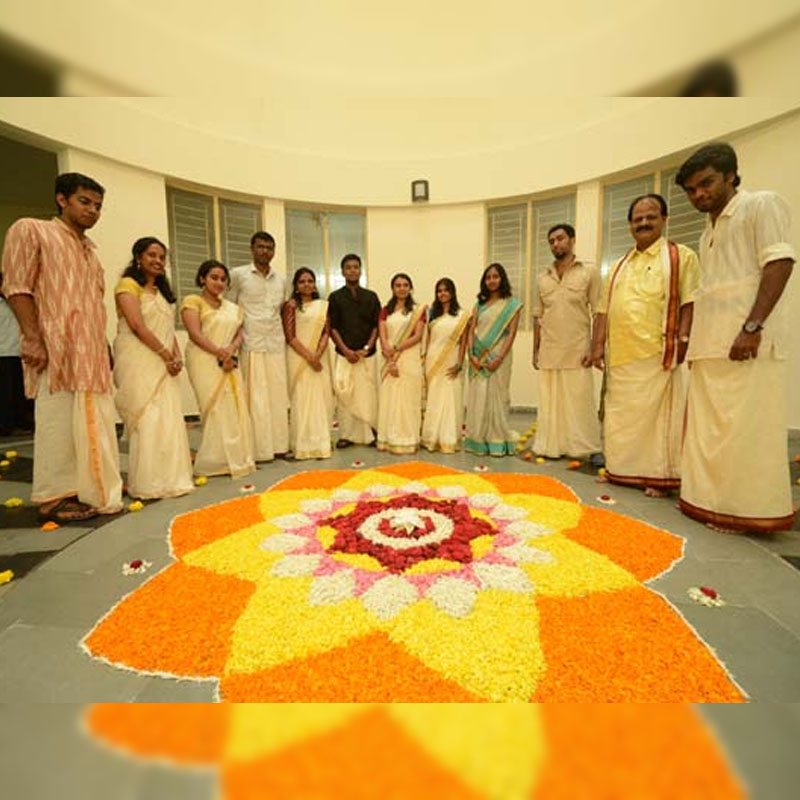
    When it is half a year for the rest of the world, the new year dawns in Kerala when the Malayalam calendar heralds the arrival of the month of Chingam. In agrarian Kerala, Chingam was the most vital month of the year for it was the harvest season with the promise of year long prosperity. Add a dollop of ancient history of a wronged, but redeemed king (Mahabali) who visits to check if his subjects are as prosperous today as when he last saw them, and Chingam has all the glamour of a superstar’s new movie.

    Kerala has long since been shorn of its glory agrarian days and having never tried its hand in industry, has now settled down to being a service economy bolstered by tourism and money from the Middle East (the (in) famous “Money Order economy”). Yet, for the average Keralite there are no spring- summer-winter season shopping nor end-of-season sales as tempting and as awaited as the Big Fat Onam Shopping !

    About four weeks leading to Onam and a couple of weeks afterwards, the consumer in Kerala watches as national brands and local biggies line up launching advertising blitzkriegs and never before offers . New launches, exchange offers, scratch-and-win schemes, BoGo offers, raffles, the works! The retail industry goes into an overdrive. And why not? White goods brands reach 40-45 per cent of their annual sales target for Kerala in the tiny three month (even lesser) window of opportunity that Onam offers. The buyer meanwhile, having deferred purchase to make a kill at the Big Fat Onam Sale, slowly loosens her purse strings. It is Win-Win all around.

    In 2015, Onam was on Friday 28 August. A study of TV consumption in the Top 10 Malayalam channels (Asianet, Asianet News, Asianet Movies, Asianet Plus, Surya, Kiran, Mazhavil Manorama, Flowers, Manorama News and Kairali) reveals many interesting insights into the melee that Onam is. In August 2015 (source: TAM), the jewellery category, which is anyway among the top consumers of TV ad space, hiked its presence by 56 per cent over July and promptly slashed it by 59 per cent in September.

    No surprise there, as auspicious Chingam is sandwiched between two inauspicious months, hence is a very busy wedding season. There can be no Onam without Onasadya (a grand meal), who would know it better than Instant Mix brands (payasams etc) that upped their TV presence more than two fold! Onam is as synonymous with Onakkodi (new clothes) as it is with the Onasadya. Textile retailers wishing to make hay while the Onam sun shone, hiked their TV presence by 120 per cent in August from July, and almost went incognito with an 84 per cent slash in September. The same trend was seen in the readymade clothes category as well.

    The category that has the highest stake in Onam, retail- durables/electronics ,was out there on a limb with close to fivefold (370 per cent) increase in TV presence ! Following Onam, there was almost total silence from this category. They were probably laughing all their way to the bank.

    Automobile manufacturers (cars/jeeps) and their compatriots – two wheeler makers increased TV presence by 44 per cent and 69 per cent respectively in the run up to Onam which they promptly slashed in September. Bright, sunny days of Chingam after the monsoons were a welcome reprieve to the paints category which hiked its presence by a whopping 80 times, and bucking the general trend, hiked it by another 25 per cent in September. On the other hand, the usual top three TV advertisers in Kerala -chocolates, toilet soaps and milk beverages- piped down during Onam month, reducing their TV presence by 18 per cent to 20 per cent.

    Leading brands earmark close to 25 per cent to 30 per cent of their annual ad budget for Kerala for the Onam season alone. For TV channels, this is the season to air film premieres, special events, programs with celebrities, all aimed at capturing eyeballs and at creating the right content to place the sudden surge in advertising. Total advertising duration (in the 10 Malayalam channels under study) shot up by about 35 per cent in Onam month compared to the previous month. Asianet and Mazhavil, the top two Malayalam GECs, garnered close to 45 per cent MORE advertising in August 2015 compared to the previous month.

    The viewers, in whose honor all the fuss is made, were very obliging on their part. Time spent analysis shows that on the days prior to Onam an average 40 minutes was spent on Asianet, which shot up to 57 minutes on the first Onam day and further to 65 minutes on Onam Day (day two of Onam a.k.a ThiruOnam is the actual Onam day). The same trend is visible across all Malayalam GECs. Mazhavil Manorama’s viewers, for instance, who used to spend an average 12 minutes on the channel pre-Onam, hiked their viewing to 16 minutes and 18 minutes on first and ThiruOnam days respectively. Surya increased its channel share to an average 14 per cent on the two days of Onam from its usual eight per cent to nine per cent . As the day finally drew to a close on 28 August 2015, the Bhima Jewelers Jewelers group had garnered the highest presence having spent 3790s on air (excluding promo tags and other promotional activities of the brand). In terms of Impact, another jeweler Josco got top marks garnering 493 GRPs.

    In 2016, Onam is scheduled to arrive mid-September. Every brand worth its salt is already out there with guns blazing to woo the consumer and make the most of the Onam fervor. It is no secret that Kerala economy needs a boost, and Onam shopping is just what the doctor ordered. All that remains to be seen is whether the consumer will be lured by the offers and whether she will script the Onam of every brand’s dreams.

    The author is the managing partner of Chennai based adMax Media Consultants.

    (The views and data expressed in this article are entirely the author’s. Indiantelevision.com is a medium on which they are being expressed)

  • What Onam heralds for Kerala’s TV channels

    What Onam heralds for Kerala’s TV channels

    When it is half a year for the rest of the world, the new year dawns in Kerala when the Malayalam calendar heralds the arrival of the month of Chingam. In agrarian Kerala, Chingam was the most vital month of the year for it was the harvest season with the promise of year long prosperity. Add a dollop of ancient history of a wronged, but redeemed king (Mahabali) who visits to check if his subjects are as prosperous today as when he last saw them, and Chingam has all the glamour of a superstar’s new movie.

    Kerala has long since been shorn of its glory agrarian days and having never tried its hand in industry, has now settled down to being a service economy bolstered by tourism and money from the Middle East (the (in) famous “Money Order economy”). Yet, for the average Keralite there are no spring- summer-winter season shopping nor end-of-season sales as tempting and as awaited as the Big Fat Onam Shopping !

    About four weeks leading to Onam and a couple of weeks afterwards, the consumer in Kerala watches as national brands and local biggies line up launching advertising blitzkriegs and never before offers . New launches, exchange offers, scratch-and-win schemes, BoGo offers, raffles, the works! The retail industry goes into an overdrive. And why not? White goods brands reach 40-45 per cent of their annual sales target for Kerala in the tiny three month (even lesser) window of opportunity that Onam offers. The buyer meanwhile, having deferred purchase to make a kill at the Big Fat Onam Sale, slowly loosens her purse strings. It is Win-Win all around.

    In 2015, Onam was on Friday 28 August. A study of TV consumption in the Top 10 Malayalam channels (Asianet, Asianet News, Asianet Movies, Asianet Plus, Surya, Kiran, Mazhavil Manorama, Flowers, Manorama News and Kairali) reveals many interesting insights into the melee that Onam is. In August 2015 (source: TAM), the jewellery category, which is anyway among the top consumers of TV ad space, hiked its presence by 56 per cent over July and promptly slashed it by 59 per cent in September.

    No surprise there, as auspicious Chingam is sandwiched between two inauspicious months, hence is a very busy wedding season. There can be no Onam without Onasadya (a grand meal), who would know it better than Instant Mix brands (payasams etc) that upped their TV presence more than two fold! Onam is as synonymous with Onakkodi (new clothes) as it is with the Onasadya. Textile retailers wishing to make hay while the Onam sun shone, hiked their TV presence by 120 per cent in August from July, and almost went incognito with an 84 per cent slash in September. The same trend was seen in the readymade clothes category as well.

    The category that has the highest stake in Onam, retail- durables/electronics ,was out there on a limb with close to fivefold (370 per cent) increase in TV presence ! Following Onam, there was almost total silence from this category. They were probably laughing all their way to the bank.

    Automobile manufacturers (cars/jeeps) and their compatriots – two wheeler makers increased TV presence by 44 per cent and 69 per cent respectively in the run up to Onam which they promptly slashed in September. Bright, sunny days of Chingam after the monsoons were a welcome reprieve to the paints category which hiked its presence by a whopping 80 times, and bucking the general trend, hiked it by another 25 per cent in September. On the other hand, the usual top three TV advertisers in Kerala -chocolates, toilet soaps and milk beverages- piped down during Onam month, reducing their TV presence by 18 per cent to 20 per cent.

    Leading brands earmark close to 25 per cent to 30 per cent of their annual ad budget for Kerala for the Onam season alone. For TV channels, this is the season to air film premieres, special events, programs with celebrities, all aimed at capturing eyeballs and at creating the right content to place the sudden surge in advertising. Total advertising duration (in the 10 Malayalam channels under study) shot up by about 35 per cent in Onam month compared to the previous month. Asianet and Mazhavil, the top two Malayalam GECs, garnered close to 45 per cent MORE advertising in August 2015 compared to the previous month.

    The viewers, in whose honor all the fuss is made, were very obliging on their part. Time spent analysis shows that on the days prior to Onam an average 40 minutes was spent on Asianet, which shot up to 57 minutes on the first Onam day and further to 65 minutes on Onam Day (day two of Onam a.k.a ThiruOnam is the actual Onam day). The same trend is visible across all Malayalam GECs. Mazhavil Manorama’s viewers, for instance, who used to spend an average 12 minutes on the channel pre-Onam, hiked their viewing to 16 minutes and 18 minutes on first and ThiruOnam days respectively. Surya increased its channel share to an average 14 per cent on the two days of Onam from its usual eight per cent to nine per cent . As the day finally drew to a close on 28 August 2015, the Bhima Jewelers Jewelers group had garnered the highest presence having spent 3790s on air (excluding promo tags and other promotional activities of the brand). In terms of Impact, another jeweler Josco got top marks garnering 493 GRPs.

    In 2016, Onam is scheduled to arrive mid-September. Every brand worth its salt is already out there with guns blazing to woo the consumer and make the most of the Onam fervor. It is no secret that Kerala economy needs a boost, and Onam shopping is just what the doctor ordered. All that remains to be seen is whether the consumer will be lured by the offers and whether she will script the Onam of every brand’s dreams.

    The author is the managing partner of Chennai based adMax Media Consultants.

    (The views and data expressed in this article are entirely the author’s. Indiantelevision.com is a medium on which they are being expressed)

  • “My life is all about ‘Leap of faith'” – Srinivasan Swamy

    “My life is all about ‘Leap of faith’” – Srinivasan Swamy

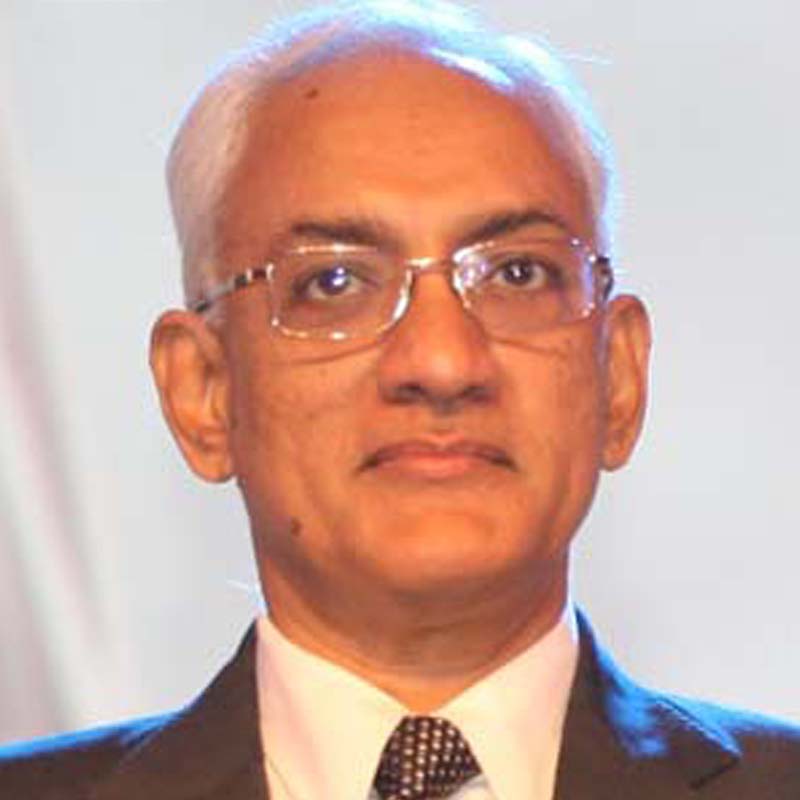
    Indiantelevision.com is delighted to share RK Swamy and BBDO boss Srinivasan Swamy’s AAAI Lifetime Achievement Award acceptance speech. Read on to partake of his fine wit.

     Sri Gurubhyo Namah: Salutations/pranams to all my Gurus.

    There are many Gurus in this room who taught me numerous things about our profession, relationships with people, and nuances of our business. Similarly, I have learnt considerably from my colleagues, past and present, in many of our group Companies; from my colleagues from the various industry Associations and Chambers of Commerce, I have been involved in; from my many clients and friends who have encouraged me to make mistakes and learn from them; from my wife and other family members who allowed me to pursue my dreams but always shown me the right path. This Award – AAAI Lifetime Achievement Award, is therefore dedicated to each and every one of them, for if I stand today receiving it, you have all made this possible.

    I am a great believer of fate. What is destined for one will happen. But that didn’t stop me in taking on many challenges. I am confident by nature, sometimes foolishly if I may add, but my life has been all about ‘leap of faith’. Every task I have taken on, I try to do full justice. My personal benchmark is to do better than all my predecessors and I have unfailingly delivered on this, to the best of my knowledge!

    Many of you may not realize this, but I have served in the AAAI Executive Committee for 18 continuous years. That is half my working life, considering I have been in this profession for 36 years. I think only Nagesh Alai has served longer than I have at AAAI.

    When I was elected into the Executive Committee of AAAI in 1998, I was an unwelcome addition. Our Agency had filed filed a case against AAAI when it proposed at an AGM that all its members should submit their Annual Report along with Client list, to determine the membership fee to be paid. Rightly or wrongly, we felt that AAAI may misuse what we felt was competitive information. The Court ruled in our favour and therefore, as mentioned earlier, I was seen as an intruder at the Executive Committee.

    Hardly two years later, in 2000, AAAI decided to move a resolution to get it members to apply for accreditation with Indian Broadcasting Foundation (IBF) much on the lines of what we had with INS. Our Agency felt that this was a wrong move, since AAAI members had a bilateral and equal relationship as an agency with every TV channel. Why would AAAI want its members to subject themselves individually to a collective body called IBF, was beyond our comprehension. Communications to AAAI on our objection to the proposal was ignored and therefore we collected adequate proxies and defeated this resolution on the floor of the house. Subsequently we got the next President to see merit in our proposition and finally got AAAI to sign an Agreement with IBF which provided an equal status with them. .

    However, both these episodes clearly implanted in the minds of many industry people that we are difficult people and we don’t toe the line on industry matters. This was so strongly entrenched, that when someone suggested in 2009 that I should join the IAA Mancom, the concern was whether I would be a difficult person to have in the Committee! Frankly, neither AAAI nor IAA, or any industry body for that matter, have found in me a unreasonable person, even if

    I have to say so myself! It would be impossible to have been Chairman/President of various Associations, Chambers of Commerce, Charitable Trusts and Registered Societies, if I were not an affable person.

    As mentioned earlier, the IBF-AAAI Agreement came about in 2000 and we were on an equal footing with IBF. In about a year, I was made the Chairman of this Joint Industry Body. For an agency person, this job was akin to running with the hares and hunting with the hounds. For 7 years when I was heading this joint working committee comprising heads of many agencies and channels, we had a great time. We combined work and had fun in different parts of the world – Australia, Germany, Sri Lanka, Malaysia and of course in many Indian locations. My faith was, if we bonded well as friends, we could be fair to each other. I am told, that was the golden era of IBF-AAAI relationship.

    When I become President of AAAI in 2004, I did what I thought was an obvious thing to do. An industry association is for all members and if anyone wanted to serve the industry they should be allowed to. So based on interest levels of members, I expanded the Executive Committee with many invited members – and made what was an exclusive club, a place anyone can participate and contribute for the industry. In hindsight it appears a normal thing to do, but at that time it was a leap of faith. Of course having invited members in the Executive Committee is the norm from then onwards. We also did many new things at that time. We celebrated the Diamond Jubilee of the association very well, we changed the logo to be in line with current trends, renamed AAAI Premnarayen Award to AAAI Lifetime Achievement Award, helped start the Confederation of Asian Advertising Agency Associations and of course our own Goafest.

    Before Goafest, AAAI had something called AAA Awards. It was an Award which no one had serious respect for. Abbys from Ad Club was seen as the most coveted and it attracted over 1500 people on their Awards night when AAAI would struggle to get 200 to 300. And the President of the day stood there all by himself and ditched out these Awards to the winners. After my first and only AAA Awards night in 2005 as President, I decided that this would be my last. AAAI represents the industry. Its members send entries and if we can’t make our Award the most coveted one, then we are doing something wrong. A small group started to think through what we can do to differentiate us and make it the most coveted. Thus was born Goafest – an advertising festival, combined with industry conclave, knowledge seminars, fun events and of course Awards. To be fair, I did invite Ad Club to join us to be part of Goafest from the first year, but they rebuked it, for their own reasons.

    In our own AAAI Executive Committee, there were doubting thomases as to whether we will get our members to participate and the whole episode will lead to financial mess for AAAI. We were looking at about Rs.2 Cr commitment and AAAI had never taken projects or events of this scale. And to top it, AAAI did not even have the financial resources to pay advances for event companies and travel agents. My faith in our idea egged me on, and my company lent substantial money to AAAI to start on the execution of the event. Fortunately there was enough goodwill when I went and met Vineet Jain in Delhi, Aveek Sarkar in Kolkata, Peter Mukerjea at Star, Subhash Chandra in Zee etc. The very first year of Goafest in 2006 had over 1200 delegates for the two-day event. Fortunately for me, we did cover our costs and made a small contribution to AAAI coffers as well. My leap of faith, paid off.

    After 2 years, Ad Club decided to team up with AAAI and now Goafest is firmly established as a destination to go to, for Creative, Media, Digital, Publisher and Broadcaster Awards.

    In 2014, Goafest was on a slide for a variety of reasons and many felt that Goafest should be skipped for a year. I felt that once it gets stopped and the momentum lost, it will be difficult to rebuilt the festival. Again with a leap of faith, I took on the Chairmanship when asked by the then President and did all that was necessary to do a festival, including broad-basing the appeal for a wider audience. Incidentally, that year turned out to be most profitable year until then for Goafest.

    I wish to give just two more instances that I was a part of, in two other Associations.

    All India Management Association conducts National Management Convention and this is the high point in any President’s Calendar. 2009 was the worst year economically in India after the economic melt down in 2008 in the western world. As President, I was to conduct this Convention. I chose Chennai, my home town, and we delivered a Convention with some of the best speakers and raked in record surplus as well, which hitherto is unsurpassed in AIMA.

    Similarly, it was just a leap of faith that I felt Kochi would be good destination for IAA Silver Jubilee Summit. Many in the IAA Mancom warned me that it may be difficult to get delegates to come there. But our speaker line up was so good that we had over 600 delegates from outside Kerala and 600 were from Kerala including some 300 students. This was the biggest event ever for IAA in India.

    My leap of faith is equally true in the businesses I lead. From a stand alone advertising agency about 15 years ago, we are amongst the most diversified marketing services group in the country today. Our cumulative revenue we believe will place us at No.3 or No.4 in India. We have about 25 business verticals across 4 of our companies in India and two in the US – R K SWAMY BBDO, Hansa Vision, Hansa Research and Hansa Customer Equity in India and Hansa Marketing Services and Hansa GCR in the US. Again the reason for this success is easy to comprehend. We identify a candidate with the right skill and more importantly the right attitude and empower him/her to take the business forward. I believe in total delegation and my task is to see that any hindrance posed by finance people based on budget constraints is removed for the person to perform and to take on new challenges and risks to grow faster. This has served us well.

    When we started BBDO India in 2007 as our second agency it was another, major leap of faith. We were told that we were cutting the ground under our own feet. The last 9 years have proved that our two-brand strategy has worked well and our overall market share and market presence have improved.

    Moving on to some other aspects, I thought I would reflect briefly on my relationship with my father, R K Swamy. I worked with him from 1978 to 2003 – 25 years. He is one of the coolest bosses one can have. He is thorough in whatever he does, but at the same time he empowers people. He is generous with his praise and quite happy to review and offer comments on anything you put in front of him. You do learn a lot by observing and I think some of his qualities have rubbed off on me, though not once he has told me what I should do.

    He was President/Chairman of all industry bodies in India other than only IAA that was not in his orbit then. May be instinctively I followed his path. He has said a few times to me that any amount of time we spend on industry matters in fine since it the hand that feeds us.

    He passed away in June 2003. If he is observing the institution he created now, I am sure he will be more than happy as to where we have taken it. In this context, I am reminded of a couplet in Tirukural:

    Eendra Pozhudhin Perithuvakkum Thanmakanai Chaandron Enak ketta Thaai.

    Loosely translated it says – the mother who hears her son being called a ‘wise-man’ will rejoice more than when she did, at the time of his birth.

    I am sure, in the same vein, my father will be mightily pleased that his son has this recognition today, as much as my mother.

    Before closing, I want to thank a few people:

    Ramesh Narayan has been a terrific support for me in IAA without whose help and constant prodding, IAA would not be what you know it to be. I am also grateful to him for all the kind words he spoke about me.

    My wife Sudha, She is a very bright lady, a MBA and had a thriving career. But she gave up much of this to support my children, me and my parents. She is here to share my happiness with me today, as she has always done in the past.

    And of course the President and the Executive Committee of AAAI for having considered me for this honour. Thank you all for what you did. But let me warn you all – this lifetime achievement award doesn’t mean retirement for me. I am not going away anywhere yet – I have a long journey ahead.

    Thank you!

  • “My life is all about ‘Leap of faith'” – Srinivasan Swamy

    “My life is all about ‘Leap of faith’” – Srinivasan Swamy

    Indiantelevision.com is delighted to share RK Swamy and BBDO boss Srinivasan Swamy’s AAAI Lifetime Achievement Award acceptance speech. Read on to partake of his fine wit.

     Sri Gurubhyo Namah: Salutations/pranams to all my Gurus.

    There are many Gurus in this room who taught me numerous things about our profession, relationships with people, and nuances of our business. Similarly, I have learnt considerably from my colleagues, past and present, in many of our group Companies; from my colleagues from the various industry Associations and Chambers of Commerce, I have been involved in; from my many clients and friends who have encouraged me to make mistakes and learn from them; from my wife and other family members who allowed me to pursue my dreams but always shown me the right path. This Award – AAAI Lifetime Achievement Award, is therefore dedicated to each and every one of them, for if I stand today receiving it, you have all made this possible.

    I am a great believer of fate. What is destined for one will happen. But that didn’t stop me in taking on many challenges. I am confident by nature, sometimes foolishly if I may add, but my life has been all about ‘leap of faith’. Every task I have taken on, I try to do full justice. My personal benchmark is to do better than all my predecessors and I have unfailingly delivered on this, to the best of my knowledge!

    Many of you may not realize this, but I have served in the AAAI Executive Committee for 18 continuous years. That is half my working life, considering I have been in this profession for 36 years. I think only Nagesh Alai has served longer than I have at AAAI.

    When I was elected into the Executive Committee of AAAI in 1998, I was an unwelcome addition. Our Agency had filed filed a case against AAAI when it proposed at an AGM that all its members should submit their Annual Report along with Client list, to determine the membership fee to be paid. Rightly or wrongly, we felt that AAAI may misuse what we felt was competitive information. The Court ruled in our favour and therefore, as mentioned earlier, I was seen as an intruder at the Executive Committee.

    Hardly two years later, in 2000, AAAI decided to move a resolution to get it members to apply for accreditation with Indian Broadcasting Foundation (IBF) much on the lines of what we had with INS. Our Agency felt that this was a wrong move, since AAAI members had a bilateral and equal relationship as an agency with every TV channel. Why would AAAI want its members to subject themselves individually to a collective body called IBF, was beyond our comprehension. Communications to AAAI on our objection to the proposal was ignored and therefore we collected adequate proxies and defeated this resolution on the floor of the house. Subsequently we got the next President to see merit in our proposition and finally got AAAI to sign an Agreement with IBF which provided an equal status with them. .

    However, both these episodes clearly implanted in the minds of many industry people that we are difficult people and we don’t toe the line on industry matters. This was so strongly entrenched, that when someone suggested in 2009 that I should join the IAA Mancom, the concern was whether I would be a difficult person to have in the Committee! Frankly, neither AAAI nor IAA, or any industry body for that matter, have found in me a unreasonable person, even if

    I have to say so myself! It would be impossible to have been Chairman/President of various Associations, Chambers of Commerce, Charitable Trusts and Registered Societies, if I were not an affable person.

    As mentioned earlier, the IBF-AAAI Agreement came about in 2000 and we were on an equal footing with IBF. In about a year, I was made the Chairman of this Joint Industry Body. For an agency person, this job was akin to running with the hares and hunting with the hounds. For 7 years when I was heading this joint working committee comprising heads of many agencies and channels, we had a great time. We combined work and had fun in different parts of the world – Australia, Germany, Sri Lanka, Malaysia and of course in many Indian locations. My faith was, if we bonded well as friends, we could be fair to each other. I am told, that was the golden era of IBF-AAAI relationship.

    When I become President of AAAI in 2004, I did what I thought was an obvious thing to do. An industry association is for all members and if anyone wanted to serve the industry they should be allowed to. So based on interest levels of members, I expanded the Executive Committee with many invited members – and made what was an exclusive club, a place anyone can participate and contribute for the industry. In hindsight it appears a normal thing to do, but at that time it was a leap of faith. Of course having invited members in the Executive Committee is the norm from then onwards. We also did many new things at that time. We celebrated the Diamond Jubilee of the association very well, we changed the logo to be in line with current trends, renamed AAAI Premnarayen Award to AAAI Lifetime Achievement Award, helped start the Confederation of Asian Advertising Agency Associations and of course our own Goafest.

    Before Goafest, AAAI had something called AAA Awards. It was an Award which no one had serious respect for. Abbys from Ad Club was seen as the most coveted and it attracted over 1500 people on their Awards night when AAAI would struggle to get 200 to 300. And the President of the day stood there all by himself and ditched out these Awards to the winners. After my first and only AAA Awards night in 2005 as President, I decided that this would be my last. AAAI represents the industry. Its members send entries and if we can’t make our Award the most coveted one, then we are doing something wrong. A small group started to think through what we can do to differentiate us and make it the most coveted. Thus was born Goafest – an advertising festival, combined with industry conclave, knowledge seminars, fun events and of course Awards. To be fair, I did invite Ad Club to join us to be part of Goafest from the first year, but they rebuked it, for their own reasons.

    In our own AAAI Executive Committee, there were doubting thomases as to whether we will get our members to participate and the whole episode will lead to financial mess for AAAI. We were looking at about Rs.2 Cr commitment and AAAI had never taken projects or events of this scale. And to top it, AAAI did not even have the financial resources to pay advances for event companies and travel agents. My faith in our idea egged me on, and my company lent substantial money to AAAI to start on the execution of the event. Fortunately there was enough goodwill when I went and met Vineet Jain in Delhi, Aveek Sarkar in Kolkata, Peter Mukerjea at Star, Subhash Chandra in Zee etc. The very first year of Goafest in 2006 had over 1200 delegates for the two-day event. Fortunately for me, we did cover our costs and made a small contribution to AAAI coffers as well. My leap of faith, paid off.

    After 2 years, Ad Club decided to team up with AAAI and now Goafest is firmly established as a destination to go to, for Creative, Media, Digital, Publisher and Broadcaster Awards.

    In 2014, Goafest was on a slide for a variety of reasons and many felt that Goafest should be skipped for a year. I felt that once it gets stopped and the momentum lost, it will be difficult to rebuilt the festival. Again with a leap of faith, I took on the Chairmanship when asked by the then President and did all that was necessary to do a festival, including broad-basing the appeal for a wider audience. Incidentally, that year turned out to be most profitable year until then for Goafest.

    I wish to give just two more instances that I was a part of, in two other Associations.

    All India Management Association conducts National Management Convention and this is the high point in any President’s Calendar. 2009 was the worst year economically in India after the economic melt down in 2008 in the western world. As President, I was to conduct this Convention. I chose Chennai, my home town, and we delivered a Convention with some of the best speakers and raked in record surplus as well, which hitherto is unsurpassed in AIMA.

    Similarly, it was just a leap of faith that I felt Kochi would be good destination for IAA Silver Jubilee Summit. Many in the IAA Mancom warned me that it may be difficult to get delegates to come there. But our speaker line up was so good that we had over 600 delegates from outside Kerala and 600 were from Kerala including some 300 students. This was the biggest event ever for IAA in India.

    My leap of faith is equally true in the businesses I lead. From a stand alone advertising agency about 15 years ago, we are amongst the most diversified marketing services group in the country today. Our cumulative revenue we believe will place us at No.3 or No.4 in India. We have about 25 business verticals across 4 of our companies in India and two in the US – R K SWAMY BBDO, Hansa Vision, Hansa Research and Hansa Customer Equity in India and Hansa Marketing Services and Hansa GCR in the US. Again the reason for this success is easy to comprehend. We identify a candidate with the right skill and more importantly the right attitude and empower him/her to take the business forward. I believe in total delegation and my task is to see that any hindrance posed by finance people based on budget constraints is removed for the person to perform and to take on new challenges and risks to grow faster. This has served us well.

    When we started BBDO India in 2007 as our second agency it was another, major leap of faith. We were told that we were cutting the ground under our own feet. The last 9 years have proved that our two-brand strategy has worked well and our overall market share and market presence have improved.

    Moving on to some other aspects, I thought I would reflect briefly on my relationship with my father, R K Swamy. I worked with him from 1978 to 2003 – 25 years. He is one of the coolest bosses one can have. He is thorough in whatever he does, but at the same time he empowers people. He is generous with his praise and quite happy to review and offer comments on anything you put in front of him. You do learn a lot by observing and I think some of his qualities have rubbed off on me, though not once he has told me what I should do.

    He was President/Chairman of all industry bodies in India other than only IAA that was not in his orbit then. May be instinctively I followed his path. He has said a few times to me that any amount of time we spend on industry matters in fine since it the hand that feeds us.

    He passed away in June 2003. If he is observing the institution he created now, I am sure he will be more than happy as to where we have taken it. In this context, I am reminded of a couplet in Tirukural:

    Eendra Pozhudhin Perithuvakkum Thanmakanai Chaandron Enak ketta Thaai.

    Loosely translated it says – the mother who hears her son being called a ‘wise-man’ will rejoice more than when she did, at the time of his birth.

    I am sure, in the same vein, my father will be mightily pleased that his son has this recognition today, as much as my mother.

    Before closing, I want to thank a few people:

    Ramesh Narayan has been a terrific support for me in IAA without whose help and constant prodding, IAA would not be what you know it to be. I am also grateful to him for all the kind words he spoke about me.

    My wife Sudha, She is a very bright lady, a MBA and had a thriving career. But she gave up much of this to support my children, me and my parents. She is here to share my happiness with me today, as she has always done in the past.

    And of course the President and the Executive Committee of AAAI for having considered me for this honour. Thank you all for what you did. But let me warn you all – this lifetime achievement award doesn’t mean retirement for me. I am not going away anywhere yet – I have a long journey ahead.

    Thank you!
  • Arnab-Barkha face-off amplifies disturbing trends

    Arnab-Barkha face-off amplifies disturbing trends

    When a section of the Indian media tries to make a case for prosecution of industry colleagues, it’s a disturbing trend. It’s more worrisome when the case being made out is based on the assertion either-you-are-with-us-or-against-us, implying that plurality of opinion (no matter how unpalatable the `other’ view is) is not welcome and that everyone needs to subscribe to just one narrative.

    Is it a case of bloated egos?

    Could be.

    Is it a case of a section of powerful media succumbing to political pressure?

    Very much possible.

    Is it a case of corporate vested interests at work?

    Why not? As most Indian media organisations, especially the big ones, are owned and run by corporations who treat media just as a business.

    Or, is it an example that in a big democracy like India a pillar of democratic right — freedom of expression — now is being readied for sacrifice at the altar of short-term gains?

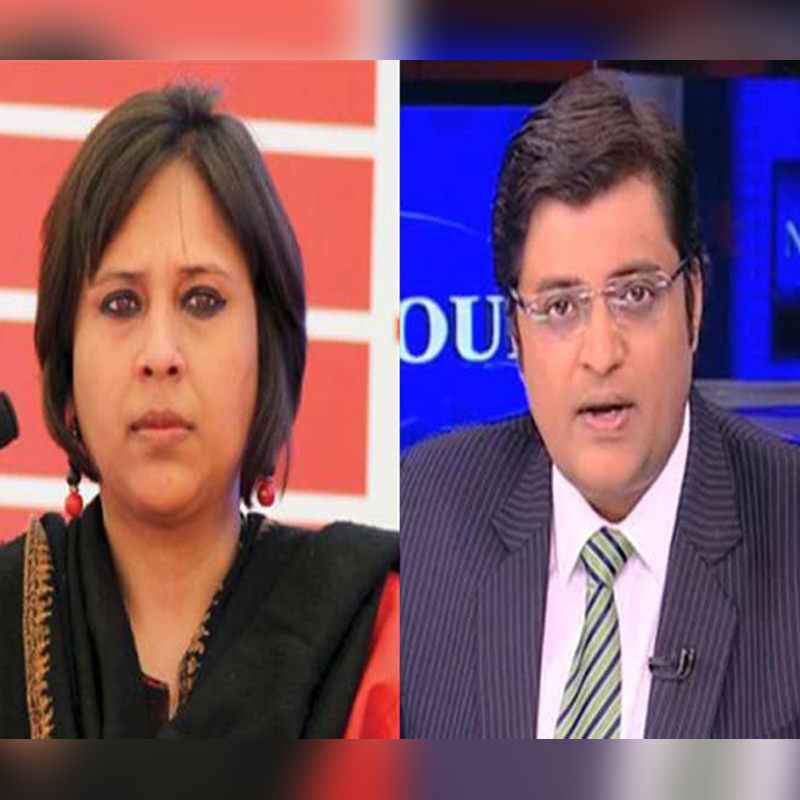
    The Arnab Goswami-Barkha Dutt (AG-BD) spat that’s keeping the nation interested presently and consuming lot of online space probably is the result of all the reasons listed in the previous para – and much more.

    While the AG-BD scrap, which has spilled over everywhere, has managed to corner eyeballs (wonder whether BARC would have data on this saga), another media related development seems to have largely gone unnoticed.

    According to the Mukesh Ambani-controlled online publication Firstpost, controversial teleevangelist Zakir Naik, accused of allegedly spreading hate through his sermons on his TV channel Peace TV, has slapped a Rs 500 crore defamation suit on Times NOW and AG.

    Why are we mentioning this defamation suit by Naik at all here? Simply because such cases will chip away at the foundation of Indian democracy and Indian media’s role as a watchdog or the Fourth Estate. This will also encourage vested interests in the country to take on more often a divided news media.

    Coming back to the face-off between AG and BD, it echoes many things, but more sharply two facts: growing intolerance in the country towards plurality of thought and opinion and increasing commercialisation of a news media where fact and fiction mix freely without alerting the consumer.

    Old school journalists have been aghast at the public display of verbal fisticuffs and washing of dirty linen (and egos) terming such behaviour from two high-profile news anchors as “shrewish and infantile,” egoistical and unworthy of such perceived role models for youngsters in the media.

    On the other hand, there are supporters of AG too, who is said to have started it all when during one of his recent shows he advocated that everybody who’s seen as anti-national (to be defined, probably, as per standards laid down by him and like-minded people), including media persons, should be legally prosecuted and punished. BD and some others media pros waded into the debate sullying the waters further with views and counter views.

    Where does that leave thousands of faceless and not-so-high profile journalists trying to eke out a living being a watchdog far away from the limelight?

    That’s a question that the media itself has to answer if it has to regain its fast-losing credibility and also protect its freedom that’s so essential in a democracy like India. For the present, it seems the Indian media is reeling under the Donald Trump effect.

  • Arnab-Barkha face-off amplifies disturbing trends

    Arnab-Barkha face-off amplifies disturbing trends

    When a section of the Indian media tries to make a case for prosecution of industry colleagues, it’s a disturbing trend. It’s more worrisome when the case being made out is based on the assertion either-you-are-with-us-or-against-us, implying that plurality of opinion (no matter how unpalatable the `other’ view is) is not welcome and that everyone needs to subscribe to just one narrative.

    Is it a case of bloated egos?

    Could be.

    Is it a case of a section of powerful media succumbing to political pressure?

    Very much possible.

    Is it a case of corporate vested interests at work?

    Why not? As most Indian media organisations, especially the big ones, are owned and run by corporations who treat media just as a business.

    Or, is it an example that in a big democracy like India a pillar of democratic right — freedom of expression — now is being readied for sacrifice at the altar of short-term gains?

    The Arnab Goswami-Barkha Dutt (AG-BD) spat that’s keeping the nation interested presently and consuming lot of online space probably is the result of all the reasons listed in the previous para – and much more.

    While the AG-BD scrap, which has spilled over everywhere, has managed to corner eyeballs (wonder whether BARC would have data on this saga), another media related development seems to have largely gone unnoticed.

    According to the Mukesh Ambani-controlled online publication Firstpost, controversial teleevangelist Zakir Naik, accused of allegedly spreading hate through his sermons on his TV channel Peace TV, has slapped a Rs 500 crore defamation suit on Times NOW and AG.

    Why are we mentioning this defamation suit by Naik at all here? Simply because such cases will chip away at the foundation of Indian democracy and Indian media’s role as a watchdog or the Fourth Estate. This will also encourage vested interests in the country to take on more often a divided news media.

    Coming back to the face-off between AG and BD, it echoes many things, but more sharply two facts: growing intolerance in the country towards plurality of thought and opinion and increasing commercialisation of a news media where fact and fiction mix freely without alerting the consumer.

    Old school journalists have been aghast at the public display of verbal fisticuffs and washing of dirty linen (and egos) terming such behaviour from two high-profile news anchors as “shrewish and infantile,” egoistical and unworthy of such perceived role models for youngsters in the media.

    On the other hand, there are supporters of AG too, who is said to have started it all when during one of his recent shows he advocated that everybody who’s seen as anti-national (to be defined, probably, as per standards laid down by him and like-minded people), including media persons, should be legally prosecuted and punished. BD and some others media pros waded into the debate sullying the waters further with views and counter views.

    Where does that leave thousands of faceless and not-so-high profile journalists trying to eke out a living being a watchdog far away from the limelight?

    That’s a question that the media itself has to answer if it has to regain its fast-losing credibility and also protect its freedom that’s so essential in a democracy like India. For the present, it seems the Indian media is reeling under the Donald Trump effect.