Category: Comment

  • 2025: Will it be the year of cloud repatriation?

    2025: Will it be the year of cloud repatriation?

    MUMBAI: After less than two decades of buzz around the cloud and the one way transitions, the return journey has commenced !!

    One can debate and contest this statement but cloud repatriation is surely going to be the consideration in 2025 extending the era of technological reforms!

    Analysing the cloud-environment based designs, consistently catalysed by consultants and evangelists of the board room, I had always been an edge professional wondering and unconvinced towards fitment of it for all solutions.

    Having said that, I do believe that the proposition, ever since public cloud came into our lives, was the driver for many innovations and initiatives no doubt (SaasS, PaaS, IaaS etc are terms given birth by cloud tech).

    However, after dominating the infrastructure design principles over a period,  the public cloud has found as its competition, the traditional on-premise environment that can safely be called private cloud that it always was.

    My simple analysis goes onto conclude that pubic cloud certainly is the solve for a business with dynamic workload and for big data compute environment; additionally, it helps business for faster go to market (GTM)  goal besides not worrying about managing tech talent.

    However, the much significant parameter of costs does get a beating if we compare that with on prem/private cloud operations. The pronounced plus of public cloud being ‘pay per use’ promise is limited just for compute services but bigger overheads, 

    particularly ingress and  egress costs, more relevant for media industry, simply make an on-prem solution the big winner.

    This aspect practically locks the customer to a specific cloud too unfairly. On this the on-prem models come out with edge (pun intended :-)) over public cloud models.

    The other aspects of data security and  control and finiteness of costs and capacity besides latency/performance issues, add to the relative merit points in favour of the on prem cloud model.

    So, as we step into yet another exciting year, technocrats and businesses would actively adopt the hybrid approach with a mix of cloud plusses and  on-prem benefits,  working with the balance of scalability and flexibility at cloud while keeping critical and  heavy data (video media industry) and bespoke applications in their own infrastructure.

    This said, cloud repatriation is a phenomenon that is indeed live and would weigh in more and more in the days to come …  unless the big public cloud providers revisit their commercial model with yet another innovation.

    Wishing all a tech-citing and glorious year 2025 !!

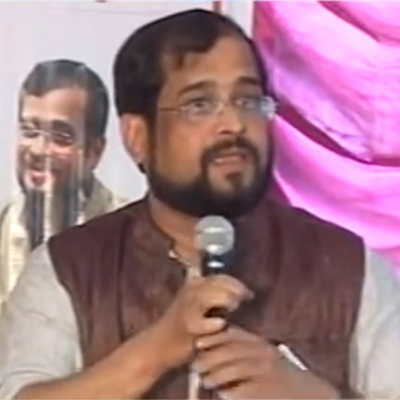
    (The article has been reprinted from Rajat Nigam’s post on Linkedin after informing him. He is the  transition CTO of JioStar. The views expressed here are entirely his own and have nothing to do with his organisation – JioStar= where he works as a professional. Also indiantelevision.com need not subscribe to these views )
     

  • Public relations’ role in the fast-evolving influencer world

    Public relations’ role in the fast-evolving influencer world

    MUMBAI: The role of influencers has witnessed major shifts within the evolving landscape of public relations. Once relegated as mere taste makers with a huge following, the influencers have turned into complex collaborators that create brand narratives, build deeper connections with audiences, or effect social commerce. Today, looking into this changing landscape of influencer partnerships requires more than just product promotion but rather an authentic and deeper-rooted relationship with audiences.

    As public relations embraces this new reality, it becomes essential to understand the trends that are transforming the influencer landscape, without which a brand will not be able to adjust in order to stay relevant, ethical, and effective in their campaigns.

    The shift from mega-influencers to micro and nano-influencers

    In its early days, influencer marketing was a channel where brands obsessed over superstars and mega-influencers with millions of followers, believing that a larger reach would translate into a greater impact on the customer. With a more sophisticated shift in the influencer marketing scenario, public relations professionals recognised that engagement is more significant than the number itself.

    Today, micro and nano-influencers are driving the most meaningful conversations and creating authentic connections with their very small, yet engaged, audience. Just as these smaller influencers concentrate on building niche followings based on the interests or values of their audiences, so do brands looking to target well-defined and loyal communities.

    This means a change for the PR, no longer searching for a name or a size but for brand-aligned truth speakers on issues concerning values, cultures, and messaging. Micro-influencers might not have the reach of celebrities, but because they have a closeness with their audience, they can deliver better RoI in terms of trust, loyalty, and long-term affinity for a brand.

    Aninditaa gupta

    Aniniditaa Gupta

    The rise of real and relatable influencers to finding out authenticity over perfection

    Gone are the days when influencers could simply post heavily curated pictures and hope for the audience to engage. Nowadays, consumers crave authenticity, and those influencers who share 100 per cent real and unfiltered experiences often succeed better than others who show what’s perceived as flawless.

    Audiences want to see influencers dealing with the little nitty-gritty of their difficult lives, talking about mental health talk, or sharing unfiltered moments that make him/her appear human. Brands reaping rewards from this shift have been giving collaborations with influencers who expose human vulnerabilities, honesty, and authenticity in their value.

    For PR teams, this means an end to the old-school traditional glossy campaigns in favor of a fresh and transparent approach to their activities. Brands need to learn to embrace the “imperfections” that come with influencer collaborations, allowing for content that resonates with honesty and relatability while still aligning with the brand’s values.

    Influencers contributing to social change

    The rise of socially conscious consumers has transformed influencer partnerships. Now, they’re social cause advocates raising awareness on matters of interest like the environment, mental health, and social justice. This pressure requires PR professionals to make sure influencers are a good fit with a brand’s values and are not just peddling pitch for that company. Consumers expect that brands should take a stand on serious issues. Influencers driving the conversation can bolster a brand’s reputation. For the PR team it is equally important to formulate authentic, purpose-driven partnerships that resonate with audiences, and not just opportunistically align themselves with trending causes.

    The impact of paid and organic content on authentic engagement and brand connection

    As influencer marketing grows, the difference between paid and organic content is becoming clearer. Consumers can spot inauthentic, overly promotional posts. Clear guidelines, like FTC rules for labelling paid posts, help with transparency. While paid content offers reach, organic posts feel more natural and connect better with audiences. Public relations account teams should permit influencers to create the content naturally, so that sponsored posts feel like a real part of their message, not just an ad.

    influencers

    Data driven PR

    In the past, measuring the success of influencer marketing was subjective-as brands would look at follower numbers, engagement rates, and sales figures. However, in today’s world, the more sophisticated the analytics tools that PR professionals utilize, the better they can gauge the correct level of influence an influencer possesses owing to data reliability.

    Insights driven by data now allow brands to track sentiment analysis, audience demographics, and long-term brand loyalty. With this, PR teams can find out the exact ROI of the influencer campaigns, refine their strategy, and ensure they partner with influencers who would positively resonate with their target audience.

    Moreover, relying on data can allow public relations professionals to better look towards the evolution of consumers and how that will allow them to keep ahead of trends and consider the types of influencers and content that would drive the most engagement.

    Building long-term partnership with influencers

    In the past, measuring the success of influencer marketing was subjective-as brands would look at follower numbers, engagement rates, and sales figures. However, in today’s world, the more sophisticated the analytics tools that PR professionals utilise, the better they can gauge the correct level of influence an influencer possesses owing to data reliability.

    Insights driven by data now allow brands to track sentiment analysis, audience demographics, and long-term brand loyalty. With this, PR teams can find out the exact ROI of the influencer campaigns, refine their strategy, and ensure they partner with influencers who would positively resonate with their target audience.

    Moreover, relying on data can allows public relations professionals to better look towards the evolution of consumers and how that will allow them to keep ahead of trends and consider the types of influencers and content that would drive the most engagement.

    Maintaining trust and understanding ethical challenges

    As the influencer market expands, there are emerging concerns about ethics and trust-building faults, especially regarding fake followers and undisclosed paid promotions. Brands must guarantee that their influencer partnerships are above-board, ethical, and aligned with their principles. The PR professionals should work with the influencers who maintain integrity and really have genuine connections with their followers. Brands, for their part, need to be proactive in the ethical world, like readily disclosing paid partnerships and avoiding partnering with questionable influencers to protect themselves.

    Conclusion

    The landscape of influencers is no longer confined to product endorsements. The modern-day influencer is like a storyteller, an advocate, a powerful partner that establishes a reputation and identity. In this new landscape, PR professionals need to adjust their approach and tasks, remain steadfast, and focus on building deeper, long-term productive relationships with influencers.

    In this fast-paced, rapidly-evolving environment, agility, trends-monitoring of overcoming all that distracts the audience in every wave of growing and engaging with them at every touchpoint is where success lies. With the right approach, influencer collaborations can ride to the very front of any brand’s PR strategy, paving the way to trust, engagement, and the long-term establishment of lasting connections amid the cacophonic world of digital innovations.

    (Aninditaa Gupta is  Scenic Communications founder. The views expressed in the article are entirely her own and indiantelevision.com need no subscribe to them.)

    (Picture for the main page created using Microsoft Image Designer. No copright infringement is intended)

  • 2024: The year that was – A snapshot of the snacks & sweets segment

    2024: The year that was – A snapshot of the snacks & sweets segment

    MUMBAI: Snacks are some small nibbles you munch on just to satisfy your cravings sometimes. But it’s no surprise that consumption has surged in a big way  – in fact the growth has been unprecedented – in 2024. The increasing population, growing incomes of people, and the shifting priorities of consumers are increasing the demand for snacks. 

    According to a report by global market research group, Imarc  the Indian snacks market was valued at ?42,694.9 crore in 2023. It is expected to swell dramatically by more than doubling by 2032, reaching ?95,521.8 crore. 

    This impressive growth is being driven by consumers’ love for convenience, the increasing role of e-commerce, and improved food safety standards.

    festivals increasing demand

    Festivals Lead to Increased Demand

    The festive season brings  joy not only to consumers but also to the FMCG brands. During this time of the year, gifting, celebration, and indulgence in snacks and sweets are synonymous.

    Many brands launched new products this year and created special hampers to meet the festive demand with variety and innovation.

    According to logistics intelligence platform for online retailers Clickpost’s report, online sales in this year’s festival season surged by as much as 49 per cent through tier-2 and tier-3 cities. And for brands, it’s probably the perfect opportunity in recent times to garner new customers, boost sales, and even better their market reach in those relatively smaller towns and cities.

    Kush Aggarwal

    Rural Growth and online expansion

    Rural areas are now an important part of the growth of FMCG brands. NielsenIQ data reports that rural markets expanded by six per cent in the Q3 of 2024, a rate greater than that of urban areas, which grew at 2.8 per cent. Small producers, however, also appeared to recover, playing a big role in the overall growth of the industry.In the meantime, the e-commerce expansion has shaken the snack and sweets industry. In the past three years, India has acquired 125 million online buyers and expects to add 80 million more by end-2025. This trend is increasing the accessibility of snacks and sweets throughout the country by improving convenience and availability more than ever.

    Swiggy delivery
    Consumer Trends Shaping the Industry

    Consumer preference is one of the major drivers of innovation in the snacks and sweets segment. Younger generations (Genz, Gen Alpha),  along with the influence of western eating patterns, are raising the demand for quick, ready-to-eat options. Sustainability too is gaining priority. On the other hand, brands are adopting eco-friendly packaging using recyclable materials, compostable, and biodegradable materials as well. This is being done to protect the environment as well as to satisfy the so-called woke younger segments sensitivity to sustainability. 

    Looking Ahead

    The Indian FMCG industry, especially the snacks and sweets category, has shown resilience in a challenging economic environment. From festive sales and rural growth to online expansion and sustainable packaging, the sector continues to evolve to meet consumer demands. Brands are not just satisfying cravings but also creating delightful experiences, making snacks and sweets a key part of India’s dynamic food landscape.

    (The views in this article are the author’s and Indiantelevision.com needn’t subscribe to them)

  • 2024 The Change makers: Subhash Chandra, the corporate warrior

    2024 The Change makers: Subhash Chandra, the corporate warrior

    MUMBAI: Subhash Chandra. No idea if today’s GenZ AND Gen Alpha know who he was. The freedom fighter in the 1940s believed in the use of guns as much as Mahatma Gandhi did in ahimsa. He did his best to trouble the English during their occupation of India. For many he is just a name in the history books.

    The modern day Subash Chandra that we know is also a doughty fighter. Excepting that he had a Goyal to his surname which he dropped.  Excepting that  he is an entrepreneur and a corporate warrior. The pioneer of lamitubes in the country. Now they are common place in this nation of ours but when he launched the tubes in India in the nineties as a replacement for the old aluminium toothpaste packaging, they were unfamiliar. T hey were an immediate success.  Soon his Essel group was the largest manufacturer of the tubes in the worldThe pioneer of entertainment pay TV in India.

    Then he launched his general entertainment television channel Zee TV, which was again a major runaway hit. It seemed whatever he touched turned to gold, or at least had to have long-term value.

    Subhash Chandra

    Cut to two years go. In 2022, Zee got into a conversation with Sony – oops we should say Culver Max Entertainment – to merge in readiness for the media gorilla that would be formed with the merger of Reliance-Viacom18 and Disney Star India. Due diligences had been done, valuations had been arrived at, exit clauses and penalties agreed upon.

    All seemed to be going well. Until dirt hit the fan and banks started calling in his loans he had taken against his equity holding in Zee to realise his grandiose ambitions to get into the development sector, that is infrastructure. The amounts were large and fingers of suspicions were pointed towards him and his son Punit the CEO of the company. Allegations that the Zee books were not all clean flew, the goateed entrepreneur was forced to step down as a director and chairman from his own company. As was his son as a director.

    The banks continued to bay for his blood and some of the FIIs actually cashed in their holdings and the promoters’ equity in a company which he had built from scratch fell to sub-five per cent levels.  He was suddenly a minority shareholder, with no control, no say, over the once entertainment power house he ruled with a tight fist.

    Through all of this, Sony continued to say it would go ahead and wed Zee. Of course, negotiations were hard as the Zee share price had meanwhile tanked. After much discussion, a peace accord was arrived at that Punit would be MD.

    Things seemed to be proceeding when before they could say hello, the proposal to form a joint venture with Sony collapsed with no hope of revival. In January earlier this year, Sony decided to officially call of their discussions with Zee TV.  Two years of laborious discussions and getting ready for the merger went down the drain.

    The two litigated against each other internationally and within India – Zee to get the NCLT’s order to Sony to go ahead with the joint venture and Sony seeking $90 million as penalties.  They finally smoked the peace pipe in August 2024, calling of their disagreements with each other.

    But some damage had been done by the banks which name called him, Sony’s backing out, all the bad press, and the impending merger between Disney-Star-Viacom18-Reliance. The Zee Entertainment share lay in the doldrums – a far cry from the Rs 500 zone it once roamed.

    Zee would collapse was what many a media observer foretold:  after all, from media baron Chandra was now a media fallen. Every company in his media empire – whether Zee Entertainment or Zee Media or Siti Networks or Dish TV – was facing flak from all quarters. 

    Subhash Chandra

    But not Subhash Chandra. He does not believe in giving up easily even if the powers that be in the Centre are not looking upon him kindly. Even if all the naysayers and rivals are ranging against him.

    In fact, being down and out gave the 74 year old a new infusion of energy. He had something to prove to himself: that he could turn around the venture he had given birth to, nurtured, until, because of circumstances beyond his control, had gone out of his hands.

    He came up with a plan to keep costs under control, let go of the flab that had accumulated in Zee Entertainment, trimmed the workforce and went back to the drawing board to begin almost as if anew. He got the professional Zeel’s  board approval to back him and his rescue plan.

    Along with his sons Punit and Amit, he went out into the market, calmed jittery nerves of banks, financial institutions, lenders, and the markets as a whole. He also hit the international markets and managed to get international financial institutions to invest in his abilities to get Zee back into fine fettle. He raised Rs 2,000 crore to almost every financial analyst’s disbelief.  But that’s Subhash Chandra for you.

    These days Subhashji or chairman (as he is called) is back on the shop floor – or should we say studio floor.

    He’s rolled up his sleeves and he is back to doing what he did best in the early days of Zee TV: go by his gut and select the right stories and make them into TV shows. His goal:  get Zee back to the top of the ratings charts.  And be ready for the behemoth JioStar when it starts stomping its way into the marketplace with its large platter of offerings soaking up advertising and subscription revenues.

    Will his magic work in today’s D2C world?

    Will he win over his lost TV viewers again in an era where streaming is gnawing away at linear TV consumption?

    Will he manage to get Zee5 to fire on all cylinders?

    He will. That’s what he is betting on.

    And we at indiantelevision.com also tend to agree.

    For the gent from Hissar, Haryana, carries a name he has to live up to: Subhash Chandra.  

    (We asked Microsoft image generator to re-imagine Subhash Chandra as a corporate warrior and the main image of the executive with the sword  is one of the images it came up with. No offence is intended to Subhash Chandra nor to anyone at Zee TV nor his family. No copyright infringement is intended either)

    Pictures of Shubash Chandra courtesy his X account. 

  • Why you should watch Colors’ Bigg Boss18

    Why you should watch Colors’ Bigg Boss18

    MUMBAI: I used to be a proud advocate of Bigg Boss, championing it as the epitome of human emotions and behaviour. I’d write blogs and tell anyone who would listen that it was a grand experiment in teamwork, polarization, resource mobilisation, negotiation, storytelling and the delicate dance between truth and lies that could turn tides faster than you could drop your popcorn. Some seasons were not to my liking, and some taught me a few lessons. I even predicted the end of Bigg Boss and called it a deadly social experiment that the HR department can copy for an offsite. I auditioned for the show one fateful day and am happy that I did not make the cut. Bigg Boss needs a reality check

    It was, of course, before Vermajee—my dear friend, soul mentor, and consultant in all non-working things in life said. It opened my eyes to the actual sincerity of it all. His wisdom, delivered with the gravity of a man who had mastered the art of sidestepping unnecessary drama, made me see Bigg Boss in another shadow. 

    Let’s face it. When it comes to quality television, nothing quite compares to the highbrow, intellectual oasis that is Bigg Boss. Because who wouldn’t want to watch a group of people—handpicked for their impressive lack of emotional regulation—battle it out in an elaborate social experiment that makes a corn maze for mice seem like the height of human achievement? 

    Allow me to walk you through why this epic display of “reality” deserves your full attention. Grab some popcorn, lean back, and marvel at this masterpiece’s sheer brilliance. The moment of truth is here. Here’s what Vermajee said. Was that not a big thumping whack on my head? 

    No One Ever Doubted The Real Test Of Human Behaviour

    Have you ever wondered how people behave when locked in a house, deprived of dignity, and prompted by whispering producers? Vermajee insists that Bigg Boss provides that valuable insight which you never asked for. It’s like watching a Roman gladiator match, except the contestants are armed with petty insults and inflatable egos instead of swords. And they have a constraint- they cannot get physical- I mean in terms of fights. Would you not agree that it is truly an anthropologist’s dream and for the audience, a release from the pressure cooker called life? 

    The whole show is an arena where emotionally volatile individuals are crammed together in a space smaller than your average Ikea display room, forced to coexist like caged animals. You’ve got your classic tropes: the guy who can’t control his temper, the girl who cries at the drop of a hat, a person still trying to find the pronoun to respond to, a couple deeply in love with but with controversial background, someone who is trying to repurpose life and the one who’s just there to add to the furniture count. You’ll be left asking the existential question: “Is this what Darwin meant by the survival of the fittest?” 

    Not The Biggboss But The Scriptwriter: Your Unseen Puppet Master 

    You might think the contestants or the voting audiences are driving the drama, but don’t be fooled. The producers of Bigg Boss are like mischievous masters tossing lightning bolts from the heavens, causing chaos and ensuring the drama never stops. The participants aren’t just navigating their emotions but also carefully following a meticulously crafted script that nudges them towards confrontations with all the subtlety of a sledgehammer and sometimes like a jeweller.

    Watch closely, and you’ll see the magic unfold: contestants are guided with cryptic “challenges” that are about as natural as a sitcom laugh track. And when you are deceived into thinking they might be showing the slightest hint of genuine emotion, the production team jumps in to stir the pot. Because who wants emotional growth or understanding when you could have a screaming match over a pillow? Or, better still, a monologue of abuses and misunderstanding longer than the one you read in Ayan Rand’s novel. 

    A Wardrobe Malfunction Waiting to Happen 

    Now, let’s talk about the visual feast Bigg Boss offers. Have you ever wondered why the contestants look like they stepped out of a trendy but slightly trashy catalogue? That’s because they didn’t even pick their clothes. That’s right, they are dressed by designers who seem to be playing a prank on them. Clothes too tight, too loud, or too inappropriate for any real-life scenario—it’s fashion with the subtlety of a fireworks display. 
    Because, after all, nothing says “real human experience,” like a grown man in a neon tank top and sequined shorts screaming about loyalty. 

    Fights? They’re Gloriously Predictable 

    If you’re looking for intellectual conversations or meaningful discussions, what are you doing here? Bigg Boss is all about the fights, and boy, do they deliver. The drama unfolds faster than you can shout “TRP”. Contestants hurl insults, food, and sometimes furniture at each other, like toddlers in an adult playground. 
    And the best part? These aren’t just spontaneous moments of anger. Oh no. These are curated, finely tuned explosions of rage, timed perfectly to break the monotony of everyone sitting around a couch wondering how they got into this mess in the first place. It’s like Fight Club, but without any subtlety, depth, or Brad Pitt. And what more do you think the producers can cram in a 90-minute daily update? What do you think the contestants do the rest of the day- other than when the cue says- Camera- sound- fights? 

    The Voting – A Systematic Scam

    Ah, the thrill of voting! You, the audience, have the privilege of participating in a system that isn’t rigged. Week after week, you send in your votes, believing your voice truly matters. This misguided perception is truly adorable, like the playschool girl dancing to Chikani Chameli. Because let’s get real: the producers have already decided who stays and who is evicted with honourable escape routes. They’ve got their favourites—those who guarantee more drama, more sponsorship deals, are promised a more extended stay or are material for the follow-up reality shows. 

    You’re not voting for who you want to stay; you’re voting to keep the illusion alive. Have you ever wondered how Bigg Boss never reveals the vote percentages? Have you ever demanded? Are you satisfied with the lollipop of one of the audit firms endorsing the results? Don’t even try going that path. Bigg Boss is less democracy and more dictatorship with a touch of game show order. 

    The Host: Bias? What Bias? 

    Then there’s the host, the impartial face of the show. Or at least, he would be unbiased if they weren’t so clearly spoon-fed instructions to keep the show’s prized troublemakers in the game. Watch as the host subtly (or not-so-subtly) guides conversations, drops hints, and occasionally throws shade at the contestants they’ve been told to hate. It’s like watching a chess game, except one side doesn’t know they’re being played. The host is also genuinely human and bias is a human trait. 

    The Reality Show Contestant Manufacturing Line

    When it’s all said and done, when the “winner” emerges, the rest of the contestants move on to their next gig in the reality show carousel. Today’s Bigg Boss loser is tomorrow’s Khatron Ke khiladi contestant. Their career? A carefully curated series of reality show appearances, each more absurd than the last. And you’ll watch them all because, let’s be honest, there’s no escaping the pull of this car-crash television. 

    NET NET – Final Thoughts on BIGG BOSS (Not That You Need Them) 

    So, why should you watch Bigg Boss 18? Because it’s a masterclass in what happens when human dignity is tossed out the window for entertainment. It’s the TV equivalent of a sugar rush—quick, addictive, and utterly devoid of nutritional value. But hey, at least you can say you witnessed the unravelling of the human spirit in high definition. 

    And who knows? You might feel better about your own life in the process. Now go and watch Bigg Boss 18 and tell me if Vermajee is right and if it made you feel better. Seeing the participants of the Bigg Boss family foundering and falling apart like straws on the bar counter may even help create stronger family bonds. 

    DISCLAIMER. Even Vermajee’s more-than-accurate tutorials aimed at brainwashing an ardent BiggBoss fan have limited appeal. I will be glued to the initial weeks of Bigg Boss18, and if the contestants ignite my curiosity, I will travel with them on the unpredictable journey.

    (The views expressed in this comment piece are the author’s and the author’s alone. Indiantelevision.com does not endorse them. We are open to contrarian views to Sanjeev Kotnala’s and will happily carry them. There’s only one requirement: the write ups should be written coherently and well)

  • Cracking down on Indian TV & streaming piracy, Italian style

    Cracking down on Indian TV & streaming piracy, Italian style

    MUMAI: Piracy has been the bane of both broadcasters and streamers for some time now. Yes, both have anti-piracy crews who spend crores of rupees behind sophisticated tools which crawl the world wide web round the clock to track illegal streams and bring down the rogue sites with the help of ISPs. 

    Even the Indian government has stepped in at times with the department of telecommunications (DoT)  directing  ISPs to take down the crooks, but more often than not the takedowns relate to what the mandarins fear could be a threat to national security,  religious sentiment, is defamatory or points fingers at the powers-that-be wrongly. 

    Could it learn from what the Italian government is doing to protect broadcasters and streamers and bring down piracy? The authorities there are not using Mafia-like tactics; they are simply putting in place stricter regulation, policing and implementation. 

    Italy has more than five million or more citizens accessing scoundrel sites costing the pay TV ecosystem (more specifically sports) – Dazn, Sky Italia, Prime Video and Mediaset Infinity –  more than €400 million  annually.

    To get an insight into what’s happening in Italy a little bit of background in sequential order would help. In August 2023, the Italian government passed a strict anti-piracy law which brought in lay viewers  into the fold of those who would be penalised with fines going up  as high as  €5,000.  ISPs would be slapped with administrative fines of 20 million lira to 500 million lira, or in today’s currency – €10,00  to €265,000.  Those involved in the supply/distribution of infringing IPTV streams would  face up to three years in prison and a fine of up to €15,000.

    Then on 31 January 2024, Lega Serie A (the governing body of football  in Italy)  launched an anti-piracy platform Piracy Shield which is operated by the nation’s Communications Regulatory Authority, AgCom. Its purpose was to identify and penalise those who are watching –  mind you, those who are WATCHING –  pirated content, and even those who are streaming it. Piracy Shield was designed to block illegal streaming within 30 minutes of detection by targeting both IP addresses and domain names.

    In March 2024, Italians  received reminders that fines were on the way, even for those who download illegal sports streaming apps from legal marketplaces operated by Google, Apple, and Amazon.

    Reports are that the measures seem to be working so far. The multi-pronged exercise has succeeded in blocking over 1,000 online domains and more than 500 IP addresses associated with illegal streaming activities since the start of the new football season in Italy. However, no information was available about individuals being penalised for viewing pirated content at the time of writing.

    Recently, AgCom announced the extension of  Piracy Shield to cover cultural events, music and TV series. Additionally, it signed a memorandum of understanding between the prosecutor’s office and Guardia di Finanza (financial police) under which automatic information exchange between the parties will enable subscribers of pirate IPTV services to be automatically fined. Yes – AUTOMATICALLY fined.  

    Secondly, an amendment to the online copyright enforcement regulation approved by the Italian senate proposes prison sentences of up to a year for individuals who do not report – yes, those who DO NOT REPORT – piracy or related offences. The amendments also target service providers such as VPN and DNS companies. This includes VPN and DNS service providers such as Google and Cloudflare. These providers will face stricter obligations to cooperate with authorities in stopping the distribution of pirated material.

    The amendments and changes have  been welcomed by the Italian pay TV industry and streamers. The reason: under the new dispensation, authorities will soon have access to names, surnames, IP addresses, and other identifying details of those accessing criminal websites and hence penalties will be automatically imposed.

    We will have to wait and see how effective these measures will prove to be and how much they will deter the pirates in Italy.

    In the meantime, can the Indian pay TV ecosystem, DoT, and the government take a closer look at the Italian model of curbing piracy?  Can the cash-rich Board of Control for Cricket in India (BCCI) and industry come together to create an industry wide platform to curb sports broadcast leakages? Especially, since it is the main sports body that has been raking in billions of dollars by licensing the TV rights. Can the penalties for resorting to piracy be made tougher?

    A study in 2023 pointed out that Indian broadcasters and streamers are losing close to $3 billion (Rs 25,000 crore) annually on signal leakages related to sports and TV series telecasts through illegal cable TV and internet distribution. Indian anti-piracy laws also only finger and penalise the pirates – and that too infrequently as policing, and implementation is weak. Hence, piracy continues to be to be widespread and almost everyone in the ecosystem takes it lightly.  

    Harsher measures like making viewers and the likes of Google and Apple culpable through automatic  penalties could help alleviate the problem. The authorities will not have to penalise too many violators; just making a loud noise about a few could prove a deterrent to most.

    The times, they are a-changing. Can the anti-piracy efforts in India gain in strength and momentum through collaboration between the stakeholders? 
     

  • The Reliance-Disney merger’s impact on the media ecosystem: an Elara perspective

    The Reliance-Disney merger’s impact on the media ecosystem: an Elara perspective

    MUMBAI: We believe the merger of Viacom18 and Star India will have a big impact on the entire M&E ecosystem as the combined entity will command a huge market share. The merger will create a large media juggernaut with 108 plus channels (Star India has 70+ TV channels in eight languages whereas Viacom has 38 TV channels in eight languages), two large OTT apps (Jio Cinema and Hotstar) and two film studios (one each of Reliance and Disney India). Large market opportunity (TAM) for the merged company, as India’s M&E market for print, TV and digital is at $18 billion in CY22, poised to post a CAGR of 8.2 per cent  over CY22-25 (Source: EY FICCI).

    Post the merger, the combined entity will command a TV advertisement/TV subscription (excluding distributors/DTH/MSO revenue)/Total TV market share of 40 per cent /44 per cent /42 per cent  (as of FY23) respectively. The merged entity is expected to command a digital OTT market share of ~34 per cent  in CY23, while the TV viewership share in top 10 channels (according to BARC) is ~40 per cent  as of CY23. The consolidation between RIL and Disney on the India TV side could have a negative impact on other linear TV broadcasters, such as Sun TV, Zee, Sony, and others, as they may not be scale up on market share. The merged entity’s focus on maximizing market share through increased investments in content, synergies, and enhanced marketing power poses challenges for individual broadcasters to compete and grow. With a large customer base across various genres, including regional genres and urban GEC, the combined entity aims to dominate key markets, potentially leading to market share loss and challenges for other players, including the possibility of smaller channels shutting down.

    Jio Cinema + Disney Hotstar merger – potential negative for global OTT giants

    The merger of JioCinema and Hotstar poses a challenge for global OTT platforms, as India’s market values bundling and is price sensitive. The combined entity can offer a comprehensive package including web series, movies, sports, originals, and a global catalogue. This bundled premium plan, possibly in collaboration with Jio’s large subscriber base, may hinder the ability of global OTT platforms to raise Average Revenue Per User (ARPU).

    Better prospects of profitability in the medium to long term

    The merger may result in improved profitability for the combined entity as there may be a reduction in employee cost, production cost and marketing costs on the TV side and content costs, particularly on the OTT side, which could contribute to a more sustainable path to profitability over the medium to long term. Currently, both platforms are facing heavy losses due to high content costs, and Jio Cinema relies solely on AVOD without significant paid subscriber revenue. With the combination of Hotstar and JioCinema, the merged entity can enhance its subscription revenue by increasing subscription prices and attracting a larger subscriber base. Reliance may drive the entire business through Jio Platforms, with a significant influx of ad revenues in digital advertising. The digital advertising market, being a winner-takes-all business, heavily relies on scale. They may also have a pay-based mechanism via Jio Cinema/Hotstar at a larger scale which will propel healthy subscription revenue over the medium term

    Monopoly in sports properties may lead to higher ad revenues

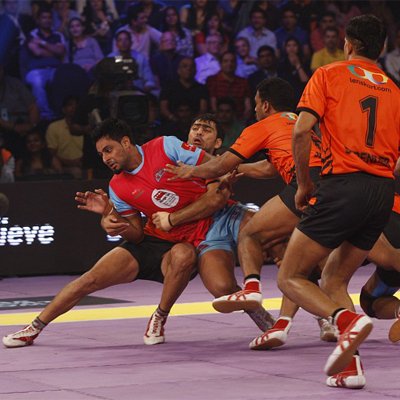
    On the sports front, the merged entity is set to become monopolistic, with Disney and Jio collectively controlling approximately ~75-80 per cent  of the Indian sports market across both linear TV and digital platforms. This dominance in sports, primarily cricket, positions them to command a substantial share of the overall ad market, showcasing strong growth in an industry where sports is a key driver of viewership on both linear TV and digital platforms. In CY22, sports adex (TV+Digital) in India stood at  Rs 71billion (according to GroupM) out of which Disney India had a contribution of ~80 per cent . The combined entity will have lucrative sports properties like Indian Premier League (both TV and digital), ICC cricket tournaments (both TV and digital), Wimbledon, Pro Kabaddi League, BCCI domestic cricket etc.

    Telco customer retention and bundling

    Telecom companies have used OTT as a value-add to retain/gain subscribers. And OTT companies piggyback on telecom plays to scale up their subscriber base – TSPs (telecom service providers) have larger access to a wide variety of customers. With the vast content library of Jio and Disney, the merged entity’s content, spanning 1) international movies, 2) web series, 3) sports content and 4) catch-up TV content, could prove advantageous for Jio subscribers and make it a one-stop content hub. There might be initiatives such as a Jio Prime offering, providing subscribers access to content at an affordable or even free price through last mile resource and 5G wireless access. The company will have a big advantage of last mile with Jio having a subscriber base of more than 450 million smartphone users This will hit Bharti Airtel as it has tried to tie up with OTT players in the content ecosystem to offer value-add. Thus, Bharti Airtel may have to invest heavily in own content or shape partnerships with global OTT giants such as Netflix and Amazon or other OTT platforms to generate clout in the content ecosystem.

    Synergy prospects

    – The ad revenue potential from IPL is expected to increase significantly with the merged entity having exclusive rights (TV+Digital) to IPL. This consolidation may result in bundled advertisement revenues, potentially mitigating the higher cost of IPL rights and reducing overall losses; due to IPL rights being split between TV and digital between two different platforms and digital platform offering IPL free, there was a big dent in the IPL revenues on TV, which could see some respite.

    – The merger is anticipated to bring about restructuring in employee costs, reduced production expenses, and lower advertisement costs for TV. These potential cost synergies could contribute to improved margins for the merged entity. On the sports side too, content costs may pare sharply for TV, digital over the medium to long term, given that fewer platforms may bid aggressively for expensive properties.

    – In digital, content cost inflation (content cost for web series 3-5x higher than for TV non-fiction shows, per episode) has been sharper due to heavy fragmentation in the OTT market and entry of global giants with deep pockets. With the merger, content cost in digital may see much lower growth, which may improve the unit economics for the OTT business, potentially resulting in lower EBITDA losses for Jio Cinema and Hotstar.

    – Considering the critical role of technological advancements in the success of OTT platforms, the integration of Disney’s technological expertise is expected to enhance the user experience on Jio Cinema. This improvement may subsequently drive higher subscriber numbers and revenue growth.

    Risks

    – Post CCI approval, NCLT (National Company Law Tribunal) approval may take another eight to 12 months

    – A below par customer experience on the video apps despite a wide variety of content may not augur well in subscribers paying for the same; global OTT giants like Netflix have a very superior experience to command a premium ARPU

    – Continuance of hefty losses of the merged entity over the near to medium term due to high costs sports properties (IPL, ICC tournaments & BCCI bilateral rights) could negatively impact valuation prospects for the merged entity

    Shareholding pattern of the merged entity

    After the merger, the ownership structure of the combined entity will be as follows: Reliance will hold 53 per cent  stake through cash infusion, after acquiring Paramount’s balance stake and factoring TV18 and Viacom 18 stake in JV, which are RIL’s subsidiaries;  Disney will hold 36.8 per cent , whereas the Bodhi Tree (stake through Viacom18) /TV18 (ex of Reliance stake) will hold balance 6.2 per cent /3.8 per cent  stake respectively.

    Valuation

    The joint entity, including cash infusion, is valued at  RS 704bn. This valuation comprises  Rs 115 billion in cash,  Rs 330 billion for Viacom18 (including Jio Cinema) and the remaining  Rs 260 billion (~USD 3.2 billion) is the combined valuation of Star India and Hotstar. This valuation of Star India and Hotstar is much lower compared to pre-covid valuation of $12-13 billion which may be due to 1) loss of IPL digital rights leading to ~50 per cent  ad revenue decline and 40 per cent  subscription revenue decline for Hotstar, 2) TV ad revenue remaining flat over FY19-23 and 3) sports content which may continue to incur hefty losses in linear TV due to slower revenue growth. From a valuation standpoint, the impact on TV18 (which owns 13 per cent  in Viacom18) is minimal to negative, as the combined entity is expected to generate substantial losses in the near term due to sports content. Additionally, TV18’s stake in the merged entity is valued at  Rs 42 billion, implying a hefty premium for its news business at  Rs 40 billion (considering TV18’s overall current market cap of  Rs 82 billion).

  • What the Zee-Sony settlement means

    What the Zee-Sony settlement means

    (Below is  Elara Securities’ Karan Taurani’s  perspective  on the settling of the dispute between Zee and Sony)

    Mumbai: The above development (settlement by Sony and not imposing a $ 90 mn termination fee to Zee) has no material impact in terms of earnings estimates as this case was a status quo with regulators. We had not factored any adverse impact of the case (Sony Zee merger termination) in our earnings estimates. However, this is seen as a clear respite to ZEEL’s core broadcasting business, which is trading at compelling valuations of seven times to one-year forward PE and has the potential to move towards our target multiple of 11 times PE core broadcasting business.

    We continue to maintain our positive stance on ZEEL, as we expect better growth rates in the festive season (Q3FY25), led by higher ad spends within FMCG verticals; further profitability too will continue to improve helped by cost-cutting initiatives, improved efficiencies, and lower losses in ZEE5, which will drive valuation re-rating. We have a BUY rating on ZEEL with a TP of Rs 210.

    Enclosed below is the link to the last update on Zee: https://tinyurl.com/54updv7x

    Highlights    

    – In an update to the stock exchange, Zee and Sony Pictures India (CMEPL and BEPL) have entered into a settlement to withdraw applications pending lawsuits, claims and counterclaims including a $ 90 mn termination fee, damages etc.

    – The agreements include a) Settlement for all ongoing disputes, b) Withdraw all applications, claims and counterclaims against each other (including a $ 90 mn termination fee), and c) Releasing each other from all claims regarding the transaction documents.

    – The parties have agreed to withdraw all pending applications, claims, and counterclaims filed before the Singapore International Arbitration Centre (SIAC)

    – On 22 Jan 2024, Sony terminated the merger cooperation agreement, and the composite scheme of arrangement originally signed on 22 Dec 2021. Sony immediately sought $ 90 mn in termination fees by filing an appeal with the Singapore International Arbitration Centre (SIAC).

    – The merger was primarily called off due to a dispute on the leadership of the merged entity.

    – The ZEEL had also filed case against Sony India seeking a $ 90 mn termination fee

  • Why we need good news today!

    Why we need good news today!

    MUMBAI: The commonly-held belief is that if you turn on any news channel, you will be rattled by the high-decibel cacophony that has become common as garden amongst the invited on-air guests and anchors during prime time. Every guest tries to outshout the other and the anchor, even as the latter raises his or her voice to be heard and play master conductor of the croaking symphony of voices.

    That’s on the so-called debate shows, on which supposedly suave and erudite journalists behave worse than the colourful loudmouthed politicians whenever they meet in the house for a parliamentary session.

    The so-called national conscience keepers have for some time now become the providers of everything but the truth about what’s going in the world around us, and in faraway distant lands. Political agendas, half-truths, opinions, poorly-researched reports, propaganda are spewed out daily during news bulletins on certain news channels. The intent: keep viewers and lay citizens guessing about the rightness of any action and development – thus confused – and envelop them in a shroud of fear by highlighting the impending danger.

    Can we blame the news providers totally?

    Not all of them have taken the same tack, but the entire news genre has got tarred and feathered with the same brush. But those who do, say it’s the masses of viewers who have forced them to take this path.

    Ordinary plain vanilla news and events do not really interest the common man is what they quip. But plant some controversy behind any news item and lo and behold the junta in hordes switch to news from the drama shows that they love to watch on general entertainment channels. Not just that: they stay glued to the news on telly as if their very lives depended on it.  And the ratings hit the moon!

    For the advertising dependent broadcasters this means heavy showers of moolah from advertisers who are looking to reach millions of viewers with their brand and product communications in the shape of TV commercials.

    Can this vicious perception about Indian news be broken? A laudable effort is being made by the TV Today group with the announcement of Good News Today (GNT). Not much is known about what its content will be. But its base line is that it will stay away from the negative tonality that has stained the Indian news television sector.

    The country and its 1.3 billion citizens do need many good doses of good news. The past 18 months have seen the world go through the agony of the rampage of the murderous novel coronavirus, not knowing who it will infect and kill or at least lay to waste. Millions have died, even more have been infected and many in multiples of that have had their economic stability totally upended, leading to trauma not experienced by any generation before. Depression is commonplace, sibling clashes have risen, the divorce rate is going up as the family fabric is stretched and strained under the pressure of being locked up in closed spaces without much social contact apart from our near and dear ones.

    Yes, the world is in trouble, economies are in shambles. Yes, all is not right with our finances. Yes, the way the virus and the world is being managed could be better. But do we need to be reminded about what is wrong daily? Is there nothing that’s right with our lives? Are there no good tidings for us? Has humanity lost its humaneness totally? Is there no goodness left in those that govern us?

    We all know the answer to this. Over the various millennia, it is always the good that has prevailed.  Usually, it appears as if the bad is getting the upper hand. But then from nowhere comes a savior, who gives hope to the suffering millions and even billions. And good triumphs.

    All of us remember Reader’s Digest. It was a compendium of articles and stories about how individuals overcame adversity; of heroes. It was a publication which I would rush to read, because it gave me hope as a youngster and in the early stage of my professional career. Even today it inspires me when I flip through its pages.

    Do I want to hear more and more rounds of Modi-bashing from rival parties who want to show his government and the efforts it is taking to build a new Bharat or India in bad light? Do I want to hear more about Modi and his team defending their actions or going on the offensive against the opposition? Do I want to hear that the world we are living in is totally corrupt? And that we have no hope?

    Yes, I would like to be informed about developments and announcements that impact our lives. But without it being distorted by prejudices and vested interests.  I would also like to hear about the good that is being done. I would like to hear about progress, about the improvements in our lives. About those who are sincerely working to better the lives of the common Indian. Whether it is a local councilor or a district collector or a state legislative member or a national parliamentarian or even a worker or a policeman.

    The English thinker and author James Allen once said: “You are what you think.”

    The Buddha said: “You are what you have been; and you shall be what you do now.”

    Hopefully, a news channel focusing on the good all around us and the attempts to build a better tomorrow will help in our shift towards a REAL better tomorrow.

  • 5G remote production: Need of the hour or call of the future

    5G remote production: Need of the hour or call of the future

    Broadcast to mobile is a fascinating concept which came into light in the early 2000s. The mobile networks were busy with offering GPRS based services. The early days saw a variety of mobile broadcast solutions including DVB-H, DMB, DAB-IP, ISDB-T and MediaFLO. The success of such solutions would depend on availability of compatible handsets and broadcasters could not justify huge investment into alternate/parallel network just to deliver content to mobile users.

    As 5G infrastructure garners pace into 2020, the response from media and entertainment industry has been very encouraging in terms of testing and potential adoption of 5G technology. Broadcasters are looking at ways to leverage and capitalize on this next-generation mobile technology. As the internet takes centre stage in content delivery and distribution, 5G will play the role of a catalyst in the growth of both, broadcasters and technology providers.

    Almost 92 per cent of broadcasters are planning to adopt 5G in the next two years(IBC report) and remote production has been identified as a major application of 5G wireless technology. As broadcasters continue to realize the potential of 5G, 65 per cent would imbibe it for remote production and 61 per cent of the broadcasters are willing to adopt 5G for distribution as an alternative to satellite, DTT or cable (OnePoll, Nevion).

    With its unique qualities like mobility, flexibility and reliability, remote production has emerged as the most vital application of 5G technology and could forever change the production workflows of live content such as events, sports and news. 5G has great potential to enable broadcasters to enhance coverage and streamline production by allowing multiple cameras and microphones. 5G will help in managing multiple live events from a central broadcast facility.

    Having said that, the transition to 5G will not be an easy one. It will take immense effort and courage to completely replace centralised production studios and widely popular OB vans with cloud-based workflows. Also, migration from SDI to IP will define the near future production techniques and it will be very interesting to see how 5G merges with these new techniques.

    Ultimately, adoption of 5G will hugely depend on the efficiency of the business model around which it will be built. The revenue-generating power of 5G is yet to be tested and broadcasters must be facing a dichotomy about migrating from the existing model which has been tried and tested for years. Change is the only constant but coexistence is nature’s amazing trait which could possibly lead to 5G complementing existing technologies and create an enhanced ecosystem for the growth of all the relevant stakeholders of the media and entertainment industry.

    (The author is founder and executive director, Planetcast Media Services. The views expressed are his own and Indiantelevision.com may not subscribe to them.)