
Category: Comment

  • News as trivial pursuit

    News as trivial pursuit

    We have been rising to majestic heights in our indignation over the proposed Broadcast Bill. Control us? The mature, responsible, credible Indian media? Curtail our freedom? Nonsense! And then we are outed by the police. A fake ‘sting operation’ by Live India (née Janmat) TV ‘exposed’ Delhi schoolteacher Uma Khurana supplying schoolgirls for prostitution. A lynch mob attacked Uma and the police clapped her in jail. The drama was dutifully recorded by the media. Uma was swiftly sacked. A week later, we hear that she had been framed.


    How shocking, said the media, but it’s an exception. We still don’t need your content code, thanks, we know what’s best. Keep your blipping Broadcast Bill away from us.


    However, voluntary self-regulation is tricky. Maybe the Press Council of India should be expanded to include TV and radio and given some teeth – dentures would do – to effectively regulate the media. For as a mortified media professional I have to admit that this scam is not an isolated example of the media’s bad behaviour. Our determined move from news as information to news as entertainment has blurred both our vision and the once inviolable line between reality and drama. Now we offer gossip, titillation, trivia and unreal aspirations as news, brushing aside boring issues of social concern, trampling sensitivities, infringing privacy, tossing aside ethics and humanity in our effort to be the hottest honey-trap available.


    Media as a trivial pursuit erodes public trust
    _______________****__________________

    Take some big stories of the recent past: Uma is framed, ex-model Gitanjali is re-discovered as a beggar, athlete Santhi Sounderajan apparently attempts suicide, freed Sanjay Dutt goes to Vaishno Devi, freed Salman Khan goes home, and MPs and journalists continue to pick bones with Ronen Sen’s ‘headless chicken’. Meanwhile, floods claim almost 700 lives and affect millions in Bihar, and displace over 70 lakh in Assam; farmers continue to kill themselves in Maharashtra, Andhra Pradesh, Karnataka and Kerala. We gave them short, customary coverage like brief, dutiful visits to elderly aunts, and returned quickly to our riveting game of trivial pursuits.


    Unfortunately, the freedoms we enjoy are for our role in educating and informing our audience, for helping them make informed choices that sustain democracy. Media as a trivial pursuit erodes public trust.


    We urgently need self-regulation by a representative body like the Press Council to get back to being a responsible and ethical media
    _____****_____

    And Live India’s scam is not even journalism, it is a criminal act of misrepresentation, using media as a weapon for personal vendetta, fabricating footage to wilfully defame and destroy a victim and incite violence. It doesn’t merit another debate on sting operations, this was not one. It needs to be dealt with as a crime.


    But the other examples represent bad journalism. Former model Geetanjali Nagpal is spotted begging in Delhi. Instantly, she is headline news, portrayed as a drug addict. The media rips the last vestige of dignity off the unfortunate woman, invading her privacy, sensationalising, offering details of her private life, presenting speculation as fact. She turns out to be mentally ill, not an addict. We cannot look beyond gossip value, cannot discuss larger issues of mental health, social security or homelessness. (We have an estimated 18 million street kids, plus possibly as many adults as street dwellers, but they aren’t sexy enough.)


    Santhi Sounderajan’s attempted suicide is gossip, too. Headlined as ‘Tainted athlete’ or ‘Sex-test failed athlete’ Santhi’s identity as an excellent sportsperson is erased by that of a curiosity of unspecified gender. After her failed gender test robbed her of her silver medal at the Asian Games last year, our media had shown no sensitivity. Even now, we don’t go beyond the curiosity factor to look at the third sex’s lack of rights and opportunities.


    Ronen Sen’s fowl story illustrates irresponsible journalism again. Getting your source into trouble for the sake of a delicious quote harms the atmosphere of trust and openness essential for constructive journalism. And then, larger issues of strategic partnership were obfuscated as we lost our head over a chicken. It didn’t help citizens to take informed decisions on the nuclear issue. Such frivolous frenzy reduces democratic decision-making to taking sides based on ignorance and muscle-flexing. Besides, it showed an embarrassing ignorance of English idiom. ‘Running around like a headless chicken’ means thoughtless rushing about; it doesn’t imply you’re a chicken. Like ‘as cool as a cucumber’ doesn’t accuse you of being a cucumber.


    Leading you through an exciting maze of trivia and gossip, the media confuses your priorities. So when a lowly constable hugs Sanjay Dutt he is instantly suspended, but no action is initiated against the policemen and politicians accused in the Bombay riots even after 14 years.


    We are losing our grip. We urgently need self-regulation by a representative body like the Press Council to get back to being a responsible and ethical media. We cannot protect our own freedoms unless we protect the freedoms and rights of others.


    (The Author is Editor, The Little Magazine. She can be reached at sen@littlemag.com)


    This article was first published in DNA (Daily News & Analysis) on 11 September 2007.


    (The views expressed here are those of the author and Indiantelevision.com need not necessarily subscribe to the same)
  • James Murdoch taking more hands on role at Star?

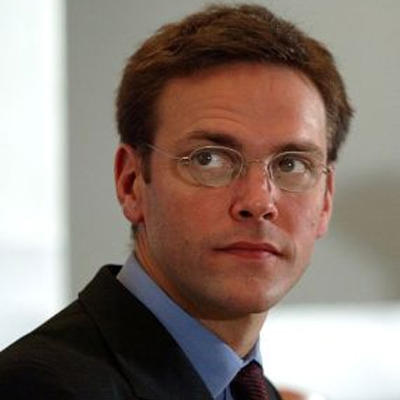
    James Murdoch taking more hands on role at Star?

    Truth will out. After months of rumour and speculation, the pieces of the puzzle as to what exactly has been going on behind the scenes at Rupert Murdoch’s Asian arm are falling in place (or so we believe).


    Conversations Indiantelevision.com has had with industry executives in India and Hong Kong aver that the countdown to yesterday’s announcement of Star CEO Michelle Guthrie’s departure had been set in motion months before. The first inklings of that came with the creation last March of a new executive structure within Star wherein Steve Askew was named president of Star Entertainment in addition to COO of Star; and the appointment less than a month later, of Paul Aiello as president of Star.

    Aiello’s was a newly created role that put him in charge of developing strategic and business directions for the pan Asian broadcaster while overseeing corporate functions including business development, strategy and implementation, Star Ventures, government affairs and corporate communications.


    Similarly, the schism that has riven Star India these past months also directly links back to events of March 2006 and the shake up in the Indian operations wherein two units were created – Star Group and Star Entertainment – with Peter Mukerjea made CEO of Star Group India and Sameer Nair promoted from COO Star India to CEO of Star Entertainment India. More on that later though.


    Back in Hong Kong, meanwhile, the next significant appointment was in September of David Butorac as president, Platforms. That announcement marked the return to the News Corp fold of a BSkyB veteran who was then COO of Malaysia’s Astro DTH operator.


    All these moves are said to have been orchestrated out of London by BSkyB CEO and now looking ever more likely heir to the Murdoch legacy, James Murdoch. That James would have a personal interest in the affairs of Star is not surprising since his three-year stint as chairman and CEO of Star marked his coming of age as an entrepreneur.


    When James joined Star in May 2000, Star was losing ?100 million a year. When he handed over charge to Guthrie in November 2003 Star’s India operations were extremely profitable and China was beginning to show profitability. Guthrie’s mandate was to drive the company further into these markets and steer it into DTH, and pure pay TV plays with higher subscription revenues.


    In both China (due to political reasons as much as anything) and India (the cycle of change?) there has been a deceleration but that doesn’t really tell the story. One could argue that it is also down to the advantages of being an owner but there is no getting away from the fact that during James’ reign there was clarity and simplicity in both executive chains of command as well as corporate structure and direction.


    To say that the executive command structure at Star today is convoluted would be putting it kindly. And nothing exemplifies this better than the India operations where there is a strategic/corporate CEO in Mukerjea, an operational CEO in Nair, and a president in Paritosh Joshi responsible for managing revenues. And there soon may even be a COO if reports of a move to India of long time Star Hong Kong hand Sanjay Das pan out as true. We’re surprised that the name of long-time Star loyalist and former India business development head Jagdish Kumar has not cropped up anywhere in the speculations.


    According to our reading of the events of the past few months, James has been preparing the ground for a return to the lean, mean management style that was in place earlier and this could more than likely see more executive churn right through the Star system. At the top of that list of potential near term departures is Askew, currently on four months’ sick leave.


    A possible offshoot of this could be that James will sooner rather than later have a far more role in running the affairs of Star, maybe take on a designation of chairman of Star or some such.direct


    And truth is that Star really means India, the rest of it being not much more than feeder operations. So James will perforce have to send out a clear message there. The present neither here nor there two-CEO proposition has proved an unmitigated disaster.


    If the head honchos at Star were convinced that Nair was the man to lead it into the new and uncertain digital future then they should have gone with him and let him do his job. The presence of a shadow CEO (Mukerjea) was a huge disservice to Nair and even more so to Mukerjea, who had helmed the fortunes of Star India in its period of greatest dominance.


    POSTSCRIPT: The reasons for Nair’s deciding to quit (informed sources say he put in his papers on 28 December) remain shrouded in mystery because his is after all the most high profile media chief executive’s job in the country (shadow CEO notwithstanding). If anyone could be said to have had reasons to quit it was Mukerjea, and by current reckonings, both have resigned. So there is certainly some serious damage control that newly inducted CEO Aiello has to deal with when he arrives in India on Monday.

  • Govt role: CAS’ fate linked to political compulsions

    Govt role: CAS’ fate linked to political compulsions

    The Indian government (read the information and broadcasting ministry) is suddenly finding itself caught between the devil and the deep blue sea, which more often than not takes great pleasure in turning red.

    Sandwiched between a strident judiciary — justifiably so in the present circumstances — and the politics of running a coalition government with vocal allies (who seem to have a view on anything and everything), the Manmohan Singh regime is bound to find it difficult to implement a recent Delhi High Court order that in short says: implement conditional access system in the areas notified earlier by a previous Bharatiya Janata Party-led coalition regime over 18 months ago.

    State-level elections in April-May would compel the government to give a deep thought to the so-called concerns of regional politicians. And, decision-making gets that much tougher when one of the states going to the polls, West Bengal, is ruled by a Left party, which is also a crucial ally of the federal government in New Delhi.

    The I&B ministry hasn’t yet held any talks with the various state governments where CAS is sought to be implemented. Nor have any meetings been held with industry stakeholders
    _____****_____

    Though the Delhi High Court order exhorts the I&B ministry to rise above regional level party politics and not use ‘public interest’ to influence an executive order (the notification related to CAS rollout) passed by the federal government, reticent politicians would definitely try to have their own way. Don’t forget that the I&B minister Priya Ranjan Dasmunsi’s parliamentary constituency lies in West Bengal and the street-smart politician has cut much of his political teeth in Bengal.

    With Kolkata in West Bengal, one of the metros targeted for CAS rollout, already swinging to the election tune, the I&B ministry would have to see how New Delhi’s Left-oriented allies react to the issue of CAS or ‘watching TV channels via a black box that would cost around Rs 3,000 (approximately $ 67),’ as some politicians are explaining addressability to the people.

    It can just be that the ministry goes in for an appeal one day ahead of the month-long court-mandated deadline
    _____****_____

    Though it hasn’t reached a crescendo, already there are murmurs amongst politicians of the Communist Party of India (Marxist), especially the local ones, on how CAS’ introduction around election time can be ‘disruptive’ and have telling effects on the electoral fortunes of the party in West Bengal.

    It is pertinent to note that the I&B ministry hasn’t yet held any talks with the various state governments where CAS is sought to be implemented. Nor have any meetings been held with industry stakeholders to discuss the issue in the light of the court’s observation.

    Apart from the West Bengal politicians, those representing the seven constituencies of Delhi in Parliament have already been petitioned by some cable operators on the ground that implementation of CAS might upset cable TV consumers of the National Capital Territory.

    With Delhi’s aam junta (hoi polloi) totally clueless on what CAS is all about — apart from what has been fed to them by politicians and the media — scepticism is bound to run all across on something new, which is not part of the basic infrastructure that is severely lacking here and making daily life that much more worrisome.

    And, the Congress-led Delhi government, trying to battle its own intra-party differences on demolition of illegal constructions all over Delhi (as directed by Delhi HC) that has left the denizens of the Capital fuming, the will to immediately implement another court order (on CAS) is definitely lacking.

    It would also be interesting to see how New Delhi could read the Delhi court order, which is not as simple as is being made out by many industry stakeholders — the benefits of CAS or addressability, notwithstanding.

    For the I&B ministry to plan a rollout of CAS as per the court order, it has to first revoke an executive order that suspended implementation of CAS.

    Now, here is the piece de resistance: the court order is silent on the fact whether addressability should be introduced, as per the prayer of the petitioners, ONLY in the south zones of the metro cities of Kolkata, Delhi, Chennai in Tamil Nadu and Mumbai in Maharashtra or the whole of the cities.

    After revoking an earlier notification, the federal government can stick to CAS’ introduction only in the south zones of the metros or interpret the court order as rollout in the whole of the cities. A clarification on the interpretation hasn’t been sought yet by the I&B ministry as there is a section that feels an appeal should be made against the present court order.

    If the government goes in for an appeal, which can turn out to be time consuming, then the timing of it would also be important. It can just be that the ministry goes in for an appeal one day ahead of the month-long court-mandated deadline.

    As things stand today, the government is keeping things fluid — deliberately so — to weigh all options, including the biggest challenge: political compulsions.