Category: Comment

  • IAA World Congress: Go digital, focus on new media

    The much talked about 42nd IAA World Congress has come and gone and given many an opportunity to visit Russia, which is generally not on anybody’s tourist map. I am sure all delegates are reasonably happy that they made it to the Congress, whether it was for the Congress speaker presentations or the venue Russia or the opportunity to meet with advertising big wigs from around the world.

    India, made its presence felt at this Congress with 47 delegates, three speakers – Vinita Bali of Britannia, K Srinivas of Bharti Airtel and Sam Balsara of Madison World; and bagging the 2010 IAA Chapter Excellence Award.

    When one visits a new country, in your flight, you replay the impressions you have about the country – so images of the biting cold, vodka and a language that you can‘t understand a word of came to my mind. But on stepping out of the Moscow airport, the heat and the sun gave us a not so pleasant surprise. Since the Conference was in the Kremlin, I was kind of expecting to bump into Putin, but that was another disappointment.

    But, let’s talk about advertising first. The Congress’s 38 speakers were to talk to over a thousand delegates from all over the world about the Consequences of Change taking place all around us.

    If I have to sum up what industry stalwarts like Sir Martin Sorrell, Mark Pritchard, Maurice Levy and other prominent speakers had to say, I would say I have four broad take aways that all speakers touched upon in their presentations:

    Go Digital and focus on new media

    Add value to consumers

    Increase consumer base and compete against non consumption

    Use CSR as a business tool

    Now going into details of what some of the speakers said, Sir Martin Sorrell gave a good overview of the advertising and marketing industry at large. He seemed upbeat about the emerging climate as reflected in WPP figures that he had seen days before the conference.

    He spoke about WPP’s strategy of focusing on BRIC markets, new media and digital, and consumer insights. He highlighted eight trends that he had observed or prophesised about and said because of this the advertising and marketing industry was poised to play a more critical role in the near future:

    Shift in economic power from West to East and North to South.

    Overcapacity in the world and therefore a need for differentiation.

    Growth and importance of digital companies. He cited the example of Google being the biggest media owner in the UK.

    Growth in retail.

    Internal communication and the challenge of getting people to work together.

    Shift in coordination from global to local.

    Importance of CSR and the use of CSR not for a social cause but more to meet a business purpose or goal.

    The Government in all markets is becoming extremely important and influential and a huge spender on advertising.


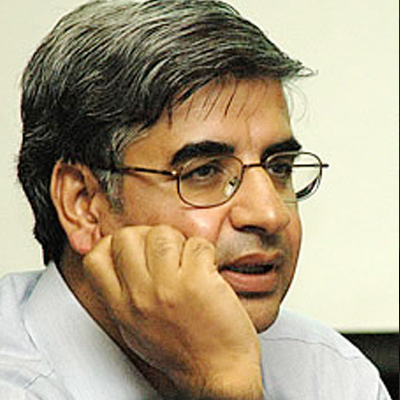
    India‘s Kaushik Roy at the Congress in Moscow
      Mark Pritchard, the global marketing   and     brand building officer at Procter and Gamble made a pitch for brands to move from marketing to serving a purpose. He also touched upon why a brand exists (what is its purpose or soul); what does the brand stand for (its benefits or its heart); and how is the brand expressed (its execution or body). To make his point come alive, Mark shared some examples of the work they did on Pampers in Russia, based on the insight that when babies sleep well at night,they are 

    active and grow up healthier; PUR, a campaign for clean water in Africa and from our very own India, the famous Gillette – Shave or Not to Shave campaign. No international conference can now be complete without the mention of this campaign! Divya, please take a bow. He also emphasized on the fact that when an organization does all these things, it boosts employee morale.

    Eric Joachimsthaler, spoke very passionately on Challenger Brands. He emphasized that organisations should forget about Disruption and focus on Deep Dive. The key difference between Disruption and Deep Dive being, in Disruption companies would focus on optimizing their own value chain, focus on market sharing and competing against the next competitor. While in Deep Dive the focus is on optimizing your consumer’s value chain, focus on market creation and competing against non consumption.

    He made his viewpoint come alive by giving the example of Flip, a video camera that could upload photos immediately on Facebook in six seconds and achieved 34 per cent market share in US in three years, because of understanding and capitalising on the need gap in the market. He also emphasized on the need for 365 day Communication and not 360 degree communication and the need to create social currency. Whilst Sir Martin spoke about the need for differentiation because of overcapacity, Eric felt it was no longer possible to differentiate your product in today’s fully wired and instant world.

    Vinita Bali was eloquent and said that challenger brands usually have less resources, so they employ sharper strategies, act faster and make better use of scarce resources and these are the qualities necessary for challenger brands to survive.

    The panel discussion on Media Opportunities in the BRIC markets, had Sam Balsara, representing India and the Panel spoke about how the only way to make the advertising business grow was to make the client’s business grow and aggressive use of new media and a better understanding of new media by agencies would help the cause.

    Microsoft and 20th Century Fox made a joint presentation on how they promoted and marketed the biggest animated film of the year Avaatar, highlighting that when two giants tango together you can get delightfully surprising results.

    Day 2 had Maurice Levy open the Congress and he spoke about companies‘ need to take their responsibility to society seriously and that they will be rewarded for doing that.

    Rich Riley from Yahoo spoke about taking the online platform to the next level and how Creative and Media agencies could use digital to engage with consumers in a meaningful way.

    Another interesting panel discussion was on The Advertising Agency Model which had representation from Group M, Publicis Groupe and Joanne Davis Consulting. The panel highlighted the lack of communication between clients and agencies, and groaned about the growing influence and power of procurement managers in agency-client relationships.

    Nikesh Arora from Google, highlighted that 26 per cent of the world’s population is online and 24 hours of video is uploaded every minute on YouTube. He also said that the internet provides instant feedback, interactivity with advertisers, a borderless world and gives a notion of mass personalisation. He emphasised that the last 10 global brands have all been built online – Google, Facebook, YouTube, etc.

    Another interesting presentation was from K Srinivas of Airtel, where he took the audience through the miraculous Airtel story of how it became the No. 1 telecom service provider in India through an innovative business model, focussing on outsourcing of core functions to overcome shortage of resources, but investing heavily on the brand.

    IAA also had a special package for their Young Professional Members, which gave them an opportunity to be part of the Congress at a fraction of the regular delegate fee. 16 youngsters from around the world, including me took advantage of this offer, including five from India.

    The evening entertainment organised by the IAA World Congress organisers gave the delegates a good flavour of Russian customs, from a gala dinner at The Kremlin Palace Congress Centre Rooftop Ballroom, to the Bolshoi Ballet. After the gala dinner, there was an after party on the roof top of the Ritz Carlton, at a Lounge called O2. Reminded me of our AER Bar at Four Seasons; O2 lounge gave an aerial view of the Kremlin and the Moscow skyline by night.

    Moscow as a city is similar to Delhi in winter in some ways – very wide roads, majestic buildings and flowers (tulips no less). But despite the wide road, the traffic and the traffic jams make you wonder if you are still in Bombay! With the onset of spring, the lush green gardens and flowers were in full bloom, the warm weather also got most of Moscowites out on the streets, enjoying the warmth, making walking on the streets, a delight.

    Quite a lot of Indian delegates were fortunate to bump into Indian taxi drivers from South India, most of whom came to Moscow 10 – 12 years ago to study medicine and because of circumstance landed up doing all sorts of businesses except medicine. They proved to be good tourist guides for us for both Moscow and St Petersburg city to show its historic sights. St Petersburg is another must see city, a one-hour flight from Moscow. The city again is very historic with many parts in the city looking a lot like Rome, but on a bigger scale.

    Russia as we all know is famous for its vodka, but what many don’t know is how a Russian has his vodka. Chilled vodka is poured into a short glass and right next to it comes another glass of orange or tomato juice. Instead of mixing the two together, like many of us do, they first take a gulp of the vodka followed by the juice. And by the way Russian girls don’t drink vodka.

    So on the whole, the 42nd IAA World Congress provided delegates a good overview of the state of advertising in the world today and gave me an opportunity to tick off Russia from the 100-places-to see-before-you-die list.


    (The author is Madison World Business Development & Diversification Manager)

  • The Business of News

    All of us in the business will agree that 2009 was not the best of years. But the good thing about it was that the world of business learnt the hard way that business is not just about excel sheets and that the valuation on those excel sheets does not attract attention in a hurry.

    Media was possibly one of the worst hit sectors across the world. Quite logically so; one of the first cost cutting steps, if not the first, is usually, if not always, slashing of advertising expenses. More often than not, in recessionary circumstances, advertising is no more considered as an essential investment.

    News industry in India, however, was not that badly hit as the country went through a General Election. But there’s much more in the news on TV News industry! Read on…

    News television is supposed to have two distinct identities. As the fourth estate, it is supposed to inform and empower the viewers, work as a watch dog to the policy makers and implementers. It is supposed to perform the role of a facilitator for our citizens, many of whom are disadvantaged and aggrieved, or for those groups which believe they have a legitimate and justifiable grievance against the powers that be. All this requires us to act as custodians of public interest. The other identity is as private sector organisations we are bound by the rules of the big bad market of balance sheets and ROI.

    Most people seem to think that these two distinct identities are at conflict, but I‘m willing to take a bet that they are not. But we sure have a lot to worry about – both our public and private interests.

    First about our reducing role in the public interest space. The viewership (GRP) figures of news television in India paint a disquieting picture. The GRPs slipped from 236 in 2007 to 221 in 2008 and to 166 last year, a 30 per cent shrink in just two years. I am at a loss to pinpoint a particular reason for the slide. However, regional channels are robustly augmenting. As a thumb rule, a regional news channel should have 70 to 80 per cent local news. Are audiences then more interested in closer home realities than the larger canvass?

    Are viewers deserting news channels? Is there a significant change in rating base which has caused this decline? Does our gut-feel endorse these slipping numbers?

    Let me cite a small anecdote. Once when former US president Lyndon B Johnson was asked his views about the media, he had quipped: “If one morning I walked on top of the water across the Potomac River, the headline that afternoon would read: “The President Can‘t Swim.”
    He may have said this decades ago but it captures to a great extent how Indian media too can influence or draw interferences from a simple and straightforward piece of news. In the spider-web of competition, the truth sometimes gets strangled. But is that all? I wish, it was.

    Like for instance, what would you call “Breaking News” in today’s context? Before that, how would you define “News” ? In my own understanding, reporting of any incidence that is “topical” and “relevant” is news. Tabloid journalism possibly compromises with the relevance factor, but still remains topical. And thus “breaking news” would be an initial (ideally first!) reporting of an incident or development which would be relevant for a certain section of audience.

    But the Indian news media has redefined “Breaking News”. It could be anything from what the babas and tantriks have to say to what the astrologers’ take on eclipses is, what the cats, dogs, snakes and the likes are engaged with! This unthinking, wavered ways of the news channels has taken the sheen away from the respect we used to command as organisations with social responsibility.

    Thankfully, we in our ( Zee News Limited) news channels do not have such wide canvas for “Breaking News” and our editors still stick to the literal translation of the two words under reference. And it was thus with some sense of concern, as also with an equal feeling of social responsibility, that in May 2008 Zee News took a conscious decision to break free from the trend of hype and hoopla. Respecting the intellect of Indian audience, we brought our focus back to facts, analysis, perspective, reportage and the likes. I can say today, with some satisfaction, that we have not wavered from our path since, despite pulls and pressures from the policies of competition. We held steadfast in dishing out for our viewers news that was accurate and relevant, across all bands and in all languages that we deal with. Clearly, our guiding principles worked and we witnessed all-round growth across channels.Let’s now look at the business of news. Did you notice that the sole criterion that a media brand or organisation is evaluated in India is nothing but the TRP numbers? Logically there’s nothing wrong in it as higher TRP would lead to higher advertising. Advertising is still about 80 per cent of the broadcast sector‘s revenues in India and hence that should lead to higher profitability. However, in India, as known to most by now, profitability is not just TRP numbers. Rational cost structure, innovative strategy, network economy of scale etc have significant influence on the way business is done and hence on the bottom-line of any business. Thankfully, the economic recession has brought the attention back to current bottom-line. Valuation is no more the buzzword. Current deliveries are at the core of all decisions with respect to a business outfit. While the marketing and programming departments still get credit for the TRP numbers, the business leaders would have to wake up to serious questions on returns and profitability from those who are funding the businesses. I assure you that the TRP rankings and profitability do not always have a direct corelation. At least in our case the latter far out-performs the former.

    Yet, I‘m not without hope. As an eternal optimist, I feel that the future of news TV is far more promising than what seems on the surface. The industry body, the News Broadcasters Association (NBA), has come up with commendable achievements in its effort to self-regulate. It is encouraging for NBA to get significant acknowledgement from the Ministry of Information and broadcasting.

    I firmly believe that the most potent regulator has always been the “market”. Here in our case, finally the audience has the last say on what they want from news TV and they would make their verdict loud and clear, eventually. And then digitisation would ease out the distribution bottle neck and the news genre would experience explosive growth. As I have always mentioned, regionalisation of TV would be a primary growth driver.

    As I debate the minutiae about dropping viewership trends in my mind, I feel that there is no one distinct phenomenon for the present exodus and it is possible that it just a matter of perspective.

    So I leave it to you to mull it over as well.

  • That day mustn’t come again

    That day mustn’t come again

    I flew back in Delhi after an exhausting day of work at the B.A.G’s Mumbai office. I sat to pursue my daily unwinding ritual of channel surfing. Least did I expect to see the dastardly act that was shaking the city and draining blood of the country.

    I immediately got on the phone to connect with the News 24 Mumbai and Delhi team. The channel had already dispatched reporters who were already present and reporting from ground zero. I watched the news feeds as they came in and as they were being relayed then on the channel. The terrorists had entered the heritage Taj Hotel- the most esteemed and loved landmark of the city, and taken the staff and guests hostage. They had grounded themselves at the Oberoi Trident firing at unsuspecting people and horrifying people like an untold unheard nightmare. They had sprayed bullets on unsuspecting people at the Chattrapati Shivaji Terminus and Leopold Café. AK-47s had been used and we got news of 20 people being murdered at the busy CST station and hundreds wounded.

    At the popular hang out Leopold Café, news came in of five people being killed and many more injured. The terrorists were still on the loose prolonging the tragedy. Any person familiar with Mumbai knows the mad rush the CST station witnesses every single day, clamouring on to trains that accommodate hundreds of people more than capacity. Every person who goes to Mumbai has the Leopold Café on their tourist destinations, for its quaint feel and heritage. I was numb as an Indian with the thought of the havoc the act would have caused at the sites and how many more would suffer in this mindless war that had been waged on us.

    Minute by minute more news kept coming in. News 24’s resident editor Hemant Sharma stood organizing his whole team and simultaneously giving piece to cameras one after the other. From the youngest of reporters to the most experienced, all set out to report the horror. The police had cordoned off the Taj and the other attacked sites and rescue operations were ensuing. Additional Commissioner of Mumbai Police had received information that a colleague had been injured in the gunfire at the Cama and Albless Hospital for women and children. They took a Toyota Qualis and proceeded in that direction. Two terrorists stepped out from behind a tree and opened fire with AK-47 automatic rifles. Priti Sompura, News 24’s reporter, was present with the cameraperson steps away from the site. Kamte had managed to retaliate, wounding a terrorist in the arm. In few minutes, news of them having succumbed to their wounds infuriated and saddened the nation.

    At the Taj, India witnesses that the Anti Terror Squad Chief Hemant Karkare had arrived and looked set to lead his team to bring the nightmare to an end. He geared up in moments in his helmet and bullet proof jacket. Was there hope for the nightmare to end shortly, reporters asked…

    It was through the live reports that we saw him go… Through the ropes and into the hotel, braving the threat he faced in his line of duty. Within seconds, the terrorists eliminated him. Their bullets pierced his so called bullet proof outfit. News 24’s anchor Sayeed Ansari told the nation of the death of one of the finest police officers to his audience. Such was the rush of blood and the magnitude of the tragedy, that his voice choked and eyes watered as he stood speaking to the camera. Another blow to efforts to end the disaster burning…another irreplaceable loss that had engulfed us all.

    Every moment was a shocker, every second a life changer. News 24’s Managing Editor Ajit Anjum, Director News Supriya Prasad and Input Head Rahul Mahajan rushed back from where they were to the news room to bring the shocking incident to their audience. Rahul Mahajan caught the first flight to Mumbai to bring the intensity and magnitude of the attack to the television screen. Supported ably by Shadab Alam, Mukul, Arun Pandey, Manish, Shashi Shekhar, Vikas, Preeti Sompura and Santosh Tiwari, the teams ensured reports relayed on the channel without any interruption.

    Raman Kumar and Amit Kumar, handling Delhi bureau, spent their night alternating between the Prime Minister’s Office and the Home Minister’s office seeking their reactions and responses to the tragedy. Manish Kumar and the whole fleet of reporters coordinated with Hemant Sharma on a minute to minute basis to bring news as it happened. Naveen Bisht, Adarsh Rastogi and their teams packaged all reports non stop in tandem with the reports.

    The Taj Hotel was totally under siege, and the freaks inside were firing randomly at staff and guests. Chefs, servers, attendants, people out for tea and dinner, foreigners out on vacation… There was only a number attached to the men and women who were falling dead with each aimless bullet being fired by the mad men inside. Bombs went off in two taxis close to where Vivek Gupta was reporting for News 24. Saved by a hair’s distance, it was all a joke to the men who had planned it all. To those suffering, to the ones reporting, to those witnessing – just an indescribable feeling raging within.

    Bullets were in an arms reach and terror was striking one the same plane on which stood the men and women reporting development, moment after moment. From News 24, cameramen Murganathan, Prahlad Singh, Vijay Chaudhary, Jitendra Singh, Imteyaz Khan and Akhilesh Singh positioned themselves at various points around the Taj, and the other sites. Reporters Priti Sompura, Vivek Gupta, Bhupendra Singh, Ankur Tyagi, Pravin Mishra and Vinod Jagdale stood, lay down, squatted – like the hundreds of other reporters from various news channels to report what was the worst terror attack on the nation.

    News came in that the CST station and Leopold Café had been taken over by security forces. 52 people had been killed at CST and 109 injured. 10 people had been killed at Leopold and many other were left maimed and bleeding. Hospitals were bustling, trying to aid the injured. Meanwhile, a one-sided war was raging at the Taj, Oberoi and Nariman house – all a stone’s throw away from each other. India watched as the moment by moment account was brought to them live by those standing at arm’s length with death. India united as news of the tragedy their compatriots faced stared them in their face.

    Amidst reports and the madness of bringing it all live from the newsroom, I called my friends in Mumbai enquiring about their safety, several of them including Sabina Sehgal Saikia. I could hear the numbness of their family members as they spoke flatly about their loved ones.

    Day after day, worse news kept coming in. And the fact that ten men had held the country to ransom for 24, then 48, then 72 hours exposed the helplessness of the common man and infuriated us all as never before. And for all the four days, Resident Editor Hemant Sharma relayed developments second by second in coordination with the Delhi team. Anchors Sayeed Ansari, Anjana Kashyap and Akhilesh Anand reported the minute by minute developments on all days non-stop. Reporters like Ankur Tyagi, Sanket Pathak, Anuja Karnik, Aarti Dani, and Anshul Agrawal along with camerapersons Dilip Rawani, Naveen Pandey, Mintu Singh, Kanti Parmar, Sameer Sherke and Babaji Nanaware continued to report and bring live second by second developments. Supplement reporters who had been flown in to support the Mumbai team included Satyendra Upadhyay and Nalini Rajput.

    Amidst the humdrum, one wondered why when we are surrounded by enemies, can we not have a centralized anti terror agency to ensure that such an incident doesn’t reach the proportions it reached? Why did our heroes have to die so arbitrarily while protecting us? Could there be no concerted effort to end the nightmare? Why was New Delhi at such a loss after the death of three fine officers and why could it not garner a unit to end the ensuing disaster? No one seemed to be in command; no one seemed to be leading the way to end the nightmare.

    A year later, the Chief Minister of Maharashtra has honoured Priti Sompura, Vivek Gupta and Ankur Tyagi with the Maharashtra Congress Committee award for their efforts in reporting the horrific day in the face of acute danger. News 24 recounts the horror of this day last year with its show, Morche Par Reporter, that also commemorates the men and women from across news channels who reported the days of horror for their compatriots and helped unite the country into one in the hours of grief and mourning.

    We all asked a hundred questions, vented our fury, wrote, debated, argued and fought…and then fell silent. Like we always have done…like we always do…A year later, there is yet no unified command in place with the anger, sorrow and helplessness that engulfs me like the billion people of India.

    (Anurradha Prasad is News24 Editor-in-Chief and BAG Films & Media CMD)

    (Disclaimer: The views expressed here are those of the author and Indiantelevision.com need not necessarily subscribe to the same)

  • Wanted: More than just editors

    Wanted: More than just editors

    The Mumbai attacks, for all their tragedy and pathos, were an unparalleled television event. It was news television that became the conduit of a shocked nation‘s horror and anger as we watched the terrible spectacle unfold in our living rooms. Mumbai was to be a game-changer at many levels – diplomatic, administrative and political. A year later, as the blanket coverage of the one-year retrospectives winds up on the networks, it is time to take stock. As the media focuses attention on the slap-dash political legacy of Mumbai – with many of the central characters of 2008 back where they were in 2009 – it is also time to focus the lens back on the news networks.

    Any discussion of broadcast reform in India gets stuck between two poles: the controlling impulses of a state always looking to turn the clock back and take back lost control and the need to maintain the independence of news television. For all its flaws, the creation of the Indian satellite news industry has been a landmark struggle unparalleled in the history of global news and the fear has always been that any attempt at regulation risks throwing the baby out with the bathwater. Yet, some kind of a real watchdog there must be. In a different context, the untamed impulses of Wall Street‘s bankers that led to the global economic crisis are an example of what unbridled laissez faire can lead to. Fifteen years after the landmark Supreme Court judgment that freed the airwaves, India remains the most unregulated television market in the world and while this suits the owners and the editors in their no-holds barred quest for revenues, Mumbai underscored the need for an unbiased oversight body comprising all stakeholders more than ever.

    Two provisos need to be added here. Much of the governmental criticism of the TV networks in 2008 focused on how television became the world‘s window into the ineptitude of the Indian state – too many spokespeople, too much ground confusion and too many operational details being divulged by the then Home Minister. Let us be clear. That was not television‘s fault. The state cannot blame the messenger for its own failures. In the early hours of Mumbai, television coverage did what it was meant to do: it brilliantly captured the scramble, the confusion and the reality on the ground.

    The real problem with television coverage in the days after Mumbai was a more deep-set one that we are used to seeing in its coverage of other events as well; that of sensationalism and the new addition to the vocabulary of newsrooms: “aggressive” journalism. The networks, in varying degrees of complicity, became not outlets of information but channels of propaganda and the lowest common denominator. The same sensitivity that goes into creating the saanp-seedhi genre of news went into much of the post-Mumbai coverage with at least one top network talking seriously about the option of a first-nuclear strike on Pakistan. This was not a considered news response; this was the response of a petulant child with the candy of TRPs hanging in front.

    The post-Mumbai proposal to provide the channels only edited and pre-censored footage of emergency situations was preposterous and was rightly opposed by TV editors and all those who believe in the institution of the free press. But it should also have been a moment to pause and consider how much of this statist counter-reaction was a result of TV‘s own impetuosity. What we have in the form of oversight today in news television is tall promises of self-regulation that are given with seeming sincerity but always fall prey to the weekly tyranny of ratings. Mumbai should have been an opportunity for genuine reform, one that seems lost.

    Ambika Soni‘s relatively benign and thoughtful attitude to news must not lead TV owners and editors into a comfort zone of complacency. Personalities come and go but the problem with satellite television regulation is structural, one that goes into the heart of the unique manner in which the industry grew in its initial years as an illegal medium. There is still no overarching regulatory body to oversee broadcasting issues. There is no Indian equivalent of the American Federal Communication Commission and Indian broadcasting remains highly unregulated. Compared to other developed television markets Indian broadcasting exists within a highly confusing maze of overlapping controls. For instance, India is one of the few developed TV markets with no cross-media ownership laws. Such a state of affairs, at a time when India is fast emerging as a new global media capital cannot be sustainable.

    In a sense, Indian television has continued to operate in a legal framework that is more akin to that utterly untranslatable North Indian word: jugaad. Jaipal Reddy‘s Broadcasting Bill of 1997 was based on British law after studying the broadcasting systems of six countries – USA, UK, France, Germany, Italy and Australia – and sought to create a new legal structure for broadcasting but disappeared into oblivion when the Gujral government fell. Priyaranjan Dasmunshi‘s draconian version of such a Bill is now on the backburner. Since the 1995 Cable Networks Regulation Act (which has limited uses), Parliament has only managed to pass one major broadcasting-related bill – the 2007 Act on mandatory sharing of sports feeds. And that only passed because of the immense drawing power of cricket.

    The Ministry of Information and Broadcasting has periodically tried to fill the regulatory vacuum with draft legislation and summary executive directives/notifications, most of these designed to assert its control. It has consistently tried to put the genie of broadcasting back into the bottle. Looking at it from a historic perspective, the contentious twists and turns over CAS and the news uplinking policy changes when NDTV bifurcated from Star News are perfect examples of the minefield that is the current broadcasting legal framework.

    War, they say, should never be left to the generals alone. Television, similarly, is too pervasive an influence to be left to the judgment of the industry itself. A year after Mumbai, the need for a genuinely impartial authority to balance the content and regulatory oversight that Indian broadcasting desperately needs is being felt even more. 

    (Nalin Mehta is the author of India on Television and a founding editor of the Routledge journal South Asian History and Culture)

  • Why the content king needs wise counsel

    Why the content king needs wise counsel

    As we mark the anniversary of the terrorist attacks in Mumbai on 26th November 2008 and the subsequent 60-hours of hostage-taking horror, with murders, mayhem and ensuing chaos unfolding live on national television, it is worth reflecting whether a more regulated news media might have shortened the misery and helped the security mission.

    There was much criticism of the way television networks covered the atrocity as a tacky round-the-clock Bollywood thriller – except that it was for real, claiming nearly 170 lives and many more injuries. Competing news networks vied with each other to provide the most sensational and dramatic reportage from India’s commercial capital. News footage such as live pictures of National Security Guard commandos being airdropped near the Nariman House, seemed highly irresponsible, potentially endangering both hostages and security forces.

    In a report just weeks after 26/11, a parliamentary panel called for greater regulation of real-time broadcasts during such emergencies, claiming that ‘the live footage shown by television channels was free intelligence for those allegedly guiding the attackers from afar through satellite/mobile phones‘. The government proposed 19 new amendments to the Cable TV Networks (Regulation) Act, including the suggestions that in the future there should be ‘delayed carriage of live feed‘ in such emergency situations.

    Partly in response, the News Broadcasters Association – a leading professional body of news organizations – set up a self-regulatory ‘emergency protocol‘ for covering terrorism. However, it is likely that commercial imperatives will still dictate what gets on air. In an excessively market-driven broadcasting ecology, the drive to be first with ‘breaking‘ news can lead journalists and news managers to compromise on content. There are numerous instances of this: one prime example is how television news has invented the sting story – sometimes slanderous, sometimes even fake. How should such content be regulated and by whom? What can we learn from other democracies?

    Until very recently, broadcasting content was tightly monitored within the European Union. Steeped in the tradition of public service, broadcasting was managed by governments as well as by self-monitoring by internal institutions within the broadcasters themselves. With the opening up of the airwaves to commercial – especially satellite and cable and later digital – broadcasting, this system has been considerably undermined by the forces of the market. As digitalization and technological convergence became a reality, it became difficult, if not impossible, to regulate content and as a result authorities opted for ‘soft touch regulation,‘ letting industry regulate itself in the public interest, while retaining control on broad policy outlines, as well as through judicial review.

    One reason that such an arrangement seems to generally work is that the regulators – such as Office of Communication (Ofcom) in Britain – are, and more importantly, are perceived to be, autonomous from government control, and therefore carry greater credibility both within the industry as well as among the general public. The content of such broadcasters as the BBC is also monitored by its Board of Governors and as a public broadcaster, it is also under parliamentary scrutiny, for periodic approval of the licence fee.

    What is more, the public have a greater say in terms of feedback on programme content – particularly on the public service television, unlike the commercial sector which is more often than not hostage to advertisers.

    Though the ratings-driven commercial model remains the dominant one in the United States and while the First Amendment ensures a high degree of independence to the media, the Federal Communications Commission requires broadcasters to follow certain restrictions in relations to content such as what is deemed as ‘harmful to minors‘.

    Though television in India was established in the European public broadcasting tradition, it has continued to veer towards a commercial model where Content is the King. As the world‘s largest and its most vibrant democracy, the notion of a free flow of information and freedom of expression is deeply entrenched in India. However, freedom of information and expression should come with a high dose of social responsibility, particularly relevant in a nation where more than 400 million people remain illiterate – despite huge progress in many areas including unprecedented growth in broadcasting industry – making India a country with the largest number of dedicated news channels (soon to touch three figures).

    As the Guidelines for Broadcast Regulations suggested by UNESCO state, the freedom of speech is ‘subject to such conditions and restrictions as are prescribed by law and necessary in a democratic society. The exclusions cover: the prevention of disorder or crime, the protection of health or morals, the protection of the reputation and rights of others (including the right to privacy), preventing the disclosure of information received in confidence, and maintaining the authority and impartiality of the judiciary.‘

    For a balanced dynamic to emerge between the freedom to report and social responsibility, there is a pressing need for an autonomous national regulator. The Indian government has been toying with such an idea for nearly two decades now and, despite promises, nothing concrete has been done. In the absence of a professional and credible content regulator, competitive commercial interests have pushed the envelope further and further in the process of creating television empires, while debasing public discourse. As we remember those who lost their lives on 26/11, it is high time that the king of content had some wise counsel.

    (Daya Thussu is Professor of International Communication and the Co-Director of the soon to be launched India Media Centre at the University of Westminster in London. Among his key recent publications are Internationalizing Media Studies (Routledge) and News as Entertainment: The Rise of Global Infotainment (Sage). He is founder and Managing Editor of the journal Global Media and Communication.)

    (Disclaimer: The views expressed here are those of the author and Indiantelevision.com need not necessarily subscribe to the same)

  • TV and the waves of change

    “Everything that can be invented has been invented.”Charles H. Duell, Commissioner, U.S. Office of Patents, 1899


    Every now and then, men of great wisdom have paused and looked upon their world as it existed then and made one of two pronouncements; condemning emerging technology to the realm of the ‘useless‘ or declaring mankind‘s attainment of all that had to be attained, the peak of technological advancement by the human race.


    In 1977, Ken Olson, Founder President of Digital Equipment Corp said, “There is no reason anyone would want a computer in their home”. There is no evidence that people want to use these things,” said the San Francisco Examiner in 1984 on an experimental pointing device called ‘the mouse‘.

    In circa 1991, cable TV arrived in our homes, and it opened up a whole new wonderland to the ‘Desi Alices‘. Most condemned it to the useless. Who needs 24-hours television? Why pay for this when a simple antenna gets us the TV we need, for free? My B&W television is happy with this signal quality…go talk to the Merc owners !!

    They say time, tide – and technology – wait for no man. There indeed was a market and it swept away the cynics.

    Dish antennas, big and small, from the terraces of multi-story apartment blocks to scores protruding defiant from the thatched roofs of slum clusters; unlike the mobile phone revolution, this is certainly not the invisible variety
    _____****_____

    The world of entertainment continues to transform. Every day the Indian consumer is sensing a new whiff of entertainment experience and she loves it. Video on demand is becoming mass. Music has moved from cassettes to MP3. Betas are giving way to DVDs. LCD TV has reached the countryside and today we can boost of being one of the largest market globally of new TVs in both LCD and traditional colour television categories. Yes, if you have guessed what I am leading you up to then, you are right. The digital wave is fast spreading itself into our souls and its manifestation can be seen in the highly dynamic world of cable transmission too.

    The statistics bear me out. Pay TV homes already at 74 million in 2007, are expected to expand to 115 million in 2012. Cable TV boom continues to grow at 5% and analogue mode continues to dominate with 60% of the market share. But, what each is looking up to is clearly the manner in which content will be experienced by the new age consumer. The teenager that was ‘content transmission through analogue cable distribution‘ has grown up into a strapping young digital adult and this experience is visible as much from inside as the outside of the house.

    Dish antennas, big and small, from the terraces of multi-story apartment blocks to scores protruding defiant from the thatched roofs of slum clusters; unlike the mobile phone revolution, this is certainly not the invisible variety.

    Of the various digital broadcast platforms, DTH is evidently most established and aggressive. The aggression of the existing five players is not just directed at grabbing share from each other, but as much driving an agenda of converting the unconverted. DTH sector at this time is touching the 21 million mark from 4 million in 2007, expected to be consumed by more than 100 million television viewers in 2009- 2010 from the glittering megapolis to the sleepy hinterland.

    With all this data heavy information if anyone is thinking that this is the death of analogue cable. Well think again. Traditional cable TV is here to stay and thrive but will have to reinvent itself. It is not the one to easily relinquish its early-mover advantage and therefore is changing face too.

    The introduction of CAS in the year 2006 set the tone for the ‘digitalization‘ of cable. With its partial introduction in Delhi, Mumbai and Kolkata, most major MSOs put together have already seeded over 0.6 million set top boxes. The government plans to extend CAS to another 51 cities. The large outlay on the laying of fiber optic network and high quality amplifiers has already secured traditional cable TV‘s leadership position in the world of broadcast.

    It is my hypothesis that more than the regulations themselves, the vociferous demand for better quality picture and inescapable competition from the sky will ensure rapid upgradation and relegation of ancient technology to the annals of history.

    These, in all their magnitude and scale are still today‘s developments.

    We are also the world‘s largest and the fastest growing mobile phone market. Voice anywhere drove the first phase of the telecom revolution. Will “content anywhere” drive the next?
    _____****_____

    Knocking on the door is the new and energized Internet – now ready to carry television content with it to the millions of homes, it has already penetrated. The megacorps like Airtel, MTNL and BSNL have already started their IPTV services – Delhi and Mumbai first, and now at least 10 other towns. The game plan between the them is over 50 key cities in the next five years.

    When broadband today reaches 4.38 million homes, you may not see this part of the digital revolution as prominently as you do in case of the dish antennas, but this is the silent wave of evolution ready for the sweep.

    What the future holds in its lap is the next stage, when we will question the very need for a television set. Viewing content on mobile phone is doing the rounds. MTNL has rolled out 3G. Doordarshan in collaboration with Nokia, Spice Telecom, Qualcomm and Samsung are just some of the stakeholders expected to play a dominant role in nursing this new technology.

    We are also the world‘s largest and the fastest growing mobile phone market. Voice anywhere drove the first phase of the telecom revolution. Will “content anywhere” drive the next? An answer that the future holds up its sleeve. Let‘s wait and watch!

    (Dinesh Jain is the CEO of Zee Turner. The views and the opinions expressed are those of the writer. Indiantelevision.com may not necessarily subscribe to them wholly or partly.)

  • Lessons from the terror front

    Lessons from the terror front

    It’s the festival of lights. And for many the festival of noise courtesy exploding fireworks. In the hope of reducing the number of those belonging to the latter tribe, we, at indiantelevision.com, decided to put a display of firecracker articles for visitors this Diwali. We have had many top journalists reporting, analysing, over the many years of indiantelevision.com’s existence. The articles we are presenting are representative of some of the best writing on the business of cable and satellite television and media for which we have gained renown. Read on to get a flavour and taste of indiantelevision.com over the years from some of its finest writers. And have a Happy and Safe Diwali!


    Written By Anil Wanvari

     
     Posted on : 29 Nov 2008 01:02 pm

    They came to terrify. And in many ways they have succeeded, if, only, for a while. The memories of a gun- and grenade-toting killer army, spraying hundreds of innocents with bullets, lobbing grenades at will, will probably never leave us. Thanks to news television.

    I believe that the efforts of the army, the commandos, the NSG and the police to flush out the Taj Hotel, the Trident/Oberoi Hotels, and Nariman House offered to TV viewers images that will also stay embedded for a long, long time. Mumbaikars, nay Indians, were concerned, and in some cases affected by the terrorist strike, and wanted to know what is happening to those caught up in the mayhem.

    News channels offered them updates, took them to the scene of the dastardly acts. And they also exposed the government‘s, the administration‘s, the army‘s, the police‘s and their own lack of preparedness to handle the crises.

    India is a complex country. We have scores of news channels, probably more than any other nation in the world. Hence, our country requires unique treatment.

    While reporters on the field of all the channels need to be lauded for staying on for hours together, reporting on developments even as shrapnel was streaking around and bombs were exploding, the key issue is could the coverage of the carnage have been managed better? And the answer is yes. The fault does not lie solely with the news channels. The fault lies with systemic failure and understanding of crisis media management by the folks who took up the rescue act, whether it is the government or the administration or the commandos or the police or the media which reported on it.

    The lack of planning showed. Did anyone have a strategy – how to combat the terrorists or how to handle and manage media? It was alarming to see that no press briefing room was set up by the government or the administration or the police or the army and sound bytes were given by senior army officials and police out in the open. No protection was provided to either. Stray bullets, exploding window panes and shrapnel could have hit any one of them.

    TV cameramen followed almost every move that the commandos made. News editors carried those images, but could they have been done so in a delayed manner, say with a 5-10 minute time lag right from day one so that terrorists may have not been able to keep a tab on what was being planned as has been alleged?

    Could the reporters have asked more pertinent questions? Is there enough training being given to them on how to cover crises such as war or terror attacks? Most news stations internationally have war correspondents, who know how to handle themselves in demanding environments.

    Could there have been more analysis – with crisis and terror management experts being brought in – from reputed studio anchors rather than playing the blame game with celebs who spouted venom against the system? Could they instead have offered solutions?

    Indeed. News channels have been hard pressed for experienced journalistic talent, and hence have been putting relatively inexperienced journos on the field to handle tough situations. That is permissible if enough training is given to them.

    A lot more homework could have been done by the news channels, an understanding provided of similar terrorists attacks the world over, and how they were handled. In the process, they could have eased the panic and sense of hopelessness that they instilled in viewers and all of us.

    The news channels behaved like little boys in a school race all wanting to come first. Each one of them wanted to flash that exclusive. And that sometimes came in the form of canards, wild flights of imagination being flashed as insights and breaking news. Some of the Hindi channels really led in this with a sensationalist tone.

    Not that the English channels were far behind. The itch to be seen as the leader forced one of the leading English anchors to voice again and again that they heard the breaking news first on his channel. It was as insensitive as you can get when almost the entire nation was quavering with fear and anger.

    Clearly, a code of ethics and policies need to be put in place. Because going by the lack of focus of the government on anti-terrorism measures, a terrorist strike in another city may not be too far away. We are living in dangerous times. Hopefully, we will not see a repeat of the media management exercise we witnessed in Mumbai.

    The news channels would do well to live up to their raison d‘etre well, that is, to inform, analyse, and investigate. Even if the government and administration are not doing their jobs well enough.


    (Anil Wanvari is CEO and editor-in-chief of Indiantelevision Dot Com. He wrote this comment piece following the terrorist attacks on the Taj Mahal Hotel, The Oberoi Hotel in 2008 in Mumbai)

  • News channels failed to balance between news and bombast

    In times of crisis, news television is the most vital link between the event/happening and the people at large. Many have been been going to town talking about how great the coverage of the news channels was during the recent terrorist attacks in Mumbai. I beg to disagree. The reportage by news channels was inept and at times embarrassing. Anchors and editors use their channels to lampoon politicians, and criticise (and rightly so) all and sundry. It is time for TV news professionals to rewind and watch their own performance.

    In this information age, where even terrorism seems to be manufactured for TV, it is judicious to strike a balance between news and bombast
    _____****_____

    Granted, most reporters and anchors are young and inexperienced; the lack of professionalism was evident. News reportage, especially of a cataclysmic event like the Mumbai terror strike, requires adequately trained professional broadcasters. In this information age, where even terrorism seems to be manufactured for TV, it is judicious to strike a balance between news and bombast.

    I was appalled to see PYTs on a business channel which loves to have its women presenters in multicoloured eyeshadow ask the most inane questions. Hindi channels as usual were full of bluster, rhetoric, and the kind of high pitched reporting which they seemed to specialise in their crime shows. Even more seasoned and veteran anchors seemed wanting.

    Sensationalism seemed to be the driving force of most channels, whether Hindi or English. It was as if a hyper-ventilated team on high octane was working on a new Bollywood blockbuster based on terror.

    Every report the reporters filed was being made out to be cathartic. They have to understand that there is no exclusivity at times like this. On one channel I heard a well-dressed editor claiming 40 times that he had the exclusive story, about the dastardly terrorists.

    People had been brutally murdered. Where was the propriety that the occasion demanded? Where was the sobriety?

    TV news channels have trivialised politics and reportage on politics. The terrorist strike in Mumbai gave them a chance to correct that. And sad to say, they did not rise to the occasion
    _____****_____

    Having many cameras on the scene is not news television journalism. Reporters who looked jaded, tired and asked the most inane questions don‘t make for good news journalism. Even the empathy seemed synthetic and the unruly way which reporters and camera persons jostled to grab a morsel of news was despicable.

    What was also sad was the way some of the studio anchors were proselytising.You have to report. You have to analyse. Not pontificate. The studio guests were relics of the past. Please get rid of them. In this situation, you needed counter insurgency experts, psychologists, thought leaders to go beyond the news. I am tired of seeing the obsession of news channels with the page 3 crowd who seem to crop up with alacrity, no matter what the situation. These “quote-hangers” need to be mothballed as quickly as the vote hungry politicos who kept popping up on our screens.

    The TV news channels have trivialised politics and reportage on politics. The terrorist strike in Mumbai gave them a chance to correct that. And sad to say, they did not rise to the occasion. While one can compliment the long hours and trauma which the reporters and crews put in, the absence of adequate preparedness showed. We have seen on television several individuals, institutions, and ideologies being ripped apart.

    It‘s time for broadcast news professionals to pause and think about their own inadequacies. Hopefully, they will take corrective action in the days ahead.

    (Amit Khanna is chairman of Reliance Big Entertainment)

  • Is Bollywood taking over TV news?

    Is Bollywood taking over TV news?

     As the world’s largest television news bazaar – with over 40 dedicated news channels, unrivalled by any other country – India offers exciting possibilities for broadcast journalism. At the same time, just as elsewhere in the world, television news in India shows a clear trend towards infotainment – soft news, lifestyle and celebrities – and a decline in journalism for the public interest.

    While news outlets have proliferated globally, the growing competition for audiences and, crucially, advertising revenue, has intensified at a time when interest in news is waning. Audiences for network television peak-time news bulletins have declined in the US from 85 per cent in1969 to 29 per cent in 2005 (though in India news audience has grown).

    With the growing commercialisation of television news, the need to make it entertaining has therefore become a priority for broadcasters. They borrow and adapt ideas from entertainment and adopt an informal style with an emphasis on personalities, storytelling and spectacle.


    This has been reinforced by the take-over of news networks by huge media corporations whose primary interest is in the entertainment business: Viacom-Paramount (CBS News); Disney (ABC News); AOL-Time-Warner (CNN) and News Corporation (Fox News/Sky News and Star News Asia). This shift in ownership is reflected in the type of stories – about celebrities from the world of entertainment, for example – that get prominence on news, thus strengthening corporate synergies.

    In the process, symbiotic relationships between the news and new forms of current affairs and factual entertainment genres, such as reality TV have developed, blurring the boundaries between news, documentary and entertainment. Such hybrid programming feeds into and benefits from the 24/7 news cycle: providing a feast of visually arresting, emotionally charged infotainment which sustains ratings and keeps production costs low. The growing global popularity of such infotainment-driven programming indicates the success of this formula.

    Infotainment – a term that emerged in the late 1980s to become a buzzword – refers to an explicit genre-mix of ‘information’ and ‘entertainment’ in news and current affairs programming. This new news cannibalises visual forms and styles borrowed from TV commercials and a MTV-style visual aesthetics, including fast-paced action, in a post-modern studio, computer-animated logos, eye-catching visuals and rhetorical headlines from an, often glamorous, anchor person. This style of presentation, with its origins in the ratings-driven commercial television news culture of the US, is becoming increasingly global, as news channels attempt to reach more viewers and keep their target audiences from switching over.

    As I demonstrate in my new book News as Entertainment: The Rise of Global Infotainment, such type of journalism has been very successful: in Italy, infotainment-driven private television catapulted Silvio Berlusconi from a businessman to the office of the Prime Minister. A study of journalism in post-Soviet Russia found that the media were ‘paying huge attention to the entertainment genre’, while in the Chinese news world, Phoenix channel regularly runs such soft news programmes as ‘Easy Time, Easy News.’

    In the world’s largest democracy, what I have described as – the three Cs – cinema, crime and cricket – encapsulate most of the content on television news. Here global influences are important: As in many other countries, the greatest contributor to infotainment in India has been Rupert Murdoch, whose pan-Asian network Star, launched in 1991, pioneered satellite television in Asia, transforming TV news and entertainment. Murdoch was responsible, among other things, for introducing the first music channel in India (Channel V); the first 24/7 news network (Star News) and the first adaptation of an international game show (Who Wants to be a Millionaire).

    Murdoch was also the first transnational operator to recognise the selling power of Bollywood, its glamour and glitz. The obsession of almost all news channels with Bollywood-centred celebrity culture today dominates coverage. Crime is big too: as the ratings battle has intensified, news networks have moved towards reporting sensational stories, which are becoming progressively gruesome: murder, gore and rape are recurring themes. The paradox is stark: although crime coverage has spiralled, especially on more populist Hindi channels, in the real India the crime rate has in fact fallen dramatically in the last decade.

    A third obsession is to be seen in the coverage of cricket: cricket-related stories appear almost daily on all networks – and not just on sports news. And as Bollywood stars start bidding for cricketers, the ‘Bollywoodisation‘ of news is likely to continue.

    These three Cs are indicative of a television news culture that is increasingly becoming hostage to infotainment. The lack of coverage of rural India, of regular suicides by peasants (more than 170,000, in the last 15 years, according to government figures), and the negligible reporting of health and hygiene, educational and employment equality (India has the world’s largest population of child labour at the same time as having vast pool of unemployed young people), demonstrates that such stories do not translate into ratings for urban, Westernized viewers and are displaced by the diversion of infotainment.

    The lack of concern among television news networks for India’s majority population is ironic in a country that was the first in the world to use satellite television for educational and developmental purposes, through its 1975 SITE (Satellite Instructional Television Experiment) programme. The interest in broader questions of global equality and social justice appear to have been replaced among many journalists by an admiration for charismatic and smooth-talking CEOs and American or Americanized celebrities.

    Should we worry about this perceived dilution and debasing of news? In the early 1980s, years before media globalization and rampant commercialization of the airwaves, Neil Postman, in his influential book Amusing Ourselves to Death, argued that television militated against deeper knowledge and understanding since it promoted ‘incoherence and triviality,’ and spoke in only one persistent voice – ‘the voice of entertainment.’

    A quarter century later, looking at the Bollywoodization of news in India, Postman’s words ring truer than ever.

    (Daya Kishan Thussu is Professor of International Communication at the University of Westminster in London. His latest book is News as Entertainment: The Rise of Global Infotainment – the first book-length study of this phenomenon, published by Sage.)

  • Govt case for administered content code gains ground

    Govt case for administered content code gains ground

    Big Brother will soon not just be watching but acting, and news broadcasters will have nowhere to hide because they will not have much of a case to defend. That is a hard truth that otherwise responsible heads of news networks accede to in private but refuse to acknowledge in public.

    The first practical signs of that came on 4 February. The spark: coverage of the political skirmishes over ‘outsiders crowding out locals’ in Mumbai city.

    Invoking for the first time the provisions of the Cable Television Networks (Regulation) Act, 1995, the Mumbai Police reportedly ordered transmission of two news channels – Sahara Mumbai and India TV – be stopped “for repeatedly telecasting clippings of tension between workers of the Maharashtra Navnirman Sena (MNS) and Samajwadi Party (SP)”. Cable operators were directed to stop transmission of the two channels for 24 hours from the time they received a copy of the order.

    Joint commissioner of police (law and order) KL Prasad was quoted in an Indian Express report as saying, “We have issued an order under Section 19 of the Act, which specifically states that ‘half truths’ cannot be spread.”

    The ‘half truth’, Prasad said, was in the manner in which the channels tried to depict through pictures, videos and words that ‘Mumbai is tense’. “A situation controlled in 20 minutes was made to look as if it was still happening,” Prasad pointed out.

    Sahara Mumbai head Rajeev Bajaj’s reaction was on expected lines: “If an order has been passed, we will fight it out in court.”

    The 4th February action by the authorities becomes even more relevant if we keep in mind the fact that the I&B ministry is already majorly upset with the News Broadcasters Association (NBA) for having failed to meet their own stated deadline of 31 January for submitting a Content Code.

    “They have sent us nothing, despite the fact that they themselves had set the deadline and we think they are not interested,” senior I&B officials complained.

    The government is worried about the excessive repetitions of shots of violence – whether against women, or communal in nature and says, “This is really dangerous and the editors must now take a call on this.”

    Incidentally, the ministry is also gearing up to meet a Delhi High Court deadline on sitting down with the Indian Newspaper Society, the Indian Media Group and the Indian Broadcasting Foundation to thrash out depiction of violence and obscenity in the media.

    Hearing a writ petition requesting the court to pass an order to tell the ministry to take action on such depictions, the court had given an interim order on 14 December, for the organisations and the ministry to thrash out issues and report to the court within 10 weeks.

    The government feels that the NBA is wasting time and that the ministry would have to soon come out with its Code.

    So just what is it that forces otherwise responsible news channel heads to do what is so patently against all norms of even the most basic of journalistic practices?

    A one line answer could of course be, ‘The low road is the easy road to ratings riches’. An already cluttered market getting ever more crowded by the day and with no regulation to govern conduct, it’s easy to see why most channels are taking this route.

    There is another factor at work here that is worth a mention. Which is that the tabloid news channel proposition is a viable entry strategy for those without the deep pockets that are required for launching an entertainment channel. So in essence these channels are not too far removed from entertainment channels, with a whole load of extremely low cost fictional content to offer as well in addition to the regular fare that is principally infotainment rather than news.

    There is an added intrinsic logic that we believe is driving this obsession with the bizarre and the salacious as far as the ‘tabloidised’ Hindi news channels are concerned. It might well be that these channels are filling a real and existing need gap for the Hindi male viewer looking for entertainment.

    After all, where does the Hindi heartland male viewer get his daily dose of TV entertainment if we accept that Hindi GECs are targeted mainly at women? Where else but Hindi news channels – which might explain why the preponderance of sex, crime, and the plain bizarre is working for Hindi news channels.

    Coming back to where all this started, the present situation is clearly becoming more and more untenable. Something has to give. The sad part of this is that it will likely be the government giving a bull in a China shop solution that will be to the detriment of all news broadcasters; and more importantly, the public at large.