Category: Comment

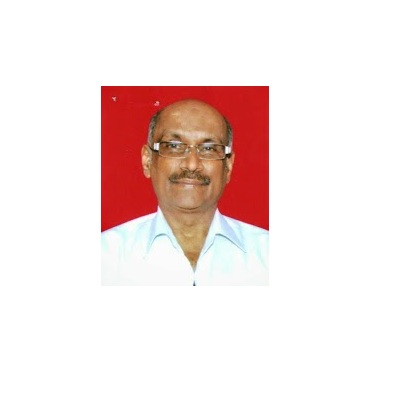
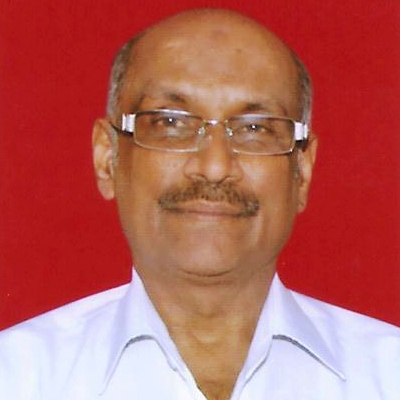
  • Bhaskar Da, a month on: Ashit Kukian remembers an unforgettable professional

    Bhaskar Da, a month on: Ashit Kukian remembers an unforgettable professional

    MUMBAI: A heartfelt tribute to someone who was not just a boss, but a true mentor, guru, and friend.

    Under his guidance, I learned the intricacies of the media world, sharpening my skills and understanding through his profound knowledge and insight. His humility, paired with one-liners full of humor and wisdom, made him a beloved figure to all who had the privilege of working with him.
     

    To say I will miss him feels like an understatement—his impact on me was immense.

    The pride he took in our successes, as though we were his own, felt much like the pride a father has for his children.

    He often said  “if the student doesn’t learn, I will blame the teacher.”

    Such was his conviction that the success of juniors was the responsibility of senior leaders.

    And he truly walked the talk—investing in us, shaping us, and ensuring that we had everything we needed to thrive.

    The void he leaves behind can never be filled. I will have to learn to navigate an altered world without his steady presence.

    I can only hope that he finds the joy and peace he so richly deserves in heaven. People like him are rare, and it’s a loss that words cannot fully capture.

    Thank you, Boss, for everything you taught me, for the lessons you shared, and for being more than just a leader—you were a guiding light in my journey.
     

  • Time to call off the witch hunt against Samay Raina and Ranveer Allahbadia

    Time to call off the witch hunt against Samay Raina and Ranveer Allahbadia

    MUMBAI: The digital landscape has erupted in a cacophony of outrage, leaving millions of young Indians wondering if innocent raunchy entertainment now comes with a risk of persecution. At the centre of this storm stands Samay Raina, whose wildly successful show India’s Got Latent has been forced into an abrupt shutdown.

    Until last week, Raina represented a new breed of digital success stories. His show didn’t just entertain; it democratised talent discovery, giving unknowns a platform while matching production values of mainstream television. It created moments of pure joy – from visually impaired comics finding their audience to small-town contestants walking away with life-changing prize money.

    Then came that fateful episode. When Beer Biceps (Ranveer Allahbadia) posed a controversial question copied from a US show, the ensuing backlash spiralled into a tsunami of moral outrage. Now, more than a dozen FIRs later, including one from Mumbai’s Cyber Crime unit, both creators stand chastened, with Raina taking the extreme step of scrubbing his show from the internet entirely.

    But let’s pause and ask: Does the punishment fit the crime? 

    Have we become a society so brittle that a single misjudged question warrants destroying careers and erasing content that brought joy to millions?

    Are we so insecure about our cultural foundations that every transgression must be met with scorched-earth tactics?

    Our culture has weathered and withstood centuries of actual invasions and emerged stronger. 

    Yet today, we’re clutching at moral straws, letting politicians and sensation-hungry media outlets whip up hysteria over a YouTube show. 

    Both Raina and Allahbadia have apologised and faced public shame. 

    The show is gone. 

    The message has been sent.

    It’s time for this digital witch hunt to end. 

    Our politicians and media might better serve society by turning their attention to actual issues plaguing our constituencies.

    The young creators have learned their lesson. Let’s not destroy the very platforms that give voice to India’s emerging talent in our rush to appear righteous.

  • In defence of L&T chairman SN  Subrahmanyan

    In defence of L&T chairman SN Subrahmanyan

    MUMBAI: Larsen & Toubro chairman SN Subrahmanyan  who expressed support for 90 hour workweeks for company employees, adding “how long can you stare at your wife?”  has  kicked up a storm. In fact, many would call it a violent typhoon.

    A simple statement like that has become fodder for debates on television which newsrooms, for want of better topics or developments to discuss,  have latched onto. As have so-called social media and celebrity influencers who know that what Subrahmanyan said can attract many more followers to their handles if they take a stand against him. Especially from the younger lot who can be influenced. Stand-up comics  have found his statement perfect to go witty or punny about. Of course, every one can crack up as Subrahmanyan has become every Tom, Dick , Harry, Larry, Jane, Cynthia, and  Joyce’s favourite  whipping boy.

    Respected industrialists like Harsh Goenka and Anand Mahindra have found a lot of fault with what Subrahmanyan  has advocated. They have been pretty vocal about it. But both inherited large corporations. Yes, they have grown them larger. But they did not have to do the grunt work that  Keshub Madhindra and Ramnath Goenka put in. The long hours, the hard toil. (I have no intention of hurting their sentiments. I am sure both Harsh and Anand worked hard too. However, the labour, the pain that an entrepreneur goes through when he’s starting up and growing  his enterprise is different.)

    Subrahmanyan  said what he did as an engineer, and as an excellent leader, what he does to excel. Students at the IITs and other engineering institutes slog their butts off .to get their degrees. That’s probably where Subrahmanyan got his work ethic from.  He works seven days a week – or may be eight, if it was possible to have those many in a week. That’s what’s made L&T a GOAT  in what it does, develop infrastructure and construct anything that’s challenging.  That ability has not come by chance, L&T folks work really hard.

    As do scientists. As do researchers. As do inventors. As do seriously-driven journalists  – online or TV –  who have a mission. As do zillions of GenZ  geeks and nerds or ingenious youth at startups who want to build their enterprises. In the Valley. In Bengaluru. In Hyderabad. 

    As do producers, writers  and online  video editors working in the movies or on television.

    These folks are so  deeply absorbed in the problem they want to solve, or the solution they want to get to, or the product they want to deliver – that time is of no consequence. They are driven. They are passionate. They take ownership of what they do. They are fortunate they love what they do. It is not a nine to five job that they are in.

    BTW, how many of you have family members who are gamers? 

    Do they have a schedule? 

     I rest my case. 

    They love what they do, and many have made millions of dollars out of being professional gamers. Yes, they live in their cocoons and are sometimes maladjusted  to  the so-called fake society. Where superficiality is the norm. 

    Hey, also what Subrahmanyan  said is nothing new.

    Do you remember what  the poet Henry Wadsworth Longfellow had penned almost a  century or so ago : 
    “The heights by great men reached and kept were not attained by sudden flight, but they while their companions slept, were toiling upward in the night.”

    Of course, he did not say that one needs to work seven days in so many  plain words.  But implied in that verse is the clarity that man or woman does not achieve greatness until she or he put their all into what they want to achieve.

    Do I work 90 hours a week? Well, heck I do. When the need arrives, I sleep four to five hours every night. And for months on an end.  Has that harmed or helped me? I love what I do so it does not seem like work at all. So, I guess it only helps me. 

    Lampoon me if you like. Troll me if you must. But I give my thumbs up to Subrahmanyan. 

    Just a little note of caution to  Subrahmanyan:  you could have gone a bit  easy when you spoke about “staring at the wife. “

    There’s a phrase that I keep in mind: “Hell hath no fury like a woman scorned.”

    I won’t ask Subrahmanyan how his spouse  reacted  when he got home that night of the conversation when he referred to “staring at the  wife.” 

    If they are a well-adjusted couple, who understand each other, probably there was no reaction or maybe a laugh from the wife as she gave it back to him playfully. 

    If their relationship is not sorted – like many an Indian marriage is not  (it’s a hollow marriage where the husband sleeps in a room and the wife in another and they quarrel all the time or give each other the cold shoulder) then he would have got hell.  And he might well still be getting it.

     I would like to believe that his  is the first type of marriage mentioned above. After all he is an engineer, and engineers calculate everything they do.

    Both he and his wife are probably having a sound sleep while a large part of corporate India, employees and the media rage  about the  “ninety hour work week” and about “not staring at the wife.”

  • Bimla Nanda Bissell who lived a FabIndia life passes on at 93

    Bimla Nanda Bissell who lived a FabIndia life passes on at 93

    MUMBAI: Not many may have heard of Bimla Nanda Bissell. But it’s because of her and her husband John Bissell we have the FabIndia brand  where we can explore garments and clothes made of rich Indian traditional fabric stitched with international quality. Bim as she was known to her friends passed on  10 January 2025  at the ripe age of 93. 

    She lived a full life, seeing the dream of her husband, John (who came to India on behalf of the Ford Foundation in 1958 to advise the Central Cottage Industries Corp), fructifying and growing into an organisation called Fabindia which did a turnover in excess of Rs 1,500 crore in 2023-2024.

    During his stay in the late fifties, John met Bimla Nanda, the social secretary to US ambassadors Chester A. Bowles and John Kenneth Galbraith. Their marriage anchored him in India, where he was inspired by the craftsmanship of local weavers.

    FabIndia – which John started at the urging of Bim – commenced in 1960 as an exporter of Indian home furnishings with the aid of $20,00 John’s grandmother had left him from just two rooms in Delhi. The business continued in stops and starts. In 1975 during the emergency after laws forbade businesses to be run from home, John was forced to open a retail store in Delhi’s Greater Kailash where he continued with this exports, sourcing exquisite handmade weaves and traditional texite fabric from artisans in distant villages.  He opened another one  showroom a couple of years later..

    One fine day in 1992,  FabnIdia’s  British importer in  London  decided to do away with their relationship. John suffered a stroke in 1993, and his son  William took his place deciding to concentrate on the domestic market  and launch many more stores all over India. John died in 1998 at the age of 66.  William than expanded FabIndia aggressively until it became a national  retail chain , that it is today.

    Through it all, Bim stood rock solid behind  her husband – actually at his side – and, then her son William, being their support when things were not looking up, and John’s vision-  to provide fair employment to Indian artisans and bridge the best of eastern and western collaborations – seemed to be disintegrating.  His idea was simple – provide the world with beautiful Indian crafts made of Indian traditional fabric. In the process, both Bim and John helped revive Indian textile heritage as well succeeding in bringing regional fabrics such as Chanderi, Sanganeri, Cutchi or Banarsi to the forefront of fashion.

    Today, Fabindia is India’s largest private platform for products that are made from traditional techniques, skills and hand-based processes. It links thousands of craft based rural producers to modern urban markets, thereby creating a base for skilled, sustainable rural employment, and preserving India’s traditional handicrafts in the process. Fabindia’s products are natural, craft based, contemporary, and affordable.

    In the early days,  John travelled across villages to find weavers who could produce flat weaves, pale colours and precise weights and it was Bim who stood by his side, journeying with him.  And she was exposed to the tough lives that artisans and their wives lived in the heartlands, with limited electricity, caste taboos, not enough toilets, and with acceptance of  patriarchal attitudes towards women, and life in general.

    Bim  was deeply touched: she became deeply committed to uplifting disadvantaged women. In 1992, she co-founded Udyogini, an NGO aimed at empowering landless, assetless women in India.

    John passed very early, according to her, she stayed put,  helping her son and daughter Monsoon just like any good mother would. So strong was her influence on her children that they retained their grandfather’s second name (from their mother’s side)  as their middle name. 

    For 27 years after John’s passing she kept herself busy being there for her own immediate family and the FabIndia family which on 9 January mourned her passing through the company’s Instagram handle. It read as follows:

    “Bim, as she was known to her friends passed away today. Her family, friends and her Fabindia family mourn her passing.

    “She loved matching everything, from her accessories to her chappals. A spirited promoter and patron of Fabindia ever since her husband, John, brought his vision of working with India’s craftspeople to life.

    She kept that vision alive and believed fiercely in what Fabindia stands for. Her legacy will live on and will continue to inspire us at Fabindia for generations to come.

    We celebrate her incredibly rich life – a tapestry like none other.”

    And so do we at indiantelevision.com.

    RIP dear Bimla. 

    Thank you for what you did for the weavers and artisans of India along with John and your FabIndia team over the years. Thank you for respecting your Indian heritage. And for making an entire generation aware of traditional handicrafts as well.  Maybe many more going forward, 

  • Remembering Pritish Nandy – the  poet, journalist, filmmaker, painter and a humanist

    Remembering Pritish Nandy – the poet, journalist, filmmaker, painter and a humanist

    MUMBAI: Around two years and eight months ago, the following post appeared on Pritish Nandy’s timeline on social media.

    “You relax on a plane, even if you don’t know the pilot. You relax on a ship even if you don’t know the captain. You relax on a bus even if you don’t know the driver. Why don’t you relax in life knowing that the universe is in control?”

    To which Pritish  responded. 

    Loved this post by @malini_ramani Perhaps I am trying to tell myself this as well. I have lived my whole life chasing stress. Stress brought forth poetry. Stress inspired my journalism. Stress informs all my creative work. Yet I yearn to relax, to switch off and go on a long vacation. Someday perhaps… when life expects less from me.”

    Pritish Nandy did realise his dream to go for a vacation five months later after that post when he got a chance to travel through Italy. He roamed the streets of Rome like a commoner, visited Harry’s Bar, soaked in the sights, the Vatican, appreciating and admiring art and the sculpting finesse of Michaelangelo’s David and the unknown Pieta. He looked relaxed and like he was having a good time. But the trip was relatively short and his thoughts kept him busy and they were probably racing a hundred a dozen through that vast and deep mind of his.

    And that’s exactly how Pritish Nandy lived his life:  busy.  He kept himself busy, as a poet in his younger days in Calcutta, a city he fled from around 40 years ago for the city of dreams. He published his own works and translated the works of other great poets – altogether more than 40 of them.  

    In Mumbai, he kept himself pre-occupied as publishing director of Bennett Coleman & Co between 1982-91 working on all its magazines but he got the most known for what he did as the editor of The Illustrated Weekly, which he transformed into a publication that stood out and made every one stand up too. Whether they were authors or politicians or  painters or film stars or beauty queens or musicians.

    Pritish Nandy in Italy

    President Gen Zia ul Haq invited him to his residence in Pakistan and gave him an explosive interview just a short while before he was assassinated. Then he and Rajat Sharma secretly recorded an off the record interview with the godman Chandraswami in London, which led to political explosions in India. Actress Neena Gupta  never forgave him for picking up Masaba Gupta’s birth certificate and identifying Viv Richards as the father of their love child. 

    Pritish did a stint with the Observer of Politics & Business, which was Reliance Industries’ Anil Ambani’s attempt at getting into media with his father Dhirubhai’s blessings. It floundered soon, despite first Prem Shankar Jha’s initial editorial guidance and then Pritish’s but it gave him an impetus to launch his own company which he set up in the offices of OBP, if I remember correctly.

    Thus Pritish Nandy Communications (PNC) was born. Which then again kep him busy as it went on to make television shows for Doordarshan, Zee TV, Star and Sony. Among them were current affairs shows, business chat shows, comedies, daily entertainment bulletins, Marathi dramas, Hindi dramas. Some of these he hosted himself. 

    From television PNC transitioned to films making some memorable titles like Jhankar Beats,  Kaante, Sur, Hazaaron Khwaishein Aisi., Pyaar ke side effects, Chameli and  Mastizaade. Some of the biggest names worked with him Amitabh Bachchan, Juhi Chawla, Sanjay Dutt, Kareena Kapoor, Aishwarya Rai in his films.
     
    And then of course came the era of streaming.  That got him busy again, it got his creative juices flowing. He, along with his daughters Rangita and Ishita, ploughed right in. Their first original approved by Prime Video Four More Shots Please was among the top shows of the year, in terms of viewership. It also went to get nominated for an international Emmy, which pleased Pritish no end.  Of course, what gave him a lot of pride was that his was amongst the first few production companies to be listed on the stock exchanges, way back in 2000.  And that the company was celebrating 25 years of its listing in 2025.

    Pritish got recognition very early at the age of 26 when he was given the Padma Shri. And he did hobnob with the powers that be. Indira Gandhi the then prime minister came to the release of his book of poems Lonesong Street and appreciated his work. This was much before he became a power house courtesy his journalistic endeavors.
    Pritish with his Pet

    He  has been a recipient of many awards: the EM Forster Literary Award, the Unesco Asia Pacific Heritage Award, the International Association Award from the Humane Society of the United States, the Friends of Liberation War Honour from Bangladesh, and hundreds  of award nominations for the films PNC has produced, from all over the world.

    A lot has been written about Pritish’s  caring for animals and how he along with Maneka Gandhi set up People for Animals much before its time. For him his pets were his children. His caring for strays on the street led him to strike a friendship with Ratan Tata who also shared with him his love for animals. In fact, so close was their friendship that Ratan Tata also picked up a chunk of  PNC shares from the open  stock market.

    Pritish was elected to the Rajya Sabha on a Shiv Sena ticket in 1998 from Maharashtra with the support  from both Sena and the BJP members without either of them knowing it.

    His pen shall write no more. Nor will his brush make the strokes on canvas. Pritish Nandy wielded both strongly. As a poet. As an editor. As a painter. As the script doctor or writer of the shows or flms that he gave his creative inputs for. With his passing away following a cardiac arrest, all that has been silenced.  He breathed his last on 8 January 2025 at the age of 73 at his south Mumbai residence, leaving behind his  two daughters who he doted on – Ishita and Rangita – his son Kushan, his pets and many a stray on the streets of Mumbai. 

    (Even as this piece is being written another Bennett, Coleman & Co legend Bhaskar Das continues to be critical in a Mumbai hospital. His family is counting down the days as the doctors have given up, surrendered to the cancer that has spread and ravaged his body)

  • CS Tech AI: The right way to rebrand a technology solutions provider

    CS Tech AI: The right way to rebrand a technology solutions provider

    MUMBAI: You are a technology solutions provider. Your company and the solutions  you provide are well known to those involved in the automotive, architecture/engineering, transportation, telecom, water management, energy and geospatial engineering spaces.  And to top it all your company name is Ceinsys Tech. And most people find the name strange and difficult to pronounce. Especially in the domestic sector; internationally, things are good as the name looks fancy enough for a tech firm.

    So what you do?

    Do you run a campaign telling customers the right way to pronounce the company’s name?  Or do you  totally change your moniker? Or  do you take the tack that  Rs 250 crore plus turnover Ceinsys Tech India operations managing director  Kaushik Khona did?

    What Kaushik and team did is they took the C and the S from the name and removed the redundant “einsy.”  So they were left with CS Tech. Well, to everyone that looked like a great change , but they also wanted to make the  brand look edgy and very design-driven  like many a tech company  takes the effort to look (remember Apple and its classy designer look in everything it does).

    In line with its  strategy to grow globally and be seen as a cutting edge global technology company which is adding dollops of artificial intelligence into its solutions and processes, a decision was taken to add the words AI next to the logo as a suffix.  This change, for the company,  marked a strategic shift to underscore its  focus on artificial intelligence (AI) and its role in driving technological innovation.

    “The move comes as Ceinsys positions itself for a future shaped by AI-driven solutions. The addition of “.ai” to the new rebranding reflects the company’s roadmap to integrate newer technologies including AI into the geospatial and technology solutions that enable smart infrastructure and utility development,” said the company.

    Hence the name of the company was changed to CS Tech AI.  

    Said Khona: “The rebranding of Ceinsys into CS Tech with inclusion of suffix ‘.ai’ is more than just a rebranding exercise—it represents our focus on the adoption of advanced technology into providing of solutions to our esteemed clients. AI is becoming the backbone of smart solutions, and this rebranding reinforces our commitment to innovation and relevance in a rapidly evolving landscape. It also allows us to communicate our vision more clearly and differentiate ourselves in the market.”

    A decision was taken to maintain the icon next to the logo as well as the tagline “Enhancing possibilities” as both only reinforced the high-tech look for the branding.  

    The corporate name Ceinsys Tech Ltd was maintained with  only the URL being changed to www. cstech.ai from www.ceinsys.com

  • Why Indian broadcast and OTT needs to adopt the ST 2110 standard in 2025

    Why Indian broadcast and OTT needs to adopt the ST 2110 standard in 2025

    MUMBAI: The media and entertainment industry is in the midst of rapid transformation, driven by evolving technologies and shifting workflows. As broadcasters and media companies adapt to meet new challenges, trends like artificial intelligence (AI), cloud-based production, IP infrastructure, and the rise of OTT platforms are reshaping how content is created, managed, and delivered.

    Among these innovations, the Society of Motion Picture and Television Engineers (SMPTE) ST 2110 standard continues to play a pivotal role, offering a scalable and flexible foundation for the industry’s evolving needs. This article explores the key trends redefining media workflows, including the significant growth of OTT services, particularly in high-demand regions like India, and highlights why  SMPTE ST 2110 remains essential in this changing landscape.

    (For those not in the know: ST 2110 is a suite of standards from the that describes how to send digital media over an IP network. It is intended to be used within broadcast production and distribution facilities where quality and flexibility are more important than bandwidth efficiency)

    Key Trends in 2024: AI, Cloud, and IP Integration

    Three trends have stood out prominently in 2024: artificial intelligence (AI) and cloud platforms for live production. While AI has generated buzz for its potential efficiencies and cost savings, it has also raised challenges around legitimacy, trust, and synthetic content. Still, AI continues to drive backend efficiencies, particularly in media asset management and post-production workflows.

    The OTT boom in India is primarily driven by affordable data plans and smartphone penetration, with platforms like Netflix and Amazon Prime competing against domestic players such as Zee5 and ALTBalaji. This growth highlights the need for robust, scalable infrastructure to manage diverse, multilingual content streams and deliver low-latency viewing experiences to millions of users daily.

    Cloud platforms have equally made waves, enabling virtualized software stacks for live production, post-production, and content delivery. Yet challenges like latency, bandwidth, and the capex vs. opex debate have slowed widespread adoption. This is especially true in regions experiencing a rapid rise in OTT consumption, like India, where cloud-based production is critical for supporting the massive demand for mobile-first content delivery and regional programming.
     

    ST 2110 as a Backbone for Integration

    As cloud and OTT workflows rise, ST 2110 remains central to modernising media production. Initially developed to replace SDI limitations, ST 2110 has become the standard for scalable, low-latency, uncompressed IP workflows. By enabling unified transport for video, audio, and metadata on a single fabric, ST 2110 simplifies operations and reduces hardware dependencies—key for supporting the complex workflows of OTT platforms producing original content and live events.

    For regions like India, where demand for OTT-driven production is surging, ST 2110 offers the flexibility to manage traditional broadcast workflows and the rapid scaling required to meet OTT platform expectations. The ability to integrate on-premise systems with cloud-based workflows positions ST 2110 as a critical enabler for companies delivering content across traditional broadcast and streaming platforms.

    However, adoption isn’t without challenges. The high cost of entry limits ST 2110 to more prominent broadcasters and media companies, where SDI inefficiencies justify the transition. Smaller players—many of whom power regional OTT content in India—will continue leveraging SDI workflows until more cost-effective solutions emerge.

    Trends Impacting ST 2110 Adoption

    In 2024, hybrid models integrating cloud-based and on-premise workflows gained momentum. While cloud platforms offer elasticity and scalability, concerns around latency and bandwidth persist. Many broadcasters and OTT platforms are experimenting with cloud tools to scale content delivery quickly, particularly for live OTT events and regional programming that demand agility.

    The slow adoption of cloud tools also reflects economic realities—especially for OTT platforms in price-sensitive markets like India, where flexible pricing and ad-supported models remain key. This makes hybrid workflows an attractive solution, offering the best of cloud-based scalability and on-premise reliability.

    ST 2110 complements this shift by providing a scalable foundation that allows broadcasters and OTT platforms to connect on-premise production with cloud tools. As platforms in India and beyond experiment with live streaming, disaster recovery, and temporary event production, ST 2110 enables seamless transitions between local and cloud-based environments.

    Looking Ahead: What’s Next in 2025?

    Looking ahead, the growth of OTT platforms will continue to reshape content delivery and production workflows. In markets like India, OTT adoption will drive demand for scalable, flexible production infrastructure capable of supporting diverse content types—from original digital series to live events. Hybrid monetisation models, heavy investment in regional content, and the rise of AI-driven personalisation will define the next phase of competition.

    Meanwhile, IP-based infrastructure will extend into post-production workflows and content delivery, supporting the needs of OTT platforms and broadcasters alike. Standards like ST 2110 and emerging technologies like Internet protocol media experience (IPMX)  will enable flexible, cost-effective experimentation and delivery of both live and on-demand content.

    Cybersecurity will also take center stage. As media companies, broadcasters, and OTT platforms increasingly rely on cloud and IP workflows, secure-by-design solutions will be critical for safeguarding content pipelines and protecting against piracy—one of the key challenges for OTT platforms in markets like India.

    2025 and the years beyond will be exciting and challenging for broadcasters of all kinds. Trends like AI, cloud workflows, and the rise of OTT platforms—especially in high-growth regions like India—are shaping a new future for content creation and delivery. 


    (Travis Wrigley is senior director of sales – APAC at Ross Video. The views expressed in this article are his own and Indiantelevision.com need not subscribe to them)

    Main picture generated to Microsoft as a visual depiction of the theme of the article. No copyright infringement is  intended)

  • Embracing 2025: Navigating marketing & communication challenges in family-run businesses

    Embracing 2025: Navigating marketing & communication challenges in family-run businesses

    MUMBAI: India’s evolution as a global business destination is both dynamic and inspiring. Driven by robust economic growth, transformative policies, and increasing global integration, initiatives like Make in India, Digital India, and Startup India have bolstered the nation’s reputation as a business-friendly destination. Moreover, simplifications such as the Goods & Services Tax (GST) and the Insolvency and Bankruptcy Code have further enhanced India’s ease of doing business ranking, signalling a promising landscape for enterprises.

    Amid this, family-run businesses form the backbone of India’s economy. They contribute over 75 per cent of the GDP, a figure projected to rise to 80-85 per cent by 2047. Not only are they vital drivers of economic growth, but they also present unique opportunities for marketing and communication (marcom) professionals navigating these organisations’ intricate blend of tradition and modernity.

    Most of India’s TV and film production sector and smaller broadcasters are run by families. Dharma Productions, YRF Films, Balaji Telefilms, Sagar Productions,  Directors Kut, Contiloe Films, Dangal TV, Governance Now – and scores of others are either first generation or second generation run by the son, or a mother-daughter, or husband-wife or mother-son combination. Firms like Applause Entertainment and Abundantia Entertainment which are run by professionals are a handful.  It’s quite possible that this article will prove handy while dealing with the family run production houses and channels. 

    The role of branding in business success
    A strong brand goes beyond selling products; it attracts the right talent, secures funding, and builds trust. In large corporations, specialized roles like marketing heads, brand strategists or corporate communication teams typically drive these efforts separately. Conversely, in family-owned businesses, marcom generalists juggle a variety of responsibilities, offering a rare opportunity to influence all facets of branding and communication.

    The allure of family-run businesses & why family businesses are a unique opportunity?

    While new-generation companies may allure professionals with their innovation and glamour, family businesses offer equally compelling prospects, particularly for those ready to navigate their complexities. These organizations provide the chance to modernize deeply rooted structures, foster long-term stability, and gain invaluable experience in managing multifaceted stakeholder dynamics.
    At a time when many startups and new-generation companies are facing retrenchments, family-run businesses often offer job security and a solid foundation—making them an attractive option for forward-thinking professionals.
    A 2018 survey reveals that 56 per cent of Indian family businesses are first-generation owned, while 44 per cent are run by subsequent generations. From 2017 to 2022, these businesses outpaced their non-family counterparts in revenue growth by approximately 2.3 per cent. For marcom professionals who champion their modernization, this presents professional growth and a chance to shape India’s economic trajectory.

    Chandrika Rodrigues

    Challenges & strategies for marcom professionals

    Navigating the traditional tide
    For marcom professionals, family-run businesses may initially feel like a time capsule. Strategies often rely on word of mouth, local fairs, inferior  content and outdated digital presence. To make an impact, start by earning trust:
    * Listen first: Invest time in understanding the business’s history, nuances, and legacy.
    * Start small: Introduce incremental changes that respect the established foundation.
    * Build rapport: Cultivate relationships with family members and long-time employees to foster collaboration.
    By respecting the company’s traditions while gently advocating for modernization, you can lay the groundwork for sustainable transformation.

    Understanding the unseen hierarchy
    Decision-making in family-run businesses doesn’t always align with organizational charts. Informal power structures often influence key decisions, with founders or long-serving employees playing pivotal roles.
    Strategies for Success:
    * Map key decision-makers: Early on, identify who holds formal and informal influence.
    * Foster inclusion: Organize workshops or brainstorming sessions to involve all stakeholders in shaping marcom strategies.
    * Position yourself as neutral: Act as a mediator to ensure all voices are heard while guiding the team toward a unified direction.
    By aligning stakeholders through clear communication and structured processes, you can mitigate conflicting opinions and drive initiatives forward.

    Balancing tradition with innovation

    Family businesses often resist change, clinging to their legacy. Modernizing their marketing efforts requires a careful balance:
    * Advocate incremental changes: Propose strategies that modernize while staying true to the company’s values.
    * Leverage success stories: Use examples of similar businesses that benefited from digital transformation.
    * Pilot projects: Introduce small-scale initiatives to demonstrate measurable results, building trust without risking the entire business.


    Famil run biz

    Addressing emotional decision-making
    Family dynamics often overshadow data-driven decision-making. While this reflects personal investment, it can hinder effective marketing strategies.

    What you can do:

    * Present data-driven insights: Tie your ideas to tangible goals such as revenue growth or enhanced brand equity.
    * Emphasise legacy protection: Position your strategies as tools to safeguard and enhance the family’s legacy.
    * Foster open dialogue: Address differing viewpoints respectfully to build credibility and collaboration.

    Overcoming resource constraints
    Conservative budgets and reliance on traditional methods can be challenging. However, these constraints also offer opportunities for creative problem-solving.

    Strategies:
    * Focus on high-impact, low-Cost initiatives: Leverage social media campaigns, content marketing, and influencer partnerships.
    * Prioritise quick wins: Demonstrate the value of modern approaches before advocating for larger budgets.
    * Introduce scalable solutions: Emphasize cost-effective tools like CRM systems or targeted digital ads to support long-term growth.

    Professionalizing the marketing function

    Family businesses often lack formalized structures, leading to inefficiencies. Modernizing these processes is critical to achieving sustainable success.

    Your approach:

    * Standardise workflows: Implement documentation practices and performance metrics to professionalize the department.
    * Set clear objectives: Establish goals and KPIs to ensure accountability and focus.
    * Showcase long-term benefits: Demonstrate how professionalism and structure contribute to profitability and growth.

    Adapting to 2025 workplace trends
    The evolving professional landscape—shaped by remote work, sustainability, and AI—offers an opportunity for family-run businesses to modernize.

     Marcom professionals can:
    * Introduce remote collaboration tools to enhance efficiency.
    * Advocate for sustainable practices to align with global trends.
    * Leverage AI-driven analytics to optimize marketing strategies.

    Attracting and retaining talent
    Family businesses often struggle to attract top talent due to perceptions of favoritism or limited growth opportunities.

    Your Strategy:
    * Foster positive workplace culture: Celebrate achievements and promote transparency.
    * Leverage networking skills: Attract professionals who align with the company’s values.
    * Offer clear growth paths: Highlight opportunities for career development to retain talent, particularly among Gen Z employees.

    Leveraging India’s growing family business economy
    Family businesses are integral to India’s economy. According to a McKinsey report, top-performing family businesses achieve higher revenue growth and shareholder returns compared to their peers.

    2025 Strategy:
    * Highlight success metrics: Use industry data to support growth-oriented marketing plans.
    * Adopt digital tools: Enhance agility and adaptability to respond to market changes.

    New year roadmap

    2025 is a pivotal year for marcom professionals in family-run businesses. By respecting traditions while championing innovation, you can turn challenges into opportunities in disguise. Focus on building trust, fostering collaboration, and delivering measurable results. As a bridge between tradition and modernity, your role is to ensure the organization’s long-term success.

    By embracing these strategies, you can not only achieve your professional goals, but also contribute to India’s economic transformation—making 2025 a milestone year for both your career and the family business you represent.

    (The writer of this article is Tropical Agrosystem (India) Pvt Ltd general manager- branding & communications Chandrika Rodrigues. The views expressed are her own and need  not reflect Indiantelevision.com’s views on the same.. The pictures for this comment piece were generated using Microsoft Designer. No copyright infringement is intended)

  • Indian DTH subscriber base drops further to 59.9 million in June-Sept ’24 quarter

    Indian DTH subscriber base drops further to 59.9 million in June-Sept ’24 quarter

    MUMBAI: Almost every leading TV executive – whether Uday Shankar or Punit Goenka or Gaurav Banerjee – has spoken about his or her belief that television  in India has legs. No doubt they have to speak optimistically. Linear television revenues are what are currently funding their hard-pressed-for-earnings streaming businesses.

    That television is under further duress has become even clearer from the latest Telecom Regulatory Authority of India (TRAI) quarterly report of telecom performence indicators for the period Jul y 2024 to September 2024.

    The continued drop in DTH  active subscriptions is alarming: the figure for end September 2024 is 59.9 million. The comparative figure for June 2024 was 62.17 million subscribers. In September 2023, there were 64.18 million active subs

    With four DTH operators in operation,  it’s not as if they are doing nothing to retain customers. They have been giving customers the freedom to create their own packs, they have slashed prices for their set top boxes, they have been offering easier payment terms and HD services, they have been doling out value-added services for cheap, and they have started OTT aggregator services,  broadband is being offered by them  at reasonable prices.

    But lo and behold, nada, nothing seems to be halting the slide of consumers dumping their satellite TV dishes.

    A few thoughts to ponder  for DTH operators:  

    When will the law of diminishing returns come into play as subscribers drop off? 

    At what level will the business become unviable? 40 million subs, 30 million, to service the well-spread-out India? 

    When will there be a major shakeup? 

    And what will lead to one or two players falling off the treadmill?

    Already, reports keep popping up that talks are continuing between Tata Play and Airtel for the latter to acquire the former. When and if it does happen, we’ll be down to three DTH operators.

    Also, solutions need to be evolved to stop the slide –   complaining about the gold rush towards DD Free Dish is not the best answer.

    2025 is a new year.

    A chance to relook at the business.

    A chance to see if Tata Play’s white-label-service model can be replicated and monetised by licensing it to other  players  in less developed markets to keep revenues coming in.

    A chance to experiment on how customers can be retained..

    Is customer service of the platinum class a good bait?  

    This has been talked about ad nauseum for quite some time; service can be the big differentiator.

    Convenience  be brought in and, if possible, local programming which can be picked up from the more advanced cable TV MSOs and retransmitted.

    There will come a time when subscribing to a nice plateful of streamers will become too expensive. Already some complaints are being voiced about the OTT bundles in the US. The commonly heard plaint is that they are  as – if not more – expensive than the pay TV bundles

    In India, we don’t have to wait for that to happen – Indian pay TV is cheap – very cheap. More than 400 linear channels are available in India for as low as Rs 300-350  on DTH and cable TV. An OTT aggregator will have to struggle to offer as much content at that price.

    The reality is both free TV and OTTs are here to stay. The question is: is India’s pay TV?

    (Picture of Dishes atop house courtesy Dish TV India) 

  • In memoriam: the passing of a lesser-known advertising legend, Walter Saldanha

    In memoriam: the passing of a lesser-known advertising legend, Walter Saldanha

    MUMBAI: Walter Saldanha passed away silently almost unknown to many in the advertising and marketing world over the weekend. For those who don’t know of him, he is the reason the creative shop Leo Burnett – which is part of the Publicis group today – is around in India.

    Actually, Leo Burnett was called Chaitra Leo Burnett for a long time and Chaitra Advertising for even longer even before that.

    Walter Saldanha and Brendan Pereira co-founded Chaitra Advertising in 1972, in the midst of “one of the worst recessions in advertising history.” Walter was this mild mannered, extremely slender, bespectacled man who looked more like a suited accountant than an advertising professional. He actually began his career as a typist in 1947 a little shy of 16. 

    Four years later somehow or the other he landed up at advertising agency J Walter Thompson and worked there in various roles before joining Aiyars  – an advertising agency –  where he and creative wizard Brendan formed a bond.  They worked together on many accounts, Brendan the creative type and Walter the client management guy who had to clean up after his colleague had an argument which turned wild with the client losing his top. 

    Walter rose to become MD of the agency which was owned by Aiyar and had some of the more prestigious accounts at that time. The owner had promised to give them equity but when it came to delivering on the promise he procrastinated every time, despite all the good work they put in. This was getting too much for both Walter and Brendan.  And they showed it. One day, Walter returned from one of his domestic client meetings only to find his office taken over by Aiyar and he was informed the board had decided to eject him as managing director. 

    This broke the soft spoken but tough-as-nails Walter who burst into tears in front of Brendan (he was offered the role to run the agency replacing Walter, which Brendan of course refused. In fact, it made him furious.)

    A lot of drama happened after that, but, to cut a long story short, the duo took along some of the gee-whiz advertising professionals of that time working at Aiyars who were livid at the treatment meted out to Walter. 
    Sheila Sista, Jean Durante, Prakash Deshpande, Shantaran, Julien Almeida, Eddie Myers, Arvind Gosavi, among others were taken on as shareholders of Chaitra. The agency was born out of this bond the two shared between themselves and 12 other team members, with no clients and out of Brendan’s flat in Colaba. 

    Amongst Chaitra’s first clients was this pan chewing businessman in white kurta pyjamas who wanted to promote his brand of polyester fabric. When both Walter  and Brendan met him at his office in Dhobi Talao (Mumbai) he kept on wiping his mouth with the towel as he chewed his pan. His brand was Vimal and he was going to launch his first retail showroom at Roxy cinema in Mumbai. Amongst the first questions Dhirubhai Amabni asked the two was  “So, what business do you have, who are your clients,?” Both Brendan and Walter told him they  had no clients. “Ha, so I’m going to be your first client. Very good. You take my business.” 
    He wanted invitation cards, bags, name boards, leaflets to be designed and a press  announcement to be made. He also gave Walter and Brendan a free hand to come up with something unusual. 

    Billings in year one for Chaitra were in double digit lakh. But the agency was unstoppable and it grew fast with many clients coming on board because of its outstanding creative. Brendan and he parted ways from Chaitra in 1983 when he returned after three months of  being away from the agency. Walter and the management informed him that they wanted to manage creative with Brendan offering creative guidance. The reason: clients were pretty miffed with Brendan refusal to cooperate with them on creative changes and adjustments, and the list was long. This was something that was unacceptable to Brendan.  For him that was it, and he left.


    Chaitra’s reputation had spread far and wide and it attracted Leo Burnett to become its affiliate in 1987 as most foreign agencies were beginning to expand internationally in order to be able to offer their international clients services in India. Leo Burnett entered India in 1992, when it invested in Chaitra which became Chaitra Leo Burnett. After around eight years, the Chaitra name was dropped and Leo Burnett India was born when Walter, as he liked to be called, gave majority to it. He retired but continued as chairman emeritus. Under his watch Chaitra had grown to be one of the top agencies of the country. 

    Walter went beyond advertising. After his retirement, he started the  Asian Institute of Communication and Research, a small business school he built in the hills of Matheran, in 2001 after retiring from Chaitra. The school has given birth to many advertising and marketing professionals who are in leading positions in leading companies today. 

    Walter was honorary treasurer of the Society for Eradication of Leprosy – something he was very passionate about – the care of those infected and eradicating it totally. He was also a trustee of the Sangeet Abhinay Academy, an organisation devoted to the development of musical talent and the Shanti Avedna Sadan (a home for terminally ill cancer patients). And yes, he  fought for the rights of  slum dwellers and he was the former Chairman of Slum Rehabilitation Society. 

    He remained extremely low key throughout his career seeking very little attention, instead focusing on bringing out great advertising for his clients and serving society in whatever manner he could. Brendan was the better known of the two, as he ran creative and was in the limelight, while at Chaitra and after that.

    I remember spending some time in Chaitra’s Kemps Corner office with Walter in the early nineties. He preferred to let Arvind Sharma – who later led the agency phenomenally well – to do most of the talking. He preferred to exchange stories about his social work, even when I spoke to him in later years – about his institute, his leprosy work and the problems slum dwellers face. Students of the institute he set up remembered him fondly when they learned of his passing  on Linkedin on how he helped shape their careers with his encouraging words and guidance. 

    11 years or so after setting up Chaitra, Walter and Brendan took their own paths. 

    Death, however, did not set them too apart. 

    Brendan passed on in July 2024, Walter on 28 December 2024., if I have got the date right. 

    May they both rest in peace! 

    (Some of the information in this piece was gleaned from Brendan’s book Changing  Faces. Any errors of information omission or inference are unintended. Picture of Walter lighting the lamp, courtesy  Vaishali  Nikalje on linkedin)