Category: Comment

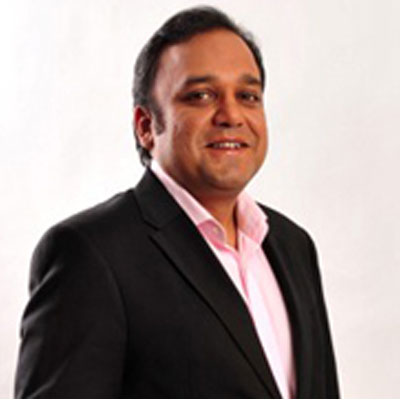
  • At Zee, we dont believe in growth without profitability : Punit Goenka MD & CEO Zeel

    At Zee, we dont believe in growth without profitability : Punit Goenka MD & CEO Zeel

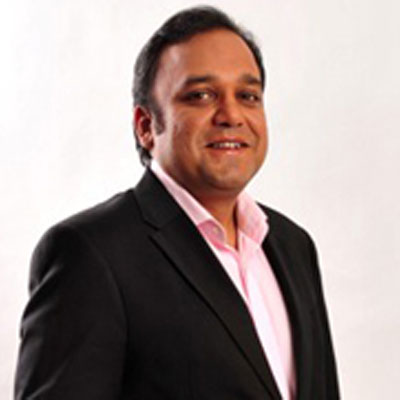
    Mipcom is the biggest event for all those in the broadcast industry. But this years Mipcom was even more special. For the first time in the history of Mipcom, an Indian addressed the gathering as a key note speaker. Present today was Zeel MD and CEO Punit Goenka, who elaborated on Zee, the changing Indian broadcast industry and the role of digitisation and the growth of new media.

    Digitisation is one big opportunity that everyone is looking at. It will also impact the advertising market positively. If you look at the advertising market; the growth in the past five years has been roughly nine per cent and television has been growing at 15 to 16 per cent. The advertising industry will see a great boost whether it is captured on traditional media or new media.

    Zee Entertainment Television was started in 1992 with just two hours of programming scheduled at that point of time; today we have 34 channels in India, 29 on a global basis.
    Our journey outside India started in 1995 so the international business is now 18 years old, but truly, the international business started only a few years back. In the first 15 years, we concentrated on the Indian diaspora.

    In the international market, to start with, we picked up the Middle East, Russia and Malaysia, where our content is re-purposed and re-formatted to suit the local audience. Our goal is to reach one billion audiences by 2020, thereby taking Zee to the top ten channels. These markets have a lot of connection with India, especially on the Bollywood side.


    Opportunities ahead of digitisation in India


    In the traditional analogue market, there was huge piracy, approximately 70 per cent. So a broadcaster like Zee did not get its fair share of valuation. This will change with digitisation.

    The second opportunity is that India is still the cheapest content market. The ARPUs that the consumers pay is $ 3 per month for almost 200 channels. I feel this number will go up to $ 10-12 with digitisation. So the opportunity is two-fold.

    Digitisation is one big opportunity that everyone is looking at. It will also impact the advertising market positively. If you look at the advertising market; the growth in the past five years has been roughly nine per cent and television has been growing at 15 to 16 per cent. The advertising industry will see a great boost whether it is captured on traditional media or new media.

    Another development taking shape in India is the new measuring body called Broadcast Audience Research Council (BARC). The advertisers, broadcasters and agencies have come together to form this measurement system. Currently, the sample size in India is less than 10,000 homes, which in the next five years will go up to 100,000 sample households. This again will prove beneficial for advertisers who can find the right consumers.


    The profit mantra…


    Revenue growth is first and profitability comes in later. But at Zee, we have always followed the mantra that growth without profitability is not good. So according to us, any investment on a sustained basis that does not give a 20-25 per cent return on the capital invested is a bad investment. So when the Indian broadcast industry operates at an average of seven to eight per cent, Zee operates at a healthy 25 per cent plus.


    Viewer segmentation…


    Going forward, both digitisation and the need of advertisers will lead to further segmentation. Also, fragmentation is the order of the day. We are continually developing more content and more products to further segment the audience and grow and reach the billion mark.

    As long as there are consumers at the end of it; yes, we will move to the second screen. In India, the concept of second screen is at an early stage. It is largely the same content that is being reformatted. For example a show which is 40 minutes on traditional media, is shortened to 15 minutes for the small screen or second screen. There have been some investments specifically for this content, largely to get the youth. But, this is still at an early stage. 


    Content creation…


    We have a strong internal team working towards ideation and content creation for shows. India is traditionally known for importing formats, Zee was the first one to develop local formats in India. A lot of credit goes to the in-house team, but the credit also goes to the execution department, because investing in formats is not easy, it is expensive and the returns come in only after three or four years. So we have to continuously innovate in terms of our content and formats. The taste changes and so we have to adapt to the changing needs.


    Criteria for choosing international partners…


    The first thing we see is if my partner shares the same passion and vision. The world today is moving towards more co-operation than competition. We are actually collaborating with our competitors to see how we can mutually create content. So we have partnered with our key competitors in India. So as long as the industry grows, a company like Zee will grow.


    Indian talent pool…


    India has a dearth of talent in this industry and this is because there are no specialised schools to train people. We at Zee recruit fresh talent every year and put them through rigorous training through institutes that we have partnered with. We have created an environment where people are given the right to decide and build a culture of entrepreneurship. And therefore they take ownership which leads to positive results. I have been talking to schools as well to see if a programme can be created to develop this pool.


    Attrition rate in the Indian broadcast industry…


    Being a traded organisation, we can give equity stock options to people and that has worked for us. Currently, almost three per cent of the company is owned by the people and this combined with the environment that we create helps us keep the attrition rate as low as possible. In India, people are still moving within the Indian broadcast industry. We are not really seeing too many attritions happening from Indian companies to international markets, but the day isnt far.


    Moving towards second screen…


    As long as there are consumers at the end of it; yes, we will move to the second screen. In India, the concept of second screen is at an early stage. It is largely the same content that is being reformatted. For example a show which is 40 minutes on traditional media, is shortened to 15 minutes for the small screen or second screen. There have been some investments specifically for this content, largely to get the youth. But, this is still at an early stage. As a content creator, we will catch up soon. We were the first in the country to launch a Video on Demand service on mobile called Ditto TV, under a subscription model. Today we have 200,000 subscribers for it. I think the biggest hindrance is lack of a good broadband service. As the infrastructure improves, in the next three to five years, we will grow in this segment as well.
  • At Zee, we dont believe in growth without profitability

    At Zee, we dont believe in growth without profitability

    Mipcom is the biggest event for all those in the broadcast industry. But this years Mipcom was even more special. For the first time in the history of Mipcom, an Indian addressed the gathering as a key note speaker. Present today was Zeel MD and CEO Puneet Goenka, who elaborated on Zee, the changing Indian broadcast industry and the role of digitisation and the growth of new media.

    Digitisation is one big opportunity that everyone is looking at. It will also impact the advertising market positively. If you look at the advertising market; the growth in the past five years has been roughly nine per cent and television has been growing at 15 to 16 per cent. The advertising industry will see a great boost whether it is captured on traditional media or new media.

    Zee Entertainment Television was started in 1992 with just two hours of programming scheduled at that point of time; today we have 34 channels in India, 29 on a global basis.
    Our journey outside India started in 1995 so the international business is now 18 years old, but truly, the international business started only a few years back. In the first 15 years, we concentrated on the Indian diaspora.

    In the international market, to start with, we picked up the Middle East, Russia and Malaysia, where our content is re-purposed and re-formatted to suit the local audience. Our goal is to reach one billion audiences by 2020, thereby taking Zee to the top ten channels. These markets have a lot of connection with India, especially on the Bollywood side.

    Opportunities ahead of digitisation in India

    In the traditional analogue market, there was huge piracy, approximately 70 per cent. So a broadcaster like Zee did not get its fair share of valuation. This will change with digitisation.

    The second opportunity is that India is still the cheapest content market. The ARPUs that the consumers pay is $ 3 per month for almost 200 channels. I feel this number will go up to $ 10-12 with digitisation. So the opportunity is two-fold.

    Digitisation is one big opportunity that everyone is looking at. It will also impact the advertising market positively. If you look at the advertising market; the growth in the past five years has been roughly nine per cent and television has been growing at 15 to 16 per cent. The advertising industry will see a great boost whether it is captured on traditional media or new media.

    Another development taking shape in India is the new measuring body called Broadcast Audience Research Council (BARC). The advertisers, broadcasters and agencies have come together to form this measurement system. Currently, the sample size in India is less than 10,000 homes, which in the next five years will go up to 100,000 sample households. This again will prove beneficial for advertisers who can find the right consumers.

    The profit mantra…

    Revenue growth is first and profitability comes in later. But at Zee, we have always followed the mantra that growth without profitability is not good. So according to us, any investment on a sustained basis that does not give a 20-25 per cent return on the capital invested is a bad investment. So when the Indian broadcast industry operates at an average of seven to eight per cent, Zee operates at a healthy 25 per cent plus.

    Viewer segmentation…

    Going forward, both digitisation and the need of advertisers will lead to further segmentation. Also, fragmentation is the order of the day. We are continually developing more content and more products to further segment the audience and grow and reach the billion mark.

    As long as there are consumers at the end of it; yes, we will move to the second screen. In India, the concept of second screen is at an early stage. It is largely the same content that is being reformatted. For example a show which is 40 minutes on traditional media, is shortened to 15 minutes for the small screen or second screen. There have been some investments specifically for this content, largely to get the youth. But, this is still at an early stage. 

    Content creation…

    We have a strong internal team working towards ideation and content creation for shows. India is traditionally known for importing formats, Zee was the first one to develop local formats in India. A lot of credit goes to the in-house team, but the credit also goes to the execution department, because investing in formats is not easy, it is expensive and the returns come in only after three or four years. So we have to continuously innovate in terms of our content and formats. The taste changes and so we have to adapt to the changing needs.

    Criteria for choosing international partners…

    The first thing we see is if my partner shares the same passion and vision. The world today is moving towards more co-operation than competition. We are actually collaborating with our competitors to see how we can mutually create content. So we have partnered with our key competitors in India. So as long as the industry grows, a company like Zee will grow.

    Indian talent pool…

    India has a dearth of talent in this industry and this is because there are no specialised schools to train people. We at Zee recruit fresh talent every year and put them through rigorous training through institutes that we have partnered with. We have created an environment where people are given the right to decide and build a culture of entrepreneurship. And therefore they take ownership which leads to positive results. I have been talking to schools as well to see if a programme can be created to develop this pool.

    Attrition rate in the Indian broadcast industry…

    Being a traded organisation, we can give equity stock options to people and that has worked for us. Currently, almost three per cent of the company is owned by the people and this combined with the environment that we create helps us keep the attrition rate as low as possible. In India, people are still moving within the Indian broadcast industry. We are not really seeing too many attritions happening from Indian companies to international markets, but the day isnt far.

    Moving towards second screen…

    As long as there are consumers at the end of it; yes, we will move to the second screen. In India, the concept of second screen is at an early stage. It is largely the same content that is being reformatted. For example a show which is 40 minutes on traditional media, is shortened to 15 minutes for the small screen or second screen. There have been some investments specifically for this content, largely to get the youth. But, this is still at an early stage. As a content creator, we will catch up soon. We were the first in the country to launch a Video on Demand service on mobile called Ditto TV, under a subscription model. Today we have 200,000 subscribers for it. I think the biggest hindrance is lack of a good broadband service. As the infrastructure improves, in the next three to five years, we will grow in this segment as well.
  • Resuscitating Prasar Bharati

    Resuscitating Prasar Bharati

    The non-coverage of the last historic test match of Sachin Tendulkar by Doordarshan entailed numerous explanations by the Information and Broadcasting Ministry. Prasar Bharati – on its part – painfully chose not to telecast the mega event because of an unsupportive legal provision that financially favours the content right holders telecasting such sports events.

    Every household watched the match of  Bharat Ratna Sachin Tendulkar with nostalgia and gratitude since the most respected cricketer decided to draw the curtains on his cricketing career representing the nation and relished the visual treat  gratefully acknowledging  “Sachin the Legend” in great measure.

    The Sports Broadcasting (mandatory sharing with Prasar Bharati) Act, 2007 mandates all right holders telecasting or broadcasting through radio to share the signals without any advertisements to enable Prasar Bharati to re-transmit on its terrestrial and direct to home network. 

    During the ICC Championship Trophy, ESPN (Now Star Sports 4) as content right holder had offered to share the live signals along with commercials embedded by ICC already.  Prasar Bharati insisted on a clean feed and chose to telecast the event without any commercials that resulted in average of DD National TVTs  soaring to an all time high – higher than other telecasting channels – for all the five matches proving that people in India preferred matches without intervening commercials.

    The Honourable High Court of Delhi decided the issue in favour of the Public Broadcaster. After a series of discussions, marketing inputs and considering the dynamic changes in technology, Prasar Bharati decided to alter the proposed amendment by withdrawing the issue of revenue sharing substituted by a very minor alteration in the Act for the mode of transmission and platform which would enable Prasar Bharati to telecast the sporting events of national importance on the dedicated free-to-air channel of Doordarshan, DD Sports, where the opportunity costs were minimal. Amendments proposed to the Sports Broadcasting Act, 2007 basically focused on the revenue sharing with the rights holders from existing ratio of 75-25 to 40-60 in favour of Prasar Bharati. 

    A recent experiment showed how independence in Prasar Bharati can make an impact. A truly independent team with young professionals in DD News prime time has rattled the industry with ratings showing an upswing.

    Ever since the Sports Act, 2007 was notified, Doordarshan has been telecasting sports events of national importance on its DD National terrestrial channel and free-to-air DTH network in compliance of the Act.  In all, 43 events have been telecast under the Act till November, 2013.

    In 18 events, Doordarshan suffered a total loss where even the amount quoted by the revenue management company, that is, the highest bidder out of Prasar Bharati and the content right holder was not enough to meet the opportunity cost (monetary value of advertisement revenue on normal programme) and in 25 events Doordarshan suffered a loss where even the opportunity cost was not realised.

    Doordarshan had no choice but to undertake these telecasts as it is mandated to comply with the Act.  The 25 per cent revenue share to which Prasar Bharati is entitled has been way below its financial obligations resulting in outright losses. It is time to stop lacerating incursions by commercial interests and to amend the mandatory sharing of Sports Broadcasting Signals with Prasar Bharati Act to avoid any further financial bleeding by the pubcaster. 

    Since 1997, DD  has been demanding literal autonomy enshrined in the Act of Parliament and has been juggling its financial management with a depleting workforce superannuating in thousands every year without a Recruitment Board in place for inexplicable reasons. It is programmed inaction that cost Prasar Bharati heavily with the  Member (Finance) with only one officer sanctioned to assist him in his Secretariat, managing the annual business of Rs 5,000 crore. The Personnel wing too has a crippled structure to handle the workforce of 48,000 sanctioned employees and continues struggling with inherited legacies along with land, buildings, technical infrastructure, ponderous liabilities and unsolved complex HR issues to manage.

    Self sustainability and financial freedom are issues that warrant immediate solution. Vast tracts of land held but not optimally utilised due to technological advancements in broadcasting  resulting in obsolescence of Relay Centres is an immediate viable option for unlocking of land for value otherwise they may end up being exposed to encroachments by land sharks. 

    The large number of government servants on deemed deputation to Prasar Bharati is a legacy that warrants serious restructuring to match modern day broadcast needs. While it has surplus of trained engineering manpower in its terrestrial infrastructure, and skilled manpower to manage content  its news related function is grossly inadequate. The much awaited Sam Pitroda Committee report is expected to offer ample opportunity for government solutions. 

    There is a bright light in the horizon with a positive I&B Ministry leading from the front, correcting inherited infirmities and guiding legal and personnel issues to operationalise practical proposals and resuscitate Prasar Bharati to a genuine and vibrant public broadcaster.


    As far as autonomy goes, all major successful public broadcasters in the world have functional and operational autonomy. The BBC model continues to be the best. The  Supreme Court of India while delivering judgement in the case of Cricket Association of Bengal in 1995 brought out the need for total autonomy for ensuring plurality of use, opinion and also to ensure a fair and balanced presentation of news and public issues, the broadcast media should be placed under the control of the public, i.e. in the hands of a Statutory Corporation or Corporations, as the case may be. 

    While dealing with the issues of airwaves, the apex court noted: “Government control, which in effect means the control of the political party or parties in power for the time being.  Such control is bound to colour and in some cases, may even distort the news, views and opinions expressed through the media.  It is not conducive to free expression of the contending viewpoint and opinion which is essential for the growth of a healthy democracy.”


    It further added: “The right to use the airwaves and the content of the programme, therefore, needs regulation for balancing it as well as to present monopoly of information and news relayed, which is a potential danger flowing from the concentration of the right to broadcast/telecast in the hands either of a central agency or of few private affluent broadcasters. That is why the need to have a central agency representative of all sections of the society free from control of the government is essential.”

    On the other hand, broadcasting system control managed by states is found to be inconsistent with the basics of full democracy all over the world.  S. Jaipal Reddy during the XIII Lok Sabha debate Session II Winter Session stated: “I do not think that our democracy is so backward to need the Ministry of Information and Broadcasting.  In fact, in no advanced country in the world do we have a Ministry for Information and Broadcasting.” 

    For a vibrant Prasar Bharati nevertheless, there is a need for the government to provide financial and personnel stability and ensure that attained ad hocism will be replaced. There is a bright light in the horizon with a positive I&B Ministry leading from the front, correcting inherited infirmities and guiding legal and personnel issues to operationalise practical proposals and resuscitate Prasar Bharati to a genuine and vibrant public broadcaster.

  • When Arnab vanished, almost

    When Arnab vanished, almost

    What happens when the nation’s most vociferous, most articulate news show anchor goes missing? Well, the nation goes into overdrive, demanding to know the whereabouts of the host it has come to love, or hate, as the case may be.


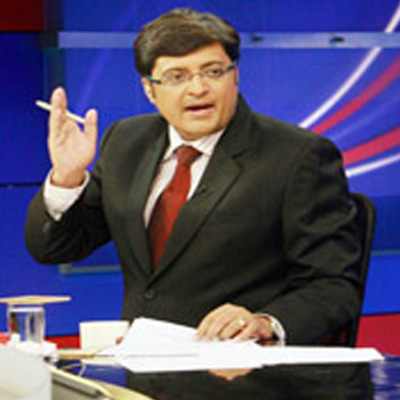
    We’re talking about Arnab Goswami, Times Now Editor-in-Chief and presenter of The Newshour, one of the most widely-watched and debated shows on the channel. Goswami’s disappearing act last week, though brief, was enough to set off a cacophony of telephones ringing at the Times Now office. And much like Arnab’s familiar rant on the show ‘The Nation wants to know’, viewers wanted to know where in God’s name was Arnab?


    Unable to deal with so many telephone calls, The Newshour even put out a tweet saying: “Our viewers have been asking about Arnab. To them, we would like to say that he will be back on Monday at 9pm on show again”. However, the calls continued unabated. A Times Now employee described the number of calls and emails inquiring whether Arnab had taken ill as ‘astonishing’ and that “Only celebrities get such calls, don’t they?”


    ________________________________________________________________________

    Forget the cold vibes between BJP prime ministerial candidate Narendra Modi and the party’s tallest leader LK Advani, it was Arnab who was the topic on social media.
    _____****________________________________________________________________

    The twitterati took to their favourite website with a vengeance, sending out both love and hate tweets for the man who loves to play devil’s advocate on The Newshour. Some went on to draw parallels between Arnab’s absence from The Newshour with that of say a Salman Khan from Bigg Boss or Amitabh Bachchan from KBC. Others made unfavourable comparisons with other news anchors in tweets like: “Barkha Dutt to undergo a face implant to look like Arnab Goswami to boost NDTV TRPs” and even derided tongue-tied panellists as: “Panellists on The Newshour speechless as they’re used to speaking for just 10 seconds with Arnab around…”.


    Still others heaved a sigh of relief as “they could finally turn up the volume of their television sets rather than turn down.” Forget the cold vibes between BJP prime ministerial candidate Narendra Modi and the party’s tallest leader LK Advani, it was Arnab who was the topic on social media. So with such an iconic presence missing, did the channel lose out on TRPs or did other news channels make most of the opportunity. Only next week will tell… that is when the TAM ratings are out…


    The collective impact of regulation and the creeping tyranny of the minority have stifled innovation in our industry and, dare I say, in the economy as whole. At 15 per cent, we may grow at thrice the rate of the GDP but that is more a reflection of our topline economic growth than the health of our industry. At this rate, it will take us another 15 years to hit $100 billion in value and by then, we will be just three per cent of the world media market. This is just unacceptable.


    Till then, both those who love and hate Arnab can sit back and watch his shenanigans as he returns today same time same show on your favourite news channel…

  • Absence of regulation is as bad as over regulation :Uday Shankar CEO Star India

    Absence of regulation is as bad as over regulation :Uday Shankar CEO Star India

    All of us took stewardship of our companies in the last two decades, when robust economic growth created an air of optimism and confidence in the country, and about India in the world. We gather today in the midst of an extremely turbulent time for the Indian economy. Beyond shrinking GDP growth and falling currency, what is truly remarkable is that the spirit of optimism seems to have been replaced by one of apprehension and despondency.

    It is therefore appropriate that this industry forum has as its theme, renewal and innovation. In my mind, the forces that unleashed our exciting growth story are the very same as those that can inspire innovation and renewal in our industry. And at its heart is our willingness to be resolutely open to the world, to new capital and to new talent. But no renewal can happen, either in our economy or in our industry, if we are not brazenly open to new ideas.

    It is in this context that I had made the point a few months ago that there is no media industry without free expression. If anything, the last few months have proven to us that there is no Indian growth story without free enterprise. Because free expression and free enterprise go together. Our ability to improve the lives of millions of Indians is firmly tied to our ability to unshackle businesses; in allowing them the space and the imagination to create new products and services.

    Every time we have made it a bit easier for entrepreneurs to conduct business, we have generated enormous dividends through growth and new jobs. Every time we have made it easier for investors to bring in capital, we have created new markets and services.
    _____****_____

    In many ways, the dramatic economic reforms of 1991 were accidental. It did not emerge from a strong national consensus that we needed to change the direction of our post-independence path. It came from a shocked polity that opened the country for business only when there was no other conceivable option left on the table. And, yet, that accidental moment created the space for a new generation of Indian entrepreneurs whose enterprise and initiative not only created wealth but resulted in millions of new jobs. It also helped India achieve a near double digit annual growth triggering a social transformation the pace of which, if sustained, was capable of lifting India out of poverty in a generation. Today, there is a vociferous debate in play on whether India can afford a $22 billion food program. 

    What is truly remarkable is it is evidence of how much distance we have moved. Two decades ago, the topic would not even have come up!

    Of course, business cycles can ebb and flow. But, what stalled India’s growth and employment creation was our remarkable ability as a country to create a web of processes, regulations and norms that make it extremely difficult for entrepreneurs to conduct business. And in a hyper competitive global economy, where countries actively nurture promising sectors and constantly renew themselves to attract new investments, we really run the risk of being left behind.

    While skepticism about reforms could have been justified 20 years ago, what is surprising is that we are still debating the value of reforms and unshackling businesses when our own recent history is the most compelling testimonial to the power of entrepreneurship. Every time we have made it a bit easier for entrepreneurs to conduct business, we have generated enormous dividends through growth and new jobs. Every time we have made it easier for investors to bring in capital, we have created new markets and services.

    Nowhere is this dichotomy more prevalent than in the media and entertainment industry. Twenty years ago, the real face of liberalisation for most Indians was the appearance of dish antennas on roofs. It was a compelling signal to the world outside that India was open for business. We were ready to embrace new ideas, wherever they originated. And we were confident enough in our own identity to be open to new worlds.

    (L-R) Walt Disney India MD Ronnie Screwvala, Star India CEO Uday Shankar, I&B Minister Manish Tewari, CII Director General Chandrajit Banerjee

    And in that period, the industry saw a remarkable transformation in its size and in its scale. From one state run broadcaster with limited reach and less than five hours of daily content, we now have over 800 channels telecasting more than half a million hours of original content to 700 million viewers. From around 3,000 newspapers in 1991, we have grown to more than 80,000 newspapers today, with most of the growth coming in the vernacular languages. Our movie industry has grown 20 times. The industry has evolved from a disorganised community dominated by a few players to a highly competitive sector that is increasingly better organised and better run. From 750 million in 1991, it is now an industry worth 15 billion dollars. It supports six million jobs directly and probably twice more indirectly. It has both facilitated and absorbed new technologies. And, it has created a compelling platform to showcase India to the world. So much so that last year we set ourselves an ambitious target of $100 billion for the sector.  And, yet, this spectacular success in serving the Indian consumer and in creating employment has not been met with more reforms and more openness. Surprisingly and frighteningly, we seem to have regressed in many ways. Successive governments have created a web of policies and regulations which while they may have had the honorable intent of protecting the consumer has had exactly the opposite effect.

    Today, I would like to call out two big challenges the combination of which have had stifling impacts on innovation in the industry.

    Our television viewers today have easy access to global content, whether through online portals, through network broadcasters who are airing shows closer and closer to global launch dates, or simply through piracy. This has brought about a burning need for innovative, original content. However, for an industry that boasts of over half a million hours of original programming every year, how much of it is innovative content that we are proud of having brought on to the screen?

    The reason is simple. Our ability to charge for content has nothing to do with the scale of our investments in it. If a bold producer does decide to risk capital on cutting-edge, new idea, today he has no liberty to price his creative work. Why then should he take a risk when he stands no chance of getting a decent return on his investment even if his production becomes a blockbuster success? The result is tired, stagnated, insipid content for the consumer. No policy has done more damage to this industry than that of price controls on television content.

    What is amazing is that we have compelling evidence in the same industry that shows that abolishing price controls can dramatically improve consumer choice. Freeing up ticket pricing in cinemas created the foundation for a dramatic improvement in the quality and diversity of movies that came to the market. Without raising costs substantially for the price conscious consumer, it has financed a generation of content that has appealed to both niche and mass audiences.

    It is difficult today to avoid the persistent debate about the quality and health of news channels. But, there is no question at all that it is the restrictive tariff regime that has prevented news broadcasters from producing high quality content for an audience that is much smaller than that available for general entertainment or sports. Ironically, a regime that was brought to protect the consumer has ended up doing the most damage to consumer choice and quality.

    Even more frightening than price control is the creeping controls on free speech. For a country that prides itself on its deep democratic ethos, the last decade has been characterised by a creeping inclination to impose controls on speech and expression. It may have started with opposition to a book but controls on expression seem to mark new grounds every year. Small film makers who decide to invest in off-beat movies are plagued by having to defend their movies in litigation because a minority is offended by it. Films cleared by the censor board are banned by state governments, and often blocked by non-state actors under the threat of violence. TV shows attempting to break through the clutter find their characters’ voices beeped out. Even the titling of a movie as the Dirty Picture seems to be an open invitation to trouble. The result is work that is so mundane that it sparks no questions, elicits no debate and pushes no creative boundaries.

    This month, Star will launch Mahabharat on television. It is a show that we have made with a lot of passion and on a scale and grandeur that has never been seen on television to date. And, yet, a few days before the launch, what worries me the most is not the quality of the series. What keeps me awake is that some lunatic fringe somewhere in the country would raise some absurd objection to the show.

    It is no surprise then that this tyranny of the minority has now reached the central halls of Parliament. Today, a small but vocal group can claim both the moral high ground and have the political legitimacy to hold to random India’s legislature for a session, a day and sometimes more. This should not come as a shock at all. For, behind this practice, is the very same culture that we have nurtured and indulged for too long. The culture that grants legitimacy, cover and sometimes state protection to the very few who are offended or bothered by the expression of another group, and who can take to the streets and can vandalise private and public property with impudence. It should not be surprising that when we start putting limits on new ideas and free expression in our cultural space, they will find their way into our political and economic spaces too.

    It is difficult today to avoid the persistent debate about the quality and health of news channels. But, there is no question at all that it is the restrictive tariff regime that has prevented news broadcasters from producing high quality content for an audience that is much smaller than that available for general entertainment or sports.
    _____****_____

    The collective impact of regulation and the creeping tyranny of the minority have stifled innovation in our industry and, dare I say, in the economy as whole. At 15 per cent, we may grow at thrice the rate of the GDP but that is more a reflection of our topline economic growth than the health of our industry. At this rate, it will take us another 15 years to hit $100 billion in value and by then, we will be just three per cent of the world media market. This is just unacceptable.

    Make no mistake. I am definitely not arguing for a world without regulation. History has taught us that free enterprise is well served by clear rules and policies. Absence of regulation is as bad as over regulation.

    But what is desperately needed is a consensus on what to regulate and how much. It is this lack of consistency in regulation that is impacting multiple industries. At exactly the moment when our economy is poised for the next big leap, we have found a way to make it harder and harder for our companies to innovate, to create new products and services, and to find new markets.

    Ladies and gentlemen, I do hope that over the next two days, as we explore new ways to grow our sector, the resounding message from this Summit is that, as a sector and as a country, we will remain stubbornly open to new ideas and committed to expanding the spaces for free expression.

  • ETV Marathi: Changing the rules of the game : Anuj Poddar EVP Viacom18 and Business Head, Marathi

    ETV Marathi: Changing the rules of the game : Anuj Poddar EVP Viacom18 and Business Head, Marathi

    ETV Marathi has been one of the pioneers in regional entertainment and to our credit, we’ve been visionaries.

    The way I see it there have been three phases of content. The first was the evolution of content. ETV Marathi, when it started out, was not on par with national TV channels but it was locally unique and culturally closer. The next phase was when Star Pravah came into being, and the quality and nature of programming took a leap. The third phase is what ETV Marathi has done since Viacom 18 came into the picture. We’ve taken the current entertainment to its next phase.

    KHMC gets a lot more visibility and helps signify that change at multiple levels such as scale of programming, quality, production values or benchmark impacts the kind of audiences we draw.

    Kon Hoyil Marathi Crorepati (KHMC) was one of the first steps to signify that. The kind of shows we were doing before and after KHMC signify the extent of change in the genre.

    KHMC gets a lot more visibility and helps signify that change at multiple levels such as scale of programming, quality, production values or benchmark impacts the kind of audiences we draw.

    The kind of programming that we have lined up is going to bring in more audiences from outside the genre. These are audiences that were not watching much of our Marathi programming but because of the quality and diversity, they would be looking at it. These are the younger audiences or more contemporary and educated in English or Hindi medium schools and therefore, are not watching regional Marathi entertainment. So it has to be the language and content that has to appeal to them. The content more than the emotional attachment to their language should pull them in.

    ETV Marathi’s legacy is very strong but we were stuck in the past where it pulled in a certain kind of audience. We are now bringing in content that is far more vibrant, younger, contemporary and fresh in order to pull in a whole new segment of audiences to Marathi GEC.

    We had to change our FPC (Fixed Point Chart) but we didn’t have the luxury to create content and wait because it was a running channel. We started replacing shows in a certain priority. We started by replacing some fiction shows. We brought contemporary drama on the channel. We created a completely original show called Vivah Bandhan while another was a remake of the popular show Uttaran called Asawa Sundar Swapnache Bandhan. We thought of taking something that worked nationally and serving it in a regional language with a setting that’s closer home.

    Post that, we worked on the fiction vs. nonfiction mix. Previously, E TV Marathi had nonfiction during a late night time band post 9:30 pm or 10:00 pm, which we pulled to the 9:00 pm to 10:00 pm band. We launched three shows; one was Natya Rang, another was Comedy Expressthat we reworked on and third was another popular ETV Marathi show called Crime Diary that we brought back in a new avatar.

    E TV’s legacy is very strong but we were stuck in the past where it pulled in a certain kind of audience. 

    Traditionally, ETV Marathi was not known for marketing. Now we have changed that and there is cross-channel marketing; outdoor, print, ground activities-pretty much 360 degree. We used KHMC to amplify our marketing because in a GEC space, a channel is never marketed, the show is. We did many on-ground activities for KHMC. We had vans going from city to town and organising a game play on the ‘hot seat’. So people in a small town would gather and get an opportunity to answer five questions and get the feel of it. So we did a lot of these things that may not ultimately give an ROI on a specific show but will help to create a lot of buzz for the channel. KHMC did manage to shake people up as it came as a disrupter.

    Incidentally, KHMC is just about 20 per cent of our ratings while the rest comes from our other shows.

    We’ve not only started doing a lot of marketing but we started just letting people know that ETV Marathi was undergoing a change.

    The consumer would take time to realise a change was happening. After carrying out some changes till March, we launched KHMC in May as our flagship program. That brought us a lot more visibility. What we have noticed is that every new show’s launch has beaten the record of the previous show’s launch. We brought on board better quality and differentiated nonfiction programs this year. The channel now has something for everybody.

    As a channel, for us, it is important to know what is happening in every age group. We track that by age or by SEC. Every single age group is showing growth in reach and time spent on ETV Marathi . We want to make sure that a lot of our old and loyal audiences have reason to stay on the channel as well as the younger audiences come back to the channel because our audiences don’t sit in Mumbai and Pune. So we target the rest of Maharashtra in both ground activities and print.

  • ETV Marathi: Changing the rules of the game

    ETV Marathi has been one of the pioneers in regional entertainment and to our credit, we‘ve been visionaries.

    The way I see it there have been three phases of content. The first was the evolution of content. ETV Marathi, when it started out, was not on par with national TV channels but it was locally unique and culturally closer. The next phase was when Star Pravah came into being, and the quality and nature of programming took a leap. The third phase is what ETV Marathi has done since Viacom 18 came into the picture. We‘ve taken the current entertainment to its next phase.

    KHMC gets a lot more visibility and helps signify that change at multiple levels such as scale of programming, quality, production values or benchmark impacts the kind of audiences we draw.
    _____****_____

    Kon Hoyil Marathi Crorepati (KHMC) was one of the first steps to signify that. The kind of shows we were doing before and after KHMC signify the extent of change in the genre.

    KHMC gets a lot more visibility and helps signify that change at multiple levels such as scale of programming, quality, production values or benchmark impacts the kind of audiences we draw.

    The kind of programming that we have lined up is going to bring in more audiences from outside the genre. These are audiences that were not watching much of our Marathi programming but because of the quality and diversity, they would be looking at it. These are the younger audiences or more contemporary and educated in English or Hindi medium schools and therefore, are not watching regional Marathi entertainment. So it has to be the language and content that has to appeal to them. The content more than the emotional attachment to their language should pull them in.

    ETV Marathi‘s legacy is very strong but we were stuck in the past where it pulled in a certain kind of audience. We are now bringing in content that is far more vibrant, younger, contemporary and fresh in order to pull in a whole new segment of audiences to Marathi GEC.

    We had to change our FPC (Fixed Point Chart) but we didn‘t have the luxury to create content and wait because it was a running channel. We started replacing shows in a certain priority. We started by replacing some fiction shows. We brought contemporary drama on the channel. We created a completely original show called Vivah Bandhan while another was a remake of the popular show Uttaran called Asawa Sundar Swapnache Bandhan. We thought of taking something that worked nationally and serving it in a regional language with a setting that‘s closer home.

    Post that, we worked on the fiction vs. nonfiction mix. Previously, E TV Marathi had nonfiction during a late night time band post 9:30 pm or 10:00 pm, which we pulled to the 9:00 pm to 10:00 pm band. We launched three shows; one was Natya Rang, another was Comedy Expressthat we reworked on and third was another popular ETV Marathi show called Crime Diary that we brought back in a new avatar.

    E TV‘s legacy is very strong but we were stuck in the past where it pulled in a certain kind of audience.
    _____****_____

    Traditionally, ETV Marathi was not known for marketing. Now we have changed that and there is cross-channel marketing; outdoor, print, ground activities-pretty much 360 degree. We used KHMC to amplify our marketing because in a GEC space, a channel is never marketed, the show is. We did many on-ground activities for KHMC. We had vans going from city to town and organising a game play on the ‘hot seat‘. So people in a small town would gather and get an opportunity to answer five questions and get the feel of it. So we did a lot of these things that may not ultimately give an ROI on a specific show but will help to create a lot of buzz for the channel. KHMC did manage to shake people up as it came as a disrupter.

    Incidentally, KHMC is just about 20 per cent of our ratings while the rest comes from our other shows.

    We‘ve not only started doing a lot of marketing but we started just letting people know that ETV Marathi was undergoing a change.

    The consumer would take time to realise a change was happening. After carrying out some changes till March, we launched KHMC in May as our flagship program. That brought us a lot more visibility. What we have noticed is that every new show‘s launch has beaten the record of the previous show‘s launch. We brought on board better quality and differentiated nonfiction programs this year. The channel now has something for everybody.

    As a channel, for us, it is important to know what is happening in every age group. We track that by age or by SEC. Every single age group is showing growth in reach and time spent on ETV Marathi . We want to make sure that a lot of our old and loyal audiences have reason to stay on the channel as well as the younger audiences come back to the channel because our audiences don‘t sit in Mumbai and Pune. So we target the rest of Maharashtra in both ground activities and print.

  • “Where Advertising Can’t, Content Can”

    Marketers for brands, consumer products, retail chains, media and entertainment are struggling to redefine and reinvent “advertising” for a new generation of empowered consumers.

    Media proliferation and fragmentation is making it harder to reach consumers with traditional formats of “interruption” advertising. New technologies, media platforms and consumer behaviors are affecting every aspect of traditional marketing and thereby dramatically impacting marketing effectiveness.

    There is a strong need to create “engagement” advertising models with digital at the core which will facilitate more sophisticated, powerful and profitable connections between brands, content creators and their target audiences….
    _____****_____

    There is a strong need to create “engagement” advertising models with digital at the core which will facilitate more sophisticated, powerful and profitable connections between brands, content creators and their target audiences.

    Internationally, the content-commerce partnership evolution is gathering momentum. Brand entertainment partnerships are changing the rules of developing creative campaigns, marketing and advertising planning and production.

    In response to these challenges, GroupM India launched GroupM ESP to help brands harness the power of content based solutions by activating the power of movies, music, sports, live, celebrities and characters.

    GroupM ESP specialises in evaluating, negotiating, developing, activating and measuring strategic content platforms and partnerships around movies, music, sports, celebrities and characters. Uniquely positioned at the intersection of the media and the sports and entertainment industries, the ESP teams focus on developing innovative content strategies and solutions with a digital core that embed advertiser‘s brands in consumer passion points using multimedia leverage and multifaceted partnerships.

    GroupM ESP also works closely as a high end consultant with clients and rights owners to help create and own multi-media content assets of long term value and their exploitation through media distribution, marketing, licensing and retailing to build deeper and more valuable connections with consumers.

    The Indian entertainment and sports market, the largest in the world by size, offers advertisers and their brands, unique and multiple passion points to reach and engage target audiences with profitable and proven content solutions, embracing all the learnings from traditional media and advertising. New technologies and new channels incorporating licensing need to be harnessed creatively using insights with marketing ROI rigorously quantified.

    The Indian entertainment and sports market, the largest in the world by size, offers advertisers and their brands, unique and multiple passion points to reach and engage target audiences…
    _____****_____

    The GroupM ESP content team comprises more than 50+ specialists (the largest for any advertising or media agency in India) has been providing end-to-end solutions for over a decade now. Known for its transparent dealings, easy and preferred access to content and talent (International, National and Regional), GroupM ESP is also able to seamlessly deliver the benefits of parent GroupM media volumes, relationships and specialist units backed by robust systems and processes. All this has been recognised through more than 50 awards at various industry and company platforms.

    Through its high profile alliances and partnerships with content creators, rights owners and talent across every domain and geography, the GroupM ESP team is able to offer expanded capacity and capability to handle complex projects smoothly.

    As we move from a decade of “Airing” to “Sharing”, digital needs to be at the core of any marketing program and the GroupM ESP team is adequately equipped to impart a strong digital dimension in all its projects. An in-house ESP digital team backed by the parent GroupM resources ensures that solutions are digitally centered and executed.

    More than 100 advertisers in India have benefited from their association with GroupM ESP.


  • Where Advertising Can’t, Content Can: Vinit Karnik National Director, Sports and Live Events of GroupM ESP

    Where Advertising Can’t, Content Can: Vinit Karnik National Director, Sports and Live Events of GroupM ESP

    Marketers for brands, consumer products, retail chains, media and entertainment are struggling to redefine and reinvent “advertising” for a new generation of empowered consumers.

    Media proliferation and fragmentation is making it harder to reach consumers with traditional formats of “interruption” advertising. New technologies, media platforms and consumer behaviors are affecting every aspect of traditional marketing and thereby dramatically impacting marketing effectiveness.

    There is a strong need to create “engagement” advertising models with digital at the core which will facilitate more sophisticated, powerful and profitable connections between brands, content creators and their target audiences….

    There is a strong need to create “engagement” advertising models with digital at the core which will facilitate more sophisticated, powerful and profitable connections between brands, content creators and their target audiences.

    Internationally, the content-commerce partnership evolution is gathering momentum. Brand entertainment partnerships are changing the rules of developing creative campaigns, marketing and advertising planning and production.

    In response to these challenges, GroupM India launched GroupM ESP to help brands harness the power of content based solutions by activating the power of movies, music, sports, live, celebrities and characters.

    GroupM ESP specialises in evaluating, negotiating, developing, activating and measuring strategic content platforms and partnerships around movies, music, sports, celebrities and characters. Uniquely positioned at the intersection of the media and the sports and entertainment industries, the ESP teams focus on developing innovative content strategies and solutions with a digital core that embed advertiser’s brands in consumer passion points using multimedia leverage and multifaceted partnerships.

    GroupM ESP also works closely as a high end consultant with clients and rights owners to help create and own multi-media content assets of long term value and their exploitation through media distribution, marketing, licensing and retailing to build deeper and more valuable connections with consumers.

    The Indian entertainment and sports market, the largest in the world by size, offers advertisers and their brands, unique and multiple passion points to reach and engage target audiences with profitable and proven content solutions, embracing all the learnings from traditional media and advertising. New technologies and new channels incorporating licensing need to be harnessed creatively using insights with marketing ROI rigorously quantified.

    The Indian entertainment and sports market, the largest in the world by size, offers advertisers and their brands, unique and multiple passion points to reach and engage target audiences…

    The GroupM ESP content team comprises more than 50+ specialists (the largest for any advertising or media agency in India) has been providing end-to-end solutions for over a decade now. Known for its transparent dealings, easy and preferred access to content and talent (International, National and Regional), GroupM ESP is also able to seamlessly deliver the benefits of parent GroupM media volumes, relationships and specialist units backed by robust systems and processes. All this has been recognised through more than 50 awards at various industry and company platforms.

    Through its high profile alliances and partnerships with content creators, rights owners and talent across every domain and geography, the GroupM ESP team is able to offer expanded capacity and capability to handle complex projects smoothly.

    As we move from a decade of “Airing” to “Sharing”, digital needs to be at the core of any marketing program and the GroupM ESP team is adequately equipped to impart a strong digital dimension in all its projects. An in-house ESP digital team backed by the parent GroupM resources ensures that solutions are digitally centered and executed.

    More than 100 advertisers in India have benefited from their association with GroupM ESP.

  • Future of Television

    Circa 2061 – Television in its new form and shape, as a personalised medium will not just continue to exist and will be 130 years old, but would actually wield a true global power.

    I truly believe that television will continue to play a critical role for India to emerge as a developed country and one of the top three economies of the world.

    Two aspects are unlikely to change – human beings will continue to bear the same thirst for entertainment and
    content will continue its reign as the real King….
    _____****_____

    It is not easy to visualise where technology will take us in the future – but two aspects are unlikely to change – human beings will continue to bear the same thirst for entertainment and content will continue its reign as the real King.

    Zee will be a leading brand for entertainment, education and a medium for prosperous growth for every Indian. Burt Manning, founder of J Walter Thomson said 40 years ago when he founded Media Lab at MIT, that the 21st century will all be about personalised segmentation of the media. We are heading towards relevant, curated content consumption. We will move from semantic web (web 2.0) to intuitive web (3.0) and finally to machine to machine talks (web 4.0).

    At Zee, our global focus is to connect to every household, and offer relevant content, to keep them engaged. Having entertained over 670 million viewers worldwide, Zee is now marching towards reaching one billion viewers. We also aim at multiplying our productivity by many folds, in order to re-conquer our achievements in the last 20 years in merely eight years. With the swift pace, at which Zee as a brand is growing worldwide, it makes me extremely confident to state that by 2061, we would be amongst the top global media conglomerate, entertaining more than half of the total television viewers across the globe.

    Zee is a pure family entertainment company. Three generations of a family can sit together and watch our programmes. We will continue in our endeavour for freedom, dignity and prosperity of our viewers and shareholders in the future. Zee as a brand, has achieved global recognition today, and has grown exponentially over the years, establishing a strong connect in the minds and hearts of its audiences globally and has gained a top of the mind recall in the media & entertainment space. Zee has been able to achieve all this through its people-centric programming and keeping its audience at the core of all its offerings.

    Our pioneering vision, has led to the formation of a seven billion dollar industry in India, and has set a foundation for not just Indian, but many international media companies. ZEE being an Indian company, has ventured into the international markets and has earned a global recognition, unlike the international media brands which have ventured in Indian markets. This strong penetration in the global markets, and the immense high brand equity earned in the last 20 years, has taken Zee to the cadre of an emerging multinational. Leveraging its core expertise of a sharp insight in the audience pulse, Zee will continue with its string of innovations and industry firsts, enhancing the media & entertainment landscape by many folds.

    Zee has been a social catalyst in TV programming and dramas, in less than 20 years. Although it surely happens at a subconscious level. When viewers watch middle class people achieve higher boundaries, they appreciate the quality of life. When they witness the rags to riches stories, they celebrate their belief in dreams and destiny.

    In another decade or so, I still expect consumers to catch up with the linear TV content. Although there would be trends of short form content in terms of news, sports, entertainment, etc., but these would never fall in high content consumption patterns. The reason being that, largely depends on the consumers’ moods, their information seeking thirst and their desire to express on social media platforms. These traits are extremely high in the mornings and also in the later part of the evening time bands. Both these activities create a leap in short consumption of content. Even today, the specially created content on new media platforms is largely following traditional media content approach.

    Introspecting the world of Television

    Television is all about content – irrespective of the advancements from a technology perspective. It has surely transformed India in the last two decades and has effectively brought about changes to hearts and minds of millions. Zee would continue with the same zeal to play a catalyst in the transformation that not just India, but the rest of the world, will witness in the coming decades.

    May be a decade later, i.e. 2020 onwards, we could expect consumers to express new moods and tastes, even when they are on the go, provided the mode of transport gets more comfortable. The content formats would also enjoy a deep paradigm shift, considering the change in consumption patterns. Just to cite some of the experimental content formats, which surely would evolve in the near future on the Non TV Screens – we could expect five to 15-minute comedy films, five-minute exposure slots (back to back new film promos), 30-minute documentaries and factual entertainment for students and business travellers, five-10 minute amateur content – short films, 60-second public service campaigns or five-10 minute highlights of sports, etc.

    TV programmes are benefiting today from the consumer habits, values and lifestyles, and at the same time they are also power feeding new lifestlyes to the consumers.

    Going forward, programming would be more inclined towards relevant issues and concerns, segmenting would
    be the way forward…
    _____****_____

    They need to evolve to a stage where they are able to predict modern India, or modern Indian lifestyles and possibly taking a position on almost all issues that affect society. Whether masses favour your position or stance, would not be that important, but a strong stance/positions will have to be taken. As of now, TV is aiming at making consumers happy with one set of generic content for all the viewers. However, going forward, when programming would be more inclined towards relevant issues and concerns, segmenting would be the way forward. So we might have a channel which only showcases modern value content, or a channel which showcases only non-fiction content, or a channel which showcases only current issues, and so on.

    As television companies adapt to the internet by deciding which shows to offer for free online, internet users accustomed to free content, and the rhetoric that promotes it, have protested that shows should be supported with advertising alone. The problem is that in a world with a hundred channels – let alone a thousand websites – there may not be enough advertising to go around. That’s why, over the course of the 1990s, cable channels that once relied mostly on advertising tried to create hit shows or buy sports rights that would let them demand higher fees from cable companies. When cable channels started to invest in original shows, they did so very differently from traditional networks. Since networks only made money on advertising, they chose shows that would reach as large of an audience as possible, whether or not individual viewers felt strongly about them. Carriage fees gave cable channels a very different incentive: to develop programmes, some viewers cared about so much that they might cancel their subscriptions without them. Not only could channels show more adventurous fare – their success depended on it.

    As we stand, we are on a brink of a revolution and convergence of television and new media platforms. We are heading towards people getting what they want, when they want, and how they want. Although it goes without saying that top quality content will be the king in the new world of TV convergence.

    In my view, TV will woo audiences to interact with the programming. And viewers will not be satisfied on the one way communication and interact with TV.

    A basic social media integration on the content distribution platform will bring in a whole new perspective to
    the viewing experience…
    _____****_____

    Unlike the pre-digitisation era, wherein there was just a monologue between the consumer and broadcaster, a more circular relationship is expected with real time communication, enabling consumers to express their feedback instantaneously. Also a basic social media integration on the content distribution platform will bring in a whole new perspective to the viewing experience.

    Reality shows shall become more and more real and would almost touch the nature of a sports event. From the current era of scripted and fictionalized content formats, there would be a huge paradigm shift to much realistic shows. The only way they can sustain the attention of viewers is by revealing real pacer content and hence as much closer to something like sports content.

    The industry is changing before our eyes and this kind of innovation creates winners and losers. No longer will consumers be forced to overpay for a one-size- fits-all bundle of channels and services.

    As rightly put forth by Robert Levine, “In the digital world, television will be revolutionised once again”. Already, more viewers than ever are using their laptops to download and to watch shows they once saw on a TV screen. The problem is that even legal online services only generate a fraction of the revenue that cable does. Like newspapers, television channels are now reaching more viewers than ever before, but in a medium where they don’t like to pay for content and aren’t worth much to advertisers. And if more viewers begin “cord-cutting”- cancelling their cable subscriptions in favour of online options – it’s hard to see how television producers could avoid the same kinds of cost reductions that are killing newspapers.

    We will be able to watch Live or On-Demand stations, either as merely stations or individual shows on home television sets, tablets, desktops or mobile phones.

    Some screens may discontinue along the way, but there will be other screens that will emerge as life continues
    to evolve…
    _____****_____

    The rise of the DVR gave access to shows on the viewer’s timetable, and the explosion of apps are putting control in consumers’ hands – who can now watch anything, anytime, anywhere. Speaking of control, a number of new TV sets- turn viewers into a remote. A remote has a touch-sensitive track pad on one side, and a Qwerty keyboard on the other. An advanced version of the same remote functions like a magic wand, allowing TV watchers to move a pointer on the screen. On the other hand, some just function based on the movements of the viewers hands. Some very advanced sets, now have an in-built voice recognition
    intelligence, enabling the viewers to literally dictate their search preference.

    To summarise, I truly believe that TV will not die. At Zee, we no longer term ourselves as merely broadcasters, but “Content Creators” and will focus on reaching out to audiences at the end of any screen that they are available on. Some screens may discontinue along the way, but there will be other screens that will emerge as life continues to evolve.

    I think there will be several technologies and platforms that are going to emerge that we have to consider and migrate. Ditto TV, which is Zee’s yet another pioneering step in the over the top television space, is something that we have foreseen and we do believe that it is going to be a big opportunity for us, in the years to come.

    The future of television is all about viewers experiencing entertainment and information content on their preferred devices, time and place.

    (Excerpted from the India 2061- A Look at the Future of India Copyright Cogito Consulting Publication)