Category: Comment

  • When ads are better than soaps!

    When ads are better than soaps!

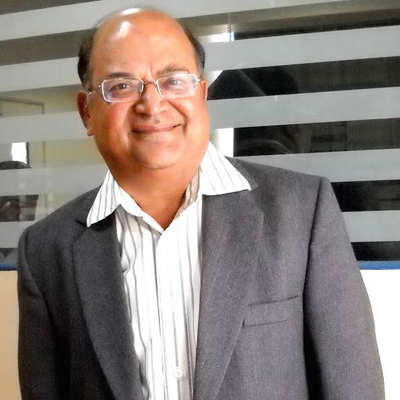
    By Ramanujam Sridhar

    It’s that time of year when we reflect on the old year, As an avid television viewer (and may my tribe flourish), I continue to find TV commercials often more entertaining than the soaps and serials my wife seems glued to. The advertising industry realizes that the remote control is an even more potent destroyer of poor advertising than clients and is hence pushing the envelope more and more to ensure that we don’t switch channels. Social issues have been sensitively portrayed and subtle brand messages conveyed. What better tribute to creativity than the Tanishq remarriage ad. Beautifully shot, it shows a woman doing the saat phere with her husband even as a child keeps calling her and trying to join the holy walk. We realize that it is the woman’s daughter from her first marriage perhaps, and the husband cheerfully asks the child to join in. Commercials like these need a lot of courage to create and more importantly, run, and I doff my hat to my friends in advertising and marketing who have the guts to push the envelope in more ways than one. The Google ad for Tanjore paintings is another one that created ripples as did some of the commercials for Idea Cellular and the latest Vodafone video streaming ad is as cute as advertising can get.

    Advertising which sucks

    And yet, I find a lot of advertising quite convoluted, where the idea seems to be stretched needlessly like some of the TV soaps that have long outlived their sell by date. The new campaigns for Fevikwik – a brand that had great advertising for years – seem to be that of an agency and a creative team which is too full of itself. Equally annoying are the new five star commercials. Some of the big budget ones like Pepsi’s much touted ‘Yes Abhi’ too hardly set the Indian pulse racing. While celebrity endorsements keep multiplying, there seems to be an inverse relationship between the amount paid to the celebrity by way of fees and the creativity of the commercials that they are involved in. Why are advertising agencies giving up so easily on celebrity scripts and coming up with such inane stuff?

    What’s with the programming?

    I am not a great follower of TV programming so I really should be the last person to complain, but our big anchors are becoming quite insufferable as they play God, passing judgments on people and events with impunity. They also seem to flit from topic to topic with the attention span of a few days and issues are just buried as they worry least about sensitivities and only about TRPs. Soaps are extended mindlessly for ages on end, timings are changed, characters dumped, and just about every possible character mayhem is managed with ease. The sports programming that I watch a lot is really cloying as India is shown to be the greatest superpower of all time based on a few home series wins and it seems really weird given the poor performances abroad.

    To hell with editorial responsibility

    The old issues of ‘paid editorials’ and ‘irresponsible journalism’ continue to haunt poor viewers like me. Unfortunately, the TV channels don’t seem to care as they keep outwitting each other in their quest for TRPs and viewer eyeballs. Self regulation will never work and I guess, the time is right for viewers to be more discerning, more militant even, and when their sensitivities are not respected, we must exercise our rights and instead of switching channels, maybe the channels will learn only if we switch off the TV set entirely!

    May that never come to pass however! Here’s wishing you all a wonderful year of TV viewing!

    (Ramanujam Sridhar is the founder CEO of brand-comm and director of Custommerce. The views expressed in the above article are the author’s personal views)
  • NP Singh’s triumph and challenges at Sony Entertainment

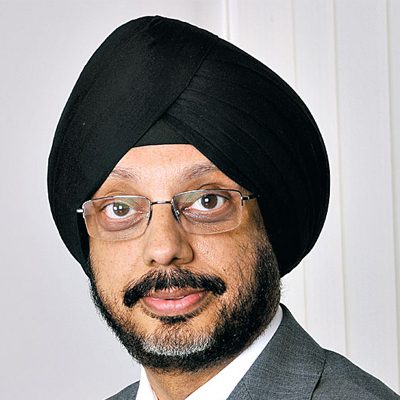
    NP Singh’s triumph and challenges at Sony Entertainment

    In 2009 when MSM India CEO Kunal Dasgupta resigned suddenly, industry insiders were betting that the COO NP Singh would take over. But that did not come to pass. MSM India chairman Man Jit Singh – who had taken charge as interim CEO and was also leading the search for Dasgupta’s replacement – was given the job after a nationwide hunt.


    Hence, when news emerged on Friday (3 January) that NP (as he is known by all in industry) was being elevated as CEO of MSM India, it was time to bring out the bubbly and cheer for him. The collective belief amongst most in the know is that NP has got his just rewards, finally!

    During the 15 years at MSM India, the turbaned NP has served the organisation well. Extremely low profile and mild-mannered, he was the perfect foil for the aggressive, innovative and outspoken Kunal Dasgupta.


    “He was always there, which gave Dasgupta the freedom to innovate and grow the network. He offered the rock solid stability which the organisation really needed,” says a person who has worked very closely with both Dasgupta and NP. “He is a very good leader, man manager and operations man. And he is extremely sharp with numbers because of his finance background. To top it all, he is a gentleman in every sense of the word – a rarity in the current cutthroat world of media and television.”


    His big win has been the biggest success of the Sony Entertainment Television (SET) Network in recent times – the channel Sab. After SET acquired it in 2005 for Rs 57 crore from Sri Adhikari Brothers, the management quickly moved it away from its comedy positioning which founder Markand Adhikari had given it and relaunched it as a youth-oriented channel. Not a very good move, really as its audiences disintegrated almost instantaneously. The team persisted with the youth demographic for two years, until NP proffered that it should stick to its original positioning of comedy, and went about cobbling together a clutch of funny shows along with Sab head Anooj Kapoor. Amongst the shows which emerged from those early huddles include the long-running Tarak Mehta Ka Oolta ChasmaChidiya Ghar and FIR.


    The net result: the audiences flocked back and Sab, today at times, figures amongst the top 5 GECs. And it is highly profitable too. Mother channel Sony Entertainment, which it was supposed to simply flank, has comparatively not lived up to its potential and has been struggling to get its fiction show act right for several years now.


    NP’s second success has been Sony Max, which offers a cocktail of cricket and movie fare to its viewers. It arguably tops the Hindi movie channel category at all times of the year and it shines brilliantly through the annual flashy IPL tournament when it has at times moved to the number one spot (it has even beaten Hindi GECs).


    He and the team under him have been innovating with Max’s programming by bringing in more entertainment into the prizewinning Extraa Innings – new anchors, cricket veterans like Navjyot Singh Sidhu and Sunil Gavaskar (cracking jokes in Hindi), better sets, cheerleaders, a live band and even added doses of comedy and movie integration. Max has over the years also dabbled in Hindi and Bangla language commentary, much before ESPN and Star Sports did.


    The third six that the extremely articulate NP has hit is with Sony Pix, the international movie channel that in the SET portfolio. It is currently placed at the No 2, behind Star Movies. But it took some doing getting it there. From a classic movie positioning when it was launched, it was refocused as a channel which delivers new fare from the world of English cinema with the tag line ‘Stay Amazed’. NP has secured long term content deals with Sony Pictures and MGM which have delivered films such as SkyFallMission Impossible III and Spiderman, among several other films. It was NP who decided to acquire Slumdog Millionaire and air it in both English and Hindi which worked very well for the network as a whole. And last year he recruited Saurabh Yagnik from Star with a clear mandate to take it to the number one spot. 

    NP also pushed for the shift of AXN – the English general entertainment channel – from Singapore to India and has been acquiring content which suits Indian tastes more. And that strategy seems to be working for AXN even though it has tough competition from Star World and Zee Café.


    When he decided to launch the music channel Sony Mix a couple of years ago in an overcrowded market, not many gave it a chance. But today it has beaten back the leader 9XM with innovations such as music based programming on time bands and moods and also bringing in radio host Anurag Pandey onto the channel with his own show.


    Along with Man Jit Singh, NP  has also been quietly building a slate of low cost movies under MSM Motion Pictures, which should start adding revenues to SET’s top line and hopefully its bottomline in the coming year.


    That he is getting charge of one of the jewels in the Sony Pictures Entertainment (SPE) international crown shows how much confidence he has managed to gain from Los Angeles-based bosses Andy Kaplan and Michael Lynton. SPE, on its part, has been under pressure in recent times with declining profits and it even announced that it would prune its movie slate and focus more on television content. It hired a consultant firm Bain & Co in November 2013 to help it generate $250 million in savings. One of the options it is looking at is streamlining its international operations by setting up more joint ventures, apart from lowering head count.


    According to reports in the international media, its Indian network reaches about 484.1 million pay TV subscribers, but it would like to see more revenues emerging from India. MSM India annually contributes nearly $600 million in revenues and $130 million in profits annually to SPE’s media networks’ business which tots up $1.5 billion in revenues overall, reveal Media Partners Asia estimates.With India’s cable TV networks on a digital rollout nationally, the hope is that subscription revenues will rise substantially for all the major Indian broadcast networks, amongst which figures MSM India.


    NP has his work cut out. He has to focus on making the nearly billion dollar investment the network made in the IPL generate more revenues (the deal ends in 2017 and probably around 40 per cent of the investment has already been recovered), he has to make fiction work at Sony Entertainment, build a stronger creative team to bring in cutting edge series, and strengthen its non-fiction lineup at a time when fatigue is setting in amongst viewers.


    This apart, he has to strengthen the Sony Entertainment network’s channel bouquet, bring in regional language and niche services to take advantage of the monetisation opportunities that digitisation will throw up in the next four to five years. All this at a time when its US parent is putting the squeeze on money and trying to generate savings, which means the accountant in NP will really have to do some financial legerdemain.


    Most industry watchers are betting that NP will do the trick. “NP’s core strength is also distribution. Remember, he has been one of the architects of putting together the content aggregator One Alliance. So clearly, he will be able to work some magic on distribution and subscription revenues,” says a media analyst. “The problem with its major content offering – Sony the Hindi GEC – has been too many people have being driving it in the past, which has impacted its performance. With a single leader at the top in NP and a good programming head in place, expect Sony to really drive ahead on its programming initiatives. NP loves a challenge.”


    It is precisely this quality in him that will prove handy as he goes about building Sony Entertainment Television for a digital and young India.

  • Consolidation & cooperation, the way forward

    Consolidation & cooperation, the way forward

    India’s cable TV industry is about to enter into a pivotal year, probably the most important in its 20-year old year history. As it does so, it needs to take a leaf out of the US cable industry playbook, a 60-year old franchise that’s been through rate regulation, digitalization, broadband and now, as it stares down the barrel at Netflix and Google, comes together to embrace consolidation and co-operation.

    At a recent investor day, industry godfather and arch value creator, John Malone, chairman of Liberty Media, urged cable MSOs to unite and create a national internet streaming platform as well as cooperate to drive technical moves, new content plays and more homogeneity in product innovation. 

    “The history of the cable business is replete with the industry solving its balkanization and scale problem through joint efforts,” said Malone.  “That can be done again. I see no reason why a vehicle, whether it’s Xfinity [from Comcast] or the equivalent, can’t be syndicated. Whether Hulu could be bought and syndicated. Or whether you’ve got some entrepreneur who’s going to come in and start something that the industry at large could get behind and give it the ability to purchase content on a ubiquitous basis.”


    It’s a critical movement for cable operators in particular. High levels of receivables and low levels of liquidity amongst MSOs is not encouraging for investors and promoters and sends out poor signals for Phase III and IV of digitalization

    Taking a leaf out of Dr Malone’s book and in the spirit of consolidation and co-operation, here are the key moves India’s cable TV operators must drive across the value chain in 2014 and beyond:

    Billing and monetization

    MSOs are coming together and slowly working with LCOs to implement gross billing but it needs to be accelerated in Q1 2014. While close to 21 million households in Phase I and Phase II have been seeded with cable STBs, monetization and ROI has been painfully slow, making the Rs 50 billion plus invested in capital expenditure appear to be an extremely expensive cost of capital. Without the comfort of carriage and placement fees, MSOs need at least Rs 100 per sub per month to breakeven on the digital cable business line – in general, the industry is well short of that at present.

    Den, Hathway and SitiCable appear to be making the right moves but each of the national MSOs need to join together with LCOs to drive billing to consumers and ensure pass through of revenues across the value chain. It’s a critical movement for cable operators in particular. High levels of receivables and low levels of liquidity amongst MSOs is not encouraging for investors and promoters and sends out poor signals for Phase III and IV of digitalization.

    Product, technology and the B2C ecosystem

    More MSOs must come together to ensure that there is homogeneity and innovation across product and technology. Scale through alliances ensures better economies to invest in STBs, CAS, middleware and more advanced functionality. Hathway and DEN appear to be the best positioned to do this with a combined base of 13 million gross digital subs. This is a good start but to seriously challenge DTH and lower capital costs and drive improved product functionality, more MSOs need to come to the table.

    Negotiating capital costs and driving a product roadmap for the next 30 million households will start becoming easier with consolidation. Phase I and Phase II did not require much consolidation and as a result, 90 per cent of STBs seeded came from the top five MSOs. However, Phase III and IV require alliances, consolidation and cooperation as the markets are fragmented and sub scale. 

    It’s also important to note that the first big chunks of cable digitalization in the US, Taiwan and Korea occurred as cable operators banded together to drive down costs, improve functionality and better the consumer experience. To be sure, multiple vendors were used for STBs but across CAS, middleware, compression and billing, often technology solutions were sourced from single vendors.

    Furthermore, the main cable TV players in India must band together to offer an innovative, simple, and functional product set with consistent, strong user interfaces. Digitalization means that all operators will reclaim analogue bandwidth and with superior capacity, this should just mean more channels but more HD channels and broadband.

    Billing systems and the creation of a robust B2C cable TV ecosystem is also important but doing this together rather than apart is important for large and small cable TV MSOs across India. The situation that the US finds itself in today – “Snow white and the seven dwarfs” (Malone’s acerbic reference to the product evolution and functionality at Comcast and its fellow cable MSOs) – is where India is heading at present with only a few MSOs driving digitalization and B2C decision making.

    Broadband and network evolution

    Cable TV broadband remains in its infancy. In spite of the spectre / threat of 4G broadband after 2014-15, cable still has headroom to grow through DOCSIS 2.0 and 3.0 technologies. Hathway has recently deployed DOCSIS 3.0 across selected markets; a strong broadband product with or without a bundle is critical for cable operators’ value creation story as it helps generate margins. New license fees are a concern but broadband with scale still offers plenty of returns.

    Longer-term, larger cable TV operators also need to start transitioning networks to (internet Protocol) IP and ensure cloud-based delivery of services and content to all devices. This will help drive TVE (TV everywhere)-type offerings in the future and ensure cable has a competitive advantage over DTH – the same issue is playing out in the US.

    Content

    Locality is always the cable operators’ last preserve and locality anchored to local content is a strong competitive advantage. While some regional MSOs have developed local content,the national ones have yet to get into the game though both Hathway and Den may have plans to do so in the future, in what may become an important differentiator over time.

    Depth over width

    The cable TV story has thus far been mostly about width and will remain so for some time as operators focus on digitalizing their entire footprint before acquiring more of the last mile. However, the long-term game has to be about acquiring and consolidating the last mile where feasible and at the right valuation as well as potential consolidation and M&A amongst other national MSOs. 

    This provides a level playing field and competitive advantage to programming and technological discussions and allows cable operators to start inheriting some telecom-type muscle and work on ramping up real talent into its ecosystem.

    Note that there is limited value creation across aggregators over the long–term in the history of global media; most of are usually displaced and made obsolete over time due to changes in consumption, delivery and technology. Ownership of assets, especially in the cable TV business, is crucial and in cable TV, the last mile and network remains everything along with consolidation and scale.

    Just ask Dr Malone.  

    (Vivek Couto is Media PartnersAsia executive director and co-founder. The views expressed in the above article are the author’s personal views)

  • The character of a channel

    The character of a channel

    Producing a television programme in India is strange business these days. A channel’s research and development team comes up with an idea/concept and asks a producer to develop it further into a show which can be put on air. The production house’s creative directors and writers then do a lot of brainstorming and pitch the developed idea to the channel’s creative and commissioning team. The latter then give inputs to the producer and his team, who then go on to further fine-tune it to what the channel wants. There’s a lot of give and take of creative ideas between the two teams before the show goes on air.

    It gets even more interesting after the show starts airing: more often than not, the channel’s creative folks start directing the producer’s team to make changes based on what is working with viewers based on TRPs. Frequently, the production house ends up being a glorified line producer with the title of producer. Normally, he or she surrenders all the rights and IPR inherent (read: copyright) in the programme to the channel for a fixed one time per episode production fee. This is unlike in other more mature television markets where creation or co-creation entitles you to some royalties of fees – often times in perpetuity. 

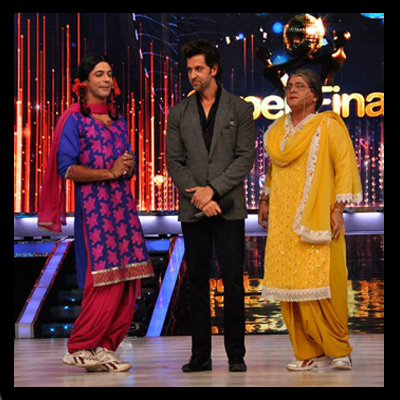
    With this background in mind, let us take a look at the recent case of involving Viacom18’s Colors. It issued a public notice in the newspapers earlier this week saying whosoever attempts to launch or be associated with its show, Comedy Nights with Kapil’s comic character ‘Gutthi’ will be taken to court.

    Sources say Sunil decided to part ways because of creative differences and his remuneration, because he thought he deserved more. And another channel was willing to give him what he wanted. Colors took this extreme step because there were rumours, nay even talks going on between Sunil Grover and another rival Hindi channel to develop a show with a similar character as the comedian portrayed in Comedy Nights with Kapil. Produced by Kapil’s K9 Productions along with the Fazilla Allan-Kamna Menezes run SOL Productions, the comedy with its fresh feel and look and gaff lines had taken the nation by storm. In fact, it had given Colors a powerful shot of TVTs, and made both Kapil Sharma and Sunil Grover who plays Gutthi household names. 

    Not surprisingly, Colors’ fired a notice in the newspapers. It read: “A certain artiste and a stand-up comedian associated with the programme Comedy Nights with Kapil aired on Colors television channel is planning to launch or be associated with other shows, wherein the said artiste is likely to perform the character of ‘Gutthi’ or use the mannerisms and characteristic features of ‘Gutthi’ or any other character played by the artiste in the said programme.”

    Ever since, many in the industry have been drawing parallels with numerous instances wherein television channels, particularly entertainment, have been overtly possessive about their actors when moving from one channel to the other or quitting a show mid-way.For instance, when actor Giaa Manek, who rose to popularity with her portrayal of Gopi bahu in Star Plus’s Saath Nibhana Saathiya, decided to participate in a reality dance show on Colors, Star Plus revoked her contract and replaced her with another actor.

    Ditto with Ratan Rajput, who made it big as Laali in Zee TV’s Agle Janam Mohe Bitiya Hi Kijo. She decided to be part of Imagine’s reality show Ratan Ka Rishtaa even before Agle Janamwrapped-up. While the producers of Agle Janam, Swastik Pictures, had extended the series for a few months, Rajput landed in trouble as she had already accepted the proposal for Ratan Ka Rishtaa. It snowballed into a fight with Zee TV threatening to slap a case against Rajput if she left Agle Janam before it ended as she had signed a contract with the channel.

    Most of the time, the law comes into play much later but channels and production houses prevent their popular characters/actors from venturing into any other show. Like Mohit Raina, who plays the titular character in Life OK’s Mahadev, is not allowed to act in any other series as ‘the audience would lose interest in his character’. Even Karan Singh Grover, who plays Asad Khan in Qubool Hai, is given an exclusivity fee by Zee TV to discourage him from bolting to any other channel. 

    TV channels also resort to prohibiting their actors from revealing their true identity in public. For example, Mona Singh, who played Jassi in Jassi Jaisi Koi Nahi, for months made public appearances in braces and a pair of obsolete spectacles just to keep audience interest in ‘Jassi’ alive and ticking. In a similar vein, there were reports about actor Gurmeet Choudhary’s early ouster from a dance reality show in 2012 as he wasn’t performing too well and prolonged participation would have hampered his popularity on another fictional show.Then again, there have been instances in the past where popular characters have reprised their acts in other shows across channels without anyone taking exception. For example, Bharti Singh, who rose to fame with her Lalli act in Star One’s Laughter Challenge, has frequently revisited her character on other shows and no one’s made a noise about it.

    Ditto for child comic Saloni Daini, who has repeated her Gangubai act on various platforms. For that matter, even Kapil Sharma, who has reprised Shamsher Singh from Sony’s Comedy Circus on Colors’ Comedy Nights with Kapil

    As far as specialised events like awards airing on a rival channel go, at times the Hindi GECs have insisted that actors go dressed in the character garb that they wear on screen. On other occasions, they have simply refused to let any of their actors even be seen on the awards show, thinking they would increase the TVTs of a rival channel.

    Clearly, broadcasters and creators have sent out mixed signals: at times they have been firm about how much they are willing to yield; at others they have not done anything and watched mutedly as actors have gone about doing as they please. 

    Hence, the Colors vs Sunil ‘Gutthi’ Grover case could end being a landmark one. That is if Colors pursues what it believes in to the end.

  • The year the industry entered the ICU

    The year the industry entered the ICU

    Perhaps that best expresses what Television News underwent in 2013. Simply because it spells out to say: What (the) Hell Ever Happened!

    A pause would have been a positive sentiment; in a year that felt like the roller coaster was going to crash. Yes, flat revenues, would have been a positive. Flat viewership would have been a positive.

    If the TV News industry was a human body, it would have woken up at the end of the year, from a long and deep coma only to discover, multiple organ attacks and multiple surgeries on its meager body had thrashed whatever hope it started the year of 2013 with.

    There was a name change, a year that saw a new expression (and that’s the biggest positive outcome of 2013) – ‘TVT’ replace ‘TRP’ to aid acknowledgement of the growth of TV viewers, was the silver lining on an otherwise dark cloud. But still to gain currency and translate into value. So, at this stage for TV News, just a name change.

    Then came hope, with the promise of new infusion of body muscle with a change in thinking around foreign investment in TV News. But on the day the good Doctor did not show up and the patient will limber on trying to find investment funds. The strong may survive, but many will perish, without new hope of quality investment.

    Tossed from one operating theatre to another, the patient remains in ICU. Not knowing if the doctor will pull the plug or resuscitate.

    A series of cardiac attacks followed, with circulation of blood (advertising income) threatening to be restricted, cutting away supply of oxygen and threatening the very survival of the TV News industry and the consequent ill effects on democracy. Tossed from one operating theatre to another, the patient remains in ICU. Not knowing if the doctor will pull the plug or resuscitate. The patient though is showing visible signs of fighting strong.

    Finally, the cost of medication went up, with Digital Addressable System (DAS) 2 – carriage fees, which were expected and promised to go down (as was experienced with DAS1) headed northwards. The daily dose of vitamins just got more expensive.

    In this mayhem and bodily torture, what kept the soul and the body together, you may ask? The kindred of the TV News industry survives on the very one thing it does best – delivering quality news, round the clock, with commitment.

    There was lots of news. It became more social and digital and TV News leveraged that growth engine.

    It has built a sound set of principles and a robust mechanism to work together as an industry, in unison. This antibody resisted all those attacks and kept intact body and soul. Nourishing it for another day, another year.  One that the TV News industry, knows will not be easy. But it has got smarter and knows how to work together.

    For 2014, the TV news industry must make a Bang – big audacious news and glory. With a major election in sigh, the industry must learn to stick together even more, grow its value and turn away the woes and the Whew to bold steps of business collaboration, to drive down costs and bring profitability into the industry.

    Be it carriage, ad price, inventory, news standards, governance – the TV News business can evolve the industry’s future by creating its own self-regulation on best business practices and best shareholder practices to bring the shine back into it.

    2014 brings hope, renewed faith and will be full of News! Good News! BANG!

    (Sunil Lulla is MD and CEO of Times Television Network. The views expressed in the above article are the author’s personal views)
  • The Year of Rapid Change

    The Year of Rapid Change

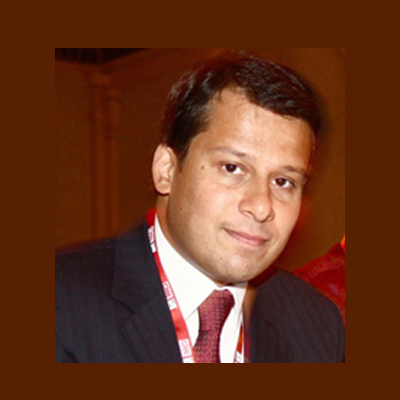
    By Ranjan Thakur

    The year 2013 witnessed a large number of activities in Prasar Bharati and Doordarshan.  A major achievement of Doordarshan was in rebranding its Free-to-Air DTH services as ‘DD Freedish’ which highlights its USP of being Free-to-Air.  Earlier, the name DD Direct Plus did not catch on because the rural audience could not connect with the name.  The name ‘DD Freedish’ now adequately conveys the USP of the product and the DTH service which is quite popular and far ahead of its paid rivals, is likely to increase its popularity further.

    The project of commissioning of enhanced capacity to 120 channels up from the present 59 channels is likely to be completed by March, 2014 and will substantially enhance the popularity of the product.  It is expected that given the background of the ongoing digitisation process in the country, a large number of cable users will shift to the DD’s Freedish in 2014 especially during the Phase III and Phase IV of the digitisation process when it will start touching the semi-urban and rural viewers.

     A matter of great satisfaction for Doordarshan has been the successful auction of the channel slots for the private channels on the DD’s Freedish platform.  A series of steps, including staggering of the auction process, enhanced the revenue of DD by nearly 40 per cent from the previous rounds of auction.  Presently, the platform is commanding an annual carriage fee of Rs 6 crore per channel due to its large reach.

    DD looks forward to the conclusion of the process of launching its international channel, DD India in the territory of Europe.  DD has received a very lucrative offer from one of the major operators in Europe for placement of DD India w.e.f. January, 2014, which is likely to be accepted with the approval of the Prasar Bharati Board soon.  DD India has already been launched in Canada and will be launched in the territories of Korea, Middle East and Central Asia in Early 2014. 

    The availability of DD India over the entire Europe including northern parts of Africa will substantially enhance the popularity of DD India globally.  As the stakeholders are aware that a global channel requires substantial investment, DD proposes to expand the global footprint of DD India in a phased manner after analysing the experience in Europe, Korea, Canada and Central Asia.

    Doordarshan is in the process of finalising its FPC for the expansion of its international channel which will be a mix of news and general entertainment.

    Doordarshan also successfully upgraded the four regional channels of Bihar, Uttar Pradesh, Madhya Pradesh and Rajasthan during 2013.  These channels were working in four hour terrestrial mode only while substantial investment in infrastructure, equipment and manpower had already been made.  In order to effectively utilise the investment made in these locations, a decision to upgrade these channels to 24 hour cable and satellite channel was taken and implemented within a period three months without any major investment. 

    The current TAM data indicates that while DD-Bihar and DD-Uttar Pradesh are already No 1, DD- Madhya Pradesh is No 2 while DD-Rajasthan is No 3, in their respective states in terms of popularity.  The upgradation of these four state channels is a major step forward to tap the regional television market.  DD now proposes to move on to upgradation of DD-Jharkhand, DD-Uttarakhand, DD-Chattisgarh and DD- Himachal Pradesh on the same pattern of the four channels.  It was our experience that the viewership of terrestrial channels was adversely affected in cable and satellite territories which needed to be addressed.  Given the success of the four regional channels upgradation, Doordarshan is confident that this process will be completed shortly and these channels are likely to be quite popular in their territory.

    We (at DD) expect the next year to be an exciting year when a number of these initiatives will start yielding results for DD with substantial enhancement of revenue besides sourcing of quality software.

    DD has enhanced its role in the industry’s body namely Indian Broadcasting Federation and has a place on the Board of Directors after quite some years.  DD expects to play its rightful role being the only public broadcaster in the country and share its experiences while lending its strength to the industry body.

    DD is on the Board of Directors of the Broadcast Audience Research Council (BARC), an initiative of the industry to develop alternative TV ratings.  DD has substantially increased its role in BARC and as the industry is aware, an alternate television rating system based on the audio watermarking technology is likely to be initiated by June, 2014.

    Doordarshan has set up a professional Audience Research Unit to analyse the available data related to the television rating points.  In the process, Doordarshan has shut down its Doordarshan Audience Research Team (DART), an in-house system.  The present practice of a professional Audience Research Unit has now brought DD at par with its private counterparts.

    Amongst several other major initiatives, Doordarshan is in the process of finalisation of external partners for monitoring its channel’s popularity of various networks, especially cable as there have been concerns that the law of the land is not being followed in this regard.  DD expects to partner with professional agencies in order to monitor the violations of the law which is likely to improve its viewership as in absence of any carriage fee being paid by DD, cable operators tend to put DD channels in the difficult to watch remote places.  DD has finalised the process to appoint a professional agency to provide electronic programming guide to its channels on all cable and DTH platforms besides upgrading its own EPG system on DD’s Freedish.

    Doordarshan is in the last stages of finalising the process of outsourcing its corporate advertisement sales of DD News which has faced some difficulties in the recent past.  The hiring of a professional agency is likely to improve its marketing of commercial time.  DD has also floated an RFP to improve its billing system which would network the entire Doordarshan Kendras for effective marketing, monitoring and billing of the commercial ad time.  DD has also focused on the Government business through its Development Communication Division and it is expected that a record increment of 40 per cent in Government revenue received by DD will be registered in this current financial year.

    DD has finalised its new commissioning guidelines which are based on the industry accepted practices of Advertisement Funded Programme, revenue sharing and simulcast.  These new guidelines are expected to source better quality programming for DD while allowing outside producers to share the positive revenue gained from quality products.  This policy will also not require DD to commit itself to funding low quality and low cost programming.

    DD is working towards the amendment of the mandatory sharing of Sports Signals Act, 2007 as the present Act requires all sporting events of national importance to be carried on DD National only, where the opportunity cost makes the present arrangement financially unviable.  DD was proud to have won the exclusive broadcast rights for the recently concluded World Chess Championship in Chennai.  DD has won some major legal battles for the transmission of sports in India as the entire validity of the mandatory sharing of sports Signals Act, 2007 has been questioned in courts.  The recent legal victory of Doordarshan in regard to ICC T-20 World Cup Championship in June, 2013 was a shot in the arm for DD.

    DD has decided to e-auction its film slots in order to bring in transparencies to the entire system and also enhance revenue by allowing the bidders to buy slots on the best prices as deemed fit.

    We expect the next year to be an exciting year when a number of these initiatives will start yielding results for DD with substantial enhancement of revenue besides sourcing of quality software.

    (Ranjan Thakur is additional director general – programmes, Doordarshan. The views expressed in the above article are the author’s personal views)

  • The alarming L’affaire Tejpal

    The alarming L’affaire Tejpal

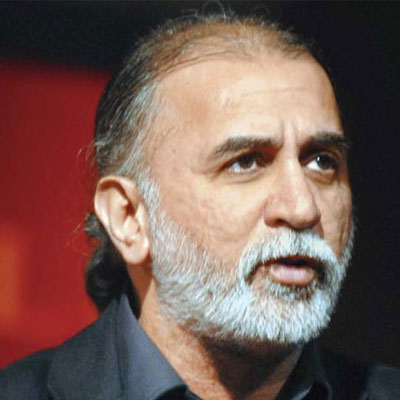
    The media industry as well as the common man was shocked yesterday when Tehelka magazine editor Tarun Tejpal reportedly admitted ‘misconduct’ against a woman journalist and offered to step aside from the post, and the office, for six months as a penance. The journo in question had alleged that Tejpal sexually assaulted her at an event organised by the magazine in Goa earlier this month.


    So what’s all the fuss about? We live in times when adults having consensual sex has become quite common at workplaces. From Fatal Attraction to Inkaar, the subject has been captured on celluloid and written about a zillion times. There’s a term coined for it as well, ‘office spouse.’ We hear about such relationships every other day; be it in classrooms or boardrooms.


    And the media, much as it may like to pretend otherwise, isn’t too far behind in these matters. Prominent journalists have had consensual relationships which are a known fact among the fraternity but no one really talks about them, openly, at least.


    One wouldn’t be wrong if he/she calls media as a cesspool. Just that those who are in the business of washing other people’s dirty linen in public, won’t wash theirs in full public view. That would be just so wrong!


    One wouldn’t be wrong if he/she calls media as a cesspool. Just that those who are in the business of washing other people’s dirty linen in public, won’t wash theirs in full public view. That would be just so wrong!
    _____****__________________________________________________________

    Like Tehelka managing editor Shoma Chaudhary side-stepped a news reporter’s query saying, “This is an internal matter”. Wouldn’t others of her ilk have said the same thing if they were in such a mess?


    There are many Tejpals striding the passages in media organisations around India. And more and more women are entering the media industry – whether in television news or general entertainment channels or newspapers – especially at the junior level. It is they who become an easy target for the ones sitting in their cozy cabins. Some of the younger lot might “cooperate” to get a helping hand in their careers while others who become victims might choose to keep mum so as to not harm their progress.


    It takes a lot of courage for one to step-up and take on the boss. The young Tehelka journalist did so and needs to be patted on her back for not letting the possible repercussions hold her back. But how many of them will do so? That is the worrying part.


    But there is a saving grace. Those in senior positions or positions of power should remember: Everyone is under scrutiny and no one — no matter how powerful — can escape from one’s actions in the liberalised social media environment of today. This is borne out by l’affaire Tejpal which has once again brought the much celebrated journalist in focus. But unlike earlier times when he was in the limelight unearthing scandals, this time, he is the scandal. The once media darling is now being crucified by one and all as a beast, and rightly so. Indeed, Tejpal and Tehelka, which made headlines with umpteen sting operations, finds itself being stung by scandal and that too rather badly.


    For a magazine known to take a stance, no matter what the consequences, it has come under severe criticism for taking a rather serious issue lightly. “He stepped down. It was not something she’d asked for. It was over and above that”, says Chaudhary matter-of-factly.


    Not only is the world shocked to know that Tejpal sexually harassed a junior colleague, who happens to be his daughter’s close friend, his decision to step aside from the editorship of the magazine and from the Tehelka office for six months as ‘atonement’ for what he describes as ‘a bad lapse of judgement, an awful misreading of the situation…’ has been labelled ‘inappropriate and grossly insufficient’ by many.


    Those in senior positions or positions of power should remember: Everyone is under scrutiny and no one — no matter how powerful — can escape from one’s actions in the liberalised social media environment of today. This is borne out by l’affaire Tejpal which has once again brought the much celebrated journalist in focus.
    _____****____________________________________________________

    Apparently, Tejpal, in his letter to Chaudhary, has said he repents his ‘drunken banter’ and offered to step aside from his post and the office for six months to ‘atone for his misconduct’. But does that absolve him from all responsibility? Maybe he hopes his close connections with the Congress president will help him in return of all the snooping he has done on the rival party.


    And what do we say to Chaudhary, otherwise known to be at the forefront of all women’s causes, who has in this instance chosen to support Tejpal, requesting Tehelka employees to ‘stand by the institution in this hard time.’


    Institution yes… but one whose future hangs in the balance. Will it outlast Tejpal when he is tried and thrown into jail as is being demanded by many on Twitter and on social media? This is probably what was playing in the mind of the victim, which is why she is still considering constitution of a committee by the magazine to go into the issue and take action. Remember, Tejpal allegedly forced himself on the girl in an elevator in a five star hotel more than 10 days ago. With a slew of publications downing shutters, and television channels shedding staff, another magazine folding up will not be good news for the industry, that too because of one man…


    While one can’t foresee the future, a niggling question remains: “What was Tejpal thinking (or smoking or guzzling) when a man of his stature did what he calls ‘a bad lapse of judgement’?”


    Maybe he doesn’t believe in practicing what he preaches.


  • How Colors is adding ‘colours’ to its content : Raj Nayak Chief Executive Officer at Colors

    How Colors is adding ‘colours’ to its content : Raj Nayak Chief Executive Officer at Colors

    We produce over 7500 hours of original content per year only amongst the top six GECs, which by itself is a tall order, and yet we produce great shows that goes on for over five years on almost a daily basis. Internationally also shows go on for years but they are in seasons and they take a break and most of them are not daily. So to that extent, in a way we can say we create great content, especially given the budgets we operate in.

    At this moment, the budgets we work with is very very low for fiction shows as compared to worldwide benchmarks, and it shows in the quality of the product that goes on air. It is an chicken and egg situation, you can’t produce high quality shows if you don’t invest…You can’t invest if you do not generate sufficient revenue. Right now we have too much dependency on advertising revenue, where the yield has been stagnant for years and a fair share either in increased subscription revenues or a decrease in carriage fees hasn’t really happened yet. But with digitisation progressing and the remaining phases to be implemented soon, I believe that over the next two-three year horizon this correction is bound to take place. What it means is broadcasters will then have more money in their kitty to reinvest on quality programming, thus enriching the viewing experience multifold for the consumer. I also believe that the 12 minute regulation on advertising inventory will act as the much needed catalyst for the advertising yields to go up, so I am very optimistic about the future.

    I believe that the 12 minute regulation on advertising inventory will act as the much needed catalyst for the advertising yields to go up, so I am very optimistic about the future
    _____****_____

    Yes we have some challenges facing the industry. There is a dearth of good script writers, most of the stories that come to us are unfortunately cut and paste jobs, either from movies or from across different shows. Original thinking is surprisingly missing. Then if you look at the comic genre, there are hardly any good comedy writers, in fact you can count them on your fingers. So either there is a genuine dearth or we haven’t been able to scout & nurture talent as an industry. We like to work with the same people who are so overloaded with work and are unable to devote 100 per cent to one story (There ofcourse are exceptions to the rule). Production houses have become executors, the channel EP’s take credit when a show does well but blames the production house, script writer, everyone else when the show flops. We need to move to a system where the production house takes cent per cent accountability to deliver a show and its ratings. A system where they are both incentivised and penalised for performance. The channel EP’s must strictly supervise that all deliverables are met & quality check. The producer of the show must have a skin in the game so that they are fully involved.

    Right now we have too much dependency on advertising revenue, where the yield has been stagnant for years and a fair share either in increased subscription revenues or a decrease in carriage fees hasn’t really happened yet
    _____****_____

    Talent is another challenge, inspite of being a country of 1.3 billion people, talent is still an issue. Again, part of the problems lies with us broadcasters, we don’t want to experiment with new people. We want the same hosts, same judges, and are not willing to look beyond. Its a musical chair. Everyone wants to play safe. We prefer to stay in our comfort zone and we need to change this mindset.

    Last year we had a list of names floating to anchor our show Jhalak Dikhhlaa Jaa. Also for the judges. My non fiction programming head and I were insistent that we needed a face that was new…Thus we got Manish Paul & see what a success he has been! We got Karan Johar again from outside the regular judges list and he has turned out to be the best judge on any TV show! His contribution to the show, like Madhuri & Remo has been enormous.

    Television is a very potent medium. The beauty of TV is, you take anybody and put them on television a couple of times and they will become a celebrity. TV fiction stars are more popular than film stars even though they may not get the same adulation as a film star. But the truth is they invade millions of drawing rooms and bedrooms day in and day out 365 days of the year in the remotest parts of the country. I have had legends in the field of art and culture or even very eminent people from different walks of life wanting to meet some of the characters from their favourite shows. I have seen film actors’ parents wanting a picture with their favourite TV star…The problem with TV stars is their life span is comparatively short and their fortunes are linked to the performance of, at most times, just one show. Once the show is successful some of them forget what got them there in the first place and there is no one to counsel them or professionally manage them. So that is another area, that we need to work on and develop as an industry.

    We as a channel have taken the first step in upping the ante by announcing a high production fiction show 24 with Anil Kapoor. Sony has followed by announcing a fiction show with Amitabh Bachchan. We are happy that we have set another new trend.

  • Acting on its mandate

    Acting on its mandate

    The NBSA has been cracking the whip on certain complaints filed with the standards body. Here is a example of three cases which were censured by it. Several other examples can be found on the nbanewdelhi.com.

    1. Decision dated 20.12.2012 passed by NBSA regarding complaint dated 14 September 2011 filed by the Rajiv Gandhi Charitable Trust against TV18 Broadcast Limited in respect of broadcast dated 1.8.2011 and subsequent broadcasts in relation to the RGCT – Channels: CNN IBN & IBN7

    The NBSA, accordingly, directed that the Broadcaster be visited with the following consequences:

    (a) The Broadcasters be directed to carry an apology by running the following text (static) on full screen in large font size with voice over (in slow speed) expressing regret for the said telecast on their channels for 5 consecutive days at 9.00 pm sharp on 24.12.202, 25.12.2012, 26.12.2012, 27.12.2012 & 28.12.2012 respectively (IBN7 will carry the apology in Hindi):

    (b) The Broadcaster is issued a “censure” by the NBSA for wilful violation of NBA Code of Ethics & Broadcasting Standards and norms of ethical journalism;

    (c) A fine of Rs one lakh is imposed upon the broadcaster, to be paid to NBA within one week of receipt of this order.

    2. Decision dated 25.10.2012 passed by NBSA regarding complaint dated 21.06.2012 filed by Dr. Kalind Prashar against broadcasts made on Aaj Tak (on 10.6.12) & on IBN7 (on 11.6.12) of a one sided story of a matrimonial dispute – Channels: Aaj Tak

    Insofar as Aaj Tak is concerned, the NBSA held that the channel was clearly in breach of the NBA Code of Ethics & Broadcasting Standards, Specific Guidelines and committed wilful violation of the NBSA Advisory on Reportage of Family/Matrimonial Matters dated 16.9.2011, for the reasons recorded above. The NBSA therefore directs that TV Today Network Ltd. / Aajtak be visited with the following consequences:

    (a)The channel must carry the unedited version of the complainant, prominently for a duration of three minutes at the same time that the first broadcast was made on 10.6.12 i.e. at 6.00 pm for three consecutive days i.e. on 30.10.12, 31.10.12 & 1.11.12 respectively. The complainant’s version must also be preceded by an apology to be tendered by the channel, by running the following text (static) on full screen in large font size with voice over (in slow speed) expressing regret for the said telecast on their channel Aaj Tak.

    (b) Directed the broadcaster to pay a fine of Rs 1,00,000 to the NBA within seven days of receipt of this Order for wilful violation of NBA Advisory dated 16.9.11 on reportage of family/matrimonial matters.

    3 . Decision dated 16.7.2009 passed by NBSA on complaint filed by Eye Bank Co-ordination & Research Centre & Arpan Eye Bank, Mumbai – Channel: NDTV India for breach of the principle of impartiality and objectivity in reporting and (ii) of not ensuring neutrality in reporting.

    Decision:

    a) To run an announcement, expressing regret for the said telecast prominently on their channel NDTV India prior to the commencement of the telecast of the program Mumbai Central stating the following (text to be translated in Hindi).

    b) To also run the apology text on NDTV India on following three consecutive days, an apology/regret as a scroll in legible font and at normal speed between 8.00 pm. and 9.00 pm, five times with a space of 12 minutes each.

    c) To grant to EBCRC and Arpan an opportunity to express their version on the subject matter of the said telecast, by broadcasting EBCRC’s and Arpan’s un-edited version on the subject matter of the said telecast of a duration not exceeding an aggregate of five minutes on the channel NDTV India in the program Mumbai Central.

    d) Proof of compliance of this Order by NDTV by submitting a Compact Disc containing the telecast/apology/regret with particulars of the time and date of the telecast be submitted to the News Broadcasters Association within 15 days of receipt the Order passed by the Authority.

    4. Decision dated 19.10.2011 passed by NBSA on suo motu action regarding telecast of a programme “Will Kanimozhi turn approver” – Channel: Times Now for “conjecture and speculation” in its Prime time debate show News Hour.

    The Authority issued to the said Broadcaster a “censure” for the breaches committed by it and made it clear that any further transgression by the said Broadcaster would be dealt with more severely. 13. The Authority further directed the NBA:

    (a) to send a copy of this Order to the said Broadcaster for noting and for future compliance;

    (b) to circulate this Order to all Members/Editors of NBA;

    (c) to host a summary of these proceedings and of the present Order on the NBA website and to include such summary in the NBA’s Annual Report.

  • Congress TV Agenda?

    Congress TV Agenda?

    With elections looming large, the spotlight may be on political parties and their candidates however an unlikely candidate seems to have entered the fray, i.e. television.

    Very quietly, two shows have been launched on two TV channels within the span of one week, bearing an uncanny resemblance to Indias biggest ruling party – the Congress.

    One; Anil Kapoors Indian adaptation of the American espionage series 24, which aired on Colors on 4 October and the other; Desh Ki Beti – Nandini, which premiered on Sony on 7 October.

        
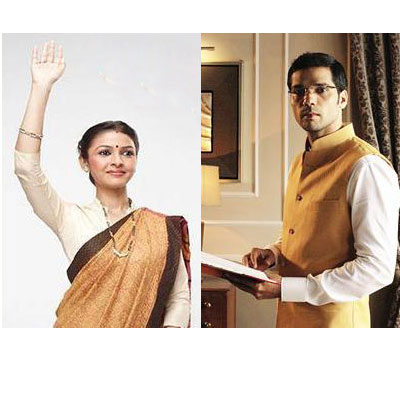
    The desi 24 sees the young scion of a political family, Aditya Singhania played by Neil Bhoopalam, reaching out to the countrys youth a la our very own vice president of the Congress Party, Rahul Gandhi.

    While Desh Ki Beti has a bun-sporting, saree and long sleeve blouse-clad Nandini waving out to the crowd, reminiscent of Indias only woman PM, the late Indira Gandhi.

    Leaving aside similarities; both the shows couldnt have been timed better. North India goes to elections in November while the race for Indias next PM unfolds in the first half of 2014.

    24 will end in approximately three months but the impact is sure to last. That Colors reduced the air time of one of its most popular shows, Comedy Nights with Kapil, to accommodate the series is proof of just how much is riding on the timing. Similarly, Sony prematurely pulled the plug on its earlier week day show Chhanchhan to make way for Nandini, citing low TRPs as reason.

    Social media has been quick to catch the so-called connect between these shows and the ruling party. Heres sampling the kind of comments on Twitter and Facebook: A new show called desh ki beti nandini seems to be funded by congress, daily soap Nandini will subtly glorify pre emergency Indira. Direct editorial control from Rahul Gandhi, waiting for Aditya Singhania the 24 character based on Rahul Gandhi, to take his speech and say phaad ke phenk do, 24 just predicted a Rahul Gandhi victory and so on.

    Makes one wonder whether this is part of the viewers fertile imagination or truly Congress Ka Haath behind these shows…