Category: Comment

  • Election Campaigns: How they boosted OOH sector

    Election Campaigns: How they boosted OOH sector

    Since the 2014 elections is being touted to be one of the toughest elections of all time, parties are more than willing to dig deep into their pockets and spend on advertising…especially outdoor since their vote bank lies within the masses on the street of not just the metros but also the tier II, III, IV markets. Therefore, outdoor has become massively important for them. It’s much more rigorous this time.


    Election season has given a boost to outdoor advertising industry by more than 30 per cent. Understand, unlike television and print which also exude national presence, the power of outdoor lies in its local behaviour. It helps put up a larger than life picture wherein literacy is not a heavy requirement. You can easily look at the picture and understand the message. As a result outdoor has become a very significant medium for the parties to reach out to the masses who stay in the hinterlands of this country. They are their vote banks, most of whom who may not even have a television at home to watch an ad or are not literate enough to read the paper. It’s outdoor that helps the candidates and parties to reach out to such regions. Now talk of metros like Mumbai, where time is limited and people do not have the leisure to watch TV and read papers, since people are constantly on the run and outdoor helps capture their attention in a very big way. Outdoor inventories  such as hoardings, transit medium, street furniture, mobile vans, railway media all can be placed at strategic locations and just cannot go unnoticed by the target viewer. In a city like Mumbai where consumers are constantly travelling, hoardings play an exponential role in capturing their attention.


    The government has estimated a 4.9 per cent rise in economic growth this financial year, against a decade-low of 4.5 per cent last year. Parties have majorly used larger than life hoardings without much innovation in a bid to keep their campaign language simple and direct. National political parties such as Congress, BJP, NCP and the latest entrant in the political game Aam Admai Party (AAP) have also rolled out an outdoor campaign to woo voters pan India. Outdoor has come up as an effective mass communication tool for targeting people on the go as soon as they step out from their home.  This has given rise to the demand of outdoor inventories on big scale especially large size hoardings. Taking the professional approach, these parties have engaged highly lit, strategically located, clutter free hoardings along with bus media.


    Interestingly, political parties have also raised ad spend on OOH medium to cater to large number of diverse voters. Focused on innovation, diverse range of outdoor inventory and tactical media planning have brought national political parties closer to outdoor medium.


    Digital Marketing and OOH: Combination used?


    These political campaigns came up with single objective to influence the decision of voters. Therefore, the demand of quality outdoor products coupled with highest reach gained popularity amongst parties.


    Parties used combination of digital and outdoor campaigns for various political promotional events such as rallies, public appearance of prime ministerial and Lok Sabha seat candidate in every constituency, awareness campaign of party’s agenda and promises to the voters and many more.


     This year we have noticed many new trends such as advertising via mobile vans, LED, huge display screen at traffic junctions, public announcements, heavy advertising on railway and bus stations etc. A lot of BTL activities are also planned around the city like Narendra Modi T-shirts, Arvind Kejriwal’s Cap and Rahul Gandhi’s Mask to list a few.


     What after election?


    The elections this year is expected to boost the ad revenues across sectors in double digits. And this boost will help sustain even the OOH industry for the rest of the year. It is only an addition to the already existing and growing business of OOH as a whole. So, we do not think that there should be any coping issues. There will be business as usual. Elections are a once in a five year phenomenon. We do not depend on elections alone, therefore…right?! The elections will get over in a few days. And April-May are the best advertising months. Its summers…and holiday season for schools too. So, a lot of advertising happens across the summer FMCG brands, tourism and education too.


    (These are purely personal views of Global Advertisers MD Sanjeev Gupta and indiantelevision.com does not subscribe to these views)

  • Andhra Pradesh: A chaotic news market

    Andhra Pradesh: A chaotic news market

    According to the Ministry of information and broadcasting (MIB), there are nearly 800 satellite channels in India, of which about half are news channels. With an already crowded market, an increasingly loud general election has added to the number of news channels mushrooming across the country.


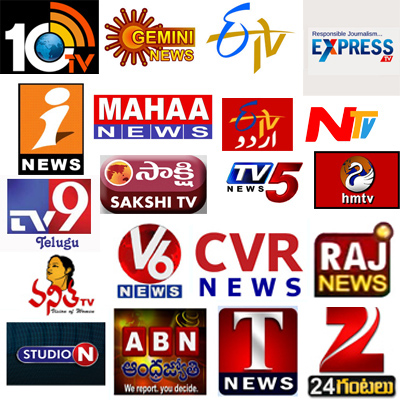
    Andhra Pradesh, which till recently was in turmoil because of the imminent bifurcation into Telangana and Seemandhra, is no exception. Counted as the state with the highest number of satellite TV channels, the last one year has seen newer additions (V6 News, Express News, 10TV and ETV3) to the existing list (ETV2, TV9, TV5, NTV, Mahaa News, HMTV, Studio N, Raj News Telugu, I News, 4TV, Sakshi TV, Gemini News, 4TV, Vanita TV, ETV Urdu, CVR News, ABN Andhra Jyoti, the now shut Zee 24 Gantalu).


    It is not as if the number of TV viewing homes is on the rise but that doesn’t deter these newbies from popping up. Indeed, AP has the highest number of cable TV homes in India at 15 per cent. At a national level, channels are deploying cost-cutting measures but in AP, newer channels are being spawned. So, what is the survival strategy of these channels? Apparently, they are all backed by political muscle though no politician will openly come out in support of them. More than anything, it is about party views being propagated through the media, sometimes openly sometimes subtly.


    Only two of the 20-odd channels – TV9 and TV5 – have major market share, followed by the likes of ETV, NTV and Sakshi TV. According to local people, YSR Congress funds Sakshi TV, NTV and TV5, while V6 is backed by six politicians affiliated to Congress.  Rumours are that ideologically, HMTV seems pro-Telangana though may not be backed by any party while ABN Andhra Jyoti is pro-Telugu Desam Party (TDP). Let’s not forget Gemini News of the Sun group under Kalanidhi Maran who has the backing of DMK leader M Karunanidhi. The office of Telangana News channel is actually located within the headquarters of the party office in Hyderabad. Now that’s called risk! According to the public, only TV9, Raj News Telugu, CVR News and the newly launched Express TV are apparently among the channels without political bias.


    Again, owning a channel may be a power trip but running it is an altogether different ballgame. Approximately Rs 1.2 to Rs 1.5 crore per month is required to run a channel in the state and this includes cost of infrastructure and technology and staff salaries. On the other hand, revenues don’t exceed Rs 70 lakh and typically, a channel takes nearly three years to break even (under good financial condition), which means an initial investment of Rs 40 crore is required.


    25 per cent of the Rs 1,000 crore advertisement market is from news channels. Of which, the top five news channels make up for Rs 200 crore while the smaller channels scramble for the left over Rs 50 crore. The ones with high viewership such as TV9, sources say, command up to Rs 2,500 to Rs 3,000 for a 10 sec slot. On the other hand, the not-so-high-on-viewership channels get just about Rs 600 for every 10 sec. Channels with political backing rarely have to bother about ad revenue since money will flow in anyway…


    In such a scenario, it is not surprising that rumours of channels unable to pay their employees have been doing the rounds. While Raj News Telugu has been stuck in revamp for months, ETV has already launched its Telangana-specific channel, ETV3.


    With 80 per cent of the state being dominated by Hathway Cable and Datacom, distribution woes are not unheard of. And yet, channels keep growing year on year.


    To add to it, soon, many new Telangana centric channels will crop up to add to the existing chaos. The existing channels will be rearranging their distribution and editorial strategies to suit the needs of two states.


     It’s time channels realised that the market is oversaturated before it’s too late. Surely the MIB can look into the state of news broadcasters in the state and rethink before giving out licences like freebies.

  • Mr Goswami, please come out of the studio

    Mr Goswami, please come out of the studio

    For the elections of the century, news channels are doing all they can to not only outdo each other but also cover the elections, accurately.


    And with half the country already inked, the fight is going to get only tougher. The primetime anchors who are used to the air-conditioned studios have left their comfort zones and are now roaming every length and breadth of the country in the scorching Indian summer.


    After the countless exit and voters’ polls and panel discussions, it is now the editors, who have taken upon themselves the task to gauge the mood of the nation. With over 80 lakh polling stations across the country, expenditure nearing Rs 110 crore and 40 lakh polling staff ready for more than 60 crore voters set to exercise their mandate this time, the anchors are venturing out to the villages and city by-lanes to gather ground information from the common man and find out who will they like to see as their new Prime Minister.


    In the drive to get the most accurate election coverage, Headlines Today has even got a special bus made. The Dilip Chabaria designer-made Election Express claims to cover over 8,000 kilometers, informing the nation on everything and anything that has to do with elections.


    The journo couple, Rajdeep Sardesai and Sagarika Sardesai, of CNN IBN too have covered the various cities to know which candidate will be opted for and why, locally.


    The Hindi and regional news channels too have boarded the outdoor express. The debates are taking place out in the open, now.


    However, one man (read Arnab Goswami) who knows all the questions which the nation wants to know hasn’t left the four-walled studio. Wonder why?


    Is it that he is too used to shouting down at people in the studio or is he is afraid that someone might just yell back at him if he tries to do the same what he does in the studio, out in the open?


    Maybe Mr Nation-wants-to-know, who suffers from OCD of not being able to see others talk, feels it to be a waste of time and money to go out to the streets where the real political debates are held.


    Imagine even if he did go out to the streets what will happen? Many might just fall on the feet of the ‘Rajnikanth of news.’ That’s quite a possibility.


    Hate him or love them, but you cannot ignore him. One has to give him that much credit. And yes, he is that one reason, which makes many switch on Times Now.


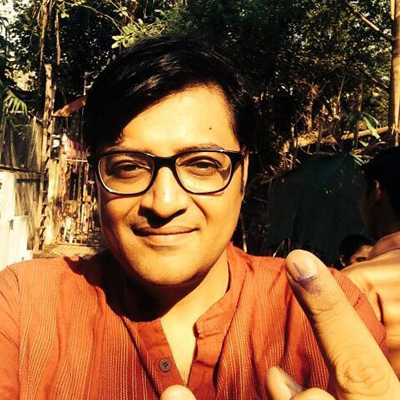
    So while he did go out to vote (his selfie caught everyone’s attention); it will be a sight, when he actually steps out on the streets, to cover elections.


    Wish Mr Goswami listens and comes out of the “shell” to cover the real deal in the Indian summers!

  • Political advertising in India – social media and the first-time voter

    Political advertising in India – social media and the first-time voter

    If you’ve always wondered why and what’s the point of political advertising when the candidates get enough coverage around their sheninagans on a regular basis, then read on.

    The primary purpose of political advertising is to swing the perception of people who have ‘CONFUSION’ written all over their faces in capital letters, and ultimately, to win votes. Because for a larger percentage of the politicians, it’s all about obtaining and retaining power, fuelled by money and greed.

    Past demeanours do not count, and most political parties have cracked the seven deadly sins of Indian voters. To elaborate, here goes:

    1. The Indian public has extremely short-term memory

    2. Over time we learn to tolerate anything

    3. Nothing comes above religion and caste

    4. Political ignorance, even amongst the educated

    5. Petty appeasement through freebies

    6. Indians love to hate each other

    7. Need to hero worship and follow dynasties

    Courtesy: Ishaan Mohan Bagga, Editor, Indian Exponent. http://indianexponent.com/24298/7-weaknesses-of-indian-voter.html

    The economics of 2014 elections

    Having mentioned money, Reuters reports that ‘Indian politicians are expected to spend around US $5 billion (Rs 30,000 crores) on campaigning for elections next month (April 2014) – a sum second only to the most expensive US presidential campaign of all time – in a splurge that could give India’s floundering economy a temporary boost.

    India’s campaign spend, which can include cash stuffed in envelopes as well as multi-million-dollar ad campaigns, has been estimated at Rs 300 billion (US $4.9 billion) by the Centre for Media Studies, which tracks spending.

    That is triple the expenditure the Centre said was spent on electioneering in the last national poll in 2009.’

    Media is the largest beneficiary in the arsenal; and all related advertising, turns into a medium to deliver promises, attack and counter-attack opponents, and function as the political game changer. Swirling on a delicate ideological spindle – ‘A lie told often enough becomes the truth’ – Vladimir Lenin. Also successfully used by Hitler’s Propaganda minister Joseph Goebbels, who also served as chancellor for a day, following Hitler’s death.

    So couple greed with the seven deadly sins of Indian voters, stir in tonnes of cash and engage some of India’s leading advertising-PR-social media conglomerates to churn out propaganda and you have a volcanic blitz of media madness; where even educated, otherwise analytical minds can’t distinguish between hell or high water.

    The year 2014 is a very interesting year for India as the majority of the audience that will be voting this year will be very young. At a news conference in New Delhi, the election commission said that the process of voting in the sixteenth Lok Sabha will see the largest ever population of eligible voters, led by over 814 million voters, 100 million more than in 2009. This time round, more than 23 million voters are aged between 18 and 19. For the first time in a general election in India, voters will be allowed to cast a ballot for “None of the Above.”

    To the extent that the ultimate decision might also be in the hands of India’s youth because of the existing majority, the marketer has set up shop in the marketplace, i.e., political advertisers have looked into reaching out to the audience where they currently ‘hang out’.

    With advertising and communication being churned out faster than widgets, there is no thinking time for the creators; hence they all narrate versions of the same story, with a different overtones, over different platforms.

    The story goes something like this –

    Cause

    Here’s the starting point: what does the party stand for? Why does this party exist? What does the prime minister candidate stand for? There are many causes on offer: secular, development, safety, jobs, prices, pride, honesty and governance.

    The first-time voter is young, idealistic and seeks a motivating argument to come and vote. The best argument to this group is economic: the promise of jobs and a brighter future.

    Constituency

    Similar to brand marketing campaigns, the candidate who presents the best chance in the constituency is a combination of optimising many variables and micro-targeting, i.e., “Think national but choose local” being one of the most commonly used engagement strategies right now.

    Comparison

    By creating syndromes of fear, uncertainty and doubt amongst the people, political advertising portrays competitors in an unfavourable manner, thereby benefitting the attacking candidate and not marring his image; eventually leading to winning more votes.

    Celebrities

    Everyone from TV presenters, to actors, to former diplomats and government servants, will start offering their endorsements for the benefit of the voter. Such endorsements will multiply gradually in this election. Parties will rope in influential social commentators and feed them with talking points to build preference, especially among undecided voters.

    This election is therefore truly at the mercy of first-time voters and social media targeting, which will decide its outcome; since reliable stats reveal that over than half of the total youth audiences are on social websites. 

    According to a research by Autumn worldwide, ‘out of a million conversations on social media on elections in September 2013, first-time voters (overall 150 million) led 40 per cent of chats. They discussed the rupee, prices, women’s safety, governance and jobs. Their idea of accountability in politics will define India over the next 20 years’. So 2014 is the start…

    What’s important here is not which party wins the elections this time, but the power of crowd-sourcing and influencing opinion on the Indian social scene. This of course calls for a social and cultural mindset change, which is slowly experiencing what theologians call an ‘eschatological breaking in’, or a foretaste of things to come before they actually occur.

    Talk about bringing colour to Indian politics. While the political camps pore over rivals’ speeches looking for historical inaccuracies and discrepancies in political manifestos, a parallel analysis is unfolding across homes, public and individual spaces alike.

    Politics and the youth in India have never seemed to have had a liking for each other so far, the relationship between the two being pre-dominantly passive. But of late, with candidates like Meera Sanyal being active on social networks and using their personal pages to promote their ‘brand’ and reach out to the users by actually informing them about what they intend to do or what they are currently doing at the moment which helps them create a following amongst the dominant and previously dormant majority.

    This adoption of new media by Indian politicians, even though late provides a personal connect between the aspiring leaders and the junta making the game a little more complicated than it previously was keeping the users aware about the actual story instead of depending on paid media for biased information.

    There is another side to the story as well. Where there’s any form of advertising there are advertising agencies and this time they come with all guns blazing on the digital front too!

    The best example for this would be Narendra Modi who has managed to carve up a decent spot for himself in the cyberspace by making complete use of social networks along with the help of his agency by keeping the audience informed about his actions as well as sharing his opinions over different issues. Mr. Modi’s social pages also boast of web applications which look towards gathering volunteers for various causes as well as send festive audio greetings to his fans on the web.


    A bit too much you said? You be the judge, but you cannot undermine the fact that these are the reasons why the 2014 elections are so exciting.

    The future of the country is yet to be determined but advertising expenditure is enabling emulation of the likes of Lenin and Goebbels…

    Long live the Indian (r)evolution and heil to its leaders.

    Hello, anybody (with a conscience) home?

    (These are purely personal views of  Raising iBrows digital and engagement strategist Carl Noronha and indiantelevision.com does not subscribe to these views)

  • IPL 7: Ready, steady, Po!

    IPL 7: Ready, steady, Po!

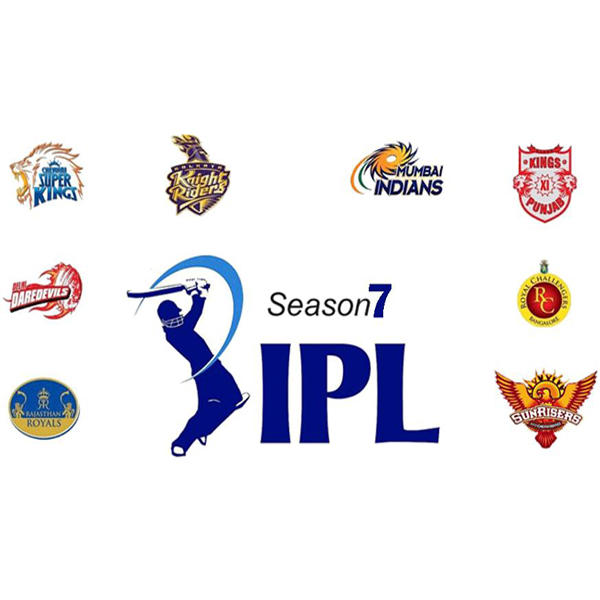
    Just a day to go for that spectacle called the Indian Premiere League and already, the season has seen more than its fair share of twists and turns!


    Apart from the fact that the upcoming tournament coincides with the 16th general elections – bringing back the ghost of IPL season two that had to be organised on South African shores because it collided with the polls here – there have been other changes as well. Right from the omission of Pune Warriors India as a franchise (earlier, Deccan Chargers and Kochi Tuskers Kerala faced termination as well) to N Srinivasan losing his chair to cricketing legend Sunil Gavaskar being appointed as the BCCI-IPL interim president on the order passed by the Supreme Court.


    Also, IPL is down to eight teams just like it was when it first kicked off, with the number of matches down to 60, of which, the first 20 will be played in the UAE and the remaining ones back home beginning 2 May.


    So before the action begins, here’s looking at some of the things the franchises need to make note of before they forge ahead:


    Maintaining momentum


    Back in 2009, when IPL had to shift to South Africa due to general elections, there were a lot of logistical issues that caused trouble for the franchises. While shifting to UAE this time round may look simpler because of the similarity in conditions, the teams will have to do some adjusting when they shift back to India in early May.


    The return to India could be more a psychological blow for the teams because while there will be bigger crowds and greater support back home, migrating back to India from the UAE with wins under their belts may prove a daunting task for the teams.


    They will have to make the psychological adjustment and rework their strategy to better suit Indian conditions. If any side gains momentum in the UAE, it is crucial that they win the first few games during the Indian leg to keep wheel of fortune turning. As far as the conditions go, it may become easier for the teams in India as the heat wouldn’t be as intense as that of the UAE. The pitches too would be a lot more familiar.


    Thus, it would all boil down to how well a franchise returns and gets moving in India. It may be a challenge for the teams that are winning, but those who struggle in the UAE may welcome the return to home conditions and that could work in their favour. So buckle up for some high adrenaline action in the first week of May.


    Sponsors fighting shy of IPL?


    What began as a fledgling franchise in 2008 is today a world-renowned property with brand value pegged at $3.03 billion in 2013 and the highest at $4.13 billion in 2010.


    But, 2014 seems to be a troubling year for IPL franchisees, what with the recent controversies, uncertainty about the fate of the tournament (this season), and the decision to take the first half to UAE having made sponsors put on their guard.


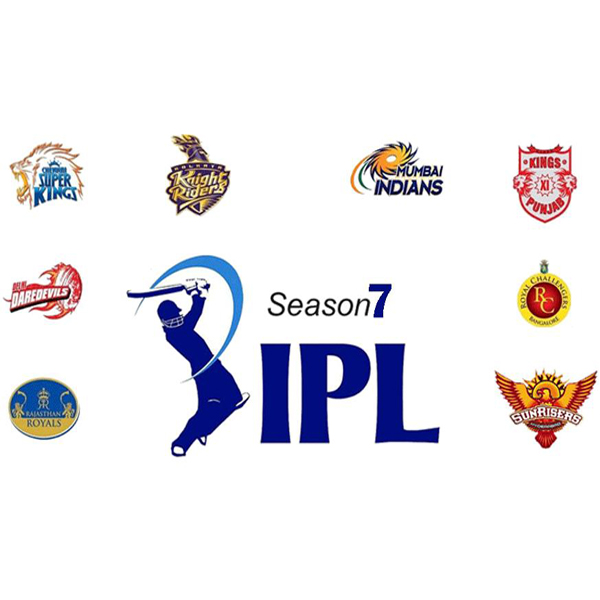
    According to an American Appraisal India report of 2013, Chennai Super Kings and Mumbai Indians emerged as the most powerful brands valued at $72 million each; followed by Kolkata Knight Riders ($69 million) and Royal Challengers Bangalore ($51 million). Rajasthan Royals ($45 million) and Delhi Daredevils ($40 million) were somewhere in the middle, while Kings XI Punjab ($32 million) and Sunrisers Hyderabad ($25 million) sat at the bottom of the pile.


    Each team is trying to claw its way back with operational improvements however, trust flows with stakeholders will eventually determine the health of IPL’s long-term liquidity and profitability. For the current eight teams to sustain, their short-term operational movements need to be aligned with their strategic plans for the tourney.


    For example, Kings XI Punjab has had its number of sponsors come down to just two from 15 in 2013. Till last season, the franchise had NVD Solar as its title sponsor for three years, along with Arise Inverters and Batteries, Raindrops Basmati, Lux Cozi, ACC, USL and McDowell’s No. 1 as official team partners. But this season, it has only USL and TK Sports on board as sponsors with the tourney at the doorstep.


    GMR group owned-Delhi Daredevils seems to have undergone a makeover this season with a new-look squad, new logo and new sponsor – Quikr. Till last year, the Muthoot Group was its title sponsor, but it did not wish to renew its contract and thus, it opened the doors for the e-commerce portal to step-in as the title sponsor for a period of three years. Apart from Muthoot, other premiere sponsors including Bajaj Allianz, Coca-Cola India, Matrix and consumer goods company Panasonic have also opted out of sponsorship deals this season.


    Other franchisees such as Chennai Super Kings, Rajasthan Royals and Kolkata Knight Riders are facing a different challenge. While these teams have managed to get some sponsors on board, the sponsorship rates have taken a pounding. Delay in the announcement of the venue and the controversies surrounding the tourney have impacted business this year, according to most trade pundits.


    So how are the teams facing up to these challenges?


    With the playing field down to just eight teams, it will lead to intense battles on the field that will hopefully lead to great last over finishes, creating an enthralling experience for the fans.


    Last season winners and maiden title holder Mumbai Indians, will square off with 2012 winners Kolkata Knight Riders on April 16 to kick-off the tourney at Sheikh Zayed Stadium, Abu Dhabi.


    The league is scheduled to culminate on 1 June 2014, to crown the champions for season seven of the Pepsi Indian Premiere League. Here is a brief description of the teams competing for the coveted title this time around.


    Chennai Super Kings (CSK)


    Team (from): MS Dhoni (Captain), Suresh Raina, R Ashwin, Ravindra Jadeja, Dwayne Bravo, Faf du Plessis, Brendon McCullum, Dwayne Smith, Ashish Nehra, Mohit Sharma, Samuel Badree, Ben Hilfenhaus, Matt Henry, B Aparajith, Mithun Manhas, Ishwar Pandey, Pawan Negi, Vijay Shankar, Ronit More, John Hastings.


    One of the most successful franchises in the league, having won the title twice (2010 and 2011) under the leadership of M S Dhoni (also captain of Team India); one of the major reasons for the success of CSK is the stability and collective effort in the team. They always have a chance to win the cup and this year is no different.


    Royal Challengers Bangalore (RCB)


    Team (from): Virat Kohli (Captain), Chris Gayle, AB de Villiers, Yuvraj Singh, Parthiv Patel, Albie Morkel, Mitchell Starc, Ashok Dinda, Ravi Rampaul, Muttiah Muralitharan, Nic Maddinson, Varun Aaron, Vijay, Sachin Rana, Yogesh Takawale, Abu Nechim Ahmed, Yuzvendra Chahal, Shadab Jakati, Sandeep Warrier, Harshal Patel, Tanmay Mishra.


    The most flamboyant team among all, with the likes of Virat Kohli and Chris Gayle, but it hasn’t really used its resources well to conquer the league. The best result for the team was in 2011, when they came second to CSK. With some real match winners, and Kohli currently in top form, the Challengers need to really put the pedal to the metal (bat to the ball) from the word go this season.


    Delhi Daredevils (DD)


    Team (from): Kevin Pietersen (Captain), M Vijay, Dinesh Karthik, JP Duminy, Manoj Tiwary, Quinton de Kock, Mohammed Shami, Rahul Sharma, Saurabh Tiwary, Laxmi Ratan Shukla, Nathan Coulter-Nile, Shahbaz Nadeem, Ross Taylor, Milind Kumar, Wayne Parnell, HS Sharath, Jayant Yadav, Jaydev Unadkat, James Neesham, Kedar Jadhav, Mayank Agarwal, Rahul Shukla, Siddharth Kaul.


    This is one team that has just drifted away after beginning strongly in the first two seasons. The team really needs to play to its strengths and take each match as it comes. The strategy needs to be very clear; first to reach the play-offs and then the semi-final and if the team plays to its strength, play the final. With the temperamental Pietersen at the helm of things, it will be interesting to see the approach of the team this season.


    Kolkata Knight Riders (KKR)


    Team (from): Gautam Gambhir (Captain), Sunil Narine, Jacques Kallis, Robin Uthappa, Yusuf Pathan, Shakib Al Hasan, Umesh Yadav, Vinay Kumar, Morne Morkel, Piyush Chawla, Manish Pandey, Veer Pratap Singh, Chris Lynn, Andre Russell, SS Mandal, Pat Cummins, Debabrata Das, Suryakumar Yadav, Manvinder Bisla, Ryan ten Doeschate, Kuldeep Yadav.


    The Shah Rukh Khan-owned franchise, was lost till it found a leader in Gautam Gambhir and have stood by him. Under Gambhir, KKR lifted the cup in 2012 and can certainly be a strong contender for this season as well. The team banks on a good mix of youth and experience, with Kallis and Gambhir giving stability to the batting. If Sunil Narine can spin his web yet again and Yusuf Pathan along with new entrant Robin Uthappa create some magic, the Knight Riders may stand to repeat its 2012 feat yet again.


    Rajasthan Royals (RR)


    Team (from): Shane Watson (Captain), Ajinkya Rahane, James Faulkner, Stuart Binny, Sanju Samson, Brad Hodge, Steven Smith, Abhishek Nayar, Ben Cutting, Kane Richardson, Tim Southee, Unmukt Chand, Ankush Bains, Vikramjeet Malik, Rahul Tewatia, Ankit Sharma, Amit Mishra, Deepak Hooda, Rajat Bhatia, Kevon Cooper, Iqbal Abdulla, Dhawal Kulkarni, Pravin Tambe, Karun Nair, Dishant Yagnik.


    The maiden champions will always be remembered for their 2008 tournament; from being the dark horse to really nudging every one out of the league to lift the cup. But since then, the team has not really done much to be noticed. Having been consistent and qualifying for the play-offs last season helps in keeping the team together, but it lacks the killer instinct which may be made up with the appointment of Shane Watson as captain. The team looks very balanced on paper and can give any team a run for its money any given day.


    Sunrisers Hyderabad (SRH)


    Team (from): Shikhar Dhawan (Captain), Dale Steyn, David Warner, Darren Sammy, Amit Mishra, Aaron Finch, Irfan Pathan, Ishant Sharma, Bhuvneshwar Kumar, Brendan Taylor, Moises Henriques, Venugopala Rao, Jason Holder, S Aniruddha, Manprit Juneja, KL Rahul, Amit Paunikar, Naman Ojha, Ricky Bhui, Ashish Reddy, Chama Milind, Parveez Rasool, Prashanth Parameshwaran, Karn Sharma.


    Having the advantage of being the youngest franchise in the league, the Sunrisers Hyderabad, proved its mettle by qualifying to the play-offs in the 2013 season. The team really battled in some of the memorable matches of the season. Under the leadership of Shikhar Dhawan, the team looks poised to maintain its performance and do exceedingly well in season seven as well. With match winners like Dhawan, Warner, Steyn, Mishra and Sammy, this looks like the most balanced team among the lot.


    Kings XI Punjab (KXIP)


    Team (from): George Bailey (Captain), David Miller, Manan Vohra, Virender Sehwag, Mitchell Johnson, Cheteshwar Pujara, Shaun Marsh, Wriddhaman Saha, Thisara Perera, Glenn Maxwell, Rishi Dhawan, Anureet Singh, Sandeep Sharma, Akshar Patel, Beuran Hendricks, Karanveer Singh, Murali Kartik, Shivam Sharma, Shardul Thakur, L Balaji, Parvinder Awana, Gurkeerat Singh Mann, Mandeep Singh.


    This team has never really proved its mettle right from season one down to season six; there have been constant changes in leadership and that has been detrimental to its performance as well. With George Bailey at the helm and support from ‘old hands’ like Sehwag, Johnson, Saha and Balaji, it’s yet to be seen if this season brings a change in fortunes for KXIP.


    Mumbai Indians (MI)


    Team (from): Rohit Sharma (Captain), Lasith Malinga, Kieron Pollard, Harbhajan Singh, Ambati Rayudu, Michael Hussey, Zaheer Khan, Pragyan Ojha, Corey Anderson, Josh Hazlewood, CM Gautam, Aditya Tare, Apoorv Wankhade, Marchant de Lange, Krishmar Santokie, Ben Dunk, Pawan Suyal, Sushant Marathe, Jasprit Bumrah, Shreyas Gopal, Jalaj Saxena.


    The reigning champions of season six IPL 2013, have seen it all. The first two years having struggled to not even qualify for the play-offs; followed by standing runners-up in 2010 and then finally completing the journey last year. But this year the one big change will be, Sachin Tendulkar not figuring in the squad, having retired from all forms of cricket. The team looks good and well balanced to retain its title, only time will tell if it really can.
  • Broadcasting woes

    Broadcasting woes

    If we are to transform India, a realist or ‘Patelist’ engagement with the rest of the world is what we must implement; engaging the world from strength while recognising reality for what it is, foreswearing hubris and belligerence”, remarked Shiv Shankar Menon during the Patel Memorial Lecture of All India Radio last year. India in effect continues with Sardar Patel appreciation against taking the Kashmir issue to the United Nations and has been successful in averting international manipulation in our internal affairs.  In the recent past, reports appeared in sections of the press that our neighbours are active in rolling controversies and possible resentment for rehabilitating surrendered militants via Nepal. Yasin Bhatkal’s revelation of Nepal remaining the favoured nation for transiting members of the Indian Mujahideen further fuelled diplomatic irritation.


    The most disturbing vilification campaign alleging torture of Nepalese people whipping up local sentiments and a number of FM stations with content paid up by vested interests and mixing attractive Bollywood stuff in Nepal are psy weapons that merit the nation’s intervention. Gorkhas of Nepalese origin have shared triumphs and sorrows battling in all theatres of operations as part of the glorious Indian Army. As of today, there seems to be no coordinated trans-border broadcast policy to air either views or the stand point of the nation. India’s National Public Broadcaster, Prasar Bharati, continues to be sub-optimally utilised.


    After Independence and up to the eighties, the External Services Division of AIR functioned in close coordination with MEA through External Publicity Division with greater interaction between the two keeping in view foreign policy requirements, dynamics of foreign relations, and priorities set from time to time.


    Due to its colonial links with England, AIR entered the domain of external broadcast in 1939 purely as a tool for propaganda for the allies during World War II with service in Pushto language in order to counter German Radio blitzkrieg and complement the efforts of the BBC in this region.  When the theatre of operation expanded to South East Asia and East Asia by 1945, External Services Division had a total of 22 language services.  The importance waned once the War ended, plummeting from 22 to just 10 languages. The capacity of ESD remains to cover 100 countries with coverage of 75% of world population in 16 foreign and 11 Indian languages with a targeted audience of 9 neighbouring countries comfortably.


    But gone are the days of diplomatic bags overflowing with letters addressed by radio audiences from all over the world to External Service Division of AIR. The Urdu Service widely popular among Pakistan and at home is in a state of disarray and listeners’ feedback has become a trickle. Chinese domination in the visual and audio medium is of concern since a substantial Arunachalee tribal population living in East Syong, Tirap, Changlong, Ajnow, Lohit, Upper and Lower Dibang Valleys could access Chinese TV channels of  High Power Transmissions from Chinese territory whereas our own Doordarshan, Itanagar, covers a few kilometres through Low Power Terrestrial Transmission. However there being no impediment to satellite TV through DTH, the case for Set Top Boxes for DD free Dish is indispensable if Prasar Bharati has to prudently cover the North East. It is our national duty to reach inaccessible terrain inhabited by tribal Indians in and around Tawang who witnessed chaotic battle scenes during the 1962 operation and upper reaches near Leh, Ladakh.


    In the changing scenario of popularity of FM channels compared to Medium Wave and Short Wave transmissions, the country needs to shift its primary broadcast to FM radio with relevant content retaining its own and traditionally loyal trans-border audience. There are more than 150 independent Radio Stations operating in Nepal. If India has to retain audience base in Nepal, augmentation of transmission power and number of FM stations is necessary as of yesterday.  As far as Bhutan, English added on to Dzonka could cover the whole population with increased presence of FM.  In times of crisis, it is AIR, BBC or Indian satellite channels which are tuned into in Pakistan for credible news; Maj Gen Mohd Azam Asif of PAK Army observed once, substantiating the relevance of AIR.


    Coverage of regional content, news and current events for external audience could only succeed with local dialect and flavour. There is all round apathy about external radio broadcast of ESD among all stakeholders including MEA, resulting in progressive decline of our broadcast as an instrument of diplomacy relegated to the background, adversely impacting its performance, notwithstanding the historic role played.  It is unfortunate and ironic that our external broadcast is touching the nadir at a time worldwide efforts are on to re-invent the importance of external broadcast expanding and consolidating their position, adopting the newest of technologies including new media to meet the changing realities of international politics.


    Complete dismantling or discontinuation of external broadcast may not be in the larger national interest and may turn out to be throwing the baby with the bucket of water. Credible assessment of external audience indicates decline in short wave and medium wave, suffers clarity due to concrete congestion and sky scrapers in Urban India and the neighbourhood. Simulcasting in FM, web streaming, proliferation in internet and availability in hand held devices would rejuvenate AIR. Unless ESD functions with regular interaction from stakeholders like MEA, MoD, MHA, meeting the needs of foreign policy and priorities, the vast infrastructural wealth of the nation in the hands of Prasar Bharati will continue to be wasted, risking its painful death. The nation has a duty and great opportunity to revisit and formulate an integrated policy on our external broadcast which is in the Government domain.


    (These are purely personal views of the writer and do not represent the official views of Prasar Bharati and indiantelevision.com does not subscribe to these views)

  • The Indian ‘Paisa’ League

    The Indian ‘Paisa’ League

    What began as a fledgling franchise in 2008 is today a world-renowned property with brand value pegged at $3.03 billion in 2013 and the highest at $4.13 billion in 2010.


    The Indian Premier League (IPL) – the fallout of an altercation between the board of control for cricket in India (BCCI) and the now-defunct Indian Cricket League (ICL) – has transformed cricket into an enterprise.


    An American Appraisal India report – based on a survey of 300 key participants of the IPL ecosystem including team managements, sponsors, advertisers, advertising agencies and broadcasters – found 57 per cent of the respondents saying that their advertising budgets towards IPL had either risen or remained constant over the last five years. Whereas only 14 per cent of the respondents said they had actually cut their ad spends on IPL over the past five years. Over 52 per cent of the respondents also said that franchise-led sponsorships could be between Rs 15 crore to Rs 75 crore per season.


    According to the report, Chennai Super Kings and Mumbai Indians have emerged as the most powerful brands valued at $72 million each, followed by Kolkata Knight Riders ($69 million), and Royal Challengers Bangalore ($51 million). Rajasthan Royals ($45 million) and Delhi Daredevils ($40 million) are somewhere in the middle, with Kings XI Punjab ($32 million) and Sunrisers Hyderabad ($25 million) at the bottom of the pile.


    While each team is trying to claw its way back with operational improvements, trust flows with stakeholders will eventually determine the health of IPL’s long-term liquidity and profitability. For the current eight teams to sustain, their short-term operational movements need to be aligned with their strategic plans for the tourney.


    Further, the report estimates the merchandising valuation of IPL at $40 million, as compared to $2 billion for Spain’s La Liga. Despite having a population which is 25 times larger and an economy which is at least 25 per cent larger than that of Spain, India’s IPL is only two per cent of Spain’s La Liga in terms of merchandising. The reason is piracy and the availability of counterfeit products apart from the fact that the prices of original IPL merchandise are quite high from an Indian point of view.


    While there is a huge potential for the merchandising market to grow, the report also predicts it will grow ten-fold by 2020 – from $40 million to $400 million.


    Coming to broadcasters in the IPL universe, the tourney is currently in its seventh edition and will continue its long-standing association with Multi Screen Media (MSM), the official broadcaster of IPL, after Sony coughed up nearly $1 billion for a period of 10 years in 2008. Between 2008 and 2012, DLF was the sponsoring partner ($50 million) while from 2013 to 2017; Pepsi won the title sponsorship for a bid of nearly $66.5 million, beating its closest rival in Airtel.


    For the seventh edition, MSM’s two channels – Sony Max and Sony Six – have already started their Pepsi IPL campaign. The network is reportedly hiking its ad rates by 15-20 per cent and expects the revenue generated to be anywhere between Rs 900 – Rs 950 crore, despite the reduction in the number of matches played from 76 to 60. The broadcaster is learnt to have floated rates in the range of Rs 4.75- Rs 5 lakh per 10-second spots, and expects to increase them as the tourney gathers momentum.


    As far as viewers go, IPL’s reach was pegged at over 200 million viewers in 2013, as against about 163 million viewers in 2012. The total viewership in 2013 has been 2.6 per cent, up from the 2.2 per cent in 2012. Correspondingly, MSM earned Rs 750 crore in ad revenues in 2012 and upped it to Rs 950 crore in 2013, according to FICCI KPMG 2014.

  • Sunny Days for Indian Cricket

    Sunny Days for Indian Cricket

    The Supreme Court’s (SC) latest judgement in the Board of Control for Cricket in India (BCCI) versus petitioners Bihar Cricket Association case has kept the Indian cricket fan upmost in mind. BCCI president N Srinivasan has to make way for legendary cricketer Sunil “Sunny” Gavaskar who will act as the interim president for the duration of the Indian Premier League’s (IPL) seventh edition.


    It is obvious that the SC has taken this decision to re-instil faith in the average Indian cricket fan who was disillusioned by the murky happenings viz. spot fixing and illegal betting by key members of a few franchisees of the IPL. Over the past six seasons the blue riband tournament has seen millions of dollars being invested in it and has captured the fancy of cricket followers – actually increasing the ‘fan base’ to an astounding number.


    Fortunately, the SC has allowed the BCCI to continue hosting the tournament for the seventh season and has also allowed two teams – Chennai Super Kings (CSK) and Rajasthan Royals (RR) – which were surrounded by controversy, to be a part of the series.  This is good news for the fans, players, franchise owners, media and the many people that are involved in the running of the tournament.


    With the IPL a few weeks away, SC’s rider that no employee of India Cements, the company headed by N Srinivasan and which owns CSK, will be part of the BCCI is a hitch that needs to be resolved by the august body. For starters, Sunder Raman the IPL CEO happens to be part of the company. Not just that but many people involved with India Cements are part of the BCCI in various capacities – from coaching to administration.


    SC’s directive that Gavaskar will now oversee the IPL Governing Council (which includes his brother–in-law and the other Indian legend, Gundappa Viswanath) in running the tournament has sent a strong message to the people associated with the tournament. Gavaskar is known for his diligence, prudence, patience and for his inclination to play with a straight bat.  Given his reputation as a disciplinarian on and off the field during his playing days, it will be difficult for anyone to twist and turn a norm under his watchful eye.


    From what one understands, SC’s latest directive is the first of the many changes that may be in the offing. The next hearing, scheduled in mid-April, will be decisive for the BCCI who will be hoping that the apex court will not cause more changes and disrupt the portals of the ‘most exclusive club in India.’


    The SC, by allowing the IPL to continue, has given a breather to the players and fans and has signalled BCCI in clear terms to shape up or face the consequences. Never before in the history of the game in India has a judicial body intervened to set the house right. BCCI, since its inception in 1928, has had conscientious administrators who kept the game above politics. Knowing Gavaskar’s penchant for fair play, Indian fans can rest be assured that underarm tactics will be met with a straight bat. Howwzat!!!


    (Hemant Kenkre is a Communications specialist, cricket columnist and former Bombay University cricketer and the views expressed are his own.)

  • Election tracker: Cricket over News

    Election tracker: Cricket over News

    The upcoming election is not just being fought on the ground; political parties have laid siege to airwaves as well.


    So much so, followers of the ICC Twenty20 World Cup will vouch for the fact that ‘commercial breaks’ are beginning to resemble the battle cry of the main contenders as they unleash newer segments of their respective campaigns on unsuspecting viewers.


    Not without reason for in a country where cricket is religion, the ‘clever’ agencies behind these rival campaigns are only putting their money where their mouth is.


    And so we have the Congress continuing to showcase all the good work done in the past decade, with the common man always at the centre, even in the new TVCs. While BJP changes its hitherto serious tone and takes a dig at the Congress in a rather comical way. Whether the saffron party has diluted the message it wants to send out is something the audience may continue to debate but one way or the other, cricket comes across as a critical component of the election strategy.


    Speaking of reach, daily soaps on general entertainment channels are watched by a majority of women in the country. With women forming 49 per cent of the voting population, the main players in this election can least afford to ignore this format. Neither can they shrug off the growing importance of digital platforms; especially in an election year when there will be close to 12 crore first-time voters, most of them always online. Hence, political outfits, even the likes of CPI (M), are pulling out all stops to woo the youth in the virtual world to get them to cast their vote in the real world.  


    Surprisingly however, news channels are still untouched by the flurry of political advertisements. In case you’re wondering why, news channels don’t enjoy the kind of reach that other television channels, say GECs, do. Then again, eyeballs will flow to news channels closer to the election dates for news and analyses. Maybe, that’s when the ad blitzkrieg will hit these channels as well…

  • “A holistic viewing experience with VAS will enlist consumer loyalty, moving forward”

    “A holistic viewing experience with VAS will enlist consumer loyalty, moving forward”

    MUMBAI: Having spent nearly 25 years in this industry, if there is one thing that has been constant over these years is the fact that there has never been a single dull moment! It’s a memorable journey which I live, learn and grow with every passing day.


    Whilst I have actively represented many genres in entertainment what comes naturally to me is movies, and so to be part of an iconic brand like HBO, is not only an honour but a dream come true! The path-breaking work HBO has done globally is truly a benchmark we aspire to match and go beyond in this part of the world as well.


    With growing fragmentation of this genre in India coupled with the tall challenge of not having much content differentiation between one channel and the other, it clearly calls out the need to bring something different to the consumer. In fact, the harsh reality of the day is that if one were to put their hand on the logo of a movie channel, one would never know which channel they were watching! Hence, I strongly believe that in the current context where lines of consumer loyalty are blurring, offering a holistic viewing experience with value added services would most certainly enlist consumer loyalty, moving forward. And this is exactly what we at HBO are currently doing and possibly paving a way for others to follow as well.


    Over the years, HBO has graduated from being a leading ‘Hollywood channel’ to one of the most celebrated ‘Premium Entertainment Experiences’. HBO has redefined television viewing in India through its latest offering of two 100% ad-free Premium Channels- HBO Defined and HBO Hits. Our vision is to create a cinema-like experience in the comfort of your home. In terms of content, we at HBO aim to strike a fine balance between blockbuster titles that rate year after year and our “differentiators” – critically acclaimed ‘HBO Original’ shows and movies.  Now with innovative services like ‘HBO on demand’, the subscription video on demand (SVOD) service offered for free exclusively to subscribers of the HBO Premium Channels- HBO Defined and HBO Hits- on Tata Sky, we are taking the premium experience a step further. ‘HBO on demand’ provides flexibility, choice, and convenience to subscribers, putting them in complete control of what they watch, when they watch, and how they watch. ‘HBO on demand’ will give HBO Premium Subscribers access to a wide selection of HBO original content with the convenience to watch what they like, when they like. Indian audiences no longer want to be limited to viewing content at specific times and want great flexibility and choice. The HBO Premium offering is aiming to fill that need.


    Having said that, we have to also admit that unfortunately, it’s not such a walk in the park and in hindsight, I guess it was never meant to be! Whilst digitisation has paved the way for players like us to come out with new revenue models, the on-ground reality with the cable fraternity leaves much to be desired. Until the marriage of MSOs and LCOs doesn’t get sorted in an amicable way, it would be testing our strengths for making these revenue models work. The need of the hour is for digital cable platforms to adopt learnings from DTH platforms and apply the same to fix some of the on-ground challenges. There definitely exists an opportunity for all platforms to address their growth against the backdrop of the ARPU challenge and I think, we all believe revenue-sharing models can be one of the ways forward. However, to make that happen, we need some tangible steps taken on the ground.


    Being an eternal optimist and seeing the glass always half full, I sincerely hope that these problems will fade away soon and I do see some baby steps being taken in that direction which will surely pave the way forward.


    If I had a genie asking me two wishes; firstly, I would ask for DTH platforms to have more bandwidth and secondly, I would ask for digital cable platforms to be more technology-ready and have a stronger customer value proposition.


    Some may argue that genies don’t exist so these wishes may not come true, but I believe the bottle has been opened and it’s just a matter of time before he comes out and grants me these wishes!


    (Monica Tata, managing director of HBO South Asia, was the Guest Editor Of the Day at Indiantelevision.com and the views expressed are her own.)