Category: Comment

  • It was Modi vs. the rest in Maharashtra: Nikhil Wagle

    It was Modi vs. the rest in Maharashtra: Nikhil Wagle

    My 10 takeaways from Maharashta Assembly election:


    1) The just concluded 2014 Assembly Elections in Maharashtra will go down as a historic development in the state’s politics, which has the potential to transform the face of Maharashtra. For the first time, a non-Congress party has reached a near majority. Since the inception of Maharashtra, BJP had never managed to reach the three-digit figure. Their highest number was 65 in 1995 when they formed the government with the help of their elder brother, Shiv Sena. But this time around, with 123 seats, BJP has inspired a tectonic change.


    2) The anger against the 15 years regime of Congress and NCP was palpable among the electorate. Serious corruption charges were labeled against the government, which they were unable to refute. Voters desperately wanted a change. The alternative was offered not by BJP, but by Prime Minister Narendra Modi whose impact was experienced during the Lok Sabha elections. Modi filled the credibility vacuum created by local leaders like Sharad Pawar, Prithviraj Chavan, Ajit Pawar and so on. Voters believed in Modi and decided to give him a chance. This is not a verdict for BJP, but Modi. It was Modi verses the rest.


    3) In spite of Modi’s popularity, BJP could not reach the magic figure of 144 in the assembly of 288 members. BJP’s national president Amit Shah tried his best with his electoral arithmetic. But Shiv Sena was able to stop them in regions like Kokan. In Vidarbha, BJP won 44 out of 62 seats. It is a big achievement, but the expectations were higher. The last minute decision of dropping the demand of separate Vidarbha from their manifesto could have damaged BJP here. In north Maharashta too, BJP could not live up to the expectations due to their weak party machinery. The lack of credible indigenous leaders and fragile cadres at remote places are the reasons behind BJP not crossing the halfway mark.


    4) Political pundits are blaming Uddhav Thackeray for Shiv Sena’s debacle. But I don’t agree with them. In fact, this is the best performance of Shivsena after 1995 when they got 70 seats. This time around, they were able to win 63 in spite of Modi onslaught. Many thought that Shivsena would be swallowed by the Modi-juggernaut but it did not only survive the storm but came out with their self respect intact. Credit goes to aggressive campaigning by Uddhav and grassroot machinery of party.


    5) Was it development verses Marathi pride, where the emotional issue took a back seat? I again disagree. Development was never ever a focus in this campaign. It was about clean and trustworthy leadership, where Modi won the battle. But along with this, the issue of Marathi pride helped Shivsena to protect their strongholds in Mumbai, Thane and Kokan. In fact, they totally snatched this plank from Raj Thackeray’s MNS.


    6) As far as MNS is concerned, this election has been a big blow to them. Raj is more charismatic than Uddhav. His oratory skills are as good as his uncle. But elections are never conquered on charisma. Due to wrong policies and frivolous politics, Raj has reached this stage. He started well in 2006, but was not able to build the party. In 2009 assembly elections, he had 13 MLAs, now he is decimated to just one. It is time for him to introspect.


    7) Raj should introspect but if there is anyone who needs utmost introspection, it is Congress and NCP. They have reached their lowest ever number in assembly elections. Congress is a house divided and NCP is totally engrossed in their politics of money and muscle power.


    By declaring unconditional support to BJP, Sharad Pawar once again proved his ‘Pawar Power’, which a common voter will only perceive as shameless opportunistic politics.


    8) This election could possibly write another chapter in the history of criminalisation of politics in Maharashtra. 165 of 288 newly elected MLAs have serious criminal charges against them and most of them are crorepatis.


     9) The participation of women candidates has been disappointing. Only 20 women candidates will be seen in the assembly, which is 7 per cent of the total assembly strength of 288. One wonders if it is still appropriate to call Maharashtra a progressive state.


    10) This election will also mark a black chapter for media, which witnessed unprecedented ‘Paid News’. In spite of the monitoring by the Election Commission, nobody could nail this cancer. Political parties sniffed the opportunity and took maximum advantage of the situation. It has set a dangerous precedent and the credibility of the media suffered like never before.


    (These are purely personal views of Mi Marathi consultant and veteran journalist, Nikhil Wagle and indiantelevision.com does not subscribe to these views.)

  • The twin tragedies of Indian football that went unnoticed

    The twin tragedies of Indian football that went unnoticed

    During the 13th episode of Kaun Banega Crorepati season seven, contestant Sumeet Kumar Sinha was asked: ‘Which team won the first Durand Cup football tournament in 1940 and most recently in 2013?’ The contestant answered Mohammedan Sporting and went home rich with a purse of three lakh twenty thousand rupees.


    But sadly, the club has now decided to shut operations after going bankrupt, unable to pay salaries to their players for the last three months. What makes the tale even grim is the fact that this historic club founded in 1891 is even older than the parent body of global football FIFA, founded in 1904!


    The decision answers the urgent need to come up with a strong sustainable business model that football clubs in India have been struggling to implement for long. Domestic clubs have been unable to garner lucrative sponsorship deals and have managed to sustain so far through the monies of businessmen who own the clubs, generous contribution from football aficionados, club membership payments and tournament prize money which are paltry when it comes to running a club that includes composition of foreign players. Experts will mention how internal workings and squabbles within these domestic clubs make it a bigger problem. Mohammedan Sporting won its last trophy this year during the IFA Shield but was axed from the I-League for failing to fulfill AIFF’s club licensing criteria.


    A leading daily said that in the last season, the club spent approximately Rs 10 crore on the senior football team and was walking a tight rope.  The club will now focus on developing youth teams and upgrading infrastructure. Clubs like these need to realise that a sense of professionalism needs to be infused before we see other such clubs shutting shop.


    While the country is footballing with the Hero Indian Super League which is promising to improve the football scene in India via better facilities, there was another tragic incident that has shocked football fans. The death of 23 year old Indian football, Peter Biaksangzuala, has garnered global media attention. Celebration was followed by devastation as he attempted to celebrate a goal with a somersault that damaged his spinal cord. He was taken to the hospital, where he underwent a surgery but did not survive. Biaksangzuala had scored an equaliser for Bethlehem Vengthlang football club against Chanmari West football club. The club is based in the north east of India.


    While these two tragedies have left a deep void, let us hope that the ongoing Hero ISL helps propel deeper interest for the game and may Biaksangzuala’s soul rest in peace.

  • This Diwali should I gift Chocolates or Mithai?

    This Diwali should I gift Chocolates or Mithai?

    All of us know that as Diwali is nearing there is always a debate; should I gift Chocolates or mithai at home, to my friends and my business partners. It’s been a tradition that every part of India celebrates this great festival of lights by sharing joy and happiness with sweets. But over a period of time as the new generation has entered this world there has also been a marginal deviation in the thinking when it comes to gifting and sharing sweets during diwali. This is partially because of the strategy adopted by many chocolate brands (which include homemade chocolate brands and products from the big MNC’s) who have entered this market to capture some share of the mithai market during this great festival across India. Let’s look at some key differentiators between the two.


    1.      Traditional & Emotional: Diwali is a festival which has lot of history and tradition which date backs to many years.  Most of them love to preserve the values of traditions connected with sweets made and prepared at home. These traditionally prepared sweets bring in plenty of love and emotional expressions when they are exchanged with your relatives, family members and friends. While the promotional campaigns of many chocolate brands try to bring the emotions through their advertising but they are not able to capture the real essence that a mithai is able to deliver. Every ingredient that goes into a mithai has that warmth and emotional connection with the audience which touches his or her heart.


    2.      Wider Choice: There is no limit when you think of preparing mithai. Since mithai is very meticulously prepared by hand the touch of authenticity further enhances its taste, which is missing in chocolates though some brands try to use some special ingredients to come closer to the mithai. The good old parents and grandparents always relish the wider choice that one has when it comes to mithai. The natural ingredients have more positive impression as compared to the artificial flavors.


    3.      Pricing v/s Presentation: Mithai’s are still easily affordable as the prices are not so steep. You have a larger choice to pick from. You can taste it at the sweet shop before you decide to buy your preferred mithai.  And when you prepare it at home you can use genuine ingredient to make it healthier, tasty and less expensive. This is not true with Chocolates but when it comes to Corporate gifting due to its attractive packaging and presentation Chocolates scores over the mithai.


    4.      Innovative & Delicious: One can experiment lot of innovation while preparing a Mithai and that has been the hallmark of traditional sweets. One of the most popular items that have caught over the years has been the mithai for health conscious audience. This is prepared from quality dry fruits which are preferred over the chocolates by many diabetics as chocolates are perceived to be more rich and sweet. But chocolates have a larger shelf life compared to mithai and therefore it has an added advantage as compared to mithai when gifting to the corporate and sending it out of station through couriers, to far off friends.


    Both chocolates and mithais have their merits and demerits when it comes to sharing and gifting during diwali. But with the change in the audience pattern there is a different point of view between the two. While mithai has still stuck to the core values of maintaining the traditional image but the chocolates has wooed the new generation audience with their product and packaging to explore chocolates instead of mithai every diwali and every other festive season.


    Let us wait and watch the various marketers in this category are planning and what would be their strategy to woo the mithai audience.


    (These are purely personal views of Ganapathy Viswanathan, who is an independent communication consultant with over two decades of experience in branding, communication and public relations, and indiantelevision.com does not subscribe to these views.)


  • The line between supporters and fanatics has blurred, says Dilip Cherian

    The line between supporters and fanatics has blurred, says Dilip Cherian

    To quell the raging Rajdeep reaction, it seems PM Modi moved swiftly by getting a story out that emissary Adani called to say sorry! While its right or wrong, true or false arguments prevail, Rajdeep became a symbol of something, a fabulous place for any TV journo to be, brand enhancing and truly a victory for Image Managers on either side.


    But then, it’s still sad, that it’s not only Hong Kong’s protestors, who are not the ones taking to the streets. The Modi lovers at Madison Square Garden sadly had closet protestors amidst them too! Clearly, this is also the season for violent expressions of distaste and distrust, and Rajdeep Sardesai was just unlucky to be a kind of lightning rod. Provocations and partisan videos aside, clearly something was very wrong amongst those gathered to greet and preen for Modi in New York City that fateful day. And its best, it’s now put to rest!


    But a basic malaise seems to have spread even further and Modi may not quite know yet. On a live television channel in New Delhi a former diplomat commenting on the excitement over Modi’s US visit lapsed into the totally unparliamentary word of “tuttoo” to describe Manmohan Singh’s relationship with the United States. A shocked anchor groaned visibly on screen, other guests were similarly aghast, but apologies were not quite forthcoming! The regrettable Rajdeep incident, too, had several up in arms against the treatment meted out to Rajdeep, but, significantly, many others who have been defending the mob’s actions as well. And it’s good that Modi’s minders put their word out too – in a manner of speaking. Clearly, the line between supporters and fanatics has blurred considerably even as the line between the “us” versus “them” perception has deepened and widened.


    Clearly, between the protestors in Hong Kong facing the wrath of an obdurate Chinese administration and the voices that seem to assume that Modi would support them in a similarly enthusiastic manner, the message that comes through visibly on television screens in a variety of ways is of a new aggression, a new violence, and that unholy suspicion that silencing the enemy is probably what the New Age mantra seems to have become.


    (These are purely personal views of India’s image guru, Dilip Cherian who is also the consulting partner at Perfect Relations and a former editor of Business India and of the Observer newspapers. He is a columnist and business analyst and indiantelevision.com does not subscribe to these views.)
  • Creative agencies need digital support to develop a brand

    Creative agencies need digital support to develop a brand

    Get this straight, marketing team or agencies don’t make brands but your customers do. We live in a world driven by digital age and apparently breaking the traditional marketing norms it has changed the way brands are built; now brands are built by consumers in virtual world.


    Digital media is a vast term in itself. It precisely contains a vast array of digital channels which includes social media, intergrated banner ads, mobile apps & wap, search, websites, viral videos and photographs. No other channel offers the level of potential for building your brand and customer-business interactivity that digital does.


    Now let’s talk about brand. What is a brand? A brand is the emotional and psychological connection a customer has with a business and its products and services. Marketers and agencies encourage a brand relationship to occur between customer and business, that’s where the role of digital media comes into the picture; it gives the perfect environment for brand building.


    Today, you have to join, guide and lead conversations that shape your brand perception, what digital has done is given control to consumers and it’s the consumers who build your brand, also it influences the traditional marketing too. How? Let me explain: Digital except for serving your brand, is a gold mine of consumer driven data. DATA, this is where both traditional and digital media comes together.


    Digital Media provides databank of information and data-driven profiles that help brands satisfy consumer’s intent. A brand is brought to life online through content, copy, tone, user experience, how it engages with its audience through social media, the nature of digital can leave a brand wide open and exposed to its audience. That’s a smart way to change the perception and build your brand.


    (These are purely personal views of Option Designs MD Japneet Singh and indiantelevision.com does not subscribe to these views.)
  • When Kabaddi turned Pink!

    When Kabaddi turned Pink!

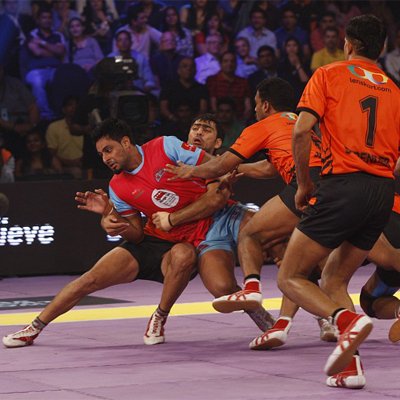
    Pink is the new colour of Kabaddi. The colour, associated with sensitivity, tenderness and femininity is definitely in stark contrast to the indigenous game which has its origins dating to the pre historic times. On 31 August,  when Jaipur Pink Panthers clawed U-Mumba during a nail biting finale of the Star Sports Pro Kabaddi League, the highly agile and contact sport was covered in Pink and announced its presence on the world stage.


    The Star Sports Pro Kabaddi League (PKL) which spanned 37 days and 60 matches, finally culminated at the National Sports Complex of India, Mumbai, the very same venue where the seeds of the game were first sown. While the Abhishek Bachchan-owned Jaipur Pink Panthers lifted the coveted trophy, the Ronnie Screwvala-owned U-Mumba team had to be content with the second spot.


    While many, including advertisers were skeptical whether the league would be able to generate audience’s interest both at the stadiums and on TV, the results are all out for the world to see. Not just male audiences, but women and children lapped up the game as they came in full gear supporting their respective teams with flags and merchandise. Families from Patna to Vizag, filled the stadiums with not just their presence but also their loud chants, enthusiasm, glee and even disappointment when their teams had to bid farewell. People connected to every raid taken by the 24 year old Jaipur Pink Panthers’ captain Maninder Singh. Players like him and U-Mumba captain Anup Kumar have a new-found fan base now. The last time when such enthusiasm was showcased was probably at the Wankhede stadium for India’s first love-Cricket.


    During the opening night 66 million Indians tuned in to watch the games on Star Sports and Star Gold claims the channel. On the micro blogging site Twitter, Star said it had generated conversations that were trending for nearly two days.


    No one but Star India, businessman Anand Mahindra and promoter Charu Sharma could have augured the path that Kabaddi has taken today. When Star India COO Sanjay Gupta earlier said that the sport would fit their objective of transforming the sports landscape in India, he was right. India seems to have found its second sport.


    The league proves that with a balanced mix of corporate backing, government support, telecast backing combined with international quality production values and celebrity endorsement, a lost game can draw renewed crowds to the stadium or tune in their TV sets. Therefore, it’s hardly a surprise that restaurants, bars and lounges had their customers asking for Kabaddi to witness the performance of 96 of the world’s best Kabaddi players. A few parents who complained that their kids were turning into couch potatoes are smiling, since their kids are now in the open playing the game.


    This has been driven by celebrities/owners of teams including Aamir Khan, Amitabh Bachchan, Shahrukh Khan, Sachin Tendulkar and Aishwarya Rai Bachchan who pledged their support to the games by being present at the venue.


    All in all, we eagerly wait to wear our favourite T-shirts at the next edition of the league beginning in March 2015 (hope the advertisers are listening!).

  • Prasar Bharati’s channel of autonomy

    Prasar Bharati’s channel of autonomy

    Seldom have government ventures succeeded in democratic India for variety of beliefs and prejudices.  Inherent security has ensured complacency in government servants with invisible accountability resulting in almost every public sector unit crashing gradually but also becoming liability to the exchequer. 


    Such ailing commercial initiatives are numerous like Air India, IDPL and HMT to name a few.  As for pure government, the performance is not even measured to stem the existing rot.  The nation coughs up large sums on salaries to maintain archaic British systems founded on in fructuous and dilatory work culture. 


    Doordarshan and AIR, the once monopolistic moghuls of video and audio arms of Information & Broadcasting Ministry, with 48000 staff and huge infrastructure as part of Prasar Bharati are under siege from the commercial private channels. The staff is till date government employees on deemed deputation status with no powers to Prasar Bharati to infuse fresh blood or promote them in the last two decades of its existence resulting in a chaotic work force with rock bottom morale with no regulation of conditions of service for employees. Most programmers of Prasar Bharati have long forgotten to produce quality content, the cadre having been decimated over the years and the engineering cadre too losing sheen with administrative impediments and faulty staff pattern, with 1:10 teeth-to-tail ratio. 


    As of today, Prasar Bharati must be the only government funded organisation with 25 cutting edge vacancies of Additional Director Generals out of 33 and 148 Deputy Director Generals out of 151 in the programme cadre creating a painful vacuum of leadership that is meant for content creation leaving the reign of DD and AIR Kendras to lower officials or to broadcast engineers by default.  Though well intentioned, Prasar Bharati, the national public service broadcaster, remains a still born child even today with shadow of government continuing despite an Act of Parliament that envisaged emergence of a BBC like institution to educate, inform and entertain people of India and Indian origin abroad. 


    Successive governments could not correct the infirmity due to inflexible approach and archaic regulations providing a sure recipe for self-destruction and resulting in natural downfall in TV ratings and Doordarshan seriously lacking audience connect.  While talking of arm’s length in governing, Prasar Bharati, the successive government’s depicted its autonomy as an oxymoron which never exists in real life. 


    But for the first time ever, after taking over, Minister of Information and Broadcasting (MIB) said, “My aim was to make Doordarshan and state-run All India Radio first choice of viewers.”  Living up to the expectations, the minister has blessed Doordarshan on their maiden effort to reach Indian diaspora through Deutsche Welle, Germany’s Public Service Broadcaster, by riding DD India, the international channel on its Hotbird 13B satellite with the reciprocal arrangement of showing each other’s channel in their bouquets in DTH platform. 


    ‘Hotbird’ has a total of whopping 1117 free-to-air TV channels with 124 English language channels to include BBC, CNN, CCTV, France 24, EuroNews, Al-Jazeera to name a few.  This satellite being the most chosen one by European countries because of its polarisiation and technical reach of 120 million TV homes in Europe, North Africa and Middle East, Prasar Bharati undoubtedly could not have got a better opportunity. 


    Being a public broadcaster, Prasar Bharati cannot compare itself with other commercially driven private channels of India as far as telecasting current Indian views and heralding the cause of fine arts showcasing heritage of India and cultural diversity through vibrant content being planned for ‘DD India’. 


    Government of India was spending to the tune of Rs 24 crore-Rs 30 crore per annum since 1995 to 2011 by hiring transponder of ‘PanAmsat’ later ‘IntelSat’ without last mile connectivity and insignificant viewership. Kudos to Jawhar Sircar and team that has ensured Doordarshan reaches to 120 million viewers across the globe to witness India as it dawns through a new image Doordarshan. 


    Countries like Japan, China, Russia and France spend between Rs 4000 and Rs 8000 crore per annum to ensure global reach for their international channels. Prasar Bharati on its part strongly aims at a content strategy considering cultural and other sensitivities of countries that would receive Doordarshan transmission with closer cooperation with Ministries of External Affairs and Overseas Indian Affairs as it rides on its maiden success in recent times truly blessed by the new government. 


    For Prasar Bharati, light seems to be at the end of the tunnel with our new Minister and his practical positivity.  “Faith is the promise of tomorrow.”


    (These are purely personal views of Prasar Bharati senior advisor VAM Hussain and indiantelevision.com does not subscribe to these views.)
     

  • Airtel ad: What’s wrong in cooking?

    Airtel ad: What’s wrong in cooking?

    At a party I attended recently, a woman narrated how at her job interview she was asked if she was planning to get married soon. The question angered us all, as we asked, “Why aren’t the men ever asked the same question?”

    The discussion led to Pepsico CEO Indra Nooyi’s recent statement on work-life debate where she declared that women can’t have it all. Of course, her statements created a lot of furor; the feminists were the ring leaders as the ones, who after their 9-5 jobs go back home to cook for their families, wondered what the big deal was all about.

    But a question that hovers on my mind is why can’t we have it all? Why is it that we have to always choose?

    While I am still trying to figure an answer to that, there is a new debate that has been ignited and this time by a TVC. And I am sure, by now, everyone would have seen the latest Airtel data services advertisement. 

    The TVC shows a woman boss ordering her subordinates to finish an assigned job no matter what. It turns out that the woman boss is the wife who goes back home to cook for her husband who happens to be the junior she had ordered. The ad is about the telecom giant’s data services, but the buzz created by it on the social media has nothing to do with the services.

    ‘They couldn’t afford a cook?’ is the question everyone needs an answer to. As many applaud the first half of the ad for showing the woman as the boss, there is another set of people who can’t digest the fact that she went home and cooked.

    While people are criticising it, I ask what is wrong in that? What if it was one of those days when she wanted to cook for her husband? Is that a wrong thing? Most of us have seen our mothers do that for years and sometimes we do it too. Does that make us less of a feminist? She a boss and she loves to cook.

    Click here to watch the Ad

    Would we have the same reaction if the genders were reversed? Most of us would have gone ‘awwww’ on the man cooking for his wife.

    The question here isn’t about who cooks or not. What is needed is a changed mindset. The husband/employee is fine with a wife who is also his boss. This is a good move in a patriarchal society. So instead of debating on the latter half, we need to focus on the first.

    The ad is forward looking, it should, according to me, be applauded and not criticised. It is a reflection of the fact that a woman can have all that she wants. It’s a choice she makes, and no one can dictate her.

  • Sir Martin Sorrell shares 10 trends shaping the global ad business

    Sir Martin Sorrell shares 10 trends shaping the global ad business

    The world’s biggest media conglomerate, which shapes the advertising and marketing of brands globally, has good news for marketing companies even though some nations are going through economic crises.


    WPP’s founder and CEO Sir Martin Sorrell shared his views on the trends impacting the global marketing service industry on his Linkedin blog.


    “As we plan for the future of our business, looking across the 110 countries in which we operate, we try to identify the trends that we think are shaping the global marketing services industry.


    Here’s our top ten:


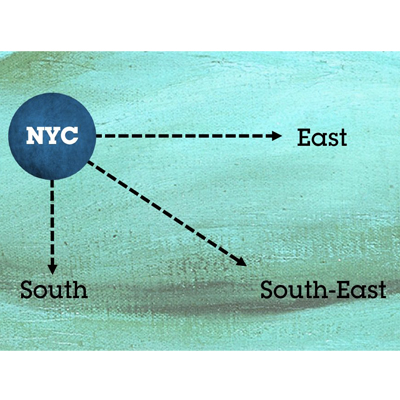
    1. Power is shifting South, East and South East

    New York is still very much the centre of the world, but power (economic, political and social) is becoming more widely distributed, marching South, East and South East: to Latin America, India, China, Russia, Africa and the Middle East, and Central and Eastern Europe.


    Although growth rates in these markets have slowed, the underlying trends persist as economic development lifts countless millions into lives of greater prosperity, aspiration and consumption.


    2. Supply exceeds demand – except in talent

    Despite the events that followed the collapse of Lehman Brothers in 2008, manufacturing production still generally outstrips consumer demand. This is good news for marketing companies, because manufacturers need to invest in branding in order to differentiate their products from the competition.


    Meanwhile, the war for talent, particularly in traditional Western companies, has only just begun. The squeeze is coming from two directions: declining birth rates and smaller family sizes; and the relentless rise of the web and associated digital technologies.


    Simply, there will be fewer entrants to the jobs market and, when they do enter it, young people expect to work for tech-focused, more networked, less bureaucratic companies. It is hard now; it will be harder in 20 years.


    3. Disintermediation (and a post-digital world)

    An ugly word, with even uglier consequences for those who fail to manage it. It’s the name of the game for web giants like Apple, Google and Amazon, which have removed large chunks of the supply chain (think music retailers, business directories and bookshops) in order to deliver goods and services to consumers more simply and at lower cost.


    Take our “frienemy” Google: our biggest trading partner (as the largest recipient of our clients’ media investment) and one of our main rivals, too. It’s a formidable competitor that has grown very big indeed by – some say – eating everyone else’s lunch, but marketing services businesses have a crucial advantage.


    Google (like Facebook, Twitter, LinkedIn and others) is not a neutral intermediary, but a media owner. Google sells Google, Facebook sells Facebook and Twitter sells Twitter.


    We, however, are independent, meaning we can give disinterested, platform-agnostic advice to clients. You wouldn’t hand your media plan to News Corporation or Viacom and let them tell you where to spend your advertising dollars and pounds, so why hand it to Google and co?


    Taking a broader view of our increasingly tech-based world, words like “digital”, “programmatic” and “data” will soon feel out-dated and obsolete as, enmeshed with so many aspects of our daily lives, network-based technologies, automation and the large-scale analysis of information become the norm.


    The internet has been a tremendous net positive for the advertising and communications services business, allowing us to reach consumers more efficiently, more usefully and often more creatively on behalf of clients. But it won’t be long before those clients stop asking our agencies for a “digital” marketing strategy (many already have). It will simply be an inherent part of what we’re expected to offer.


    4. Changing power dynamics in retail

    For the last 20 years or so the big retailers like Walmart, Tesco and Carrefour have had a lot more power than manufacturers because they deal directly with consumers who are accustomed to visiting their stores.


    This won’t change overnight, but manufacturers can now have direct relationships with consumers via the web and e-commerce platforms in particular. Amazon is the example we all think of in the West, but watch out for Alibaba, the Chinese behemoth due to list on the New York Stock Exchange later this summer in what could be the largest IPO in corporate history (and heading a capitalisation of around $200 billion).


    5. The growing reputation of internal communications


    Once an unloved adjunct to the HR department, internal comms has moved up the food chain and enlightened leaders now see it as critical to business success.


    One of the biggest challenges facing any chairman or CEO is how to communicate strategic and structural change within their own organisations. The prestige has traditionally been attached to external communications, but getting internal constituencies on board is at least as important, and arguably more than half of our business.


    6. Global and local on the up, regional down

    The way our clients structure and organise their businesses is changing. Globalisation continues apace, making the need for a strong corporate centre even more important.


    Increasingly, though, what CEOs want is a nimble, much more networked centre, with direct connections to local markets. This hands greater responsibility and accountability to local managers, and puts pressure on regional management layers that act as a buffer, preventing information from flowing and things from happening.


    7. Finance and procurement have too much clout, but this will change

    Some companies seem to think they can cost-cut their way to growth. This misconception is a post-Lehman phenomenon: corporates still bear the mental scars of the crash, and conservatism rules.


    But there’s hope: the accountants will only hold sway over the chief marketing officers in the short-term. There’s a limit to how much you can cut, but top-line growth (driven by investment in marketing) is infinite, at least until you reach 100% market share.


    8. Bigger government


    Governments are becoming ever more important – as regulators, investors and clients. Following the global financial crisis and ensuing recession, governments have had to step in and assert themselves – just as they did during and after the Great Depression in the 1930s and 1940s. And they’re not going to retreat any time soon.


    Administrations need to communicate public policy to citizens, drive health initiatives, recruit people, promote their countries abroad, encourage tourism and foreign investment, and build their digital government capabilities. All of which require the services of our industry.


    9. Sustainability is no longer “soft”

    The days when companies regarded sustainability as a bit of window-dressing (or, worse, a profit-sapping distraction) are, happily, long gone. Today’s business leaders understand that social responsibility goes hand-in-hand with sustained growth and profitability.


    Business needs permission from society to operate, and virtually every CEO recognises that you ignore stakeholders at your peril – if you’re trying to build brands for the long term.


    10. Merger flops won’t put others off

    Despite the failure of one or two recent high-profile mega-mergers, we expect consolidation to continue – among clients, media owners and marketing services agencies. Bigger companies will have the advantages of scale, technology and investment, while those that remain small will have flexibility and a more entrepreneurial spirit on their side.


    FMCG and pharmaceuticals (driven by companies like 3G and Valeant) are where we anticipate the greatest consolidation, while our own industry is likely to see some activity – with IPG and Havas the subject of constant takeover rumours. At WPP we’ll continue to play our part by focusing on small- and medium-sized strategic acquisitions (31 so far this year, and counting).”


     (These are purely personal views of  WPP’s founder and CEO Sir Martin Sorrell and indiantelevision.com does not subscribe to these views.)

  • Government should address the long-pending insurance bill: Sanjay Tripathy

    Government should address the long-pending insurance bill: Sanjay Tripathy

    Life insurance is one of the most important segments of the financial services industry and has contributed immensely to boost various sectors in the economy through its ability to make long term investments, and provide huge employment opportunities. Currently the sector is reeling under tough economic environment and regulatory changes that have been instituted in last couple of years. The industry needs support from the government of India, to help it in further contributing to nation building in the coming years.


    As an immediate step, the new government should address the following to boost growth in the life insurance industry:


    1. Re-looking at the current investment limits for tax rebates and certain current tax provisions would augur well for the industry. Life insurance is a socio economic instrument. In absence of any strong social security system by the government, at least the investment in life insurance premiums should be given additional limit of at least Rs 1 lakh, instead of clubbing the same with other investments u/s 80C of the Income tax Act, 1961. This will inculcate the habit of systematic and consistent long-term savings among retail investors. The present limit of Rs 1 lakh has not been increased in the past several years.


    2. To encourage customers to meet their retirement needs, investment in pension premium should be given separate deduction. Currently, such investments are clubbed with 80C investments. Annuity has been an unpopular investment choice because of its tax disadvantage. The maturity proceeds from Annuity are currently fully taxable as income, which effectively means that income is taxed twice.


    3. The current limit of Rs 15,000 in health insurance must be enhanced to at least Rs 50,000. Currently an individual gets a deduction of Rs 15,000 for health insurance premiums paid (apart from a similar deduction on premiums paid on the lives of their parents).


    Growing inflation has increased the cost of medical treatment. This has made it necessary for health insurance to be taken by every individual. In order to help the common man in meeting increased medical costs, offering more tax incentives would help in promoting health insurance.


    4. The service tax charged to insurance companies has been increased to 12 per cent from the existing 10 per cent and the rate on life insurance policies where entire premium is not toward risk cover increased to 3 per cent for the first year and maintained at 1.5 per cent for subsequent years. At the same time mutual funds are exempted from such tax.


    Overall, the change in tax has rendered life insurance at a position of disadvantage vis-a-vis MFs, PPFs, NPS, etc. Revisiting these changes will definitely provide the necessary impetus to help attract funds into long term savings and protection products offered by the life insurance industry.


    5. Armed with an absolute majority, the new government is expected to address the long pending insurance bill, which looks to raise the foreign direct investment (FDI) cap in the sector from the current 26 per cent to 49 per cent. FDI relaxation would encourage long-term fund inflow that would both encourage the growth of insurance in India as well as provide the government with access to funds to aid infrastructure growth.


    Moreover, insurance industry has seen negative job creation as number of agents and employees have been on the wane. FDI would get in greater investments into the sector and make it an attractive proposition for good talent.


    We also expect clarity to emerge on the road map of DTC and GST. This would help the industry better plan in the implementation of the new regulations.


     (These are purely personal views of HDFC Life senior executive vice president marketing product, digital & e-commerce Sanjay Tripathy and indiantelevision.com does not subscribe to these views.)