Category: Comment

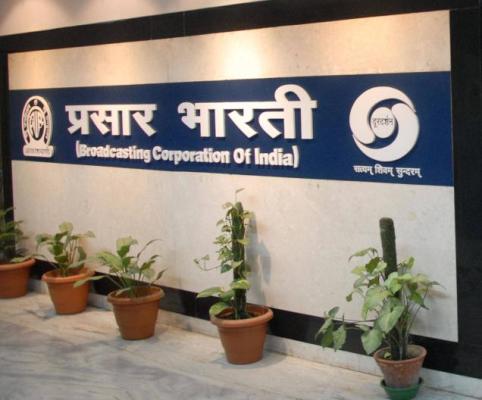
  • Prasar Bharati doesn’t need a Green or White Paper, it needs action & implementation

    Prasar Bharati doesn’t need a Green or White Paper, it needs action & implementation

    If you think you know what your purpose is, but can never seem to gain satisfaction from it, then it’s probably not the purpose you’re destined for.”


    Perhaps these lines by Canadian author who penned the fantasy series Morningstar aptly sums up the confused state of Prasar Bharati, which will be completing two decades in the next two years having been operationalised in 1997.


    For although the Government keeps claiming Prasar Bharati is a fully autonomous public service broadcaster, it interferes whenever it wants including in senior level appointments, which should have been left to the Prasar Bharati Board the moment the Corporation was operationalised in September 1997.  But irrespective of the political party ruling the nation, the state of the public broadcaster has not changed.


    In comparison, the British Broadcasting Corporation (BBC) – arguably having the most diverse, exciting and long history – keeps examining and re-examining its role as a public service broadcaster and independently takes its decisions about changes it wishes to make to reach out to more and more viewers in an era of increasing competition from private broadcasters.


    Once again, the BBC, which will be marking its centenary in 2022 has come out with a Green Paper that examines whether it is failing audiences, whether it should be advertisement-funded or take licence fee as it has been doing, and even whether it should be putting on air certain shows that have drawn the ire of the general public.


    Not merely that, but the 86-page document has been made public for the viewers to react as that would help it to decide its future course.


    In India, although there were some reports on autonomy of the public broadcasters Doordarshan and All India Radio even before the Prasar Bharati Act of 1990, there has been just one report after the pubcaster was operationalized: the Sam Pitroda Committee Report.


    Unfortunately, this report came out with nothing new that was not already being done by the broadcaster or had not been said by the Parliamentary Standing Committee in report after report, year after year. However, the real test is whether the Sam Pitroda Committee’s recommendations have been implemented. And there, sadly, the answer is in the negative. Because the biggest stumbling block to the pubcaster moving ahead is the government, which does not leave it free to move on its own and instead believes in the general principal of he who pays the piper plays the tune.


    If there has been any movement within Prasar Bharati – like the recent appointment of a number of fresh talent to fill the huge number of vacancies or putting some popular radio channels on FM – it has been due to the individual action of the different CEOs or the chairmen of the Board.  


    At a time when the country has around 800 operational television channels and around 245 private FM radio channels – with the auctions for a massive 900+ beginning soon – it is necessary for the pubcaster to wake up and smell the coffee.


    Doordarshan and All India Radio cannot be complacent by just telling themselves that they are the most seen and heard broadcasters in the country – particularly since their viewers are rural and they have failed to make much headway in urban areas, except for the FM radio channels.


    Even after the media keeps pointing out these failures, DD for example has still not been able to ensure that the private DTH players or even its own FreeDish carries the name of the programme and a basic summary – something which the DTH players do for all the major private broadcasters.


    In its report, the BBC has asked whether it is failing audiences and notes, “The BBC remains highly valued and well-used by the majority of people within the UK. But there are variations across different groups and there are particular challenges in reaching black, Asian and minority ethnic audiences and in meeting the needs of younger age groups who increasingly access content online, rather than via the traditional platforms of television and radio. There is also variation across the nations and regions of the UK. Charter Review will consider the extent to which the BBC is meeting the needs of these different segments of the domestic audience.”


    Surely, if the oldest broadcaster is worried by such concerns, the younger pubcasters like Prasar Bharati need to wake up. The Naxal or Marxist movements or separatist movements in some states, could be curbed if the pubcaster played its role well.


    BBC’s Green Paper admits that although there are funding options like advertisement-funded, licence fees, funding through general taxation, or a universal household levy, or mixed public funding and subscription fee, “no funding option is perfect and all involve trade-offs.” The Green Paper even discusses whether licence fee can be shared with private broadcasters.


    Unfortunately, this aspect has never been discussed in detail in India for the simple reason that the majority of Prasar Bharati employees want government funding as that ensures them pensions etc. In India, the concept of licence fee was given up sometime in the late sixties.


    While the Green Paper suggests some core values that the BBC must have, and undoubtedly the Prasar Bharati Act and Programme and Advertising Codes in India also swear by this, the core value that prevails is a rosy picture of the political party in power – at least as far as Doordarshan goes. 


    In fact, the Paper also discusses the issue of whether and how BBC should be regulated. 


    A close look at the Prasar Bharati Act would show that successive governments have deliberately failed to look at the clauses relating to a Broadcasting Council or a Committee of Parliament, as that would not suit the ruling party at the centre.


    Unlike BBC, India has far more complex problems in view of the number of competing private channels, the large number of languages, and the cultural values, which change almost every fifty kilometers.


    However, this does not mean that Prasar Bharati should sit comfortably, waiting for the Ministers or Secretaries to dole out instructions.


    What Prasar Bharati needs is a serious look at the Sam Pitroda Committee recommendations to find out why these recommendations were not implemented when they were under consideration much before the Committee came on the scene, and also to radically examine the relationship of Prasar Bharati with the Government or the ruling party. 


    Additionally, the rule of the Indian Administrative Service babus has to stop with professionals from the Indian Broadcasting (Programme) Service or – since this service never really took off – of the Indian Information Service till the IB(P)S officers can take over!  
  • BBC on the boil; some lessons for Prasar Bharati

    BBC on the boil; some lessons for Prasar Bharati

    BBC, the public broadcaster who benchmarks broadcasting audio and video signals all over the world, seems to be under siege. The British government has launched a Consultation paper to decide on the future of BBC’s Royal Charter.


    A number of questions and ideas have rolled from non existence of ‘Codified set of values’ to ‘not reaching out to youngsters’ the world over who shifted to on line accessing from fixed TV viewing. The Green paper points out that the last Royal Charter is one of the most tumultuous and numerous issues have arisen placing BBC’s people and practices to a great deal of scrutiny.


    “BBC is a public broadcasting organisation and it is right that it’s values should reflect the views of public. This charter review presents the opportunity to consult on what a potential set of values might be.”


    BBC’s several headlines making failures from “excessive severance payments” to a “cancelled report on Jimmy Savile” have called into questions of BBC’s governance itself. A model based hence on the Trust, which presently chaired by Ms Rona Fairhead with more powers to censure BBC as also withhold funds, a new stand alone regulatory organisation like Public Service Broadcasting Commission are being considered.


    There are some major lessons from the Green Paper for our own pubcaster Prasar Bharati (PB), which is many times bigger in infrastructure and manpower compared to the BBC but on whose model the Prasar Bharati Act 1990 was enacted. With some of the provisions yet not acted upon, the checks and balances originally intended by the framers of the Act remain inoperative till date making PB a polio child despite of its huge work force and wasteful expenditure on its obsolescent terrestrial network, which even rural India is not interested in.


    An important provision like public funding through license fees does not exist in India whereas huge public funding continues to pay to the tune of about Rs 1500 crore annually on pay and related expenses of the huge establishment, which the government conveniently handed over to a presumably autonomous PB in 1997. 


    The major plan expenditure is on maintaining thousands of ineffective terrestrial TV and less effective AM and SW radio towers. But not a single practical Board resolution of PB like leveraging dormant assets to fund content, power to hire and fire with flexible recruitment rules for creative professionals and an Independent Servicing Body have seen the light since successive governments continued to administer PB as an adjunct of government. As far as the word autonomy goes, it is an ‘oxymoron’ that does not exist in real life as one of our former MOS, I&B once remarked.


    BBC spends 97 per cent of its programme funding on children whereas PB spends only about eight per cent of its total expenditure on content itself across all its TV channels. The efforts on kids’ programme by PB is negligible. With its strong creative capabilities, BBC developed numerous programmes and sold off to the world commercially like Strictly Come Dancing, which fetched ?20 million giving no space to other commercial channels. 


    PB is yet to commercialise any programme worth its name and pose a challenge to commercial channels in the recent past for a variety of reasons. Despite huge infrastructure and equipment, there is no vibrant audit and monitoring mechanism on utility of its huge inactive studios and mobile camera units. The commercial codes and guidelines of course are self restrictive, inhibiting any novel initiative in PB. 


    It is time the government has a closer look at the Sam Pitroda Committee report, which has some workable suggestions. The government needs to review PB with objectivity as the functions to ‘educate, inform and entertain’ also needs lead funding for quality content. PB caters to the citizens of the nation and other commercial audio and TV channels to the consumers, but the pubcaster yet needs to net more eyeballs for passing public service messages and codified set of values enshrined in section 12 of the PB Act.


    As the Green Paper on BBC voices concern on reaching the youth that accesses anything on line at the time of their choosing, PB needs to revolutionise web streaming its content of all its audio and video channels as of yesterday. For TV, it is DTH and for radio, it is FM in India today, but the survival depends more on content, the king.


    The potential values British government looks forward to for the Royal Charter are, independence, impartiality, high quality, efficient value for money, transparency, distinctive status, diversity and representative of the views of public. All these imperatives are aptly applicable to our Public Broadcaster too. The best that could happen to PB is a strong professional and truly independent Board with an efficient monitoring mechanism and powers to intervene along with an executive set up with ‘real’ powers to handle this mammoth organisation with complete verticals viz. Technical, Marketing and International Relations in addition to Personnel, Finance and Accounts.


    Less Government and more efficient Governance by PB itself could set the pubcaster right.


    Note: The author of this article is former member (personnel) of the Prasar Bharati Board. 

    Disclaimer: The views expressed here are purely personal views of the author and Indiantelevision.com does not necessarily subscribe to them.

  • Archival Neglect

    Archival Neglect

    It is a matter of prime cultural concern in any nation of heritage to preserve its invaluable assets of antiquity and inherited monuments of fine arts that pass through generations of artistic brilliance.   Traditionally, a culture rich nation plans and preserves its monuments of immense cultural value with pride, adequate funds and a sustainable infrastructure.  Alas! India has hundreds of so-called protected monuments, but in fact have none to actually guard and protect them and prevent unruly defacing of artefacts that once laboriously were sculptured by efficient hands devoting weary long years.


    A population which does not realise the intrinsic value in cultural terms does not even object visitors writing their names or of their loved ones indiscriminately on the walls of our monuments. Our predecessors could not prevent the Portuguese soldiers from using the statues and carvings of immense historic value and elegance as targets for shooting practice in the Elephanta Caves without remorse and defacing cultural treasures on stone preserved for centuries.


    The criminal disintegration and powdering of Bamiyan Buddhas in Afghanistan by Taliban rebels could not be averted even by a well meaning and civilised world community.  Stealing of deities in stone from the sanctum sanctorum of celebrated Indian temples for money continues even today.  India in fact is fortunate to get back its famous dancing Bronze Nataraja Statue of Chola era from the Australian Museum illegally smuggled by cultural traffickers.


    India is replete with examples of events missed in history running to thousands of years due to our national character not giving due importance to preservation of invaluable historic cultural works and monuments for varieties of religious and reasons of cultural conflicts. We owe rediscovery of most of our treasures to British pathfinders and inquisitive soldiers, be it Ajanta, Ellora or so many monuments of Buddhist origin. 


    With preservation of our historical assets not being our national priority and character, we already have lost substantial works of wisdom of our ancestors in Indigenous Medicines, Astronomy, Mathematics and other applied sciences.  But the present scientific tools that enable easy preservation of great monuments through chemical and mechanical means and digitisation of potential audio and video materials are being fruitfully utilized the world over.  The information technology with its current scientific leap has immensely enabled the world community to preserve great works in print through digitisation instead of managing huge libraries of printed books.


    The advent of new media and possibility of preservation of digitised content in cloud form has eased archiving process with excellent networking and retrieval arrangements.  Given the wealth of skilled human resource in IT available in our own country, the delay in archiving assets of audio and video content of Prasar Bharati is inexplicable. 


    The sound archives of All India Radio (AIR) came into existence in April 1954 and can well be termed as the National Audio Archives of the nation being the treasure house of precious recordings in more than 53,000 tapes comprising music and spoken words. 


    The library has invaluable collection of prayer speeches of Mahatma Gandhi recorded in 1947 at Sodepur Ashram, Kolkata and in 1948 at Birla House, Delhi in addition to his famous broadcast from the Broadcasting House, New Delhi on 12.11.1947.  All India Radio has recordings of all the Presidents and Prime Ministers of India besides important voice recordings of eminent personalities like Gurudev Rabindranath Tagore, Constitutional architect, Dr. B.R. Ambedkar, Bismarc of India, Sardar Vallabhbhai Patel and Nightingale of India Ms Sarojini Naidu and many others.


    The library is further enriched with numerous radio drama features, documentaries, memorial lectures and radio autography of eminent personalities from various walks of life.  Although release of archival materials of All India Radio started in April 2002 under the banner ‘Akashvani Sangeet’, only 76 Albums containing legends of Hindustani and Carnatic Classical and light music have been released so far. This despite AIR holding the richest cachet of sound recordings of almost of all genres of Radio Broadcasting including the rare recordings of freedom fighters, unforgettable and resounding voices of great maestros like Bade Ghulam Ali Khan, Abdul Karim Khan, Krishna Rao Shankar Pandit, Begum Akhtar, Siddeshwari Devi, Rasoolan Bai, Ariayakkudi, Chembai Vadyortha Bhagavatar and others.


    On instrumental music, there are invaluable recordings of Pandit Pannalal Ghosh, Dwaram Venkataswamy Naidu, Pandit V.G. Jog, T. Chowdiah, Pandit Nikhil Banerjee and the like preserved for posterity.  There are oral histories which provide direct insight into lives and creative process of great writers and artists.  In the realm of dramatics, the greatest contribution of radio is Radio play which evolved into an independent creative genre in the hands of very eminent directors and writers.


    As of today, AIR has been able to digitize only 6,000 hours since 2002 out of a total of 75,000 hours of archival materials available with Prasar Bharati.  The archives have rare collections of speeches by Quaid-I-Azam Muhammad Ali Jinnah and sensational addresses during ‘Bangladesh Liberation’ by Bangabandhu Sheikh Mujeebur Rahman and Ms Indira Gandhi.


    Doordarshan archives started in 2003 involving digital restoration, preservation, digitisation of the content, creation of meta-data for easy access and retrieval of archived programmes.   The laborious process of cleaning and finally preserving digitised content in file format through Media Assets Management (MAM) saving files on Linear Tape Open (LTO-4) format is on for a very long time.


    Doordarshan has digitised programme in 38 subjects to include animation and puppetry, ballot, documentary series, environment and ecology, fair and festival, game show, interview and conversation, light music, literature and poetry, variety entertainment, etc.  Out of 21,000 hours of digitised content, Doordarshan is able to bring out only 77 DVDs so far.


    The process of digitisation is painfully slow with no technical road map, finalised plan for marketing digitised content as also making free accessibility of speeches by great national leaders to the world at large as decided by Prasar Bharat Board. 


    Other developed nations which have successfully archived their contents like NHK, Japan and Deutche Welle, Germany in High Definition have their Central Archives networked with programme generating facilities dealing with a single or couple of languages with few dialects. But India suffers from a complex need to document archival materials available in multiple languages and hundreds of dialects in stations and kendras spread over the length and breadth of the nation as also link them up.


    Learning from its experience, Prasar Bharati needs to create meta-data at the time of programme production itself, secure produced content online and avoid piracy with a central archive in New Delhi networked with regional centres of rich cultural content.  It would be worthwhile for Prasar Bharati either to create a vertical for archives or expedite digitisation of its archival content of historical and monetary value by outsourcing to reputed media houses or facilities with domain experts without any further delay to save on precious tapes from open wooden shelves and gunny bags exposed to vagaries of adverse weather conditions.


    While Prasar Bharati Board has conceptually cleared creation of a well-networked data house on the programmes of AIR and DD stations all over India, procurement of equipments connected to MAM needs to be compatible.  Piecemeal procurements due to lack of funds should be avoided at all costs and avert resultant obsolescence of technology.  Aggressive strategy and an action plan to promote products released by AIR and DD could earn huge dividends and benefit Prasar Bharati monetarily.


    The revenue receipts of DVDs and footage sale of Doordarshan has declined by 70 per cent in the year 2015.  Despite its rich archival content, Prasar Bharati has been able to earn about only Rs 50 lakh in the last financial year compared to its revenue of Rs 1.5 crore in 2012. 


    Fast tracking of digitisation and archiving of its audio and video content is workable by an active national level steering committee duly monitored by Prasar Bharati Board on monthly basis for speedy accomplishment of digitisation of born content as also legacy content in gramophone records and analogue magnetic tapes.


    Prasar Bharati does not have a recruitment mechanism and in the absence of a statutory body, Prasar Bharati Recruitment Board, there is an emergent need to put dedicated personnel in place to supervise handling of invaluable archival content with inherent security even if outsourced for digitisation to private players.


    Establishing an exclusive web portal for AIR and DD archives with a payment gateway for purchase of archived programmes and expeditiously installing digital kiosks of Prasar Bharati in airports and railway stations to access its popular archival content would enable Prasar Bharati Archives self sustain. Prasar Bharati Board on its part had already cleared development of ‘Leaders of India’ website with facility to download famous video clippings and sound byte free of cost.


    Training of staff at grass root level with proficient archival procedures would enable Prasar Bharati to achieve its archival goals in a shorter duration. The nation could expect speedy action on the archival front especially with an ex-Secretary of Culture, Jawhar Sircar, CEO who initiated the process and is leading from the front. 


    (The views expressed here are purely personal views of Prasar Bharati principal advisor, personnel and administration VAM Hussain and Indiantelevision.com does not necessarily subscribe to them.)

  • Mr. Netflix, are you ready for India?

    Mr. Netflix, are you ready for India?

    After tasting global success, Mr. Netflix is revving up to thrust into India by 2016. But let’s take a breather here. We are talking about a country which debates about Bharat and India and where a part of the demography still views its favourite content in black and white CRT TV.


    While youngsters these days are widely speaking about Game of Thrones, Breaking Bad, House of Cards and Orange Is The New Black, dear Mr. Netflix wait before you get buoyed by all these series that generates millions for you, as Indians still believe in ‘torrent’ing .


    In India, while some of the best movies, made by the greatest filmmakers have been uploaded on YouTube, what has worked is the bathroom comedy by All India Backchod. Why do I talk about this, because if one has to believe the sources, Netflix is meeting a lot of producers across India to rope in quality content for the subscription based video on demand (SVOD) platform. 


    I know that the unprecedented number of downloads of Hotstar has tested your temperament and you can’t wait to enter the lucrative Indian market, but this video on demand (VoD) platform from Star India, got most of its downloads, thanks to Cricket, a religion in India. The app has so far been downloaded by more than 10 million Android users.


    Hotstar was placed in the top spot in the Google free app category even taking over Facebook and Whatsapp while the ICC Cricket World Cup was on. Now that the World Cup and IPL are over, the platform is not even in the top 10. This substantiates the fact that Hotstar’s unprecedented success was because of the two cricketing events.


    So what are you thinking now, Mr Netflix? Hotstar does not have adequate content? Hold on, the platform has 20,000 hours of content spread across seven languages. This includes 120+ full length TV shows and 500+ movies. This apart, the app also live streams popular sports like Cricket, Football, Tennis and Kabbadi. In short, Hotstar caters to a very large and diverse audience.


    Hotstar is not the only VOD platform India has. Right from Zee’s DittoTV, Spuul, Zenga, YupTV to the speculated Viacom 18’s soon to be launched VOD platform, competition will be tough. So, Mr Netflix it’s not just another regular expansion of business, you are going to enter a war: A war of over the top (OTT) services.


    Not only domestic players, but international ones like HOOQ and Vuclip among others have already entered the Indian market. HOOQ launched in India in May 2015 with a subscription plan of Rs 199.


    The subscription based platform has managed to secure 10,000 downloads in the two months since its launch. So Mr. Netflix, you may just have to change your strategy and become an ad based VoD platform, to woo Indian consumers. If industry sources are to be believed, Netflix is looking for a possible tie up with HOOQ for its India launch.


    Mr Netflix if you are thinking you will change your strategy and take the ad route let me throw a few numbers. Of the Rs 414 billion Indian advertising budget, only 10.5 per cent is expected to be spent on digital. Eating into this 10.5 per cent will be giants like Google, Yahoo and Bing among others, leaving you with a meager percentage share of the ad pie. If this satisfies you, join the fight and prepare yourself with some melodrama content that can please the advertiser.


    By now you must be thinking: what do 1,280 million people in India do and what about the 300 million smartphone exaggeration? Let’s take the number route again. Yes it’s true that India is about to dethrone the US and become the second largest mobile internet market by having more than 300 million wireless internet users and the year-on-year growth rate stands at 31 per cent. The main reason behind it is availability of smartphones at a low price which is enabling the penetration in rural India. But Mr Netflix what content will you provide in rural India? Malgudi Days? And you think rural India will accept it? On a Rs 5,000 smartphone Malgudi Days will look like Guilever Travels and produce sound like a radio. So not convincing!


    I know what is lucrative — 210 million wireless internet connections which is estimated to reach 402 million by 2017 and 528 million by 2019. While urban India widely speaks about 3G, majority of them disable their 3G service and stay satisfied with Edge or 2G service. 3G is largely alien to rural India. To add to your vivid imagination, while you are widely reading about smartphone penetration, 66 per cent of the urban internet traffic comes from desktop. 11 per cent of active urban consumers use tablets to access internet of which only 16 per cent consider tablets as their primary device for internet access.


    So Mr Netflix, if you still have zest let me present to you the fiercest competition: Television, which you think will diminish with the emergence of digital. Yes, there are close to 300 million internet users whereas only 168 million television households in India. But if one takes a closer look, the168 million households amount to 825 million television viewers.


    The growth rate of internet users is also expected to be much higher compared to that of television. From 2014-19 television is expected grow at a CAGR of 3 per cent, when pitched against the huge CAGR 18 per cent for internet users. The television growth can go much higher if more areas are empowered with electricity.


    So, only if there is a complete paradigm shift, with five national MSOs and six DTH players committing a bundle of mistakes and a Tsunami of technology comes in to change the entire infrastructure, a concept like SVOD may work, otherwise it may just perish.


    Mr Netflix let me introduce a term to you which you might have never come across throughout your journey – ‘buffering’. To watch a video at 144p one has to go through numerous buffering so guess what will happen to someone who wants to watch an Argo or Apocalypse Now.


    The only ray of hope for you Mr. Netflix is 4G. Airtel has already launched 4G in some parts of the country and Reliance Jio is expected to launch by 2015 end. 4G is supposed to be a lot faster compared to 3G but the price is yet to be determined. Why did I mention price? As the current scenario goes, to watch 1GB of content one has to pay around Rs 300. So for 10 GB worth of content, one has to pay approximately Rs 3,000 — an amount that can give 500 channels on television for 10 months.


    The other ray of hope is Prime Minister Narendra Modi’s ‘Digital India’ vision.


    Mr Netflix don’t worry India believes in Atithi Devo Bhava (Guest Is God) and hence will welcome you with grace and gratitude, like the nation did with Starbucks and Dunkin Donuts.


    But at the end of the day as Charles Darwin said ‘Survival of the fittest.’

  • Bureaucracy continues to plague Indian pubcaster Prasar Bharati

    Bureaucracy continues to plague Indian pubcaster Prasar Bharati

    Today, most of the Doordarshan (DD) Kendras and AIR Stations are without Station Directors, which is the major cause for poor content and crash in TV audience of DD. The dynamic efforts of CEO, Prasar Bharati (PB) to induct media professionals into PB to checkmate stiffly competing private players has fallen on deaf ears of conservative and unimaginative bureaucracy.


    Despite the impetus AIR got through patronisation from the new Government in power through ‘Mann Ki Baat’ and DD getting the first right of coverage of high profile Government events at home and abroad, personnel issues continue to be in the dark almirahs of ‘babudom’.


    The good news is AIR continues to be number one with improved listenership in the audio universe as also with its newer additions in web streaming and mobile apps for eight of its radio channels to include Vividh Bharati, Urdu Service, FM Gold and FM Rainbow.


    In the absence of Prasar Bharati Recruitment and Services Board, PB has not been able to fill up even the GOM approved Group A posts of 580 Assistant Station Directors (Programmers-265 and Engineers-315) out of 3452 posts of different categories, which is the real cutting edge.


    In fact, even Staff Selection Commission itself which is not tasked to recruit above Group B, fell short of its target of 252 Programme Executives by 82 posts due to not being able to get suitable candidates. In any case, the Union Public Service Commission has expressed its inability to recruit Group A posts for PB, an autonomous body, since all the posts stand transferred from Government to PB under an amendment to Section 11 of PB Act 1990 from 1 April, 2000.


    The most important issue of non promotion of Programmers and similarly placed employees is yet not resolved by the Government although PB Board gave some interim relief through ad hoc promotions to Programme cadre employees well appreciated by all the Employees Associations.


    The promotion issue is still hanging fire without Government approval, compelling the promotion deprived employees to rush and knock at the doors of justice. In a recent case filed by Gurmail Chand from the Audience Research Wing of Prasar Bharati, Honourable CAT, Delhi categorically ruled endorsing PB’s competence to hold Departmental Promotion Committee meetings for all similarly placed categories.


    The only issue involved therefore is the onus on Government to dispel apprehension in the minds of employees of organised services viz., Indian Broadcast (Programme) Service and Indian Broadcast (Engineering) Service that they may be denied all the authorised promotional emoluments as Government servants on deemed deputation holding the posts that belong to PB.


    Further, the Government approved new inductees in PB numbering about 2000 need to be extended all the perquisites like CGHS, KV admissions etc to avoid future legal recourse in an autonomous PB where there are about 1000 court cases already on Conditions of Service alone.


    Hence , the most urgent need is to resolve personnel issues and raise the rock bottom morale of PB employees, who were once the media moguls with monopoly. But in PB, Jawhar Sircar continues his optimism while voicing concerns and rolling out ideas with brilliance. Is someone listening? Jai Hind.


    (The views expressed here are purely personal views of Prasar Bharati principal advisor, personnel and administration VAM Hussain and Indiantelevision.com does not necessarily subscribe to them.)

  • New opportunities from cable TV digitisation in India

    New opportunities from cable TV digitisation in India

    India is home to approximately 60,000 to 100,000 cable TV operators. Assuming 20 kilometres of cable laid by every operator on an average, India has 1.2 to 2 million kilometres of cable! With digitisation of cable TV, the cable networks are transitioning from coaxial to optic fiber in the last mile. So, with access to so much optic fiber in premises where people live and work, why is digitisation of cable TV still not leading to a large upswing in broadband availability, quality of connections, and consumer use? After all, optic fiber can carry a much larger amount of data and video than coaxial cable can.

    What is the Last Mile?

    The last mile is called the ‘access’ network. It is called so since this network is accessed by end-consumers. The last mile network stretches all the way from the cable operator’s control room (seen in the picture below to the left) to a junction box (picture below to the right) near the consumer premises. At the junction box, the electrical signals carried on the optic fiber are converted into RF signals that are then transmitter through coaxial cable for the final few metres to the set top box at the consumer premises.

     Caption: (L-R) Typical View of a Cable Operator’s Control Room and Junction Box near customer premises.

    In most places, the last mile network is in the form of an overhead cable, whilst sometimes it is laid underground.

    The missing ‘Middle Mile’

    Several last mile ‘access’ networks are aggregated at one point and then connected to the core network. This ‘aggregator’ network is where most challenges arise. Ranging from 0.5 kilometres to 3 kilometres and more in most cases, the aggregator network has to carry large amounts of traffic. Assuming a requirement of 2 Mbps per TV channel, a typical cable feed will have 400 channels or around 800 Mbps of video at any point in time. If we add any internet or data traffic to this, then the aggregator networks have to carry at least a few gigabits of data every second. Lack of rights of way for optic fiber and very high costs of laying any fiber running into a few lakhs of rupees for every 100 meters make fiber unviable commercially at low cable TV ARPU of Rs 200-300 per home per month. The missing ‘middle mile’ and the resulting adverse effect on monetization of the last mile networks is the bane of the cable TV industry today. Negative or zero returns on investment on last mile networks and set top boxes is the main reason behind the opposition digitization of cable TV in India has faced.

    Making the model commercially viable

    Investments in the last mile and advanced consumer premise equipment that deliver entertainment and a large number of other services can be justified only if monthly earnings per consumer or ARPU increase. This is possible only if the last mile carry internet/IP or data traffic which has better ARPU than cable TV. However, cable networks have to lay more optic fiber in the last mile for this data traffic to reach consumers. The only other solution is to turn the last mile network into an all IP network. However, this is not feasible in most cases since cable Multi-System Operator (MSO) networks transmit one-way RF feeds and not two-way IP feeds.

    The Lukup Media model

    This model relies on making the last mile network capable of carrying IP/data traffic along with RF traffic. The IP feed in this case carry both TV signals and Internet access, thereby potentially increasing the earnings from every connection the last mile network provides to consumers. This model also makes TV channels available on demand. Instead of broadcasting TV channels, on demand TV implies that channels are unicasted or streamed on demand. This reduces the stress on quality of service in the last mile network. This model also takes advantage of innovation in transporting IP traffic in the ‘middle mile’ by making it possible to transport gigabits of data per second without laying optic fiber or resorting to using unlicensed or lightly licensed microwave or wireless bands that do not guarantee quality of service for video traffic or assure availability of such large bandwidth.

    Additional Revenue opportunities for Cable operators

    In the scenario where the last mile carries IP/data traffic which enables cable operators to provide both TV and internet access through a single connection to consumers, vast revenue opportunities open up. In addition to TV revenue, cable operators can earn from providing internet access and services such as media storage in the cloud, delivery of educational content, high definition gaming, home automation and monitoring services and more.

    Just like the US market where digitized cable TV networks deliver 60 per cent of America’s data traffic, cable TV networks in India are also poised to evolve in a similar manner providing dual play and eventually triple play services to consumers.

     (These are purely personal views of Lukup Media chief executive officer Kallol Borah and Indiantelevision.com does not necessarily subscribe to these views.)

  • The epic journey of online-only mobile brands: A game changer

    The epic journey of online-only mobile brands: A game changer

    In the last 12 months or so, a number of mobile brands have adopted the online-only sales strategy and results indicate that consumers have taken a liking to this new approach.


    In India, the online-only strategy was first embraced by Motorola with their then flagship product Moto G in partnership with India’s largest e-commerce marketplace, Flipkart. When Motorola first announced this approach, few market analysts would have expected the Moto G to sell out within 15 minutes of its first opening. While this event has been eclipsed by rival brands such as Xiaomi and OnePlus, in hindsight, it will forever be remembered as the beginning of a consumer trend that nobody had previously anticipated.


    Now that this model has stood the test of time and has been adopted by a number of brands, reasons for its success are slowly coming to the fore.


    Reaching target market in smaller cities


    One very plausible reason why mobile brands such as Xiaomi and OnePlus have successfully entered the market through their online-only strategy is the reach that an online platform like Flipkart offers their product. By adopting an online-only strategy, these brands are able to reach consumers in smaller cities where the retail sector isn’t organised as well as it is in bigger cities. An online-only strategy actually allows these brands to give their products unprecedented visibility in tier 1 and tier 2 cities right from day one.


    Another important factor why the online-only approach has worked is that with time, consumers have grown more comfortable with online buying. Consumer awareness of products has increased manifold compared to what it was a few years ago.


    Offline buying is overrated


    Consumer awareness and improved online buying experiences have also led mobile brands into believing that offline buying is overrated. These days, when consumers want to buy a new phone; they often resort to comparing the prices and specifications on offer from various brands before arriving at a decision. This process can be best executed online with a wide variety of brands for them to choose from when compared to the limited variety they might find at a retail store.


    Also, the process of price and spec comparison has been made all the more simpler online thanks to leading price comparison websites like iSpyPrice.com, mysmartprice, smartprix etc and consumers don’t have to visit multiple physical retail outlets before they can finally zero in on their choice.


    The ability to control prices


    Perhaps the most important reason why brands like Xiaomi, OnePlus, and even new entrants like InFocus are using an online-only strategy is that this allows them to control the pricing strategy of their products.


    Just like other consumer electronics goods, mobile brands have always had to go through the cumbersome distributor-retailer cycle to make their product accessible to the consumer. In the traditional offline model, mobile brands either build their own distribution network or strike a deal with one or more established distributors. And if you are a foreign brand looking to make inroads into a local market, this cycle gets further complicated.


    In a market that changes every few months and has an incredible number of competitors, building one’s own distribution network is a hassle most foreign brands would ideally want to avoid. This is mainly because this is a time consuming process.


    The other option for these brands is to opt for a national distributor. These national distributors will end up making a margin on the sale of each device, pushing the price of the device up. Then come the regional distributors, they also need to make a margin on the sale of each device, pushing the device’s price further up. Finally, it’s the turn of the retailers to make a margin on the sale of each device. By this time, the price of the device goes up by a fair notch.


    If you think Xiaomi’s current flagship the Mi4s 16 GB version is a steal deal at Rs 19,999 consider adding another Rs 3,000-5,000, or maybe more, to that price and it doesn’t sound like a steal deal anymore, does it? That’s what the distributor-retailer cycle can do to the price of a device. Xiaomi and the likes can afford to give the consumer a favorable price because the online-only strategy allows them to do so.


    This is also why you get to see different prices for the same devices on various e-commerce marketplaces. Mobile brands are able to pass the benefit of price saving to the consumer. The e-commerce brands also don’t need to save a margin from a sub-retailer. It’s a win-win situation for all parties involved.


    A high success ratio


    Motorola’s online-only strategy for the various versions of the Moto G and later the Moto E was such an incredible success that they ended up selling more than a million of these devices. Xiaomi followed suit and has done well with the sale of its Mi3, Mi4, and Redmi 1s devices. This strategy has paid rich dividends for Xiaomi as they are now among the top three smartphone brands in the world, third only to Apple and Samsung.


    Earlier this year, the Micromax-owned Yu Televentures brand launched its first flagship product- the Yureka. They entered into a deal with e-commerce giants Amazon for the online sale of this device.


    Brands such as Lenovo and Xolo have also decided to adopt this strategy. Lenovo has already announced its plans to take on the likes of Xiaomi with its online-only brand Shenqi. Brands like vivo are making a foray into the market taking advantage of this method.


    Lava International’s smartphone brand Xolo has been in the news for building its own e-commerce platform which it intends to use for the purpose of reaching a wider consumer base for an online-only sub-brand it is building.


    This still isn’t the right choice for everybody


    While the online-only strategy may have many ups, it also offers no immediate reasons for bigger players to join the bandwagon. Huge brands like Apple Inc. aren’t likely to switch to this sales channel full-time anytime in the near future. They have no reason to do so. Apple’s sales are built upon brand value and standing in queue to buy an Apple iPhone is still very much a fan thing. Apple’s marketing makes the brand and its products desirable and that is why switching to an online-only model seems highly unlikely.


    Then there is the South Korean behemoth Samsung. Samsung currently sells a large majority of its smartphones through the traditional model. It does offer select e-tailers exclusive deals where they can sell a particular Samsung mobile through their online marketplace, but by and large Samsung is a supporter of the traditional method and believes in this sales channel.


    Some would argue that’s only two brands to take into consideration but the fact is these two are the current flag-bearers of the mobile industry, the top two smartphone makers in the world. And as long as they, and others like them, are convinced, the offline distributor-retailer cycle is likely to remain healthy in the foreseeable future.


    The growth of e-commerce, Internet penetration and future prospects for the online-only strategy


    While a number of these brands have taken to this approach, it is undeniable that there are other factors that have led to the success of this sales channel. The first is the growing Internet penetration. India’s Internet penetration has grown to 300 million+ and is on the rise all the time. Although e-commerce is said to account for only about 1 per cent of total retail sales, this 1 per cent accounted for sales worth $5.3 billion. It is a given that as this online-only strategy by smartphone brands takes shape, these figures will see a surge in sales.


    The growing penetration of Internet is allowing e-commerce brands to reach a critical mass of potential customers and there is no doubt that in time, as more and more mobile brands opt for an online-only strategy, e-tailing would begin to rival traditional sales channels. Perhaps not immediately, but definitely!


    (These are purely personal views of iSpyPrice.com founder and director Suresh Sharma and Indiantelevision.com does not necessarily subscribe to these views.)


  • Mark Zuckerberg on net neutrality debate in India

    Mark Zuckerberg on net neutrality debate in India

    Over the past week in India, there has been a lot written about Internet.org and net neutrality. I’d like to share my position on these topics here for everyone to see.


    First, I’ll share a quick story. Last year I visited Chandauli, a small village in northern India that had just been connected to the internet.


    In a classroom in the village, I had the chance to talk to a group of students who were learning to use the internet. It was an incredible experience to think that right there in that room might be a student with a big idea that could change the world — and now they could actually make that happen through the internet.


    The internet is one of the most powerful tools for economic and social progress. It gives people access to jobs, knowledge and opportunities. It gives voice to the voiceless in our society, and it connects people with vital resources for health and education. 


    I believe everyone in the world deserves access to these opportunities.


    In many countries, however, there are big social and economic obstacles to connectivity. The internet isn’t affordable to everyone, and in many places awareness of its value remains low. Women and the poor are most likely to be excluded and further disempowered by lack of connectivity. 


    This is why we created Internet.org, our effort to connect the whole world. By partnering with mobile operators and governments in different countries, Internet.org offers free access in local languages to basic internet services in areas like jobs, health, education and messaging. Internet.org lowers the cost of accessing the internet and raises the awareness of the internet’s value. It helps include everyone in the world’s opportunities.


    We’ve made some great progress, and already more than 800 million people in 9 countries can now access free basic services through Internet.org. In India, we’ve already rolled out free basic services on the Reliance network to millions of people in Tamil Nadu, Maharashtra, Andhra Pradesh, Gujarat, Kerala and Telangana. And we just launched in Indonesia on the Indosat network today.


    We’re proud of this progress. But some people have criticized the concept of zero-rating that allows Internet.org to deliver free basic internet services, saying that offering some services for free goes against the spirit of net neutrality. I strongly disagree with this.


    We fully support net neutrality. We want to keep the internet open. Net neutrality ensures network operators don’t discriminate by limiting access to services you want to use. It’s an essential part of the open internet, and we are fully committed to it.


    But net neutrality is not in conflict with working to get more people connected. These two principles — universal connectivity and net neutrality — can and must coexist.


    To give more people access to the internet, it is useful to offer some service for free. If someone can’t afford to pay for connectivity, it is always better to have some access than none at all.


    Internet.org doesn’t block or throttle any other services or create fast lanes — and it never will. We’re open for all mobile operators and we’re not stopping anyone from joining. We want as many internet providers to join so as many people as possible can be connected.


    Arguments about net neutrality shouldn’t be used to prevent the most disadvantaged people in society from gaining access or to deprive people of opportunity. Eliminating programs that bring more people online won’t increase social inclusion or close the digital divide. It will only deprive all of us of the ideas and contributions of the two thirds of the world who are not connected.


    Every person in the world deserves access to the opportunities the internet provides. And we can all benefit from the perspectives, creativity and talent of the people not yet connected. 


    We have a historic opportunity to connect billions of more people worldwide for the first time. We should work together to make that happen now.


    (Mark Zuckerberg is the founder of Facebook.com. This article was first published on Mark Zuckerberg’s official Facebook page. The views expressed here are that of the writer and Indiantelevision.com does not necessarily subscribe to them.)

  • Effect of 4G rollout on the e-commerce industry

    Effect of 4G rollout on the e-commerce industry

    4G i.e. fourth generation is an advanced version of 3G that facilitates its users with mobile broadband internet access. The technology provides wide area coverage and high speed to mobile as well as laptop users. Offering peak upload rate of 500 mbps and peak download rate of 1gbps; 4G supports HD streaming. 4G network can ensure optimal use of HD phones. With its WiMAX LTE technology, 4G provides path-breaking speed and impeccable connectivity to its users. A game-changing internet technology, 4G network is slowly becoming the ‘Next Big Thing’ that provides immediate access to everything from around the world at your fingertips. 


    With 4G taking the Indian market by storm, the demand for smartphones is taking an upward swing. The 4G rollout is further influencing the sphere of e-commerce immensely. Online retail firms have to confront logistics as well as connectivity hindrances in order to serve their patrons efficiently. These issues can be solved with 4G internet services. By providing cutting-edge speed and connectivity, 4G is helping online firms to tackle their problems easily. 


    Escalated speed and enhanced connectivity provides users with a compelling and satisfactory browsing and shopping experience. Usually it is seen that potential buyers leave a particular site when they are just going to finalise their purchase. The reason being – connectivity problem or slow internet. With 4G, customers can quickly make purchases without having to face any such hassles. This is thus, indirectly boosting the sales of e-commerce companies. 


    With 4G for mobiles as well as laptops, e-commerce companies can be unperturbed about the size of images or videos. Even on smartphones, users can enjoy the same experience as on a laptop or PC, due to higher connectivity and speed offered by 4G. Another situation will justify the sturdy role that 4G is playing in the realm of e-commerce. Many a times, it happens that online shopping websites hang or the speed of internet dips while making payments or while checking out. This leads to reduction in the confidence level of customers, leaving them in a dilemma of whether to purchase online or not to take the chance. This can result in dwindling sales for e-commerce companies. With 4G at hand, buyers are able to make instant purchase decisions and check-out in a hassle-free way. 


    In order to gain maximum advantage of the fourth generation internet technology, the market is witnessing various e-commerce firms going the mobile-way. In short, for better results, e-commerce firms are turning to m-commerce. With 4G on mobile, people are preferring to use their handheld devices to fulfill their day to day needs. Hence, e-commerce firms are coming up with ground-breaking designs and models to utilise the lucrative mobile space efficiently, making scores of firms turn to the m-commerce platform. 


    4G, the improved and enhanced version of 3G, is metamorphosing the entire domain of e-commerce, making transactions instant, thus delivering reliable and constraint-free experiences.


    (These are purely personal views of iSpyPrice.com founder and director Suresh Sharma and Indiantelevision.com does not necessarily subscribe to these views.)

  • Farewell Editor

    Farewell Editor

    The last time I did an India at 9 debate on CNN IBN on June 2, 2014, Vinod Mehta was on the panel. As the debate was ending, Vinod insisted on having the last word. ‘What is this I am hearing about you quitting or going on a sabbatical? Don’t stay away from the screen for long, you must return soon!’ As it turned out, that was my last appearance on CNN IBN: I did not return. Little did I know then, that neither would Vinod. He left us permanently this Sunday, leaving behind a great void.

    I never had the privilege of working under Vinod, although my wife Sagarika did and she told me wonderful stories of an editor who was passionate and committed to journalism. My interactions with Vinod were largely on the television screen though he did get me to write the occasional column for Outlook. I found him the person I had always imagined him to me: honest, straightforward, and above all, irreverent. Most editors take themselves very seriously and believe their one article or programme can change the world. Many will tell you how proximate they are to the corridors of power. Not Vinod. His almost self-deprecating attitude to being an editor was perhaps his greatest strength (he had even named his dog ‘Editor’). That coupled with a nose for news and the big, bold headline made him the ideal reporters’ editor, someone who nurtured and embraced many fine young talents. For Vinod, the story mattered, not the pomposity of the byline or the celebrityhood of being editor.

    In a sense, Vinod belonged to what I would call the grand ‘Bombay school of editors’, reared in the more genteel 1960s and 70s. Leading the pack was my first editor when I was in college: Behram Contractor or Busybee, someone also blessed with the craft of using simple language to bring a story alive. Vinod and Behram were in many ways two of a kind: they didn’t flaunt their connections or get intimate with their sources, but enjoyed the idea of bringing out a cracking good newspaper or magazine.

    Sadly, we live in an age where the editor is an endangered species, combating marketing, corporate and political pressures. Vinod is perhaps one of the last of the editors who would not compromise on journalistic independence. As he once told a colleague: “Let someone serve a legal notice, the story must go!” His views were his own, he did not wish to follow the herd or be intimidated by the cacophony of cheerleaders and naysayers. That both LK Advani and Sonia Gandhi were present at his funeral exemplified his ability to cut across the political divide. He wrote a fine book on Sanjay Gandhi and an equally well written biography of Meena Kumari: in both books, there was just enough gossip and anecdote to make them real page turners. Editor, author, journalist: we shall all miss his affable, always energetic presence. RIP.

    Post- script: Vinod made the effortless transition to being a pundit on television. ‘I don’t really like it, but it does pay well,’ he told me with a smile. That was quintessential Vinod: he liked expressing his thoughts candidly, but not without a glass of whiskey in the hand!

    (The piece has been written by veteran journalist Rajdeep Sardedsai on his blog http://www.rajdeepsardesai.net and Indiantelevision.com took his consent and uploaded it after his approval)