Category: Comment

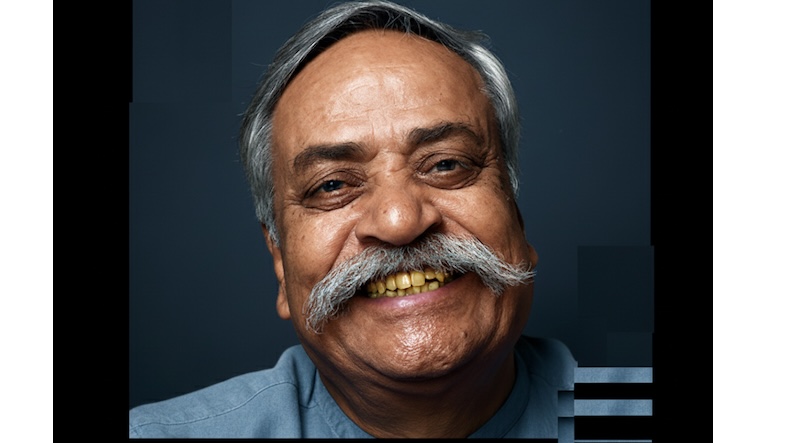
  • Piyush Pandey: India’s greatest adman never stopped watching, listening and loving life

    Piyush Pandey: India’s greatest adman never stopped watching, listening and loving life

    MUMBAI: The lights went out on Indian advertising this Diwali. Piyush Pandey, the wordsmith who turned bus rides and roadside tea into unforgettable campaigns, died on Friday aged 70. Just four months earlier, at the Emvies awards in Mumbai, veterans had touched his feet for blessings while young hopefuls queued for selfies. He looked frail but smiled through every encounter. Humility was his signature; genius was his secret.

    Pandey never claimed special talent. His gift was simpler and rarer: he kept his eyes open. The famous Fevicol advertisement—a Jaisalmer bus groaning under passengers clinging to every inch—came from a real sighting. The magic was slapping a Fevicol poster on the back of the bus. “Keep your eyes open, keep your ears to the ground and have a heart willing to accept,” he told newcomers at Ogilvy. It wasn’t a slogan. It was scripture.
     

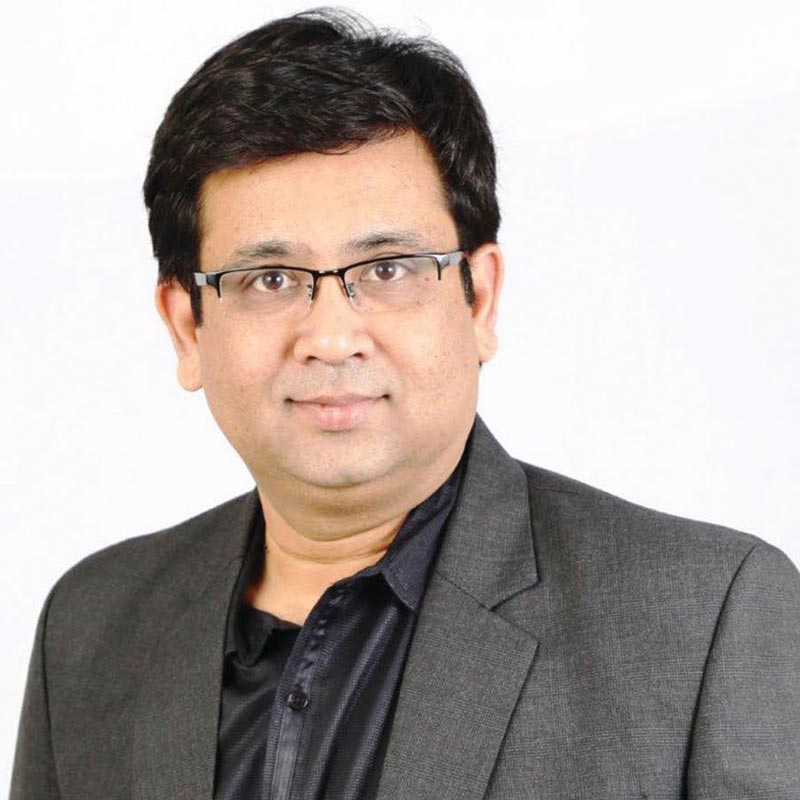
    Piyush Pandey

    He joined Ogilvy & Mather in 1982 at 27, after failing at cricket, tea tasting and construction. When Mani Iyer, who headed the agency, introduced him to me as creative director in the late 1980s, Pandey’s deep, soft voice belied a fierce passion for the craft. Like Roda Mehta, who ran media at Ogilvy, he was generous with his time,  patiently explaining the thought behind many a campaign to me. Those campaigns moved hundreds of thousands of crores worth of products off shelves over their lifespans.

    His method was observation turned into emotion. The Dum Laga Ke Haisha Fevicol spot was originally made for a smaller brand called Fevitite. The Parekhs, who owned Pidilite, told him the ad was too good to waste. Reshoot it for Fevicol, they urged. He did. That single decision spawned a series of award-winning campaigns and turned Fevicol into the category itself.

    His philosophy was disarmingly simple: love life. “Whether you are sipping tea from a roadside vendor or in a five-star hotel, whether you are travelling by second class or in a Mercedes-Benz,” he would say. Great ideas came from loving all of it—the chaos, the mundane, the sublime. “Be open to accepting ideas from the world. Be open to sharing ideas with the world. Learn to talk but most importantly also learn to listen.”

    Piyush PandeyPandey despised lazy advertising. Technology for its own sake was pointless; celebrities without ideas were  useless. “Many TVCs are pathetic these days when they use celebrities. They are made very lazily,” he once said. For him, the idea came first. Technology could enhance it; fame could amplify it. But without a core truth, it was just expensive noise.

    He believed consumers, not suits or pony-tailed creatives, made advertising great. “It’s when he or she accepts the product and emotionally bonds with it, the product becomes a brand,” he said. His advice to brand managers was blunt: stop being salesmen. Build brands, not just products.

    I lost touch with him for decades  as I went about building the indiantelevision.com group and all its ancillary services. Journalism and writing as I used to practice when I was younger was relegated to the background. It was during the pandemic that I reached out to him and requested him to spare some time for an online interview. To my surprise, he remembered me and he readily agreed. It was an interesting conversation about how Ogilvy was serving clients during the pandemic and how its creative edge was being maintained. We had agreed we would speak for 30 minutes, but the conversation went on for an hour. It was peppered with Pandey-isms. But that was the last time we spoke at length to each other, though we said hello to each other at advertising industry get-togethers which I rarely attended. Sadly, for me. 

    The man who taught India to watch, listen and love has gone silent. But his voice echoes still—in every vernacular tagline, every slice-of-life commercial, every campaign that dares to see India as it truly is. Pandey didn’t just sell products. He gave an entire nation permission to speak in its own accent, to find poetry in the everyday, to believe that the roadside and the boardroom could meet and make magic. 

    The lights dimmed this Diwali, but the spark he lit—built on observation, fuelled by empathy, sustained by love—will burn for generations. That’s not advertising. That’s immortality.

  • The slow eclipse of India’s media and broadcasting pioneers

    The slow eclipse of India’s media and broadcasting pioneers

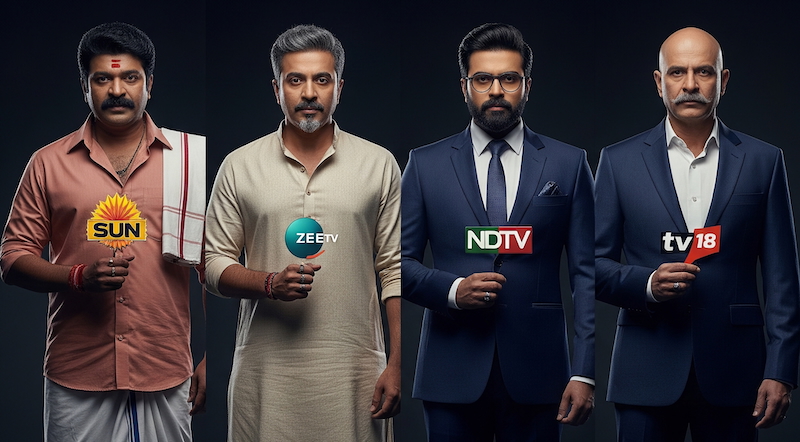
    MUMBAI: Once, they blazed across the Indian media landscape with the swagger of pioneers. Entrepreneur-led behemoths like Subhash Chandra’s Zee Entertainment, Kalanithi Maran’s Sun TV, Prannoy Roy’s NDTV, and Raghav Bahl’s Network18 weren’t just market leaders — they were institutions, holding their own even as foreign giants circled hungrily.

    Today, those stars are fading. Some have already fallen.

    Network18 and TV18 are now firmly in the grip of Reliance Industries and Disney Star. NDTV, long a bastion of editorial independence, is under the control of the Adani Group. Its founders — Roy and Radhika — have exited stage left, their names now relics of an era that once prized journalistic idealism.

    Zee, once the crown jewel of Indian broadcasting, is barely hanging on. The Chandra family — once majority owners — now clutch a meagre four-odd  per cent stake. It’s a dramatic fall from grace fuelled by Subhash Chandra’s ill-advised adventures into infrastructure. To bankroll these forays, he pledged Zee shares, opening the gates to lenders who came calling. The result: a sharp dilution of promoter ownership and a credibility crisis. The failed merger with Sony’s Indian arm, Culver Max Entertainment, only added insult to injury — scuppered reportedly due to concerns about Zee’s financial hygiene. A company once viewed as squeaky clean had its reputation muddied.

    Sun TV, the fourth of the old guard, is also showing cracks. Helmed with iron discipline by Kalanithi Maran, it long stood as a symbol of stability. But the facade is now under strain. A family feud has burst into public view, with brother Dayanidhi Maran accusing Kala of wresting control of Sun TV through backdoor share acquisitions. Legal notices have flown, regulatory filings issued, and the company insists all was above board. Still, some reputational damage has been done — and the gossip mills are churning.

    The result is a media map being redrawn in real time. Where once these founders shaped the narrative, today they’re either sidelined, embattled, or ousted. And as corporate titans and conglomerates take over, the question is whether passion-led media can survive in an era of balance sheets, bottom lines, and boardroom power plays.

    India’s media isn’t short on ambition. But nostalgia alone won’t stop the sun from setting on yesterday’s giants.

  • The role of marketing in the evolution of corporate transport-as-a-service (TaaS) platforms in India

    The role of marketing in the evolution of corporate transport-as-a-service (TaaS) platforms in India

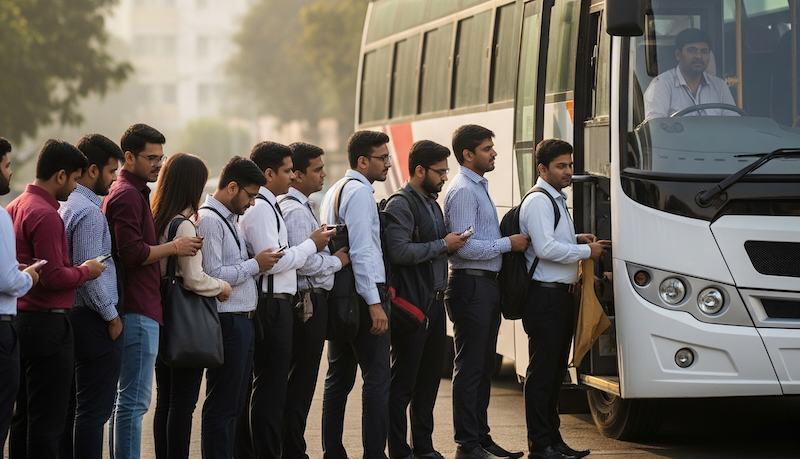
    MUMBAI: India is at a pivotal moment in rethinking how businesses move people. As companies continue to grow in a post-pandemic, sustainability-focused era, safe and efficient employee transport is more critical than ever. AI-powered transport-as-a-service (TaaS) platforms—once seen as futuristic—are now driving tangible efficiencies and smarter mobility.

    In a landscape long dominated by legacy systems and fragmented vendors, successful adoption increasingly depends on strategic marketing that builds trust and drives behaviour change. As more companies shift to integrated, tech-enabled solutions, India’s employee transportation market is poised to reach $13.2 billion by 2030—propelled by the expansion of GCCs, rising focus on employee well-being, and environmental accountability. 

    However, the concept of TaaS is still relatively new to many businesses, especially those in tier 2 and tier 3 cities. And with TaaS providers rapidly growing in India, standing out now hinges on strategic marketing—not just tech. So how does marketing drive all this? Rather than flashy promotion, the focus has pivoted to education, translating AI-driven, real-time transport orchestration into boardroom value. Marketing teams are now playing a crucial role in educating decision-makers about the cost, environmental, safety and operational benefits of transitioning from legacy transport models to digital-first, on-demand solutions. 

    Targeted content campaigns, engaging webinars, whitepapers, industry events, data-driven campaigns, and fact-based storytelling have become prime levers for TaaS marketers to successfully communicate the advantages of reduced overheads, improved route optimization, and enhanced employee satisfaction.  

    Powerful sources such as Google India’s Think with Google: B2B Playbook indicate that Indian business buyers digitally explore solutions to the extent of around 80% prior to going into contact with vendors. This makes online reputation, transparent data, and customer reviews critical marketing touchpoints. In response, thought leadership marketing—via blogs, LinkedIn articles, and panel discussions—has emerged as a strategic lever, positioning TaaS not just as a logistics solution, but as a vital pillar of future-ready enterprise strategy. 

    Arjun BhojrajIn an ESG-conscious corporate world, sustainability has become a major buying criterion. Indian TaaS platforms have leveraged this through savvy green marketing. Campaigns emphasizing electric vehicle (EV) adoption, carbon footprint reduction, and alignment with India’s net-zero goals have resonated strongly with large enterprises under pressure to showcase sustainability metrics. 

    Perhaps most fascinating is the shift in how trust and value are built. Marketing’s function today is to encourage internal adoption within client organizations, offering toolkits and change management processes to facility teams and HR rather than simply selling a service, but inducing behaviour change through tailored communication, including ROI calculators and demo videos. Trust is further reinforced through robust safety protocols, comprehensive driver background checks, vehicle health monitoring systems, and transparent ESG impact reports and sustainability dashboards playing a pivotal role in accelerating adoption.

    A critical dimension in the evolution of corporate TaaS platforms is monetisation. TaaS platforms often operate on a hybrid model, combining subscription-based pricing with usage-linked fees. Several research from PwC and Bain & Co. reveals a trend toward transparent, outcome-driven pricing, with additional layers for advanced analytics, ESG reporting, and premium support. Strategic marketing plays a role here too—by clearly communicating the ROI, cost-saving benefits, and long-term value of these offerings, platforms are able to position themselves not just as transport providers but as strategic mobility partners. 

    As India accelerates its push toward digitization, green mobility, and human-centric workplaces, the role of smart transport marketing becomes increasingly critical. Marketing is no longer a peripheral function—it is a strategic force that drives awareness, builds trust, fosters engagement, and accelerates adoption.

    By aligning brand narratives with operational excellence and measurable socio-environmental impact, marketing ensures that TaaS platforms aren’t just selected—they’re embraced and advocated for by forward-thinking Indian enterprises.

    (This comment piece has been penned by Routematic chief business officer Arjun Bhojraj. The views expressed in it are entirely the author’s and indiantelevision.com need not subscribe to them)

  • Skyesports and leadership partially cleared of charges  by employee harassment whistle blowers?

    Skyesports and leadership partially cleared of charges by employee harassment whistle blowers?

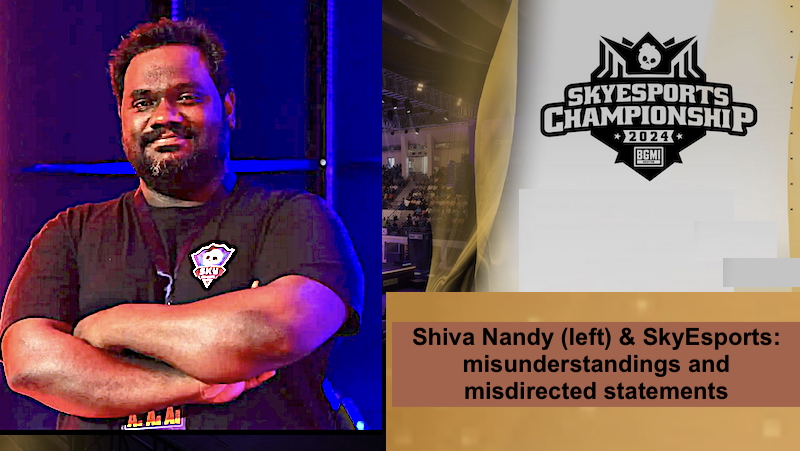
    MUMBAI: Did competitors play a hand in the employee harassment narrative  that was played out in the media against Sky esports, its founder Shiva Nandy and the company? If the turn of events that is being seen now is to be believed, it well might be the case.

    What initially appeared to be a serious controversy involving the company and Shiva, is now being viewed through a more nuanced lens—one that suggests the allegations may have been misdirected or prematurely amplified.

    The original claims, which gained traction on social media, pointed fingers at the company’s leadership. However, recent clarifications from the very individuals who raised concerns have painted a different picture. Former employee @NotyourAlexaa posted a statement making it clear that her negative experience stemmed from “a single person” and that the rest of the team, including leadership, “did not know about this earlier.”

    She further emphasised that she had no intention of casting the entire company in a negative light.

    Similarly, @Ananya_plays echoed the sentiment, stating: “One more time I will say I have issue with one person only,” directly tagging both JetSynthesys and Skyesports to clarify the scope of her claims.

    Adding to this, Shiva, has already issued a response, directly addressing the situation. He reiterated his support for a safe and inclusive workplace while expressing disappointment at the misinformation that circulated without proper context.

    As these clarifications emerge, many are beginning to question whether the original uproar was based on misunderstanding or miscommunication. Moreover, several industry voices and former Skyesports team members have stepped forward to vouch for the professionalism and integrity of the company’s leadership—particularly Shiva and Shashank—both of whom have been consistently described as respectful and supportive of women in esports.

    While the incident involving one individual deserves to be taken seriously, the evolving narrative suggests that the broader allegations may have cast an unfair shadow on the organisation and its founders. What seemed like a scandal now feels more like a case of misattributed blame, is the Skyesports view.

    In an era where viral outrage often overrides patient inquiry, this episode serves as a reminder: truth takes time, and every story has more than one side.

    We could not get in touch with the lady who blew the whistle against the company and Shiva first – Mrinal “@Jollies10_”  Baranwal. If she does reach out to us, we will update you, our readers.

  • Cricket and cinema: the strategic brand accelerator in India’s cultural economy

    Cricket and cinema: the strategic brand accelerator in India’s cultural economy

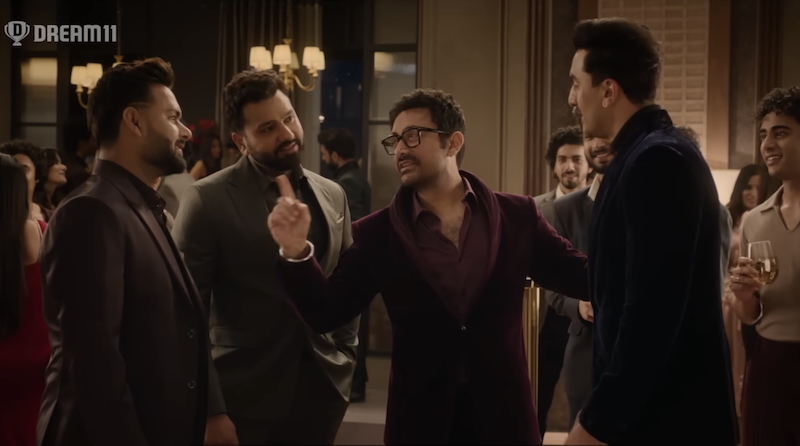
    MUMBAI: With IPL 2025 underway, it’s worth examining why the combination of cricket and Indian cinema remains the most potent market entry and brand acceleration strategy in India’s dynamic consumer economy. Brands like Dream11 and EMotorad continue to demonstrate how effectively leveraging the insight ‘cricket and cinema unite India as a country’ can drive exceptional marketing results. 

    What makes cricket and cinema uniquely powerful is their unparalleled ability to transcend India’s extraordinary diversity. In a nation with 22 official languages and countless regional subcultures, these two cultural forces create a shared national experience that cuts across all demographic divides. The data supports this observation: when mapped against consumer engagement metrics, no other cultural touchpoints come close to matching their penetration across income brackets, age groups, and geographic regions. This isn’t merely entertainment – it’s the social fabric that connects 1.4 billion people. 

    For brands like Dream11 and EMotorad that recognise this cultural alignment, the benefits extend far beyond conventional marketing metrics: 

    The 2024 IPL season shattered all previous viewership records, reaching an astonishing 572 million viewers across platforms, with average engagement time increasing to 47 minutes per match. This represents nearly 40 per cent of India’s population actively engaged with a single longish running event.

    When these viewership patterns are overlaid with the social media footprint of leading Indian cinema personalities – many commanding follower-ships larger than the population of European countries – the potential reach becomes unparalleled in global marketing. The cross-platform amplification effect creates a visibility multiplier that traditional media planning simply cannot replicate. 

    EMotorad Dhoni Sandeep Vanga Raddy

    Analysis of over 200 Indian brand campaigns shows that those leveraging both cricket and Indian cinema consistently generate emotional engagement scores 3.7x higher than those using either element alone. This emotional resonance translates directly to brand affinity metrics that persist long after campaign completion. 

    The strategic advantage of this dual approach lies in its demographic universality. Consumer panel research across 18 Indian states reveals that cricket-cinema integrations uniquely solve the urban rural divide that plagues most marketing strategies. 

    In a market where consumer trust metrics show declining confidence in traditional advertising, the implicit endorsement effect of cricket-Indian cinema integrations provides a critical credibility accelerator. Recent research indicates brands with authentic cricket and cinema  associations report up to 41 per cent higher trust ratings than category competitors. This trust premium directly influences the consumer decision journey, with 68 per cent of consumers demonstrating increased purchase intent for products within this ecosystem. 

    Forward-thinking brands are now moving beyond simple endorsements to create sophisticated ecosystem strategies that maximize the cricket-cinema connection. Through narrative integration, these brands develop authentic storylines that merge cricket themes with Indian cinema storytelling conventions, creating content that resonates at a deeper cultural level with Indian audiences. 

    Their platform architecture constructs comprehensive touchpoint ecosystems that begin during IPL broadcasts, extend through celebrity social channels, and culminate in immersive digital experiences, creating seamless consumer journeys across multiple media. Additionally, strategic brands position themselves to capitalise on specific cricket-cinema convergence points—such as celebrity reactions to dramatic match moments—enabling real-time engagement that feels organic rather than manufactured. This integrated approach allows brands to participate in cultural conversations in ways that traditional advertising simply cannot achieve. 

    As more brands recognize this strategy, the key differentiator has become execution sophistication. Brands achieving breakthrough results are those implementing “cultural intelligence” – the ability to authentically participate in the cricket-cinema conversation rather than simply appropriate its imagery. 

    The most successful campaigns demonstrate deep understanding of the subtle cultural codes embedded within both cricket and cinema, allowing them to engage at a level that feels native rather than commercial. 


    Jaspreet Bumrah Haridik Pandya Dream11

    Perhaps most importantly, leading brands have developed specialized metrics to quantify the impact of cricket-cinema integrations beyond traditional marketing KPIs. These include cultural relevance scores, conversation share analysis, and cross-platform engagement attribution that capture the true business impact of these strategies. 

    In India’s intensely competitive brand landscape, the cinema-cinema  convergence represents not just a marketing tactic but a strategic imperative. Brands like Dream11 and EMotorad haven’t merely adopted this approach – they’ve embedded it within their core business strategy. 

    With another IPL season, the brands that will emerge victorious are those that recognize a fundamental truth: in India, cricket and cinema aren’t just marketing channels – they are the cultural operating system through which consumers experience and interpret brand meaning. 

    The question for strategic leaders isn’t whether to engage with this cultural ecosystem, but how to do so with the sophistication and authenticity that today’s discerning Indian consumer demands. 

  • Bharti Telecom needs Airtel’s cash flow boost to tame its debt monster

    Bharti Telecom needs Airtel’s cash flow boost to tame its debt monster

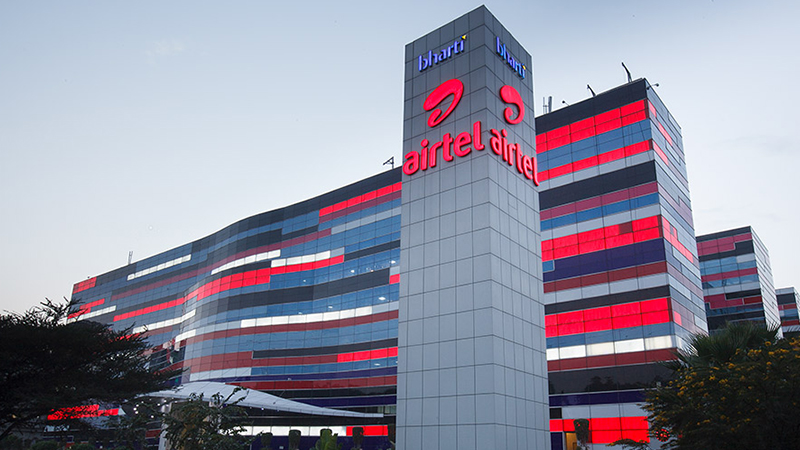
    MUMBAI: Bharti Telecom Ltd (BTL), the controlling entity of Bharti Airtel, is staring at a financial puzzle that needs urgent solving. With its debt ballooning to nearly Rs 38,000 crore, analysts say BTL needs a much bigger dividend payout from Airtel to keep its loan sharks at bay, according to a report in The Economic Times.

    BTL’s estimated annual finance cost stands at a staggering Rs 3,183.2 crore—far outpacing the modest dividend cheques of Rs 600.6 crore in FY23 and Rs 876.9 crore in FY24 from Airtel. The gap is wide, and unless Airtel loosens its purse strings, BTL might have to consider alternative moves, including a possible stake sale.

    BTL’s financial burden isn’t just a case of unfortunate circumstances—it’s self-inflicted. Over the years, the entity has been on a stock-buying spree, scooping up Airtel shares from its key stakeholders, Singapore Telecommunications (Singtel) and the Mittal family.

    As a result, BTL’s net debt has skyrocketed from Rs 15,900 crore in December 2022 to a massive Rs 37,800 crore in December 2024. In total, BTL has invested Rs 38,100 crore in securing a larger stake in India’s second-largest telco, including an initial Rs 1,900 crore commitment to Airtel’s October 2021 rights issue.

    Motilal Oswal, in a recent report, seen by ET, suggested that Airtel’s dividend per share would have to rise to at least Rs 14 in FY25—up from Rs 8 in FY24—just to cover BTL’s interest obligations. That’s a significant bump, and whether Airtel can afford such a steep increase remains a key question.

    Singtel currently owns a 49.44 per cent stake in BTL, while Bharti Enterprises, backed by the Mittal family, holds a 50.56 per cent share. Both have gradually shifted their direct Airtel stakes into BTL, which has been funding these acquisitions through debt.

    ET also cited Ambit Capital’s warning that BTL has become dangerously dependent on Airtel’s dividends. If the telco doesn’t ramp up its payouts, BTL might be forced into a corner.

    “We expect the dues to be refinanced as BTL owns a 40.47 per cent stake in Airtel. But given (BTL’s) rising debt-to-equity ratio, dividends from Airtel would have to be ramped up significantly over the next few years or there could be some risk of a stake sale by BTL,” noted Motilal Oswal, later in the ET report.

    The numbers are daunting. BTL’s debt-to-equity ratio has surged to 5.4x in December 2024, a far cry from the more manageable 0.24x in June 2022. Additionally, BTL faces Rs 21,500 crore in upcoming debt repayments between September 2025 and February 2026.

    BTL isn’t out of the woods yet. It still needs to cough up another Rs 5,800 crore for Airtel’s pending October 2021 rights issue calls, which means the dividend pressure isn’t going away anytime soon. Airtel, for its part, raised Rs 5,247 crore in the first tranche of its Rs 21,000 crore rights issue but postponed further calls, citing sufficient cash reserves.

    Currently, Singtel and the Mittal family collectively own 29.49 per cent and 22.93 per cent of Airtel, respectively, through both direct and indirect holdings, much of which is routed via BTL. However, it remains unclear how much of their stake they plan to keep under the BTL umbrella.

    For now, Bharti Telecom’s financial health hangs on a delicate balance—can Airtel come to the rescue, or will the mounting debt force a radical shift in ownership structure? The telecom industry is watching.

  • Creators vs. Influencers: Who Should Brands Work With?

    Creators vs. Influencers: Who Should Brands Work With?

    MUMBAI: Let’s get one thing straight, not everyone with a camera and an audience is a creator.

    Over the past few years, brands have gone all-in on influencer marketing, pumping money into campaigns focusing on numbers, views, likes, and reach. But they’ve forgotten the essence of content creation somewhere along the way. The obsession with influencers has overshadowed the people who genuinely create, the ones who make content that audiences connect with.

    At Creators Network, we didn’t just pick the word Creator for the sake of it. We genuinely believe in the art of content, not just the commerce behind it. If you’re good at your craft, money follows as a by-product. But if you start with just the commercial intent, chances are you’ll struggle to build real trust.

    The Difference Between a Creator and an Influencer

    It’s simple.

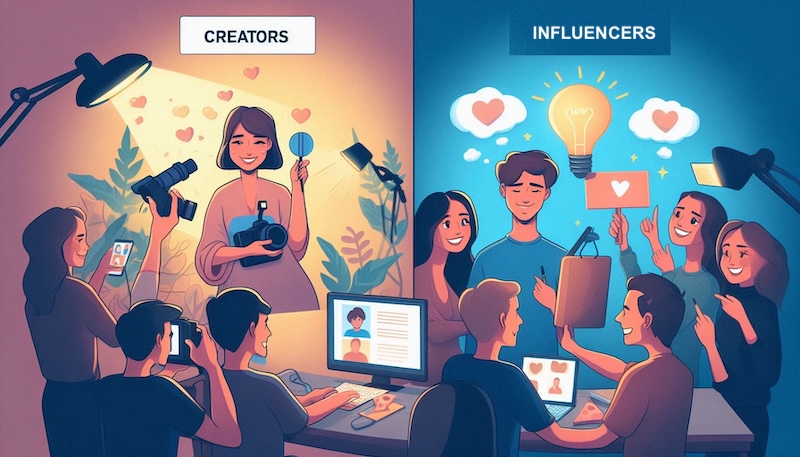
    Influencers exist because of their audience. Their primary goal is to maintain engagement, grow numbers, and (let’s be real) sell products. And honestly? There’s nothing wrong with that, it’s a legit marketing model. But let’s call it what it is: a sales funnel in human form.

    Himanshu AroraCreators, on the other hand, exist even without an audience. Their focus isn’t on “how do I sell this?” it’s “how do I make something I love?” And when you love what you do, an audience naturally follows. That’s why creators build communities, while influencers build followers.

    Selling vs. Using – Why Gen Z Can See Through the BS

    Here’s the thing: Gen Z is the most ad-resistant generation ever.
    They don’t want to be told what to buy. They want to see how something fits into their life. Instead of “Here’s why this shampoo is the best,” they prefer “This shampoo saved me from a bad hair day before my date.” 

    See the difference?

    And that’s exactly why creators work better for long-term brand relationships. When a creator genuinely uses a product, it doesn’t feel like an ad. It feels like a recommendation from a friend.

    A great example:  Kusha Kapila. You’ve seen her brand collabs, they never feel like she’s selling something to you. They feel like an extension of her content, a natural part of the world she’s built. And because of that, people watch them instead of skipping through.

    Or take Bhuvan Bam. If he endorses a product, it doesn’t feel forced, because it’s seamlessly woven into his storytelling. He doesn’t push a brand, he makes it a part of his world. And that’s why it works.

    Brands Need to Think Long-Term, Not Just Viral

    Right now, most brands are still chasing short-term virality instead of long-term trust. They’ll work with an influencer for one campaign, squeeze out some impressions, and move on to the next. But the best brands, the ones that get it, invest in creators.

    Instead of thinking, “Who can get us one million views this week?” they think, “Who can represent our brand for the next three years?”

    Few brands have already started doing this, though. They choose long-term creator partnerships over one-off influencer deals because, ultimately, influence fades, but trust compounds over time.

    So, Who Should Brands Work With?

    It’s not about influencers vs. creators. It’s about short-term vs. long-term thinking. If you need quick clicks, sure, go with an influencer. But if you want brand advocacy that lasts, invest in a creator. Always  ask yourself:
    “Do we want an influencer for today or a creator for the future?”

    Your answer will define your brand’s story.

    Himanshu Arora is the  founder & CEO, Creators Network & BookYourCreator. The views expressed in this column are entirely the author’s and indiantelevision.com need not subscribe to them. 

  • The fall of VFX titans: Technicolor to follow Rhythm & Hues’ tragic path?

    The fall of VFX titans: Technicolor to follow Rhythm & Hues’ tragic path?

    MUMBAI: A decade and two years after the dramatic collapse of Oscar-winning studio Rhythm & Hues, history appears to be repeating itself as Technicolor faces imminent shutdown, highlighting the persistent vulnerabilities in the global visual effects industry.

    The parallels are striking. Like Rhythm & Hues, which ironically filed for bankruptcy just weeks before winning an Academy Award for Life of Pi  in 2013, Technicolor’s potential closure comes despite its stellar creative achievements, including work on blockbusters like The Lion King and The Jungle Book.

    Both cases expose a fundamental flaw in the VFX industry’s business model: studios maintaining expensive executive operations in Western markets while relying on lower-paid artists in outsourcing hubs like India. This structure, which prioritised top-heavy management over sustainable artist compensation, has proven unsustainable twice over.

    Technicolor’s recent mismanagement compounds these structural issues. The company’s third-quarter 2023 results tell a devastating story: revenue declines of over 45 per cent across its creative divisions, masked by corporate buzzwords about “transformation journeys.”
    Technicolor's WARN noice

    The appointment of an interim chief executive from the car rental industry, rather than someone with media expertise, echoes the kind of decision-making that plagued Rhythm & Hues in its final days.

    “The industry hasn’t learned from its past,” notes one veteran VFX artist who witnessed both collapses. “When Rhythm & Hues fell, we said ‘never again,’ but here we are, watching another giant stumble under the weight of mismanagement and unsustainable business practices.”

    Technicolor, the Paris-headquartered company has begun issuing Worker Adjustment and Retraining Notification (WARN) notices to its US employees, alerting them of potential mass layoffs and closure. The shutdown would affect thousands of visual effects artists across the company’s  global operations in the US, UK, Canada, and India..

    “Technicolor has been facing severe financial challenges,” states the WARN notice obtained by us at indiantelevision.com “Despite exhaustive efforts — including restructuring initiatives, discussions with potential investors, and exploring acquisition opportunities — we have been unable to secure a viable path forward.”

    The issuance of WARN notices to US employees, signalling potential closure by 24 February, eerily mirrors the sudden unravelling of Rhythm & Hues. Then, as now, thousands of artists across global studios face uncertain futures, while ongoing projects hang in limbo.

    This second major collapse in a decade raises serious questions about the sustainability of the VFX industry’s current model. Despite the increasing demand for visual effects in film and television, the businesses creating these spectacles continue to struggle with profitability, suggesting that fundamental reform may be necessary for the industry’s survival. 

    The content creation industry needs to understand, creating realistic visuals costs, and the cheques – probably much fatter than given out now –  need to be kept aside for those bringing  realism to green-screen shot sequences. These days, VFX is the real hero of most action filled films; without it most films would fall flat and seem uninteresting. While onscreen talent walks away with tens of hundreds of millions of the box office collections, the VFX folks who labour on a film for  a  couple of years —  after putting in millions of dollars for software licences and hardware –  end up with as much or even less than what the onscreen talent does in terms of profits. 

    What makes Technicolor’s potential demise particularly troubling is that it comes despite the lessons of Rhythm & Hues’ collapse. The company’s aggressive merger strategy and failure to maintain operational efficiency – evidenced by missed EBITDA targets and withdrawn financial outlooks – suggest that even recent history’s harsh lessons went unheeded.

    As employees in seven US states prepare for possible closure, submitting direct deposit details for final paycheques, the industry faces a moment of reckoning. The question remains: how many giants must fall before the visual effects industry finds a sustainable path forward?

    The development also  raises concerns about the global AVGC-XR (Animation, Visual Effects, Gaming and Extended Reality) industry, particularly in markets like India where both animation and visual effects sectors are reportedly struggling despite official optimism. 

    Industry observers await Monday’s developments as Technicolor continues last-minute efforts to keep its doors open, while the future of thousands of visual effects artists hangs in the balance.

  • Advertising & the art of survival for the Indian cinema exhibition sector

    Advertising & the art of survival for the Indian cinema exhibition sector

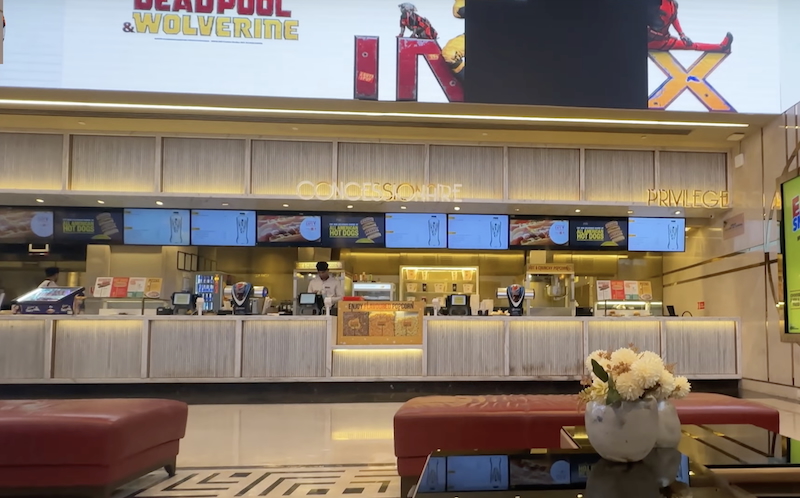
    MUMBAI: A recent ruling by a Bengaluru consumer court against PVR Inox’s practice of running blocks of commercials before a film’s screening has sent shockwaves through India’s cinema exhibition industry. The court ordered PVR Inox to pay Rs 20,000 in compensation to a customer whose screening of “Sam Bahadur” was delayed by 25 minutes, along with Rs 8,000 in legal costs and a hefty Rs 100,000 fine. The complainant argued that the delay disrupted his schedule and constituted misrepresentation of screening times, while PVR has denied any wrongdoing and plans to appeal the decision. The court also instructed PVR to mention actual start times for films on tickets, rather than just show start times (ads included).

    While judicial rulings must be respected, there is concern that this decision may not fully account for the operational realities of running a multiplex. The cinema exhibition industry operates on a tight schedule, with only a 50-minute gap between screenings. Within this window, crucial activities such as cleaning, restocking, and technical checks must be completed to ensure a seamless movie-watching experience. Typically, around 20-30 minutes are consumed by cleaning operations alone, leaving theatre owners with limited time to run commercials and pre-show content.

    The placement of advertisements before a movie is neither new nor exclusive to India. In most countries, pre-show advertisements are a standard practice, helping exhibitors generate additional revenue to sustain their business. These ad slots are often categorized into different packages, such as bronze, silver, gold, and platinum, depending on when they are played relative to the start of the movie.

    For instance, in the United Kingdom, cinema-goers are accustomed to watching an average of 11 minutes of commercials before the film begins. This system allows cinemas to monetize screenings while ensuring that the audience is well aware of this industry-wide practice. The United States follows a similar model, with advertisements running for about 15-20 minutes before the start of a feature film.

    Theatre chains, including PVR Inox, depend on multiple revenue streams to stay afloat. Ticket prices alone are often insufficient to cover operational costs, especially given the significant investment in infrastructure, maintenance, and technology. Average ticket prices in India are among the lowest in the world; hence, chains are dependent on food and beverage purchases by patrons to plug the gap in revenues. Advertisements play the next most important role in offsetting these expenses, ensuring that cinema halls can offer high-quality viewing experiences while keeping ticket prices competitive.

    Additionally, government-mandated public service announcements and advisories—such as health warnings about smoking or messages promoting national interests—also consume valuable screen time. At one point, playing the national anthem before the movie was a compulsory practice in India, further adding to the pre-screening content duration.

    The consumer court’s ruling sets a concerning precedent that could disrupt the well-established norms of the cinema industry. If similar cases emerge, multiplex operators may be forced to reduce or eliminate advertisements, leading to revenue losses and potentially higher ticket prices to compensate. This could, in turn, affect moviegoers who may have to pay more for the same entertainment experience.

    Moreover, imposing rigid constraints on advertisements without considering industry norms and financial dependencies could discourage investments in multiplex infrastructure and expansion. It could also affect advertisers, for whom cinema remains a lucrative medium to reach captive audiences. I remember as a youngster how we would pester our parents to take us earlier to the cinema hall so we could learn about new launches and promotions and take advantage of them by rushing to the stores. Even the commercials during the interval were something we watched, fascinated and goggle-eyed.

    While consumer rights must be protected, it is imperative that regulatory and judicial bodies take a holistic approach when adjudicating industry practices. Instead of outright bans or penalties, a more balanced solution could involve clearer communication from cinema chains about the expected duration of advertisements before a film starts. This could include displaying specific information on ticket booking platforms and at theatre entrances, ensuring transparency while allowing theatres to sustain their business model. For more than 70 years, not many objections relating to the airing of advertisements have been filed in the courts – consumer or otherwise. Let us remember: a swallow does not make a summer.

    PVR Inox’s decision to appeal the ruling is a step toward safeguarding the interests of the industry. If courts begin penalizing exhibitors for long-standing practices that are globally accepted, it may only serve to disrupt an ecosystem that has been meticulously structured to benefit both businesses and audiences alike.

    The cinema industry is already navigating challenges such as declining footfalls due to streaming services and high operational costs. Adding legal hurdles in the form of restrictions on pre-show or interval advertisements could prove to be a costly misstep that does more harm than good. As this case unfolds, it remains to be seen whether common sense and pragmatism will ultimately prevail.

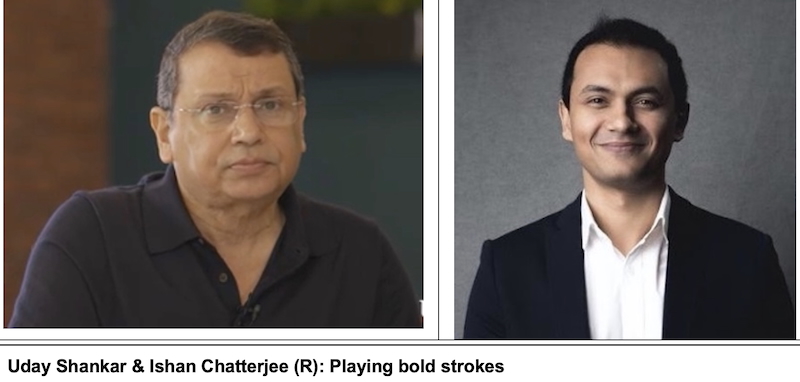
  • Uday Shankar & Ishan Chatterjee’s masterplan to disrupt the sports ecosystem

    Uday Shankar & Ishan Chatterjee’s masterplan to disrupt the sports ecosystem

    MUMBAI: By partnering with Nielsen, Uday Shankar and Ishan Chatterjee have revolutionised the way advertising revenue is allocated in media. With all relevant consumption metrics now accessible, brands and managers can accurately measure the return on investment for ads on the JioHotstar platform.     

    Previously, advertisers relied on distributor and retailer feedback to gauge the impact of TV or OTT ad campaigns or simply trusted platform-provided figures on watch times and engagement. This lack of transparency led many senior marketing executives to lament that half their advertising budget was wasted—without knowing which half.     

    Now, with JioHotstar exposing detailed consumer engagement data, transparency is paramount. Competitors such as Sony, Zee5, and MX Player will face pressure to disclose their own engagement metrics, which are likely to fall far short of JioHotstar’s. With 50 million subscribers, JioHotstar’s numbers will set a new benchmark, challenging the credibility of figures previously reported by other streaming services.     

    Will Nielsen’s dashboards validate or debunk existing industry claims? Will this new transparency drive up unit pricing for OTT ad spots or cause a market correction?

    sports watcher     

    Some believe smaller OTT platforms could benefit from JioHotstar’s initiative, as advertisers gain confidence in exploring alternative options.     

    “The battle for advertising video revenue is primarily between Alphabet, Meta, and other players, while retail commerce giants such as Amazon, Flipkart, and Swiggy are evolving into media powerhouses, attracting thousands of crores in ad spending. The first two dominate 70 per cent of India’s digital ad spend. Transparency measures like JioStar’s could shift investment from Alphabet and Meta to other video platforms as the ad market expands,” observes an industry expert.     

    To capitalise on this shift, Uday Shankar has launched sports channels in multiple languages in both standard and high definition. The true impact of JioStar’s transformation of the sports vertical will likely become evident later this year, as marketers, agencies, cable operators, aggregators, and DTH platforms assess the platform’s potential. Subscription and advertising revenue are expected to surge.

    Digital advertising has long been a black box, with advertisers investing heavily in Meta and Alphabet despite knowing there’s wastage—largely because of the strength of their data, even though it’s self-reported.

    In an effort to bring more transparency, Google has been encouraging third-party tech solution providers outside its ecosystem through programs like YTMP, where Channel Factory plays a role, particularly for YouTube advertisers.

    The recent Jio-Hotstar collaboration with Nielsen aims to shed light on consumption data, providing advertisers with third-party insights. However, since the study is commissioned by the media company itself, its credibility will be met with some skepticism—much like the trust advertisers place in Meta and Alphabet’s data. That said, it still offers a level of validation that could make investment decisions more confident.

    More importantly, this move could push other players to enhance transparency in their own data reporting, ultimately fostering a more accountable digital ecosystem

    Yesudas Pillai   
    Founder Y&A Transformation and Strategic Advisor, Channel Factory

    The BCCI has thrived on the IPL’s ever-increasing media rights value, pocketing Rs 48,000 crore in the 2022–27 cycle. However, the IPL has been a loss leader for JioStar, with revenue projections of Rs 4,000–4,500 crore for the 2025 season, meaning profitability remains elusive.     

    The recent merger aims to stabilise rights acquisition costs. Previously, Disney Star and Viacom18 engaged in aggressive bidding wars, inflating prices. With one less competitor, prices may better reflect market realities—unless Netflix, Eurosport, Prime Video, YouTube, Zee, or Sony enter the fray, not just for the IPL but for other sports properties, as India’s sporting interests expand beyond cricket.     

    (Sources suggest sports administrators are privately expressing concerns about the impending disruption, while smaller sports associations are eager for new opportunities.)     

    If rights prices fall to more realistic levels, the entire ecosystem will feel the effects. BCCI and ICC will have less revenue from central media and broadcast rights pools, reducing payouts to team owners. Consequently, player salaries will also decline as team owners rationalise spending. The days of cricketers commanding double-digit crore salaries, as Virat Kohli, Rohit Sharma, and Hardik Pandya have, may be numbered.     

    The sports sector is on the brink of a transformation. On the infrastructure side, on the broadcast side, on the talent side – it is all waiting to explode. Production quality, engagement, and interactivity will reach unprecedented levels. It only took a nudge from the likes of Uday Shankar, Akash Ambani, and Nita Ambani. As the saying goes, the match isn’t over until it’s won—or lost.