Category: Case Study

  • GIVA introduces the latest Rakhi collection, celebrates #TiesofLove this Raksha Bandhan

    GIVA introduces the latest Rakhi collection, celebrates #TiesofLove this Raksha Bandhan

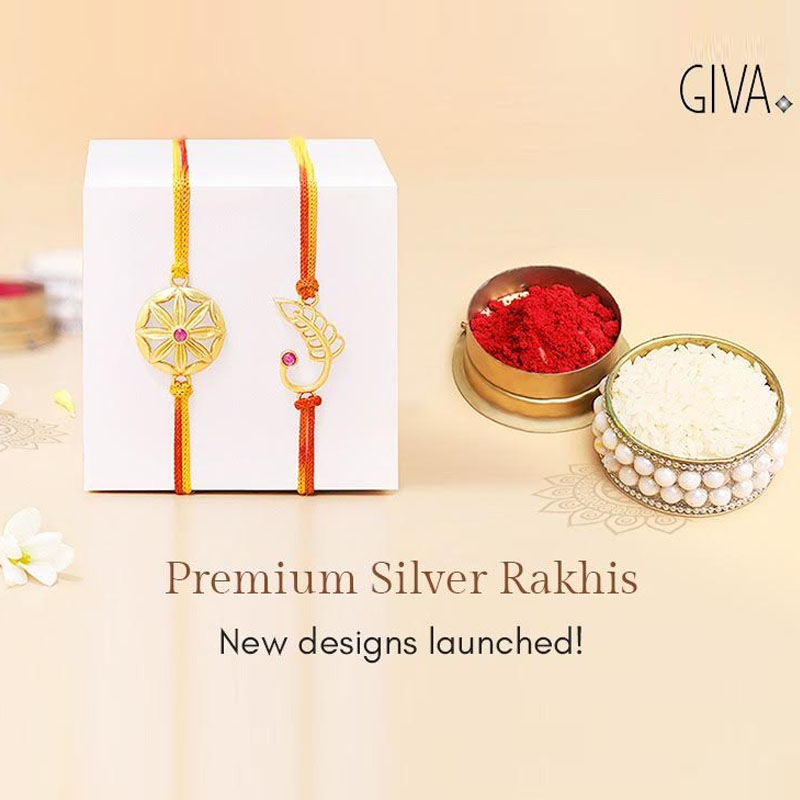
    Mumbai: GIVA, a premium jewellery brand aiming to make authentic, elegant, and fine silver jewellery accessible in India, launched their latest line of Rakhi collections, for the upcoming Raksha Bandhan festivities in India. Renowned for redefining the art of presenting exquisite sterling silver jewellery, GIVA takes immense pride in launching an emotive campaign that honours the profound sibling connection. Aptly named “Ties of Love,” the campaign transcends being a mere collection; it is an exploration of the emotional connection that siblings share. This campaign artfully encapsulates the essence of sibling relationships through meticulously crafted 925 silver jewellery rakhis, serving as poignant symbols of affection, protection, and enduring love.

    GIVA has embraced a digital advertisement that eloquently portrays the deep and meaningful love that siblings share. This ad serves as a heartfelt depiction of the profound bond that exists between brothers and sisters, further resonating with the brand’s dedication to celebrating and cherishing these special relationships. The ad beautifully captures the essence of a sibling duo celebrating a long-distance Raksha Bandhan and highlights the range of emotions amidst virtual and real-time celebrations. The campaign’s strategic blueprint leverages modern communication platforms such as influencer marketing, Youtube and Instagram advertising.

    In a strategic move, GIVA enlisted the support of prominent social media influencers and celebrities Ridhhi Dogra, Pooja Gor and Sreejita De to convey the campaign’s key messages to their target audience. To honour this enduring bond between siblings, GIVA has created an Instagram filter named #TiesofLove. This filter is a tribute to the unbreakable bond we share with our siblings and with this, GIVA aims to witness countless siblings sharing their own delightful and hilarious anecdotes all through August.

    GIVA has introduced an exclusive Rakhi collection complemented by exquisite fine silver jewellery choices, with prices beginning at just Rs 899 only. This assortment encompasses a diverse range of options to cater to various preferences, featuring personalized rakhis designed to strengthen the sibling bond. These personalised rakhis can showcase intricately embedded names of brothers and sisters, alongside specially crafted Lumba rakhi designs for beloved sisters-in-law. Moreover, their innovative Convertible rakhis offer a unique transformation into stunning pendants, reflecting a blend of sustainability and style.

    GIVA founder  Ishendra Agarwal said, “GIVA’s Ties of Love Rakhi campaign embodies GIVA’s mission: celebrating the timeless with a modern twist. This year, we sought to extend Rakhi’s warmth beyond a day by crafting convertible rakhis that can transform into cherished pendants. We also extended our shipping to over 20+ countries to truly celebrate sibling love across borders.

    It is more than a campaign. It’s a call for togetherness. It’s a shared tribute to love, tradition, and cherished moments. Our curated collection of gift hampers, personalised rakhi and rakhi gifts are a testament that gifts should know no boundaries.”

    To extend a perfect gesture towards both sisters and brothers-in-law, their Bhaiyya-Bhabhi combo stands as an ideal selection. The Rakhi Box is an exclusive gifting choice that presents a personalized rakhi and kumkum, encapsulating a heartfelt touch. Additionally, they also have Bracelet rakhis that seamlessly fuse tradition with fashion, adding to their charm.

    Ensuring no one is left out, GIVA has an exclusive Kids’ collection that presents a delightful array of rakhis, starting at just 699 INR. This collection is tailored for younger siblings, capturing the spirit of sibling love playfully.

    GIVA’s Raksha Bandhan campaign seeks to highlight the profound emotional value of the rakhi tradition in India, positioning the brand as a provider of thoughtfully crafted and meaningful silver jewellery. The brand’s objective is to establish a heartfelt connection with customers, nurturing a deeper understanding of sibling connections while showcasing the brand’s impeccable artistry. GIVA has always prioritized individuality and self-expression in its design ethos. This Raksha Bandhan, the brand is particularly attentive in presenting a diverse range of top-notch, hypoallergenic rakhis, all certified by GIVA. This effort is dedicated to cherishing the enduring bond, as precious as silver, that exists between siblings.

  • What is Third-Party Car Insurance Cover & How it Works?

    What is Third-Party Car Insurance Cover & How it Works?

    If you own a car or are planning to get one, you cannot take it on the roads without obtaining valid insurance for the same. Though there are two types of car insurance, third-party insurance is considered the most basic insurance that no vehicle owner can do without. If you’re ever caught driving an uninsured car, you will be heavily penalized by the authorities.
     
    Third-party insurance for car is comparatively affordable compared to other car insurance, but it also offers limited coverage. If you’re contemplating getting third-party car insurance from a well-known insurance provider but want to gather necessary information before making any purchase, this article is here to guide you. 

    Also Read – New to Insurance? Keep these 5 Things in Mind While Purchasing life Insurance  

    Third-Party Car Insurance: Things to Know

    The Indian Motor Vehicle Act mandates car owners to get at least third-party insurance for their registered vehicle if they don’t want to go ahead with comprehensive insurance. Third-party insurance primarily covers the vehicle owner against losses/damages caused to a third party during an accident. Like other insurance policies in the market, even third-party insurance for car has specific inclusions and exclusions that you should be aware of.

    Inclusions in a Third-Party Car Insurance

    Irrespective of your driving skills, driving on chaotic Indian roads can sometimes be challenging. And with so much crowd and traffic around, chances of unfortunate events, like road accidents, increase manifold. In such a situation, if you end up hurting/damaging a third party or his property, you will be liable to pay the damage cost to the other individual. It is during such cases when third-party insurance comes to the rescue. They cover car owners for:

    Also Read – Government Should Address The Long Pending Insurance Bill Sanjay Tripathy

    1. Personal Damages to Third-Party

    If a person gets hurt during an accident because of your car, you will have to bear his medical and other associated expenses. If you have taken third-party insurance, you can claim the financials involved from your insurance provider, and they’ll take care of the rest.     

    2. Property Damages to Third-Party

    Similar to personal damages, you are also required to pay the property damage cost to the third party. Whether you accidentally hit another vehicle or a street lamp post, you will be liable to pay for the damages caused because of your car. Luckily, it is also covered in third-party insurance, so policyholders don’t have to bear the brunt of such unexpected out-of-pocket expenses.  

    ● Exclusions in Third-Party Car Insurance

    While third-party car insurance covers the vehicle owner for personal and property damages caused to a third party, it doesn’t cover the damage caused to the policyholder. But this negative can be turned into a positive by adding a personal accident cover to your basic third-party car insurance. You will have to pay for personal accident cover separately, but the extra payment will be worth it, as it will bring along peace of mind.    

    Also Read – Insurance A Push Product in India Says Indiafirst Lifes Rushabh Gandhi

    ● Difference Between Comprehensive and Third-Party Car Insurance

    The fundamental difference between comprehensive and third-party insurance lies in coverage. While the third-party insurance protects the car owner from a property and third-party damage caused by his vehicle, the comprehensive insurance covers policyholders for both third-party and own damages. You should purchase comprehensive car insurance if you want maximum coverage. The insurance premium varies proportionately to the inclusions/coverage a policy offers, so don’t worry if you have to pay more for comprehensive insurance.  

    But before you purchase any insurance for your vehicle, always remember that no claim will be entertained if the policyholder was found driving in a drunken state or the driver had no valid driving license. Also, if a minor was found driving the car at the time of the accident, no claim will be fulfilled. So always be responsible while driving to avoid any unpleasant surprises during claim settlement.

    How does Third-Party Car Insurance Work?

    If a person meets an accident after taking third-party car insurance, the policyholder can raise a claim for the damage caused to a third party or his property. For claim settlement, the policyholder should inform the insurance company about the accident within the stipulated time as mentioned in the policy document and also furnish an FIR so the insurance company can take things forward. A surveyor will then be sent from the insurance provider’s end to assess the monetary damage caused and verify the same before sharing a detailed report with the insurance company. Based on the final report, the claim amount will be processed.

    You can either call the representative you’ve been in touch with from the insurance provider’s side or simply email them on their official email id with the necessary details. Having a good insurance company by your side is important if you want faster claim settlement and excellent customer support. So take your time and do the due diligence before purchasing third-party insurance from any insurance provider.   

    Taking third-party car insurance from a trustworthy insurance provider will enable you to drive legally on the Indian roads without any worry of traffic penalties or fines and save you from unexpected and unavoidable out-of-pocket expenses in case of a road accident. With so many benefits on the table, you shouldn’t think twice before getting your vehicle insured.  

    Also ReadCovid-19 Uplifts Health insurance Sector, But Premium Segment Sees Decline 
     

  • Shah Rukh Khan’s KKR most valued IPL brand at $86 million: American Appraisal

    Shah Rukh Khan’s KKR most valued IPL brand at $86 million: American Appraisal

    MUMBAI: As the Indian Premier League (IPL) gathers full speed, American Appraisal has released a concise report called “On a sticky wicket” on the brand values in IPL. While many expected that the latest round of controversies will shake the belief that advertisers and corporates had put in the million dollar cricketing extravaganza, the report is upbeat about the IPL and tags the event as most popular and anticipated event around, which advertising campaigns are run despite the launch of several rival sporting leagues in the country during the last 12 months.

    As per the report, Shah Rukh Khan co-owned franchisee Kolkata Knight Riders (KKR), grabs pole position in the brand valuation chart, followed by Mumbai Indians (MI). KKR’s brand value increased from $69 million to $86 million, while MI was stagnant at $72 million. Chennai Super Kings dropped to number three slot as their brand value declined to $69 million as compared to $72 million in 2014. Royal Challengers Bangalore (RCB) and Rajasthan Royals (RR) were also stagnated at fourth and fifth berth with $51 million and $45 million respectively.

    Meanwhile, Kings XI Punjab after their strong performance in the 2014 edition, rose to number six position as their brand value hiked from $32 million to $41 million in the 2015 edition. Sunrisers Hyderabad (SRH), at penultimate position, also secure growth as their valuation rose to $35 million from $25 million. Positioned at the bottom of the table in terms of brand valuation, Delhi Daredevils saw the biggest dip following an underperformed 2014, with a brand valuation of $34 million, which dipped from $40 million in 2014.

    The report also depicts that player selection is not just limited to skills and performance but also to the ability of a player to garner sponsorships, case in point being Delhi Daredevils’ acquisition of Yuvraj Singh for a record Rs 160 million. Yuvraj has all the abilities to change the fate of a match single handedly with either batting or bowling but in recent times he failed to step up to his ability as he registered average performances. He started his IPL career with Kings XI Punjab then went to Pune Warriors before Royal Challengers paid a hefty amount for his services. However, his stint with RCB didn’t last for long as the Vijay Malya owned franchisee decided to let him go following his exclusion from India’s World Cup team. In the current season, Yuvraj is a part of Delhi Daredevils and the franchise will hope that he can change both his and the team’s luck with strong performance. The irony is that despite not showing a satisfactory performance, Yuvraj’s value kept increasing year after year.

    There is a clear sense of maturity and business intent by franchises in selecting their teams, evident in the way player auctions took place earlier this year. With almost all social media platforms set to be awash with IPL content over the next few weeks, and the fact that the Indian national cricket team did unexpectedly well at the recently concluded World Cup, there is no surprise that the real winner of the next IPL will be cricket.

    Viewership

    The cumulative reach of the IPL increased from 155 million for the 2013 edition to 190 million for the 2014 edition. The TV reach of IPL has been consistently growing at a compound annual growth rate (CAGR) of 10 per cent since the first edition, despite the fact that the IPL’s TV ratings have been consistently falling every year since the first edition suggests the report. The report describes 2014 as a tremendous year for India when it comes to sport and entertainment, driven by the success of the IPL, the country saw a plethora of new sporting leagues, some of which have seen unexpectedly high levels of popularity. The Pro Kabbadi League (PKL) and the Hero Indian Super League (ISL), both of which had their first editions in 2014, saw viewership numbers large enough to rival even the IPL. The PKL garnered viewership of 435 million viewers for its first edition, a shade more than the ISL’s 429 million viewership, while season seven of the IPL garnered close to 552 million viewers, despite the controversies and changes in venue.

    Emergence of Digital

    In a recent development, the global digital media rights (excluding the US region, which were sold separately to ESPN for an estimated $12.4 million for a three year contract) for the IPL were sold to a Star Group company for a staggering Rs 302 crores for a three year contract. This represents a 50 per cent increase in previous deal value. With the TV broadcasting rights for the IPL due for renewal in a few years, we could be looking at a TV broadcasting deal of record proportions in India. Some food for thought here would be the 83 per cent increase in the annual broadcasting fees for the English Premier League paid by Sky and BT for a league whose viewership has been increasing at a fraction of the growth seen in the IPL.

    Understanding The Brand Value

    Great sporting brands across the world have been built over several decades of fan following, successful performances, the ability of a team to attract great talent, and continued association with large companies, partners and sponsors. Teams like the New York Yankees, Dallas Cowboys, Manchester United, Chelsea, Real Madrid, Barcelona, Los Angeles Lakers and the like have become much sought after brands by advertisers and represent brand values in the billion dollar range.

    In the IPL, brand value is derived from a wider variety of reasons, keeping in mind the Indian viewer’s association preference for vernacular proclivities, cricketing knowledge and celebrity influence. Accordingly, drivers of brand value in the IPL can be categorised under the following broad headings.

    Management Strength and On Field Performance

    For an advertiser / sponsor, being associated with a team that is consistently performing at the top of the table is a key factor in assessing brand potential. A look at the largest deals in the sponsorship space not only in the IPL, but also internationally, will reveal that teams that are better on field performers garner higher sponsorship values In the IPL, the estimated lead sponsorships (lead chest and limited player promotions) were valued at a 100 per cent premium for a top ranked team over its lower rung peer.

    Of course, a team that consistently performs at the top of the table is not the result of a prefixed formula. Team management plays an important role in squad selection, talent acquisition, performance management and administrative support. Clearly, a winning team is the result of a combination of several factors including the strength of the management team.

    Marketing Strategy

    Based on an analysis, it is estimated that, on average, franchises spend anywhere between 15 and 25 per cent of their revenues towards marketing and promotion. Some teams, like Kolkata Knight Riders, who invested significantly towards brand building in the early part of their IPL existence, have seen fantastic support from sponsors and partners. IPL events, television advertisements, merchandising, in stadium freebies and other such promotional activities driven by the franchise go a long way in garnering exposure and support translating into brand gains. Merchandising in the IPL is presently in a nascent stage, and most franchises are still coming to terms with the best possible way to monetise different streams. The reports suggests that this will be a game changer for franchises that are able to crack this difficult market and identify new monetisation streams by tapping into their existing fan base.

    Celebrity Influence and Marquee Players

    The presence of key marquee players and celebrity owners in a franchise brings additional popularity to the individual team brands. However, it may be added that cricket is a team game, and no one person can change the fortunes of a badly performing franchise. In addition, while franchise brands may be able to ride on the brand of a celebrity owner or a marquee player, they are also open to the risk of damage in cases where said individual is embroiled in a controversy, even if that controversy is outside of the IPL.

    Geographical Location

    The geographical location of the franchise determines the population of its support base and is an important factor in assessing the strength of an individual team brand. In general, it is likely that higher density of teams in a particular region of the country will split the fan base and impact the ability of a team to garner support outside of its immediate location. While the intention of the IPL was never to split support on the basis of vernacular lines, this does seem to be the current situation with every team in the current season belonging to a different state of the country. While this makes support for each team more intense, it remains to be seen how support will be impacted once a few more franchises are added to the current format.

    Governance and Transparency

    Over the last few months, teams or promoters of teams accused of professional misconduct or embroiled in any controversy have had a negative impact on brand perception. Last year, as part of the survey, respondents were asked to rate their preferred IPL franchises on the basis of their perceived brand strength and the quality and transparency of their management teams. The results were interesting, to say the least.

    Social Media Engagement

    The ability of a franchise to engage fans on a regular basis, particularly during the IPL season, has been crucial in building positive brand perception. Over the last few seasons, dedicated Twitter campaigns and “player battles” organised by the franchises have been seen with the intention of engaging fans regularly and keeping them up to date with the events of the individual teams.


  • Exposure to ads & smoking in films led to increase in smoking among adolescents: Nadda

    Exposure to ads & smoking in films led to increase in smoking among adolescents: Nadda

    NEW DELHI: Various studies conducted over the past decade on advertising, marketing and depiction in Bollywood films has had a significant effect on adolescents taking to use of tobacco.


    Health Minister JP Nadda cited various studies in Parliament that show increase of tobacco use among adolescents aged between 12 to 16 years not only because of Bollywood films, but also because of advertisements of tobacco products on cricket grounds during important series between India and other countries.


    A study done between 2009 and 2012 showed that 59 movies contained 412 tobacco use occurrences. The prevalence of ever tobacco use among adolescents was 5.3 per cent. Compared with low-exposure adolescents, the adjusted odds of ever tobacco use among high-exposure adolescents and being receptive to tobacco promotions was also associated with higher adjusted odds of ever tobacco use.


    A cross-sectional sample of 3956 adolescents (eighth and ninth grades, ages 12–16 years) from 12 randomly selected New Delhi schools were taken for the survey, assessing tobacco use status, receptivity to tobacco promotions (based on owning or being willing to wear tobacco-branded merchandise) and exposure to tobacco use in movies.


    A 10-city survey of over 9,000 students between the ages of 13 and 17 showed that after seeing the Wills World cup Cricket Series, 13 per cent felt a desire to smoke. The survey also showed that 72 per cent thought that there was at least one smoker on the Indian cricket team, which played in the 1996 World Cup.


    A previous study published in the British Medical Journal, showed similar results. It concluded that cigarette company sponsorship of the India-New Zealand cricket series in 1995 had a significant impact on kids, who watched it on television. The advertising created the impression among the 1,948 children aged 13-16 years, who participated in the survey, that “smoking gives more strength, improves batting and fielding and ultimately increases the chance of winning.”


    There are independent studies that have been conducted to determine the impact of advertising and promotion of tobacco products on the consumption of these products by Indians, the Minister said. Evidence suggests that exposure to promotional activities for tobacco leads to initiation and progression of tobacco use. Research also corroborates that exposure to tobacco advertisements and receptivity to tobacco marketing are significantly related to increased tobacco use among students.


    Nadda also quoted other studies related to advertising of tobacco products and said that according to the Report of the Tobacco Control in India (2004), tobacco advertising, in direct or indirect form, boosts consumption.


    Section 5 of the Cigarettes and other Tobacco Products (Prohibition of Advertisement and Regulation of Trade and Commerce, Production, Supply and Distribution) Act, 2003(COTPA, 2003), prohibits all direct and indirect advertisements of the tobacco products. The prohibition also extends to any activity that promotes the use or consumption of cigarettes or any other tobacco products.


    The advertisement of Pan Masala is regulated by Section 30 of the Food Safety and Standards (Packaging and Labelling) Regulations, 2011, issued under the Food Safety and Standards Act, 2006, which states that every package of Pan Masala and advertisement relating thereto, shall carry the warning, “Chewing of Pan Masala is injurious to health.” 


    Food Safety and Standards (Prohibition and Restrictions on Sales) Regulations 2011 issued under the Food Safety and Standards Act 2006 by the Food Safety & Standards Authority of India (FSSAI), lays down that tobacco and nicotine shall not be used as ingredients in any food products. Therefore, Gutkha is a prohibited product under the Food Safety and Standards (Prohibition and Restrictions on Sales) Regulations 2011 under the Food Safety and Standards Act, 2006, and hence its advertisement is also prohibited.


  • Suits Season 2 FB App: Are You a Real Suitor?

    Suits Season 2 FB App: Are You a Real Suitor?

    Brand and communication objectives:

    Promoting television shows – be it reality or drama or even comedy for that matter – is really serious business. Especially in a cluttered television space that is vying for audiences glued to their favourite programs. Viacom18 owned Comedy Central India, the Indian version of Comedy Central devoted to catering to our constant need to laugh, launched a social media game for the second season of its legal comedy drama series ‘Suits’.

    The objectives were twofold:

    1. To capitalize on the show’s wide appeal and provide a refresher to audiences before the second season
    2. To drive eyeballs to the latest episodes of the show

    Target Audience: Information on Demographics and Psychographics of intended target audience

    Comedy Central reaches an affluent, internet savvy audience. The average viewer is a working professional whose television viewing time is fairly limited.

    Campaign Details:

    How we achieved our outcome, including creative & media communication strategies and execution.

    Comedy Central created conversations around Suits through a “Suits challenge”. It tested die-hard fans of the show to find out if they have what it takes to be a real Suitor. It used an innovative approach of creating a treasure hunt across the web. Fans needed to hunt for clues across social media – spanning Comedy Central’s gamut of properties – Facebook, Twitter, Pinterest and YouTube. Fans needed to watch a video on YouTube to complete a quote, find a hint on Pinterest image board or tweet with a hashtag #IfIWereJessica to @comedycentralin. In true Comedy Central spirit fans also needed to research funny laws and odd facts to complete the game.

    The game consisted of six levels and with six questions around the six key characters thereby increasing familiarity and recall. Participation was further incentivized with exclusive custom made Suits merchandise.

    The game was marketed through a mix of television and on-line promotions. And the fans loved it. Over 50,000 participants signed up to test their “Suits Quotient” giving us 308,000 page views and 199,160 unique views. A fairly healthy bounce rate of 30% proved that audiences were engaging with the content.

    Results:

    Comedy Central used a unique technology of weaving different social media platforms into a single game creating a truly platform agnostic experience. The application was integrated with Facebook and Twitter allowing fans to sign in and post and tweet without leaving the gaming interface.

    Another tricky element from a technology point of view was creating the mechanics of a Treasure Hunt. Fans could only move forward if each question was answered correctly. While they could keep trying again and again they were only eligible to win if they got all the questions right in their first try. This means that the backend needed to differentiate between users with single tries and users with multiple tries and throw up a unique “result page” for each category. This fed back into the campaign strategy of separating the true Suits fans from the others, while still keeping all participants engaged up to the end.

    The final question – did this campaign succeed in driving audiences to Suits Season 2? The answer is a resounding yes. Social media conversations around the show increased and the show hashtag  #SuitsS2onCC trended in India. 

  • Multiplex operators post weak recovery in FY’10

    The multiplex operators were up against the wall in FY’10. The first quarter was gobbled by a bitter row with the film producers, freezing fresh movie content from the Bollywood studios. Revenues went for a toss as they tried to source alternate content and tapped regional language movies.

    The bruise didn’t disappear in a hurry as the revenue-share arrangement increased their content costs. The release window shortened as film producers had to find space in the clutter. The situation worsened as most of the movies bombed at the box office.

    Corrective measures were taken and the major players hiked ticket prices while their expenses also deepened. Revenue for the fiscal jumped but operating profit took a knock.

    Revenue soars

    The combined turnover of the five listed cinema exhibitors stood at Rs 13.73 billion in FY’10, up 21.47 per cent over the earlier year. The major reason was hike in the ticket prices and some blockbuster movies in between (like 3Idiots, Ajab Prem Ki Gajab Kahani etc).

    Reliance Mediaworks, Fame India and Cinemax saw maximum growth in revenues, jumping 39.5 per cent, 28.7 per cent and 25 per cent for each of them. Inox Leisure saw a moderate 12.6 per cent growth, while PVR had a measly 3.2 per cent increase in its income.

    Higher expenses as distributor payout increases

    Multiplex operators had to cough out more to the film distributors due to the new revenue share agreement.

    Though the companies kept control over personnel costs, their interests in organic and inorganic growth led them to invest to build or acquire properties. This resulted in increase in expenses.

    Expenses in the fiscal stood at Rs 13.59 billion, up 24 per cent, from Rs 10.98 billion in FY09. (Disclaimer: All expenses figure are on approximate basis barring PVR, as the companies have not given the expenses for the exhibition segment separately.).

    Fame India, Reliance MediaWorks and Cinemax had seen over 30 per cent increase in their expenses during the fiscal, compared to the year-ago period.

    Inox saw a 16.5 per cent rise in expenses over the year-ago period, while PVR kept the expenses under control with just over one per cent increase over the earlier year.

    At the operational level, all the exhibitors had a bad year as between the two fiscals, their profit narrowed by 58.3 per cent in FY’10 over the year-ago period. The FY’10 operating profit stood at Rs 179.09 million as compared to operating profit of Rs 429.69 million.

    The companies who suffered the most were Fame India (down 80.3%), and Cinemax (down 64.07%). However, Reliance MediaWorks, which had suffered an operating loss from the exhibition sector during FY’09 (Rs 454.56 million), increased the losses by nine per cent to Rs 495.37 million in the fiscal 2009-10.


    The cinema exhibitors are expected to put up a better show in FY’11 with an increase in ticket prices and, hopefully, more successful movies.

  • TV and film production companies have a bumpy FY’10

    Television content production companies have had a bumpy ride during the 12-month period ended March 2010 as broadcasters cut costs and restructured businesses to tide over the recession.The listed TV content companies – Balaji Telefilms, UTV Television, BAG Films and Media, Creative Eye and Sri Adhikari Bros – posted a combined revenue of Rs 3.36 billion, down 38.32 per cent from Rs 5.44 billion in the year ago period. Barring Sri Adhikari Bros, which has low revenues, each company’s turnover de-grew during the fiscal.

    Realisation per hour of programming fell dramatically and the content creators had to work on squeezed margins. The existence of too many content companies did not make the task any easier.

    The listed companies, in fact, swung into losses at an operational level. The combined loss stood at Rs 25.79 millon compared to operating profit of Rs 186.73 million in the year-ago period.

     
    Expenses were kept under tight control as projects fell, amounting to Rs 2.25 billion, or a drop of 37.48 per cent.

    (We have taken UTV’s content financials which include airtime sales as they don’t disclose them separately. Also, expenses and net profit are not available for UTV and BAG separately).

    The movie production houses also had a rough patch as it was caught in a row with multiplex operators, cluttered releases and high ratio of box office disasters.


    The combined revenues of the five listed companies – UTV Motion Pictures, Cinevistaas, Pritish Nandy Communications, Mukta Arts and Shree Ashtavinayak – dropped 20.48 per cent to Rs 13.78 billion (from Rs 17.33 billion).

     
    On an operational level, these companies, however, posted a profit of Rs 1.43 billion, up 2.6 per cent from the earlier year.
    Expenses fell by 24 per cent to Rs 8.13 billion, as against Rs 10.71 billion in the year-ago period.

    The content entertainment revenue pie, in fact, fell by 24.74 per cent in FY’10. Revenue of the listed film and television production companies stood at Rs 17.14 billion, down from Rs 22.77 billion a year ago.


  • News broadcasters on recovery path in FY’10

    Reeling under recession and intense competition in the genre, news broadcasters looked at 2009 as a year when they had to correct their business models. The chief executive officers of these companies came out with harsh prescriptions: cut jobs, reduce news gathering costs and exit from non-core businesses.

    The measures, some of which were really painful, are beginning to improve the health of their balance sheets. These companies are still not out of the woods but they are surely on recovery path. While revenues grew slowly during the fiscal ended March 2010, operational efficiencies have improved and net losses have narrowed.

    Revenue rebounds but growth path still slow

    The combined turnover of seven listed news broadcasters stood at Rs 16.53 billion in FY’10, up 7.01 per cent over the earlier year, as the advertising market eased and the recovery became stronger in the last two quarters.

    IBN18 (CNN-IBN and IBN7) and TV Today (Aaj Tak, Headlines Today Tez and Delhi Aaj Tak) grew their topline by 16 per cent and 12 per cent respectively while NDTV saw a modest 5 per cent increase in its income.

    BAG Films and Media, which runs News24 and E24, and IBN Lokmat showed a revenue growth of over 121 and 258 per cent respectively, albeit on a lower base.

    TV18, however, should be worried. The company, which runs business news channels CNBC-TV18 and CNBC Awaaz, saw its revenue dip marginally by 2.35 per cent as competition in the genre put pressure on ad rates.

    Revenue (in Rs million)

    Companies tighten costs

    Companies continued to focus on cost-cutting drives, the main corrective step taken after being on an expansion overdrive. Expenses dropped to Rs 14.48 billion, from Rs 16.41 billion in FY09, falling by 11.81 per cent between the fiscals.

    BAG Films, a new entrant that was going through an investment phase in FY’09, really clamped down on costs and brought it down by almost 66 per cent.

    Expenses (in Rs million) 

    Other players who were on an austerity drive were TV18, which cut costs by 27 per cent, and NDTV (22 per cent). Only Zee News Ltd’s expenses saw a miniscule 0.01 per cent increase.

    At the operational level, the news broadcasters had a remarkable turnaround story between the two fiscals as operating profit rose 378.33 per cent in FY’10 over the year-ago period. The FY’10 operating profit stood at Rs 2.59 billion as compared to operating loss of Rs 930.82 million.

    The companies who had the highest operational efficiency in the fiscal are Zee News Ltd (Rs 812.1 million), TV18 (Rs 648.1 million) and TV Today (Rs 415.89 million).

    Operationg Profit (in Rs million)

    News broadcasters stare at losses

    Despite a drastic improvement in operational efficiencies, news broadcasters still stare at losses. The loss leaders during the fiscal were IBN18 (Rs 820.99 million), TV18 (Rs 597.3 million), IBN Lokmat (Rs 210.88 million) and NDTV (Rs 205.2 million).

    Zee News Ltd and TV Today, however, stayed profitable.

    In FY’11, most news broadcasters expect to be in the black amid restructuring, cost-cuts and operational efficiencies.
     

  • Indian media and entertainment firms script growth story in FY’10

    After a lull driven by the recession, the media and entertainment sector is on a strong rebound amid restructuring.

    The combined turnover of 40 listed M&E companies stands at Rs 174.42 billion for the fiscal ended March 2010, up 13.18 per cent over the earlier year, as the stresses and strains of the economy eased during the 12-month period.

    Adjusting to the changing business landscape and absorbing the pain of massive staff layoffs, the sector also improved its profitability. The drive in the last few years was just the reverse as companies stretched to expand their footprint and kept their eye on valuations as raising capital was far easier in a bull-run phase.

    The jump from a FY’09 revenue of Rs 154.1 billion was led by broadcasting, distribution and publications companies.

    Zee Entertainment Enterprises Ltd was ahead of the pack with an income of Rs 22 billion during the fiscal.

    Companies continue to focus on cost-cutting drives, a main corrective step after going on an expansion overdrive. Overall expenses dropped to Rs 127.91 billion, from Rs 146.55 billion in FY‘09, falling by 12.72 per cent between the fiscals.


    Print cut expenses by 92.18 per cent, while production houses dropped costs by 13.4 per cent.

    At an operational level, the sector has had the most remarkable turnaround story between the two fiscals as operating profit rose 198.9 per cent higher in FY’10 over the year-ago period. The FY’10 operating profit of Rs 24.05 billion looked healthier than the earlier year’s Rs 8.04 billion.

    The companies who had the highest operational efficiency in the fiscal are Sun TV (Rs 7.7 billion), ZEEL (Rs 5.8 billion) and Deccan Chronicle Holdings (Rs 4.4 billion).

    In FY’10, broadcast news, production houses, cable TV distribution, specialty retail and radio were in the red as far as bottom lines go.

    However, the media and entertainment sector as a whole posted a net profit of Rs 9.08 billion in FY10, as against Rs 4.86 billion a year ago. This 86.98 per cent jump in bottom line came at the back of strong performances from Sun TV (Rs 5.2 billion), ZEEL (Rs 4.8 billion), Deccan Chronicle (Rs 2.6 billion) and HT Media (Rs 1.2 billion).

    TV18, IBN18, WWIL, Dish TV and Reliance Mediaworks notched up losses of over Rs 1 billion each during the fiscal.

  • Magazines lead print sprint

    Circa 1996. A close look at an A H Wheeler newsstand at any Indian railway station reveals hardly 40 magazines on display, and that too in the film and generals interest category.

    Circa 2006. A close look at the same newsstand shows up more than a 100 magazines.

    What‘s up? The Indian print media sector has got into the grip of magazine mania ever since the government permitted foreigners to invest 26 per cent in general interest publications and 74 per cent in special interest ones. Publishers both foreign and Indian have been introducing magazines in genres and targeted at segments which were unimaginable earlier.

    Source: Guide to Indian Markets 2006 by Hansa Research & MRUC

    Hear out Mediaedge:cia general manager Mumbai Manas Mishra: “It‘s boom time for the magazine market and especially so for the niche magazine segment. I think, the market is still going to grow further. So, while the existing magazines will continue to do well and in the coming months, one is definitely going to see many more publications make a foray.”

    Elaborating further, A.C. Nielsen client services director ND Badrinath says, “The game is really to work towards market expansion, with existing publishers launching niche magazines, right from photography to automobiles to food to healthcare.”

    His estimate is that close to two magazines a month have launched in the past year, making it close to 24 new magazines that are out in the market today. “As consumerism is rising, so also is an appetite for special interest magazines. Also, what has made it interesting for the foreigner is the higher ceiling of 74 per cent in special interest non-news publications,” feels Badrinath.

    The major magazine players are not just sitting back and watching the fun. English news magazine leader India Today has jacked up its cover price to Rs 20, a move that has been carried through by rival Outlook as well. The Week from the Malayala Manorama stable, meanwhile, has also upped its price to Rs 15.

    And the tie-ups have been happening apace as well. Consider:

    * Bennet Coleman & Co floated a 50:50 joint venture called World Wide Media – with the BBC last year. Under this, the joint venture will roll out new niche titles from the BBC stable in the Indian market while BCCL will sell ad space. Among the magazines which have rolled out include Top Gear. Others are expected to be introduced soon.

    * Infomedia India Limited, India‘s leading special interest magazine and directory publishing company, set up a 51:49% joint venture with Reed Business Information called Reed Infomedia India Pvt. Ltd. The purpose: license titles from the Reed portfolio for the Indian market including the likes of Variety, JCK, Control Engineering and Logistics Management.

    * In December 2005, Playboy Enterprises announced that it would launch its magazine with its usual fare, except for its name and its nudes. Christie Hefner, the chief executive of Playboy Enterprises had then announced to media that its Indian version “would be an extension of Playboy that would be focused around the lifestyle, pop culture, celebrity, fashion, sports and interview elements of Playboy.” But the magazine would not be “classic Playboy,” she warned. “It would not have nudity,” she said, “and I don‘t think it would be called Playboy.”

    * To add on more to the action, is the Outlook group, publisher of the English weekly newsmagazine Outlook, has tied up with McCGraw Hill to bring out the best selling international newsweekly Newsweek into India. The Outlook management says it will relaunch the magazine (bring out a facsimile edition) this year by pricing it at locally affordable prices with Indian advertising with the content however being international. The magazine will be printed in Singapore, and will be shipped to India.

    Says Outlook president and publisher Maheshwari Peri, “Today it is sold at Rs 80 per copy. To make it a mass product we will have to sell it at the prevailing prices in the country for mass market magazines. We will also undertake a brand promotion exercise.” His goal is to double the magazine‘s circulation in India from the 13,000 copies currently within a year.

    “We will be able to break the price barrier, which is the key in making the product affordable,” Peri says.

    Meanwhile, he has also inked a deal to bring to bring the leading international women‘s magazine Marie Claire to India. And of course, the group has also recently launched a business magazine called Outlook Business, which it is promoting aggressively.

    * The India Today Group has been publishing Readers Digest, Cosmopolitan, Scientific American India and Golf Digest under different licence agreements from their US parents. The group is gearing up to reintroduce Time in India. Earlier it was distributing it along with magazines such as Fortune, but is now looking to take Newsweek head-on by introducing Time at Indian pricing. This apart, it has announced plans to introduce a regional language version of Readers Digest.

    But where the action has really been red hot is in the men‘s lifestyle segment. A few months ago, Maxim publisher, Dennis Publishing licensed the title to speciality publisher Media Transasia. Man‘s World – a publication launched by Anuradha Mahindra – has been in this space for almost half a decade.

    Says Maxim India CEO and associate publisher Piyush Sharma, “India has the most underpenetrated and underleveraged print media sector, especially magazines. In almost every genre there is either zero or just one or two players, as compared to the UK, which has 600 publishers and the US which has 2,000 publishers. And while there are many publications and publishing houses, just about 15-20 of them account for 80 per cent of revenues. We are looking at launching another three publications from the Media Tranasia stable – two of these are focused on travel, and women respectively.”
    The goal, for starters, according to Sharma, is to take circulation of Maxim up to 80,000 copies. The first three issues, according to Sharma, have received a great response and almost all ad pages have been sold out.

    Source: Guide to Indian Markets 2006 by Hansa Research & MRUC

    To take on the fight further, the Malayala Manorama group have gone ahead and launched a niche, lifestyle magazine called The Man. But, is there space for a third and fourth magazine in the genre, with Man‘s World and Maxim already in the market?

    Says Pinaki Chattopadhyay, senior manager marketing, for The Week, “We decided to go ahead with a men‘s magazine, when research proved that there‘s a market for a magazine like this. We‘re printing around 30,000 copies and are also upbeat about the advertising potential of the brand.”

    Adds Chattopadhyay, “The urban Indian man, we felt, needed a publication that understood his informational needs as a person who is evolving in response to changing city life, social roles and attitudes. He needed a publication that knew how to meet his aspirational needs as a consumer who sought a better lifestyle. Hence The Man.”

    “Niche, premium magazines definitely have a lot of scope in the country with foreign brands making a foray and looking for specialized platforms to advertise, ” says Manas Mishra. “Though, the circulation might be less, but brands like Louis Vuitton, Christian Dior, Fendi, Schanel would rather advertise on these premium magazines and not go in with the general interest magazines.”

    And statistics bear this out. According to TAM Research, magazine ad spend grew by 15 per cent in 2005 to reach Rs 7 billion with general interest (39 per cent) and women‘s (21 per cent) categories taking up 60 per cent of spend business, while the remainder 15 per cent was controlled by a large number of special interest titles.

    Observers point out that it is this 15 per cent, which is only going to grow as niche magazines and consumer products wanting to reach out to their niche readers proliferate. Says a media observer, “But care has to be taken that the party does not get spoilt by an overkill of titles. Only the fittest will survive.”

    Hopefully, the wannabe magazine barons are tuned in!