Category: People

  • ICTV comes out with a platform for personalised video mosaics, active immersive viewing

    ICTV comes out with a platform for personalised video mosaics, active immersive viewing

    MUMBAI: ICTV which creates on-demand solutions that blend the choice and control of broadband video with the quality and responsiveness of television, will unveil its ActiveVideo platform at the IBC trade show.

    The event takes place in Amsterdam from 8-12 Seotember. The company says that its platform combines the best attributes of television and the Web.

    ICTV will demonstrate how operators, programmers and advertisers can use the ActiveVideo platform to successfully bring broadband video programming and advertising models from the Internet to the television. ActiveVideo delivers Web-driven programming in combination with both live and VOD streams to provide an immersive TV-quality viewing experience.

    ActiveVideo programming can be delivered either through the widely deployed two-way cable infrastructure or via an IPTV network. ActiveVideo is navigated with standard remote controls and is fully compatible with all existing IP and cable set-top boxes, enabling the complete re-use of existing capital infrastructure.

    At IBC, ICTV will be demonstrating two new applications of the ActiveVideo platform: An ActiveVideo Mosaic, the multichannel industry’s first customizable, personalised mosaic for video-rich navigation, and ActiveVideo Channels, which enable existing broadband programming networks to be delivered to the TV in real time as subscriber-controlled television video.

    ICTV president and CEO Jeff Miller, says, “One of the greatest challenges for network operators in the broadband era has been to match the precision of the Web in delivering the right programming and advertising to the right subscriber at the right time.

    “The ActiveVideo platform is a standards-based approach that creates new programming choices with high-CPM, targeted, auditable and interactive advertising opportunities.”

    Capitalising on the ability to deliver Web programming as MPEG video to any digital set-top box, the ICTV ActiveVideo platform is entirely standards- based, requiring no custom integration or proprietary development. Live and on-demand programming can be blended with content that is created and modified quickly using standard Web tools and talent.

    The ICTV ActiveVideo Mosaic creates easy-to-use personalised navigation. This allows subscribers to view live video from and navigate through a number of channels at a single glance. The ActiveVideo Mosaic can be personalised based upon subscriber, operator, or programmer choice, or via system response to subscriber viewing habits – all on any digital set-top box.

    Interactive elements, including Web-driven targeted advertising, can be incorporated within the mosaic screens. With ActiveVideo Channels, network operators and programmers can enhance the value of existing channels by allowing viewers to take active
    control of what they see and when they see it. Simply by using their remote control, television viewers can select an ActiveVideo Channel from the standard programme guide and enter a broadband experience that includes video, navigational elements, channel branding, banner advertisements, and links to different video segments.

    Screens can be manipulated to reflect personal viewing interests and purchasing preferences. Clicking on advertisements within the ActiveVideo experience enables interaction with sponsor messages, including “telescoping” to let consumers request more information, watch a demonstration or make a purchase.


  • Breakthrough Animation forays into multi-platform programming

    Breakthrough Animation forays into multi-platform programming

    MUMBAI: Breakthrough Animation Inc., a Canadian animation production company, announced at Mipcom 2006 that it will create cutting-edge multi-platform vignettes for three of its most popular animated series, Atomic Betty, Miss BG and Captain Flamingo.

    As announced by Breakthrough Animation Inc., executive producer and managing partner Kevin Gillis, the company is creating high-quality, original programming to ensure that they remains at the forefront of the industry as audiences gravitate toward diversified platforms for entertainment.

    Breakthrough Entertainment will distribute the content to broadcasters and Breakthrough New Media will distribute the mobile content to telecommunication companies and content aggregators for the mobile market, informed an official release.

    The vignettes developed for Atomic Betty will be a combination of humourous, space-based science facts, blooper reels, animated interviews and music videos. Along the lines of the original series, Miss BG’s vignettes will highlight her unconventional perspective on the world, her family and friends. While Captain Flamingo disseminates 101 ways to attain superhero savvy by revealing a sneak-peek into his extraordinary talents.

    “As audiences move toward accessing their content beyond the traditional television broadcast platform we want to provide unique programming for these new mediums. Traditional television content was intended to be viewed on an all-encompassing wide screen format to bring the audience into the program’s world. The advent of portable personal devices has created the opportunity for a one-on-one experience between our characters and our audience. Produced for the mobile screen, we have designed our multi-platform programming to provide distinctive content for these mediums because we believe global audiences will be looking for an original viewing experience that differentiates it from re-purposed fare,” said Gillis.

    Atomic Betty is a co-production between Atomic Cartoons, Breakthrough Animation Inc., and TeleImages Kids, the comedy-adventure animated series has already been licensed worldwide to major broadcasters in over 120 territories. Atomic Betty follows the adventures of Betty, whose double life as “Galactic Guardian and Defender of the Cosmos” takes her on a whirlwind journey through space. Extensive merchandising and licensing deals have been signed including Penguin Books for publishing and Hallmark for greeting cards.

    Miss BG is adapted from the acclaimed “Gudule & les Bébés” book collection authored by Fanny Joly and illustrated by Roser Capdevilla. Miss BG is a co-production between Ellipsanime, Breakthrough Animation, TVO, TFO (Canada) and France 5. Aimed at kids aged 5-8, the 3-D animated TV series centers around the world of Miss BG.

    Captain Flamingo is a co-production between Breakthrough Animation, Heroic Film Company, Atomic Cartoons and Pasi Animation, the animated hit is an original production for YTV Canada. Captain Flamingo follows the adventures of Milo Powell who, tired of being overlooked by big kids, dons his terrycloth cape as Captain Flamingo and saves the day for kids everywhere.

  • Sunfeast and Hungama TV join hands for ‘The Sunfeast Open Ball boy/Ball Girl Contest 2006’

    Sunfeast and Hungama TV join hands for ‘The Sunfeast Open Ball boy/Ball Girl Contest 2006’

    MUMBAI: Sunfeast and Hungama TV have announced ‘The Sunfeast Open Ball boy/Ball Girl Contest 2006’. This contest will give children across the country a chance to be the ball boy/girl in a match played on center court during the Sunfeast Open tournament to kick off in Kolkata from 18 – 24 September 2006.

    To participate in the contest kids will have to answer a question that will be aired on Hungama TV till 15 September. It appears that the question will be related to India’s top woman’s tennis player. Correct responses will give five lucky winners a chance to participate as ball boys/ ball girls at the tournament.

    What’s more, these five kids will also be featured on Ten Sports and Hungama TV, in addition to receiving special training for this role at the Jaidip Mukerjea Tennis Academy promoted by former India tennis ace and Tournament director for Sunfeast Open, Jaidip Mukerjea.

    Contestants can enter the contest by sending their answers either by SMS to 6767888 or email to sunfeastopen@itc.in.

    Besides providing the kids with an opportunity to rub shoulders with International Tennis Stars, it is also an attempt to promote the game in India.

    ITC Foods Ltd. divisional chief executive Ravi Naware said, “Sunfeast’s association with sports was to foster love for the game and groom generation next for keener participation in sporting activities. It is our constant endeavor to connect with our audiences by providing constant interface between the tournament and the audiences in order to form a strong connect and create a sense of ownership for the tournament among viewers.”

    Further commenting on the association Hungama TV COO Zarina Mehta said, “Hungama TV always believes in empowering, engaging and entertaining kids through various touch points, both on-air and off-air. This unique initiative with Sunfeast is an opportunity to provide a wholesome experience of both our brands by giving our consumers an access to their role models and enabling them to get a step closer to their aspirations.

    Touted as South Asia’s biggest sporting spectacle, the Sunfeast Open 2006 is Tier III WTA (Women Tennis Association) event with prize money of US$ 170,000. It will be played at Netaji Indoor Stadium in Kolkata from 18 to 24 September 2006. The tournament is being brought to Kolkata by Globosport, the sports management company owned by Mahesh Bhupathi, under the auspices of the Government of West Bengal.

  • K Sera Sera buys out Jhankar TV

    K Sera Sera buys out Jhankar TV

    MUMBAI: K Sera Sera is buying out Hamara Samay TV News Network, the company that owns and operates music channel Jhankar TV.

    The acquired company will be renamed K Sera Sera Entertainment. It will become a subsidiary of K Sera Sera Productions Ltd, the listed company.

    The promoters of Hamara Samay TV News Network will be given around 20 per cent stake in K Sera Sera Entertainment. “We have applied for a change in shareholding. Hamara Samay promoters will hold close to 20 per cent in the subsidiary company,” says a source in K Sera Sera.

    Sapna Chaturvedi is going to head K Sera Sera Entertainment. Chaturvedi also owns a media company, Eternal Dreams.

    Jhankar TV will be given a new name and the channel will be relaunched. “We have not yet finalised on the name but it may be called K Sera Sera. Chaturvedi will be the managing director of the company and the channel is being revamped by Diwali,” says the source.

    K Sera Sera’s idea of running a music channel is seen as a strategy to synergise with its movie production business. The company spends substantial amount of money for promoting its movies on music channels. “We will still use the general entertainment channels for promoting our movies. But we don’t have to spend on music channels,” the source says.

    K Sera Sera also plans to ramp up its movie production business. The company yesterday approved an enabling clause to raise debt of up to Rs 5 billion. “We have big plans for our movie business. Having a music channel makes strategic sense,” says the source.

    Though K Sera Sera was also weighing options of launching the music channel on its own, it decided on the acquisition route. “Jhankar already enjoys distribution. We realise the problems we would have to face in distributing a new channel,” the source adds.

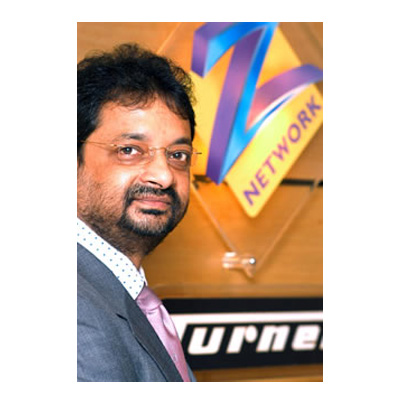
  • ‘In some areas, we have done better than One Alliance, while in some areas we have done as well as Star. But no denying that at a national level Star bouquet is way ahead of others’ : Arun Poddar – Zee-Turner CEO

    ‘In some areas, we have done better than One Alliance, while in some areas we have done as well as Star. But no denying that at a national level Star bouquet is way ahead of others’ : Arun Poddar – Zee-Turner CEO

    Arun Poddar is an industry veteran with an enriched experience and excellent track record of over 23 years in sales and distribution. He brings with him vast experience in media and broadcasting industry and proven ability in the FMCG sector. A business management graduate, Poddar started his career with Maxwell Industry. During his tenure of seven years with Maxwell, he successfully established a robust distribution network in the eastern region of the country.
    One of the many important tasks that Poddar undertook during a stint at ESPN was seamless transition of ESPN from Modi Entertainment Network, which used to be responsible for ESPN’s distribution. After working with ESPN Star Sports for seven years, Poddar joined Ten Sports as vice-president, distribution and marketing. Utilizing his expertise in sales and distribution, garnered over 21 years, he successfully structured and developed an in-house distribution team. At Ten Sports, he also established a working and monitoring format to create a direct relation between company and trade.
    After spending two years at Ten Sports, Poddar joined Zee Turner as its chief executive. A person who loves to read, paint and listen to music, Poddar in this interview with
    Indiantelevision.com Anjan Mitra holds forth on various aspects of the broadcast industry.

    Excerpts:

    What is your overview of the present scenario of the broadcast industry?
    If you really see the broadcast industry in the last 10 years, then it has evolved a lot from being totally fragmented to a situation where big corporate bodies have come in and are trying to evolve a corporate structure. The distribution segment too has seen this happening with big MSOs coming in and trying to bring a semblance of order in the business.

    At one point when big corporate entities started coming into the industry’s various segments it was felt that the industry as a whole would shape up faster having well defined corporate identities and professionally managed businesses as in other sectors. Unfortunately, that did not happen.

    From a broadcaster’s point of view under-declaration of the subscriber base had always been an issue, which slowly became an accepted norm. The whole flip-flop on CAS since 2003 has added to the confusion in the market. However, CAS in its second inning now seems to be more of a reality than just talking about bringing in new technologies.

    With the arrival of DTH and CAS, the choice of a consumer gets widened. It gives broadcasters a competitive edge as good content and a strong channel would be a winner. From cable operators’ point of view, new technologies not only bring in transparency in the whole system, but also some orderliness.

    Don’t you think that intra-industry differences and constant appealing to the umpire (the government or the regulator) has impeded industry’s growth?
    Fundamentally, everybody had their own agenda. There has always this issue of declaration or under-declaration between the cable fraternity and broadcasters. Most industry disputes emerged from this basic issue of want of more declaration of the subscriber base or a resistance to it.

    Now this basic issue gave rise to subsidiary areas of dispute. I’d say that want of more subscriber base, price hike and introduction of new channels on limited bandwidth are at the core of ills afflicting the industry. These always created an environment that was not very conducive for business on either side.

    The regulator’s efforts to address industry issues cannot be negated. At the end of the day, any industry difference would affect the subscriber. It’s always beneficial to have a neutral agency to oversee an industry as it helps the industry too to go to such a body and bounce off ideas.
    Over the last 18 months or so every issue, major or otherwise, seems to be going to disputes tribunal, which results in loss of time and inconvenience to subscribers. What do you have to say about this trend?
    This was bound to happen. When (industry) grievances are kept captive for long one glimmer of hope in a tribunal makes stakeholders run to it. Had there been a regulator or a disputes tribunal from the start or even earlier, the rush of cases in TDSAT would not have been there. It’s like giving vent to accumulated fury.

    As part of the broadcast industry, are you, unlike some others, in favour of a regulator?
    I am definitely in favour of a regulatory body.

    Even if the regulatory body may end up over-regulating the industry?
    A regulation is a regulation. At least in India you have the freedom to stand up and ask the reasons for a particular regulation and what led to its formulation. Ideally, a regulatory body should take care of the interest of all stakeholders, including consumers. It’s foolish to think that broadcasters should grow and the MSOs shouldn’t. If a particular segment is not growing, then the whole industry suffers.

    It’s easy to put the blame for all industry ills on one particular segment, but that’s not the case and a regulator should see it turns out to be a win-win situation for all.

    What do you think of the revenue share formula that the Telecom Regulatory Authority of India (Trai) has mandated?
    At this point of time, I feel there is scope to better it (from a broadcaster’s point of view). Also, at this juncture we could put across our views to the regulatory body, which would be done in all probability.

    If you ask me, what should have been the broadcasters’ share of revenue accruing from pay channels, I’d say 50 per cent, instead of 45 per cent. The remaining could have been divided in the ratio of 20:30 between the MSOs and local cable operators.

    I am giving the LCOs more share as they are the retailers, while MSOs are whole sellers. In marketing practices, retailers always have the bigger margin.

    Why do you think broadcasters’ share of the revenue gravy should be more?
    Simply because broadcasters are making investments in programming. If cable TV subscribers and viewers in general want high quality programming, then broadcasters need to invest in such shows. Quality production can only come through higher investments and costs cannot be limited or capped.

    How would broadcasters bring quality stuff if their margins are clipped? Every business runs on the formula that the return on investment is balanced. Low investments could also mean low quality production values. Would Indian viewers settle for shoddy programmes and production values?

    What’s your opinion on Trai’s move to legitimize carriage fee charged by MSOs, a reality that was never discussed openly or accepted?
    I don’t think carriage or a fee paid for carriage on cable networks’ prime band would be an issue in a digital era towards which everybody is working. A digital system will take care of not only quality of broadcasting, but also the shortage of space that’s plaguing cable networks.

    Do you feel that ratings of various TV channels will get affected during initial phase of CAS, scheduled to be rolled out from 1 January 2007?
    Any change will have its rub-off effect on all stakeholders, including customers. A transition phase always throws up some doubts, which would get ironed out over a period of time.

    'Ideally, a regulator should take care of the interest of all stakeholders.
    It’s foolish to think that b'casters should grow & MSOs shouldn’t'

    Is there a chance of some pay TV channels going free in CAS areas to safeguard their reach, which is important vis-?-vis advertising revenue?
    I really don’t think so. If the content is powerful, consumers will pay for a channel. It can happen that broadcasters introduce new free to air channels. I don’t foresee a scenario where existing pay channels turn free to air.

    Do you foresee a scenario where a consumer picks and chooses channels in a CAS regime depending on events for a short period of time?
    It is a possibility and will revolve around marketing initiatives. For example, a pay channel can be made available to a consumer for a year at X price. Now if that consumer wants the channel for just six months, then the cost would X plus a certain percentage. Shorter the period, higher would be the premium.

    This trend could be a big concern for sports broadcasters as actual pay-per-view comes into vogue. These are advanced technologies, which will follow when digitalization, DTH and CAS set in properly.

    Will CAS turn out to be beneficial from a distribution point of view?
    Certainly. Apart from bringing about some transparency in the whole system, CAS would make the environment competitive, while giving more choice to a consumer. Distribution will have a bigger role to play in such a scenario.

    With the introduction of CAS and expansion of DTH services, the focus of distribution will be more on consumer rather than just a broadcaster’s client, which is the MSO. As a distribution person, I’ll also have to keep in mind the interest of my client’s clients (consumers). Therefore, there would be a lot of play while servicing clients.

    To facilitate a loyal customer base for a cable operator, it will be very important for me to also go and directly talk to the consumer about a broadcasting product.

    What will Zee Turner do to dial the customer directly?
    The primary objective should be the content and then creating awareness about it. As a company we would try to create a communication channel with the consumer/viewer to keep him in the loop about my product in its entirety.

    The approach would have to be 360 degree in the sense that we get feedback from consumers, hitherto not permitted by cable operators to approach directly, and then create products or upgrade existing channels depending on the feedback.

    In a small way, Zee Turner has started hooking up with the consumer. But it’ll take more time for this exercise to bloom fully as some doubts still persist. Those uncertainties have to be removed before a full-fledged consumer relationship exercise can be rolled out.

    What are the future plans for Zee Turner?
    With consumer becoming the king as options for him open up, thanks to new technologies, I need to be more close to him. Most company activities will be revolving around this theme of getting up close to the consumer, apart from satisfying my direct customers, the MSOs.

    For this to happen, activities like events have to be organized either via TV channels or on the ground. As a bouquet, Zee Turner has the largest number of channels (32) across most possible genres of programming. The task before us is to pick up our positives and pass it on to the consumer in a way that is understood by him.

    'In some areas, we have done better than One Alliance, while in some areas we have done as well as Star. But no denying that at a national level Star bouquet is way ahead of others'
    Do you think the regulator is doing a fair job on the pricing front? (The question was asked before Trai mandated all pay channels will be priced at Rs 5.)
    I think the regulator is trying to do a fair job.

    Has a deal with Tata Sky been concluded?
    We are talking to each other. We had suggested a price for Zee Turner bouquet of channels based on the formula mandated by a disputes tribunal in case of Dish TV and Star India. Tata Sky is not comfortable with the suggested price.

    What are the issues bogging down an agreement to be concluded?
    Tata Sky wants to be selective in terms of channels (from the Zee Turner bouquet), which we are not agreeable to; especially when such a criteria has not been adopted for other bouquets.

    Has Tata Sky given any reason for being selective with Zee Turner channels?
    The reason is quite obvious: lack of transponder space to accommodate all channels. But we also feel this reason is not true. We are keen on giving our channels to Tata Sky, but one cannot have different set of conditions for different broadcasters. Moreover, we are guided by an order from TDSAT.

    What are the revenue targets for Zee Turner this financial year?
    Zee Turner with a subscriber base of 4 million for bouquet 1 and 3.7 million for bouquet 2 is targeting a turnover of Rs 4000 million by the end of this financial year in March 2007. This should translate into 30-35 per cent growth in revenue compared to last year. I am not taking into account bouquet 3 as the subscriber base and revenue is negligible at this point of time.

    I can say with pride that we have been improving our performance. In some areas, we have done better than One Alliance (Discovery-Sony distribution joint venture), while in some areas we have done as well as Star. But there is no denying that at a national level, the Star bouquet is way ahead of others.

  • Branded ‘Big’, ADAG’s FM venture targets 12 October launch

    Branded ‘Big’, ADAG’s FM venture targets 12 October launch

    MUMBAI: The Anil Dhirubhai Ambani Group (ADAG) is entering the final stages of preparation for its “Big” bang entry into the FM radio field.

    The Ambani brothers are known for doing everything on a big scale and it is certainly no different in this case as younger brother Anil’s ADAG gets set to launch its 92.7 FM stations across India. It is only fitting, therefore, that ADAG is launching ahead of the Diwali festive season under the brand name Big Radio.

    According to sources, the group is targeting 12 October for the launch of its radio station in cities where the common infrastructure network exists. This includes Delhi, Mumbai, Kolkata, Jaipur and Surat.

    Big Radio is expected to be on air in Mumbai first, with a fast-paced rollout in the other cities where the common infrastructure exists. The teams for the radio stations are already in place with radio jockeys and other engineers hired and ready.

    Big Radio will be facing a phalanx of established players when it launches services in Mumbai. The group will have to compete with players such as the Times Group’s Radio Mirchi, Radio City, Red FM and Radio One (Formerly was known as Go FM), who have been in this game for over five years.

    One advantage Big Radio will be looking to leverage upon is the massive mobile phone user subscriber base that sister concern and telecom major Reliance Infocomm provides. Big Radio will be introducing a lot of interactive features with the specific aim of building a community of cell users hooked in to the station, industry sources have told Indiantelevision.com.

    Another “Big” advantage ADAG is banking on is that it has the ultimate brand icon in the “Big B” Amitabh Bachchan endorsing the station. If ever there was a case of the brand and the ambassador fitting to a T, it is this.

    ADAG originally secured its FM licence through Adlabs Films Ltd (AFL) in which it has a controlling stake. But post the demerger of the radio business, the company has transferred its FM operating units to Reliance Unicom Ltd.

    Big Radio will manage 45 FM stations. The frequencies were bought out for approximately Rs 1.60 billion. Initially, the company had bagged the licence for 57 frequencies but had to surrender the licence for 13 cities as per the norms, which do not allow one single company to hold more than 15 per cent of the total allotted frequencies.

  • PTC files indecency complaint over Emmys

    PTC files indecency complaint over Emmys

    MUMBAI: The Parents Television Council (PTC) has filed an indecency complaint with US media regulatory watchdog Federal Communications Commission (FCC) over the NBC broadcast of the Emmy Awards on Sunday night.

    The complaint states that actresses, Helen Mirren and Calista Flockhart used vulgar and obscene language on the live broadcast.
    The PTC on behalf of its over one million members acros the US has asked the FCC to levy a notice of Apparent Liability against each NBC affiliate that aired the unedited programme.

    During the broadcast the phrase “tits over ass” was spoken by both Mirren and Flockhart and was aired unedited during the broadcast.

    PTC president L. Brent Bozell says, “It is utterly irresponsible and atrocious for NBC to air this vulgar language during the safe harbour time when millions of children were in the viewing audience. People are getting sick and tired of networks allowing unedited profanity on their award shows in front of millions of youngsters, and with NBC this practice is becoming habitual.
    Didn’t NBC learn anything from airing the live broadcast of the Golden Globes during which Bono dropped the F-word? NBC should have aired the Emmys on a tape delay, to bleep out the obscenities. A few seconds’ delay would not have meant a thing.

    “We are calling on our members in the Central and Mountain time zones to file an indecency complaint with the FCC about this broadcast. We certainly hope that NBC will feel the pain of a hefty indecency fine for breaking the indecency law. It seems the only way to restore a sense of responsibility to the broadcast networks for polluting the public airwaves is to make sure the multi-billion dollar companies are financially penalised.”

  • Media e2e ropes in Rajit Desai as VP-broadcast business applications

    Media e2e ropes in Rajit Desai as VP-broadcast business applications

    MUMBAI: Times Now’s Rajit Desai has joined Media e2e as vice president-broadcast business applications. He will oversee the business applications for media companies, customisation and market feedback.

    In a post that has been recently introduced to the organisation, Desai will be based in Mumbai and will come under the stewardship of Media e2e chief evangelist Atul Phadnis.

    “We are pleased to welcome Rajit into the Indian chapter of Media e2e. He brings in a varied and valuable expertise to spearhead critical projects within the company. It is indeed very heartening to see more and more senior professionals vindicating the vision that originally conceived Media e2e,” said a joint statement issued by Atul Phadnis and Julie Petersen, senior partners at Media e2e.

    Desai’s prior experience in media industry includes heading consumer marketing and research functions for Times Now. While he started his career with HTA-Media (now Mindshare), and then moved to Sony Entertainment Television contributing to the team that won the Emvies twice for media marketer of the year. During the same period, he also helped clinch Promax World Gold for the Shiksha campaign.

  • GoTV announces IPTV coverage of Primetime Emmy Awards

    GoTV announces IPTV coverage of Primetime Emmy Awards

    MUMBAI: Underscoring the growing importance of mobile entertainment in the world of event coverage, the US-based IPTV player GoTV Networks has announced its made-for-mobile news coverage of the 2006 Primetime Emmy awards and related events.

    GoTV Networks’ coverage will be created exclusively for mobile viewers’ consumption on the GoTV Networks suite of channels, and it will feature full access to a variety of glamorous events that culminate in television’s biggest night, state an official release.

    GoTV Networks entertainment host Athenia Veliz-Dunn will chat with television’s biggest stars as they make their way up the red carpet into the Shrine Auditorium on Sunday, 27 August. Additional coverage will include in-person reports from such A-list events and destinations as the Governor’s Ball Press Reception, The Hearts on Fire Emmy Diamond Indulgence Lounge, the pre-Emmy Golf Tournament at Trump National Golf Club, and the Emmy Performers’ Reception.

    A team of GoTV Networks hosts including Possum, Yana Kay, Stephanie Stanton, and Courtney Friel will contribute reports from each of these Emmy Week events, exclusively for GoTV Networks subscribers, the release adds.

    “GoTV Networks programming is always fresh and hip,” says GoTV Studios executive vice president Daniel Tibbets. “Our Primetime Emmy coverage will be all that and more. Fans can expect all of the glamour and excitement of TV’s biggest night to be delivered with our trademark attitude and style.”

    GoTV Networks’ Emmy Awards coverage is available throughout the week and will be featured on GoTV and Diva, two of GoTV Networks’ on-demand premium subscription channels.

  • Karnataka CM’s wife promoted TV channel targets 1 November launch

    Karnataka CM’s wife promoted TV channel targets 1 November launch

    MUMBAI: Kannada Kasturi, the television channel promoted by the Bangalore-based Kasturi Media Pvt Ltd (KMPL), will be unveiled on 1 November. KMPL is promoted by Anitha Kumaraswamy, the wife of Karnataka chief minister D Kumaraswamy.

    Originally planned as a news channel, Kasturi will now be an entertainment channel with news content. “We will be launching the channel on 1 November. We have acquired a good chunk of movies recently and this is the reason for the change in our plans. The company also has a subsidiary which is into film production. This will help us supply movies to the channel,” says KMPL director M V Prasad Babu.

    KMPL has got the uplinking licence from the Information & Broadcasting ministry, Babu adds. The channel will be uplinked from a commercial teleport facility in the country.

    Reportedly, D Kumaraswamy started his career as a film distributor for Kannada movies. He has Kannada blockbusters like Suryavamsha and Chandra Chakori to his credit.

    The entry of Kannada Kasturi will see the politically driven Tamil channels getting a Karnataka counterpart. The Rs 2 billion Kannada Television market is dominated by the Sun Network channels including Udaya TV.

    This year, Zee made its entry in the market with its entertainment channel Zee Kannada. The Telugu television network TV9 will be launching its news channel TV9 Kannada in a couple of months.