Category: Cable TV

  • Will Mukesh Ambani’s Reliance Jio do what Bill Gates’ Windows did?

    Will Mukesh Ambani’s Reliance Jio do what Bill Gates’ Windows did?

    MUMBAI: Computer in its early days was only used by government organisations for various defence purposes. The size of the device kept getting smaller as generations passed by and now, deemed as a necessity, it is omnipresent in almost every house. But what opened the floodgates for computer in every house almost twenty years ago in 1995 was Bill Gates’ Windows 95.

    Cut to 2015 and the present scenario in India. The current fad, which might just be here to stay, are Over The Top (OTT) players. Media and entertainment content companies are bullish on the OTT scenario and multiple apps have mushroomed left, right and centre over the last few months. However, they haven’t yet managed to augment a revolution of sorts by their services, thanks to the poor infrastructure support in the country. The broadband or mobile internet bandwidth is, on the one hand, too slow to offer a good viewing experience and on the other, it is also very expensive.

    The country currently has more than 350 million internet users and the number is expected to reach 640 million by 2019, of which 528 millions are estimated to be wireless consumers as per a report by KPMG.

    The growth rate of smartphones and tablets is also very encouraging for the video on demand (VOD) ecosystem. The number of tablets in India is is expected to be more than 18 million by 2019, according to the US-based firm’s Visual Networking Index (VNI) global mobile data traffic forecast for 2014 to 2019.

    The report said that in India, the number of smartphones grew 54 per cent during 2014, reaching 140 million in number and the number of smartphones will grow 4.7-fold between 2014 and 2019, reaching 651 million in number.

     What Colors CEO Raj Nayak has to say is by far the most apt depiction of the Indian OTT ecosystem in the current scenario. “The only reason why digital has not yet taken off in  India is because of the bandwidth issue. If any service can resolve that issue, it will be a complete game changer. There will be a leapfrogging of content consumption in mobile devices be it smartphones or tablets,” he opines.


    And addressing that issue soon will be Mukesh Ambani’s ambitious project Reliance Jio.

    Reliance Jio is Ambani’s visionary mission of spreading internet to every nook and corner of the country. Industry watchers say that the organisation in entering the market with a ginormous corpus fund of approximately Rs 70,000 crore. Under the able leadership of cable industry veteran K Jayaraman as CEO of Reliance Jio, the company has now started to take the aerial route to fast forward proceedings. It is now connecting pole to pole through cable in order to spread deep and fast.

    Jio is also teaming up with multiple last mile owners (LMOs) to expedite execution. As was reported earlier by Indiantelevision.com, Reliance is planning to carry out Jio’s soft launch on the occasion of Dhirubhai Ambani’s birth anniversary on 28 December this year. 

    Speculations are also rife that Reliance Jio is planning to unleash its services with affordable pricing, which will no doubt disrupt the market. “The focus with Jio is not money but the vision that we have. The pricing and speed will surprise many,” said a source close to the development.

    The question on every one’s lips is: Will Reliance Jio resolve bandwidth issues in the country? Moreover, will Mukesh Ambani’s Jio do what Bill Gates’ Windows did?

    Indiantelevision.com spoke to multiple industry stakeholders to ascertain their expectations. Here’s what they had to say: 

    Spuul Global CEO Subin Subaiah says, “Give a consumer higher speed at lower costs, and it gives him a huge incentive to consume more content – especially video – online. We  are watching Reliance Jio’s launch with keen interest, which should lead to other service providers following suit – creating a market where data costs and speeds are not an  impediment to consumption.”


    Reliance Industries’ latest AGM grabbed Eros Now COO Karan Bedi’s attention. “Mr Ambani in their AGM announced that they are rolling out Reliance Jio in December and that’s  a very positive move. The statement made Airtel roll out their 4G services immediately and the service is good. Other telcos are also planning to unleash their services soon. So  overall it’s certainly a move towards the positive side,” he says.  


    ”Bandwidth has been an issue for OTT services and we are looking forward to the new launch of Reliance Jio. Hope it turns out to be a consumer friendly proposition. Any improved internet service will certainly help the ecosystem,” asserts Zee Digital Convergence Limited CEO and India web portal CEO Debashish Ghosh.


    #Fame CEO Saket Saurabh adds, “We are waiting for the launch. Let’s see how it goes. If the internet infrastructure develops, it will be good for the entire ecosystem.”  


     “From a consumer perspective, 4G would more be a network bandwidth problem solver and hence would immensely expand the experience of browsing and interacting with  mobile internet products. And from a digital and mobile player perspective, I expect 4G to significantly enhance the reach and innovation in the mobile video ecosystem. Today,  Indian online users watch approximately 40 per cent of YouTube videos on their mobile phones even when the experience is not the best and I am really looking forward  to Reliance Jio’s launch. Any new player disrupting the mobile ecosystem adds a new dimension to the environment. So from a consumer perspective, just as Monsoon Dhamaka  was a massive disruption to making mobile phone accessible to all, I expect 4G launch of Reliance to be also a dhamaka for the consumer and the mobile marketing,” opines Madhouse South Asia COO Milind Pathak.


    Ping Network CEO Rajashree Naik adds, “Even a marginal shift in internet speeds will have a significant impact in data consumption – for us in the video space, there is a relevant link between consumption and speeds. For everyone in the internet and content space, if the consumer experience is enhanced because of speeds much of our own    business metrics will change. So whether it is Jio or any other data options that will make it cheaper to consume and remove the buffering hurdle, will certainly be something to look forward to.”  

    Even as the stage is set for Reliance Jio’s disruptive entry into the Indian telecom market, rivals are gearing up to fire their respective salvos. While India is waking up to some interesting times ahead in the telecom space, what each one does to change the ecosystem, only time will tell.
  • Hinduja’s NXT Digital installs Actus broadcast monitoring platform

    Hinduja’s NXT Digital installs Actus broadcast monitoring platform

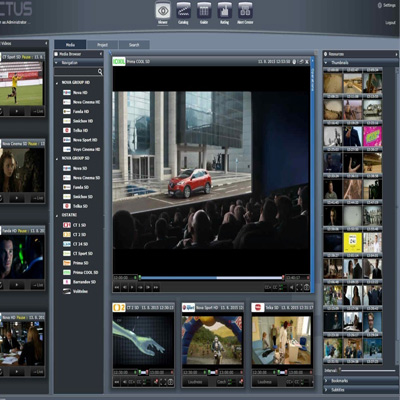
    MUMBAI: Hinduja Group’s headend-in-the-sky (HITS) digital service platform NXT Digital has installed the Actus broadcast monitoring platform.


    The recently launched HITS platform offers over 500 channels to the fast-growing television market in India.


    By implementing the latest version of Actus’s broadcast monitoring platform, NXT is being guaranteed that all IP-based channels are reliably recorded 24×7 and that whenever more channels are added; Actus’s scalable broadcast recording platform will be easily expanded. In order to comply with the current requirements, Actus has deployed Actus View to record and monitor the 350 IP-based channels, Actus Multitrak to support multiple audio tracks, Actus EncoderPro to save hardware resources, Actus Loudness to monitor audio levels, and Actus AlertCenter to provide NXT with real-time alerts for any audio or video issues.


    Grant Investrade MD Tony D’Silva said, “In the dynamic digital video world, we are assured that Actus Digital will not only fulfil our current requirements but also comply with future requirements that the digital world will dictate. Actus has vast experience with installations worldwide and we are confident that the platform will grow as our business expands constantly.”


    Actus was selected for this premier service after a rigorous four-stage RFP evaluation process conducted by Castle Media – Asian broadcast consultancy tasked with end-to-end programme management and delivery of the HITS project.


    “The Actus platform is scalable and modular, which makes the solution cost-effective by allowing GIL to implement only the modules required yet be assured that once additional requirements arise, Actus’s platform will provide us the solution,” added Castle Media executive director Vynsley Fernandes.


    Shaf Broadcast, Systems Integrator, implemented the solution. 


    “We have the knowledge base and experience to deploy Actus Digital’s solutions. The installation, implementation and integration of the Actus platform went fluently and complied with all of our high expectations. The Actus local team worked closely with Shaf engineers to make sure the system will be up and running and meet the high demands and tight time frames. I am assured Actus will provide an excellent platform to NXT Digital also in the future,” said Shaf Broadcast director P.R. Suresh. 


    “One of the challenges, beyond the installation of a large system, was the fastest-possible deployment that was required to meet the time frames of launching the digital rollout of NXT Digital services. In order to be sure that Actus would meet the tight time frames, we sent an Actus-trained local team to the customer’s site to prepare the site ahead of time. With good cooperation with Shaf, we optimized our recorders to take advantage of recent improvements in hardware and of a new version of Actus’s EncoderPro technology and were thus able to offer better performance than initially proposed for the same budget,” said Actus CEO Sima Levy. 

  • NAGRA powers Hinduja’s NXT Digital HITS platform in India

    NAGRA powers Hinduja’s NXT Digital HITS platform in India

    MUMBAI: Switzerland based Kudelski Group’s digital TV division NAGRA has powered the Hinduja Group’s new headend-in-the-sky (HITS) platform – NXT Digital in India.


    NAGRA’s anyCAST, OpenTV solutions and user interface are enabling NXT Digital. This makes it NAGRA’s first HITS platform in India, which is one of the fastest growing markets in pay-TV today, as the country continues the government-mandated digitisation process. According to a recent report by Media Partners Asia, the Indian pay-TV market is expected to grow by 11 per cent annually on average by 2018, with total pay-TV subscribers expected to grow from 65 million in 2013 to 165 million by 2018 and 180 million by 2023.


    NAGRA’s anyCAST content protection and OpenTV middleware solutions are enabling the HITS platform, which will provide backend operations to local and multi-system cable operators in India. NXT Digital offers a variety of packages and services including 500-plus MPEG 4-encrypted services featuring SD and HD channels along with value-added services like PVR and educational content.


    “Our new HITS platform gives regional cable operators access to an infrastructure that helps them deliver high-quality video services to a new generation of viewers. NAGRA has been a key partner in the process, providing the expertise and support expected of a pay-TV leader, as well as solutions that provide the right level of content protection, scale seamlessly and allow for flexible business models that are critical to our operators’ success as they kick off their new services,” said Hinduja Group subsidiary Grant Investrade managing director Tony D’Silva.


    “It is an honor to work with Grant Investrade and be a part of the digital TV transformation in India that is making access to digital TV services a reality for millions of people. This new platform makes it easy for local and regional cable operators to deploy new services without having to worry about the operational complexities that can come with installing their own system. And by leveraging NAGRA’s deployed, market-leading solutions, they are ensuring a high quality user experience that is not only highly secure but offers pay-as-you-grow models adapted to their strategy,” said NAGRA sales SVP Asia-Pacific Jean-Luc Jezouin.


    NAGRA’s anyCAST Security Services Platform, OpenTV middleware and user interface are ready-to-deploy solutions that enable of range of entry-level and advanced DTV services. They allow operators to leverage scalable, pay-as-you-grow business models with multiple set-top boxes and chipsets, and include an intuitive user interface adapted to India’s diverse population and languages.

  • Reliance Jio appoints Amit Shah as senior vice president

    Reliance Jio appoints Amit Shah as senior vice president

    MUMBAI: Reliance Jio Media has appointed Amit Shah as the senior vice president – content carriage and Value added services (VAS) of the company.  


    Shah will report to Reliance Jio CEO K Jayaraman and will be looking after the content and carriage aspect of the business. 


    A source in the company informs Indiantelevision.com, “A series of veterans from the cable fraternity will be joining Jio as the launch date comes closer.”
     

    Earlier, Shah worked for two years as head content carriage and VAS for Videocon d2h. He was also associated with Hathway Cable & Datacom as GM accounts content and strategy.

  • Comcast acquires majority stake in Universal Studios Japan for $1.5 billion

    Comcast acquires majority stake in Universal Studios Japan for $1.5 billion

    MUMBAI: Comcast NBC Universal has agreed to purchase 51 per cent ownership of Universal Studios Japan in a recapitalisation transaction, partnering with the current owners including Goldman Sachs, USJ’s CEO Glenn Gumpel, Asian private-equity firm MBK Partners, and U.S. hedge fund Owl Creek Asset Management. 


    Comcast NBC Universal’s purchase price for the majority ownership of the theme park destination is $1.5 billion (?183 billion).


    Located in Osaka and featuring classic Universal attractions as well as attractions and shows specifically designed for the Japanese market, USJ opened in 2001 and has experienced continued growth in attendance and revenue.


    “We are excited to expand our global footprint with this wonderful theme park in Osaka and are excited by the opportunities that lie ahead in Japan and all of Asia. This investment represents a huge opportunity and commitment to creating value for our shareholders and continuing to grow internationally,” said Comcast chairman and CEO Brian L. Roberts.


    Acquiring majority ownership of Universal Studios Japan continues Comcast NBC Universal’s ongoing investment strategy for its US parks in Orlando and Hollywood.


    “We want to expand our theme park business around the world and this investment in Universal Studios Japan fits perfectly with that strategy. Our theme parks in the U.S. have performed exceptionally well and we look forward to working with our partners to achieve that success in Japan as we plan to introduce significant attractions at USJ over the next five years,” added NBC Universal CEO Steve Burke.

  • Hathway – MSM Media Distribution resolve differences, end dispute

    Hathway – MSM Media Distribution resolve differences, end dispute

    MUMBAI: Multi system operator (MSO) Hathway Cable & Datacom and Multi Screen Media’s distribution arm MSM Media Distribution (MSMMD) have finally put an end to their very public dispute.


    Hathway subscribers in phase I and II were greeted with a scrolling message on their screens, which informed them about restoration of MSM channels.


    Commenting on the development, a senior Hathway spokesperson told Indiantelevision.com, “We have mutually agreed to renew our deal with MSM in DAS and analogue markets post a meeting yesterday. The MSM bouquet channels have been reinstated in our packages.”


    It all started on 14 August when Telecom Disputes Settlement and Appellate Tribunal (TDSAT) had directed Hathway to pay Rs 14.56 crore towards subscription dues to MSMMD for DAS Phase I till the expiry of the agreement i.e. 31 October, 2015 in three instalments.


    Hathway in reply to that said that it will not renew the contract with MSMMD for DAS phase II. It may be recalled that this contract between the two expired on 31 March, 2015 and was not renewed by Hathway then.


    Commenting on the entire development a senior media observer said, “It’s good that both Hathway and MSM Media have kept the interests of cable TV subscribers in mind and ironed out their differences. A lesson to be learnt from their dispute and the resolution thereafter is that MSOs, DTH players and broadcast networks need to refrain from washing their dirty linen in public. Commercial disputes between two parties need to be resolved behind closed doors and not in the public glare of the media. Using the media for one’s own ends only sends out a bad signal that the industry has yet to mature to government, the regulator and potential investors in India’s video and broadband distribution sector.”


    Speaking to this website, Maharashtra Cable Operators Federation (MCOF) president Arvind Prabhu said, “It’s a great move firstly for consumers and secondly for the ecosystem. We are glad that they sorted it out amongst themselves. Having said so, we are now waiting to see how Sony or Hathway compensate the mental and commercial losses of last mile operators (LMOs). Huge number of cable subscribers have shifted to DTH during the dispute. We have given a representation to Hathway from the Aurangabad association but if they don’t do anything, we will go to TDSAT. The ecosystem needs mutual understandings, stakeholders should not let the subscribers suffer because of their individual benefits.”


    At the time of filing this report, MSMMD spokesperson was unavailable for comment.


    For the time being Hathway subscribers who missed out Messi and Ronaldo dribbling their way through to the nets can enjoy the highlights and wait for the weekend to catch some live LA Liga and Italian Serie A action on Sony Six and Kix for the first time this season. The sports expertise of MSM acquired the broadcasting rights of the two flagship football tournaments this year but before the commencement of the season the two stakeholders landed into dispute which resulted in fans missing the matches.

  • Q2-2015: US Cable industry: Internet, biz services continue as growth drivers; video continues to lose subscribers

    Q2-2015: US Cable industry: Internet, biz services continue as growth drivers; video continues to lose subscribers

    BENGALURU: The cable industry in the US continues to bleed video subscribers, albeit slower than earlier, while internet and business services continue to be growth drivers in terms of subscription numbers and revenue, if one were to go by the results reported by five major players in the US for the quarter ended 30 June, 2015 (Q2-2015). Overall, YoY and QoQ subscription numbers or customer relationships of the bigger three of the five players in this report have increased.

    The five players in this report are Comcast Inc., Cable Communications segment, the largest player by far among the sample players in this report; Time Warner Cable, Inc., (TWC), a little less than half the size of Comcast’s Cable communications segment in terms of revenue; Charter Communications with revenues that are less than half again as TWC’s. Cablevision, the fourth player in the sample had a little more than two-thirds of Charter’s revenues in Q2-2015, while the smallest, Suddenlink whose major operating areas includeArizona, Arkansas, Louisiana, North Carolina, Oklahoma, Texas, West Virginia, had revenue that was a little more than a third of Cablevision’s revenue in Q2-2015.  

    Despite the continued slide in video customer relationship, the combined sum of video subscribers in Q2-2015 of the five entities is about 4.09 crore or almost two thirds (62 per cent) of the 6.6 crore video subscribers through wire in the US as of 2013. The five players in this report are generally considered amongst the biggest players in the US cable television industry. All have three major revenue streams – Video, Internet and Voice (VIVE).

    Note: (a) 100,00,000 = 100 lakh = 10 million = 1 crore

    (b) While denominations for $have been mentioned in millions or billions where applicable, denominations for numbers have been mentioned lakhs and crores.

    (c)Residential customer relationship numbers have been used in this report wherever the breakup has been mentioned in SEC filings by the concerned entity.

    (d) The results and the conclusions in this report may not necessarily reflect the true trends and nature of the cablecommunications industry in US.

    It is noteworthy that an even smaller company, Mediacom Broadband alone, without Mediacom LLC numbers, had revenue of about $246 million (Rs 1626.53 crore, ($1 = Rs 63.5363 as on 30 June, 2015) in Q2-2015, many times more than the revenue generated by the largest cable company in India. Mediacom Broadband’s revenue was less than half $608.02 million revenue reported by Suddenlink in Q2-2015.

    Performance in Q2-2015

    In general, six streams add to most of the five entities’ revenue – three products -Video, high speed Internet, Voice; Business Services (BS); Advertising; and Other. Collectively, the first three have been given the acronym VIVE by the author. Generally VIVE numbers, be they subscription or revenue indicate residential subscribers and revenue from these subscribers in this report. Some of the companies don’t indicate the breakup of VIVE revenue from business services, and hence these figures could be included in the overall VIVE revenue .This reports examines VIVE and touches briefly upon business services of some of the players in this report later on.

    In general, Internet has been driving growth, both in terms of revenue and subscription numbers. Contribution by business services is growing and is in the sub or low double digits in terms of percentage of overall revenue.

    Subscription numbers in Q2-2015

    Figure A below displays the subscription numbers of the five players considered in this report. Individual as well as combined Video subscribers or Video customer relationships have dropped year-on-year (YoY) and quarter-on-quarter (QoQ) during Q2-2015. Internet subscription numbers of all the five players in this report have increased, while Voice subscription numbers of four of the five companies have gone up. Cablevision has reported a small dip in Voice subscription numbers in Q2-2015.

    YoY and QoQ combined Total Customer Relationships of all the five players have gone up in Q2-2015 by 2.03 per cent and 0.24 per cent respectively. In Q2-2015, the combined Total Customer Relationships of all the five companies was 525.64 lakh as compared to 515.19 lakh in Q2-2014 and 524.41 lakh in Q1-2015. Though QoQ customer relationships of all the five companies have gone up, in the case of Cablevision and Suddenlink, customer relationships were actually lower in Q2-2015. Cablevision saw a decline 1.52 per cent in Q2-2015 to 31.17 lakh as compared to the 31.65 lakh in Q2-2014, while Suddenlink saw a QoQ decline of 0.86 per cent to 14.39 lakh in Q2-2015 from 14.52 lakh.

    Video

    As mentioned above, the US Cable communications industry continues to lose video customers. YoY, the combined Total Customer Relationships declined 1.53 per cent to 409.40 lakh in Q2-2015 as compared to the 415.74 lakh. QoQ the decline was 0.47 per cent from 411.32 lakh. Suddenlink saw the highest YoY drop among the five players in this report in Video subscribers at 5.66 per cent (lost 66200 subscribers) to 11.03 lakh in the current quarter as compared to 11.69 lakh in Q2-2014. Suddenlink’s YoY decline in Video customers was also the steepest among the five companies at 2.6 per cent (lost 29400 subscribers) from 11.32 lakh in Q1-2015. 

    In absolute numbers, TWC had the highest YoY decline of video subscribers among the five players in the current quarter of 2.27 lakh to 107.74 lakh from 110.11 lakh. QoQ, Comcast’s Cable communications has seen the largest fall in absolute numbers among the 5 companies, a fall of 69,000 (0.31 per cent) Video subscribers in Q2-2015 to 223.06 lakh from 223.75 lakh in the immediate trailing quarter.

    Internet

    Overall, the five entities reported a 6.07 per cent YoY increase in Internet subscribers in Q2-2015 at a combined total of 436.33 lakh from 411.36 lakh in the corresponding year ago quarter and a one per cent increase from 432.01 lakh in the immediate trailing quarter. The five entities gained 24.965 lakh subscribers YoY and 4.322 lakh subscribers QoQ in Q2-2015. As is obvious, the number of internet subscribers exceeds the number of video subscribers.

    All the five companies in this report witnessed a YoY increase in Internet subscribers. Charter had highest growth in percentage terms at 8.6 per cent ( gained 3.93 lakh subscribers) increase in Internet subscription in Q2-2015 with the subscriber base reaching 49.61 lakh from 45.68 lakh in the corresponding year ago quarter and 1.43 per cent higher (gained 70000 subscribers) QoQ from 48.91 lakh. 

    QoQ, both TWC (gained 7.47 lakh subscribers) and Charter reported 1.43 per cent growth in Q2-2015, while Comcast and Cablevsion reported 0.80 (gained 1.79 lakh subscribers) and 0.51 growth (gained 14000 subscribers) in Internet subscribers. Suddenlink reported a slight QoQ decline of 0.24 per cent (lost 2800 subscribers) to 11.81 lakh in the current quarter as compared to the 11.84 lakh in the immediate trailing quarter.

    In absolute numbers, Comcast Cable Communications reported the highest YoY and QoQ Internet subscription growth among the five companies in Q2-2015 at 12.77 lakh (six per cent) and 1.79 lakh (0.80 per cent) respectively.

    Voice

    The five entities reported a 6.19 per cent YoY growth and a 1.48 per cent QoQ growth in combined Total Voice Subscriber base of 224.55 lakh in Q2-2015. This translates to a YoY increase of 13.092 lakh and QoQ increase of 3.275 lakh subscribers in absolute numbers.

    Except for Cablevision, the other four players reported YoY and QoQ increase in subscription numbers. Cablevison reported a YoY decline of 2.86 per cent (65000) and a QoQ decline of 0.32 per cent (7000) in Voice Subscribers in Q2-2015 to 22.08 lakh from 22.73 lakh in Q2-2014 and from 22.15 lakh in Q1-2015 respectively.

    The highest YoY growth in Voice subscribers among the five players in this report in Q2-2015 in percentage as well as absolute numbers was 17.71 per cent and 8.81 lakh by TWC, which saw its numbers grow to 58.56 lakh from 47.75 crore in Q2-2014. TWC also reported the highest QoQ growth in percentage and absolute terms in Voice subscribers among the five players by 4.5 per cent and 2.52 lakh to 58.56 lakh in Q2-2015.

    Single, double and triple play numbers

    Four of the five players have indicated the breakup of their single, double and triple play customer relationships.

    Generally, all have been losing single play and double play subscribers either because of conversion from single to double or triple play, or from double to triple play, or because of subscriber churn, while Suddnelink has also reported numbers than indicate growth in its non-video customer relationships.

    Revenue numbers in Q2-2015

    Please refer to Fig A1 below. Combined Total revenue of all the five players in this report increased YoY 2.46 per cent ($517 million) to $21566 million from $21049 million in Q2-2014, but declined 0.2 per cent ($43 million) from $21609 million in Q1-2015. Charter saw the largest YoY increase of total revenue in percentage terms among the five at 7.57 per cent ($171 million) in Q2-2014. In absolute numbers, Comcast Cable Communications segment reported the highest YoY growth of total revenue of $700 million (6.35 per cent) and QoQ growth of $399 million (2.62 per cent) in the current quarter. QoQ, Suddenlink saw the highest growth in Total revenue among the 5 players in percentage terms of 3.36 per cent ($28 million) in Q2-2015.

    Combined YoY and QoQ VIVE revenues of all the five entities increased 5.15 per cent ($890 million) and 1.43 per cent ($257 million) respectively in Q2-2015$ 18170 million. Here also, Charter reported the highest YoY growth in percentage terms of VIVE revenue of 7.07 per cent ($134 million) in Q2-2015. QoQ, Suddenlink reported the highest growth among the five players in percentage terms at 3.49 per cent ($31 million) in the current quarter.

    As far as absolute US dollars are concerned, Comcast’s Cable Communications segment reported the highest YoY and QoQ growth at $455 million (5.07 per cent) and $154 million (1.66 per cent) respectively in Q2-2015.

    Among the three products, Video was the biggest contributor to revenue of all the five companies in this report. Video’s contribution to VIVE revenue was in the range of 50 to 60 per cent. Internet contributed between 25 and 35 per cent and Voice between 6 to 17 per cent to VIVE revenue.

    YoY, combined Total Video and combined Total Internet revenue increased by 2.04 per cent and 13.22 per cent respectively, while Voice revenue declined by 1.89 per cent. QoQ, Video, Internet and Voice revenue in Q2-2015 increased by 1.08 per cent, 2.41 per cent and 0.15 per cent respectively.

    Video

    Despite a drop in Video Customer Relationships, combined Total Video revenue YoY increased by $204 million and increased QoQ by $109 million to $10198 million in Q2-2015. The highest increase in Video revenue among the five players was by Comcast at 3.66 per cent and $192 million in Q2-2015, while Suddenlink saw its Video Revenue drop by 0.68 per cent and $2 million in Q2-2015.

    Internet

    Combined Internet revenue of the five players in this report increased by 13.22 per cent and $720 million YoY and increased QoQ by 2.41 per cent and $145 million to $$6171.4 million in Q2-2015.

    The highest YoY as well as QoQ growth in percentage terms of Internet revenue among the five players was by Suddenlnk with 17.07 per cent ($31 million) and 4.40 per cent ($9 million) respectively in the current quarter. In absolute US dollar terms, Comcast Cableshowed the highest YoY and QoQ growth at $282 million (10 per cent) and $57 million (1.87 per cent) respectively.

    Voice

    Though Voice subscription numbers have been growing, the combined Voice revenue of the 5 players declined YoY by 1.89 per cent ($35 million) to $1800 million. The combined voice revenue of the players increased marginally QoQ by 0.15 per cent ($3 million) in the current quarter. 

    The big three players – Comcast Cable Communications, TWC and Charter saw their YoY Voice revenue decline by 2.06 per cent ($19 million), 2.45 per cent ($12 million) and 6.9 per cent ($10 million) respectively. Cablevision and Suddenlink saw their YoY Voice revenue increase by 2.2 per cent ($5 million) and 2.53 per cent ($1 million) respectively.

    Comcast Cable Communications and Suddenlink saw their QoQ Voice revenues drop 0.33 per cent ($3 million) and 0.48 per cent ($0.25 million) in the current quarter, while TWC and Charter saw their YoY Voice revenues increase by 1.06 per cent ($5 million) and 0.75 per cent (one million) respectively . Cablevision’s Voice revenue remained flat in Q1-2015 and Q2-2015 at $232 million.

    Comcast Cable, TWC and Charter have indicated business services revenue in their quarterly filings. Please refer to Fig B below. As is obvious, business services revenue (BSR) has been going up in value as well as in terms of percentage of Overall or Total Revenue (OR)

  • Comcast Business forms new unit targeting Fortune 1000 companies

    Comcast Business forms new unit targeting Fortune 1000 companies

    MUMBAI: Comcast Business has created a new Enterprise Services unit that will target Fortune 1000 companies and other large enterprises that have multiple locations nationwide.


    This new enterprise-level service and delivery organisation will offer a portfolio of managed enterprise solutions that includes Broadband, Ethernet, Voice, Router, Security, Business Continuity and Wi-Fi. The company also acquired a managed services company and has signed network agreements with other cable operators to further support national accounts.


    Comcast Business has already signed customers from multiple industries, including financial services firms, banks, hospitality chains and retailers.


    Technology industry veteran and former SpaceNet Inc. CEO Glenn Katz will lead the new group within Comcast Business.


    “We’re committed to expanding and enhancing our offerings for businesses of all sizes, and having the expertise, tools and portfolio in place to deliver customised service packages to nationwide enterprises is a key part of our growth strategy. Large companies need a provider who can help them manage complex networks, develop business continuity plans and integrate cloud-based applications. Our entry into this segment of the market will introduce new innovation and choice,” said Comcast Business president Bill Stemper.


    Comcast’s Enterprise Services team will design, build, implement and manage customised communications networks for large enterprise customers who need managed Broadband, Ethernet, Voice, Router, Business Continuity and Wi-Fi services in locations across the country. The new product portfolio will be branded “Managed Enterprise Solutions.”


    According to IDC, a Framingham, MA-based IT industry analyst firm, the US market for managed services is expected to increase from $29 billion in 2014 to $52 billion in 2019.


    “Comcast Business’ entry into the enterprise network services market takes its value proposition of competitively priced high-speed, high availability connectivity to a demanding set of customers looking for alternatives to the incumbent national telcos and/or do-it-yourself multiple provider solutions. With its national network reach and end-to-end service delivery capabilities, Comcast is well positioned to serve the outsourced network management needs of large business that require increasing network capacity to serve expanding multi-site requirements,” added IDC research VP Melanie Posey.


    To help Comcast Business support these national accounts, it recently acquired Contingent Network Services; a technology deployment and managed services company that helps enterprise customers outsource their day-to-day network operations. Contingent provides deployment and managed services to a number of well-known national brands. The company will become a wholly-owned subsidiary of Comcast Business and will continue to operate under the Contingent brand name.


    “Contingent’s mission is to provide clients with high-quality, cost-effective network and deployment services wherever and whenever needed for reliable communications across an enterprise, and we couldn’t be more excited for them to join our team. By joining forces with Comcast Business, Contingent can further expand their reach and take advantage of Comcast’s extensive fiber and hybrid fiber coax network to give enterprises the optimal network experience to meet their business and technology requirements,” said Katz.


    Comcast Business has also reached network agreements with leading cable operators making it easier to serve national clients with local offices and locations that span different geographies.

  • Stockmarket reacts to buzz on FDI raise to 100 per cent in DTH, cable TV firms

    Stockmarket reacts to buzz on FDI raise to 100 per cent in DTH, cable TV firms

    MUMBAI: Is the government going ahead with the Telecom Regulatory Authority of India’s August 2013 recommendation of allowing a hike in foreign direct investment (FDI) in content carriage companies to 100 per cent from the current 74 per cent? And in news channels from 26 per cent to 49 per cent?


    No formal announcement has come as yet, but the buzz is that  the Narendra Modi-led government is indeed looking at TRAI’s recommendations which have been gathering dust on the ministry of information and broadcasting’s shelves at Shastri Bhavan in Delhi.  A while ago finance and MIB minister Arun Jaitley had stated that technology had made FDI limits on news channels redundant.


    Apparently, an inter-ministerial committee is examining that proposal (which was part of TRAI’s consultation paper released in 2013)   along with those relating to hiking the foreign investment limits in cable TV direct-to-home (DTH), internet TV, mobile TV, HITS (headend-in-the sky) and teleports from 74 per cent to 100 per cent.


    But the buzz generated by a Press Trust of India report was enough to lead to  a rise in the share prices of at least two listed content carriage firms  – the Essel group owned Dish TV and the Sameer Manchanda promoted DEN Network on 21 September. DEN, along with the Rajan Raheja promoted Hathway Cable have been enabling themselves to be in  a position to hike the foreign investment limits in their firms  to 74 per cent.


    Dish TV shares closed at Rs 116.45, 6.59 per cent higher than its previous close. To be fair to Dish TV, the share is being tipped by almost every investment advisory firm as a stock to be bought as it has been showing an improvement in its financial performance.


    At an early stage of the day (Monday) Den Network’s share were up by 1.53 per cent priced at Rs 129. The day, however,  ended with  its shares at Rs 126 down by 0.35 per cent compared to the previous close. Other listed MSOs such as  Siticable, Hathway and Ortel Communications, also saw similar downward movement in their stocks after climbing earlier in the day.

  • Technicolor raises €375m loan to fund Cisco STB biz & The Mill acquisitions

    Technicolor raises €375m loan to fund Cisco STB biz & The Mill acquisitions


    MUMBAI: To finance the recent acquisitions of Cisco’s set-top-box (STB) business as well as the purchase of British visual effects studio The Mill, French media company Technicolor has raised a €375 million five year incremental term loan maturing, which is due to be syndicated in the coming days.


    Additionally, the company will also increase its capital with preferential subscription rights of up to €225 million.


    The combination of the incremental term loan and of the rights offering would allow Technicolor to maintain a healthy balance sheet pro forma for the acquisitions of Cisco’s Connected Devices business for a sum of €550 million) and The Mill for €259 million and appropriate financial flexibility for future growth.


    The envisaged financing transactions should result in a pro forma expected leverage (Net Debt to Adjusted EBITDA) of 1.7x at end 2015 and include:


    1) An incremental term loan of €375 million maturing in 2020 fully underwritten by Goldman Sachs, the syndication of which will start in the coming days;

    2) A Rights Offering of up to €225 million, which Technicolor will launch after the publication of its Q3 2015 revenues. Banks have been appointed and are committed to underwrite the Rights Offering, subject to customary conditions; and

    3) Approximately €100 million of cash-on-hand will also be used to finance the acquisitions.


    The Incremental Term Loan: Concurrent with the announcements of the strategic acquisitions of Cisco Connected Devices on 23 July, 2015 and of The Mill, Technicolor will launch an Incremental Term Loan in €375 million equivalent aggregate principal amount, to help fund those transactions in conjunction with the planned Rights Offering and cash on hand. The Incremental Term Loan is being led by Goldman Sachs International as Sole Lead Arranger and Bookrunner.


    The Rights Offering: Technicolor will raise up to €225 million of new equity through a capital increase with the issuance of new ordinary shares. Existing shareholders will receive preferential rights to subscribe for new shares. The Rights Offering will be launched post announcement of Q3 2015 revenues on 21 October, subject to market conditions and receiving the visa from the French Autorité des marchés financiers. 


    The terms of the Rights Offering will be announced at the time of launch. Banks are committed to underwrite the Rights Offering, subject to customary conditions. Upon the launch of the Rights Offering, the company will publish a prospectus in respect of the Rights Offering, which will be available on the website of the company.


    In addition, as was previously announced, the acquisition of Cisco Connected Devices will be partially financed through the delivery to Cisco of Technicolor newly-issued shares.