Category: Cable TV

  • “Our strategy is clear, we are ready to associate with everybody but we won’t compromise with our transparency:” Tony D’Silva

    “Our strategy is clear, we are ready to associate with everybody but we won’t compromise with our transparency:” Tony D’Silva

    For Hinduja’s Headend In The Sky (HITS) platform – NXT Digital, which was launched earlier this year, the journey so far has been about tussling it out. From procuring the requisite license from the Ministry of Information & Broadcasting (MIB) to getting broadcasters on board, for NXT Digital, it was no mean feat. Focusing on phase III and IV areas of Digital Addressable System (DAS), the venture has made it very clear that they mean business and are here for the long haul.

    Led by Grant Investrade managing director Tony D’Silva, the venture is investing heavily in order to achieve the goals that have been set. With an aim to spread its network pan India, NXT Digital has deployed teams on ground to reach out to operators. Speaking to Indiantelevision.com’s Anirban Roy Choudhury, D’Silva speaks about the roadmap ahead for NXT Digital, the recent deal with Zee Entertainment Enterprises as well as India’s cable digitisation drive. D’silva makes no bones about the fact that the company is ready to associate with anybody but will not compromise with its transparency.

    Read on:

    How did the industry respond to the launch of NXT Digital?

    The launch of NXT Digital has been very well received by most markets across the country. Initially people were skeptical about what this system was all about. There was a lot of negative publicity in the market spread by people with various vested interests saying that we would face the same problems that Jain HITS faced. I think we have been able to overcome that gradually. And now we believe that we are a platform to stay. We have made substantial investment and have the financial support to invest more.

    What do you think has been the biggest achievement so far for NXT Digital?

    The most important achievement is the fact that we have successfully signed all the broadcasters. The deal with broadcasters is for both active and passive services (with exception of Zee), which is a greater achievement. Now I think we have started to move faster. Initially the progress was a little slow because there was a lot of confusion in the market as what will be the last date of DAS Phase III. However, now that there is clarity on the final date, the demand has seen a substantial growth in terms of COPE mini headend systems and set top boxes (STBs).

    When you speak about demand, is there any particular region where you are witnessing the demand or is it pan India?

    It is indeed pan India. In fact, we are observing a huge demand in phase I and II areas. But considering our decision to not disturb the existing ecosystem, we have decided to focus on phase III and IV markets only as of now. That said, we will review the model whenever needed.

    How robust is your infrastructure to meet the growing demand?

    We built our infrastructure for a particular demand but we have gone well beyond that demand and hence we have to now re-build our infrastructure. And that’s exactly what we will do to meet the demand.

    Infrastructure will certainly not be a problem as far as NXT Digital is concerned. We are evaluating various options when it comes to STBs. DAS Phase IV will have a different affording power as compared to phase III and keeping the diversity in mind, we plan to offer a variety of options when it comes to STBs. By next year we will add one or two more transponders too.

    How do you plan to ensure cordial reach out to the operators?

    We reach out to the operators through various print, digital mediums, live roadshows etc. Moreover we have an on-ground team, which interacts with the operators. I think the proof of the pudding is in the eating. Once cable operators as well as the market have seen our services, there will automatically be a level of satisfaction and confidence and then they will be our ambassadors.

    What’s your take on pricing when it comes to DAS Phase III and IV?

    The content pricing is a function of broadcasters. We follow a business model where we don’t make any money from content. We don’t want to make money from content. The lower the broadcaster gives us, the lower we offer to our operators. Broadcasters unfortunately don’t see a difference between Phase III and Phase IV even though we have been repeatedly appealing to them because there is a clear difference in Average Revenue Per User (ARPU) in the two regions. I think it’s the function of authority overseeing the digitisation process to ensure the fact that the price quoted is fair for the entire ecosystem.

    Is there a clear enough revenue model?

    I think there should be a differentiation in the markets, or another way to look at it is to see what you can afford and pay for it. But I don’t know if the second one is a right option at this stage. And the reason I say at this stage is because the consumer is used to a kind of model and suddenly you cannot give him another rationale and logic. The transition needs to happen after following a logical approach and that is something that I firmly believe in. You cannot bring in a change by being harsh on the end consumers. 

    How many operators has NXT Digital signed with so far? Are you happy with the number?

    We are very close to touching the 500 mark and I am very happy with the number. The number will go up substantially as we come closer and closer to the D-Day. There are a huge number of people who are still trying to figure out the best way forward. The main reason why operators held back was because they were insecure about us not having all the content. After getting Zee on board that problem has been addressed and now we will certainly see the demand going up.

    The other problem that we faced in the initial stages was our broadcaster friends campaigning against us. They went on to many operators and mis-informed them saying NXT Digital will also be on the same track as Jain HITS as we will not provide them the content. I think we have proved that these were just rumours and hence they don’t count anymore.

    What’s your take on the entire digitisation process?

    Not all operators are equipped with higher education and hence they do not understand the actual meaning of digitisation. Digitisation does not mean putting a digital head-end and STBs but it is also about managing the backend, packaging and bundling. On the other hand, there are a lot of smart, intelligent Chinese vendors all around laying the trap and there are a good number of operators falling in that trap maybe because of the government pressure or lack of understanding.

    The other thing I have been telling the government is that when you look at regulation per se, the entire onus of implementing digitisation lies on the MSO. However, we are forgetting that a very important part of the process is the local cable operator (LCO), who is delivering the signal to the end consumer. Therefore billing, receipt collection, ensuring quality, consciousness and other on-ground responsibilities should remain with the LCO.

    The government needs to understand that unlike many other countries, India is not a homogenous market. On a single street you will find slums and multi-storeyed apartments, which are both are consuming content. The LCO cannot go with a fixed price because it will be more than some or less than some. Moreover, he will also have to pay service tax on it. The concept of billing needs to be realistic and practical. There are a lot of things that need to be addressed if we really want to digitise the country. 

    You are also providing local channel facility, which is something that lacks on DTH. Who takes the responsibility of the content put on those channels?

    We have a mechanism through which operators can have as many as eight – sixteen local channels. The benefit is that they are all encrypted and hence piracy is taken care of. We are clear with the operator that whatever content is put up, should follow the Cable Act. If the operator airs pirated content or breaches the law, the broadcasters can inform us and we will switch off signals. We have the power to switch off, which other MSOs don’t and that’s another advantage that we have. We have to understand one thing that the COPE belongs solely to the operator and therefore the liability of whatever is inserted through that COPE is on him. 

    Can DD Freedish capitalise on the on-ground chaos? If there is a blackout, people may just move to DD Freedish?

    DD Freedish is also like any other DTH platform. I don’t think it meets consumer requirements. The consumer knows what he wants to watch. Setting up a DD Freedish and buying an STB is similar investment. It’s just that there is no subscription fee attached to DD Freedish but it has its limitations when it comes to number of channels. And not only channels, the exposure that we offer is far beyond, be it international with global channels, local channels or value added services. So we are far ahead of a platform like DD Freedish and we are not bothered by it.

    You had all major broadcasters on board except Zee. How was your experience inking the deal with Zee?

    A deal that took four months to be signed cannot be called a smooth one. We went to the MIB, the Telecom Regulatory Authority of India (TRAI) and then eventually tussled it out at the Telecom Disputes Settlement and Appellate Tribunal (TDSAT). For many years now we have been requesting TRAI to come up with a standard Interconnect Agreement (ICA). There are so many operators across the country who cannot even afford to go to the TDSAT. It’s not an easy process; he has to come to Delhi, hire a lawyer and it needs a lot of financial backup. The deal signing with Zee was a learning experience for me. It was a case of dealing with people who say something and do something totally different. It was a clear case of mis-interpretation of law.

    What is the way forward for NXT Digital?

    Value added services are important to ensure growth and now we are focusing aggressively on that front. I want to make one thing very clear, which is that the Hinduja Group will fight this till the very end. We are not going to be tempered over by anybody in this industry. If there is a genuine problem or concern, we are more than happy to sit and discuss. At the same time, no matter what, we will not be stepped on for nothing. I firmly believe that the whole is always bigger than the individual. If we have all the broadcasters with us and one against, there has to be some vested interest. Our strategy is clear, we are ready to associate with everybody for business or betterment of the industry but we won’t compromise with our transparency. 
  • Mukesh Ambani flags off ambitious digital initiative – Reliance Jio

    Mukesh Ambani flags off ambitious digital initiative – Reliance Jio

    MUMBAI: On the eve of the 83rd birth anniversary of the family patriarch Dhirubhai Ambani, Reliance Infocom Limited (RIL) launched Jio, Mukesh Ambani’s most ambitious digital initiative designed to deliver hi-speed connectivity and 4G broadband services in every nook and corner of India, to its one lakh-plus employees and their families.

    The star-studded event, which featured Shah Rukh Khan and Academy-winning music director A R Rahman, saw many a firsts. The event saw the third-generation of Ambanis – twins Isha and Akash – taking centre-stage and welcoming the audience. It was also the first Employee-only, Partner-Consumer initiative ever to have happened in the history of corporate India, with over a lakh employees spread across a 1,072 centres across India, and one in Dallas, US, connected to the launch event at RCP on Jio’s own hi-speed network. Through two-way video conferencing, RIL chairman and managing director Mukesh Ambani interacted with employees, who were watching the event from distant places.

    The participants, all of whom where RIL and Jio’s employees hailed from varied cultural backgrounds located in diverse geographies. The motto: One India. One RIL. One Jio. One for all and all for one – resounded at the venue.

    RIL launch event was reflective of a miniature India, where people from all walks of life and from various backgrounds engaged simultaneously. With this employee launch, Jio became the common strand that runs through every single employee, entwining them together.

    Speaking on the occasion,  Ambani said, “Friends, today on the eve of the 83rd birthday of Dhirubhai, it is my proud privilege to invite all our Reliance families and friends to be the first to experience Jio’s services. While you enjoy Jio Digital Life, I am also counting on you, as part of my family, to be part of co-creating the best experience for all our customers. I am sure that when you experience the next generation service of Reliance Jio – you will spread the word.” 

    Iterating his confidence in the youth of India, he further added, “India and Indians cannot afford to be left behind in this new world. India is ranked around 150 in the Internet and mobile broadband penetration out of 230 countries; Jio is conceived to change this. 1.3 billion Indians cannot be left behind as the world enters a new era. We have the youngest population in the world. Give them the tools. Give them the skills. Give them the environment. They will surprise us. It is this opportunity to transform the lives of our 1.3 billion Indians that motivated Reliance to enter this space. And Jio is the result. Jio will help advance and realise the potential of every Indian and India. I have no doubt that with the launch of Jio, India’s rank will go up from around 150 to among the top 10 in the next few years for internet and mobile broadband penetration.”

    The event also saw the Old Reliance, the traditional projects and production powerhouse (B2B), joining hands with the New Reliance, the consumer-facing business of retail and digital services (B2C), to celebrate the employee launch of Jio, elevating them all on to a common digital platform where they will be living the same Digital Life. 

    The event was unique in another aspect. Digital townhalls of large corporates and multinationals usually involve only the top bosses. This is the first time a company has involved every single one of its employees, from the lowest rung right to the top, and their families in the town hall event. The corporate world has never witnessed anything like this before.

    As was reported earlier by Indiantelevision.com, the commercial launch of Reliance Jio is slated for March – April 2016.

  • Scale meets technology at Reliance Jio’s massive employee launch

    Scale meets technology at Reliance Jio’s massive employee launch

    MUMBAI: Reliance Jio’s launch for its employees is set to create history in corporate India, as for the first time an employee launch will see as many as 35,000 people attending the event at the venue. 

    The event will be beamed live on the Jio network across 1000+ locations – one of them being in Dallas, US – where another 80,000 – 90,000 Reliance Industries Ltd’s (RIL) employees and their immediate kin will be watching.

    The locations will be connected to the event venue at Reliance Corporate Park (RCP) via Jio’s high-speed network, which will enable two-way video interaction between employees outside Mumbai and RIL chairman Mukesh Dhirubhai Ambani. 

    “The conglomerate will provide high-speed Jionet Wi-Fi free to 35,000 spectators at the venue in RCP,” the company said. The venue, with its huge futuristic stage to match the digital spirit of Jio and spaced out stands for spectators’ viewing comfort, has been built from scratch in seven days flat, with thousands of men, and heavy duty machines like earthmovers and cranes, working in shifts round the clock. Gigantic LED screenshave been set at strategic locations at the event venue.

    Digital invitations have been sent out to every RIL employee. The link on the digital invite leads employees to an exclusive portal managed by BookMyShow (BMS). Once employees registers themselves and their immediate family on the portal, the portal allocates tickets for the employees and their families.

    “Seat allocation happens automatically (no choice of option), and QMS codes are generated to facilitate electronic allocation. Seats are colour-coded and numbered. Car parking too is allotted by the same portal, with separate spaces for chauffeur-driven and self-driven cars” an executive taking care of the production informed Indiantelevision.com.

    The mega launch of Reliance Jio will no doubt be watched with bated breath by all and sundry. 

  • Reliance Jio appoints Shah Rukh Khan as brand ambassador

    Reliance Jio appoints Shah Rukh Khan as brand ambassador

    MUMBAI: Shah Rukh Khan will soon be seen as the face of Mukesh Ambani’s telecom services brand Reliance Jio, which is slated for a soft launch next week.


    Khan, who earlier endorsed rival telecom brand Airtel, will be present at Reliance Jio’s soft launch on 27 December, which is also the eve of Dhirubhai Ambani’s birth anniversary.


    As was reported earlier by Indiantelevision.com, Reliance Jio will be handing out two lakhs cards to hand-picked ‘privileged’ people as a part of the soft launch. The commercial roll-out of the telecom service is expected by March 2016.


    On 27 December, Khan will be unveiling the Reliance Jio brand along with the company’s employees. AR Rahman will also be a part of the launch.

  • NXT Digital signs RIO deal with Taj Television

    NXT Digital signs RIO deal with Taj Television

    MUMBAI: The Hinduja Group’s Headend In The Sky (HITS) service under the brand name NXT Digital has finally struck a reference interconnect offer (RIO) deal with Zee Entertainment’s distribution subsidiary Taj Television India, by virtue of which it will be able to include Zee Entertainment Enterprises Ltd (Zeel) and Turner International India’s channels in its bouquet of offerings.

    As was reported earlier by Indiantelevision.com, the matter was with the Telecom Disputes Settlement and Appellate Tribunal (TDSAT) and the two companies informed the Tribunal that Taj Television will provide its signals to Hinduja Group’s Grant Investrade as soon as an inter-connect agreement was signed.

    Zeel and Turner International were the only major broadcasting networks that were missing from the service’s bouquet. This deal will see NXT Digital, the rapidly growing platform in phase III areas, having a wholesome catalogue to offer to the operators, as well as reach a larger audience.

    Speaking on the signing of the new deal, a source from close to development told Indiantelevision.com, “The channels will be available on an ? la carte basis. And we are certain that this deal will help NXT Digital garner an enhanced reach.”

    This gives a definite edge to NXT Digital, which is the second HITS player in the country, the first being Jain HITS NXT Digital was launched earlier this year with state of art technology. On the other hand, Jain HITS is currently in the process of upgrading its technology.


    Also read:


    Taj TV to supply signals to Grant Investrade after signing ICA

  • Taj TV to supply signals to Grant Investrade after signing ICA

    Taj TV to supply signals to Grant Investrade after signing ICA

    NEW DELHI: Grant Investrade, which operates the headend-in-the-sky (HITS) brand NXT Digital, and Taj Television have arrived at an agreement.


    Taj Television will provide its signals to Grant Investrade as soon as an inter-connect agreement is signed.


    Stating this, the Telecom Disputes Settlement and Appellate Tribunal (TDSAT) noted however that the agreement will be “without prejudice to Grant’s rights and contentions with regard to those clauses.”


    Listing the case for 13 January, TDSAT chairman Justice Aftab Alam and members Kuldip Singh and B B Srivastava made this observation after counsel Salman Khurshid on behalf of Grant Investrade said his client had some reservations on two or three clauses of the agreement.


    Both counsels namely Pratibha Singh on behalf of Taj and Khurshid said there was broad agreement for supply of Zee channels as also for Turner channels and this would be signed this week.


    Singh accepted that the agreement would be signed “without prejudice to Grant’s rights and contentions with regard to those clauses.”

  • Tamil Nadu cable TV industry incurs Rs 25 crore loss due to floods

    Tamil Nadu cable TV industry incurs Rs 25 crore loss due to floods

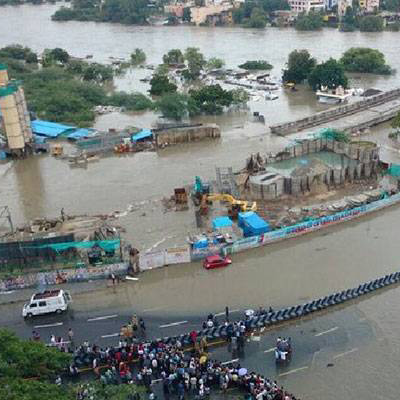
    MUMBAI: ’Twas Mother Nature’s fury at full throttle when the state of Tamil Nadu was flooded by the heaviest rainfall it has been privy to in the last century. Many lives were lost even as over three lakh people became homeless.


    While the southern state is slowly inching back to normalcy from the unprecedented rains and floods, which engulfed whatever came in its way, the natural disaster had a massive impact on the media and entertainment industry as well. The entire cable TV ecosystem was brutally affected by the calamity. It may be recalled that for the last couple of weeks, the Broadcast Audience Research Council (BARC) India hasn’t received television ratings data from the region too.


    In the light of this disaster, a senior cable federation member from Chennai estimates the overall loss suffered by the cable industry to be close to Rs 25 crore. “We have done an on-ground survey and after a thorough analysis, we came to the estimate. Local cable operators (LCOs) will have to bear the majority of the loss as most of the fibre amplifier devices, which were damaged belong to them,” he adds.


    While industry body ASSOCHAM estimated the overall financial loss from the torrential rains and floods in Tamil Nadu to be in excess of Rs 15,000 crore, the Rs 25 crore loss to the cable industry may even be a conservative one. The on-ground reality indeed paints a grim picture.


    “Thousands of fibre amplifiers got affected. The LCOs are trying their level best to restore services but the damage is so massive that it will take at least a week or 10 days more to get things back on track,” added a senior official from the cable fraternity.


    A fibre amplifier, which is located in the operating room of cable operators, costs around Rs 3500 and a large number of them were totally destroyed as they immersed in the flood water. Fortunately, no instance of head-end damaged could be traced.


    An independent multi system operator (MSO), who was also affected by the natural calamity, said, “The head-ends are generally placed at a good height and hence they got saved. But my transmitter is totally damaged. The flood has damaged cable operations brutally, and to restore services it will take me more than 15 days at least.”


    “The transmitter costs Rs 50,000 and I have to invest in a new one,” he adds.


    The other equipment that was damaged in the flood and needs serious investment is Erbium Doped Fiber Amplifier (EDFA), which is an optical repeater device used to boost the intensity of optical signals being carried through a fiber optic communications system. “I need to invest Rs 1.5 lakh in my EDFA and there are many other such operators who will have to change their EDFA,” said an LCO.


    While some equipments may be under warranty, it is unlikely that the warranty applies in the case of natural disasters. A looming question is also that of insurance. All said and done, many LCOs and MSOs affected severely by the flood will have to bend over backwards in order to get their system back on.

  • Hathway bags ET Best Tech Brand 2015 award

    Hathway bags ET Best Tech Brand 2015 award

    MUMBAI: Hathway won the Economic Times Best Tech Brand 2015 in telecommunication, technology and media space for its significant contribution in the growth of digital cable television in the country. 


    The ET Edge-Best Tech Brands 2015 summit was held in Delhi on 17 December.


    Technology brands like HP, Capgemini, IBM, Ricoh, Mphasis and Sify amongst others were part of this summit, which recognised key contributions of organisations in building and upgrading technology to create a robust ecosystem and providing a business edge in their respective industry.


    Hathway Cable & Datacom managing director and CEO Jagdish Kumar G Pillai said, “We are extremely proud of this achievement and thank all stakeholders and team Hathway who have contributed towards the growth of Hathway in the digital cable television and broadband space. This recognition from one of leading and most trusted names in media, The Economic Times, is testament to the giant strides that Hathway has taken in the technological transformation of digital cable TV and wired broadband businesses in India and our continuing efforts in empowering our customers to build a better and robust service & brand.”


    Hathway featured in the list of top 150 technology brands of India as per the Economic Times & MRSS industry agnostic study to understand what goes into the making of leading tech Brands in the B2B space.

  • Reliance Jio to soft launch with two lakh ‘privileged’ subscribers

    Reliance Jio to soft launch with two lakh ‘privileged’ subscribers

    MUMBAI: Mukesh Ambani’s Reliance Jio Infocomm is all set to soft launch its telecom services brand Reliance Jio on 28 December, 2015 by handing out two lakhs cards to hand-picked ‘privileged’ people as a part of the launch.


    It may be recalled that Indiantelevision.com was the first to report that Reliance Jio would soft launch on the eve of Dhirubhai Ambani’s birth anniversary (28 December) this year.


    Reliance Jio has been running test signals from a month now wherein the company’s employees have also been availing the services.


    A senior Reliance Jio official on condition of anonymity told Indiantelevision.com, “We will analyse the performance of our services over the next two months and a consumer base of two lakh is robust enough for that. After thorough analysis, we will do our commercial roll-out by March 2016.”


    The official added, “Our price package will be way lower than what is available in the market at this stage. We are entering a market where we want to have the largest number of subscribers and we will do that by providing the best services at the lowest price.”


    With a pan India MSO (multi-system operator) license under its belt, Reliance Jio is also in talks with both broadcasters and cable operators for their cable TV services. “By next month we will start signing deals. The technology is already in place and now we will focus on content deals. The work on cable TV front is also progressing at a good pace and by April we plan to start with 20 cities,” informed the official.


    Launching in a highly competitive market with multiple players, be it in the telecom or the cable space, it now remains to be seen how Reliance Jio’s pricing and service offerings are a notch above the rest.

  • Hathway re-appoints Jagdish Kumar G Pillai as MD & CEO

    Hathway re-appoints Jagdish Kumar G Pillai as MD & CEO

    MUMBAI: Hathway Cable & Datacom’s board of directors have re-appointed Jagdish Kumar G Pillai as the managing director and CEO of the company for a period of two years with effect from 21 December, 2015.


    Since 21 December, 2012, Pillai served as CEO, MD and executive director of Hathway Cable and Datacom Limited.


    With more than 27 years of experience, Pillai has worked with bluechip companies like ITC Ltd, Star TV and Reliance Industries.


    Prior to joining Hathway, he was part of the Reliance Jio project team as president – media & entertainment at Reliance Industries Ltd.