Category: Cable TV

  • MIB grants permanent license to Uttar Pradesh MSO

    MIB grants permanent license to Uttar Pradesh MSO

    NEW DELHI: The Ministry of Information and Broadcasting (MIB) has granted a permanent (ten-year) license to the Uttar Pradesh based multi system operator (MSO) Eminent Cable Network. With this the number of MSOs, who have got permanent licences has gone up to 231.


    This also takes the total number of MSOs to get a license to 655 including 424, who have got provisional registration in all urban areas in the country.


    The MIB by 12 January cancelled the licences of 26 MSOs and closed their cases. It had initially cancelled the licences of 30, but restored those of four of whom one – Tanuku Communication Network from Andhra Pradesh – was given a provisional registration and another – Eminent Cable Network from UP – is the latest entrant to the permanent licensees.  


    As was reported earlier by Indiantelevision.com, of the provisional licensees, a total of 12 MSOs were given provisional licences on 12 January and another 30 on 1 January, 2016.


    The other two licensees whose permanent licences had been cancelled but have been restored are Skynet Digital Services and Silverline Entertainment, both for most parts of Uttar Pradesh.


    An earlier list had put the figure at 382 provisional licensees on 31 December, 2015 the day the analogue signals were to be switched off, showing 45 new MSOs had been added in the last fortnight of 2015.


    With the Home Ministry directive about doing away with security clearances for MSOs not being communicated in writing to the MIB, the pace remains slow.


    The new licensees covering 11 states include one MSOs in the northeast for Tripura, but it also includes two MSOs in Tamil Nadu and one in Chhattisgarh where DAS Phase III remains stayed.


    The other states covered include Haryana, Maharashtra, Uttar Pradesh, Madhya Padesh, and Kerala.


    The permanent licence issued to Kal Cable of Chennai had been cancelled on 20 August, 2014 but this cancellation was set aside by Madras High Court on 5 September the same year. However, Kal Cable’s name continues to be in the Cancelled List – presumably because the cases are still pending.


    The number of MSOs was 612 on 31 December, 567 in mid-December, 553 by 24 November and 470 earlier in November, but this increase was merely in those who have provisional licences.


    Sources said many MSOs holding provisional licences had not completed certain formalities relating to shareholders and so on.

  • DAS Phase III: Fifth updated list of urban areas shows 100 changes in Karnataka

    DAS Phase III: Fifth updated list of urban areas shows 100 changes in Karnataka

    NEW DELHI: The Government, which had last month issued an updated list of urban areas to be covered during Phase III of the Digital Addressable System (DAS) in West Bengal, today issued a fifth list relating to West Bengal.


    Earlier, the list issued on 3 November was related to the urban areas to be covered in seven states and one union territory. That was in addition to the 16 states for which upgradation had been announced on 16 October.


    Around 80 towns have been deleted from Karnataka but around 20 have been added or upgraded. This leaves a total of 2,044,940 TV households to be covered in DAS Phase III.


    The third updated list had referred to changes in Andhra Pradesh, Chhattisgarh, Jammu & Kashmir, Kerala, Madhya Pradesh, Manipur and Telangana, and the Union Territory of Daman & Diu.


    Earlier in October, the states and union territories where changes were made were: Arunachal Pradesh, Assam, Gujarat, Haryana, Himachal Pradesh, Jharkhand, Mizoram, Nagaland, Odisha, Rajasthan, Punjab, Tripura, Uttarakhand, Uttar Pradesh, Andaman and Nicobar, and Puducherry.


    The updated list attached on the Information and Broadcasting Ministry’s website with regard to these states and UTs also indicates areas that have been deleted and those which have been added, apart from the number of television households to be covered in each case.


    The changes have been made on the basis of the list of Urban local Bodies received from Karnataka government.


    The list does not contain areas covered in the first two phases.


    The list of areas to be covered in Phase III had been issued on 30 April last year. 

  • I&B Ministry awaits Law Ministry’s opinion on DAS Phase III stay orders

    I&B Ministry awaits Law Ministry’s opinion on DAS Phase III stay orders

    NEW DELHI: Even as High Courts across different Indian states continue to issue extension of the Digital Addressable System (DAS) Phase III deadline beyond 31 December, 2015, the Information and Broadcasting Ministry is still waiting for the Law Ministry to respond to the file on the issue.


    However, as was first reported by Indiantelevision.com, I&B Secretary Sunil Arora had confirmed that the Ministry will move the Supreme Court and file an application for clubbing the various orders in different High Courts, which ordered an extension of the deadline.


    That said, it was not immediately clear whether this would be a fresh appeal, or would be in the form of an appeal against one of the High Court orders with an additional request that since other matters are similar, they could also be heard at the same time.


    This decision came as a disappointment to many multi system operators (MSOs) in other states who said that they would find it very difficult to come to Delhi to fight the case or pay the high fee charges by Supreme Court advocates for this purpose.


    Several rounds of discussions have been held internally as well as with officials of the Law Ministry and legal experts over the past few days before coming to this decision, to thwart the snowballing effect of the orders that commenced from Hyderabad and found a boost in the arguments in the Bombay High Court based on the Kusum Ingots case of 2004, which encouraged MSOs and local cable operators (LCOs) in other states.


    While the Kerala and Karnataka High Courts are to hear petitions early next week, the implementation remains stayed for varying periods in the states of Andhra Pradesh, Assam, Chhattisgarh, Maharashtra, Orissa, Sikkim, and Telangana, apart from Tamil Nadu where prolonged legal cases have been pending since Phase I.


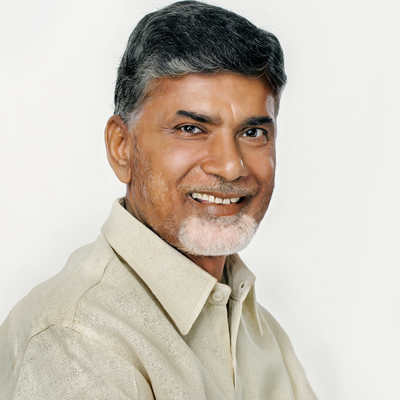
    Adding to its woes, I&B Minister Arun Jaitley has received a letter from the Andhra Pradesh Chief Minister N Chandrababu Naidu seeking a six-month extension for the 800+ MSOs and 9000+ LCOs across 13 districts serving 1.3 million households in the state. 


    Reacting to this, an official of the I&B Ministry said that these High Courts orders would have no effect on the Government decision to stick to its date of 31 December, 2015 and it had asked broadcasters and MSOs to switch off analogue signals in all areas covered under Phase III, which was aimed at the remaining urban areas except where certain states sought exemption.


    The official also said that the Courts were generally following the logic given before the Bombay High Court whereby the Supreme Court had said in the Kusum Ingots case that if one High Court gives an order, others can give similar orders if the circumstances are similar. In this case, the petitioners had sought to say in all the cases that there was a shortage of set top boxes (STBs), which belied the figures received by the Government, the official added.


    There was also general consensus in the Ministry that this was the right course as the apex court had on an earlier occasion relating to the Cable Television Networks (Regulation) Act 1995 and orders issued thereunder that High Courts have to be cautious when giving orders on matters relating to policy.  


    While the Ministry would prepare to file its counters in all the High Courts, the Ministry official also said it was working on how plans to thwart the implementation of Phase III could be prevented – if necessary through legislative processes.


    The Government feels that the cases would in fact work against the last mile operator (LMO) and benefit the direct to home (DTH) and Headend In the Sky (HITS) players.


    Sources said that they had evidence to show seeding of STBs to the extent of 76 per cent as revealed in the 13th Task Force meeting on 30 December. 


    Broadcasters and channel distributors feel any extension would only lead to delays in all fields of digitisation including a further delay in not just the Phase III and Phase IV (slated for December 2016) but also pockets of Phase I and Phase II, which have still not implemented digital addressable systems.


    At the same time, stakeholders agree that there is a shortage of STBs and just one or two players are making local boxes despite the ‘Make in India’ campaign, and the government had to be make some relaxations in the budget in this regard.

  • Hathway Cable & Datacom director Brahmal Vasudevan resigns

    MUMBAI: Hathway Cable & Datacom independent director Brahmal Vasudevan has tendered his resignation at the company with effect from 13 January, 2016.


    Vasudevan, who founded Creador and serves as its CEO, joined Hathway as an independent director in 2011. 


    He has also had stints with Monet Investment Advisors and ChrysCapital Investment Advisors as managing director.

  • Andhra Pradesh CM writes to Arun Jaitley seeking 6-month extension on DAS Phase III

    Andhra Pradesh CM writes to Arun Jaitley seeking 6-month extension on DAS Phase III

    MUMBAI: With an aim to address the concerns of 800+ multi system operators (MSOs) and 9000+ local cable operators (LCOs) across 13 districts serving 1.3 million households in Andhra Pradesh, the state’s chief minister N. Chandrababu Naidu has written to the Information and Broadcasting minster Arun Jaitley seeking a six-month extension to the Digital Addressable System (DAS) Phase III deadline, which expired on 31 December, 2015.


    The signed letter, a copy of which is with Indiantelevision.com, says, “Only a few MSOs have got Digital License, mainly due to to non-affordability of digital headends and lack of technical know-how. As a part of AP Fiber Grid AP Government envisages to support there MSOs/LCOs by setting up a multi-tenanted digital cable headend that can be utilised as, ‘Infrastructure as a Service & Platform as a service’ facilitating the operations to apply for digital MSO license and sustain their areas of operation. This will help a large number of operators/employees who are surviving on this industry directly and indirectly.”


    The letter further adds, “In view of the initiative and the special situation in Andhra Pradesh, the commissioning of AP Fiber Grid is required to enable MSOs/LCOs to utilise this network infrastructure ad to partner with this project. As this model is going to be uniform among all operators interested in associating with Fiber Grid, the cable operators may not be willing/able to invest for STBs in advance to meet the present deadline. Hence, it is requested to consider extending the phase III Digitisation target date by six months beyond 31 December, 2015.


    Highlighting the status of the AP Fiber Grid Project, Naidu further informed that: 


    .   AP Government has initiated Fiber Grid project to digitise the households in Andhra Pradhesh through both aerial and underground optical fiber cable network.


    .   Work is in progress to lay 24 core ADSS optical fiber cable for a length of around 22000 kms over electrical poles. It is planned to complete this work by June 2016 under phase 1 of Fiber Grid.  2449 PoPs (Points of Presence) will be set up at identified electrical substantiations to house the electronics.


    .   Laying of underground Fiber for a length of around 60000 Kms will be taken up under Phase II in association with government of India.


    .   Dedicated Network Operations Center (NOC) equipped with all digital Headends providing Video (TV Channels, Data (Internet) and Voice (telephone) services also be commissioned by June 2016 facilitating all service providers to utilise the fiber grid with the model of infrastructure as a service & Platform as a Service.


    .   It is planned to enrol the LCOs as Last Mile Operators (LMOs) to provide services to households connecting to Fiber Grid PoPs (points of presence) through their existing network.


    .   The MSOs can be enrolled as ‘multi service providers,’ offering Internet and TV services by connecting to NOC of Fiber Grid and delivering through last mile operators. 


    At the time of filing this story, the AP CM’s office was yet to receive a reply to the letter from Jaitley.

  • Ortel offers special value added Wi-Fi public hotspot service

    Ortel offers special value added Wi-Fi public hotspot service

    MUMBAI: Ortel Communications has introduced Wi-Fi public hotspot services for its broadband subscribers as a special value added service. The service is being offered in the busiest locations of the state of Bhubaneswar.


    Customers can access the Hot Spot services by using their existing internet account. They can use the broadband services in the public Hot Spot Wi-Fi location and can also access the primary wired broadband connection at home.


    Without the requirement of any other additional hardware like modem or a dongle neither a software installation, the subscribers can use the service through their smartphones, tablet PCs and laptops.


    Ortel is the first MSO and ISP to offer an additional wireless broadband service at public places in Bhubaneswar for its wired broadband subscribers without any additional charges. These services will be extended to other markets very soon.


    Ortel Communications president and CEO Bibhu Prasad Rath said, “We are happy to launch wireless broadband access at public areas through Wi-Fi Hotspots for our existing and new broadband subscribers. This will allow our wired broadband subscribers to access internet using their existing Ortel Broadband connection outside their homes at places where most of them visit very frequently. Ortel has been one of the pioneers in the Cable TV and Broadband industry and it is our constant endeavour to provide unique and path-breaking services to our subscribers. The Wi-Fi Hot Spot is yet another value-added service which will enable our broadband subscriber’s to access internet on-the go through their internet-enabled devices.”


    Ortel is also focused in the states of Odisha, Chhattisgarh, Madhya Pradesh, Andhra Pradesh, Telengana and West Bengal.

  • DAS Phase III: Chhattisgarh gets two-month extension by Court

    DAS Phase III: Chhattisgarh gets two-month extension by Court

    MUMBAI: Chhattisgarh has become the newest addition to the list of stayed states allowed extension by the judiciary for the Phase III deadline of Digital Addressable System (DAS).


    The Chhattisgarh High Court, hearing the petition filed by Gentle Entertainment Private Limited, announced a two-month extension to complete the seeding process. The court ordered stakeholders to complete the proceedings in two months and ordered that during the process cable connections should not be discontinued.


    “The court’s main concern was shortage of set top boxes and the discomfort of common people. And that is why the honourable court decided to allow the extension,” a source present in the court tells Indiantelevision.com.


    The petition filed by Gentle Entertainment said, “Due to the shortage of STBs in the global market, and high demand here in India it is becoming impossible to have the adequate supply. To meet the necessary demand it will take at least two months more and hence we request the esteemed court to allow an extension of two months.” 


    “The question that one should ask now is, when the deadline was announced a year back why the process started so late. Are we trying to say that twelve months was not enough and we need fourteen? This leaves a bad impression on those who followed the deadline. Will the government compensate those who followed the deadline and executed things on time?” asked a senior executive from the cable fraternity.   


    As was reported earlier by this website, at present, the implementation remains stayed for varying periods in the states of Andhra Pradesh, Assam, Maharashtra, Orissa, Sikkim, and Telangana, apart from Tamil Nadu where prolonged legal cases have been pending since Phase I. The original deadline for DAS Phase III deadline was that of 31 December, 2015.


    Moreover, the Information and Broadcasting Ministry is now planning to move the Supreme Court to club the various orders in different High Courts, which ordered extension of DAS Phase III.

  • ‘Broadcasters should black out areas where DAS implementation is tardy; Govt should move SC:’ VD Wadhwa

    ‘Broadcasters should black out areas where DAS implementation is tardy; Govt should move SC:’ VD Wadhwa

    An Alumnus of Harvard Business School and a fellow member of the Institute of Company Secretaries of India, V D Wadhwa carries his multifarious responsibilities with a humility and ease that belies the positions he had occupied in the private sector. 


    SitiCable executive director and CEO, Wadhwa has almost 30 years of general management experience in consumer lifestyle and retail industries. Additionally, he has also served on various committees of FICCI and Assocham besides serving as president of the Horological Federation of India.


    His personal interests include – playing squash, adventure sports, and travelling.


    Donning the hat of All India Digital Cable Federation’s president for the past 15 months, Wadhwa is convinced that the move towards digital addressable system (DAS) is in the  right direction. In an interview with Indiantelevision.com, he justifies this and is of the opinion that there should be no let up.


    Excerpts from the interview:


    With cable operators and multi system operators in so many states having got extension orders from the courts, do you feel the government should have given more time before implementing Phase III covering all urban areas?

    No, I feel that the Government has taken the right decision in not extending the date except where Court orders have come. With reports that there are pockets even in the first two phases where analogue signal is still being beamed, any extension by the Government would have made the MSOs and LCOs go slow and this could have gone on for years.


    At least the stakeholders now know they have a deadline that they have to meet. We should not forget that all stakeholders knew since September 2014 that the Government had set a deadline it would stick to, and had enough time to get ready for DAS Phase III.


    What is the way out?

    The Government should go to the Supreme Court and stop all the High Court cases on DAS.


    But there is great shortage of set top boxes, if you go by the pleadings before the High Courts…

    In SitiCable, we have 11 million subscribers on our network and we have already seeded three million STBs in Phase III. I am confident that we will complete five to six million in the next couple of months and reach 10 million by March. Thus we will cover 6.5 million boxes of the first three phases. Other stakeholders had enough time to order STBs if they had acted in time.


    But these are Chinese STBs with little or no service.

    They are Chinese, but they are reliable and when we fit this in any household, we give the requisite service for taking care of any problems.


    What about indigenous STBs?

    It is true that there is very little indigenous production with just two manufacturers. There are less than two per cent indigenous STBs. The Government will have to facilitate more under its Make in India scheme. But that is not our field. We have expertise as the distribution pipe.


    Pricing of STBs is also a problem since there is no fixed rate.

    STBs had initially cost much more, but are now being sold for just around Rs 1200 and even on a rental basis.


    What do you think should be done to speed up the DAS process?

    Implementation on the ground needs support. And the broadcasters should black out areas where implementation is tardy.


    And now the Government is gearing up for Phase IV, which covers the rural areas…

    In my view, Phase III and Phase IV should have been done together as the government had initially planned. In any case, there is a 30 per cent base of direct-to-home (DTH) platforms in Phase IV so a large pocket is already digitised. In fact, the total DTH segment in Phase III and IV is around seventy per cent.


    What are SitiCable’s future plans?

    We are very clear that we now have to concentrate on broadband and add on at least 500,000 subscribers every year.

  • DTH to benefit, Reliance Jio to intensify competition in DAS Phase III: Edelweiss

    DTH to benefit, Reliance Jio to intensify competition in DAS Phase III: Edelweiss

    NEW DELHI: Broadcasters are obviously clear winners, but the direct to home (DTH) platforms may ultimately become the greatest beneficiaries of Phase III of digital addressable system (DAS) by garnering incremental market share of more than 50 per cent.

     
    According to Edelweiss Securities Ltd, broadcasters will be one of the safest and most attractive plays on the digitisation theme, irrespective of higher subscriber additions by DTH or MSOs. “We expect a one-year lag for subscription revenue to flow (starting FY18) from the newly digitised subscribers,” Edelweiss said in its analysis of DAS Phase III.   

     
    “In our view, analogue signals will gradually switch off and substantial roll out of Phase III digitisation will take at least three to four quarters driven by mass media ads and proactive steps by DTH players, national MSOs & the regulator,” the firm said.


    However, this view is contrary to the Chrome Data Analytics’ claim of 70 per cent digitisation in Phase III. 

     
    With six states (Assam, Telangana, Andhra Pradesh, Maharashtra and Odisha and Tamil Nadu) stalling Phase III digitisation by eight weeks or more with High Court orders, Edelweiss says, “Uncertainty persists; we expect many more states to follow suit.” In Tamil Nadu, the stand-off between Arasu and the Information & Broadcasting Ministry will delay digitisation, as was the case with Chennai earlier. 

     
    Moreover, Edelweiss believes Reliance Jio’s entry in cable TV will intensify competition in the space. “Overall, we expect Zee, Sun TV, TV18 and Dish TV to be bigger beneficiaries of Phase III digitisation over the long term.”   

     
    In Phase I and II cities, MSOs were able to retain around 75 per cent of incremental market share, while DTH players managed to garner only 25 per cent.

     
    However in Phase III markets, Edelweiss says regional MSOs will have to incur substantial capex to make the cable infrastructure digital ready. “We believe DTH players will enjoy natural advantage over regional MSOs in Phase III markets.”

    Further, voluntary digitisation by national MSOs in Phase III markets, learnings from Phase I & II digitisation and parts of Phase III areas being contiguous with Phase I & II markets put national MSOs in better position than regional MSOs. 

     
    With the rollout of Reliance Jio, Edelweiss expects “competition to intensify in cable TV business. Cashing in on its strong balance sheet, RJio will fuel further competition in cable TV (free STBs, bundled services) in Phase I and II markets. We expect RJio’s entry to change the industry dynamics led by introduction of packaging and prepaid billing.”

  • I&B Ministry to move Supreme Court to club all DAS cases into one

    I&B Ministry to move Supreme Court to club all DAS cases into one

    NEW DELHI: The Information and Broadcasting (I&B) Ministry will be moving the Supreme Court to club the various orders in different High Courts, which ordered extension of Phase III of the Digital Addressable System (DAS) beyond 31 December, 2015.


    I&B Ministry Secretary Sunil Arora confirmed to Indiantelevision.com that the apex court would be moved in this connection within the next few days.


    However, it was not immediately clear whether this would be a fresh appeal, or – as was reported by this website on 7 January – it would be in the form of an appeal against one of the High Court orders with an additional request that since other matters are similar they also be heard at the same time.


    This decision came as a disappointment to many multi system operators (MSOs) in other states who said they would find it very difficult to come to Delhi to fight the case or pay the high fee charges by Supreme Court advocates for this purpose.


    Several rounds of discussions have been held internally as well as with the officials of the Law Ministry and legal experts over the past few days before coming to this decision, to thwart the snowballing effect of the orders that commenced from Hyderabad and found a boost in the arguments in the Bombay High Court based on the Kusum Ingots case of 2004, which encouraged MSOs and local cable operators (LCOs) in other states.


    At present, the implementation remains stayed for varying periods in the states of Andhra Pradesh, Assam, Maharashtra, Orissa, Sikkim, and Telangana, apart from Tamil Nadu where prolonged legal cases have been pending since Phase I.


    There was also general consensus that this was the right course as the apex court had on an earlier occasion relating to the Cable Television Networks (Regulation) Act 1995 and orders issued thereunder that High Courts have to be cautious when giving orders on matters relating to policy.  


    At the same time, Ministry officials said that while obeying the directives of the various High Courts, which had extended the DAS deadline by various periods ranging between eight to 12 weeks, it would prepare to oppose the decisions.


    A senior Ministry official also said it was working on how plans to thwart the implementation of Phase III could be prevented – if necessary through legislative processes.


    The official also expressed the view that the cases would in fact work against the last mile operator and benefit the direct to home (DTH) and Headend In the Sky (HITS) players.


    Sources said they had evidence to show seeding of set top boxes (STBs) to the extent of 76 per cent as revealed in the 13th Task Force meeting on 30 December. 


    Meanwhile as earlier reported, legal opinion is divided on whether the Kusum Ingots case, which was referred to in the Bombay High Court could be used by a High Court to direct a pan-India stay.


    The broadcasters and channel distributors feel any extension would only lead to delays in all fields of digitisation including a further delay in not just the Phase III and Phase IV (slated for December 2016) but also pockets of Phase I and II, which have still not implemented digital addressable systems.


    At the same time, the stakeholders agree that there is a shortage of STBs and just one or two players are making local boxes despite the ‘Make in India’ campaign, and the government had to be make some relaxations in the budget in this regard.


    With the I&B Ministry now taking the matter to the Supreme Court, the developments ahead will be keenly watched by all stakeholders.