
Category: Cable TV

  • DAS Phase III cases caught up in a logjam courtesy Delhi High Court

    DAS Phase III cases caught up in a logjam courtesy Delhi High Court

    NEW DELHI: With the Delhi High Court yet to decide on the date of hearing all cases seeking extension of Phase III of digital addressable system passed on to it by the Supreme Court, two more cases – before the Telecom Disputes Settlement and Appellate Tribunal – have been put off again.

    Petitions by the Rohtak Cable Operator Association, Haryana, and Rewari Cable Operators Association against Siti Cable Networks have been put off to 11 August by member B B Srivastava.

    In the previous hearing on 6 May 2016, the cases had been put off in view of their pendency before the Punjab and Haryana High Court.

    However, the Tribunal said that in view of the directive by the Punjab and Haryana High Court that SitiCable will not interfere with the operators continuing to transmit in analogue, the previous order of 6 May 2016 of the Tribunal will continue.

    In its order on 11 July 2016, the Tribunal noted the statement by counsel for the cable operator organizations that the matter was now being transferred to the Delhi High Court after the order of the Supreme Court but “is yet to be listed.”

    But the Tribunal said the LCOs will continue to pay the monthly subscription fee as per the previous agreement and on thebasis of invoices raised by the respondent in order to receive signals.

    The registry of the Supreme Court has sent to all the concerned High Courts the directive of the apex court of 1 April for transfer of all cases seeking extension to digital addressable system for cable television to Delhi High Court with a view to avoid conflicting decisions.’

    A copy of the order was also sent to the Delhi High Court and it was now up to that Court to fix a date, Supreme Court officials said.

    The officials said that the attempt would be to first receive from the various High Courts the papers relating to the petitions, which almost all had pleaded shortage of set top boxes for seeking extension or stay of DAS which became effective 1 January 2016.

    The apex court had accepted the plea of the Central Government that ‘it would be just and proper for this Court to withdraw allthose cases pending in different High Courts and transfer the same to the Delhi High Court.’

    Ironically, the Information and Broadcasting Ministry had on 12 January 2016 written to its counsel in Punjab and Hryana High Court that it had understood the Hyderabad order to mean a pan India stay while asking him to defend the case.

    But later, the Ministry sources admitted to indiantelevision.com that there was a misreading of the Bombay High Court directive. The Court had merely refereed to the Kusum Ingots & Alloys Ltd vs the Union of India 2004 case to say that if one High Court gives a stay, another High Court can act in similar fashion if the facts are similar – in this case, shortage of STBs. Thus, they agree that the High Court stay was only confined to Maharashtra and not pan-India.

    Earlier, the Indian Broadcasting Foundation had withdrawn its petition after the Supreme Court said that the order of the Bombay High Court did not imply any pan-India stay.

    The last DAS Task Force meeting on 30 May 2016 was informed that a total of 42 court cases have been filed for extension in the deadline of Phase lll in various courts in the country with the two-month extension by the Telangana & Andhra Pradesh High Courts. Other Courts followed suit in the ground that this order was extendable to other areas. This led to the Centre moving the Supreme Court which passed an order of transfer of all cases for extension filed in various courts and any new cases on similar prayer to the Delhi High Court for adjudication.

    The meeting was also told 17 cases had been transferred by various courts to the Delhi High Court out of which the High Court had dismissed three cases and another three cases were being heard that same day.
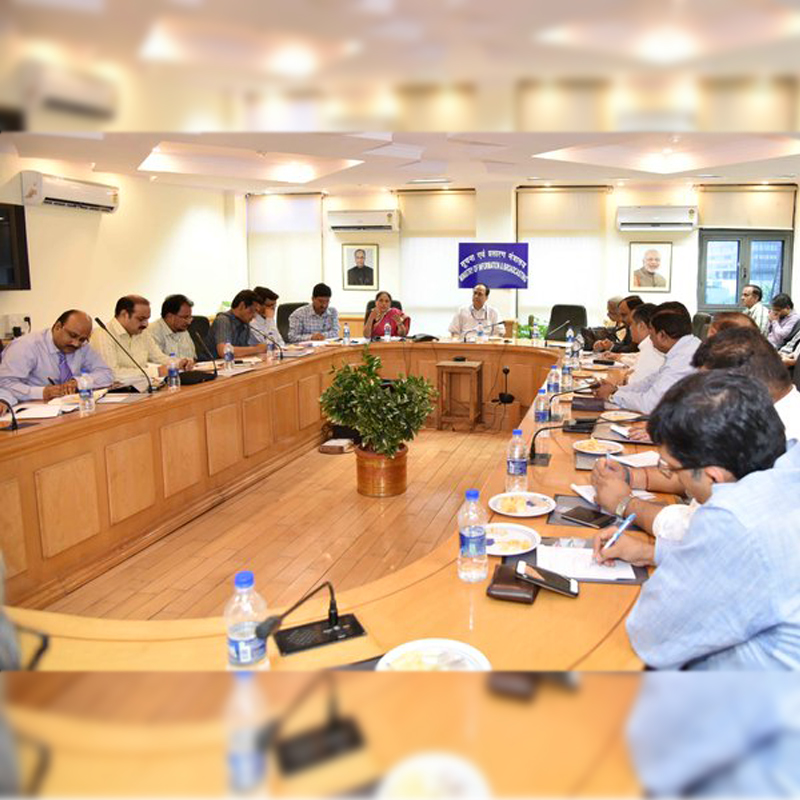
  • DAS Phase III cases caught up in a logjam courtesy Delhi High Court

    DAS Phase III cases caught up in a logjam courtesy Delhi High Court

    NEW DELHI: With the Delhi High Court yet to decide on the date of hearing all cases seeking extension of Phase III of digital addressable system passed on to it by the Supreme Court, two more cases – before the Telecom Disputes Settlement and Appellate Tribunal – have been put off again.

    Petitions by the Rohtak Cable Operator Association, Haryana, and Rewari Cable Operators Association against Siti Cable Networks have been put off to 11 August by member B B Srivastava.

    In the previous hearing on 6 May 2016, the cases had been put off in view of their pendency before the Punjab and Haryana High Court.

    However, the Tribunal said that in view of the directive by the Punjab and Haryana High Court that SitiCable will not interfere with the operators continuing to transmit in analogue, the previous order of 6 May 2016 of the Tribunal will continue.

    In its order on 11 July 2016, the Tribunal noted the statement by counsel for the cable operator organizations that the matter was now being transferred to the Delhi High Court after the order of the Supreme Court but “is yet to be listed.”

    But the Tribunal said the LCOs will continue to pay the monthly subscription fee as per the previous agreement and on thebasis of invoices raised by the respondent in order to receive signals.

    The registry of the Supreme Court has sent to all the concerned High Courts the directive of the apex court of 1 April for transfer of all cases seeking extension to digital addressable system for cable television to Delhi High Court with a view to avoid conflicting decisions.’

    A copy of the order was also sent to the Delhi High Court and it was now up to that Court to fix a date, Supreme Court officials said.

    The officials said that the attempt would be to first receive from the various High Courts the papers relating to the petitions, which almost all had pleaded shortage of set top boxes for seeking extension or stay of DAS which became effective 1 January 2016.

    The apex court had accepted the plea of the Central Government that ‘it would be just and proper for this Court to withdraw allthose cases pending in different High Courts and transfer the same to the Delhi High Court.’

    Ironically, the Information and Broadcasting Ministry had on 12 January 2016 written to its counsel in Punjab and Hryana High Court that it had understood the Hyderabad order to mean a pan India stay while asking him to defend the case.

    But later, the Ministry sources admitted to indiantelevision.com that there was a misreading of the Bombay High Court directive. The Court had merely refereed to the Kusum Ingots & Alloys Ltd vs the Union of India 2004 case to say that if one High Court gives a stay, another High Court can act in similar fashion if the facts are similar – in this case, shortage of STBs. Thus, they agree that the High Court stay was only confined to Maharashtra and not pan-India.

    Earlier, the Indian Broadcasting Foundation had withdrawn its petition after the Supreme Court said that the order of the Bombay High Court did not imply any pan-India stay.

    The last DAS Task Force meeting on 30 May 2016 was informed that a total of 42 court cases have been filed for extension in the deadline of Phase lll in various courts in the country with the two-month extension by the Telangana & Andhra Pradesh High Courts. Other Courts followed suit in the ground that this order was extendable to other areas. This led to the Centre moving the Supreme Court which passed an order of transfer of all cases for extension filed in various courts and any new cases on similar prayer to the Delhi High Court for adjudication.

    The meeting was also told 17 cases had been transferred by various courts to the Delhi High Court out of which the High Court had dismissed three cases and another three cases were being heard that same day.
  • DEN Networks takes control of Snapdeal home shopping JV

    DEN Networks takes control of Snapdeal home shopping JV

    MUMBAI: Jasper Infotech CEOs Kunal Bahl and Rohit Bansal are working on getting their ecommerce platform Snapdeal in ship shape by focusing on customer satisfaction and net revenues instead of gross merchandise value (GMV). This follows the march that rivals such as Flipkart and Amazon have stolen from it.

    Getting rid of any diversifications and other assets that are not scaling up is probably part of the fitness plan. And that explains why the company has decided to divest its equity stake in Macro Commerce Private Ltd, which operates the DEN-Snapdeal home shopping channel.

    When it was launched as a 50:50 joint venture with cable TV MSO DEN Networks with much hype last year, Bahl had stated that he was targeting Rs 500 crore in revenues from TV commerce in year one.
    The numbers did not stack up and Snapdeal TV did a turnover of Rs 3.17 crore in 2015 and Rs 28 crore in 2017.

    DEN Network promoter Sameer Manchanda probably has more faith in the home shopping television initiative than Bahl. Hence, late last week DEN informed the Bombay Stock Exchange that it was buying an additional 32.87 per cent stake in the company from Jasper Infotech at a cost of Rs 60 million. Rs 10 million is for purchase of existing shares and Rs 50 million is through a rights issue, which will lead to an infusion of funds into Macro Commerce.

    Post the acquisition, DEN Networks’ shareholding will rise to 82.87 per cent in Macro from the 50 per cent currently.

    The purpose of the deal, the cable MSO says, is to take a controlling stake in the venture, expand the business and effectively manage the operations of the TV channel.

    The market responded well to DEN Networks’ announcement: its shares rose to Rs 94.70 in early morning trades, then dropped to Rs 89.90 – a rise of 0.35 paise over its previous close by day’s end.

  • DEN Networks takes control of Snapdeal home shopping JV

    DEN Networks takes control of Snapdeal home shopping JV

    MUMBAI: Jasper Infotech CEOs Kunal Bahl and Rohit Bansal are working on getting their ecommerce platform Snapdeal in ship shape by focusing on customer satisfaction and net revenues instead of gross merchandise value (GMV). This follows the march that rivals such as Flipkart and Amazon have stolen from it.

    Getting rid of any diversifications and other assets that are not scaling up is probably part of the fitness plan. And that explains why the company has decided to divest its equity stake in Macro Commerce Private Ltd, which operates the DEN-Snapdeal home shopping channel.

    When it was launched as a 50:50 joint venture with cable TV MSO DEN Networks with much hype last year, Bahl had stated that he was targeting Rs 500 crore in revenues from TV commerce in year one.
    The numbers did not stack up and Snapdeal TV did a turnover of Rs 3.17 crore in 2015 and Rs 28 crore in 2017.

    DEN Network promoter Sameer Manchanda probably has more faith in the home shopping television initiative than Bahl. Hence, late last week DEN informed the Bombay Stock Exchange that it was buying an additional 32.87 per cent stake in the company from Jasper Infotech at a cost of Rs 60 million. Rs 10 million is for purchase of existing shares and Rs 50 million is through a rights issue, which will lead to an infusion of funds into Macro Commerce.

    Post the acquisition, DEN Networks’ shareholding will rise to 82.87 per cent in Macro from the 50 per cent currently.

    The purpose of the deal, the cable MSO says, is to take a controlling stake in the venture, expand the business and effectively manage the operations of the TV channel.

    The market responded well to DEN Networks’ announcement: its shares rose to Rs 94.70 in early morning trades, then dropped to Rs 89.90 – a rise of 0.35 paise over its previous close by day’s end.

  • Hinduja Ventures increases stake in Indusind Media

    Hinduja Ventures increases stake in Indusind Media

    MUMBAI: The Hinduja group is in a consolidation mood. Especially in its media business. Group company Hinduja Ventures informed the Bombay stock exchange today that it was buying both ordinary and preferential shares of Indusind Media & Communications Ltd (IMCL) from another Hinduja venture Grant Investrade Ltd (GIL).

    IMCL runs the InCable Net, IN Digital, IN2Cable and IN Phone businesses, while GIL is getting ready to aggressively roll out its HITS platform NXT Digital after its launch last year.

    In the communiqué, HVL has stated that it will be buying 43.03 lakh Rs 10 face value shares (equal to 5.82 per cent of IMCL’s paid up capital) of IMCL at a premium of Rs 456 per share, and it will also purchase 7.04 million preference shares (equal to 26.02 per cent of IMCL’s paid up preference capital) of Rs 10 each at par from GIL.

    HVL’s holding in IMCL will rise to 61.91 per cent from 56.09 per cent once the transaction is completed by 20 July 2016.

    IMCL, according to the notification had a turnover of Rs 434- odd crore and a net worth of 139.20 crore in the year ended 31 March 2016.

    Observers say that the transaction will allow some funds to be infused into GIL as it moves to take NXT Digital to its next phase.

  • Hinduja Ventures increases stake in Indusind Media

    Hinduja Ventures increases stake in Indusind Media

    MUMBAI: The Hinduja group is in a consolidation mood. Especially in its media business. Group company Hinduja Ventures informed the Bombay stock exchange today that it was buying both ordinary and preferential shares of Indusind Media & Communications Ltd (IMCL) from another Hinduja venture Grant Investrade Ltd (GIL).

    IMCL runs the InCable Net, IN Digital, IN2Cable and IN Phone businesses, while GIL is getting ready to aggressively roll out its HITS platform NXT Digital after its launch last year.

    In the communiqué, HVL has stated that it will be buying 43.03 lakh Rs 10 face value shares (equal to 5.82 per cent of IMCL’s paid up capital) of IMCL at a premium of Rs 456 per share, and it will also purchase 7.04 million preference shares (equal to 26.02 per cent of IMCL’s paid up preference capital) of Rs 10 each at par from GIL.

    HVL’s holding in IMCL will rise to 61.91 per cent from 56.09 per cent once the transaction is completed by 20 July 2016.

    IMCL, according to the notification had a turnover of Rs 434- odd crore and a net worth of 139.20 crore in the year ended 31 March 2016.

    Observers say that the transaction will allow some funds to be infused into GIL as it moves to take NXT Digital to its next phase.

  • Open House on Interconnect agreements aims at expediting framework

    Open House on Interconnect agreements aims at expediting framework

    NEW DELHI: Picking up momentum even as the deadline for the final phase of digital addressable system is less than six month away, an Open House discussion is being held on the Telecom Regulatory Authority of India’s consultation paper on Interconnection framework for Broadcasting TV Services distributed through DAS.

    This meeting, being held in Delhi on 13 July, comes just over a month after an earlier meeting on Register of Interconnection Agreements dated26May, which had thrown up diverse opinions and led to extension of the date for receiving comments of stakeholders to 10 June on its Consultation Paper.

    In the paper issued on 4 May on Interconnection framework for Broadcasting TV Services, TRAI noted that the exceptional growth of the number of TV channels combined with the inherent limitations of analogue cable TV systems had posed several challenges, mainly due to capacity constraints and non-addressable nature of the network. The evolution of technology paved way for bringing about digitization with addressability in the cable TV sector. For implementation of digital addressable systems in the cable TV sector, the Central Government notified the Cable Television Networks (Amendment) Rules 2012 on 28 April 2012. Immediately after the notification of the Cable TV Rules 2012, the Authority notified the Telecommunication (Broadcasting and Cable Services) Interconnection (Digital Addressable Cable Television Systems) Regulations 2012 on 30th April 2012.

    These regulations are specifically applicable for DAS whereas the Interconnection Regulations 2004 were applicable for non-addressable cable TV systems and also for other addressable systems such as DTH, HITS and IPTV. The basic features of the Interconnection Regulations 2012 are similar to the basic features of the Interconnection Regulations 2004.

    With implementations of DAS, there has been a marked increase in the number of subscribers receiving TV channels through addressable platforms. The number of subscribers being served by the DTH services has also gone up significantly. HITS platforms are also expected to make fast penetration in making available digital broadcasting TV services in the country. Now majority of the subscribers in India are receiving TV signals through digital addressable systems.

    TRAI said the interconnection regulations ought to evolve to keep pace with new developments in the sector, while sustaining the fundamental underlying principles of non-discrimination and level playing field. The commercial parameters for revenue share between service providers primarily depend upon the number of subscribers subscribing to channels/ bouquets. The numbers of subscribers in each type of addressable platform are verifiable. To ensure non-discrimination and level playing field amongst the distributors using different digital addressable systems such as DTH, IPTV, HITS, and DAS, it would be in the fitness of things that all these service providers are regulated using the common regulatory framework.

    Therefore, the consultation paper was aimed at providing a regulatory framework for interconnection that ensures a level playing field to all types of DAS systems. The consultation paper also discussed issues that the Authority noticed and plausible ways of dealing with those issues in respect of digital addressable systems. The review of the existing regulatory framework is being done with the objective of fostering competition, increase trust amongst service providers, ease of doing business, reduce disputes, improve transparency and efficiency, promote sustainable, orderly growth and effective choice to consumers.

  • Open House on Interconnect agreements aims at expediting framework

    Open House on Interconnect agreements aims at expediting framework

    NEW DELHI: Picking up momentum even as the deadline for the final phase of digital addressable system is less than six month away, an Open House discussion is being held on the Telecom Regulatory Authority of India’s consultation paper on Interconnection framework for Broadcasting TV Services distributed through DAS.

    This meeting, being held in Delhi on 13 July, comes just over a month after an earlier meeting on Register of Interconnection Agreements dated26May, which had thrown up diverse opinions and led to extension of the date for receiving comments of stakeholders to 10 June on its Consultation Paper.

    In the paper issued on 4 May on Interconnection framework for Broadcasting TV Services, TRAI noted that the exceptional growth of the number of TV channels combined with the inherent limitations of analogue cable TV systems had posed several challenges, mainly due to capacity constraints and non-addressable nature of the network. The evolution of technology paved way for bringing about digitization with addressability in the cable TV sector. For implementation of digital addressable systems in the cable TV sector, the Central Government notified the Cable Television Networks (Amendment) Rules 2012 on 28 April 2012. Immediately after the notification of the Cable TV Rules 2012, the Authority notified the Telecommunication (Broadcasting and Cable Services) Interconnection (Digital Addressable Cable Television Systems) Regulations 2012 on 30th April 2012.

    These regulations are specifically applicable for DAS whereas the Interconnection Regulations 2004 were applicable for non-addressable cable TV systems and also for other addressable systems such as DTH, HITS and IPTV. The basic features of the Interconnection Regulations 2012 are similar to the basic features of the Interconnection Regulations 2004.

    With implementations of DAS, there has been a marked increase in the number of subscribers receiving TV channels through addressable platforms. The number of subscribers being served by the DTH services has also gone up significantly. HITS platforms are also expected to make fast penetration in making available digital broadcasting TV services in the country. Now majority of the subscribers in India are receiving TV signals through digital addressable systems.

    TRAI said the interconnection regulations ought to evolve to keep pace with new developments in the sector, while sustaining the fundamental underlying principles of non-discrimination and level playing field. The commercial parameters for revenue share between service providers primarily depend upon the number of subscribers subscribing to channels/ bouquets. The numbers of subscribers in each type of addressable platform are verifiable. To ensure non-discrimination and level playing field amongst the distributors using different digital addressable systems such as DTH, IPTV, HITS, and DAS, it would be in the fitness of things that all these service providers are regulated using the common regulatory framework.

    Therefore, the consultation paper was aimed at providing a regulatory framework for interconnection that ensures a level playing field to all types of DAS systems. The consultation paper also discussed issues that the Authority noticed and plausible ways of dealing with those issues in respect of digital addressable systems. The review of the existing regulatory framework is being done with the objective of fostering competition, increase trust amongst service providers, ease of doing business, reduce disputes, improve transparency and efficiency, promote sustainable, orderly growth and effective choice to consumers.

  • 9 Indian companies to manufacture STBs; iCAS cost less than $0.5: Govt

    9 Indian companies to manufacture STBs; iCAS cost less than $0.5: Govt

    NEW DELHI: A total of nine private companies have been identified by India’s Department of Electronics and Information Technology (DeitY) for manufacturing indigenous set top boxes equipped with Indian Conditional Access System (iCAS).

    However, the government department could not give a time-frame as to when indigenously-manufactured STBs would be ready to address the growing demands for boxes as digital rollout inches towards the finishing line.

    Sources in DeitY said STBs with iCAS is a techno-commercial decision of the operators, but indicated it could coincide with the Phase IV deadline of Digital Addressable System in December this year.

    In the third and fourth phase of ongoing digitisation of TV services in India, industry experts estimate need for approximately 70-80 million boxes.

    DeitY, till recently part of the Communications Ministry but since then sliced away under the charge of minister Ravi Shankar Prasad, had been set up to promote e-Governance for empowering citizens, promoting inclusive and sustainable growth of the electronics, IT & ITeS industries, enhancing India’s role in Internet governance, promoting R&D and innovation and ensuring a secure cyber space.

    The companies identified so far for manufacturing iCAS STBs and with whom ByDesign India Pvt. Ltd. of Bangalore had signed Memorandums of Understanding included New Delhi-based Melbon-Millenium Technologies, Solid-KMTS Engineering Pvt. Ltd, MyBox Technologies Pvt. Ltd and C-Net Communications India Pvt. Ltd.

    The Bangalore-based companies include Smasher Communications Pvt. Ltd and Velankani Electronics Pvt. Ltd, while the others are Exza Info system from Pune, ABS Productions Pvt. Ltd. of Mumbai and Aurangabad-based Videocon.

    ByDesign India Pvt. Ltd. had been shortlisted after a tendering process for the development and implementation of iCAS in association with a government organisation, Centre for Development of Advanced Computing (C-DAC).

    The development stage of iCAS had been successfully completed as on November 14, 2015.

    As per the agreement with STB manufacturers, ByDesign will make available the developed iCAS to all domestic manufacturers or to the operators at not more than $ 0.5/license (including smart card, if required) for a period of three years.

    Government sources indicated more than 25,000 STBs with iCAS have already been deployed across the country between December 2015 and January 2016.

    DeitY has recently informed a parliamentary committee on information technology that during five months till March 2016, iCAS was presented in various national and regional level conferences/forums. The product received encouraging response both from cable and DTH operators.

    iCAS had been test deployed by 13 operators by March-end at Sandur, Challekere and Ranebennur in Karanataka; Chalisgaon and Wai in Maharashtra; Yeraguntala and Tadapatri in Andhra Pradesh; Madurai in Tamil Nadu; Durgapur in West Bengal; Hamirpur in Himachal Pradesh; Neemuch in Madhya Pradesh; Bikaner in Rajasthan

    and Haldwani in Uttarakhand.

    The Department said operators in these towns had confirmed successful deployment of iCAS.

    The installation of the system is in progress at seven more operator locations of Nevada in Bihar; Narayanpur and Leilunga in Chhattisgarh; Ganjam and Bhingarpur in Odisha; Pachora and Daund in Maharashtra.

  • 9 Indian companies to manufacture STBs; iCAS cost less than $0.5: Govt

    9 Indian companies to manufacture STBs; iCAS cost less than $0.5: Govt

    NEW DELHI: A total of nine private companies have been identified by India’s Department of Electronics and Information Technology (DeitY) for manufacturing indigenous set top boxes equipped with Indian Conditional Access System (iCAS).

    However, the government department could not give a time-frame as to when indigenously-manufactured STBs would be ready to address the growing demands for boxes as digital rollout inches towards the finishing line.

    Sources in DeitY said STBs with iCAS is a techno-commercial decision of the operators, but indicated it could coincide with the Phase IV deadline of Digital Addressable System in December this year.

    In the third and fourth phase of ongoing digitisation of TV services in India, industry experts estimate need for approximately 70-80 million boxes.

    DeitY, till recently part of the Communications Ministry but since then sliced away under the charge of minister Ravi Shankar Prasad, had been set up to promote e-Governance for empowering citizens, promoting inclusive and sustainable growth of the electronics, IT & ITeS industries, enhancing India’s role in Internet governance, promoting R&D and innovation and ensuring a secure cyber space.

    The companies identified so far for manufacturing iCAS STBs and with whom ByDesign India Pvt. Ltd. of Bangalore had signed Memorandums of Understanding included New Delhi-based Melbon-Millenium Technologies, Solid-KMTS Engineering Pvt. Ltd, MyBox Technologies Pvt. Ltd and C-Net Communications India Pvt. Ltd.

    The Bangalore-based companies include Smasher Communications Pvt. Ltd and Velankani Electronics Pvt. Ltd, while the others are Exza Info system from Pune, ABS Productions Pvt. Ltd. of Mumbai and Aurangabad-based Videocon.

    ByDesign India Pvt. Ltd. had been shortlisted after a tendering process for the development and implementation of iCAS in association with a government organisation, Centre for Development of Advanced Computing (C-DAC).

    The development stage of iCAS had been successfully completed as on November 14, 2015.

    As per the agreement with STB manufacturers, ByDesign will make available the developed iCAS to all domestic manufacturers or to the operators at not more than $ 0.5/license (including smart card, if required) for a period of three years.

    Government sources indicated more than 25,000 STBs with iCAS have already been deployed across the country between December 2015 and January 2016.

    DeitY has recently informed a parliamentary committee on information technology that during five months till March 2016, iCAS was presented in various national and regional level conferences/forums. The product received encouraging response both from cable and DTH operators.

    iCAS had been test deployed by 13 operators by March-end at Sandur, Challekere and Ranebennur in Karanataka; Chalisgaon and Wai in Maharashtra; Yeraguntala and Tadapatri in Andhra Pradesh; Madurai in Tamil Nadu; Durgapur in West Bengal; Hamirpur in Himachal Pradesh; Neemuch in Madhya Pradesh; Bikaner in Rajasthan

    and Haldwani in Uttarakhand.

    The Department said operators in these towns had confirmed successful deployment of iCAS.

    The installation of the system is in progress at seven more operator locations of Nevada in Bihar; Narayanpur and Leilunga in Chhattisgarh; Ganjam and Bhingarpur in Odisha; Pachora and Daund in Maharashtra.