Category: Cable TV

  • GST: Both good and bad for the Indian cable TV sector

    GST: Both good and bad for the Indian cable TV sector

    MUMBAI: India’s most ambitious indirect tax reform, the Goods and Service Tax (GST) got the green flag from the Lok Sabah on 8 August.

    While, taxation rates under the GST regime are yet to be finalised, an indicative figure of 18 per cent is being talked of in various circles.

    Indiantelevision.com has already postulated that DTH companies like Dish TV could be beneficiaries when GST goes live. Broadcasters, however, could be slapped on their wrists as GST is likely to result in their tax payment going up.

    However, cable TV distribution sector is going to benefit like its country cousin – the DTH segment. Estimates are that multisystem operators could end up saving around five to 10 per cent in taxes in many Indian states. However, in some the tax payouts could likely go up courtesy GST.

    MSOs operating in states like Punjab (with up to Rs 15000 annual entertainment tax), and Gujarat (Rs 6 per cable TV sub per month), Harayana (no tax), Kerala (Rs 5), Orissa (Rs 3) are going to be impacted negatively with their tax bill climbing up once GST becomes applicable. Other states like Maharashtra (Rs 45 per month subscriber), Jharkhand with Rs 30-50 per month per subscriber, Rs 20 in Delhi, Bihar Rs 15 per month per subscriber, will see a lightening of their tax burden.

    Says a cable TV industry observer: “Cable operators normally maintain three sets of books. One for the tax folks, one for the content providers, and one which has the real facts about their business. Many of them are not tax payers at all. Under the new regime, they will have to clean up their acts, get their registration done, get their subscriber information all in order. And then pay their GST. That’s even if their margins keep coming under pressure on account of this.”

    Keep watching this space for further updates!

  • GST: Both good and bad for the Indian cable TV sector

    GST: Both good and bad for the Indian cable TV sector

    MUMBAI: India’s most ambitious indirect tax reform, the Goods and Service Tax (GST) got the green flag from the Lok Sabah on 8 August.

    While, taxation rates under the GST regime are yet to be finalised, an indicative figure of 18 per cent is being talked of in various circles.

    Indiantelevision.com has already postulated that DTH companies like Dish TV could be beneficiaries when GST goes live. Broadcasters, however, could be slapped on their wrists as GST is likely to result in their tax payment going up.

    However, cable TV distribution sector is going to benefit like its country cousin – the DTH segment. Estimates are that multisystem operators could end up saving around five to 10 per cent in taxes in many Indian states. However, in some the tax payouts could likely go up courtesy GST.

    MSOs operating in states like Punjab (with up to Rs 15000 annual entertainment tax), and Gujarat (Rs 6 per cable TV sub per month), Harayana (no tax), Kerala (Rs 5), Orissa (Rs 3) are going to be impacted negatively with their tax bill climbing up once GST becomes applicable. Other states like Maharashtra (Rs 45 per month subscriber), Jharkhand with Rs 30-50 per month per subscriber, Rs 20 in Delhi, Bihar Rs 15 per month per subscriber, will see a lightening of their tax burden.

    Says a cable TV industry observer: “Cable operators normally maintain three sets of books. One for the tax folks, one for the content providers, and one which has the real facts about their business. Many of them are not tax payers at all. Under the new regime, they will have to clean up their acts, get their registration done, get their subscriber information all in order. And then pay their GST. That’s even if their margins keep coming under pressure on account of this.”

    Keep watching this space for further updates!

  • Hathway goes mobile with Hathway Connect

    Hathway goes mobile with Hathway Connect

    MUMBAI: Hathway has taken its path breaking LCO portal- Hathway Connect to the next level by launching the Mobile APP version for its local cable operators (LCOs), which will further enhance and empower the operators in strengthening their business operations while “On The Move.”

    As the cable industry is paving its way through the digitization phase, technology is transcending to new platform avenues. Shifting from online to mobile gives the necessary, added tool to our LCOs to manage their business from anywhere and be more widely connected with their subscribers. They no longer need to be restricted to the confines of their offices and can easily manage their subscriber base from any location, thus, creating better efficiencies, communication and turnaround time.

    Commenting on the launch of the Mobile APP of Hathway Connect, Hathway Cable and Datacom video business president Tavinderjit Panesar said, The “Hathway Connect” online portal has been a huge success as operators have benefitted by an increase in their collections from customers. Further, there was a demand from our LCOs for a mobile version which would enable them to operate from anywhere, anytime. This transformational initiative needs to be beyond traditional platforms and this mobile APP will take customer experience to the next level and improve & speed up the operational process in our distribution chain and strengthen brand ‘Hathway.’

    Hathway Connects’ Mobile APP will be available for download on Android only and will provide all major functionalities of the online portal version required by the LCOs for conducting daily operations in an easy and convenient way. The mobile APP facilitates a series of features to LCOs such as Balance management including instant top-up of his online account with immediate credit, Pack management (renew pack, add new packs or change existing packs), bulk renewal and activation of packs in almost real-time, managing & monitoring of ground collections through field executives, thus, enhancing customer experience. The APP also sends SMS updates to customers for renewals done and the LCO can provide a printed payment receipt to customers via a Bluetooth-enabled printer.

  • Hathway goes mobile with Hathway Connect

    Hathway goes mobile with Hathway Connect

    MUMBAI: Hathway has taken its path breaking LCO portal- Hathway Connect to the next level by launching the Mobile APP version for its local cable operators (LCOs), which will further enhance and empower the operators in strengthening their business operations while “On The Move.”

    As the cable industry is paving its way through the digitization phase, technology is transcending to new platform avenues. Shifting from online to mobile gives the necessary, added tool to our LCOs to manage their business from anywhere and be more widely connected with their subscribers. They no longer need to be restricted to the confines of their offices and can easily manage their subscriber base from any location, thus, creating better efficiencies, communication and turnaround time.

    Commenting on the launch of the Mobile APP of Hathway Connect, Hathway Cable and Datacom video business president Tavinderjit Panesar said, The “Hathway Connect” online portal has been a huge success as operators have benefitted by an increase in their collections from customers. Further, there was a demand from our LCOs for a mobile version which would enable them to operate from anywhere, anytime. This transformational initiative needs to be beyond traditional platforms and this mobile APP will take customer experience to the next level and improve & speed up the operational process in our distribution chain and strengthen brand ‘Hathway.’

    Hathway Connects’ Mobile APP will be available for download on Android only and will provide all major functionalities of the online portal version required by the LCOs for conducting daily operations in an easy and convenient way. The mobile APP facilitates a series of features to LCOs such as Balance management including instant top-up of his online account with immediate credit, Pack management (renew pack, add new packs or change existing packs), bulk renewal and activation of packs in almost real-time, managing & monitoring of ground collections through field executives, thus, enhancing customer experience. The APP also sends SMS updates to customers for renewals done and the LCO can provide a printed payment receipt to customers via a Bluetooth-enabled printer.

  • DAS effect: MIB registered MSOs’ list nears 1,000

    DAS effect: MIB registered MSOs’ list nears 1,000

    NEW DELHI: Although the government is adamant about extending the deadline of the final phase of digital addressable system, the couutry which claims to have more than 60,000 cable operators is finally nearing a total of 1000 multi-system operators who provide signals to them.

    The total of MSOs went up to 966 by 28 July 2016, with 26 MSOs gettomg the green signal as provisional licencees after 28 June 2016. The number of permanent licencees (up to ten years) remains at 229.

    The Information and Broadcasting Ministry had cancelled the licences of 27 MSOs and closed their cases by 2 June 2016. In most of the other cases in the list of cancelled registrations, it is because of failure to get security clearance from the Home ministry. However, there are cases of many MSOs holding provisional licences for failing to complete certain formalities relating to shareholders and so on.

    According to the latest list upto 28 July 2016, the area of operation of three MSOs including one permanent licensee have been revised after 28 June, one of which – Radiant Digitek Network Pvt. Ltd of Kota – which already had a permanent licence for has now got licence to operate pan-India on a provisional licence. .

    The other new registrations include the states of, or specific districts in, Uttar Pradesh, Haryana, Jammu and Kashmir, Punjab, Maharashtra, Tamil Nadu, Uttarakhand, Rajasthan, Madhya Pradesh, West Bengal, Kerala, and Andhra Pradesh.

    With the Home ministry directive about doing away with security clearances for MSOs not being communicated in writing to the MIB, the pace remains slow.

    The permanent licence issued to Kal Cable of Chennai had been cancelled on 20 August 2014, but this cancellation was set aside by Madras High Court on 5 September the same year. However, Kal Cable’s name continues to be in the cancelled list – presumably because the cases are still pending.

  • DAS effect: MIB registered MSOs’ list nears 1,000

    DAS effect: MIB registered MSOs’ list nears 1,000

    NEW DELHI: Although the government is adamant about extending the deadline of the final phase of digital addressable system, the couutry which claims to have more than 60,000 cable operators is finally nearing a total of 1000 multi-system operators who provide signals to them.

    The total of MSOs went up to 966 by 28 July 2016, with 26 MSOs gettomg the green signal as provisional licencees after 28 June 2016. The number of permanent licencees (up to ten years) remains at 229.

    The Information and Broadcasting Ministry had cancelled the licences of 27 MSOs and closed their cases by 2 June 2016. In most of the other cases in the list of cancelled registrations, it is because of failure to get security clearance from the Home ministry. However, there are cases of many MSOs holding provisional licences for failing to complete certain formalities relating to shareholders and so on.

    According to the latest list upto 28 July 2016, the area of operation of three MSOs including one permanent licensee have been revised after 28 June, one of which – Radiant Digitek Network Pvt. Ltd of Kota – which already had a permanent licence for has now got licence to operate pan-India on a provisional licence. .

    The other new registrations include the states of, or specific districts in, Uttar Pradesh, Haryana, Jammu and Kashmir, Punjab, Maharashtra, Tamil Nadu, Uttarakhand, Rajasthan, Madhya Pradesh, West Bengal, Kerala, and Andhra Pradesh.

    With the Home ministry directive about doing away with security clearances for MSOs not being communicated in writing to the MIB, the pace remains slow.

    The permanent licence issued to Kal Cable of Chennai had been cancelled on 20 August 2014, but this cancellation was set aside by Madras High Court on 5 September the same year. However, Kal Cable’s name continues to be in the cancelled list – presumably because the cases are still pending.

  • Action “reportedly” taken against LCOs in Kurnool and Aurangabad showing Peace TV: Naidu

    Action “reportedly” taken against LCOs in Kurnool and Aurangabad showing Peace TV: Naidu

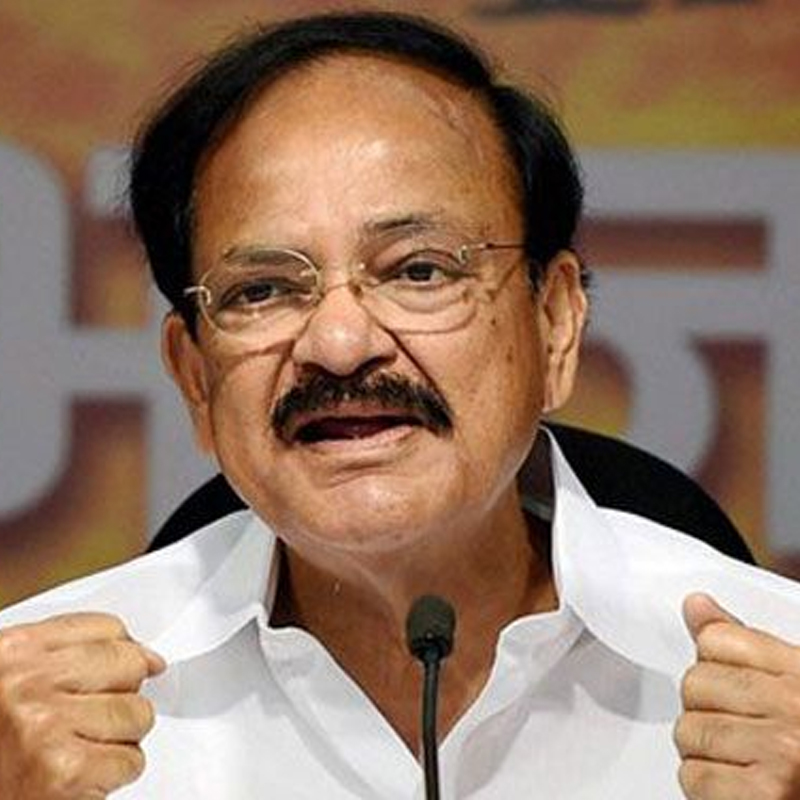
    NEW DELHI: Reiterating that action was taken against telecasting of unpermitted television channels, Information and Broadcasting Minister M Vekaiaih Naidu said today that such complaints were received against some cable operators from some districts such as Kurnool and Aurangabad regarding carriage of Peace TV channel.

    He told the Rajya Sabha that the complaints were forwarded to the District Collector for necessary action by the authorized officers under the Cable Television Networks (Regulation) Act 1995 and Rules 1994.

    “They have reportedly taken action”, the Minister added in reply to a question.

    The Ministry has also invited complaints by the general public regarding transmission of unpermitted satellite TV channels by cable operators on its social media platforms. These are also forwarded to the District Collectors for necessary action.

    Whenever instances are brought to the notice of thr Ministry regarding Uplinking of unpermitted TV channels through any Indian teleport, action is taken to stop the same as per the provisions of Uplinking guidelines 2011, he said.

    He said that the Cable Act and Cable Rules regulates the transmission and re-transmission of TV channels over the Cable Networks. The Authorized Officers (the District Magistrates, the Additional District Magistrates, the Sub-Divisional Magistrates and the Commissioners of Police within their territorial jurisdiction) under the Act are empowered to take action whenever violations of the Cable Act, 1995 are brought to notice.

    The Telecom Regulatory Authority of India (TRAI) has made recommendations on the regulation of ground channels in this regard.

    Meanwhile, he said his Ministry had on 8 July 2016 issued advisories to the State Governments and Union Territories, the District Collectors and the MSOs/LCOs that no unpermitted satellite channel such as Peace TV should be carried by the cable operators in the country.

    In addition, the Ministry has issued advisories from time to time to the State Governments and Union Territories to constitute State and District Level Monitoring Committees for recommending action against broadcast content being carried by the cable operators which are in violation of the Programme Code and the Advertisement Code under the Cable Act 1995.

    The Ministry has mandated Digitization of the entire cable network in the country by December, 2016 in a phased manner through the introduction of the Digital Addressable Systems (DAS). This measure is expected to address the issues of transmission of unpermitted TV channels, he added.

  • Action “reportedly” taken against LCOs in Kurnool and Aurangabad showing Peace TV: Naidu

    Action “reportedly” taken against LCOs in Kurnool and Aurangabad showing Peace TV: Naidu

    NEW DELHI: Reiterating that action was taken against telecasting of unpermitted television channels, Information and Broadcasting Minister M Vekaiaih Naidu said today that such complaints were received against some cable operators from some districts such as Kurnool and Aurangabad regarding carriage of Peace TV channel.

    He told the Rajya Sabha that the complaints were forwarded to the District Collector for necessary action by the authorized officers under the Cable Television Networks (Regulation) Act 1995 and Rules 1994.

    “They have reportedly taken action”, the Minister added in reply to a question.

    The Ministry has also invited complaints by the general public regarding transmission of unpermitted satellite TV channels by cable operators on its social media platforms. These are also forwarded to the District Collectors for necessary action.

    Whenever instances are brought to the notice of thr Ministry regarding Uplinking of unpermitted TV channels through any Indian teleport, action is taken to stop the same as per the provisions of Uplinking guidelines 2011, he said.

    He said that the Cable Act and Cable Rules regulates the transmission and re-transmission of TV channels over the Cable Networks. The Authorized Officers (the District Magistrates, the Additional District Magistrates, the Sub-Divisional Magistrates and the Commissioners of Police within their territorial jurisdiction) under the Act are empowered to take action whenever violations of the Cable Act, 1995 are brought to notice.

    The Telecom Regulatory Authority of India (TRAI) has made recommendations on the regulation of ground channels in this regard.

    Meanwhile, he said his Ministry had on 8 July 2016 issued advisories to the State Governments and Union Territories, the District Collectors and the MSOs/LCOs that no unpermitted satellite channel such as Peace TV should be carried by the cable operators in the country.

    In addition, the Ministry has issued advisories from time to time to the State Governments and Union Territories to constitute State and District Level Monitoring Committees for recommending action against broadcast content being carried by the cable operators which are in violation of the Programme Code and the Advertisement Code under the Cable Act 1995.

    The Ministry has mandated Digitization of the entire cable network in the country by December, 2016 in a phased manner through the introduction of the Digital Addressable Systems (DAS). This measure is expected to address the issues of transmission of unpermitted TV channels, he added.

  • Q1-17: Infrastructure leasing segment pulls down Ortel’s numbers

    Q1-17: Infrastructure leasing segment pulls down Ortel’s numbers

    BENGALURU: The Bibhu Prasad Rath led regional cable television and broadband internet player Ortel Communications Limited (Ortel) reported less than one third  ( 1/3.6 times) profit after tax (PAT) for the quarter ended 30 June 2016 (Q1-17, current quarter). Ortel reported PAT in Q1-17 at Rs 0.86 crore (1.6 percent margin) as compared to Rs 3.05 crore (7.5 percent margin) in the corresponding quarter of the previous year. The improved performance by company’s cable and broadband segments were pulled down by the lower execution of the company’s Infrastructure Leasing segment. Cable TV and broadband segments are the major contributors to Ortel’s numbers.

    Ortel provides services in the Indian states of Odisha, Chhattisgarh, Andhra Pradesh, Madhya Pradesh and West Bengal.

    Ortel’s Total Income from Operations (TIO) increased 29.1 percent year-over-year (y-o-y) in the current year to Rs 52.42 crore as compared to Rs 40.60 crore in Q1-16. TIO declined marginally (declined 1.6 percent) quarter-over-quarter (q-o-q) from Rs 53.28 crore in Q4-16.

    Company speak:

    Ortel President and CEO Rath said, “We have begun the year on a positive note with healthy results in our Cable Television and Broadband segments. This is reflected in the revenues which grew y-o-y by 45 percent and 26 percent respectively in Q1-17. I am also pleased to highlight that the total subscriber addition stood strong at 68,949 during the quarter taking our total subscriber base to 770,141. Our profitability however was impacted during the period under review primarily due to lower quarterly execution in the  Infrastructure Leasing business. Going forward I expect Infrastructure Leasing business to return back to normalcy in the coming quarters as execution picks up.

    Revenue breakup

    Cable TV revenue in Q1-17 increased 44.9 percent y-o-y to Rs 41.20 crore from Rs 28.43 crore in Q1-16 and increased 5.3 percent q-o-q from Rs 39.14 crore.

    Cable TV Activation fees or connection fees in Q1-17 were  almost 7 times at Rs 4.6 crore as compared to Rs 0.7 crore in Q1-16, but declined 23.8 percent q-o-q from Rs 6 crore. Cable TV subscription revenue in Q1-17 increased 38.7 percent y-o-y to Rs 27.7 crore from Rs 20 crore and increased 11.5 percent q-o-q from Rs 24.8 crore. Channel carriage fees in the current quarter increased 14.3 percent y-o-y to Rs 8.9 crore from Rs 7.8 crore and increased 7.8 percent q-o-q from Rs 8.3 crore.

    Broadband services revenue in Q1-17 increased 26 percent to Rs 9.5 crore from Rs 7.5 crore in Q1-16 and increased 6.3 percent q-o-q from Rs 8.9 crore. Internet connection fees in Q1-17 increased 13.4 percent y-o-y to Rs 0.7 crore from Rs 0.6 crore and increased 1.6 percent q-o-q. Internet subscription fees in Q1-17 increased 27 percent y-o-y to Rs 8.8 crore from Rs 7 crore and increased 6.6 percent q-o-q from Rs 8.3 crore.

    Ortel’s revenue from its infrastructure leasing segment in Q1-17 declined 75.4 percent to Rs 10 crore from Rs3.9 crore in Q1-16 and declined 78.4 percent q-o-q from Rs 4.4 crore.

    On a geographical basis, in the current quarter, revenue from Ortel’c core market – Odisha increased 13.9 percent to Rs 42.2 crore from Rs 37.1 crore but declined 5.3 percent q-o-q from Rs 44.6 crore. EBIDTA from the Odisha region in Q1-17 increased 5.5 percent y-o-y to Rs 17.2 crore from Rs 16.3 crore but declined 14.3 percent q-o-q from Rs 20.1 crore

    Revenue from Ortel’s Emerging Markets (Chhattisgarh, Madhya Pradesh, Andhra Pradesh, Telengana and West Bengal) more than tripled (3.2 times) y-o-y to Rs 9.7 crore in q1-17 from Rs 3 crore and increased 15.3 percent q-o-q from Rs 8.4 crore. Emerging markets reported lower negative EBIDTA in Q1-17 at Rs 0.7 crore as compared to a negative EIDTA of Rs 1 crore in Q1-16  and same as the negative EBIDTA of Rs 0.7 crore in Q4-16.

    Subscription numbers (revenue generating units – RGUs’), ARPU

    During the current quarter, the total subscribers (both cable and television) stood at 770,141 subscribers. Net addition in Q1-17 stood at 68,949 as compared to 74,717 subscriber additions in Q4-16. Percentage of digital TV subscribers in Q1-17 increased to 43.6 from 37.1 in the immediate trailing quarter.

    Television ARPU’s have been falling. Analog and Digital TV ARPU stood as Rs. 141 per month and Rs. 169 per month respectively. Digital ARPU in Q1-16 was Rs 185 and in Q4-16, it was Rs 178.

    The company added 5,124 broadband subscribers in Q1-17, taking its total broadband subscriber count to 77.609.

    Broadband ARPU in the current quarter increased to Rs 401 from Rs 393 in Q1-16 and Rs 398 in Q4-16.

    Let us look at the other numbers reported by Ortel in brief.

    Higher y-o-y total expenses (TE) in Q1-17 have also resulted in the lower PAT numbers for Q1-17 vis-à-vis Q1-16. Ortel’s TE in the current quarter increased 33.2 percent y-o-y to Rs 45.86 crore (87.5 percent of TIO) as compared to Rs 34.42 crore (84.8 percent of TIO), and increased 2.3 percent q-o-q from Rs 44.82 crore (84.1 percent of TIO).

    Programming cost in Q1-17 came in higher at Rs. 10 crore. Employee expenses during the current quarter stood higher y-o-y at Rs. 6.22 crore. EBITDA in Q1-17 (including other income) came in at Rs. 12.51 crore, representing a q-o-q decline of 6.1 percent.

    Note: The unit of currency in this report is the Indian rupee – Rs (also conventionally represented by INR). The Indian numbering system or the Vedic numbering system has been used to denote money values. The basic conversion to the international norm would be:

    (a) 100,00,000 = 100 lakh = 10,000,000 = 10 million = 1 crore.

    (b) 10,000 lakh = 100 crore = 1 arab = 1 billion.
  • Q1-17: Infrastructure leasing segment pulls down Ortel’s numbers

    Q1-17: Infrastructure leasing segment pulls down Ortel’s numbers

    BENGALURU: The Bibhu Prasad Rath led regional cable television and broadband internet player Ortel Communications Limited (Ortel) reported less than one third  ( 1/3.6 times) profit after tax (PAT) for the quarter ended 30 June 2016 (Q1-17, current quarter). Ortel reported PAT in Q1-17 at Rs 0.86 crore (1.6 percent margin) as compared to Rs 3.05 crore (7.5 percent margin) in the corresponding quarter of the previous year. The improved performance by company’s cable and broadband segments were pulled down by the lower execution of the company’s Infrastructure Leasing segment. Cable TV and broadband segments are the major contributors to Ortel’s numbers.

    Ortel provides services in the Indian states of Odisha, Chhattisgarh, Andhra Pradesh, Madhya Pradesh and West Bengal.

    Ortel’s Total Income from Operations (TIO) increased 29.1 percent year-over-year (y-o-y) in the current year to Rs 52.42 crore as compared to Rs 40.60 crore in Q1-16. TIO declined marginally (declined 1.6 percent) quarter-over-quarter (q-o-q) from Rs 53.28 crore in Q4-16.

    Company speak:

    Ortel President and CEO Rath said, “We have begun the year on a positive note with healthy results in our Cable Television and Broadband segments. This is reflected in the revenues which grew y-o-y by 45 percent and 26 percent respectively in Q1-17. I am also pleased to highlight that the total subscriber addition stood strong at 68,949 during the quarter taking our total subscriber base to 770,141. Our profitability however was impacted during the period under review primarily due to lower quarterly execution in the  Infrastructure Leasing business. Going forward I expect Infrastructure Leasing business to return back to normalcy in the coming quarters as execution picks up.

    Revenue breakup

    Cable TV revenue in Q1-17 increased 44.9 percent y-o-y to Rs 41.20 crore from Rs 28.43 crore in Q1-16 and increased 5.3 percent q-o-q from Rs 39.14 crore.

    Cable TV Activation fees or connection fees in Q1-17 were  almost 7 times at Rs 4.6 crore as compared to Rs 0.7 crore in Q1-16, but declined 23.8 percent q-o-q from Rs 6 crore. Cable TV subscription revenue in Q1-17 increased 38.7 percent y-o-y to Rs 27.7 crore from Rs 20 crore and increased 11.5 percent q-o-q from Rs 24.8 crore. Channel carriage fees in the current quarter increased 14.3 percent y-o-y to Rs 8.9 crore from Rs 7.8 crore and increased 7.8 percent q-o-q from Rs 8.3 crore.

    Broadband services revenue in Q1-17 increased 26 percent to Rs 9.5 crore from Rs 7.5 crore in Q1-16 and increased 6.3 percent q-o-q from Rs 8.9 crore. Internet connection fees in Q1-17 increased 13.4 percent y-o-y to Rs 0.7 crore from Rs 0.6 crore and increased 1.6 percent q-o-q. Internet subscription fees in Q1-17 increased 27 percent y-o-y to Rs 8.8 crore from Rs 7 crore and increased 6.6 percent q-o-q from Rs 8.3 crore.

    Ortel’s revenue from its infrastructure leasing segment in Q1-17 declined 75.4 percent to Rs 10 crore from Rs3.9 crore in Q1-16 and declined 78.4 percent q-o-q from Rs 4.4 crore.

    On a geographical basis, in the current quarter, revenue from Ortel’c core market – Odisha increased 13.9 percent to Rs 42.2 crore from Rs 37.1 crore but declined 5.3 percent q-o-q from Rs 44.6 crore. EBIDTA from the Odisha region in Q1-17 increased 5.5 percent y-o-y to Rs 17.2 crore from Rs 16.3 crore but declined 14.3 percent q-o-q from Rs 20.1 crore

    Revenue from Ortel’s Emerging Markets (Chhattisgarh, Madhya Pradesh, Andhra Pradesh, Telengana and West Bengal) more than tripled (3.2 times) y-o-y to Rs 9.7 crore in q1-17 from Rs 3 crore and increased 15.3 percent q-o-q from Rs 8.4 crore. Emerging markets reported lower negative EBIDTA in Q1-17 at Rs 0.7 crore as compared to a negative EIDTA of Rs 1 crore in Q1-16  and same as the negative EBIDTA of Rs 0.7 crore in Q4-16.

    Subscription numbers (revenue generating units – RGUs’), ARPU

    During the current quarter, the total subscribers (both cable and television) stood at 770,141 subscribers. Net addition in Q1-17 stood at 68,949 as compared to 74,717 subscriber additions in Q4-16. Percentage of digital TV subscribers in Q1-17 increased to 43.6 from 37.1 in the immediate trailing quarter.

    Television ARPU’s have been falling. Analog and Digital TV ARPU stood as Rs. 141 per month and Rs. 169 per month respectively. Digital ARPU in Q1-16 was Rs 185 and in Q4-16, it was Rs 178.

    The company added 5,124 broadband subscribers in Q1-17, taking its total broadband subscriber count to 77.609.

    Broadband ARPU in the current quarter increased to Rs 401 from Rs 393 in Q1-16 and Rs 398 in Q4-16.

    Let us look at the other numbers reported by Ortel in brief.

    Higher y-o-y total expenses (TE) in Q1-17 have also resulted in the lower PAT numbers for Q1-17 vis-à-vis Q1-16. Ortel’s TE in the current quarter increased 33.2 percent y-o-y to Rs 45.86 crore (87.5 percent of TIO) as compared to Rs 34.42 crore (84.8 percent of TIO), and increased 2.3 percent q-o-q from Rs 44.82 crore (84.1 percent of TIO).

    Programming cost in Q1-17 came in higher at Rs. 10 crore. Employee expenses during the current quarter stood higher y-o-y at Rs. 6.22 crore. EBITDA in Q1-17 (including other income) came in at Rs. 12.51 crore, representing a q-o-q decline of 6.1 percent.

    Note: The unit of currency in this report is the Indian rupee – Rs (also conventionally represented by INR). The Indian numbering system or the Vedic numbering system has been used to denote money values. The basic conversion to the international norm would be:

    (a) 100,00,000 = 100 lakh = 10,000,000 = 10 million = 1 crore.

    (b) 10,000 lakh = 100 crore = 1 arab = 1 billion.