Category: Cable TV

  • DAS 4 deadline extended to 31 Mar

    DAS 4 deadline extended to 31 Mar

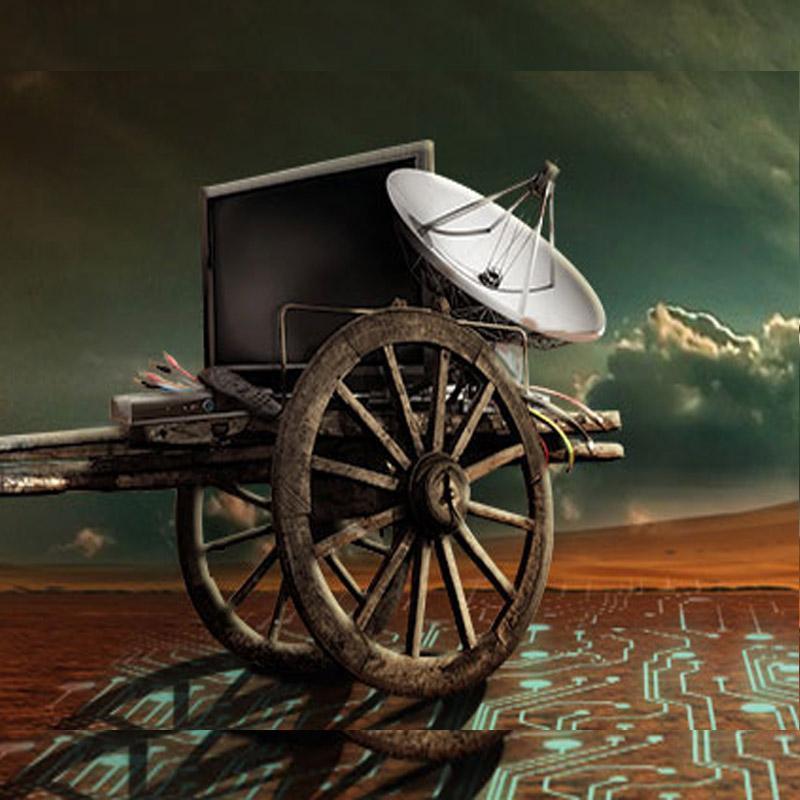
    NEW DELHI: Digitisation of the final (fourth) phase of Digital Addressable System has been put off to 31 March 2017.

    The information and broadcasting ministry said this was being done “in lieu of uncertainty in the market due to pending court cases and unsatisfactory progress of installation of set-top boxes (STBs) in Phase IV areas.” Digitisation in rural areas was targeted to be achieved by 31 December, 2016, under Phase IV.

    The ministry said a notification in this regard will be issued shortly.

    The ministry is also providing additional time for the remaining subscribers in Phase III areas to switch over to digital mode of transmission by 31 January 2017 on account of ongoing court proceedings.

    In Phase III areas, digitisation in remaining urban areas in the country was to be completed by 31 December, 2015. However, some MSO associations/individuals had moved various High Courts and obtained either extension of cut-off date / stay on the operationalisation of the notifications of the ministry dated 11 November 2011 and 11 September 2014.

    The matter was raised before the Supreme Court by the ministry, which transferred all the cases to the Delhi High Court for hearing in an order on 1 April 2016. The Delhi High Court disposed of most of the cases, and the ministry said, “It is very likely that the remaining cases would also be finally disposed of in very near future.”

    The ministry will be issuing instructions to all the broadcasters, multi-system operators (MSOs), local cable operators (LCOs) and the authorised officers to ensure that no analog signals would be transmitted over the cable networks in Phase III areas after 31 January 2017.

    The ministry also made clear that no further extension of time would be allowed.

    The Cable Television Networks (Regulation) Amendment Act, 2011, made it mandatory for switch-over of the existing analogue Cable TV networks to Digital Addressable System (DAS) in four phases. Digital switch-over has already taken place in Phase-I and II areas.

    However, a case is pending relating to Phase I in Chennai in the Madras High Court.
  • DAS 4 deadline extended to 31 Mar

    DAS 4 deadline extended to 31 Mar

    NEW DELHI: Digitisation of the final (fourth) phase of Digital Addressable System has been put off to 31 March 2017.

    The information and broadcasting ministry said this was being done “in lieu of uncertainty in the market due to pending court cases and unsatisfactory progress of installation of set-top boxes (STBs) in Phase IV areas.” Digitisation in rural areas was targeted to be achieved by 31 December, 2016, under Phase IV.

    The ministry said a notification in this regard will be issued shortly.

    The ministry is also providing additional time for the remaining subscribers in Phase III areas to switch over to digital mode of transmission by 31 January 2017 on account of ongoing court proceedings.

    In Phase III areas, digitisation in remaining urban areas in the country was to be completed by 31 December, 2015. However, some MSO associations/individuals had moved various High Courts and obtained either extension of cut-off date / stay on the operationalisation of the notifications of the ministry dated 11 November 2011 and 11 September 2014.

    The matter was raised before the Supreme Court by the ministry, which transferred all the cases to the Delhi High Court for hearing in an order on 1 April 2016. The Delhi High Court disposed of most of the cases, and the ministry said, “It is very likely that the remaining cases would also be finally disposed of in very near future.”

    The ministry will be issuing instructions to all the broadcasters, multi-system operators (MSOs), local cable operators (LCOs) and the authorised officers to ensure that no analog signals would be transmitted over the cable networks in Phase III areas after 31 January 2017.

    The ministry also made clear that no further extension of time would be allowed.

    The Cable Television Networks (Regulation) Amendment Act, 2011, made it mandatory for switch-over of the existing analogue Cable TV networks to Digital Addressable System (DAS) in four phases. Digital switch-over has already taken place in Phase-I and II areas.

    However, a case is pending relating to Phase I in Chennai in the Madras High Court.
  • TRAI: DAS-Bharatnet Digital India’s ‘Aadhaar’

    TRAI: DAS-Bharatnet Digital India’s ‘Aadhaar’

    NEW DELHI: Telecom Regulatory Authority of India chairman R S Sharma said that the country would gradually shift to a payment system using Aadhaar card instead of the various private pay systems or wallets.

    He also mentioned that the implementation of Bharatnet will be faster and effective with PPP model, and further combined with Digital Cable Television System, India will reach a new level of digital connectivity.

    At a seminar on “Demonetisation to Digital Remonetisation”, Sharma said that “Cost, Convenience, and Confidence are crucial factors for a successful Digital Payment System implementation in India.

    In the meet organzed by FICCI, he said 1.1 billion people already have Aadhaar cards and the number was going up everyday.

    Sharma said one of the nine pillars of TRAI in a report given early this year was to go cashless. This report which also refers to Unified Payment Interface (UPI) and Unstructured Supplementary Service Data (USSD) was already being implemented by banks.

    The regulator was now working on a system of Aadhaar KYC (Know Your Customer) whereby any consumer could directly be able to use his Aadhaar identification to make payments. Electronic KYC is also in place.

    He said that TRAI had given a paper about Aadhaar authentication system to UIDAI as early as October 2010 and said this is vital.

    This involved three elements: What I know (my finger print or Iris), what I have (Credit or Debit Cards) and What I am (Biometrics).

    Aadhaar interoperability was also suggested in 2010. Thus, the software for going cashless is in place but has to be implemented as both software and infrastructure are in place.

    It was important for the finance sector to get integrated into the telecom sector in this regard.

    Answering a question, he said that the systems have to be made simple so that everyone is able to understand and implement them.

    Sharma highlighted the pillars of Digital India and mentioned the need of an effective Digital Infrastructure, and how availability and affordability of digital solutions formulates the base of Digital Remonetisation. The TRAI chairman highlighted how JAM Trinity creates a robust system within India, which further creates a digital inclusion with Aadhaar users across India.

    Sharma recommended that in order to create a well operational and sustainable digital and cashless economy, it is vital to eliminate convenience charge by the banks. He firmly suggested that interoperable or interlinked digital wallets can additionally support the digital payment systems of India.

    The meet was part of an ICT policy dialogue with the agenda to discuss the challenges and opportunities that lie before the ICT sector, government and the regulators following the demonetisation move.

  • TRAI: DAS-Bharatnet Digital India’s ‘Aadhaar’

    TRAI: DAS-Bharatnet Digital India’s ‘Aadhaar’

    NEW DELHI: Telecom Regulatory Authority of India chairman R S Sharma said that the country would gradually shift to a payment system using Aadhaar card instead of the various private pay systems or wallets.

    He also mentioned that the implementation of Bharatnet will be faster and effective with PPP model, and further combined with Digital Cable Television System, India will reach a new level of digital connectivity.

    At a seminar on “Demonetisation to Digital Remonetisation”, Sharma said that “Cost, Convenience, and Confidence are crucial factors for a successful Digital Payment System implementation in India.

    In the meet organzed by FICCI, he said 1.1 billion people already have Aadhaar cards and the number was going up everyday.

    Sharma said one of the nine pillars of TRAI in a report given early this year was to go cashless. This report which also refers to Unified Payment Interface (UPI) and Unstructured Supplementary Service Data (USSD) was already being implemented by banks.

    The regulator was now working on a system of Aadhaar KYC (Know Your Customer) whereby any consumer could directly be able to use his Aadhaar identification to make payments. Electronic KYC is also in place.

    He said that TRAI had given a paper about Aadhaar authentication system to UIDAI as early as October 2010 and said this is vital.

    This involved three elements: What I know (my finger print or Iris), what I have (Credit or Debit Cards) and What I am (Biometrics).

    Aadhaar interoperability was also suggested in 2010. Thus, the software for going cashless is in place but has to be implemented as both software and infrastructure are in place.

    It was important for the finance sector to get integrated into the telecom sector in this regard.

    Answering a question, he said that the systems have to be made simple so that everyone is able to understand and implement them.

    Sharma highlighted the pillars of Digital India and mentioned the need of an effective Digital Infrastructure, and how availability and affordability of digital solutions formulates the base of Digital Remonetisation. The TRAI chairman highlighted how JAM Trinity creates a robust system within India, which further creates a digital inclusion with Aadhaar users across India.

    Sharma recommended that in order to create a well operational and sustainable digital and cashless economy, it is vital to eliminate convenience charge by the banks. He firmly suggested that interoperable or interlinked digital wallets can additionally support the digital payment systems of India.

    The meet was part of an ICT policy dialogue with the agenda to discuss the challenges and opportunities that lie before the ICT sector, government and the regulators following the demonetisation move.

  • Siti Networks appoints Sanjay Berry as CFO

    Siti Networks appoints Sanjay Berry as CFO

    MUMBAI: Siti Networks Ltd, a sister company of Zee group, has appointed Sanjay Berry as the chief financial officer of the company.

    The new CFO Berry was working as the corporate financial controller with Bharti Enterprises. Berry has been handling finance function with expertise in financial management, compliance and internal controls. In his 25 years of work life, he had varied experience with Computer Sciences Corporation, Bharti Airtel, Patni Computer Systems, HCL Technologies and Arthur Andersen & Associates.

    Siti Networks got its new sobriquet earlier this year. Prior to this it was known as Siti Cable Network Ltd.

    It has gained respect from the cable community and is reputed to have a robust business model. In August this year, got board approval to raise up to $100 million through the issuance of securities.

    Siti Networks has chalked up improved financials in its latest quarter financials. It reported a 23.6 percent and 2.9 percent year-over-year (y-o-y) growth in operating revenue and EBIDTA including other income for the quarter ended 30 September 2106 (Q2-17, current quarter). The growth in revenue was led by a 33.3 percent y-o-y growth in restated subscription revenue on net billing basis of Rs 135.3 crore (46.8 percent of Total Income from Operations or TIO) as compared to Rs 101.5 crore (43.4 percent of TIO) reported for the corresponding year ago quarter.

    The company’s cable TV customer base was stable at 1.22 crore in the current quarter as compared to the immediate trailing quarter. The company had 1.07 crore cable customers in Q2-16. The company says that is now present in 400 plus locations in India serving a total digital subscriber base of 87 lakh customers. For the last quarter the company had reported a digital subscriber base of 84 lakh and 59 lakh for Q2-16.

    Broadband revenue increased 167.7 percent y-o-y to Rs 24.9 crore (8.6 percent of TIO) in the current quarter from Rs 9.3 crore (4 percent of TIO) in Q2-16.

    By bringing in Berry who has a telecom background Siti Networks has indicated that its focus on the broadband sector is likely to increase as well that it is working on putting in place more rigorous financial processes in its operations.

  • Siti Networks appoints Sanjay Berry as CFO

    Siti Networks appoints Sanjay Berry as CFO

    MUMBAI: Siti Networks Ltd, a sister company of Zee group, has appointed Sanjay Berry as the chief financial officer of the company.

    The new CFO Berry was working as the corporate financial controller with Bharti Enterprises. Berry has been handling finance function with expertise in financial management, compliance and internal controls. In his 25 years of work life, he had varied experience with Computer Sciences Corporation, Bharti Airtel, Patni Computer Systems, HCL Technologies and Arthur Andersen & Associates.

    Siti Networks got its new sobriquet earlier this year. Prior to this it was known as Siti Cable Network Ltd.

    It has gained respect from the cable community and is reputed to have a robust business model. In August this year, got board approval to raise up to $100 million through the issuance of securities.

    Siti Networks has chalked up improved financials in its latest quarter financials. It reported a 23.6 percent and 2.9 percent year-over-year (y-o-y) growth in operating revenue and EBIDTA including other income for the quarter ended 30 September 2106 (Q2-17, current quarter). The growth in revenue was led by a 33.3 percent y-o-y growth in restated subscription revenue on net billing basis of Rs 135.3 crore (46.8 percent of Total Income from Operations or TIO) as compared to Rs 101.5 crore (43.4 percent of TIO) reported for the corresponding year ago quarter.

    The company’s cable TV customer base was stable at 1.22 crore in the current quarter as compared to the immediate trailing quarter. The company had 1.07 crore cable customers in Q2-16. The company says that is now present in 400 plus locations in India serving a total digital subscriber base of 87 lakh customers. For the last quarter the company had reported a digital subscriber base of 84 lakh and 59 lakh for Q2-16.

    Broadband revenue increased 167.7 percent y-o-y to Rs 24.9 crore (8.6 percent of TIO) in the current quarter from Rs 9.3 crore (4 percent of TIO) in Q2-16.

    By bringing in Berry who has a telecom background Siti Networks has indicated that its focus on the broadband sector is likely to increase as well that it is working on putting in place more rigorous financial processes in its operations.

  • Extend DAS deadline to Dec ’17 for fiber expansion, Andhra CM writes to MIB

    Extend DAS deadline to Dec ’17 for fiber expansion, Andhra CM writes to MIB

    MUMBAI: Andhra Pradesh chief minister N Chandrababu Naidu recently wrote to the union minister of urban development, information and broadcasting, housing and urban poverty alleviation M Venkaiah Naidu seeking extension of deadline for digitalisation of Cable TV services in the state he governs.

    In the letter dated 3 December, 2016, the chief minister stated: Under A.P. Fiber Grid Phase-I Project, a state-wide high speed Optical Fiber Network Infrastructure has been setup across the 13 Districts of the State leveraging the assets of the Electricity Department. A 24-Core ADSS Optical Fiber Cable has been laid for a length of around 23,000 Kms. over the electrical poles with its back-end electronic systems set up as the Points of Presence (PoPs) at 2445 identified locations. mainly electrical sub-stations. A state-wide control and command centre for this entire network has been commissioned at Visakhapatnam as a Network Operations Centre (NOC).

    The services from AP Fiber Grid will be delivered by the Andhra Pradesh State FiberNet Limited (APSFL) to the end-users i.e. households. offices / enterprises in partnership with the Multi System Operators (MSOs) and Local Cable Operators (LCOs) etc, the letter stated.

    The partners who provide the last mile connectivity through A.P Fiber Grid by hooking to the PoPs / NOC can immensely benefit from this system as they can provide triple play services — PTV, high-speed broadband and Telecom and value added services under a single umbrella, thus enhancing the scope for revenue generation. They will convert themselves as last mile operators, the key link between the AP Fiber Grid and the end-user

    (Around) 13,325 LCOs and MSOs have been registered so far with APSFL as business partners to provide last mile services. The works of AP Fiber Grid have been completed and at present the infrastructure is ready for delivering the intended Triple Play Services to the households / offices. Services are being provided successfully on a pilot/test basis to identified households/offices and the commercial Public services are planned to be launched in December 2016, Chandrababu’s letter added.

    The digitalisation of Cable TV services is not yet completed in Andhra Pradesh. To accelerate this process. APSFL has initiated procurement of Customer Premises Equipment Boxes (GPON basic box+ IPTV box with WiFi) for enabling expeditious spread of AP fiber triple pay services in A.P. The CPE boxes will be seeded to the households through the APSFL’s last mile business partners i.e., MS0s/LCOs, the letter added.

    Further, Chandrababu states, the registered MS0s/LCOs can also procure & seed the CPE boxes on their own.

    It is estimated that the households under Analog cable TV services will be digitalised through AP Fiber services in the next 1 year period. The last mile operators (MS0s/LC0s) need some more time beyond 31 December, 2016, to procure and seed Digital CPE boxes under AP Fiber Grid as the technology and the business model being implemented is first-of-its kind and unique in AP.

    Keeping in view the potential for Digital empowerment of citizens through AP Fiber, which enables delivery of a host of citizen-centric digital services apart from IPTV, it is essential that sufficient time window is given to spread the services under AP Fiber Grid.

    Hence, taking into account the special situation in Andhra Pradesh, it is requested to extend the deadline for digitalisation of cable TV services in A.P up to 31 December, 2017 in Phase-III & Phase-IV in the interest of smooth expansion of AP Fiber services as explained above towards realising the vision of Digital India.

    Necessary instructions may please be issued to various broadcasters and implementing agencies in this regard, the chief minister urges the central ministry.

  • Extend DAS deadline to Dec ’17 for fiber expansion, Andhra CM writes to MIB

    Extend DAS deadline to Dec ’17 for fiber expansion, Andhra CM writes to MIB

    MUMBAI: Andhra Pradesh chief minister N Chandrababu Naidu recently wrote to the union minister of urban development, information and broadcasting, housing and urban poverty alleviation M Venkaiah Naidu seeking extension of deadline for digitalisation of Cable TV services in the state he governs.

    In the letter dated 3 December, 2016, the chief minister stated: Under A.P. Fiber Grid Phase-I Project, a state-wide high speed Optical Fiber Network Infrastructure has been setup across the 13 Districts of the State leveraging the assets of the Electricity Department. A 24-Core ADSS Optical Fiber Cable has been laid for a length of around 23,000 Kms. over the electrical poles with its back-end electronic systems set up as the Points of Presence (PoPs) at 2445 identified locations. mainly electrical sub-stations. A state-wide control and command centre for this entire network has been commissioned at Visakhapatnam as a Network Operations Centre (NOC).

    The services from AP Fiber Grid will be delivered by the Andhra Pradesh State FiberNet Limited (APSFL) to the end-users i.e. households. offices / enterprises in partnership with the Multi System Operators (MSOs) and Local Cable Operators (LCOs) etc, the letter stated.

    The partners who provide the last mile connectivity through A.P Fiber Grid by hooking to the PoPs / NOC can immensely benefit from this system as they can provide triple play services — PTV, high-speed broadband and Telecom and value added services under a single umbrella, thus enhancing the scope for revenue generation. They will convert themselves as last mile operators, the key link between the AP Fiber Grid and the end-user

    (Around) 13,325 LCOs and MSOs have been registered so far with APSFL as business partners to provide last mile services. The works of AP Fiber Grid have been completed and at present the infrastructure is ready for delivering the intended Triple Play Services to the households / offices. Services are being provided successfully on a pilot/test basis to identified households/offices and the commercial Public services are planned to be launched in December 2016, Chandrababu’s letter added.

    The digitalisation of Cable TV services is not yet completed in Andhra Pradesh. To accelerate this process. APSFL has initiated procurement of Customer Premises Equipment Boxes (GPON basic box+ IPTV box with WiFi) for enabling expeditious spread of AP fiber triple pay services in A.P. The CPE boxes will be seeded to the households through the APSFL’s last mile business partners i.e., MS0s/LCOs, the letter added.

    Further, Chandrababu states, the registered MS0s/LCOs can also procure & seed the CPE boxes on their own.

    It is estimated that the households under Analog cable TV services will be digitalised through AP Fiber services in the next 1 year period. The last mile operators (MS0s/LC0s) need some more time beyond 31 December, 2016, to procure and seed Digital CPE boxes under AP Fiber Grid as the technology and the business model being implemented is first-of-its kind and unique in AP.

    Keeping in view the potential for Digital empowerment of citizens through AP Fiber, which enables delivery of a host of citizen-centric digital services apart from IPTV, it is essential that sufficient time window is given to spread the services under AP Fiber Grid.

    Hence, taking into account the special situation in Andhra Pradesh, it is requested to extend the deadline for digitalisation of cable TV services in A.P up to 31 December, 2017 in Phase-III & Phase-IV in the interest of smooth expansion of AP Fiber services as explained above towards realising the vision of Digital India.

    Necessary instructions may please be issued to various broadcasters and implementing agencies in this regard, the chief minister urges the central ministry.

  • ‘Vardah’: Cables uprooted; antennae warped: Chennai MSO, DTH most affected

    ‘Vardah’: Cables uprooted; antennae warped: Chennai MSO, DTH most affected

    MUMBAI: It seemed that the month of December was not so favourable for the Indian state Tamil Nadu. We can recall that, last year, Tamil Nadu was badly affected by floods which caused damages to the tune of around Rs 9000 crore and hundreds of deaths. The more recent catastrophe is the cyclone Vardah, an intense storm to have hit the state again, which left at least 12 dead in TN and Andhra Pradesh.

    According to news reports, the severe cyclonic storm affected electricity, communication lines and put rail, road and air traffic in disarray as it crossed the coast, pounding Tiruvallur, Chennai, and Kanchipuram with heavy rain and squall.

    Also Tamil Nadu, being a broadcasting hub was badly affected by the calamity. Not only the broadcast industry but the MSOs, LCOs and DTH players too were terribly hit by the cyclone.

    Speaking to Indiantelevision.com, Raj TV vice-president programming and production vice-president Amit Bose said, “No one could do much to ease the situation because of power failure and heavy roadblocks due to uprooting of trees throughout the city. Internet and phones were out of system, and hence communication and mobility were affected.

    Bose added, “Productions were disrupted and TV viewing was not possible for the people of Chennai. DTH and cable connections were thrown out of gear and even for the people who had inverters and cable homes deserted on a powerless mode. Power backups could not sustain for a long time. This calamity might have affected Chennai’s viewership more than rest of the markets. On the whole, I apprehend the broadcasters, MSOs and viewers suffered the most.”

    Polimer TV creative consultant Mathivannan Raju said, “Failure of power is the major issue right now. Also, the antennae of houses with a DTH connection have been destroyed, and there is no way to watch television. The issue is on the path to rectification.”

    Raju added, “Of course, viewership will be affected due to the unfortunate event, which will eventually affect revenue as well but it is something beyond control. As this wasn’t our strategic plan, I am unsure how its actual impact on revenues. But, the MSOs and DTH industry has been majorly affected.”

    Commenting on the cable industry, Raju said, “At present, cables used for delivering television content have been washed away in Chennai. Almost 99 per cent cables switched off. To recover the lost ground, we need to establish the complete network again. Most of the dish antennae that MSOs had installed have been dislocated, and we need to reinstall them.” “Moreover, on the LCOs front, cables from their office to the consumer’s houses/offices have been eroded. Most of the fibre cable severed into pieces; a new network of cables will now be required,” Raju lamented.

    On the MSOs front, Chennai Metro Cable Operators Association general secretary MR Srinivasan said that there was a short supply of fibre cable and other equipment; that’s another problem that the cable industry was facing. In next 10-12 days, the association believes, everything will come to normal.”

    As there was negligible electricity in the state, Srinivasan said, it was difficult to check whether DTH antennae were working properly.

    From 15 December, the electricity will hopefully be reinstated; and only then people will come to know about the actual conditions vis-a-vis entertainment. With 120 km of wind speed, the antenna might have dislocated from their places, they need to be realigned.

    On the DTH front, Tata Sky CEO Harit Nagpal said that the cyclone had not affected the DTH industry in any way. The dish antennae at the residences of some subscribers might have tilted because of the strong winds, and this might have had temporarily affected reception, but this was set right by the subscribers themselves, and so there were no complaints of any disruption.

    Another MSO from Chennai informed that it would take another week for the cable industry to get to normal functioning in Chennai and other parts of the state. The state and local government will step in to clear fallen trees and restore wires.

  • ‘Vardah’: Cables uprooted; antennae warped: Chennai MSO, DTH most affected

    ‘Vardah’: Cables uprooted; antennae warped: Chennai MSO, DTH most affected

    MUMBAI: It seemed that the month of December was not so favourable for the Indian state Tamil Nadu. We can recall that, last year, Tamil Nadu was badly affected by floods which caused damages to the tune of around Rs 9000 crore and hundreds of deaths. The more recent catastrophe is the cyclone Vardah, an intense storm to have hit the state again, which left at least 12 dead in TN and Andhra Pradesh.

    According to news reports, the severe cyclonic storm affected electricity, communication lines and put rail, road and air traffic in disarray as it crossed the coast, pounding Tiruvallur, Chennai, and Kanchipuram with heavy rain and squall.

    Also Tamil Nadu, being a broadcasting hub was badly affected by the calamity. Not only the broadcast industry but the MSOs, LCOs and DTH players too were terribly hit by the cyclone.

    Speaking to Indiantelevision.com, Raj TV vice-president programming and production vice-president Amit Bose said, “No one could do much to ease the situation because of power failure and heavy roadblocks due to uprooting of trees throughout the city. Internet and phones were out of system, and hence communication and mobility were affected.

    Bose added, “Productions were disrupted and TV viewing was not possible for the people of Chennai. DTH and cable connections were thrown out of gear and even for the people who had inverters and cable homes deserted on a powerless mode. Power backups could not sustain for a long time. This calamity might have affected Chennai’s viewership more than rest of the markets. On the whole, I apprehend the broadcasters, MSOs and viewers suffered the most.”

    Polimer TV creative consultant Mathivannan Raju said, “Failure of power is the major issue right now. Also, the antennae of houses with a DTH connection have been destroyed, and there is no way to watch television. The issue is on the path to rectification.”

    Raju added, “Of course, viewership will be affected due to the unfortunate event, which will eventually affect revenue as well but it is something beyond control. As this wasn’t our strategic plan, I am unsure how its actual impact on revenues. But, the MSOs and DTH industry has been majorly affected.”

    Commenting on the cable industry, Raju said, “At present, cables used for delivering television content have been washed away in Chennai. Almost 99 per cent cables switched off. To recover the lost ground, we need to establish the complete network again. Most of the dish antennae that MSOs had installed have been dislocated, and we need to reinstall them.” “Moreover, on the LCOs front, cables from their office to the consumer’s houses/offices have been eroded. Most of the fibre cable severed into pieces; a new network of cables will now be required,” Raju lamented.

    On the MSOs front, Chennai Metro Cable Operators Association general secretary MR Srinivasan said that there was a short supply of fibre cable and other equipment; that’s another problem that the cable industry was facing. In next 10-12 days, the association believes, everything will come to normal.”

    As there was negligible electricity in the state, Srinivasan said, it was difficult to check whether DTH antennae were working properly.

    From 15 December, the electricity will hopefully be reinstated; and only then people will come to know about the actual conditions vis-a-vis entertainment. With 120 km of wind speed, the antenna might have dislocated from their places, they need to be realigned.

    On the DTH front, Tata Sky CEO Harit Nagpal said that the cyclone had not affected the DTH industry in any way. The dish antennae at the residences of some subscribers might have tilted because of the strong winds, and this might have had temporarily affected reception, but this was set right by the subscribers themselves, and so there were no complaints of any disruption.

    Another MSO from Chennai informed that it would take another week for the cable industry to get to normal functioning in Chennai and other parts of the state. The state and local government will step in to clear fallen trees and restore wires.