Category: Cable TV

  • MSOs get permission to operate in other areas apart from permitted areas

    MSOs get permission to operate in other areas apart from permitted areas

    NEW DELHI: In a major change of policy aimed at expediting digital addressability of cable television in the country, the Government late this evening said all registered multi system operators “are free to operate in any parts of tire country, irrespective of registration for specified DAS notified area(s) granted earlier”.

    Until now, MSOs are licensed by the Information and Broadcasting Ministry to operate only in areas specified by them in their applications, unless they have applied for pan-India registration.

    A notice on the Ministry website said if any registered MSO has operationalized the service in any DAS notified area(s) in any part of the country, it would be treated as having been implemented the service on his part irrespective of the number of the Set Top Boxes (STBs) installed by him.

    However, the registered MSO has to submit the details of Headend, SMS, subscribers list and a self-certificate that he is carrying all the mandatory TV channels.

    This has to be done within six months from date of issuance of MSO registration to the Ministry, failing which the MSO registration is liable to cancelled/suspended.

    All other terms and conditions of the registration shall remain unchanged

    Also Read :

    No DAS III extension beyond 31 Jan, reiterates MIB

    Budget 2017 Wish-list: MSOs demand industry status, rationalisation of entertainment & services taxes

    TRAI to meet b’casters, MSOs, DTH ops, telcos on ’17 roadmap

  • MSOs get permission to operate in other areas apart from permitted areas

    MSOs get permission to operate in other areas apart from permitted areas

    NEW DELHI: In a major change of policy aimed at expediting digital addressability of cable television in the country, the Government late this evening said all registered multi system operators “are free to operate in any parts of tire country, irrespective of registration for specified DAS notified area(s) granted earlier”.

    Until now, MSOs are licensed by the Information and Broadcasting Ministry to operate only in areas specified by them in their applications, unless they have applied for pan-India registration.

    A notice on the Ministry website said if any registered MSO has operationalized the service in any DAS notified area(s) in any part of the country, it would be treated as having been implemented the service on his part irrespective of the number of the Set Top Boxes (STBs) installed by him.

    However, the registered MSO has to submit the details of Headend, SMS, subscribers list and a self-certificate that he is carrying all the mandatory TV channels.

    This has to be done within six months from date of issuance of MSO registration to the Ministry, failing which the MSO registration is liable to cancelled/suspended.

    All other terms and conditions of the registration shall remain unchanged

    Also Read :

    No DAS III extension beyond 31 Jan, reiterates MIB

    Budget 2017 Wish-list: MSOs demand industry status, rationalisation of entertainment & services taxes

    TRAI to meet b’casters, MSOs, DTH ops, telcos on ’17 roadmap

  • Is DAS III optional in AP, Telangana? HC seeks Govt answer by 31 Jan

    Is DAS III optional in AP, Telangana? HC seeks Govt answer by 31 Jan

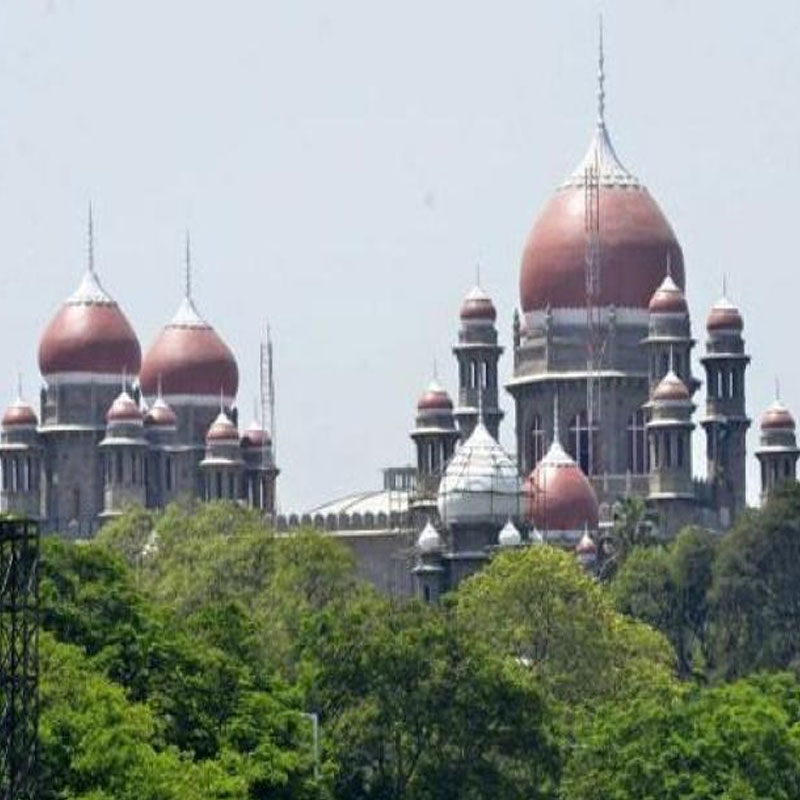
    MUMBAI: A high court division bench has directed the Centre to respond to a PIL questioning the coercive manner in which the authorities were trying to bring in digital transmission of television programmes. Posting the case to 31 January, the bench has directed Central Government to clarify the issue.

    The bench of the Hyderabad High Court of justice Shameem Akther and acting chief justice Ramesh Ranganathan directed the Central Government to respond to the public interest litigation questioning the manner in which the authorities were trying to bring in digital transmission even in small towns in Telangana and Andhra Pradesh in place of transmission through cable television mode, the Hindu reported.

    The bench was hearing a case filed by the Citizens Welfare Society of Hyderabad. The court was told that, though an Act has made digital transmission mandatory, the explanation said it was optional. Meanwhile, the Society argued, citizens were being coerced. Two phases of digital addressable system (DAS) were completed whereby major cities were covered.

    The Centre now had started the third phase of DAS covering small towns in the two states (and across India). Government officials, the Society argued, had been threatening that after 1 February, television sets without (digital) set top boxes would not get signals.

    Also Read:

    DAS petitions challenging constitutional provisions listed for 3 November   

    DAS Phase III stay extended in Uttar Pradesh, Telangana and Andhra Pradesh

    Govt claims almost 100 percent STB seeding in DAS III areas despite cases     

    Telangana state government sets up committees to track the television sector

  • Is DAS III optional in AP, Telangana? HC seeks Govt answer by 31 Jan

    Is DAS III optional in AP, Telangana? HC seeks Govt answer by 31 Jan

    MUMBAI: A high court division bench has directed the Centre to respond to a PIL questioning the coercive manner in which the authorities were trying to bring in digital transmission of television programmes. Posting the case to 31 January, the bench has directed Central Government to clarify the issue.

    The bench of the Hyderabad High Court of justice Shameem Akther and acting chief justice Ramesh Ranganathan directed the Central Government to respond to the public interest litigation questioning the manner in which the authorities were trying to bring in digital transmission even in small towns in Telangana and Andhra Pradesh in place of transmission through cable television mode, the Hindu reported.

    The bench was hearing a case filed by the Citizens Welfare Society of Hyderabad. The court was told that, though an Act has made digital transmission mandatory, the explanation said it was optional. Meanwhile, the Society argued, citizens were being coerced. Two phases of digital addressable system (DAS) were completed whereby major cities were covered.

    The Centre now had started the third phase of DAS covering small towns in the two states (and across India). Government officials, the Society argued, had been threatening that after 1 February, television sets without (digital) set top boxes would not get signals.

    Also Read:

    DAS petitions challenging constitutional provisions listed for 3 November   

    DAS Phase III stay extended in Uttar Pradesh, Telangana and Andhra Pradesh

    Govt claims almost 100 percent STB seeding in DAS III areas despite cases     

    Telangana state government sets up committees to track the television sector

  • Q3-17: Den Networks reports higher ARPUs, subscription revenue & operating profits

    Q3-17: Den Networks reports higher ARPUs, subscription revenue & operating profits

    BENGALURU: Following the 26.7 percent year-over-year (y-o-y) increase in the previous quarter, multiple-systems operator (MSO) Den Networks Limited (Den) reported 29.7 percent y-o-y increase in consolidated Total Income from operations (TIO) for the quarter ended December 31, 2016 (Q3-17, current quarter) as compared to the corresponding year ago quarter (Q3-16). The company also reported a 75.1 percent quarter-over quarter (q-o-q) increase in consolidated operating profit (EBIDTA) to Rs 50.34 crore (18.7 percent margin) from Rs 28.75 crore (10.6 percent margin) in the current quarter. In the corresponding year ago quarter Den had reported an operating loss (negative EBIDTA) of Rs 39.56 crore. Den’s TIO for the current quarter was Rs 298.83 crore as compared to Rs 230.39 crore in Q3-16. EBIDTA including other income was Rs 62.60 crore (22.3 percent margin of TIO) in Q3-17 as opposed to an operating loss (including other income) of Rs 27.03 crore in Q3-16.

    Further the company reported lower losses for the current quarter as compared to the corresponding year ago quarter. Net loss after tax (PAT) reduced to Rs 45.19 crore in Q3-17 as compared to a loss of Rs 87.39 crore in Q3-16. Total Comprehensive Income (TCI) improved to a negative Rs 44.39 crore in Q3-17 as compared a negative Rs 87.18 crore in Q3-16.

    Said DEN Networks CEO SN Sharma: “The company continues to improve on cable subscription billing on a quarter on quarter basis. ARPU (including taxes) for DAS 1, 2 and 3 markets stood at Rs 125, Rs. 95 and Rs. 64 per box respectively which reflects on improvement of 11 per cent , 6 per cent and 23 per cent respectively on Q-o-Q basis , with a strong collection efficiency at 95 per cent .”

    Sharma also announced that DEN has  achieved break even in the company’s broadband business for the full quarter despite telecom launches and freebies offered by the big players.

    Segment numbers

    The company has two operating segments that contribute to revenue for now– Cable Distribution Network (Cable) and Broadband (brand Boomband). Both segments reported improved operating numbers. Its third segment – the soccer segment has no revenue as of now. The segment has neither income nor result for the current quarter. That’s because the company is gradually exiting from the business and has divested almost 80 per cent of its equity in the team.

    Cable segment reported 35.4 percent growth in operating revenue in Q3-17 at Rs 277.36 crore as compared to Rs 204.84 crore in Q3-16. The segment’s operating loss in the current quarter improved significantly to Rs 11.68 crore as compared to higher operating loss of Rs 43.90 core in Q3-16 and an operating loss of Rs 31.22 crore in the immediate trailing quarter.

    Broadband segment revenue increased 82.6 in the current quarter to Rs 21.47 crore as compared to Rs 11.76 crore in Q3-16. The segment reported lower standalone operating loss in Q3-17 of Rs 7.22 crore as compared to an operating loss of Rs 19.77 crore in the corresponding year ago quarter.

    Let us look at the other numbers reported by Den

    Other Income in Q3-17 declined 2.2 percent to Rs 12.26 crore as compared to Rs 12.53 crore in Q3-16

    Total Expenditure in the current quarter was 0.8 percent lower at Rs 317.73 crore (118.2 percent of TIO) as compared Rs 320.17 crore (162.6 percent of TIO) in Q3-16.

    A major cost head for Den is Content Costs which increased 3.5 percent to Rs 119.28 crore (44.4 percent of TIO) in Q3-17 from Rs 115.27 crore (58.5 percent of TIO).

    Other Expenses reduced 26.9 percent in the current quarter to Rs 84.44 crore (31.4 percent of TIO) as compared to Rs 115.49 crore (58.7 percent of TIO) in Q3-16.

    Placement fees increased 2.9 percent in the current quarter to Rs 11.82 crore (4.4 percent of TIO) as compared to Rs 11.49 crore (5.8 percent of TIO) in the corresponding year ago quarter.

    Employee benefits expense in Q3-17 increased 17.3 percent to Rs 32.95 crore (12.3 percent of TIO) as compared to Rs 28.10 crore (14.3 percent of TIO) in Q3-16.

    Finance costs in the current quarter increased 9 percent to Rs 20.44 crore (7.6 percent of TIO) as compared to Rs 18.75 crore (9.5 percent of TIO) in Q3-16.

    Note: (1) All numbers mentioned in this report are standalone unless stated otherwiserigh.

    (2)The unit of currency in this report is the Indian rupee – Rs (also conventionally represented by INR). The Indian numbering system or the Vedic numbering system has been used to denote money values. The basic conversion to the international norm would be:

    (a) 100,00,000 = 100 lakh = 10,000,000 = 10 million = 1 crore.

    (b) 10,000 lakh = 100 crore = 1 arab = 1 billion.
  • Q3-17: Den Networks reports higher ARPUs, subscription revenue & operating profits

    Q3-17: Den Networks reports higher ARPUs, subscription revenue & operating profits

    BENGALURU: Following the 26.7 percent year-over-year (y-o-y) increase in the previous quarter, multiple-systems operator (MSO) Den Networks Limited (Den) reported 29.7 percent y-o-y increase in consolidated Total Income from operations (TIO) for the quarter ended December 31, 2016 (Q3-17, current quarter) as compared to the corresponding year ago quarter (Q3-16). The company also reported a 75.1 percent quarter-over quarter (q-o-q) increase in consolidated operating profit (EBIDTA) to Rs 50.34 crore (18.7 percent margin) from Rs 28.75 crore (10.6 percent margin) in the current quarter. In the corresponding year ago quarter Den had reported an operating loss (negative EBIDTA) of Rs 39.56 crore. Den’s TIO for the current quarter was Rs 298.83 crore as compared to Rs 230.39 crore in Q3-16. EBIDTA including other income was Rs 62.60 crore (22.3 percent margin of TIO) in Q3-17 as opposed to an operating loss (including other income) of Rs 27.03 crore in Q3-16.

    Further the company reported lower losses for the current quarter as compared to the corresponding year ago quarter. Net loss after tax (PAT) reduced to Rs 45.19 crore in Q3-17 as compared to a loss of Rs 87.39 crore in Q3-16. Total Comprehensive Income (TCI) improved to a negative Rs 44.39 crore in Q3-17 as compared a negative Rs 87.18 crore in Q3-16.

    Said DEN Networks CEO SN Sharma: “The company continues to improve on cable subscription billing on a quarter on quarter basis. ARPU (including taxes) for DAS 1, 2 and 3 markets stood at Rs 125, Rs. 95 and Rs. 64 per box respectively which reflects on improvement of 11 per cent , 6 per cent and 23 per cent respectively on Q-o-Q basis , with a strong collection efficiency at 95 per cent .”

    Sharma also announced that DEN has  achieved break even in the company’s broadband business for the full quarter despite telecom launches and freebies offered by the big players.

    Segment numbers

    The company has two operating segments that contribute to revenue for now– Cable Distribution Network (Cable) and Broadband (brand Boomband). Both segments reported improved operating numbers. Its third segment – the soccer segment has no revenue as of now. The segment has neither income nor result for the current quarter. That’s because the company is gradually exiting from the business and has divested almost 80 per cent of its equity in the team.

    Cable segment reported 35.4 percent growth in operating revenue in Q3-17 at Rs 277.36 crore as compared to Rs 204.84 crore in Q3-16. The segment’s operating loss in the current quarter improved significantly to Rs 11.68 crore as compared to higher operating loss of Rs 43.90 core in Q3-16 and an operating loss of Rs 31.22 crore in the immediate trailing quarter.

    Broadband segment revenue increased 82.6 in the current quarter to Rs 21.47 crore as compared to Rs 11.76 crore in Q3-16. The segment reported lower standalone operating loss in Q3-17 of Rs 7.22 crore as compared to an operating loss of Rs 19.77 crore in the corresponding year ago quarter.

    Let us look at the other numbers reported by Den

    Other Income in Q3-17 declined 2.2 percent to Rs 12.26 crore as compared to Rs 12.53 crore in Q3-16

    Total Expenditure in the current quarter was 0.8 percent lower at Rs 317.73 crore (118.2 percent of TIO) as compared Rs 320.17 crore (162.6 percent of TIO) in Q3-16.

    A major cost head for Den is Content Costs which increased 3.5 percent to Rs 119.28 crore (44.4 percent of TIO) in Q3-17 from Rs 115.27 crore (58.5 percent of TIO).

    Other Expenses reduced 26.9 percent in the current quarter to Rs 84.44 crore (31.4 percent of TIO) as compared to Rs 115.49 crore (58.7 percent of TIO) in Q3-16.

    Placement fees increased 2.9 percent in the current quarter to Rs 11.82 crore (4.4 percent of TIO) as compared to Rs 11.49 crore (5.8 percent of TIO) in the corresponding year ago quarter.

    Employee benefits expense in Q3-17 increased 17.3 percent to Rs 32.95 crore (12.3 percent of TIO) as compared to Rs 28.10 crore (14.3 percent of TIO) in Q3-16.

    Finance costs in the current quarter increased 9 percent to Rs 20.44 crore (7.6 percent of TIO) as compared to Rs 18.75 crore (9.5 percent of TIO) in Q3-16.

    Note: (1) All numbers mentioned in this report are standalone unless stated otherwiserigh.

    (2)The unit of currency in this report is the Indian rupee – Rs (also conventionally represented by INR). The Indian numbering system or the Vedic numbering system has been used to denote money values. The basic conversion to the international norm would be:

    (a) 100,00,000 = 100 lakh = 10,000,000 = 10 million = 1 crore.

    (b) 10,000 lakh = 100 crore = 1 arab = 1 billion.
  • 16 local among 350 channels’ network launched in Jammu

    16 local among 350 channels’ network launched in Jammu

    MUMBAI: Another cable network Time-N-Tune (TNT) has been launched in the Jammu region in a move to connect the masses with the cable network system. The TNT management said it would endeavor to promote Jammu’s heritage and language.

    J&K minister Bali Bhagat formally launched the network at Talab Tillo in Jammu. Several personalities including Kashmir Times group editor-in-chief Prabodh Jamwal graced the occasion, Kashmir Times reported.

    In the initial phase, the network would offer a package of 350-plus channels, including 16 local channels comprising entertainment, news and regional languages such as Kashmiri and Dogri. The number of channels and services would gradually be be increased depending on the feedback.

    TNT proprietor Paras Magotra said that initially the reach would be within urban areas of Jammu, and would slowly extend to towns and rural areas. The primary focus would be on quality programmes as per the taste of the viewers.

    During the launch, Bhagat hailed Magotra for venturing into the field of knowledge and entertainment. He called upon the management to focus on quality programmes. Bhagat, appreciating the role of media, appreciated the fourth pillar of democracy for playing its role as per the people’s mandate.

  • 16 local among 350 channels’ network launched in Jammu

    16 local among 350 channels’ network launched in Jammu

    MUMBAI: Another cable network Time-N-Tune (TNT) has been launched in the Jammu region in a move to connect the masses with the cable network system. The TNT management said it would endeavor to promote Jammu’s heritage and language.

    J&K minister Bali Bhagat formally launched the network at Talab Tillo in Jammu. Several personalities including Kashmir Times group editor-in-chief Prabodh Jamwal graced the occasion, Kashmir Times reported.

    In the initial phase, the network would offer a package of 350-plus channels, including 16 local channels comprising entertainment, news and regional languages such as Kashmiri and Dogri. The number of channels and services would gradually be be increased depending on the feedback.

    TNT proprietor Paras Magotra said that initially the reach would be within urban areas of Jammu, and would slowly extend to towns and rural areas. The primary focus would be on quality programmes as per the taste of the viewers.

    During the launch, Bhagat hailed Magotra for venturing into the field of knowledge and entertainment. He called upon the management to focus on quality programmes. Bhagat, appreciating the role of media, appreciated the fourth pillar of democracy for playing its role as per the people’s mandate.

  • Ortel plans Rs 300 cr investment to improve efficiency & reach

    Ortel plans Rs 300 cr investment to improve efficiency & reach

    MUMBAI: Odisha’s largest multi-system operator (MSO) Ortel Communications plans to invest Rs 300 crore on expansion over the next two years. Ortel CEO BP Rath said it would utilise IPO proceeds, internal accrual, debt and equity to meet its need.

    Ortel, a regional cable television service-provider, is engaged in the distribution of analog and digital cable television services, high-speed broadband services & Voice over Internet Protocol services. Currently focused in the states of Orissa, Chhattishgarh, Andra Pradesh, Telangana, Madhya Pradesh & West Bengal, Ortel focuses on building a two-way state-of-the-art communication network enabled for ‘Triple Play’ services (video , data, and voice capabilities) with control over the ‘last mile’ .

    Rath said that Ortel would be making the investment on upgrading and expansing its infrastructure. The investment would help strengthen Ortel’s efficiency, reach and competitiveness. Ortel, which manages 90 per cent of its subscribers directly, in September last year, had a subs base of around 805,000.

    Also Read:

    BSNL leader in wireline b’band subs addition in Oct-16; Jio joins top five wireless list

    MSO Ortel strengthens digital payment services

    Q1-17: Infrastructure leasing segment pulls down Ortel’s numbers


  • Ortel plans Rs 300 cr investment to improve efficiency & reach

    Ortel plans Rs 300 cr investment to improve efficiency & reach

    MUMBAI: Odisha’s largest multi-system operator (MSO) Ortel Communications plans to invest Rs 300 crore on expansion over the next two years. Ortel CEO BP Rath said it would utilise IPO proceeds, internal accrual, debt and equity to meet its need.

    Ortel, a regional cable television service-provider, is engaged in the distribution of analog and digital cable television services, high-speed broadband services & Voice over Internet Protocol services. Currently focused in the states of Orissa, Chhattishgarh, Andra Pradesh, Telangana, Madhya Pradesh & West Bengal, Ortel focuses on building a two-way state-of-the-art communication network enabled for ‘Triple Play’ services (video , data, and voice capabilities) with control over the ‘last mile’ .

    Rath said that Ortel would be making the investment on upgrading and expansing its infrastructure. The investment would help strengthen Ortel’s efficiency, reach and competitiveness. Ortel, which manages 90 per cent of its subscribers directly, in September last year, had a subs base of around 805,000.

    Also Read:

    BSNL leader in wireline b’band subs addition in Oct-16; Jio joins top five wireless list

    MSO Ortel strengthens digital payment services

    Q1-17: Infrastructure leasing segment pulls down Ortel’s numbers