Category: Cable TV

  • Punjab govt. studying Arasu & other regulatory models on distribution

    NEW DELHI:  The Punjab Government is said to be studying Tamilnadu Arasu Cable TV Corporation (TACTV) model as also some other regulatory setups as part of a proposal to explore bringing about more transparency in  cable TV distribution system in the State, while breaking any monopoly that exists.

    A source in the state government confirmed to indiantelevision.com that structuring and functioning of Asasu is being studied by legal eagles. The source added that some other regulatory models are being studied too to explore setting up of a mechanism ensuring that any “monopoly in cable TV distribution”, if it exists, could be broken. The final aim: make the whole system transparent and democratic for all players to operate in Punjab.

    Former-cricketer-turned-politician-cum-TV-personality Navjot Singh Sidhu, a minister in the present Congress government in Punjab, had alleged in the state assembly some time back that  MSO Fastway Transmission Private Limited, under the “patronage” of the previous Akali government, had caused a loss of around Rs 6840 million to the state exchequer. Because of political patronage, Fastway monopolised the cable TV business in Punjab, a PTI report had stated, basing its observations on Sidhu’s claims.

    In a laudable step Punjab chief minister Amrinder Singh, despite his cabinet colleague’s outbursts, in a public statement few days later assured the TV industry  ruling out “vendetta politics”  or any witch-hunt against any MSO or TV channel. Still, he did say any allegations of  tax evasion would be probed as per the law.

    However, the Punjab government source was unable to fully explain to indiantelevision.com how studying the Arasu model would help as the TN MSO is a state government-run organization, which itself has been accused of  trying to monopolise cable TV distribution business in the south Indian state.

    In a set of recommendations first made in 2008, then in 2012 and reiterated in August 2014, broadcast and telecoms regulator TRAI had suggested barring government or government backed organizations from entering the business of TV broadcast or  distribution. The suggestions, part of media ownership’s proposed norms, have been gathering dust in the Ministry of Information and Broadcasting under successive governments.

    TRAI had observed: “Given that about six years have elapsed without any concrete action being taken by the government, the Authority strongly recommends that …political bodies, religious bodies, urban, local, panchayati raj, and other publicly funded bodies, and Central and State government ministries, departments, companies, undertakings, joint ventures, and government-funded entities and affiliates be barred from entry into broadcasting and TV channel distribution sectors…(and)  in case permission to any such organisations have already been granted, an appropriate exit route is to be provided.”

    ALSO READ:

    Punjab govt. vows to break cable monopoly, rules out blocking MSO Fastway

    Probe Punjab ‘cable mafia,’ demands minister, Fastway refutes charges


  • DEN Networks allots Rs 7.5 mn worth shares for eSOP

    MUMBAI: DEN Networks Limited has informed the corporate  relationship department of the National Stock Exchange of India and BSE Limited that it has allotted shares under DEN eSOP Plan B, 2014.

    In a communique signed by DEN company secretary Jatin Mahajan, it stated: This  is to inform you that the Securities  Committee, in its meeting dated 21 July, 2017, has issued  and allotted 7,50,000 equity shares of Rs. 10/- each at par to eligible employee(s) under DEN ESOP Plan.

    In a separate earlier report, Dish TV, Hathway & Den Networks were amongst the top 10 global Pay TV platforms, according to the Global Pay TV Operator Databook from Digital TV Research.

    Also, as reported earlier, three years after it announced its intention to get into TV home shopping, the Samir Manchanda-promoted  multi systems operator Den is exiting from it.  The company had launched a channel called DEN Snapdeal Home Shop in 2016   (in partnership with the ecommerce site) only to have its partner exit from it in March 2017.

    Also Read :

    Dish TV, Hathway & Den amongst top 10 global Pay TV platforms

    DEN Networks exits TV home shopping channel business

    DEN Networks ties up with Visiware, launches premium gaming service


  • GTPL boosts channels & OTT with Harmonic, can deliver to 8 mn homes

    MUMBAI: Harmonic, a leader in video delivery infrastructure, announced that GTPL, India’s leading digital cable TV distribution company, which reaches an estimate of more than 8 million households in more than 189 cities, has deployed a next-generation software-based unified video headend system from Harmonic.

    At the heart of the solution is Harmonic’s Electra™ X2 advanced media processor that supports MPEG-2, MPEG-4 AVC and HEVC encoding for both traditional cable television and live OTT multiscreen services, saving GTPL significant space and power consumption.

    “To remain competitive in the television distribution space, we needed to further differentiate our offering with compelling content, deliver higher video quality at a lower cost of operation and prepare for OTT,” said Aniruddhsinh Jadeja, managing director at GTPL Hathway. “Harmonic provides us with a complete headend solution for CATV and live OTT, with distribution of up to 650 cable television channels and 50 OTT channels from a unified management system. We can also support advanced features such as graphic overlay and scroll insertion, which are integral to our business. We are currently delivering live TV and have plans to explore catch-up TV, nPVR and 4K video in the future to provide an even better viewing experience to subscribers.”

    According to Frost & Sullivan, there are approximately 66 million unique connected video viewers in India, and about 1.3 million OTT paid video subscribers. The ability to support CATV and live OTT services from a unified headend provides interoperability capabilities, operational efficiency and opens up revenue opportunities for GTPL by enabling the operator to launch OTT offerings when ready.

    “Migrating to a software-based unified video headend for CATV and OTT delivery allows GTPL to roll out new offerings quickly and reduce costs through decreased space, power, equipment and personnel requirements,” said Tony Berthaud, vice president of sales, APAC, at Harmonic. “In the future, as GTPL further improves upon its video quality and service offerings, Harmonic’s software-based infrastructure will make it easy to adapt new codecs and formats.”

    The Electra X2 processor maximizes the efficiency and flexibility of statistical multiplexing through tight integration with Harmonic’s ProStream® video stream processor, allowing the operator to increase bandwidth efficiency and broaden its channel count. The unified headend also includes ProView™ integrated receiver-decoders for reception and ProMedia™ Package multiscreen stream packager for deploying secure live OTT services. Everything is managed through the NMX network management solution.

  • Supreme Court stays order on entertainment tax by LCOs

    NEW DELHI: The Supreme Court today stayed an order of the Entertainment Department of Delhi Government that entertainment tax should be paid by local cable operators with effect from 1 April 2013.

    The division bench of Justice Ranjan Gogoi and Justice Navin Sinha issued notice to multi-system operators and the Delhi Government to file their replies and listed the matter to come up on 1 September 2017.

    It was alleged by some associations of local cable operators – All Local Cable Operators Assciation, All Delhi Local Cable Operator Association, Cable Operators Welfare Association and Walled City Cable Operators Association — that they had earlier been paying entertainment tax to the MSOs but this had not been deposited with the Delhi Government.

    Meanwhile, some MSOs had approached the Delhi High Court challenging a directive of the Government of 17 December 2012 relating to DAS. In its ex-parte order, the Court on 9 March this year said that MSOs who had subscribers directly linked to them would pay the tax while the LCOs would pay for the subscribers linked to them.

    Consequently the Delhi Government had issued notices to the LCOs to deposit the tax from 1 April 2013 onwards.

    The LCOs thus alleged that this amounted to double taxation as they had already paid the entertainment tax to some of the MSOs who allegedly did not pay to the Government.

    Until 1997, the LCOs had been paying the tax but later this was passed on to MSOs to be paid. Later the Aam Aadmi Party government had doubled the tax from Rs 20 to Rs 40 in 2014.

  • Hinduja’s NXT Digital enters Fastway-dominated Punjab

    MUMBAI: It was announced with much fanfare, which simmered down. Now the Hinduja group promoted HITS platform NXT Digital has once again started making news. The group has stated that it is going to be pushing its headend in the sky (HITS) service in Punjab and Chandigarh.

    NXT Digital allows local cable operators to upgrade to digital cable TV serices at a mimimal expense. Speaking to the media Hinduja Media Group CEO Ashok Mansukhani on Friday said: “We have the state-of-the-art technology for digital TV viewing and our network in Punjab would ensure the viewers get uninterrupted world-class viewing experience at economical price in the market.”

    The entry of NXT Digital into Punjab will bring it head to head competition with Rs 500 crore turnover Fastway which has 2.45 million subscribers in Punjab, out of a national total of 4.2 million, of which 3.2 million are active. The other states in which Fastway has a presence is in Uttar Pradesh, Himachal Pradesh, Jammu&Kashmir, Rajasthan, Uttarakhand and Haryana.

    Speaking to Hindustan Times, Hinduja Media Group senior vice president Narinderpal Singh, claimed that NXT Digital has the active co-operation of the Congress state government which would welcome the existing and new cable operators to join them.

    Fastway, on the other hand, allegedly was closely linked to the previous Punjab government under the Shiromani Akali Dal (SAD) president Sukhbir Singh Badal.

    But that monopoly has been getting marginally eroded.

    Fastway MD Gurdeep Singh had acknowledged in an earlier media interview that the MSO has 5,290 cable operators (as compated to 6,500 cable operators from a total of 8,000 earlier) associated with it in Punjab and 159 in Chandigarh.

    “Some of the earlier ones have merged with others or gone to another multi-system operator, Hinduja Cable, which is a new player in Punjab. Then, some cable operators are aligned with other groups such as Bhullar Cable in Amritsar,” he had said.

    Will that marginal erosion becoming a landslide? For that, watch this space.

  • Rajesh Sethi re-designated chief biz transformation officer of Siti Networks

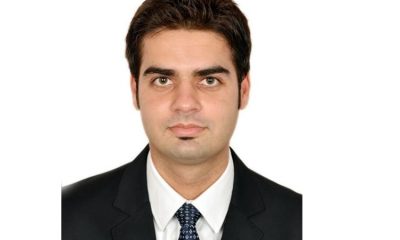
    MUMBAI: Rajesh Sethi, who had been appointed as executive director and CEO of Siti Networks sometime back, has been re-designated as  chief  business  transformation officer of the company with immediate effect.

    Before joining Siti Networks, Sethi served as CEO at Taj Television’s Ten Sports from 2013 to 2016 when it was still a subsidiary of Zee Entertainment. In a strategic decision last year, Zee sold its sports business, comprising TV channels marketed under Ten Sports brand, to Sony Pictures Network India. 

    Siti Networks also informed BSE that the the board of directors of the company at its meeting held on 14 July 2017, approved  the  appointment  of  Sidharth  Balakrishna  as a whole-time director of the company with immediate effect.

    Balakrishna has over 13 years of experience in the energy, infrastructure and education sectors. In the past he has led strategy and headed projects including in the fields of oil & gas, renewable energy, education, water and vocational training. Balakrishna has  also  been  a  strategy consultant with Accenture and KPMG. 

    ALSO READ: 

    Rajesh Sethi succeeds Wadhwa as ED & CEO of SITI Networks

    SPN India-SITI Networks dispute: TDSAT directs SITI to sign SPN RIO agreement (updated)

  • Fox’s Asia SVP Joe Welch named CASBAA board chairman

    MUMBAI: CASBAA, Asia’s media association serving the multichannel audio-visual content creation and distribution industry, has announced that Joe Welch has been named as the chairman of its board of directors.

    Welch is 21st Century Fox’s senior vice-president of government relations for the Asia-Pacific region. He is responsible for supporting the public policy and regulatory advocacy efforts of 21st Century Fox’s business units across the region.

    Previously, Welch served as MCI WorldCom’s Asia director of government affairs, and earlier was an attorney at the U.S. Federal Communications Commission in Washington, D.C.

    “I’m taking on this role at a time when we have a set of positive options at hand, many now in progress, that will make CASBAA sustainable and relevant for the long term,” Welch said. “For some time now, CASBAA has been moving to secure the ability to deliver ‘twin pillar’ services for members: advocacy and anti-piracy. I look forward to working together with the Board and the Executive Office in driving an effective delivery of these pillars while continuing our mission to inform and connect our members.”

    Welch replaces outgoing director Jonathan Spink of HBO Asia. Spink was elected the chairman of the board in December 2016, but stepped down recently, at the time stating “…a new vision for CASBAA is needed.” HBO remains a patron member of the association, and Spink expressed confidence that its new direction would “…fit in with the desires and requirements of our industry.”

  • Dish TV, Hathway & Den amongst top 10 global Pay TV platforms

    MUMBAI: Indian companies — Dish TV, Hathway & Den Networks are amongst the top 10 global Pay TV platforms, according to the Global Pay TV Operator Databook from Digital TV Research. For the top 10 operators, the global TV revenue share was 55 per cent in 2016, with the leading 50 operators taking three-quarters of the total.

    Despite high number of subscribers but low ARPUs, Asia Pacific’s top operators are much less prominent in the PPV and subscription rankings with respect to revenue. This is where the US companies were leading – with six among the top 10 in 2016.

    Subscribers of Pay-TV for 522 operators reached a significant number — 839 million in 2016 (that is, 87 per cent of the 959 million global subscribers).

    In all, 50 leading operators accounted for two-thirds of the global Pay-TV subscribers by end-2016, Advanced Television reported. At that time, 10 million paying subscribers were using the services of 15 operators, according to the Databook.

    Globally, China Radio & TV is the largest pay-TV operator with a huge gap. Chinese government policy to consolidate cable TV translated as China Radio becoming the globe’s largest by 2016 — accumulating 227 million subs.

    Digital TV Research principal analyst Simon Murray said that India and China’s dominance of the top pay-TV operator rankings had been increasing, as US operators lost subs and the two nations subscriber bases swelled.

    PPV and subs revenues for the 522 operators were around Rs 11.9 trillion (US$185 billion) in 2016. Around 30 pay-TV operators earned more than Rs 64.5 billion (US$1 billion) revenue.

    MUMBAI: Indian companies — Dish TV, Hathway & Den Networks are amongst the top 10 global Pay TV platforms, according to the Global Pay TV Operator Databook from Digital TV Research. For the top 10 operators, the global TV revenue share was 55 per cent in 2016, with the leading 50 operators taking three-quarters of the total.

    Despite high number of subscribers but low ARPUs, Asia Pacific’s top operators are much less prominent in the PPV and subscription rankings with respect to revenue. This is where the US companies were leading – with six among the top 10 in 2016.

    Subscribers of Pay-TV for 522 operators reached a significant number — 839 million in 2016 (that is, 87 per cent of the 959 million global subscribers).

    In all, 50 leading operators accounted for two-thirds of the global Pay-TV subscribers by end-2016, Advanced Television reported. At that time, 10 million paying subscribers were using the services of 15 operators, according to the Databook.

    Globally, China Radio & TV is the largest pay-TV operator with a huge gap. Chinese government policy to consolidate cable TV translated as China Radio becoming the globe’s largest by 2016 — accumulating 227 million subs.

    Digital TV Research principal analyst Simon Murray said that India and China’s dominance of the top pay-TV operator rankings had been increasing, as US operators lost subs and the two nations subscriber bases swelled.

    PPV and subs revenues for the 522 operators were around Rs 11.9 trillion (US$185 billion) in 2016. Around 30 pay-TV operators earned more than Rs 64.5 billion (US$1 billion) revenue.

    Top 10 operators by subscribers (000)
    Ranking Operator Country 2016
    1 China Radio & TV (total) China 226,535
    2 China Telecom (IPTV) China 52,038
    3 BesTV (IPTV) China 26,019
    4 AT&T (total) USA 25,065
    5 Comcast (total) USA 22,508
    6 Charter merged (total cable) USA 16,836
    7 Dish TV (satellite) India 13,582
    8 Hathway (total) India 13,300
    9 Den Networks (total) India 13,000
    10 DISH Network (satellite) USA 12,521
    Source: Digital TV Research
  • 170 TN companies start providing Arasu Net, IPTV plan under way

    MUMBAI: In all 170 Tamil Nadu companies have started providing Arasu internet services in the state. For providing IPTV (Internet Protocol Television) service, a detailed project report was under process.

    Arasu Cable TV had floated expression of interest (EoIs) to become business partners on revenue-sharing basis and about 392 applications were received. At present, 2,577 subscribers use the leased line internet connectivity. Tamil Nadu state government’s proposal to expand internet service connectivity has received a healthy response, PTI reported.

    Directions had been issued to 170 applicants for starting the internet service and about 24,750 households are expected to be provided with the internet service under this initiative.

    The TN government had floated a SPV (special purpose vehicle) ‘Tamil Nadu FiberNet Corporation’ to implement it. Telecom major Vodafone was selected by the Arasu Cable TV Corporation under the open tender process, an IT department policy note said.

    For the sake of cable TV digitisation, a global tender was floated in May for procuring 60 lakh standard and 10 lakh HD (high definition) STBs (set-top boxes). Tenders had been received from various companies and are being scrutinised. The number of cable television connections provided by Arasu rose to 70.52 lakh as of 1 May this year, as compared to 4.94 lakh in 2011.

    Also Read :

    37 new MSOs in 45 days takes total to 1421, seven among 59 cases sub-judice

    Arasu gets a month’s extension to go digital

    Arasu gets provisional MSO licence subject to analogue switch-off in three months

    TRAI keeping watch over Arasu, TN MSO extends digital hardware bids deadline

  • Punjab govt. vows to break cable monopoly, rules out blocking MSO Fastway

    NEW DELHI: Even though the Congress government in Punjab has made it clear it would not tolerate monopoly in information and news distribution via cable TV, the state government clarified no particular MSO company or TV channel would be targeted and action would be taken if found guilty of tax law violations.

    MSO Fastway, which holds sway in Punjab resulting virtually in a monopoly, is allegedly owned and operated by close aides of former Punjab chief minister’s family — the Badals. The decade-old MSO company also has sizable presence in neighbouring states of Himachal Pradesh, Haryana and Union territory of Chandigarh.

    In an official statement, the present CM Captain Amarinder Singh on Thursday ruled out any “censorship” (read blacklisting) of MSO Fastway and Punjabi-language TV channel PTC News or any other media organization. However, he made it clear that action would be taken against media companies if charges of tax violations are proved to be correct.

    Reiterating his government’s stand of providing a level-playing field to TV channels and cable operators, and, thus, encouraging healthy competition, the chief minister ruled out “vendetta politics” against political opponents, but vowed to take action against media companies indulging in malpractices.

    Earlier in April, a Punjab government official was quoted by local media outlets as saying the administration was committed to break any television or cable network monopoly in the state and that it proposes to undertake a study to explore legislating setting up of a Cable Network Authority for the purpose of implementing rules and regulations to be framed for broadcasters, MSOs and LCOs to operate in the State.

    On Thursday, Singh welcomed all segments of broadcasting and media businesses to establish their presence in Punjab, reiterating that his government was committed to “ending the cable mafia”.

    “Let them all come and compete for the viewers’ attention,” CM Singh said in the statement, adding that with wider choice, people would reject any channel found to be engaged in “biased dissemination of news or information”.

    However, the CM warned that if any channel or network, be it PTC or Fastway, is found indulging in “illegal activities in defiance of the legal provisions”, they would be prosecuted.

    Also Read:

    Probe Punjab ‘cable mafia,’ demands minister, Fastway refutes charges