Category: Cable TV

  • Indian pay-TV expanding by 10.6 pc, 77 pc to be digitised, ARPUs to rise by ’22: MPA

    Indian pay-TV expanding by 10.6 pc, 77 pc to be digitised, ARPUs to rise by ’22: MPA

    MUMBAI: Pay-TV players in Asia-Pacific region are girding up their loins to integrate online video into their service bouquets and recalibrate owing to broadband growth while concentrating and scaling up their investment on premium content as they stare at competition

    Indian pay-TV revenue, according to the new Media Partners Asia (MPA) report, is set to expand by 10.6 per cent this year. The annual ‘Asia Pacific Pay-TV Distribution 2017’ report covering 17 markets includes analysis of 80 pay-TV and broadband operators with KPIs and P&L.

    Pay-TV industry revenues in India are on track to pass the US$-10 billion mark this year, MPA states. Industry revenues are set to expand by 10.6 per cent this year, picking up the pace again after a 6.3 per cent growth rate in 2016.

    Cable, the dominant platform in Indian pay-TV with 59 per cent of subscription revenue and 67 per cent of subscribers, will expand by 7.0 per cent this year to exceed US$ 3.6 billion, according to MPA forecasts. Revenues for DTH satellite meanwhile will grow by 13.6 per cent to reach approximately US$ 2.6 billion. Pay-TV advertising, meanwhile, is set to contribute just over US $3.8 billion.

    Media Partners Asia president – India Mihir Shah said: “India’s pay-TV market has been shaken and stirred by macro-economic developments, from demonetisation to tax reform, as well as structural shifts in the marketplace, notably TV ratings for rural areas as well as proposals for a new tariff regime from the regulator. That said, the market continues to offer scale and opportunities for monetisation. India’s pay-TV industry will add five million net new customers this year, lifting the base to 155 million homes. By 2022, this base will have grown to 173 million homes.”

    “Although average revenue per user or ARPU is relatively low at US$ 3.4, this will rise to US$ 3.8 by 2022,” Shah added.

    “Digitalisation offers a major opportunity, not only to incumbent cable and DTH operators, but also to new platforms such as DD FreeDish. By the end of this year, there will still be 44 million analogue cable homes in India that need to be upgraded to digital networks. We expect 77 per cent of India’s pay-TV base to be digitalised by 2022. On-ground enforcement of the government’s cable digitalisation programme, together with more foreign direct investment as well as healthy primary and secondary capital markets, will also help drive digital subscriber growth.”

    India’s pay-TV market is poised to be the fastest growing in Asia Pacific over the next five years, as revenues increase by a 7.1 per cent annual growth rate between 2017 and 2022, according to MPA forecasts. Analysts projected pay-TV industry revenues in India to pass the US$ 14-billion mark in 2022.

    Revenue from pay-TV advertising will grow by a 10.5 per cent annual growth rate over this time-frame, increasing its share of the pay-TV pie from 38 per cent in 2017 to 45 per cent in 2022. Pay-TV subscription revenue will grow by a 4.8 per cent annual growth rate, with its share of the pie set to fall from 62 per cent in 2017 to 55 per cent in 2022.

    India is the second largest pay-TV market in Asia-Pacific, after China, which is expected to generate US$ 21.0 billion in revenue this year, according to MPA. Japan, a US$ 6.5 billion pay-TV market, is third. Korea sits in the fourth place, at US$ 5.5 billion, while Australia lies fifth at US$ 2.8 billion.
  • Cable operators who worked with Arasu, Sumangali ‘blocking’ new digital players, plaint lodged

    Cable operators who worked with Arasu, Sumangali ‘blocking’ new digital players, plaint lodged

    MUMBAI: A district collector in Tamil Nadu has reportedly received a complaint against a cable operators’ group that had worked with Arasu Cable for not allowing new digital operators to enter the market.

    The plaint has been lodged against the group of about 20 operators which had earlier worked with (then) analogue cable operators such as Arasu Cable and Sumangali Cable Vision (SCV), the Times of India reported.

    The Tamil Nadu Arasu Cable TV Corporation (TACTV)’s digital operations  (DAS) were launched on 1 September with the inauguration of upgraded MPEG 4 control room. The Centre had in April this year given a provisional MSO licence to Arasu on the condition that it adopts DAS within three months. TACTV had sought extension, but the Centre had only agreed to one month — till 17 August.

    Around a fortnight ago, a Tamil Nadu federation of unions had alleged that the Arasu MSO had been following  ‘monopolistic practices’. TACTV had set the subscription fee as Rs 70, which was below the fee recommended by TRAO. Of this, cable operators were expected to pay 50 per cent to Arasu, the federation alleged.  

    Now, on Monday, the petition submitted before the Coimbatore district collector TN Hariharan by a local digital cable television operator said the group of 20 has taken over around 85,000 connections in the district and put pressure on BSNL not to allot fibre-optic cables to new digital players.

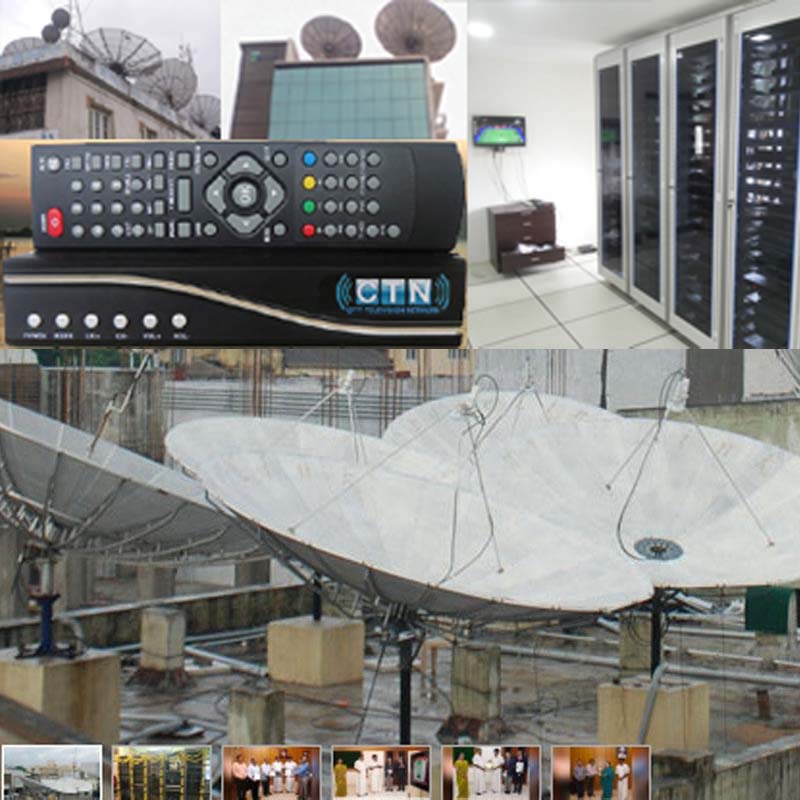
    Cable Television Network (CTN), a Coonoor-based digital cable television operator, which claims to have around 500 connections, alleged that the ‘cable mafia’ had misled the BSNL by lodging false complaints against the new entrants.

    ALSO READ :

    Delayed Arasu DAS starts, 7 mn subs to get 180 channels in Rs 125

    Arasu ‘monopolistic practices’ decried by LCOs, TN body seeks GST exemption

    Punjab govt. studying Arasu & other regulatory models on distribution


  • GTPL Hathway share up as FII / FPI limit raised to 49 pc

    GTPL Hathway share up as FII / FPI limit raised to 49 pc

    MUMBAI: The share price of GTPL Hathway, a leading regional multi-system operator (MSO) which offers cable television and broadband services, rose 2.60 per cent to Rs 132 at 11:05am on the BSE after the central bank of India — RBI — raised foreign investment limit to 49 per cent from 24 per cent, earlier.

    The shares were listed on the stock exchanges on 4 July 2017, debuting on a flat note at Rs 170 compared with the IPO price of Rs 170. On a yearly basis, the price of GTPL Hathway has lost 23.46 per cent.

    The stock of GTPL Hathway, which recently pocketed Rs 480-mn Gujarat govt contracts, had touched a high of Rs 134 and a low of Rs 130.50 during the day. It was on 11 July that the stock climbed a record high of Rs 190.30 and hit a record low of Rs 126.60 on 24 August 2017.

    The stock had underperformed the market in the past month till 7 September 2017, falling 10.57 per cent when compared with 0.42 per cent overall decline in the Sensex.

    The Reserve Bank notified after market hours on 7 August 2017 that the Foreign Institutional Investors (FIIs)/Foreign Portfolios Investors (FPIs) investment limit under Portfolio Investment Scheme in GTPL Hathway has increased to 49 per cent of its paid-up capital.

    Recently, GTPL Hathway was awarded a work order by Gujarat Informatics Limited an estimated sum of Rs. 290 million for a five-year contract.  Additionally, it was awarded with a work order by the home department, government of Gujarat, worth Rs 190 million.

    ALSO READ :

    Restructuring brings Hathway to black in first quarter

    GTPL Hathway reports higher numbers and flat q-o-q ARPUs

    GTPL boosts channels & OTT with Harmonic, can deliver to 8 mn homes

  • MIB tells MSOs: Report on cable ops and subs grievance redressal mechanism

    MIB tells MSOs: Report on cable ops and subs grievance redressal mechanism

    NEW DELHI: All multi-system operators have been asked to send to the ministry of information and broadcasting (MIB) details of the grievance redressal mechanism drawn up by them to hear complaints of cable operators and subscribers.

    Pointing out that this is mandatory under Rule 12(2) of the Cable Television Networks Rules 1994 for every cable operator and multi-system operator, the ministry has sought a report by 25 September 2017 from all MSOs.

    At the outset, the note says that during the implementation of Digital Addressable System (DAS) which became operational from 1 April this year, a large number of complaints have been received on the following issues:

    i)                   Non-issuance of payment receipts/computer bills,

    ii)                Abrupt stoppage of services and/or channels by cable operators without any notice,

    iii)              No fixed price of STBs- different operators charge different rates,

    iv)              Non-filling up of CAF,

    v)                 Non-operationalisation of toll-free number for redressal of consumer grievances,

    vi)              Non-creation of web-site for logging of complaints

    vii)            Not providing a-la-carte choice of channels

    viii)         Nodal officer name not notified

    Rule 12(2) says MSOs and LCOs “shall devise a mechanism for grievance redressal of subscribers in respect of the services offered by them in such manner as may be specified by the Authority and inform the details thereof to the subscribers through the cable service or the website or any other appropriate means and such information shall also include the address and telephone number where a subscriber can file a complaint and the time period within which grievances are to be addressed, the manner of communication of the redressal to a subscriber and the feedback thereon from the subscriber.”

    It added that under the Telecom Regulatory Authority of India regulations on Consumers Complaint Redressal (Digital Addressable Cable TV Systems) Regulations 2012 dated 14 May 2012, every MSO and the linked LCOs should have to:

    i)      establish a ‘web-based complaint monitoring system’ to enable the consumers to monitor the status of their complaints

    ii)    establish a complaint centre in his service area and publicise the toll-free Consumer Care Number.

    iii)  appoint or designate one or more Nodal Officers in every state in which it is providing its service.

    ALSO READ :

    MIB directs states to ensure TV digitisation & action against defaulters

    MIB show-causes MSOs on incomplete digitisation info

    Arasu ‘monopolistic practices’ decried by LCOs, TN body seeks GST exemption

  • Ortel elevates Satyanaryan Jena as CFO as Manoj Kumar Patra resigns

    Ortel elevates Satyanaryan Jena as CFO as Manoj Kumar Patra resigns

    MUMBAI: Ortel Communication has made an internal promotion as its chief financial officer Manoj Kumar Patra has resigned.

    The board of directors has informed the Bombay Stock Exchange (BSE) that the company has  accepted  his  resignation and  relieved  him  of  his  responsibilities effective from close of business hours on 5 September, 2017. The board has also informed the BSE that the company has appointed Satyanaryan Jena as the CFO effective from 5 September.

    Patra has been associated with Ortel for more than eight years. He joined Ortel as GM -finance and accounts in November 2008. Prior to this, he was working with Reliance Fresh as the commercial head for more than a year.

    Jena has been associated with the company since 12 November, 2015. He was  previously associated   with  OM  Khejriwal,  CA, lspat Alloys,   Indian Metals and Ferro   Alloys and  Qatar Petroleum.

    ALSO READ :

    Lower carriage and internet subs fees pull down Ortel numbers in first quarter

    MSO Ortel strengthens digital payment services

    Jio juggernaut rolls on, wired segment wobbles

    TRAI tariff order: MSOs welcome its direction

  • Lower carriage and internet subs fees pull down Ortel numbers in first quarter

    Lower carriage and internet subs fees pull down Ortel numbers in first quarter

    BENGALURU: A forty four percent year-on-year (y-o-y) decline in carriage fees and a thirty five percent y-o-y  decline in internet subscription fees for the quarter ended 30 June 2017 (Q1-18, current quarter, first quarter of fiscal 2018) resulted in decline of some major numbers for Ortel Communications Limited (Ortel). The company has reported a net loss of Rs 29 million in Q1-18 as compared to a profit after tax of Rs 1 million in Q1-17.

    Ortel reported carriage fees of Rs 62 million for Q1-18 as compared to Rs 89 million in the corresponding year ago quarter. Despite a 4.5 percent increase in cable subscription fees, the company’s Total cable TV services revenue declined 5.5 percent in the current quarter to Rs 371 million as compared to Rs 384 million in Q1-17. Ortel reported cable subscription fees of Rs 288 million as compared to Rs 277 million in the corresponding year ago quarter. Connection fees rose to Rs 21 million in the first quarter of fiscal 2018 as compared to Rs 18 million in Q1-17.

    Ortel reported internet subscription revenue on lower Average Revenue per user at Rs 57 million for Q1-18 as compared to Rs 88 million in Q1-17. Internet connection fees declined to Rs 4 million in the current quarter as compared to Rs 7 million in Q1-17. Overall broadband revenue declined 35.8 percent y-o-y in Q1-18 to Rs 61 million as compared to Rs 95 million in Q1-17.

    Coupled with a 13.8 percent decline in Ortel’s Infrastructure and Leasing segment revenue, the company’s total operating revenue declined 8.6 percent y-o-y in the current quarter to Rs 468 million from Rs 512 million.

    Subscription number, ARPU

    The company’s cable TV and internet subscriber bases declined quarter-over-quarter (q-o-q).  Ortel’s cable TV subscriber base in Q1-18 was 747,528 in Q1-18 as compared to 750,471. Broadband subscriber base in the current quarter declined to 70,273 from 73,087. Cable TV ARPU for the current quarter declined by Rs 1 to Rs 137 from Rs 138 in the immediate trailing quarter. In Q1-17, the company has reported a much higher Cable TV ARPU at Rs 157. Broadband ARPU in Q1-18 was substantially lower at Rs 267 as compared to Rs 319 in the immediate trailing quarter and Rs 401 in the corresponding year ago quarter.

    Major Expense heads

    Ortel’s total expenses in the current quarter declined 7.7 percent y-o-y to Rs 359 million from Rs 389 million. Programming cost increased to Rs 115 million in Q1-18 as compared to Rs 100 million in Q1-17.Broadband bandwidth cost increased to Rs 25 million from Rs 22 million. Digital bandwidth cost increased to Rs 15 million from Rs 13 million. Employee benefits expense declined to Rs 54 million from Rs 62 million. Finance costs increased to Rs 71 million from Rs 64 million. Other expenses in the current quarter declined to Rs 114 million from Rs 135 million in the corresponding year ago quarter.

    Company speak

    Ortel managing director and CEO Bibu Prasad Rath said, “This has been a challenging period for the Company as intense competition in our core markets and new subscriber integration issues in new markets  continued to impact our performance. The management team is working towards improving our position and expect to deliver better results by the end of this fiscal year. While we are evaluating fund raise possibilities to bridge our short-term capital requirement, our focus in FY18 would be to consolidate the operations and improve the operational matrix which would result in notable cash flow generation. Overall, we remain confident of the strength of fully controlling the ‘last mile’ network and the B2C business model, which we believe will enable us to tide over this difficult period.”

  • Indian subsidiary of Broadsoft blamed in Time Warner Cable data breach (updated)

    Indian subsidiary of Broadsoft blamed in Time Warner Cable data breach (updated)

    MUMBAI: Weeks after the ‘Game of Thrones’ episode leaks admitted by an Indian technology company — a Star India partner, another data leak is being blamed on the India subsidiary of Broadsoft.

    Broadsoft India’s Bengaluru-based head of support Jatin Shivalaya chose not to comment when Indiantelevision.com sought their version of the story. However, BroadSoft later wrote to Indiantelevision.com from Melbourne (Australia) stating: “BroadSoft was notified that a third-party cloud storage site containing internal BroadSoft documentation and end-user customer data was exposed to public internet. The end-user customer data exposed did not include bank or credit card information or social security numbers. We immediately re-secure d the information. BroadSoft core IT and cloud unified communication infrastructures were not exposed or compromised in this incident.”

    Charter Communications, which purchased Time Warner Cable renaming it Spectrum, acknowledged last Friday that it discovered a data breach that made the private information of some of its customers available to outsiders. Those affected were Time Warner Cable customers who mainly used the My TWC app, and the company is advising the app users to change passwords, the Hollywood Reporter said.

    A Charter representative refused to elaborate, but Gizmodo, a part of Gawker Media having brands such as Deadspin and Lifehacker, which is run in India by Times Internet, says the breach originated in India at BroadSoft, a communications company whose partners included Time Warner Cable.

    Gizmodo reported that around four million records from 2010 to 2017 were exposed, though that does not mean that it involved four million individual customers. The breached files, it said, were discovered last week by Kromtech Security while its researchers were investigating an unrelated breach at World Wrestling Entertainment. Kromtech said it downloaded the contents of the publicly accessible BroadSoft data “for verification purposes”.

    CCTV footage, which was presumably of BroadSoft’s workers in Bengaluru, (India), where the breach is believed to have originated, was also discovered on the Amazon bucket. The BroadSoft data, Kromtech said, as improperly configured to allow public access in AWS,

    The S3 buckets were accidentally configured to allow public access, potentially allowing anyone with the URL to access and download the sensitive data. It shows that companies are still making rookie mistakes when handling data.

    Not all TWC records had data on a unique customer. However, the cache size made it difficult for the researchers to pinpoint the exact number of affected persons. There were also some internal company records like credentials for external systems, internal emails, and SQL database dumps.

    BroadSoft later told Gizmodo that it locked down its Amazon data (Charter says it was taken down) and has not seen evidence that intruders accessed the information.

  • GTPL Hathway pockets Rs 480-mn Gujarat govt contracts

    GTPL Hathway pockets Rs 480-mn Gujarat govt contracts

    MUMBAI: GTPL Broadband Private Limited, a wholly owned subsidiary of GTPL Hathway Limited, has been awarded a work order by Gujarat Informatics Limited an estimated sum of Rs. 290 million for a five-year contract.

    The scope of the order is for providing Wi-Fi services on Service / Rental Module including (Design, Built, and Operations & Management) for state-wide public Wi-Fi hotspot’s under Gujarat State Urban Area Network (GSUAN).

    Additionally, GTPL Hathway has been awarded with a work order by the home department, government of Gujarat, worth Rs 190 million. The order, for a period of five years, was received for supply, installation, commissioning and maintenance of internet bandwidth for various offices of Home Department, government of Gujarat across the state.

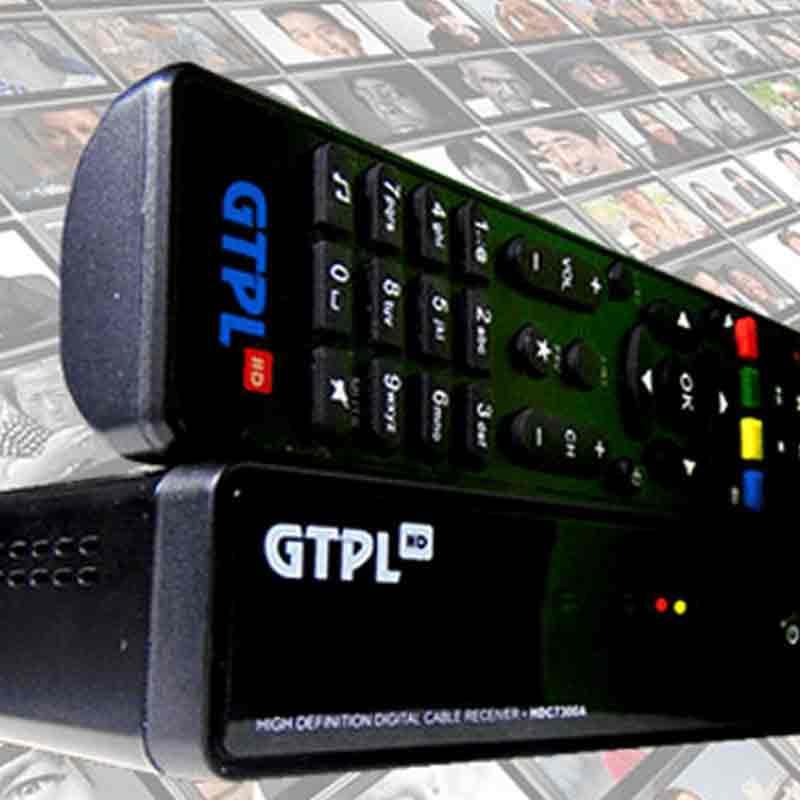
    GTPL Hathway Ltd, formerly known as GTPL Hathway Pvt. Ltd., provides digital cable television and broadband services. It also provides channels across various genres and offers approximately 30 high-definition (HD) channels.

    ALSO READ :

    Restructuring brings Hathway to black in first quarter

    GTPL Hathway reports higher numbers and flat q-o-q ARPUs

    GTPL Hathway declares maiden dividend on higher numbers for FY-17

    GTPL boosts channels & OTT with Harmonic, can deliver to 8 mn homes


  • SITI Networks’ transformation begins with slashing of bloated workforce

    SITI Networks’ transformation begins with slashing of bloated workforce

    MUMBAI: The breeze of change is being felt at the Essel Group-owned SITI Networks. Work is on to claw the 13-million subscriber base strong MSO – which has estimated accumulated losses of Rs 650-odd million – back to profitability. And, the Essel group chairman Subhash Chandra is relying on the chief transformation officer Rajesh Sethi to do the job.

    According to an industry observer: “All the major publicly-listed MSOs have to spruce up and streamline their operations keeping in mind the digitisation of cable TV.  Almost all the companies’ financials are in a bit of a mess. Some more, some less. Siti Networks is no different. Hence, Sethi has his task cut out for him.”

    The SITI Networks scrip  – like other listed cable TV companies – has been languishing at its lowest – somewhere in the Rs 22-25 range, after reaching a 52 week high of Rs 41.35, and in the Rs 30 range for the past two years.

    Amongst the first things Sethi decided to do after agreeing to take up Subash Chandra’s challenge is making presentations to investors overseas, admitting that mistakes have happened in the past, assuring them that  he is seeking  to rectify them with the backing of the promoters.

    “Subhashji is very passionate about TV distribution and he wants to really get the company on track,” says Sethi.

    Sethi has earned his stripes by building Ten Sports as a brand (before the Goel family finally sold its sports TV channel network to Sony earlier this year), and later  looking after the distribution of the Zee group channels. He was then asked to take over SITI Networks’ management  as CEO & ED but he preferred the title of chief transformation officer.

    Sethi has been instrumental in roping back former Airtel hand Sanjay Berry as chief financial officer, who rejoined the company on 1 September. Berry had joined SITI Networks  for a brief stint of three months earlier this year.

    “We are committed to getting things in order,” says Sethi. “It will take time, but we will do it. People, processes and product are what we are focusing on.”

    Sethi has spent the past few months reviewing SITI Networks’ operations. And  his discovery was that the company had a bloated workforce: 3,500 employees, and 500 field offices – 22 in Delhi alone.

    Hence, last week, he wielded the axe on headcount. Close to 670 employees were issued pink slips, with three months severance pay.  Almost 100 of those asked to go were in administration. “Cost-cutting is imperative,” says Sethi. “These were people who were hired over the years, and they were there.”

    Sethi points out that he has retained most of the sales force of SITI Network. “We have to keep the money coming in,” he says, with a smile.

    What next? “Get the basics of business right. And, take up initiatives that bring in revenue,” he says.

    That should give  a lot more confidence to SITI Networks’ shareholders and investors.

    ALSO READ :

    Siti Networks’ operating profit more than doubles in first quarter

    Comment: Jawahar Goel gets into the boxing ring with iron gloves

    Rajesh Sethi re-designated chief  biz transformation officer of Siti Networks

  • Delayed Arasu DAS starts, 7 mn subs to get 180 channels in Rs 125

    Delayed Arasu DAS starts, 7 mn subs to get 180 channels in Rs 125

    NEW DELHI: The Tamil Nadu Arasu Cable TV Corporation (TACTV)’s digital operations  (DAS) were launched on 1 September with the inauguration of upgraded MPEG 4 control room and distribution of free set-top boxes. Around seven million Arasu subscribers will now have access to 180 channels in digital quality at a monthly subscription of Rs 125. The STBs will be distributed among users through local cable operators who can charge a one-time activation fee of Rs 200. The distribution of free STBs will be completed in three months, an official release said.

    Tamil Nadu chief minister Edappadi K. Palaniswami formally launched the digital addressable system (DAS) at Nungambakkam in Chennai. Minister for information technology M Manikandan and chief secretary Girija Vaidyanathan were also present.

    The distribution of free STBs was a promise made in the last AIADMK party manifesto by the late chief minister J Jayalalithaa.

    The Centre had in April this year given a provisional MSO licence to Arasu on the condition that it had adopts DAS within three months.

    Taking the ground that it had failed to get an adequate number of digital set-top boxes, TACTV had sought extension for three months beyond mid-July, but the Centre had only agreed to one month — till 17 August. Consequently, TACTV has been asked to complete the digitisation process by 17 August 2017 failing which the provisional the “registration may be suspended/revoked.”

    Its present application seeking a further extension is still pending with the information and broadcasting ministry.

    Four monthly packages have been offered to subscribers, including paid and free-to air channels: 180 channels for Rs 125, 230 channels for Rs 175, 260 for Rs 225, and 300 for Rs 275. The subscription fee is exclusive of 18 per cent GST.

    According to government advertisements in the local media, STBs come with a three-year warranty and TACTV is the only state-owned undertaking in India to offer STBs at no cost. TACTV is aiming at six million standard definition (SD) STBs and one million high definition (HD) STBs.

    “The proposed TV services (300 channels to start and to be expanded to 500) will be in MPEG 4 Standard definition and 30 Television services in HD (MPEG4) and 20 FM Audio services with provision to add more SD & HD Channels in the near future,” according to the tender document issued in May this year when seeking STBs.

    It also said the system will ultimately aim to broadcast 500 TV channels, including 50 HD channels and 20 FM audio Channels. The initial subscriber base is expected to be over 7 million.

    Meanwhile, the central government is still to take a final decision on repeated recommendations by the Telecom Regulatory Authority of India that states the political parties, and religious groups should not be permitted in broadcasting or distribution sectors.

    ALSO READ :

    Arasu gets a month’s extension to go digital

    Arasu to formally launch DAS in Chennai on Sept. 1