Category: Cable TV

  • Siti bullish on broadband: Rajesh Sethi

    Siti bullish on broadband: Rajesh Sethi

    Mumbai: Despite uncertainty in many quarters, these are interesting times for people following the multi-system operator (MSO) industry. Recently, Siti Networks Ltd (Siti) released its Q2 and H1 results for 2017-18, reigniting the hope for growth in the industry. Announcing growth in operating EBITDA, the company outperformed the competition in set-top box (STB) seeding by adding nearly 2.3 million boxes in the first half of the year as against near flat growth by other companies in the industry.

    For Siti, this forms the bedrock for future growth as monetisation of these boxes in H2 will bring incremental revenue benefit to the company. In the cable television distribution business, STB seeding, monetisation of seeded STBs, and collection efficiency are the core performance metrics.

    The broadband space is exploding with Reliance Jio having announced its impending entry and trial runs across various cities in the country. Siti is looking to leverage existing infrastructure and improve extraction levels. The company will look at a number of business models to ascertain what is the right fit in this business.

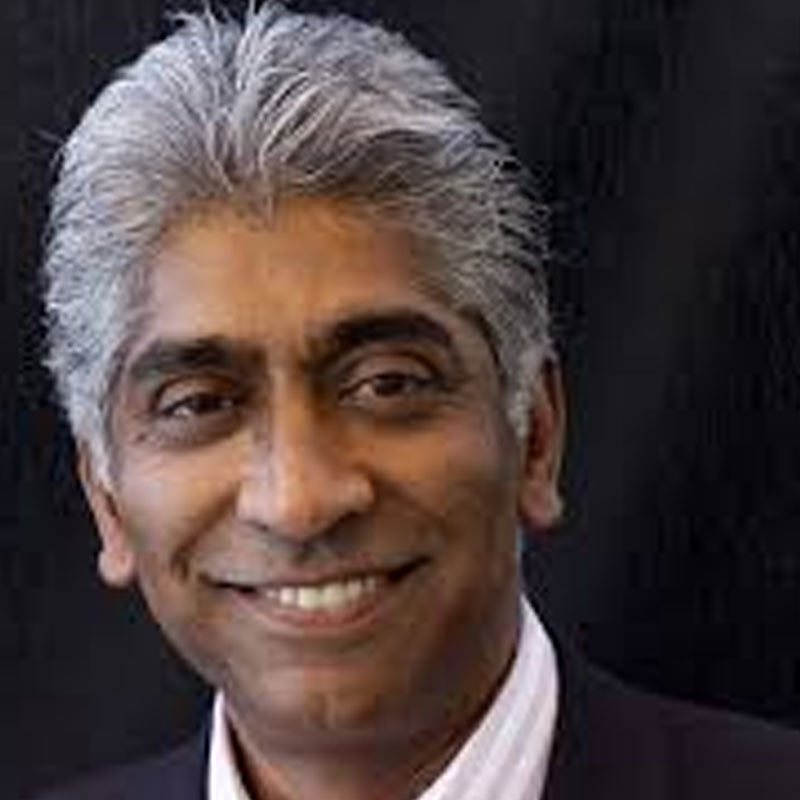
    In an email interaction, Rajesh Sethi spoke to Indiantelevision.com on a wide range of issues. Here’s what he had to say:

    What is the direction you are taking to turn around the fortunes of Siti Networks?

    We are one of the largest distribution platforms in the country and are working on the ethos of ‘demand more.’ We will leave no stone unturned to deliver the best to our customers while ensuring enhanced shareholder value. On the video front, this is going to be the last year of major seeding as we consolidate our market dominance. The focus will be on improving monetisation, collection efficiency, and prepaid implementation. We are well prepared to execute the tariff order as soon as the judgment is passed on the same.

    On the broadband front, we are looking to leverage our existing infrastructure and improve extraction levels. We will be selective in our broadband expansion and will look at a range of business models to ascertain what suits us best. The focus is on four pillars of people, process, product, and corporate governance with emphasis on compliances, systems and processes, harnessing inbuilt operating leverage, and making the organisation more agile and lean.

    What is your strategy to prune losses in the time to come?

    In the video business, seeding to capture the opportunity offered by digitisation, subsequent monetisation improvement, and enhanced collection efficiency will be the key priorities. These factors will form the bedrock for strong sustainable growth and ensure recurring cash flows.

    Broadband is a field that we are quite bullish on. Uptake in broadband is dependent on 4G pricing, which definitely is now looking to increase. Broadband growth will come from primarily form Tier 2 and 3 cities rather than the bigger cities. Broadband revenue performance will also see uptick with increasing customer base, churn, and fault rate control.

    Cost optimisation is a major lever in coming back to profitability and we are looking to rationalise our bandwidth, general and administrative, content, and HR costs to drive increased savings. The tariff order is expected to come by end of this fiscal and will substantially moderate content cost growth; content cost is expected to become a pass through.

    These actions are expected to contribute towards improved recurring cash flows and better profitability.

    How soon do you see a revival in the cable industry?

    The revival you speak of is already underway as Phase 3 and 4 monetisation has started happening and this will only move up, eventually being at par with monetisation levels in Phase 1. The bulk of Phase 4 seeding will be completed this fiscal and you will see strong subscription revenue growth lead by volume and monetisation increases. Thereafter, it is a steady state perpetuity business.

    The tariff order will moderate content cost growth as customer choice will dictate the content they view. At the same time, broadband is a big opportunity that will spur long-term growth and drive convergence. The industry is in a transitory phase and things will improve significantly in a year’s time.

    Why hasn’t digitisation helped the dynamics of the industry as envisioned?

    Ever since the announcement of digitisation, there were multiple delays due to a variety of factors. Phase 3 and 4 deadlines were delayed by more than a year due to multiple petitions, regulatory uncertainty, and other factors. As we speak, the tariff order is pending in the Chennai high court. Most DPOs incurred huge capital expenditure in upgradation of the network and purchasing STBs. The costs were incurred upfront and, therefore, monetisation got delayed.

    In addition to these delays, regulatory guidelines such as MIA/SIA also faced delays in enforcement. You are seeing this turbulence as we are in transition right now…once things settle down, you will witness strong recurring cash flows. The content delivery value chain will become more streamlined and the balance of power will shift to the DPOs.

    How important is it to have a lean workforce? Do you have a retrenchment strategy in place?  

    We have been focusing on areas where we can bring efficiencies into the system and one such effort in right sizing was executed in Q2 of 2017-18. This is a regular practice in most mature industries and allows the organisation to become leaner and agile. With this, we have given more latitude to our current employees by adding joint responsibilities in the video and broadband space in terms of delivery. We are focussed on employee growth with regular training sessions being held to upgrade skill sets and clearly delineating what is expected from them. Recently, we also rolled out our seven core values that define our DNA and influence behavior. We want to inculcate and sustain a high-performance culture in this company. These are the guiding principles in our efforts to take SITI to greater heights.

    What is your vision for Siti Networks?

    We are the leading content provider in the country and will continue to sustain our preponderance in video. Simultaneously, broadband is a natural transition for an entity like ours. Customers have already shown indication towards moving to non-linear on-demand entertainment and we expect broadband penetration to see a huge increase. Hence, we are moving towards delivering non-linear content. This will be the future of content consumption and Siti is preparing earnestly for it.

    We are also working with our technology partners to bring innovative products to the market. Our vision is that we should be at the forefront of providing world-class technology to customers.

    How do you see the company evolving over the next two years?

    Siti will have consolidated its primary growth lever of video with strong recurring cash flows taking place. We will be offering substantial HD, OTT, and other VAS services. In addition, we intend to push the pedal on broadband and ensure we have sizeable presence in the high-speed-wired broadband space. We could go in for some inorganic expansion as well.

  • Louis Boswell appointed CASBAA CEO

    Louis Boswell appointed CASBAA CEO

    MUMBAI: CASBAA Association has appointed Louis Boswell, senior media and digital business leader in Asia, as the chief executive officer (CEO). Boswell will begin his tenure on 1 January 2018, succeeding outgoing CEO Christopher Slaughter.

    As CEO for CASBAA, Boswell will serve as the content distribution industry’s leading advocate with industry leaders and policymakers throughout Asia-Pacific. In addition to driving the programs and initiatives of the association, Boswell will work with business heads of the member organisations to shape the increasingly rapid evolution of the industry in the region.

    “Louis is one of the most well respected senior commercial executives in the content distribution industry in Asia. We are proud to have him leading our association. Louis’s track record of leadership and insight make him an ideal fit to work strategically with in-country business and government leaders to address the challenges and opportunities that lie ahead as the industry continues to invest, innovate and evolve at an unprecedented pace”, said Chair of the CASBAA board of directors and 21st Century Fox senior vice president Joe Welch.

    “I am thrilled to be joining CASBAA”, Boswell commented. “The industry is changing and it is paramount that its representative body keeps up and is reflective of those changes. I believe the need for CASBAA is greater now than it ever has been and I look forward to making sure that we lead the industry from the front as we confront those changes.”

    “Louis is a true professional, able to listen, rationalise differing viewpoints and then drive execution”, said Henry Tan of ASTRO who worked closely with Boswell on the AETN All Asia Networks joint venture. “He will make an excellent head of the association.”

    Boswell’s background in Asia includes senior positions at Discovery, ESPN Star Sports, BBC, AETN All Asia Networks and, most recently, as the general manager, Asia for Da Vinci. His experience includes leading businesses in Japan, Korea, Hong Kong, Singapore, Taiwan and all of the major markets in Southeast Asia.

  • Multiple challenges weaken Ortel numbers in second quarter

    Multiple challenges weaken Ortel numbers in second quarter

    BENGALURU: Hit by multiple challenges, Indian regional multi-system operator (MSO) Ortel Communications Ltd (Ortel) reported lower numbers and posted net loss–the second one this fiscal–for the quarter ended 30 September 2017 (Q2 FY 2017-18). The company expects the business to stabilise one year down the line.

    Ortel president and CEO Bibhu Prasad Rath explained the performance in an earnings release, “Our performance during the quarter further weakened due to multiple challenges faced by us, including severe competition in our core market, collections shortfalls, repayment of debt as well as integration issues among others.

    “Financial year 2017-18 has been a difficult year for us on all fronts and we are actively working towards restoring the business performance. We have taken many firm steps to turnaround our performance over the last few months and we expect operations to improve going forward. However, we will take one year to fully stabilise our business. In the near term, our main effort is to improve cash collections, which will help us through this difficult phase of the company. We remain committed to our B-to-C ‘last-mile’ business model and believe it will help us through this tough operating environment.”

    Declining average revenue per user (ARPUs), higher programming costs due to increase in cable TV subscribers, and higher bandwidth costs despite a lower internet subscriber base have impacted the company’s numbers.

    Despite dropping prices for the consumer due to competition with other big internet players, the company has been losing broadband subscribers. Ortel witnessed 17.6 percent year-on-year (y-o-y) decline in the broadband subscriber base between Q2 FY 2017-18 and Q2 FY 2016-17
     

  • Now, Comcast in talks to buy 21st Century Fox

    Now, Comcast in talks to buy 21st Century Fox

    According to several reports, 21st Century Fox is on the block and Philadelphia-based cable TV conglomerate Comcast is interested. Comcast has approached Fox about acquiring most of the company. Reportedly, Verizon, the biggest wireless carrier in the US, has also thrown its hat into the ring. Earlier in the month, Disney was also in talks with the Rupert Murdoch company for a possible acquisition.

    Comcast and Verizon have inquired about Fox’s movie and television studios, entertainment cable networks and international businesses. Comcast, which owns NBC Universal, would achieve global reach if it acquires Murdoch’s stake Star and Sky among other 21st Century Fox properties.

    A deal between Comcast and Fox could radically change the media landscape, consolidating some of the biggest entertainment properties in the world.

  • CASBAA elects new board directors

    CASBAA elects new board directors

    MUMBAI: The Cable and Satellite Broadcasting Association of Asia (CASBAA) has announced the election of several new directors to its board, and the return of a number of long-serving directors.

    Following its AGM on 8 November, first-time directors elected were James Ross (Lightning International), Belinda Lui (Time Warner), and Desmond Chan (TVB). Also re-elected to the board were previous directors Joe Welch (21st Century Fox), Andrew Jordan (AsiaSat), Ricky Ow (Turner Asia Pacific), and Amit Malhotra (The Walt Disney Company).

    They join existing Directors Todd Miller (Celestial Tiger Entertainment), Andrew Stott (CMS Asia), Marcel Fenez (Fenez Media), Rohit D’Silva (FOX Networks Group Asia), and Alexandre Muller (TV5MONDE) to form the 2017-18 CASBAA board of directors.

    “CASBAA is fortunate to have such an excellent group of subscription TV industry executives willing to serve on the association’s board,” said chairman Joe Welch. “We are deeply appreciative of the long and committed service of our out-going directors, and thank them tremendously. At the same time, we offer a heartfelt welcome to our new directors, and look forward to working together with them to lead the association for the benefit of CASBAA’s members and the industry as a whole”.

  • Workshop to train manpower in cable TV distribution

    Workshop to train manpower in cable TV distribution

    NEW DELHI: A workshop is being held on 27 November to deliberate on the importance of skilling, certification and accreditation of the manpower deployed in cable TV distribution.

    It is organised by the Broadcast Engineering Consultants (India) Ltd ( BECIL) in collaboration with the Instrumentation Automation Surveillance & Communication-Sector Skill Council (IASC-SSC in New Delhi a Vigyan Bhavan.

    Digitisation of the cable TV networks in the country has enabled availability of state-of-the-art services not only in the field of TV but also broadband access and host of value added services. HD, 4K & 8K quality TV pictures can also be provided on digital cable networks. This has provided a lot of opportunities to cable TV service providers which are not available even on DTH/ IPTV/ OTT platforms.

    However, it has also posed challenges like properly equipping and training the manpower in the field of digital technology to maintain the quality of service specified not only by the Ministry of Information and Broadcasting and the Telecom Regulatory Authority of India but also for consumer satisfaction.

    Certification of their skills for better employment opportunities and their accreditation (since the personnel visit homes during hours when most women and children are alone) are also considered important issues.

    Keeping in view the need of skilled manpower, the government embarked on Skill India Mission and a number of schemes have been initiated. IASC-SSC was created with the objective to carry out skill-gap analysis, development of qualification packs and national occupational standards and affiliation of training partners and assessment agencies, certification of trained manpower and help their placement.

    IASC-SSC is an industry-led non-profit company under the preview of Ministry of Skill Development and Entrepreneurship. The council is also certifying the existing available human resources having domain knowledge under recognition of prior learning (RPL) scheme to bring them into mainstream

  • Higher subscription & activation lead Den’s turnaround in Q2

    Higher subscription & activation lead Den’s turnaround in Q2

    BENGALURU: Indian multi system operator (MSO) Den Network (Den) reported growth in operating revenue, operating profit (EBIDTA) and profit after tax (PAT) for the quarter ended 30 September 2017 (Q2-18, current quarter) as compared to the corresponding year ago quarter. In Q2-17 (the corresponding year ago quarter), the company had reported a loss. The change to black from red in the current quarter was driven by a reported 22.3 percent increase in operating revenue and an operating profit for its cable distribution (cable) business. Den’s cable business performed well due to cost optimisation measures and the company accelerating its subscription collections. The company claims in its earnings release that its subscription collection efficiency in Q2-18 was 93 percent.

    Den’s operating revenue for Q2-18 was Rs 3,277.9 million, 20.3 percent more y-o-y as compared to Rs 2,724.4 million. Total income including other revenue grew 19.6 percent y-o-y to Rs 3,349 million from Rs 2,800.4 million. The company reported 2.84 times the EBIDTA for Q2-18 at Rs 815.5 million as compared to Rs 287.5 million for the corresponding year ago quarter. PAT for the current quarter was Rs 11.1 million as compared to a loss of Rs 439.6 million in Q2-17.

    Cable business revenue in Q2-18 was Rs 3,079.9 million as compared to Rs 2,517.4 million in Q2-17.Cable business operating profit in the current quarter was Rs 277.5 million as compared to a an operating loss of Rs 306.7 million in Q2-17. Cable business subscription revenue increased 24 percent y-o-y to Rs 164 million from Rs 132 million. Activation revenue increased more than 7 times (7.3 times) to Rs 37 million from Rs 5 million. Placement revenue increased 2 percent y-o-y to Rs 88 million from Rs 86 million. Broadband revenue declined 8 percent y-o-y to Rs 19 million from Rs 21 million. Broadband EBIDTA loss was lower at Rs 1 million in Q2-18 as compared to an operating loss of Rs 2 million in Q2-17.

    Den says that it has deployed 0.25 million digital set top boxes in Q2-18 and its digital subscriber base (including associates) stands at 11 million. Broadband subscriber base in the current quarter was 0.205 million as compared to 0.14 million in Q2-17. Broadband ARPU declined in Q2-18 to Rs 664 from Rs 775 in Q2-17.

    Total expenditure in Q2-18 was almost flat (increased 0.6 percent) y-o-y to Rs 3,261.2 million from Rs 3,240.3 million. The company has reduced employee costs in the current quarter by 17.1 percent to Rs 273.8 million from Rs 330.2 million. Placement fees expense in Q2-18 declined 22.5 percent y-o-y to Rs 107 million from Rs 138 million. Other expenses declined 3.7 percent y-o-y to Rs 756.9 million from Rs 786.2 million. Content costs in the current quarter increased 12 percent y-o-y to Rs 1,324.7 million from Rs 1,182.5 million.

  • GTPL reports higher numbers for second quarter

    GTPL reports higher numbers for second quarter

    BENGALURU: Indian multi system operator (MSO) and broadband internet services (broadband) provider GTPL Hathway Limited (GTPL) has reported a year-over-year (y-o-y) growth in standalone as well subsidiary companies’ operating profits and net profits for the quarter ended 30 September 2017 (Q2-18, current quarter). GTPL’s broadband internet business – GTPL Broadband is a 100 percent subsidiary of GTPL. The company owns a 51 percent stake in GTPL Kolkata Cable & Broadband Pariseva Limited (KCBPL).

    GTPL standalone

    On a standalone basis, GTPL reported 23.9 percent y-o-y growth in revenue for Q2-18 at Rs 1,838.16 million from Rs 1,480.60 million. EBIDTA including other income in the current quarter was 19.7 percent higher y-o-y at Rs 585.13 million (31.9 percent margin) as compared to Rs 488.66 million (33 percent margin). Net profit after tax increased 53 percent y-o-y in Q2-18 to Rs 117.68 million (6.4 percent margin) from Rs 76.93 million (5.2 percent margin).

    The company reported 32.6 percent y-o-y growth in subscription revenue for Q2-18 at Rs 1,001 million from Rs 755 million. Placement revenue increased 10.7 percent y-o-y in the current quarter at Rs 588 million from Rs 531 million. Activation revenue declined 7.8 percent y-o-y in Q2-18 to Rs 47 million from Rs 51 million.

    GTPL says that it has seeded 0.52 million set top boxes and increased CATV digital active subscribers by 0.37 million in the current quarter. It says that CATV digital paying subscribers increased by 0.94 million to 6.94 million in Q2-18 as compared to 5.70 million subscribers in the immediate trailing quarter Q1-18.

    The phase-wise breakup of GTPL’s digital paying subscribers is 0.56 million, 1.66 million, 2.02 million and 2.40 million for DAS phases I, II, III and IV respectively. ARPU in Q2-18 with respect to Q1-18 has increased by Re 1 each to Rs 101 and Rs 96 in phases I and II respectively; has increased by Rs 4 and Rs 8 in phases III and IV respectively.

    GTPL Broadband

    The company says that GTPL Broadband’s total income in Q2-18 increased 13 percent y-o-y to Rs 331 million from Rs 292 million. EBIDTA grew 15 percent y-o-y to Rs 92 million from Rs 80 million. PAT increased 2 percent y-o-y to Rs 39 million in the current quarter from Rs 38 million.

    The company claims that GTPL Broadband has added 10,000 broadband internet subscribers in Q2-18 as compared to Q1-18.Its broadband internet subscriber base at the end of Q2-18 was 0.26 million. Broadband internet ARPU has increased in the current quarter to Rs 487 as compared to Rs 486 in Q1-18 and 465 in Q2-17.

    GTPL Kolkata Cable & Broadband Pariseva Limited (KCBPL)

    KCBPL’s total income grew 45 percent y-o-y to Rs 398 million from Rs 274 million. Subscription CATV revenue increased 48 percent y-o-y to Rs 256 million in Q2-18 from Rs 176 million. Placement revenue in the current quarter grew 6 percent y-o-y to Rs 80 million from Rs 76 million. Activation revenue in Q2-18 more than quintupled y-o-y to Rs 56 million from Rs 11 million.

    KCBPL’s EBIDTA more than tripled y-o-y in Q2-18 to Rs 119 million from Rs 37 million. The company reported PAT of Rs 2 million in Q2-18as compared to a loss of Rs 23 million in Q2-17.

  • Arasu can’t operate outside Tamil Nadu despite DAS compliance

    Arasu can’t operate outside Tamil Nadu despite DAS compliance

    NEW DELHI: Tamil Nadu government-owned multi system operator (MSO) Arasu TV Corp has been told by the Ministry of Information and Broadcasting (MIB) that it cannot operate outside of Tamil Nadu despite having a provisional MSO licence.

    The MSO was granted the provisional licence in April this year and was given several extensions to prove that it had become fully digital addressable system (DAS) compliant. Arasu claimed to have gone entirely digital by 1 September 2017.

    Godfather Communication is another MSO that can only operate in Punjab, Haryana, Jammu & Kashmir, Rajasthan, Chandigarh and Himachal Pradesh. Godfather’s registration is dependent on a court verdict in which it had challenged the MIB’s cancellation of its provisional registration for in Amritsar.

    There are just 1471 MSOs even after seven months of DAS in the country. Apart from Arasu and Godfather, the remaining 1469 provisional licence holders have been permitted to operate anywhere in the country, according to the list of MSOs as on 31 October 2017 placed on the MIB website.

    Early this year, the government had said all provisional MSOs will be deemed as having regular licences. They were also free to operate in any part of the country.

    The MIB had earlier this year told indiantelevision.com that it had been made clear to Arasu that the provisional licence was subject to the centre taking a final decision on the recommendation of the Telecom Regulatory Authority of India (TRAI) that no government-owned body should be permitted in the field of running or distributing television channels. TRAI had in 2008, 2012 and 2014 held that state governments and political parties should not be permitted to own TV channels or distribution channels.

    Also read :

    Post-DAS, tardy MSO registrations in six months, 14 new additions

    Including Arasu, total number of MSOs goes up to 1376, to ensure DAS implementation

    37 new MSOs in 45 days takes total to 1421, seven among 59 cases sub-judice

    Godfather, Kal, Digi Cable & Intermedia licence cancellation stayed, 50 ‘pan-India’ MSOs’ op area changed

  • Siti Networks reports higher revenue, operating profit for Q2-18

    Siti Networks reports higher revenue, operating profit for Q2-18

    BENGALURU: Siti Networks Limited (Siti) reported higher revenue and operating profit (EBIDTA) for the quarter ended 30 September 2017 (Q2-18, current quarter) as compared to the corresponding year ago quarter – Q2-17 (y-o-y). However, loss for the current quarter was higher year-on-year.

    Siti reported 21.9 percent y-o-y growth in operating revenue for Q2-18 at Rs 3,523.08 million as compared Rs 2,889.67 million. Total Income (including other income) for the current quarter increased 22.3 percent higher y-o-y at Rs 3,562.64 million that Rs 2,913.17 million in Q2-17. Revenues grew mainly on account of higher subscription revenue partially set off by a decline in carriage revenue.

    Operating EBIDTA for Q2-18 was 41.9 percent higher y-o-y at Rs 671.75 million as compared to Rs 473.37 million, while overall EBIDTA increased 43.1 percent y-o-y to Rs 711.31 million from Rs 497.07 million. The company reported a higher loss of Rs 524.25 million in Q2-18 as compared to a loss of Rs 354.73 million.

    While commenting on the results, Siti’s chief business transformation officer Rajesh Sethi said, “Siti displayed strong growth in video as Q2 subscription income jumped 21 percent q-o-q and 52 percent y-o-y with overall collection efficiency improving to 93 percent for H1FY18. We continue to improve monetization levels and leverage our customer base in Phase 3 and 4 territories. An emphasis on cost optimization and instilling a lean culture is expected to drive efficiencies across the board and further aid the bottomline. At the same time, an organizational restructuring is underway to evolve Siti into a more nimble and effective organization. In Broadband, focus on further enhancement of service levels to retain customers and new geographies expansion is expected to drive growth along with overall improvement in the pricing environment.”

    Breakup of revenue (rounded off) and subscriber matrices

    Siti reported 51.9 percent y-o-y growth in subscription revenue to Rs 2,050 million from Rs 1,350 million. Carriage revenue declined 6.6 percent y-o-y to Rs 710 million from Rs 760 million. Activation revenues increased 15.8 percent y-o-y to Rs 440 million from Rs 380 million, but were sharply lower than the Rs 850 million in the immediate trailing quarter (Q1-18). Siti has a cable subscriber base (analogue and digital) of 13.2 million. The company had converted 1.6 million of its existing subscribers to digital in Q1-17 as compared to less than half that number in Q2-17 (0.7 million). Siti’s active video subscriber base was 11.1million in Q2-18, while it was 10.6 in Q1-18. It’s HD subscriber base increased by 34,000 in Q2-18 to 254,000 from 230,000 in Q1-18.

    Broadband revenue was flat (grew 2.2 percent) y-o-y at Rs 250 million. The company has witnessed a slight decrease in its broadband subscriber base to 238,000 in the current quarter from 240,000 in the immediate trailing quarter Q1-18.

    Let us look at the other numbers reported by the company

    Total expenditure increased 22.9 percent y-o-y to Rs 4,013.93 million from Rs 3,268.10 million. Finance costs increased 32.7 percent y-o-y to Rs 371.49 million from Rs 280.02 million. Carriage sharing, pay channel and related costs increased 16.9 percent y-o-y to Rs 1,676.01 million in Q2-18 from Rs 1,434.08 million. Employee benefits expense in the current quarter increased 9.9 percent y-o-y to Rs 227.47 million from Rs 206.98 million in the corresponding year ago quarter. Other expenses increased 25 percent y-o-y in Q2-18 to Rs 942.86 million from Rs 754.09 million.