Category: Cable TV

  • IMCL aspires to hit 7 mn subscribers in a year

    IMCL aspires to hit 7 mn subscribers in a year

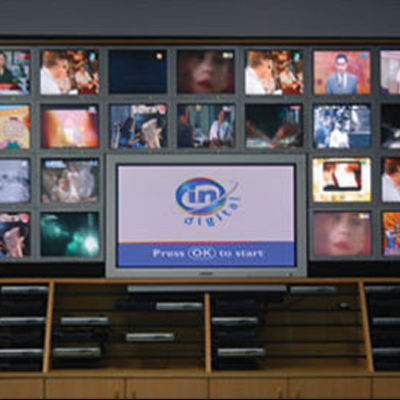
    MUMBAI: At a time when the face of India’s multi-billion dollar cable industry is changing rapidly with the emergence of new players, IndusInd Media & Communication Ltd (IMCL), one of the oldest players in the industry, has announced a new offering ‘I Am Mumbai, I Am InDigital’. Consisting of premium 22-channel bouquet of ad-free content, the initiative is aimed at providing viewers with a 360-degree experience. The digital distribution platform standing with almost 5 million subscriber base predicts to reach 7 million subscribers over next four quarters.

    The newly announced expansive range of content under the “NXT Services” brand is available to InDigital customers as well as NXT Digital customers across India. From rhymes, cartoons and movies for kids to dubbed movies in regional languages, cooking, music, the bouquet has content from various genres. However, pricing for the ad-free premium channels has not been decided yet.

    “While we have technology pushing our bouquet and opening our channels, we have realised that we have to give people what they want, not what we want them to have. So we cater to each and every age group. Overall this has been our endeavour to upgrade our approach for our city of Mumbai,” IMCL CEO Vynsley Fernandes said.

    To cater to every customer based on their different requirement and affordability, InDigital has also presented a range of next-generation set-top boxes (STBs). The new products include Standard Definition (SD) Zapper, High Definition (HD) Zapper, HD basic hybrid, HD Dual Tuner, HD Advanced Hybrid, 4K Android Hybrid and along with OTT device from group company ONE Fiber with prices ranging from Rs 1000 to Rs 5000.

    For the OTT box, it has partnered with streaming platform Viu. Speaking about more tie-ups, ONEOTT iNTERTAINMENT LTD(OIL) CEO Yugal K Sharma said that more partnerships are in the pipeline. “As far as I can see today, there will be 10 more strategic alliances I have to do. We are not into the internet business anymore; it is called CDCA (Connectivity, Devices ecosystem, Content and Applications),” Sharma said.

    “The whole industry is now shaping up and moving towards intertainment (entertainment moving on to the internet). I firmly believe that all the Ps are given – product, pricing, placement, promotion, packaging and people strategy which is 97 per cent the same for everyone. We already had our underground fibre systems in Mumbai and all the major metros, which was built for cable TV. Now, we are leveraging that for broadband as well. We have fibre system ready in 32 cities. We have a slight edge over Reliance Jio because we started rolling out our 1 GB plans about two months back,” Sharma commented while asked about competition with Reliance Jio.

    While in broadband segment Jio FTTH is a prime competitor, DTH players pose a challenge to traditional cable players. However, IMCL is not losing confidence owing to its Headend-in-the-Sky(HITS) technology. The HITS platform is on C-band keeping it unaffected from any weather change. But DTH platforms being on the KU band are susceptible to any change in weather. Moreover, the channels provided under HITS technology are priced at low cost. Hence, the company claims HITS as the direct competitor of DTH services.

    Through the HITS services, the company also wants to grow a subscriber base in rural areas. However, other than pure penetration, the company is focusing on managed service business. The smaller MSOs, last mile owners who are keen to embrace digital distribution can migrate by using the technology, rather than making own investment. Even IMCL can take the existing technology and repurpose it.

    Other than technological changes, the new TRAI tariff order is going to disrupt the broadcast and cable industry. Though the matter is still sub judice in the apex court, Fernandes thinks technology readiness to provide so many packages is going to be a challenge for distributors. Moreover, as content preference varies from region to region, smart packaging and segmentation are going to be driving factors.

    Though IMCL is putting high focus on new technologies, the in-house engineering team has come up with innovative designs using minimal capex, even less than 100k. In the next one year, it will definitely like to target the sale of over 2 million STBs.

  • ACT Fibernet seeks funding; discloses financials

    ACT Fibernet seeks funding; discloses financials

    MUMBAI: In its prospectus with SEBI, ACT Fibernet submitted the financial details and is looking for fund-raising to expand the business across India. ACT Fibernet reported revenue of Rs 1,217 crore and EBITDA of Rs 211.67 crore in fiscal 2017.

    In the six months ended 30 September 2017, the revenue was Rs 684 crore and EBITDA was Rs 286 crore. In fiscal 2016, ACT Fibernet posted revenue of Rs 874 crore and EBITDA of Rs 323 crore. Moreover, in fiscal 2015, it registered the revenue of Rs 618 crore and EBITDA of Rs 468 crore.

    According to the reports, ACT Fibernet had approximately 1.28 million wired broadband internet customers and 0.71 million cable TV customers as at 31 December 2017. It reported a monthly ARPU of Rs 813 in fiscal 2017, Rs 756 in fiscal 2016 and Rs 684 in fiscal 2015 from retail wired broadband internet business.

    The wired broadband internet market is expected to grow from 18.1 million subscribers as at 31 December 2016 to 24 million by 31 December 2021, according to a study by MPA.

    Revenue from wired broadband internet service business accounted for 82.77 per cent, 90.31 per cent, 91.61 per cent and 91.38 per cent of total income for fiscals 2015, 2016 and 2017 and the six months ended 30 September 2017 respectively.

    Revenue from cable TV service business accounted for 11.86 per cent, 6.13 per cent, 4.61 per cent and 5.21 per cent of total income from operations for fiscals 2015, 2016 and 2017 and the six months ended 30 September 2017 respectively.

    Standing at the third largest position across the wired broadband internet service provider in India, the company bags the market share of 6.9 per cent as at 30 September 2017 according to MPA. Its fibre broadband network covers 5.4 million plus residential homes in the markets in which it operated as at 30 September 2017, according to MPA.

    ACT Fibernet said it invested significantly to develop fibre broadband network. The majority of the fibre network utilises an advanced Metro Ethernet Active FTTX technology. It also utilises GPON technology in certain parts of the network.

  • Hathway to target existing users for new OTT, cable hybrid STBs

    Hathway to target existing users for new OTT, cable hybrid STBs

    MUMBAI: Indian consumers are not losing interest in linear TV anytime soon but one can’t be too wary given the OTT burst. To stay ahead of the game, Hathway has unveiled two new products – an OTT set-top box and a cable hybrid box. Both of the boxes have been priced at Rs 2999.

    80 per cent of Hathway’s target will be existing users who can upgrade to the new hybrid box while 20 per cent will be new customers. As on 30 June, it had 7.2 million cable TV subscribers. Overall, the company is hoping to sell 100,000 STBs each month. The box production capacity is the same as before for now but if the volume of response explodes, it can even double it.

    The newly introduced boxes will be available to the local cable operators from 15 October and consumer registrations will start by 1 November.  For initial rollout, the company will work closely with local cable operators.

    Hathway Play Box, the OTT set-top box is based on Google’s Android TV. The remote carries a dedicated YouTube, Netflix and Google Play button. It will also have voice-enabled Google assistant and inbuilt Chromecast. The hybrid cable box named as Hathway Ultra Smart HUB combines linear TV with Play services in HDR quality along with easy navigation. It will enable users to download apps from the Google Play store also.

    “When we developed Ultra Smart Hub, the most important aspect has been listening to our customers to understand their needs regarding their TV viewing. We see a clear shift in consumption in content today compared to earlier. Indian consumers today want a mix of traditional linear television viewing combined with on-demand or streaming services. With the Smart Hub we have a product that meets their expectations,” Hathway Cable and Datacom MD Rajan Gupta said.

    There is a slight difference in the usage of both. The cable hybrid boxes can be made available in areas where Hathway has its cable infrastructure while the OTT has an advantage. It can reach areas where there’s no cable but Hathway’s broadband service is offered.

    The new boxes can lead to the company’s ARPU growth also. He hopes top 25 per cent of consumers will go for OTT services. “In general, any OTT service providers will be more than happy to do such tie-ups because it will help them increasing reach,” he also added.

    “Starting 1 December we will have a TVC for this product. Our marketing team is working on a 360-degree marketing campaign. Creating awareness, right from metros, mini metros to rural will be the key. We will also be working closely with our LCO partners. In fact, we will be rolling out first with them and apart from TVC we will also take help from them to create awareness,” he added.

    In the previous investors call from the Q1 financial result, Gupta mentioned the necessity of an innovative model, bundling IoT, cable with current pay TV and OTT. He had said that the company is working on it and would announce something soon.

    "We are pleased to be working with Hathway and look forward to leveraging their extensive broadband and cable network to enable more exciting and useful Android TV experiences for consumers," Android, Chrome & Play Business Development head India Pranab Mookken commented.

  • Carriage fees have dropped in 2018 : Chrome Carriage Optimizer Report

    Carriage fees have dropped in 2018 : Chrome Carriage Optimizer Report

    BENGALURU: Carriage fees have dropped by approximately 5 per cent for existing deals and by about 7 per cent for new channel launches is one of the highlights of the seventh edition (R7) of the Chrome Carriage Optimizer Annual Report (CCO) by Chrome Data Analytics & Media (Chrome DAM).
    CCO gives headend wise average carriage fee spends for placing channels across individual cable networks. It takes into account the footprint of individual cable networks and co-relates the same to the average carriage fee spend for a particular band/frequency on that particular network. Chrome DAM says that the CCO report entails region-wise, market-wise and MSO wise carriage fee spends further broken down to individual cable operator level across the country.Chrome DAM claims that CCO is a tool actively used by broadcasters to indicate the carriage fee return on investments across cable networks in 3300 plus cities of India.
    Chrome DAM CEO Pankaj Krishna said, “While all three leaders uphold divergence against RIO, the verdict will take some more time to see the light. Even phase IV attributed much less alteration against what was anticipated, as the carriage trend continues to be where it was in FY 2016 to 17. As per the Chrome CCO R7, the carriage fees have dropped by an average of ~7 per cent nationally over the last one year with the CCO Cost per Subscriber (CPS) coming down from Rs 7.17 to Rs 6.75 – (which as per TRAI was to ideally be a CPS of 20 paisa). With rural gaining more significance and emerging as a tie breaker on the viewership front, the need is to understand the structure of the deals to optimise the distribution investments, and hence the Chrome Carriage Optimiser – R7 to map the headend wise carriage fee spends for placing channels across individual cable networks, the objective of which is to empower the broadcasters with an independent audit across cable networks in 3300+ cities of India”.
    The highlights of CCO R7 include:

    1. The carriage fees have dropped by about 5 per cent for existing deals and approximately 7.per cent for the new launches.
    2. As compared to R6, the CCO Cost per Subscriber (CPS) has come down from Rs 7.17 to Rs 6.75 – (As per TRAI the CPS was to be 20 paisa)
    3. North has emerged as the costliest region in terms of carriage fee/deals.
    4. The gap between CCO for existing and new launches has reduced over the years owing to digitization and increase in bandwidth of the networks.
    5. DEN commands the highest CCO amongst national MSOs, followed by Siti and GTPL.
    6. Coverage of networks in R1 to R7 has grown by 1509 per cent (from 200 to 3218).

    Top lines 1) National Top lines
    a. Top MSOs – Subs* vs. CPS** – Ranking

    b. Top MSOs – Subs vs. CPS – %Gain/Drop

    According to Chrome DAM R7: 2) Top 2 MSOs across metros
    a. Delhi
    i. Subs – DEN & Hathway
    ii. CPS – DDC & DEN
    b. Mumbai
    i. Subs – Hathway – & IN Cable
    ii. CPS – DEN & YOU
    c. Kolkata
    i. Subs – Siti & GTPL
    ii. CPS- GTPL & Siti
    d. Chennai
    i. Subs – SCV & TCCL
    ii. CPS – SCV & TCCL
    e. Bangalore
    i. Subs – Hathway & Siti
    ii. CPS – DEN & Hathway
    f. Hyderabad
    i. Subs – Hathway & Siti
    ii. CPS – Siti & IN
    (Source: Chrome Carriage Optimizer, Round 7, June 2018)
    3) Top 2 MSOs across Regions
    a. North
    i. Subs – Den & Fastway
    ii. CPS – Fastway & DEN
    b. East
    i. Subs – Siti & GTPL
    ii. CPS – Ortel & GTPL
    c. West
    i. Subs – GTPL & Hathway
    ii. CPS – DEN & GTPL
    d. South
    i. Subs – ARASU & Siti
    ii. CPS – SCV & TCCL
    e. Central
    i. Subs – SR & Siti
    ii. CPS – DIGI & Hathway
    (Source: Chrome Carriage Optimizer, Round 7, June 2018)
    4) Genre-wise Carriage Index
    a. News – 100 per cent
    b. GEC – 82 per cent
    c. Music – 88 per cent
    d. Movies – 86 per cent
    (Source: Chrome Carriage Optimizer, Round 7, June 2018)
    Subs* – Active Subscribers attached to network
    CPS** – Cost per Subscriber by network

  • SITI Networks Limited announces “SITI PlayTop”, its first Hybrid Set Top Box

    SITI Networks Limited announces “SITI PlayTop”, its first Hybrid Set Top Box

    MUMBAI: SITI Networks Limited, has announced that it will be introducing a range of Set Top Boxes for delighting its customers. To begin with, the company has announced, “SITI PlayTop”, its first Hybrid Set Top Box.

    “SITI PlayTop” is a hybrid device that has YouTube and YouTube Kids in-built along with the benefits of SITI HD+ Digital Cable Television. The box has an in-built Wi-Fi receiver which allows customers to use their existing broadband connection of any ISP to make their TV Smart. “SITI PlayTop has DVR facility along with USB play- back functionality. This hybrid STB is being initially launched in SITI’s dominant markets of West Bengal, Bihar, Jharkhand, Assam, Odisha, Delhi & Haryana followed by a progressive rollout across India in the coming months.

    This is the first device in a range of customer focused offerings planned by SITI. The company intends to roll out more devices in their line-up over the next few months.  While launching “SITI PlayTop”, Mr. Rajesh Sethi of SITI Networks Limited mentioned –

    “SITI has been at the forefront for delighting our customers with latest technology. In this regard, we are today introducing SITI PlayTop, our first hybrid set top box. SITI PlayTop has YouTube & YouTube Kids in-built, which is the most actively viewed app globally. This box will make any TV Smart while bringing the ultimate viewing experience of SITI HD+ Digital Cable Television with DVR facility. Customers will be able to cast YouTube and other apps from their mobile phones on to their TV using SITI PlayTop. The box features a Smart and Intuitive UI which is a testament of our teams’ customer connect.

    After initial rollout in our dominant markets of West Bengal, Bihar, Jharkhand, Assam, Odisha, Delhi

    & Haryana, we will be progressively rolling out across India in the coming months.

    This is just the first step for us, in a long range of customer delight devices which we intend to rollout in the coming months in line with our Customer First motto. We are working with several OEM partners to incorporate AI and machine learning into our work-flows and offerings. The idea is to have a holistic device line-up for our customers to choose from.”

  • Siti relooks at broadband as cable subscription drove revenues in FY18

    Siti relooks at broadband as cable subscription drove revenues in FY18

    BENGALURU: In FY 2017 (fiscal or year ended 31 March 2017, previous year), the Essel Group’s Siti Networks Ltd (Siti) was all gung-ho about broadband. In its annual report for fiscal 2017, the company said that it had become the largest multi-system operator (MSO) and a leading wired broadband services provider. The tone of the company’s 2017 annual report showed that Siti was fired up by the doubling of broadband revenue in FY 2017 as compared to FY 2016 to Rs 97 crore (about 8 per cent of total revenue for fiscal 2017) from Rs 48.6 crore (about 4 per cent of total revenue for fiscal 2016). The company’s broadband operations added 7.2 lakh home passes during the year taking the total footprint to 16.1 lakh homes. Broadband customer base grew to 2.28 lakh by Q4 2017 exit, up 73 per cent year-on-year (y-o-y). Further, Siti said in its FY 2017 annual report that it planned to channelise more capital to its broadband division, which it then felt was a highly scalable opportunity.

    Cut to FY 2018 and the story has changed. Siti’s broadband operations with a total footprint of 16.8 lakh homes had a base of 2.5 lakh customers.  Siti added just about 22,000 broadband subscribers in fiscal 2018, and y-o-y broadband revenues grew by only 4 per cent to Rs 101 crore in FY 2018.The company said that it was working on building a growth strategy in the sector.

    Quoting from its fiscal 2018 Annual report:

    “We are also looking closely at better and centralised inventory controls, besides identifying unsustainable locations running on IP bandwidth with the objective of phasing them out. We also aim to focus more aggressively on high definition (HD) penetration, broadband expansion, and improving monetisation in digital addressable system (DAS) phase III and IV areas.”

    At another place in the 2018 annual report Siti states:

    “In broadband, your company is looking to deepen its penetration levels in its existing markets to better utilise existing capital expenditure incurred. Going forward, we are also looking to arrive at an ideal business model that will allow us to grow profitably and sustainably in this segment, especially considering the disruptive pricing environment prevalent in mobile internet currently and the entry on new entities in wired broadband.”

    It must be noted that broadband contributed to just about 8 percent and 7 percent to Siti’s revenues in FY 2017 and FY 2018 respectively. Cable business is and has been the major revenue earner for Siti.

    While its broadband business has not met with Siti’s expectations, its cable business and more so subscription revenue has been the revenue growth driver. Cable subscription (Video) revenue in FY 2017 grew 39 per cent to Rs 569 crore as compared to Rs 410.2 crore in FY 2016. Siti’s cable subscription revenue grew 41 per cent in fiscal 2018 to Rs 799.7 crore as compared to the previous year. Carriage revenue, which had grown by 17 per cent in FY 2017 to Rs 300.1 crore from Rs 256.8 crore was almost stagnant in terms of growth in FY 2018. It grew by about 1.3 per cent to about Rs 303.8 crore in fiscal 2018. Siti’s activation revenue has also been almost constant and will taper off once its entire subscriber base has been digitised, since this is generally a one-time revenue. Activation revenue in FY-2016 was Rs 170.6 crore, it was Rs 170.1 crore in FY 2017 and was Rs 175 crore in FY 2018. Advertisement revenue had declined in FY 2017 to Rs 13.5 crore from Rs 32 crore in FY 2016 has increased in FY 2018 to Rs 18.5 crore.

    Siti has yet to report profit after tax and reward its shareholders with dividends. But, the good thing is that Siti’s operating profits (EBITDA) without activation revenue have grown 2.6 times in FY 2018 to Rs 150.7 crore from Rs 58.6 crore. Overall EBITDA including activation has grown 41.9 per cent in FY 2018 to Rs 324.5 crore from Rs 241.2 crore in the previous year.

    All numbers in this report are consolidated unless stated otherwise.

    Siti’s position with regards to broadband is more of a norm rather than an exception. Many other MSOs’ and LCOs’ that have also been providing broadband internet services have had muted numbers from this business stream in FY 2018 as compared to the previous year. This implies either a slow growth or even de-growth of subscriber numbers, reduced ARPUs’ or even both.

    Mukesh Dhirubhai Ambani’s Reliance Jio Infocomm Ltd (Jio) has been the biggest disrupter that has got both wireless and wireline internet service providers struggling to match up. With its plans to start FTTH wired internet services, with strategies that many in the industry term as ‘predatory’, it is likely to make the ground difficult to sustain and grow for incumbents.

  • Pay TV execs feel need to innovate to remain relevant, finds study

    Pay TV execs feel need to innovate to remain relevant, finds study

    MUMBAI: With the advent of digital content platforms, pay TV industry across the world is facing stiff competition. The pay TV Innovation Forum report produced by Nagra in association with research firm MTM, found that 90 per cent of executives believe that pay TV providers will have to innovate strongly to remain competitive and relevant.

    The research has also found that 84 per cent of pay-TV executives expect competition for paid-for video services to increase dramatically over the next five years. The number of 90 per cent of executives who believe that pay TV providers will have to innovate strongly is 5 per cent up from last year. However, participants are optimistic they can continue to appeal to paying consumer.

    Findings of the report are based on extensive regional research conducted in Europe, North America, with a special focus on the United States, Asia-Pacific and Latin America.

    It has also highlighted that the pay TV (http://www.indiantelevision.com/television/tv-channels/viewership/india-china-to-provide-50-of-global-pay-tv-subs-by-2023-180411) industry is converging towards a platform-agnostic model and is transitioning into a paid-for-video market spanning a variety of offerings including standalone OTT and direct-to-consumer services. Moreover, 77 per cent of pay-TV executives consider innovation to be one of the top three strategic priorities for the industry.

    “Change is the one constant in the global pay-TV industry, driven by numerous pressures from competitors, pirates and subscribers, making it challenging for service providers and content owners to maintain revenue growth,” said NAGRA product marketing senior director Simon Trudelle.

    Executives have agreed that piracy remains a major problem. In addition to that, 47 per cent of respondents believe that piracy will lead to greater pressures on the industry over the next five years.

    “It is exciting to see a growing number of service providers embarking on the next stage of innovation, encompassing product and service portfolio improvements, alongside advanced technology platforms and new commercial and operating models,” said MTM managing partner Jon Watts said. “By keeping innovation at the core of their strategies and recognising the need to diversify, service providers can continue to compete effectively and grow revenue,” he added.

  • Hathway Cable gets approval to raise funds worth Rs 99.63 crore

    Hathway Cable gets approval to raise funds worth Rs 99.63 crore

    MUMBAI: Leading cable and broadband player Hathway received an approval to raise funds worth Rs 99.63 crore at a board meeting held on 29 August. Following the approval the company’s shares rallied as much as 15 per cent.

    The approval has come for raising of funds through issuance of 30,800,000 equity shares at a price of Rs 32.35 per equity share including premium of Rs 30.35 per equity share which is higher than the issue price determined in accordance with Regulation 76 of Securities and Exchange Board of India (Issue of Capital and Disclosure Requirements) Regulations, 2009, as amended, aggregating to Rs. 99.63 crore on preferential basis to Hathway Investments Private Ltd, an entity forming part of the promoter group, as posted on BSE.

    Hathway offers cable television services across 140 cities and towns and high-speed cable broadband services across 21 cities.

  • ZEEL announces new TV channel prices ahead of deadline

    ZEEL announces new TV channel prices ahead of deadline

    MUMBAI: Ahead of 31 August 2018 deadline for publishing TV channel prices in a new format and a day before the Supreme Court hears a case relating to TRAI’s new tariff regime, Zee Entertainment Enterprises Ltd  (ZEEL) has made public its channel prices as suggested by the regulator in 2016, setting an example for owners of other TV channels.

    All ZEEL channels will be available on a-la-carte basis, as required by regulations, and the consumers will also have the option to choose from specifically created bouquets for Hindi speaking markets (HSM) and different regional language markets like Marathi, Bangla, Odia, Bhojpuri, Tamil, Telugu, Kannada and Malayalam, an official statement from ZEEL said on Monday evening.

    The Punit Goenka-led ZEEL’s initiative to be first off the blocks with a-la-carte pricing could very well put pressure on other broadcasters to follow the example. Goenka also happens to be the president of the Indian Broadcasting Foundation, an industry body that claims its members manage 350+ TV channels and about 90 per cent of television viewership across the country.

    [[{“fid”:”836178″,”view_mode”:”default”,”fields”:{“format”:”default”,”alignment”:””,”field_file_image_alt_text[und][0][value]”:”graph”,”field_file_image_title_text[und][0][value]”:”graph”},”link_text”:null,”type”:”media”,”field_deltas”:{“1”:{“format”:”default”,”alignment”:””,”field_file_image_alt_text[und][0][value]”:”graph”,”field_file_image_title_text[und][0][value]”:”graph”}},”attributes”:{“alt”:”graph”,”title”:”graph”,”height”:266,”width”:624,”class”:”media-element file-default”,”data-delta”:”1″}}]]

    Meanwhile, according to ZEEL, for each market, there will be multiple bouquets available to consumers across the country at different price points. Each bouquet would constitute a mix of channels of different genres, including general entertainment, movies, news, infotainment and music. The starting bouquet (B1) is likely to exclude English entertainment and English movie channels whereas the premium bouquet would include all channels offered by Zee.

    ZEEL is likely to keep the prices of Hindi language bouquets from Rs. 45 upwards. For other languages, bouquet prices will be higher in those markets where Zee has multiple offerings and lower in other cases. For the discerning high definition (HD) consumers, Zee is creating additional bouquets that will make it convenient for various operators to offer to their respective subscribers, the statement said. The Hindi language HD bouquets are likely to be priced Rs. 60 upwards.

    ZEEL has decided to offer all its News channels along with its other popular channels like Zee Anmol, Big Ganga and Big Magic as part of these pay bouquets. As a result, these channels would not be available in the FTA pack.

    In a related development, the Supreme Court is scheduled to hear a case filed by Star India and Vijay TV against Madras High Court clearing regulator TRAI’s new tariff regulations, which were first announced middle 2016 but has been in suspended animation since late 2016 due to various legalities.

  • GTPL Hathway to promote 40 Mbps broadband speed to masses

    GTPL Hathway to promote 40 Mbps broadband speed to masses

    MUMBAI: As wireline broadband business is emerging as a sector full of growth opportunities, several cable operators, as well as MSOs, are increasing their investment in the segment. GTPL Hathway, the Gujarat based cable and broadband player, is ready to lower its ARPU in the broadband segment to get more customers. Reliance Jio’s entry has got companies worried about losing subscribers and many of them are revising prices while others are ready to lower subscription costs.

    GTPL Hathway’s capex allocation shows the increased importance of broadband business for the company. While in Q1 2019, the capex stood at Rs 21 crore (almost equal to Rs 24 crore capex for cable TV business), in Q4 FY 2018 Rs 8 crore was the broadband capex. For entire FY 2019, the company will invest Rs 50-60 crore on broadband.

    The company’s plan is to make 40 Mbps a mass product for which the ARPU stands at Rs 388 to Rs 450 per month. One of the main reasons for emphasising on this particular range is to control churn rate of subscribers as attracting more customers with high speed and high volume will make a loyal user base. Churn is happening more on the side of lower speed, where the company is providing 5 Mbps or 8 Mbps speed due to the wireless competition. Even for the 40 Mbps plan, the cost has already come down.

    “We are pushing this (40 Mbps) for mass, so we are looking forward that the numbers will start coming from this quarter and next quarter we will see a surge in the number,” chief strategy officer Piyush Pankaj commented on the broadband segment revenue in an earnings call. The company has targetted broadband revenue for this financial year to be at Rs 160-170 crore.

    Though overall the company witnessed only 10,000 new broadband subscriber addition despite creating 230,000 home passes, its logic revolves around the basic formula of supply and demand. “In this quarter if you see our FTTH implementation on the ground for the home pass is around 65-70 per cent complete and then you see the home pass is increased,” Pankaj added. According to company guidance, it is going to add around 100,000 net subscribers this year.

    The Jio rampage is likely to cause havoc in the broadband sector too. Pankaj said that the company is waiting for other players to come into the market with new pricing to make any decision on whether or not to scale down investment. For now, the capex guidance for broadband business would remain same.

    “The decision like investment in broadband cannot be based on one quarter pricing of any particular player. We expect the market to expand considerably,” GTPL Hathway chairman and non-executive director Rajan Gupta said.

    While GTPL has a huge fibre network available in Gujarat, it is not rolling out fibre to home or building because of low demand. There is a very limited demand for 100mbps and 40mbps in those markets.

    “With large players coming in investing there and that is where is the whole demand will build up and GTPL already has a huge infra, so pricing is one play, but more than pricing it is about revenue from a particular area and the overall size of the pie. Frankly, there are multiple factors needs to be evaluated, which will be clearer over the next two to three quarters,” Gupta added.

    In terms of its traditional cable business, the company expects phase three and phase four ARPU increase in this quarter and next quarter while phase one and phase two ARPU increased in the last quarter.

    “For phase two we are going to take the hike (10 per cent hike) in Q4 of FY 2019. Phases three and phase four we have already taken the hike in Q2 that is from July onwards,” Pankaj said. “Current Q1 ARPU we will see the 10 per cent jump for phases three and four, but you will see the full 10 per cent increase in two quarters’ time in Q2 and Q3,” he added further.

    Though the company had Rs 126 crore content cost in Q1, it is now confident that it won’t exceed Rs 500-510 crore until some big acquisition happens. However, the company has indicated it is looking forward to some of the acquisitions which could increase the content cost further as well as the revenue.