Category: Cable TV

  • Den Networks CEO SN Sharma takes over from Hathway’s Rajan Gupta as AIDCF president

    Den Networks CEO SN Sharma takes over from Hathway’s Rajan Gupta as AIDCF president

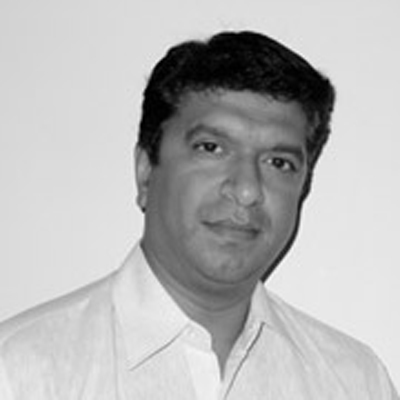
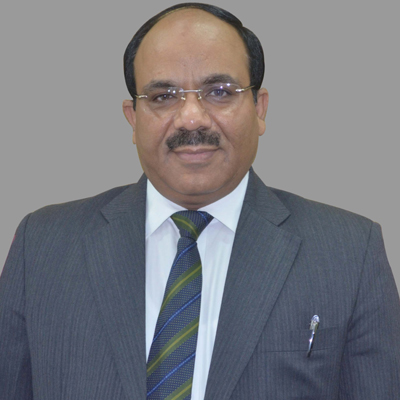
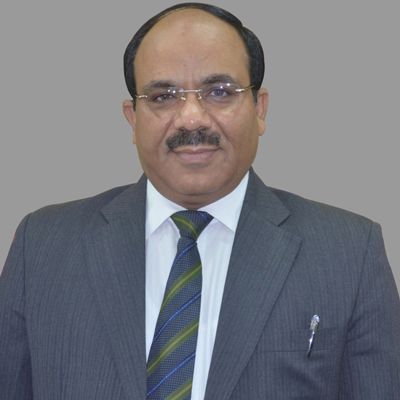
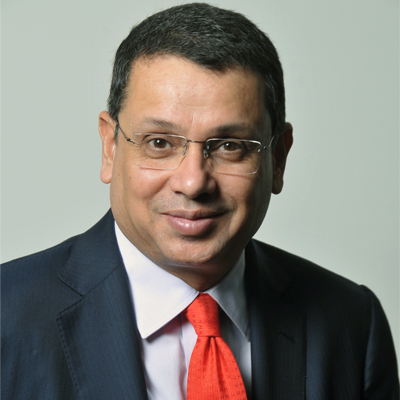
    New Delhi: All India Digital Cable Federation (AIDCF), the apex body of digital cable television players, announces the appointment of Mr. S N Sharma (CEO – Den Networks Limited) as the new President of the Federation with effect from 1st  April 2019 post expiration of term of Mr. Rajan Gupta – current President.

    Mr. Gupta commented that, “I am delighted to handover the presidency to Mr. Sharma.  It had been an event filled last couple of years at AIDCF, where we successfully migrated into the digital regime and ensured that New Tariff Regime becomes a reality, thereby empowering the consumers. I would like to thank all the members of AIDCF, without whose support this journey would not have been possible” Commenting on his appointment as the new AIDCF President, Mr. S.N. SHARMA said, “It is an honour for me to take the baton of leading AIDCF from Mr. Gupta and carrying it forward in the direction of realizing ‘The dream of Digital India’. All the esteemed members and I will continue to work as a team to resolve the issues and enhance the overall growth of Cable Television. Our priority will be making the new Tariff Regime hassle free so that that there is no inconvenience to the consumers. We will encourage and value the constructive suggestions and feedbacks.

  • Kerala Vision partners Y&A Transformation for new revenue streams

    Kerala Vision partners Y&A Transformation for new revenue streams

    MUMBAI: After establishing itself in Kerala with 24 lakh TV homes, Kerala Vision Cable (KV) is looking to expand its revenue streams. For its next stage of transformation, the company partnered with Y&A Transformation, a business transformation company, focused on helping its clients build the #NextPractices, erasing the #BestPractices legacy mindset, through agile, collaborative, adaptive and innovative methods of doing business in the areas of technology, data, content, customer centricity, customer experience, CRM, CSR, sustainability and organisation culture.

    Y&A Transformation is helping KV find new streams of revenue by making use of its chain of cable operators and households. IT is working to transform the relationship with customers from just a subscription fee collection one to building relationships. By this, it can open up a new channel for sales. Deals have already been struck for products ranging from gold loan by a bank to creating loyalty to a particular petroleum company.

    Commenting on the KV transformation, Y&A Transformation MD and co-founder S Yesduas said, “In today’s dynamic market where the focus is moving from selling products to building relationships with the customers, we are helping Kerala Vision reimagine their field strength by making it a sales channel which will take relevant products and services specifically curated and created by marketers for KV consumers, to doorsteps.  It is an absolute win-win solution. The large base of KV customers is an attractive proposition for marketers, their sales and marketing costs reduce. They also get to use the KV channels for their promotion with very special packages. KV gets a special incentive on the actual conversion and they are also able to provide additional value to their customers.”

    Speaking on the partnership, Kerala Vision MD Rajmohan Mambra said, “Y&A Transformation is our business advisors. We are very pleased with the contributions they make to our business. They are involved with us in all aspects of our business, from distribution to programming to sales. I would urge marketers looking at Kerala as a market to get in touch with Y&A Transformation before they look elsewhere because what they can put together will be incomparable.”

  • Reliance Jio acquires another 12% of Den Networks

    Reliance Jio acquires another 12% of Den Networks

    BENGALURU: Under disclosures of SEBI Regulations for Substantial Acquisitions of Shares and Takeovers (SAST), three Reliance Jio companies have informed the stock exchanges that they have increased their holdings in Indian multi system operator (MSO) Den Networks from 66.57 percent to 78.62 percent or increased their holdings by 12.05 percent which translates to roughly 5.75 crore shares. The three Jio companies are Jio Futuristic Digital Holdings Pvt Ltd, Jio Digital Distribution Holdings Pvt Ltd and Jio Television Distribution Holdings Pvt Ltd.

    As mentioned by us in October 2018 (http://www.indiantelevision.com/iworld/telecom/ril-close-to-buying-majority-stakes-in-den-hathway-181016) , Reliance Industries Limited (RIL) had announced the following strategic investments through a preferential issue under SEBI regulations and a secondary purchase to acquire a 66 per cent stake in Den Networks Ltd. Reliance Jio Infocomm Limited (Jio) is a mobile network operator owned by Reliance Industries Limited. Besides Den Networks, RIL had also announced strategic investments in the Rajan Raheja-controlled  Hathway Cable and Datacom Ltd at that time RIL said that these strategic investments are in furtherance of Reliance’s mission of connecting everyone and everything, everywhere – always at the highest quality and the most affordable price and transforming India’s digital landscape.

  • Cable subscribers switching to DTH platforms amid new tariff order implementation

    Cable subscribers switching to DTH platforms amid new tariff order implementation

    KOLKATA: While the Telecom Regulatory Authority of India (TRAI) continues to reiterate that its new tariff order will benefit all stakeholders of the cable and broadcasting industry, implementation of the new norms has witnessed a mixed response on the ground. As the ecosystem adapts to this radical change, local cable operators (LCOs) in Kolkata have started bleeding as cable subscribers are migrating to DTH platforms.

    Many consumers in the city have complained that they are experiencing channel blackouts despite shifting to new packages ahead of the deadline. In addition to that, they also contended that the operators are forcing them to opt for packages and not providing any options of a-la-carte channels. As a result, several consumers have switched over to DTH platforms in order to avoid this hassle.

    One of the major local cable operators in south Kolkata said they have experienced 10-15 per cent churn rate post the new tariff order implementation. On the other hand, another operator in north Kolkata has claimed that his company experienced a 20-25 per cent churn rate. Both of them have opined that the churned out subscribers are not choosing other cable operator but DTH operators only.

    Both the local cable operators blamed MSOs for not having a proper system in place to make the migration smoother. According to them, the websites of MSOs are crashing due to the traffic spikes. In turn, this is hampering the process of new package selection, with the a-la-carte channel activation getting delayed. 

    They also pointed out that web portals of some national MSOs are malfunctioning for last two months. They added that subscribers, being unaware of the problems, are pinning the blame squarely on LCOs.

    Last week the West Bengal government held a meeting with some of the stakeholders of the Indian broadcast and cable industry to understand the tariff issue and challenges in its implementation.

    State government sources told Indiantelevision.com that the meeting, attended by a minister too, was called to explore what the stakeholders could do for local LCOs who have been having a trying time to convince and educate consumers, especially in rural areas of the state.

    It is learnt that those who attended the meeting included senior representatives from Star India, MSO Hathway and Zee group. One of the requests made by the state government, according to official sources, was whether companies like Star and Hathway could also fund educational TVCs relating to the TRAI tariff order in the Bengali language that could be aired by the LCOs on their networks to make consumers better understand the issues relating to  channel selection and their prices. Industry stakeholders, it is learnt, remained mostly non-committal on this particular matter of TVCs in Bengali.

    Maharashtra Cable Operators Foundation (MCOF) committee member Asif Sayed, an LCO based out in Mumbai, too voiced a similar opinion, saying a-la-carte channel activations are getting delayed as MSO web portals aren’t equipped to manage the load.

    According to him, the churn rate is actually 5-10 per cent and another 10-15 per cent may be switching off because of ongoing examinations. Hence, after one month, there would be clarity on the actual churn.

    Since the beginning of tariff order rollout, many LCOs across the country have expressed their reservations about the new regulations. The 80-20 revenue share between broadcasters and DPOs has been a bone of contention, as they maintain there should be revenue cap separately for LCOs.

    “NTO has come at a time industry had settled down after DAS. Obviously it's a major shift and hence causing confusion across the board. Negative propaganda does happen when any change takes place. For example when DAS was declared similar propaganda was there that MSOs are not equipped to provide channels, boxes, and that consumers are migrating to DTH. Some people strategically float these propaganda. DPOs offer packages that satisfy most consumers. If a particular MSO fails to implement that there could be migration to other DPOs which can be to DTH or to other MSOs,” KCCL CEO Shaji Mathews, a veteran in the industry, commented.

    Mathews also added that the major MSOs are equipped to provide high-quality service to their consumers. 

    According to him, MSOs are in a better position to implement the order as cable operators are doing channel activations on ground. He added that in any case, there will be some amount of consumers who will keep jumping on both sides. He does not hold the view that there is any massive migration on either side, neither to cable nor to DTH.

    “Whatever migration is taking place is driven by non-compliance of some stakeholders. While the SC has commented on the need to regulate bouquet rates in relation to a-la-carte rates, the broadcasters have taken liberty to overstep the basic objective of NTO and declare disproportionate rates. With the most important part of the NTO thrown to the wind it's as good as no NTO and is the fundamental cause of confusion. Secondly, I have come across a DTH operator in blatant violation of basic DAS itself and transmitting unencrypted channels including pay channels,” he further added.

    Earlier TRAI said that in case of MSOs and LCOs, the biggest problem was discriminatory treatment by the broadcasters. As a result, it was almost impossible for smaller MSOs to get the content at an appropriate price from the broadcasters because the agreements were not transparent.

    The new tariff order, however, was meant to change that and benefit both the MSOs and LCOs. While a part of cable industry continues to believe the same, a large number of LCOs, at least in Kolkata, are quite disappointed with what implementation of the new tariff order has resulted in. 

  • Ortel CFO Satyanarayan Jena steps down

    Ortel CFO Satyanarayan Jena steps down

    MUMBAI: Satyanarayan Jena, the chief financial officer of the MSO Ortel Communications has stepped down. The resignation of the executive was effective from yesterday.

    “We hereby inform you that Satyanarayan Jena, has resigned from the post of chief financial officer of the company. The company has accepted his resignation and he will be relieved of his responsibilities effective from close of business hours on 28 February 2019,”  the company said in a BSE filing. Jena was elevated as CFO back in 2017 when Manoj Kumar Patra resigned from his position. He was associated with the company since 12 November 2015.  

    Ortel Communications is undergoing corporate insolvency resolution process (CIRP) and as on 27 November 2018, the National Company Law Tribunal passed an order for comencement of CIRP in last November. Sony Pictures Networks India( SPNI), an operational creditor of Ortel filed the application.

  • One Take Media Co launches K-World first time in India on IMCL platform

    One Take Media Co launches K-World first time in India on IMCL platform

    MUMBAI: Leading multi-system operator (MSO) and Headend-in-the-sky (HITS) platform company IndusInd Media & Communications Limited (IMCL) has partnered with One Take Media Co (OTMC) to launch K-World (Korean Language) first time in India. This will be part of their subscription-based services which are available to all InDigitalCATV subscribers across India.

    Korean K-dramas are popular due to the freshness and short length of the dramas. OTMC offers an array of K-dramas and Korean Movies with more than 200 Hours of content dubbed in Hindi.

    Currently, One Take Media isalready running 14 services across IMCL’s InDigital and NXT Digital platforms like Hollywood Movies, Bhojpuri films, Bengali, Marathi, Tamil and Telugu movies, kids nursery rhymes, animated movies , animated series ,Celebrity Chef based cooking shows,  Other unique services also include Hollywood and South Indian movies dubbed in Hindi.

    The Korean entertainment industry is booming right now. The global audience for Korean music and Korean television is exploding across Asia and is even spreading to Europe and North America. The unique K- World service from OTMC includes popular K-dramas like “Rich Man” “My Littlie baby”, “Melting Hearts”, “King in Love” , “ Sweet Revenge “”Bride of the century”  and many more .

    OTMCDirector ShamolyKhera said, “K- world is catching world like a fever .This surge of Korean popularity has been called "Hallyu.–Korean wave” and refers to the way Korean entertainment is spreading around the world”


    NK Rouse, COO, IndusInd Media & Communications Ltd. added, “IMCL continues to be the driver in digital innovation and building up our VAS offerings across both our platformsremains an integral partof that evolution. With One Take Media Co, a company with decades of experience in providing VAS solutions – we’re certain that our customers will enjoy this engaging and innovative offering of K-World”
     

  • Guest Column: The way forward for DPOs, broadcasters in the new TRAI tariff regime

    Guest Column: The way forward for DPOs, broadcasters in the new TRAI tariff regime

    During the early 2000s, cable television began to spread rapidly across India and the cable distribution business rapidly shifted from the early muddled phase towards a more corporate structure which put emphasis on the rationalisation of business practices, billing system transparency and technical know-how.

    The number of cable television subscribers in India grew from 4 lakh in the early nineties to more than 91 million by the end of 2009, the number of satellite television channels grew from a handful in 1992 to around 550 channels in 2010 and there was a significant increase in the number of distribution platform operators. However, the landscape of the cable industry completely transformed when the ordinance to digitise analogue cable systems was passed. The ordinance mandated the digitalisation and it got completed over a period of 6 years from 2011 to 2017 in four phases. Phase I covered the four metro cities of Delhi, Kolkata, Mumbai and Chennai, followed by 38 cities in phase II, all remaining urban areas and rest of India were covered in phase III and phase IV.

    The benefits of digitalisation for consumers as compared to analogue are multi-fold including refined quality of transmission, better sound clarity, and the choice to pay for select channels. Post digitalisation, we have witnessed significant consolidation/merger/closure of DPOs in the market with the number of distribution platforms reduced to 1200 from around 6000.

    The introduction of the New Tariff Order from 1 Feb 2019 focuses on “Consumer Choices” and will completely change the manner of channel selection, pricing and reach which is likely to disrupt existing revenue models of both broadcasters and DPOs.

    New regime and its impact

    Prior to the implementation of the new tariff order, the DPOs and the broadcasters were mostly operating on a fixed fee model. However, the new regime is likely to have a significant impact on the channel reach, channel share, ratings of non-driver channels and the overall revenue. The key to address these challenges for securing the correct revenue share amongst other things would entail consumer education, constant monitoring of consumer preferences and realignment of the bouquet packaging strategies taking into account consumer preferences.

    Under the new regime, consumers will have the option of paying only for channels they want to watch and can drop other channels from their list and hence, the subscriber base will now solely depend on the communication between the DPOs and the end consumer, and in the event of any communication gap, the last mile consumer will not subscribe to the channels and these may result in significant erosion of subscriber base impacting the revenue of DPOs and the broadcasters.

    Also, broadcasters and DPOs will have to upgrade or completely revamp their internal credit risk management and operating systems used for billing, settlements and disputes to capture complex and multiple combinations of channels that a consumer would choose from.

    Under the MRP regime, the revenues of MSO & broadcasters will be solely dependent on the subscriber numbers reported by LCO to MSO and IPTV, DTH and MSO to broadcasters. As subscriber reporting requirements have changed from reporting opening & closing of the month to opening & closing for all the weeks of the month, it requires significant system and process upgrades at DPOs’ end. Till such time, revenues of MSOs and Broadcasters remain in jeopardy. It would be imperative to closely monitor the situation from March 2019 onwards when DPOs are expected to submit their first subscriber report.

    Way forward

    The best solution for broadcasters and the DPOs to earn their fair share of revenues would be to continuously monitor the ground, track channel reach & availability and adapt to changing consumer preferences on a real-time basis. Such requirements can be effectively managed by mapping every DPOs headend catering to each and every last mile consumer, getting complete ground information on packages and channels being offered to consumers through field surveys and regular transport stream (TS) recording cum analysis at consumer points which will help to determine the placement of the channels and their encryption status !

    *DPOs include IPTV, DTH, MSO and LCOs.

    (The author is managing director in Risk Assurance Practice of PwC, India. The views expressed here are his own and Indiantelevision.com may not subscribe to them) 

  • GTPL cable TV business revenue up; broadband business keeps afloat

    GTPL cable TV business revenue up; broadband business keeps afloat

    BENGALURU: Indian multi-system operator and internet service provider GTPL Hathway Ltd (GTPL) reported 12.6 percent increase in total income for the quarter ended 31 December 2018 (Q3 2019, quarter or period under review) as compared to the corresponding year ago quarter (y-o-y) Q3 2018. GTPL’s Total Income in Q3 2019 was Rs 319.91 crore, for the corresponding year ago quarter it was Rs 284.09 crore.

    GTPL has two segments – cable TV business and internet service. Every Indian broadband internet services provider has been hit by Jio. Reliance Jio Infocomm has made available low cost broadband internet services at a never before scale in India, unprecedented anywhere in the world. Most operators have been bleeding subscribers, and how! ARPUs have plummeted.

    GTPL’s internet service business has been reporting a steep decline in operating profits over the past few quarters. In Q3-2019, GTPL’s internet business was still profitable. And the company has reported that its internet subscriber base increased by 11,000 for the period under review, however at lower ARPU. For Q3 2019, internet business ARPU was Rs 430 as compared to Rs 487 in Q3 2018.

    GTPPL’s consolidated profit after tax (PAT) increased 3.1 percent y-o-y in Q3 2019 to Rs 19.72 crore from Rs 19.13 crore in Q3 2018. Consolidated total comprehensive income for the period increased 2.4 percent y-o-y to Rs 19.72 crore from Rs 19.26 crore. Consolidated operating profit (EBITDA) excluding other income was almost flat – it declined 0.8 percent y-o-y in Q3 2019 to Rs 77.89 crore (24.8 percent of operating or op revenue) from Rs 78.53 crore (27.8 percent of op revenue) in the corresponding quarter of the previous fiscal.

    Segment Performance

    Cable TV business operating result increased 20.1 percent y-o-y to Rs 19.35 crore in Q3 2019 from Rs 816.11 crore in the corresponding quarter of the previous year. Operating revenue of GTPL’s cable TV business increased 14.7 percent y-o-y to Rs 278.06 crore from Rs 242.4 crore.

     GTPL’s TV business added 2,00,000 CATV digital subscribers in Q3 2019, 1,70,000 of which it says were paying subscribers. The company says that it had seeded 3,00,000 set-top boxes during the quarter under review. In all GTPL says that it seeded 0.95 crore STBs, of which 0.8 crore were active and 0.745 crore were digital paying subscribers as of 31 December 2018. GTPL’s largest subscriber base is in phase IV areas. Digital paying subscriber bases for phases I, II, III and IV were 0.066 crore, 0.169 crore, 0.226 crore and 0.283 crore respectively. ARPUs remained flat y-o-y across all the four DAS phases. ARPUs net of taxes for phases I, II, III and IV were Rs 103, Rs 102, Rs 67 and Rs 60 respectively.

    GTPL’s internet business operating revenue in Q3 2019 was almost flat – it increased 1.1 percent y-o-y to Rs 36.44 crore from Rs 36.03 crore. Internet service segment’s operating results for Q3 2019 declined by 87.9 percent y-o-y to just Rs 0.37 crore from Rs 3.03 crore in the corresponding quarter of the previous year.

    GTPL says in a press release that during the quarter, it was appointed as Project Implementation Agency (PIA) of Package B for implementation of BharatNet Phase – II Project in the state of Gujarat by Gujarat Fibre Grid Network Limited (GFGNL). The company says that the project is worth Rs 1,245.77 crore. The project is on EPC bases and includes survey, design, plan, execution with active/passive (OSP + Electronics) components with commissioning of complete network.

    Let us look at the other numbers reported by GTPL Hathway

    Consolidated total expenditure increased 16.3 percent y-o-y during the quarter under review to Rs 289.05 crore from Rs 248.59 crore in Q3 2018. Pay channel cost in Q3 2019 increased 26.5 percent y-o-y to Rs 137.72 crore from Rs 108.90 crore in the corresponding quarter of the previous year. Other operational costs reduced 16.5 percent y-o-y in Q3 2019 to Rs 23.99 crore from Rs 20.64 crore in Q3 2018.

    Employee benefits expense in Q3 2019 increased 18.9 percent y-o-y to Rs 37.63 crore from Rs 31.64 crore in the corresponding quarter of the previous fiscal. Finance costs reduced 20 percent y-o-y during the quarter under review to Rs 5.86 crore from Rs 7.32 crore. Other expenses in the period reduced 3.7 percent y-o-y to Rs 37.28 crore in Q3 2019 from Rs 38.72 crore in the corresponding quarter of the previous year.

    Company Speak

    GTPL Hathway managing director Anirudhasinhji Jadeja said in a press release, “In an environment of uncertainty, GTPL Hathway has continued to post steady performance. Our first 9 month revenue and PAT are up by 14 percent and 10 percent respectively; reflecting inherent strength of the company’s offerings and quality customer service. The new tariff order has put customers at the centre of the business; providing them freedom to make their own choices. As India’s one of the leading MSOs, we expect higher monetisation across the phases and better transparency as a direct fall out of the new order.”

  • TRAI steps in after 24% homes lose complete access to all pay channels

    TRAI steps in after 24% homes lose complete access to all pay channels

    MUMBAI: The Telecom Regulatory Authority of India (TRAI) on Tuesday extended the deadline for consumers to select television channels under its new tariff regime till 31 March  The subscribers that don’t opt for new channels would be moved to ‘Best Fit Plans’, which would be developed as per usage pattern, language and channel popularity, the sector regulator said in its statement.

    The regulator said the decision had been taken to protect the interests of consumers. TRAI stated that some subscribers are facing difficulties in selecting the channels/ bouquet of their choice. In some cases, LCOs have not been able to reach out to the subscriber to create awareness among them and collect the options, it noted.

    Right through the last couple of months, the regulator had time and again directed broadcasters and DPOs to ensure a seamless transition with no blackouts of TV screens.
    Despite the best efforts of all stakeholders, switch offs were reported across several cities of the country during the transition, a situation RS Sharma and team wanted to avoid.
    Therefore the TRAI’s latest move aimed at a consumer-friendly migration seems to be a positive one if ground-level implementation data is looked into.

    According to numbers provided by Chrome DM, 24 per cent households had lost complete access to all pay channels in 10.9 million cable and satellite homes in 366 urban cities (340 Chrome DM reported channels).

    As per Chrome DM week 6 data, 76 per cent of households in these cities felt no impact of the new norms, as they continued to have access to 300 odd channels as per their old packs. 13 per cent of households among rest 185.1 million cable and satellite homes across the country have exercised their right in some form to pick new packs.

    Bhima Riddhi Digital Service promoter Nagesh Chhabria said his team had to convert consumers from pay channel base to FTA base in some areas. Chhabria said the Belgaum-based operator had initially handed ten days to its subscribers to select new channels or packages. However, those that did not exercise their choice were converted to the FTA base. However, he added that consumers were informed prior to the switch off. Overall 30-35 per cent of his company’s consumer base has been converted to FTA.

    Maharashtra Cable Operators Foundation (MCOF) member Asif Sayed said the switch-off phenomenon was being witnessed in parts of Mumbai as well. According to him, all the MSOs other than Den Networks “have forcefully converted the pay packages into FTA”.

    Sayed went on to add that some consumers, despite having packages with six months validity, have been moved to the FTA base.

    “Any form of TV buying on the back of the existing ratings’ sampling does not hold, as the 196 million C&S homes in India will choose different channel packages – running into thousands of combinations. There are multiple combos being rolled out by the broadcasters, DPOs and variants of the same – earlier were an average of 5 packages earlier, which has moved to over 5000 combinations post the NTO implementation,” Chrome DM founder Pankaj Krishna highlighted.

    Chrome DM week 5 data revealed that a staggering 90 per cent of consumers were aware of the change in tariff through the TV ads of broadcaster, and not through their cable service providers.

    The data also showed that 70 per cent of people who have been contacted were yet to take decisions on which package or channels to subscribe to. Out of the balance 30 per cent in the regional markets, the inclination of choice is more towards regional packages and channels.

    According to Chhabria it is premature to talk about the package uptake. He pointed out that broadcasters are marketing national bouquets a lot more than regional one. The veteran executive feels that regional channels are being promoted by DPOs.

    According to Chrome DM, a major chunk of the off take of packages will be taken over by the distributor-defined packages, while broadcaster defined-packages will always remain a second choice. Chhabria seconded that theory, adding that around 60 per cent of consumers are picking bouquets designed by DPOs only. Sayed, from his on-ground experience, claimed that only DPO suggested packages are working. He also added that MSOs are taking a lot of time to activate pay channels on a-la-carte basis.

    According to several industry watchers Indiantelevision.com spoke to, major MSOs including Arasu Cable, Den Networks, GTPL Hathway, Hathway Cable and Datacom among others had switched off pay channels in various parts of the country. Multiple cities in Delhi and Uttar Pradesh reported a complete pay channel bouquet switch off, expect channels from IndiaCast and Sony. A small section of DPOs had also switched off all pay channels, barring some regional packages. Sayed added that the chaotic situation is increasing the churn rate of the cable business, thereby helping DTH operators.

    As per TRAI, there are close to 100 million cable service TV homes and 67 million DTH TV homes in the country. The regulator believes that approximately 65 per cent of the subscribers of the cable services and 35 per cent subscribers of the DTH services have already exercised the options.

  • IMCL highly optimistic about impact of tariff order on business

    IMCL highly optimistic about impact of tariff order on business

    MUMBAI: Indusind Media & Communications Ltd (IMCL), the Hinduja Ventures Ltd (HVL) subsidiary, is highly optimistic about the impact of the new tariff order on its business. The MSO asserts that the new regime ensures a more equitable distribution of economic benefits in the value chain. After overcoming major legal battles the new tariff order by Telecom Regulatory Authority of India (TRAI) has finally come to effect from 1 February.

    While earlier the deals between broadcasters and distribution platform operators (DPOs) were not transparent and consumers did not have the option to select channels as per their choice, with the new regime the industry is moving towards an MRP based model. IMCL in its third quarter earnings release said that through proper packaging and pricing and giving the consumers the channels of their choice, the company will now be able to move very fast on the path to profitability. The MSO also added that the change will also enable the company to have a better return on capital employed.

    HVL reported a total income of Rs.10.16 crore for the third quarter on 7 February while the media and communication segment contributed 10 crore. HVL operates across three segments including media and communication, real estate and investment, and treasury and IMCL comes under the first category.

    "IMCL being a progressive player in the MSO industry has looked at the developments in the industry both with respect to the new tariff order and the consolidation very positively and is today in the forefront of providing excellent consumer service through seamless implementation of the new tariff order while ensuring excellent viewership through world class technology. This along with efficient packaging and pricing adopted by it will result in the company move on the path to profitability," IMCL CEO Vynsley Fernandes said.

    Last year another major development took place in the distribution industry with the entry of Jio FTTH. To reach last mile consumers easily, JIO announced majority stake in two large MSOs, Hathway Cable and Datacom and Den Networks.

    “IMCL believes that such consolidation is good for the industry as it creates an environment for technology driven organisations who will now focus on better consumer experience leading to better pricing rather than pure volume growth in a frittered industry,” the release read.