Category: Cable TV

  • MCOF raises questions on Hathway, Den pushing existing STBs under Jio brand

    MCOF raises questions on Hathway, Den pushing existing STBs under Jio brand

    KOLKATA: Maharashtra Cable Operators’ Foundation (MCOF) has flagged off several unethical practices in the television distribution segment. In a letter written to the Telecom regulatory authority of India (TRAI), it has alleged that some multi system operators (MSOs) are violating rules and taking the unethical route of business. 

    MCOF has expressed concern about Den Networks and Hathway for imposing replacement of existing STBs by STBs under Jio brand in the last six months. The federation has claimed that the two MSOs have not replaced the expired standard interconnection agreement (SIA) with the model interconnection agreement (MIA) without offering any explanation for the rebranding.

    “The LCOs who resist the imposition are made to toe the line by disabling their access to the Prepaid Portal resulting in service interruptions ton the subscribers. In addition to the arm-twisting, the MSOs have lined up numerous dummy operators to replace the existing LCOs who usurp their business and assets,” the letter added.

    MCOF stated that Jio is not a registered MSO nor has it signed interconnection agreement (ICA) with LCOs. Moreover, Hathway and DEN continued to rely upon expired SIA overlooking repeated requests to adopt MIA. 

    It has also claimed that BRDS provides signal feed to its network in Kolhapur and connected areas but deploys InCable STBs. InCable has been alleged of providing feed to Sampark Network (Powai Mumbai and Bhiwandi Area) through STBs that the latter has deployed. 

    “We fail to understand as to how auditors have overlooked the mismatch between CAS, STB inventory and conflicting branding, head-ends can be used as pass-through pipes for signals from another MSO, random off-site checks by broadcasters through watermarking have not detected the malpractices,” it added.

    Against this context, MCOF has asked copies of ICA between Jio and Broadcasters and status of MSO License to Den and Hathway. It has also called for clarification on whether a mere share purchase deal allows the buyers to change brands and automatically subrogate the company whose shares it buys. 

    It has also requested the industry watchdog to share the steps it is taking to prevail on MSO to sign up fresh ICA with LCOs by mutual consensus rather than arm-twisting via Prepaid Portal Access denial. MCOF has also asked directions for the course of actions that LCOs should take to safeguard against likely disabling of STBs that are drawing signals from third party head-end or suspension of feed sharing between MSOs. 

  • NXTDIGITAL reaches out to new consumers

    NXTDIGITAL reaches out to new consumers

    KOLKATA: As the country gears up to welcome Lord Ganesha, NXTDIGITAL, the media arm of the Hinduja Group, has launched a consumer connect program – ‘Ganpati Bappa Morya’ to spread the message of joy and safety amidst the global pandemic. 

    As part of this initiative, NXTDIGITAL would encourage consumers, to shoot their Ganpati celebrations at home (their decoration, sthapna and aarti) on their mobile phones and upload it to NXTDIGITAL at https://ganpatibappamorya.nxtdigital.in. Select participants will get a chance to feature on the television channels of INDigital and NXTDIGITAL network as a part of this video contest.

    Video entries will be judged and the top three videos in the category of ‘Best Ganpati Idol’, ‘Best Ganpati Decoration’ and ‘Best Eco-Friendly Ganpati’ stand a chance to win attractive gifts by answering a simple question. Home Theatre System, Wonderchef Tandoor and Wonderchef Non-stick cookware are some of the exciting prizes up for grabs for the winners of this contest.

    Commenting on this initiative, NXTDIGITAL brand and marketing head Rajdeep Rudra said “The ongoing pandemic of coronavirus has impacted the economic, social and mental wellbeing of people across the world. As we approach one of the most revered, loved and celebrated festivals of India – Ganesh Chaturthi, we want to help our audience celebrate their love for Lord Ganesha with the same faith and dedication, as they do each year. As caring brands, through this program, we want to create awareness amongst our audience about taking necessary safety precautions while they celebrate this festival from the comfort of their homes. Our objective is to capture this celebratory mood and engage with consumers as we try and build a safe environment for them.”

    Shortlisted videos will also be edited and broadcast on INDigital and NXT DIGITAL (HITS) channels from 22  Aug to 1 Sep 2020 i.e. the entire Ganesh Utsav.

  • MSOs see recovery in subscription collection post lockdown

    MSOs see recovery in subscription collection post lockdown

    KOLKATA: At the beginning of the Covid2019 crisis, distribution platform operators (DPOs) witnessed a sharp drop in collections from subscribers. After months of lockdown and controlled movements, major multi-system operators (MSOs) are seeing stability in their collections from June end. 

    According to a survey done by business intelligence enterprise Intin titled ‘Cable TV Fitness Check’ published in late May, the collection dropped for 84 per cent of cable operators, which was attributed to the unwillingness for digital payment and the lack of infrastructure, coupled with the social distancing norms.

    GTPL Hathway CATV business head and chief strategy officer Piyush Pankaj says that they have recovered the collections once the opening up started. Moreover, many new consumers have opted for digital payment. Hence, the payment collection issue has stabilised. Pankaj also added while 10-15 per cent of total collection dipped at the beginning of the pandemic, the scene has changed June onwards leading to 100 per cent recovery in the collection.

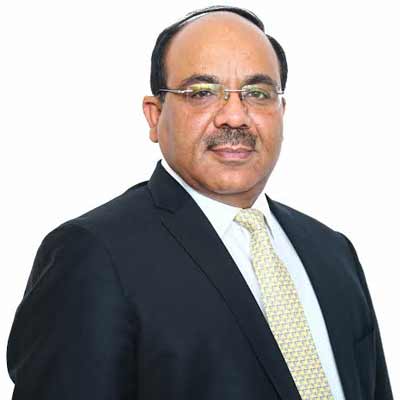
    Siti Networks Ltd CEO Anil Malhotra also echoes the same tone. According to him, the collection dropped by 20-25 per cent in March-April. While it recovered, there is still five to six per cent lag. However, he mentions that it is still facing an issue on the side of placement and marketing. 

    While UCN Cable Network director Jagdish Paliya states that two to three per cent recovery is still left, the collection is not difficult at this moment. There was 15 per cent drop in collection till May as the stringent lockdown made it difficult for last mile operators to reach the consumers.

    IndusInd Media & Communications Ltd (IMCL) CEO Vynsley Fernandes also reflects the positive sentiment of his peers in the industry. As everyone is adjusting to the new normal, some amount of stability has come, especially in terms of collection. He highlights another important trend that more consumers are paying digitally through payment gateways like Google Pay, PayTM, etc.

    Malhotra also agrees to the surge in digital payment from consumers but he notes that it is still not substantial despite a noticeable improvement. On the other hand, Pankaj says there has been an overwhelming surge in digital payment from the consumers’ side in the last four months. While it was 30-35 per cent pre-Covid2019 time, it has now reached 80-85 per cent. Metrocast Network Services promoter Nagesh Chhabria also says that it has converted more consumers into digital payment mode.

    With recovery, MSOs are likely to benefit from the growth in digital payments that they have witnessed during the pandemic.

  • NTO 2.0: DPOs express discontent over partial implementation of regulation

    NTO 2.0: DPOs express discontent over partial implementation of regulation

    KOLKATA: With constant changes in regulations, the pay-TV sector in India continues to face uncertainty. Major broadcasters have come together to fight the implementation of the amended new tariff order (NTO 2.0) as directed by the Telecom Regulatory Authority of India (TRAI). However, distribution platform operators (DPOs) have already complied with the network capacity fee (NCF), multi-TV charges, etc., under the new directive and express dissatisfaction over the partial implementation. 

    “TRAI had asked all DPOs to adhere with NTO 2.0 on NCF, multi-home and others. As broadcasters have not given any new rates, you can’t implement the full NTO 2.0. If you implement half NTO, you have taken whatever is negative on your books but whatever positive we could take from broadcasters’ side has not happened. Hence, it is harmful to both DPOs and subscribers. We will be struggling how to handle it if the issues drag on and broadcasters don’t come out with new prices,” says GTPL Hathway CATV business head and chief strategy officer Piyush Pankaj.

    While broadcasters are reeling under Covid2019 impact, TRAI came out with a directive to implement NTO 2.0 by 10 August. As the petition against it was already sub judice, the broadcasters went to the Bombay high court challenging the directive. The court asked both parties to go by “gentlemen’s word” and TRAI assured it would not take any action till the next hearing. The court is hearing the case today before a bench comprising justice AA Sayed and justice Anuja Prabhudesai. 

    Another executive from a national MSO also brought up the fact that TRAI made all DPOs to implement the order on 1 March. But DPOs could not implement new pricing without broadcasters publishing it. Hence, many DPOs reached out to TRAI saying that either broadcasters should comply with all the rules or the authority should roll back pressure on DPOs. He also informs that one of the large broadcasters already published new pricing with 10-15 per cent hike but was continuing with the old reference interconnect offer (RIO).

    “Any channel which is above Rs 12 cannot be clubbed in a bouquet. If broadcasters don’t reduce the prices to be included in the bouquet that will affect all our bouquets,” says Metrocast Network Services promoter Nagesh Chhabria. However, he adds that there is no issue currently as Metrocast is continuing with the old model.

    “It’s an ecosystem, you cannot implement regulations in bits and parts,” says UCN Cable Network director Jagdish Paliya. However, he adds that NTO 2.0 is not very favourable for DPOs, too, as making a discount on second box compulsory is harsh on the operators.

    But what if the order comes in favour of the implementation of NTO 2.0? Here, the DPOs echo broadcasters’ view that executing it amid a pandemic would be very difficult. While approximately 15 million pay-TV subscribers cut the cord during NTO 1.0 implementation, the executive from a national MSO posed the most important question – will more subscribers drop off now?

  • SPN’s distribution team brings cheer to Maharashtra LCOs through ‘Nukkad LIVE’

    SPN’s distribution team brings cheer to Maharashtra LCOs through ‘Nukkad LIVE’

    KOLKATA: The Covid2019 pandemic has had a seismic effect not only on the way businesses run but also on several other aspects of people's lives. The cable industry, the unsaid essential service, has played a major role in the current environment keeping people entertained and informed. While a majority of the population was under a shelter-at-home directive, last mile operators kept working on-ground risking their lives to provide seamless services to their subscribers. SPN was the first network to salute these unsung heroes through its ‘Happy Hero’ campaign. Taking the relationship with the operators forward and to bring some cheer , excitement to the last mile operators, Sony Pictures Networks India (SPN) undertook a novel initiative of virtual event, ‘Nukkad LIVE.’ 

    Through ‘Nukkad LIVE’ last mile operators, more commonly known as LCOs, get to enjoy specially curated acts as well as interact with the artists & key protagonists of various SPN channel shows. 

    "The new normal in our day to day to work life has shifted to the digital interface. We have always believed in staying connected with our trade partners & we enjoy excellent partnerships with MSOs across the country. The ‘Nukkad LIVE’ initiative is really about going a step further & creating opportunities for interaction for SPN’s well known show artists with the last mile, namely the LCOs. They are really the unsung heroes who are risking their lives every day to keep the pipeline of entertainment flowing and alive. After seeing the huge success of ‘Nukkad LIVE’ in Maharashtra with the likes of DEN and GTPL, we will soon be extending this format to the Hindi GEC & sports genres,” said Sony Pictures Networks (distribution business) EVP Sales and Marketing, Makarand Palekar. 

    SPN has initiated the first leg of this digital collaboration in the Maharashtra market bringing actors from Sony Marathi and leading operators from the state together. Samir Choughale, Vishakha Subhedar and Vanita Kharat, all well-known names from the Marathi entertainment industry, are part of this campaign to meet operators on the ‘Nukkad LIVE’ platform. 

    While Kharat holds the meet-up together by anchoring it, Choughale is interviewing Subhedar and the latter gets humorously offended. The fun banter ends with the stars thanking the operators for their relentless support and service to keep the show on during the lockdown period as operators made sure all the viewers got uninterrupted signals for their daily dose of entertainment. The 40-minute meet ended with both the actors interacting with the trade fraternity by answering their questions.

    Although both broadcasters and distributors are dependent on each other to run their businesses, during this crisis period, such collaborations can help to keep the touch points on both sides alive and lighten the burden of social distancing, on everyone. 

    What do the partners think?

    “Good initiative by the Sony Marathi & distribution team to connect & engage our business partners using the virtual platform. Spreading a smile is very important in the present situation where people are facing a lot of hardship. All the best to the Sony team,”  GTPL Hathway Ltd promoter and managing director Aniruddhsinh Jadeja said. 

    “This unique initiative by Sony team to bring the last mile operators together, added a new dimension to strengthen relationship between broadcaster, MSO & LCO. It helps the industry to work towards a common goal of inclusiveness by involving the last mile which further encourages them to provide better services,”  DEN Satellite director Rajeev Gavi shared. 

    “Brilliant programme! The execution of the event was seamless despite the dependency on technology. Inviting the LCOs to this event and mentioning the special relationship that Den Satellite and Sony shares further strengthens the bond between stakeholders. Artists were really entertaining and it was thoroughly enjoyed by our partners,”  DEN Satellite director Ravishankar Singh said. 

  • NXT Digital does a financial turnaround in FY 2020

    NXT Digital does a financial turnaround in FY 2020

    MUMBAI: Among the early movers in the cable TV industry, the Hinduja group run – NXT Digital has turned out impressive financials for the financial year 2020. The topline has shown significant growth, it has turned EBIDTA positive and how; the red ink on its bottomline has been replaced by fat profits and to top it all it has even declared a dividend of 50 per cent. And it's all thanks to its subsidiary IMCL, which has declared a robust performance over the past four quarters. 

    On a consolidated basis, revenues grew by 65 per cent over FY19, from Rs 704.62crore to Rs 1,162.10crore; operating EBIDTA rose significantly to Rs 218.01crore against a loss of Rs 72.61crore; its PAT is a healthy Rs 110.05 crore as against a loss of Rs 303.43 crore in FY19. Buoyed by the great showing, a dividend of 50 per cent has been declared to the joys of many a shareholder. 

    NXT Digital announced that its HITS platform today has five million subscribers through local cable operators (LCOs) and smaller multisystem operators (MSOs) in 1500 towns all over India, and even in remote places such as Ladkah, Kargul, the far north east and the Andaman, Nicobar and Lakshwadeep islands. The technology, using C-band is not affected by rain or adverse weather and customers in these areas continue to enjoy digital services, uninterrupted. 

    "This kind of outstanding performance consistently over the last four quarters speaks volumes on our commitment towards our subscribers through strong value creation," says IMCL CEO Vynsley Fernandes."We firmly stand committed to further our endeavor of creating an integrated platform for digital services, offering cable TV, satellite, broadband and other digital media, all under one roof. Building an effective framework along with our product bundling strategy has been crucial for our business turnaround in FY20. With close to a 100 per cent prepaid base and a substantial presence in phase 3 and 4 markets, IMCL expects to continue on its digital growth path."

     The company says it has continued to focus on key drivers through FY' 20. Some of these include: 

    * Targeting the the fastest growing segments of semi-urban and rural India. Over 60 per cent of its subscriber base is in these markets which continue to see increasing pay TV penetration as well as growing average revenue per user (ARPU).

     *Growing ARPU through value added services and differentiated products in the cities. Launching innovative products like layering cable TV with broadband and value-added services, coupled with 24X7 services on ground.

     * Successfully implementing the new regulatory framework, set out by the TRAI (Telecom Regulatory Authority of India) in early 2019. The visionary framework which brought in much needed transparency to the pay TV ecosystem and enhanced subscriber choice has buoyed the business model and set out a clearly defined level playing field for the industry. 

    * Maintaining pre-paid collections at nearly 100 per cent, whilst ensuring low churn through a focused E&R (engagement &retention) model for subscribers and franchisees. 

    * Leveraging its leadership position in technology, whilst improving cost efficiencies. Recently moved to 32APSK technology, that improves satellite throughput by over 30 per cent. 

    * Working closely with its 9,000 plus franchisees to remain focused on the subscriber through continuous enhancement of the quality of service and viewership experience. 

     This apart, the company is working on developing an indigenous set top box keeping in mind the government's Make in India mandate; it has been conducting digital online training for its LCOs; it has built a robust digital payment collection platform, and even rolled out a proactive business continuity plan to ensure that its subscribers get top class service even during cyclone and the ongoing Covid2019 pandemic that has rocked India and the world. 

    Going forward, it plans to expand on its managed services model and has signed on additional MSOs; that should double its subscriber base to 10 million. The company says the model effectively supports these smaller MSOs and LCOs several of whom are unable to sustain their businesses due to increasing costs of connectivity and technology obsolescence. 

    Fernandes adds that the idea is to expand the services its franchisees can offer, making them multi-product and multi- service providers; offering customers a whole range of services from FMCG products to digital and financial solutions. 

    "This will help our franchisees not only sustain their businesses, but diversify and grow their earnings portfolio, across the country," he says. "We remain focused on delivering integrated services to customers, bundling television with broadband services from our ISP subsidiary OneOTT iNTERTAINMENT, which has a presence in over 40 cities."

  • Hathway reports higher profits despite lower revenue

    Hathway reports higher profits despite lower revenue

    BENGALURU: The Mukesh Dhirubhai Ambani-controlled MSO and broadband internet services provider Hathway Cable and Datacom Ltd (Hathway) reported consolidated profit after tax (PAT) at Rs 66.06 crore for the quarter ended 30 June 2020 (Q1 2021, quarter or period under review) against loss of Rs 9.38 crore for the corresponding year ago quarter Q1 2020 (y-o-y). Consolidated operating EBITDA for the period under review at Rs 118.18 crore (28.2 percent of operating revenue) grew 26.9 percent y-o-y from Rs 83.14 crore (20.7 percent of operating revenue).

    Hathway’s consolidated operating revenue fell 6.7 percent y-o-y in Q1 2021 to Rs 419.56 crore from Rs 449.78 crore in Q1 2020. Consolidated total income (total revenue) during the quarter fell 3.6 percent y-o-y to Rs 514.46 crore from Rs 506.68 crore.

    Hathway has two major segments – broadband internet services (BB) and cable television or CATV.

    BB segment saw operating revenue increase 9.5 percent y-o-y in Q1 2021 to Rs 146.51 crore from Rs 133.81 crore in the corresponding year ago quarter. The segment’s operating result (operating profit) declined 14.2 percent y-o-y in Q1 2021 to Rs 7.84 crore from Rs 9.14 crore.

    CATV segment revenue declined 13.6 percent y-o-y in Q1 2021 to Rs 273.05 crore from Rs 315.97 crore in Q1 2020. The segment reported more than six-fold increase in operating result (operating profit) – which grew 505 percent y-o-y in Q1 2021 to Rs 17.06 crore from Rs 2.82 crore in Q1 2020.

    Let us look at the other numbers reported Hathway for Q1 2021

    All numbers in this report are consolidated unless stated otherwise.

    Total expenditure in Q1 2021 declined 17.6 percent y-o-y to Rs 427.92 crore from Rs 519.61 crore in the corresponding period of the previous year. Pay channel cost during the quarter under review increased 1.6 percent y-o-y to Rs 152.70 crore from Rs 130.06 crore. Employee cost in Q1 2021 grew 2.8 percent y-o-y to Rs 24.30 crore from Rs 23.63 crore in Q1 2020. Operational expenses in Q1 2021 grew 0.7 percent (almost flat) y-o-y to Rs 77.67 crore from Rs 77.13 crore. Finance cost was less than half (declined 59.7 percent) y-o-y to Rs 32.96 crore from Rs 81.79 crore in the corresponding quarter of last year. Other expenses in Q1 2021 declined 46.6 percent y-o-y to Rs 67.23 crore from Rs 125.82 crore.

  • APOS 2020: Why Indian pay TV still holds a lot of potential

    APOS 2020: Why Indian pay TV still holds a lot of potential

    KOLKATA: Even as the doomsayers have been predicting impending doom for India’s television business and tomtomming the growth of streaming services, Tata Sky CEO Harit Nagpal and IndiaCast Media Distribution Group CEO Anuj Gandhi believe that there’s tremendous scope to grow pay-TV in India. Taking part in a roundtable as part of Media Partners Asia’s virtual APOS 2020, both said television has barely been penetrated yet. 

    Tata Sky’s Harit Nagpal – who's running, arguably, one of India's most respected DTH platforms – highlighted that there is a distribution game which needs to be played well. Nagpal mentioned two ways that the business can get a growth impetus: one is reaching out to the un-penetrated households and secondly selling more to existing consumers.

    He backed his statement with facts. According to Nagpal, 100 million homes in India are TV-less, and would go on to buy one eventually. Moreover, 35 million TV watchers have subscribed to free to air service DD Freedish. According to him, the Indian consumers are gradually moving from no TV to FTA to pay-TV, acknowledging that those in the higher end of pay-TV spectrum in urban areas are migrating to OTT and broadband. While he acknowledged the movement to OTT, he also mentioned that it is slower compared to the growth of linear TV and it will continue for a while.

    “Households without a TV have not bought one so far, and those that bought one have moved to FTA because they could not afford the Rs 300 plan which the platforms charge,” says Nagpal.

    Hence, he added that expecting them to pay Rs 1000 for bandwidth to watch Rs 300 worth of content is a bit much. He stated that they would start with linear TV paying only for content while they may migrate to new media in the next decades. 

    “In the last two years, we have seen a huge surge in small screen viewing of content essentially because data cost was abysmally low. As the data prices find their right level, which is what it should be, I guess the projections we all are making will level up,” he stated.

    Indiacast’s Gandhi agreed with Nagpal’s view on the distribution game and the growth opportunity. He pointed out while pay TV’s potential has been spoken about a lot, the industry has barely made any change in the past six-seven years. 

    The silver-lining is that fictitious numbers of cable subscribers were floating up in the market before the NTO while after its implementation the industry now agrees on the number of 120-130 million paying subs. According to Gandhi, the growth opportunity is low-ARPU market which is partly either on DD or getting pirated content needs to be converted. This ongoing process cannot be taken away by streaming services.

    Moreover, Gandhi stated that the pandemic has made the industry realise that overly depending on advertising revenue is a troubling trend. Until now, content players have not focused on subscription revenue by not creating cohorts or not helping the platforms to plan for a better ARPU or upselling. Hence, while there are opportunities in the pay-TV business: one has to build a robust subscription model by tweaking, changing, remodelling the existing one.

    The statistic of 500 million smartphone users has been touted enough but Gandhi noted that all of them may not have four-inch plus screens or enough memory to have more than seven-eight apps on their devices. Hence, he opined that despite the fact that a part of the high-end consumers have started subscribing to streaming services – some of them live –  using connected TVs and devices, linear TV cannot be replaced for most of the consumers. 

  • Den Networks reports higher profits despite lower revenue in Q1-2021

    Den Networks reports higher profits despite lower revenue in Q1-2021

    BENGALURU: Indian cable TV and broadband services provider Den Networks Ltd (Den) reported 3.8 percent lower consolidated revenue for the quarter ended 30 June 2020 (Q1 2021, quarter or period under review) as compared to the corresponding year ago quarter (Q1 2020). Consolidated operating profit (simple EBITDA) for the period under review increased 55.2 percent in Q1 2021 as compared to Q1 2020. The company’s profit after tax (PAT) more than quadrupled (increased by 308 percent) y-o-y in Q1 2021. The company has pared its expenses in Q1 2021 as compared to Q1 2020.

    Den reported consolidated operating revenues of Rs 301.31 crore and Rs 313.15 crore for Q1 2021 and Q1 2020 respectively. Consolidated EBITDA for Q1 2021 was Rs 63.93 crore, for Q1 2020 it was Rs 41.19 crore. PAT for the period under review was Rs 58.32 crore as compared to Rs 14.31 crore in the corresponding year ago quarter. Total Income (revenue) for the period was flat at Rs 364.47 crore as compared to Rs 364.40 crore in Q1 2020.

    Segment Revenue

    Den Networks has two major segments in Cable Business and Broadband Business.

    Den reported 3.6 percent decline in total revenue for its Cable Business in Q1 2021 at Rs 284.47 crore as compared to Rs 295.17 crore in Q1 2020. The company reported 6.93 crore operating result for the quarter under review as compared to an operating loss (negative result) of Rs 11.07 crore for Q1 2020.

    Den reported 14 percent growth in subscription revenue for its Cable Business for Q1 2021 at Rs 195 crore as compared to Rs 171 crore in the corresponding quarter of the previous year. Placement/Marketing Income declined 37.1 percent y-o-y in Q1 2020 to Rs 61 crore from Rs 97 crore. Activation Income increased 4.3 percent in Q1 2020 to Rs 24 crore from Rs 23 crore in Q1 2020. PAT for the segment more than tripled to Rs 65 crore in Q1 2020 as compared to Rs 20 crore for Q1 2020.

    Den reported 6.3 percent lower Broadband Business operating revenue at Rs 16.85 crore in Q1 2021 as compared to Rs 17.98 crore in Q1 2020. The segment’s operating loss (negative result) increased to Rs 6.32 crore in Q1 2020 as compared to operating loss of Rs 5.45 crore in Q1 2020.

    Let us look at the other numbers reported by Den for Q1 2021

    Total expenditure for Q1 2021 declined 12.8 percent to Rs 302.95 crore from Rs 347.32 crore in Q1 2020. Content costs declined 15.2 percent in the quarter to Rs 135.20 crore from Rs 159.41 crore in the corresponding year ago quarter. Placement fees declined 62.8 percent to Rs 3.59 crore in Q1 2021 as compared to Rs 9.65 crore in Q1 2020. Employee benefits expense for Q1 2021 increased 5.1 percent y-o-y to Rs 23.92 crore from Rs 22.75 crore in Q1 2020. Finance costs in Q1 2021 declined 87.2 percent to Rs 2.26 crore from Rs 17.64 crore. Other expenses declined 12.8 percent in Q1 2021 to Rs 74.69 crore from Rs 80.15 crore in Q1 2020.

  • GTPL Hathway reports higher subscription revenue, improved numbers for Q1-2021

    GTPL Hathway reports higher subscription revenue, improved numbers for Q1-2021

    BENGALURU: GTPL Hathway Ltd (GTPL) reported 19.3 percent growth in revenue for the quarter ended 30 June 2020 (Q1-2021, quarter or period under review) and 8.9 percent growth in the operating profit for its cable TV business (CATV business) as compared to the corresponding year ago quarter Q1 2020. The company’s consolidated revenue from operations for the quarter under review grew 10.8 percent year on year (y-o-y) while consolidated total income expanded 10.1 percent in Q1 2021 as compared to Q1 2020. Consolidated profit after tax grew 39.8 percent to Rs 46.47 crore in Q1 2021 as compared to Rs 33.23 crore in Q1 2020. All the three major segments of the company had operating profits.

    GTPL reported consolidated revenue from operations at Rs 495.46 crore in Q1 2021 as compared to Rs 447.22 crore in Q1 2020. Consolidated total income for the period was Rs 502 crore as compared to Rs 456.05 crore in the corresponding year ago quarter. CATV business revenue was Rs 412.53 crore in Q1 2021 as compared to Rs 345.91 crore in Q1 2020. CATV business reported operating result of Rs 50.17 crore for the period under review as compared to Rs 46.06 crore for Q1 2020. ARPU or Q1 2021 was up by Rs 7 to Rs 422 from Rs 415 in the previous year’s corresponding quarter.

    The company’s internet services business (Ex-EPC Project numbers) revenue grew 34 percent to Rs 52.65 crore in Q1 2021 from Rs 39.29 crore in Q1 2020. The segment reported an operating profit of Rs 5.34 crore in Q1 2021 as compared to an operating loss of Rs 0.18 crore in the corresponding year ago quarter. The company had been awarded Package B of the prestigious Bharat Net Phase-II project from the Gujarat Fibre Grid Network Ltd under Digital India Initiative (EPC Project) last year. GTPL reported revenue of Rs 30.28 crore an operating profit of Rs 2.01 crore from the EPC Project.

    GTPL reported revenue (Ex EPC Project) of Rs 471.7 crore, which was 20 percent more y-o-y. The company says in an earnings release that its CATV subscription revenue increased seven percent y-o-y to Rs 265.3 crore. EBITDA Ex EPC Project increased 14 percent y-o-y to Rs 126.1 crore.

    On the operational front, GTPL says that it has seeded 100,000 STBs but at the same time, it has lost 300,000 digital paying subscribers in Q1 2021. The company says that it had 72 lakh (7.2 million, 0.72 crore) digital paying subscribers as on 30 June 2020.

    Company Speak

    GTPL managing director Anirudhsinh Jadeja said, “GTPL Hathway delivered another strong quarter. The highlight of the quarter was strong profitability anddebt reduction. Our Q1 FY21 consolidated revenue, EBITDA and PAT grew by 10 percent, 11 percent and 39 percent respectively. During the quarter, we have reduced our gross debt by Rs 368 million (Rs 36.8 crore). During the current financial year, we plan to launch a Hybrid box, which will enable us to provide multiservice product that will have Broadband, OTT and Cable service at an attractive price point. Our CATV Business expansion in Maharashtra, Tamil Nadu, Andhra Pradesh and Telengana is on track and it will gain momentum in the coming quarters.”

    Let us look at the other numbers reported by GTPL

    Consolidated total expenditure increased 9.5 percent during the quarter under review to Rs 444.48 crore from Rs 405.74 crore in Q1 2020. Pay channel cost in Q1 2021 increased 24.8 percent to Rs 226.98 crore from Rs 181.92 crore in the previous year. Other operational costs increased 48.9 percent to Rs 31.85 crore from Rs 21.39 crore.

    Employee benefits expense in Q1 2021 decreased 11.4 percent to Rs 31.28 crore from Rs 35.29 crore in the correspond period of the previous fiscal. Finance costs reduced 33.9 percent during the quarter under review to Rs 8.23 crore from Rs 12.45 crore. Other expenses in the period increased 26.2 percent to Rs 55.46 percent from Rs 43.93 crore in the corresponding quarter of the previous year.