Category: Cable TV

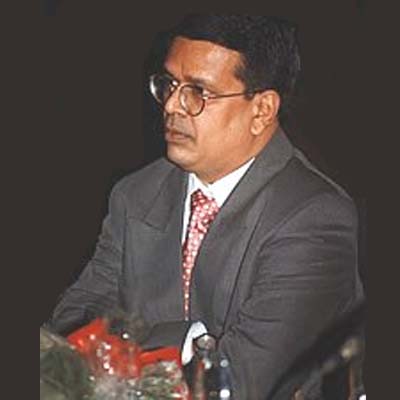
  • ‘Trai has come up with the correct CAS economics’ : K Jayaraman – Hathway Cable & Datacom MD & CEO

    ‘Trai has come up with the correct CAS economics’ : K Jayaraman – Hathway Cable & Datacom MD & CEO

    The Telecom Regulatory Authority of India (Trai) has laid out a fertile ground for digital cable TV take off. The formula is simple: price everything low and large volumes will create a viable market dynamics.

    India has seen it in mobile phones. The lessons will repeat itself in the television industry. Despite the initial blip, the industry will correct itself and grow as at the centre of this pull of gravity rests the consumers.

    Broadcasters are not in tune with this logic. Their programming costs are rising. So why not let them have the freedom of pricing their products?

    The cable operators, along with the consumers, are in love with the a la carte pricing of pay chanels at a maximum of Rs 5. The multi-system operators (MSOs) feel that a new business model is being set.

    In an interview with indiantelevision.com‘s Sibabrata Das, Hathway Cable & Datacom managing director and CEO K Jayaraman argues how every stakeholder will eventually stand to gain. The a la carte pricing will make digital cable popular while the revenue share across the value chain has been “very accommodative.”

    Excerpts:

    Do you agree with what the Telecom Regulatory Authority of India (Trai) has fixed as the price and revenue share under conditional access system (Cas)?
    The regulator has come up with the correct economics. Consumers will have choice and at a real affordable cost. The a la carte pricing of channels at a maximum of Rs 5 in Cas areas will increase the penetration of set-top boxes (STBs) and drive in volumes. The revenue share allocation across the value chain is also very accommodative. Broadcasters will get 45 per cent share and have access to advertising revenues as well. While multi-system operators (MSOs) will have 30 per cent and carriage fee, local cable operators are also given a fair share with full revenue on the free-to-air (FTA) package and a 25 per cent share on pay channel revenues. Also, the government will get more tax revenues.

    Broadcasters complain that the maximum price of Rs 5 per channel is too low and doesn‘t take into account their high programming costs.
    When subscription becomes transparent, the rate has to be low. For digital technology to take off, we need such a price regulation. Let us face the reality: these are the consequences of a new environment and a change in business model. Besides, the price regulation is only for one year. Free market will prevail and price will be discovered eventually.

    With a la carte pricing, cable bills are expected to drop. How will falling ARPUs (average revenue per user) affect the cable companies?
    Nothing can be worse than the current model. But under Cas, we will, at least, have a legally sanctioned revenue, albeit lower. No doubt we will get a Hindu rate of return. But we will not have under-reporting of subscribers. We are happy that a proper business model is being set. Revenues Will grow once the business model settles. Everybody will be on the move. As consumers have choice, broadcasters will have to worry about pricing their channels correctly within a maximum of Rs 5. If they do that, then MSOs can also make money. We will have to focus on providing quality cable TV service. If we don‘t do that, we have competition from direct-to-home (DTH) service and will face threat of being wiped out.

    Cable companies will also have to subsidise the boxes. Do they have the resources to absorb subsidy costs and still scale up?
    All of us will have to be in investment mode because the business model is changing. The initial subsidy on each box will work out to Rs 1,500. This is the price we have to pay for a change in the business model. But this can be squared off once it settles down. The price of STBs will fall by 15-20 per cent with a surge in volumes. Cable companies will have to raise resources, either through debt or equity. For those who can‘t, survival will be tough. The telcos like Reliance Infocomm are waiting to step in. We should be prepared for a high volume, low margin game. Distribution, initially, is a volume business.

    Won‘t your traditional business from non CAS areas be a support?
    Yes, we will have other businesses to run: internet, non CAS placement fee, ad revenues from local cable channels. We will also have carriage fee from FTA channels in a CAS system. For cable companies to cover up their overhead and variable costs (STBs), they will have to do other related businesses.

    A la carte pricing will drive down our ARPUs. But we are happy that a proper business model is being set

    Like having a well-rounded revenue stream?
    If you are a composite cable company, you will survive. We will have to provide video, voice and data through a common pipe. Standalone players will have a tough time. We, for instance, are preparing to launch voice over internet protocol (VoIP) services by the last quarter of this year. Test runs are currently on. We are also be aggressively pushing digital cable TV in non CAS markets. We recently launched in Jalandhar, having rolled out our digital services earlier in New Delhi, Mumbai, Pune, Bangalore, and Hyderabad.

    Do you see DTH having a perceptional advantage over cable?
    DTH platform providers are well capitalised and have a more long term vision. Their ARPUs can also settle higher as they better their products. But they have a huge variable cost in occupying transponder space. Cable companies, in contrast, have already made the investments and have low operating costs. Of course, now they will have a variable cost towards procurement of boxes. But they have an existing relationship with customers and cable is two-way enabled. Digital cable can also offer more channels. Composite cable companies with focus on multiple revenue streams can effectively fight DTH.

    How are you planning to infuse capital to fund digitisation?
    We will raise Rs 1 billion as debt to fund the first phase of CAS The bulk of the investments will be towards subsidising the STBs. Funding will also be required in setting up VoIP and expanding broadband infrastructure.

    Is it a good time to acquire last mile operators?
    If cable companies have the resources, acquisition of last mile will make sense. In the CAS areas where you have an administered price regime for one year, the payback period will be longer. But once the price is market-based, then recovery will be faster as more channels come under the pay system and people start subscribing to them. Even in non CAS areas, acquisition will provide size upon which a digital platform can be built later. But in case of Hathway where we have limited resources, we would rather put the money in placing more STBs.

    Will Valuations of cable companies go up under CAS?
    CAS will bring some semblance of order into the business. But it is a long term roll out and needs cash flow. What is more important is that cable companies will attract capital, whether in the form of equity, debt or convertible bonds.

    Will there be a consolidation in the industry?
    Consolidation will happen wherever digitisation is required because of new technology and service requirements.

    Zee network‘s Wire & Wireless India Ltd (WWIL) is planning to launch a headend-in-the-sky (Hits) platform and has expressed intent to make inroads into south and western suburbs of Mumbai. Do you see territorial warfare among MSOs returning?
    Hits is right now viewed more as a fashion statement. We are delivering digital without having Hits. If it is necessary, then everybody will do it. As far as poaching of operators go, it is an open ground. Cable companies who focus on good service and have capital to create capacity will turn out winners. Competition is not a one-way street.

  • Indosiar launches local adaptation of hit sitcom ‘The Nanny’ in Indonesia

    Indosiar launches local adaptation of hit sitcom ‘The Nanny’ in Indonesia

    MUMBAI: Indonesian broadcaster, Indosiar will launch the local version of Emmy-winning US sitcom The Nanny on September 25, 2006. The half hour series will air on the terrestrial TV channel at 7:30 p.m. from Monday to Friday.

    This will be the first scripted adaptation in Asia (excluding India and Japan) from Sony Pictures Television International (SPTI), which has, over the past year, made significant headway in local production projects in the region.

    The Indonesian version, called Si Neny, is being produced by Indosiar in the local language, Bahasa Indonesia. The original Sheffield family from the US has been transformed into the Ferdy family in Indonesia. The head of the family is played by film and TV actor Ferry Salim (Ca Bau Kan, Istri Pilihan) who is also one of two Indonesian ambassadors for UNICEF. The Nanny is played by Thessa Kaunang, an Indonesian supermodel who has made a name for herself as a comedian and TV personality. Finally, Lia Afi, who plays the role of the eldest daughter, is an upcoming singer.

    SPTI has been working closely with Indosiar’s production team over the past year to ensure the show captures the look, feel and attitude of the original while enhancing it with local flavors to make it more credible and appealing to the Indonesian audience.

    “We are very excited about Si Neny and proud to partner with Indosiar in bringing this much-loved character and story to the Indonesian audience. The format has demonstrated universal appeal with successful local adaptations around the world and we look forward to its Asian debut,” said Sony Pictures Television International senior VP and MD(Asia) Todd Miller.

    “As one of the major broadcasters in Indonesia, we are very pleased to have SPTI entrust us with their valuable The Nanny format. In addition, our cooperation with SPTI has enhanced our in-house production capabilities and brought it to an international standard of quality. We believe Si Neny’s story will resonate with the Indonesian audience since, in our culture, almost every family has a nanny helping with out with daily life,” PT Indosiar program director Triandy Suyatman.

    SPTI has already produced extremely successful local adaptations of The Nanny in seven countries outside the US. The comedy has morphed into Dadi in Turkey, Nyanya in Russia, Ntavta in Greece, Niania in Poland and La Ninera in Argentina, Ecuador and Mexico.

  • Zee plans to launch Southern channels overseas in Q1 2007

    Zee plans to launch Southern channels overseas in Q1 2007

    MUMBAI: Zee Network is planning to launch its two southern language channels overseas in the first quarter of 2007-08.

    There is no decision taken yet on which country Zee Telugu and Zee Kannada would launch first. “we are looking at taking these two channels to the international markets. There is a sizeable audience to be tapped,” says Zee’s south initiatives head Ajay Kumar.

    Zee is also preparing to launch a Tamil and a Malayalam channel to cover up all the southern language states. But these are tough competitive markets, dominated by Sun TV, Asianet and Surya.

    Zee’s aim is to have a presence across eight regional languages of India. Already available are Zee Marathi, Zee Bangla, Zee Punjabi, Zee Gujarati, Zee Telugu and Zee Kannada. The focus will be on consolidating in these eight languages over the next five years by clubbing the language entertainment channels with regional news channels.

    The regional channels form a part of Zee’s demerged entity, Zee News Ltd (ZNL). Under this company also falls the news channel business.

    ZNL has projected a 33 per cent compound annual growth rate (CAGR) over the next five years to touch a revenue of Rs 8.7 billion by FY 2011, up from Rs 2.01 billion in FY 2005-06. The operating margins, which stood at 16 per cent, are expected to expand to around 30 per cent during this period.

    ZNL has a networth of Rs 1.7 billion. The capital employed (as of 1 April 2006) is Rs 2.31 billion with loan funds standing at Rs 612 million. The company has no major capex requirement at this stage.

  • Karunanidhi kicks off colour TV scheme in Tamil Nadu

    Karunanidhi kicks off colour TV scheme in Tamil Nadu

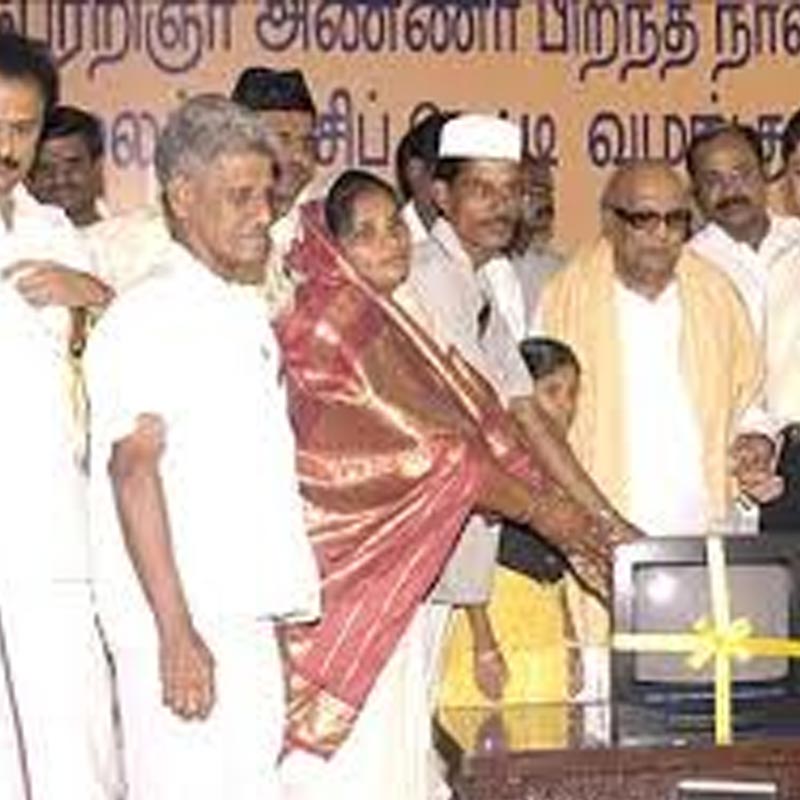
    MUMBAI: Tamil Nadu chief minister M Karunanidhi has unveiled the free Colour TV Scheme for the poor. Fulfilling his party’s poll promise, the DMK president distributed 25,245 colour TV sets worth about Rs 90 million were given to the residents of Samathuvapuram (a colony of all communities and creeds) at Thundalkazhani village in Padappai in Kanchipuram district.

    The CM has been quoted in media reports as saying that, Rs 7.5 billion had already been allocated in the state budget for distributing 25 lakh colour TV sets. He said the scheme would be implemented in phases as it was not possible to distribute all the 2.5 million sets in a single day.

    Karunanidhi’s cabinet colleagues would begin the distribution of the colour TVs in other districts, barring Madurai where the code of conduct had come into force for the 11 October 11 Assembly byelections, on 16 September.

    Finance minister K Anbazhagan is scheduled to launch the scheme in Madurai, while local administration minister M K Stalin would distribute the TV sets at Enathur Samathuvapuram, also in Kancheepuram District. Electricity minister Arcot N Veerasamy would hand over the TVs to those living in slum clearance board tenements in Pursawalkam and Kotturpuram in the city.

  • Soccer World Cup generates 135 million euro profit

    Soccer World Cup generates 135 million euro profit

    MUMBAI: Looks like the German soccer and tax authorities have netted a serious windfall from this year’s soccer World Cup.

    This summer’s World Cup turned out a real financial success for the German organizers.

    German football federation president Theo Zwanziger has been quoted in media reports saying that the event made a 135 million euro profit before tax.

    After tax, an amount of 56.6 million euros will be shared between the German Football Federation (DFB) and German Football League (DFL) while football’s governing body Fifa earned 40.8 million euros.

    Reports add that the accounts still need to be checked by Fifa auditors KPMG. The final figures will not be known until all work has been finalised but they could easily exceed the previously mentioned amount.

    Germany managed a strong attendance during the event which took place from 9 June 2006 to 9 July 2006.

  • B Wooding Media announces worldwide launch of ‘Baby Genius’ at Mipcom 2006

    B Wooding Media announces worldwide launch of ‘Baby Genius’ at Mipcom 2006

    MUMBAI: B Wooding Media (BWM) repositions its business objectives to include international brand management with the worldwide launch of Pacific Entertainment’s Baby Genius at Mipcom 2006.

    “We are delighted to be working with Pacific Entertainment to develop and cultivate the Baby Genius brand for the global marketplace,” said BWM managing director Brenda Wooding. “We also anticipate positive feedback from the international community regarding the grassroots stages of redefining our company’s areas of expertise to include brand management.”

    BWM’s rollout of the international brand management for Baby Genius, will also seek to establish DVD and audio distribution partners on a country-by-country basis to build a solid international foundation for the brand. BWM will then integrate these distribution partners with current and future Baby Genius consumer products partners, informs an official release.

    In claiming to offer the best in developmental edutainment for families with infants and young children, the Baby Genius brand includes over 30 music CDs, 10 animated/live-action titles available on audio and DVD in English and Spanish as well as a consumer products campaign with a major U.S. retailer launching in 2007.

    In addition to BWM’s core financing and distribution operations, it has created a consulting division to help production companies build their own internal distribution divisions. The company also offers custom distribution services designed to meet the needs of producers.

  • Balaji announces event property ‘Celebrity Fusion Dandiya’

    Balaji announces event property ‘Celebrity Fusion Dandiya’

    MUMBAI: This Navratri, Balaji Telefilms will launch a special event Balaji Celebrity Fusion Dandiya, participated by popular television stars. To be held at Andheri Sports Complex, the event will run from 23 September to 1 October 2006.

    Balaji Navratri Fusion Dandiya will feature Nitin Bali, Sharon Prabhakar with a 20-piece live orchestra everyday; DJ Ryan Beck & DJ Ashrafi. Nitin and Sharon will be joined each evening by other artists including SaReGaMapa winner Debojit and finalist Himani; Ek Main Aur Ek Tu winners Aishwarya & Ujjaini and a host of other finalists from SaReGaMaPa, Indian Idol and Ek Main Aur Ek Tu, informs an official release.

    The show will also have daily appearances by all the leading artists from various Balaji productions and star attractions like Ishaa Koppikar, Neha Dhupia, Kim Sharma, Aarti Chhabria, Rohit Roy to name a few, the release adds.

    “We are organizing such an event for the first time in our production history. I am very excited and I know it is going to rock the city,” says Balaji Telefilms creative director Ektaa Kapoor.

    Balaji has made arrangements to sell the tickets to the event through various multiplexes across Western suburbs. “The ticket sales begin on Saturday, 16 Septemeber and shall be available at Andheri Sports Club, Fun Republic, Andheri and Fame Adlabs in Andheri, Malad and Kandivli. There are daily couple passes, season couple passes and for the first time, a daily family pass for four people is also being introduced,” says Shenazz Nadirshah from Balalji Telefilms.

  • Intec to supply Convergent Billing to MTNL

    Intec to supply Convergent Billing to MTNL

    MUMBAI: India’s largest telecom and internet service providers Mahanagar Telephone Nigam LTD(MTNL), has struck a multi-million dollar deal with Intec, a leading software vendor to carriers operating fixed, mobile and next-generation networks, to supply its convergent billing systems.

    Intec supplies billing software solutions to over 60 per cent of the world’s top 100 telecoms carriers and is one of the world’s fastest growing major business and operations support systems vendors( BSS/OSS ).

    MTNL has a subscriber base of over 5 million in India. And Intec Convergent Billing (Singl.eView) will form a key part of the carrier’s convergence strategy for rapid penetration and growth via innovative, next generation communications services in India.

    “Intec Convergent Billing is a proven solution in many of the world’s largest wireless, fixed, cable and IP carriers, supporting many millions of subscribers in our largest accounts. We’re proud to be selected by MTNL for this important project, in a very competitive tender, and we look forward to supporting its growth and development plans in the Indian market,” said Intec CEO Kevin Adams.

    Intec Chief Operations Officer, Asia Pacific, Norm Halvorson added, “Intec is proud to work with MTNL to deliver high quality, leading edge technology, robust performance and the benefits of next generation services to a wider spectrum of the Indian market.”

    Intec’s products, solutions and services have been chosen by over 60 per cent of the world’s top 100 carriers. Intec invests heavily in both its core technology and its customer service capabilities on a global basis, including, for example, its expanding technical facilities in India which are delivering and supporting successful OSS/BSS projects to operators in India as well as across the world.

  • Roger Millay is Discovery CFO

    Roger Millay is Discovery CFO

    MUMBAI: US broadcaster Discovery Communications has appointed Roger F. Millay as senior executive VP and CFO.

    Besides leading the global financial functions of the company, Millay will also be responsible for financial strategies of the company. He will direct all accounting, treasury, budgeting, audit and tax activities and will also serve on Discovery’s executive committee. Millay will be a key contributor to the overall strategic direction of the company.

    Discovery founder and chairman John S. Hendricks says, “Roger is a tremendously accomplished executive and his leadership, financial acumen and extensive operational experience will be invaluable to Discovery as we continue to grow our global businesses.

    “On behalf of everyone at Discovery, we welcome Roger to our executive team and look forward to his many contributions across the company.”

  • Tech firms up in arms over proposed television rights treaty

    Tech firms up in arms over proposed television rights treaty

    MUMBAI: Dell, HP, AT&T, Sony, podcast firms and net broadcasting firms are among those who have come together to voice their dissent against a proposed treaty by the World Intellectual Propertry Organisation (Wipo).

    This will give television channels a new set of intellectual property rights over content. The firms mentioned above will fight to stop the UN proposal being adopted internationally.
    Media reports state that the plan being opposed is called the Treaty on the Protection of Broadcasts and Broadcasting Organisations. Wipo convenes in Geneva this week to discuss steps to be taken regarding the treaty.

    It would create a new class of IP rights designed to protect broadcasters from having their signals being stolen. The treaty reports indicate is designed to help fight signal piracy across countries. Here a channel shown in one country is re-broadcast in another without permission.

    The technology companies have signed a protest document against the treaty. The firms say that they remain unconvinced that a treaty is necessary at all. “We note with concern that treaty proponents have not clearly identified the particular problems that the treaty would ostensibly solve, and we question whether there are in fact significant problems that are not addressed adequately under existing law. Further, we are concerned that the current treaty approach differs radically from US legal traditions, and, if implemented, would require substantial and unnecessary changes to current US law.”

    The parties say that if the treaty moves forward in any form then the current rights-based approach of the treaty must be abandoned. They argue that creating broad new intellectual property rights in order to protect broadcast signals is misguided and unnecessary, and risks serious unintended negative consequences. They recommend instead a signal protection-oriented approach, ideally focussing narrowly and specifically on protecting signals from intentional misappropriation or theft.

    The protest is being co-ordinated by digital rights activist group the Electronic Frontier Foundation (EFF).

    Podcasters and internet broadcasters claim that the treaty may give broadcasters a lot of rights over internet content.

    The new rights that the treaty seeks to give channels include an exclusive right of retransmission for over-the-air television signals (retransmission involves capturing a broadcast signal and rebroadcasting it without permission of the copyright holder or the original broadcaster) and more than doubling the term of protection for broadcasts to 50 years from the current 20-year term.

    EFF has expressed concern that the proposed treaty will endanger consumers’ existing rights, restrict the public’s access to knowledge, stifle technological innovation, preclude free and open source software, and limit competition in the next generation of broadcast and Internet technologies. It believes that Congressional hearings should be held in the US to address concerns.

    EFF argues that before creating a brand new set of exclusive rights for broadcasters, cablecasters, and netcasters, there should be a demonstrated need for such rights, and a clear understanding of how they will impact the public, educators, existing copyright holders, online communications, and new Internet technologies.

    Also it says that Treaty proponents have not provided a clear statement of the particular problem that justify the need for the new treaty, and why they are not able to be addressed adequately under current treaties and law. EFF notes that while Treaty’s ostensible goal is protection against broadcast signal theft, the treaty goes far beyond that by creating broad new intellectual property rights over the recording or fixation, and subsequent uses of, recorded
    programming content.

    Creating a new layer of rights that apply on top of, and in addition to, copyright law, would allow broadcasters to restrict access to public domain works and use of information that would be lawful under copyright law. This will directly impact all entities that rely on the balanced set of exceptions and limitations in national copyright.

    A Wipo statement regarding the treaty said: “Updating the IP rights of broadcasters currently provided by the 1961 Rome Convention began at WIPO in 1997. A growing signal piracy problem in many parts of the world, including piracy of digitised pre-broadcast signals, has made this need more acute.”