Category: Cable TV

  • Imagilon launches online news sharing community ‘Jhanki.com’

    Imagilon launches online news sharing community ‘Jhanki.com’

    MUMBAI: Imagilon, a New York based media company, has launched www.jhanki.com, an online community for sharing news and views.

    Jhanki – literally glimpse or snapshot in Hindi, is a site where readers can add news stories that they think are interesting, along with their comments. Readers can also vote or “Jhanki” stories posted by others, and post comments. In this way, Jhanki provides a very powerful forum for all Indians to voice and share their opinion about news, states an official release.

    Jhanki includes stories in many categories, including current affairs, international news, Hollywood, bollywood, cricket, television, citizens’ concerns and many others. Within a week of its launch, over 1300 stories, all submitted by readers, can be read on the site. There is no editorial control over the content, it is entirely driven by the community, the release adds.

    Speaking at the occasion, Imagilon CEO Jay Joshi said, “We felt that the time was right for an online news community, as net usage among Indians is at a never-before seen high, with almost 40 million users. More and more people are turning to the net to access news, but more importantly, many are also using the net to voice their opinion in the form of blogs and online communities. We designed Jhanki to be a meeting point for news and opinions that would normally be dispersed among various news sites, blogs and communities. Our job is to provide an excellent technical backbone, that makes it easy and fun for users to add news and comments, then the community takes over.”

    During the launch period, Jhanki is being promoted through an exciting contest for users, with prizes that include a laptop, iPods and mobile phones. This has motivated many users to use the site very extensively, and also invite their friends to “Jhanki.”

    The future plans for www.jhanki.com include – more opportunities for the user community to express their minds, providing public opinion information to media and researchers, and advertising sales.

  • Percept Picture Company to be the main sponsor of Rain Dance Film Festival in UK

    Percept Picture Company to be the main sponsor of Rain Dance Film Festival in UK

    MUMBAI: Percept Picture Company (PPC) becomes India’s first motion picture company to be the prime sponsor of Raindance Film Festival 2006, to be held in UK. Percept Picture Company’s MD Shailendra Singh together with national award winning director Madhur Bhandarkar will share their insights on various aspects of the Indian Film Industry and its growing influence globally with prominent experts from the global cinema.

    PPC had joined hands with Madhur Bhandarkar to launch a 50:50 joint venture company named Madhur Bhandarkar Motion Pictures (MBMP) recently.

    As part of this exercise, two award winning films – PAGE 3 and Yahaan, both from PPC stable will be showcased at this festival.

    PPC has lined up various interactive activities during this festival. They would be exhibiting in the ‘State of The Art’ and showcasing the various past and future projects of the company.

    Interesting footage of the past work of PPC and the future films will be showcased in a gigantic audio visual screen at the venue. The prime attraction of this festival will be the showcasing of the promo of PPC and Madhur Bhandarkar’s much awaited film, Traffic Signal. PPC have also sponsored a script writing competition during the festival where the winner win a trip to Goa.

    Percept Picture Company MD Shailendra Singh added, “We couldn’t have asked for a better platform than this to associate ourselves with. Raindance film festival is a perfect window for any film maker to showcase and connect with the globe. We have selected Raindance after a detailed screening of various film festivals that happens all over the world. PPC looks forward for some interesting liaison and international business opportunities in this festival.”

    Adds an elated Mr. Madhur Bhandarkar, ” I am very excited to represent the Indian film industry and share my views and aspects of Indian film making with eminent members of the respected panel which will consist of global experts.”

    PPC will also display their recent AV campaign on Anti Piracy campaign at the festival. This Anti Piracy campaign is the beginning of a powerful movement against piracy to educate, increase awareness and awaken everybody from the producer to the director, the distributor, exhibitor, the end viewer and the accused pirates of how the epidemic of piracy is growing like a deadly virus and affecting everybody in an alarming way.

    Raindance is a prestigious film festival and since 1992 and has been well known for their objective to discover, foster and champion new talent and audiences. It has been imperative in igniting and over seeing major developments in the international film industry.

  • Capital rollout for BIG FM; Bachchan Jr. brand ambassador

    Capital rollout for BIG FM; Bachchan Jr. brand ambassador

    NEW DELHI: BIG 92.7 FM, an Adlabs Films venture, began its nation-wide station roll out from Delhi today with future plans of getting into Internet radio also.

    The station has signed up Bollywood actor Abhishek Bachchan, son of Hindi film legend Amitabh Bachchan, as its brand ambassador.

    Over the next fortnight, BIG 92.7 FM will be heard across the six metros of Delhi, Mumbai, Bangalore, Kolkata, Chennai and Hyderabad, apart from FM radio virgin territories of Jammu, Srinagar and Aligarh.

    The tagline of the station being: BIG 92.7 FM. Suno. Sunao. Life Banao (listen to BIG FM, make others also listen to it and make your life).

    Unveiling the brand, BIG 92.7 FM COO Tarun Katial today said here, “At BIG 92.7 FM, we will be driven by the desire to give new and innovative radio programming to millions of Indians. We will not only present unique, city-specific content but also rope in personalities who will connect with the listeners and provide the glamour quotient”.

    Aimed at touching the lives of 200 million listeners – that is, every fifth Indian in the country; every third Indian in the cities and every eighth Indian in the villages — BIG 92.7 FM claimed it would redraw the broadcast map of the country.

    “Our detailed research on the city’s psychographics will ensure that the station sounds refreshing and different, with a major focus on utilities and entertainment”, Katial, a former programming head of Sony Entertainment TV, added.

    Based on extensive research and in-depth analysis, BIG 92.7 FM has made special effort to customize its programming to the preferences of each of the cities that it plans to enter.

    According to brand ambassador Abhishek Bachchan, “Radio has risen phoenix-like after being overshadowed by the visual medium. With the launch of BIG 92.7 FM, this romance with the radio is set to continue and intensify. My association with BIG 92.7 FM gives me a chance to connect directly with the Indian audiences.”

    To ensure high aspiration and connect with the listeners, BIG 92.7 FM has signed on celebrity radio jockeys such as Mona Singh aka Jassi and Gaurav Gera aka Nandu of the Jassi Jaisi Koi Nahi serial fame.

    Apart from these, ace comedian Sunil Pal of The Great Indian Laughter Challenge and Shweta Tiwari from Kasauti Zindagi Kay will host shows on BIG FM.

    On the day of the official launch of the station, BIG 92.7 FM hosted a city-wide awareness telethon to sensitize Delhi to the issue of safety as part of its initiative of “providing entertainment with a cause”.

    For this initiative, the station roped in several celebrities to come on air and discuss with Delhi-ites various safety concerns facing the Capital, including crimes against senior citizens, women and foreign tourists.

    Among the celebrities who joined this forum were singers Shuba Mudgal and Kailash Kher and actors Sushma Reddy, Smriti Irani, Isha Koppikar, Arjun Rampal, Neha Dhupia, Mandira Bedi and Varun Badola.

    ADLABS MAKES BIG INVESTMENT

    Adlabs Films, which is majority controlled by Reliance-Anil Dhirubhai Ambani Group (ADAG), is making big time investment in its FM radio venture.

    According to company sources, a total of Rs. 4 billion will be invested in the radio venture out of which approximately Rs. 2.4 billion will be spent on the rollout of 45 stations across the country, which includes programming costs too.

    The remaining investment is in the form of licence fee.

    Asked whether programming would consist of only music — mostly from films and Indipop like other FM radio stations— a senior executive of Reliance said that sports programming is also being explored, subject to clearance from the government.

    At present, the government hasn’t come out with a clear policy whether sports programming like running commentary of cricket matches on private radio stations would be categorized as news and current affairs or entertainment genre programming.

    Present FM radio policy guidelines don’t allow news and current affairs programming, except weather and stock market quotations, on private radio stations. Only All India Radio’s FM channels are allowed to broadcast news.


  • Viacom is testing social networking platforms for TV, ad integration

    Viacom is testing social networking platforms for TV, ad integration

    MUMBAI:The phenomenon of social networking is growing rapidly in the US and MTV is the latest media firm looking to take advantage of this phenomenon.

    It is testing new social-networking platforms that will integrate television programming with virtual world technology, resulting in interactive experiences that let viewers personally experience — and ‘live’ for themselves — the content they see on-air.

    The new platforms are in early stage development and will evolve in partnership with advertisers and audience feedback. MTV says that it could help define next-generation media and advertising models.

    The company is working hand-in-hand with Pepsi, Mediavest Worldwide and OMD on the development of a beta version of the first platform Virtual Laguna Beach. This is built around the successful MTV series Laguna Beach.

    MTV president music, films, Logo Van Toffler noted that the platforms will deliver immersive environments that are not only reflective of, but parallel to, the world viewers see on
    television. These universes take viewers beyond passive consumption to active engagement with programming and with marketers’ messages. A beta version of Virtual Laguna Beach is at www.vlb.mtv.com.

    Other virtual worlds are planned later this year for the broader music community and for viewers of Logo. This makes it one of the first such applications for the lesbian, gay, bi-sexual and transgender community.

    Toffler says, “Our audience wants more interaction with our content and with each other. Virtual Laguna Beach lets our audience become the stars themselves, stepping onto a virtual stage and living the life they see — or would like to see — on television.

    “Virtual Laguna Beach also is just one example of the next-generation media models that we’re creating for our viewers to connect with one another in ways they never could before; for content creators to develop experiences that live side by side with on-air content; and for marketers to become an integral and meaningful part of the programming.”

    MTV executive VP Jeff Yapp programme enterprises notes that the media models give rise to a new concept of social networking by combining two elements audiences love —
    popular television programming and emerging virtual world technology.

    He says, “Virtual Laguna Beach and the other models we are developing hold the potential for ushering in a new era of audience engagement.

    MTV says that the platforms offer the ideal environment for marketers to seamlessly weave their messages into the overall experience.Viewers in- world also can choose to interact with sponsors’ content and also purchase virtual as well as physical goods. MTV is working with its advertisers to help them become an integral part of each experience so they can reach their consumers — our audience — in meaningful ways.

    Marketer Support: A number of marketers and media buyers have pledged their support for Virtual Laguna Beach. Pepsi says that through Virtual Laguna Beach the brandwill be able to interact with consumers in ways that it never thought possible.

    Mediavest says that platforms like Virtual Laguna Beach allows it to achieve much more than a simple campaign extension. They offer the opportunity to dimensionalize the brand and infuse brand attributes into the user experience in a smart, fun, engaging way.

    OMD notes that this opportunity is an extension of the truly convergent partnership between it and MTV. It allows clients the opportunity to connect with the audience of one of MTV’s premier properties in a much deeper and personal way.

    Virtual Laguna Beach transports viewers directly to Orange County, California, where they live in the same environment as their favorite cast members, and interact with other fans through real-time chat. Viewers can hang out at the beach or shop at the local surf store and interact with one another in ways that mirror the on-air program. Just as the cast gears up
    for the Winter Formal, so too can viewers within Virtual Laguna Beach prepare for the big night, find a date online and select the tux or prom dress for their on-screen identity.

    The third season of the reality drama premiered last month and chronicles the coming-of-age stories of various high school stories in the upscale seaside town. On MTV.com fans can join the VIP section of the Laguna Beach Surf Club. Die-hard fans also can go to MTV’s Overdrive broadband channel to get exclusive content, first looks, community features, games and much more.

    MTV is also working with Makena Technologies on the development of Virtual Laguna Beach and the forthcoming Logo environment. MTV Networks is also working with Doppelganger, formerly Evil Twin Studios, on the virtual
    music environment.

    MTV Networks selected Makena Technologies, creators of the 3D social virtual world There.com. Makena is helping develop Virtual Laguna Beach and the forthcoming Logo-based experience. The selection leverages Makena’s many years of experience in developing one of the Internet’s largest 3D social virtual worlds, its understanding of the youth demographic, its
    development of an in-world economy, and its sophisticated integration of user-created content.

  • Tandberg TV to beef up Asian IPTV business

    Tandberg TV to beef up Asian IPTV business

    MUMBAI: Tandberg TV is set to build on its business and technology in the Asian IPTV video head-end market with a demonstration of its full suite of live, on-demand and interactive solutions at IPTV World Forum Asia 2006 (stand 83), which runs 27 September – 29 September in Shanghai.

    The event will give delegates the chance to see why the annual IPTV leadership report, published earlier this month by the Multimedia Research Group (MRG), ranked Tandberg Television as the leading IP video head-end supplier in Asia, as well as in EMEA and rest of world.

    Worldwide Tandberg Television claims to have been involved in more than 160xDSL and FTTH deployments and there are over 2 million subscribers currently viewing IPTV due to the company’s technology, states an official release.

    “Asia has always been a very important market for us,” says Tandberg Television Asia Pacific EVP & GM Graham Cradock. “According to research from In-Stat the Asia-Pacific IP video services market will grow nearly 80 per cent per year between now and 2010, with Asia accounting for half of all worldwide IPTV subscribers by the end of 2009. We’ve been working with IPTV operators in the region for over five years and our market-leading technology is allowing telcos to deploy IPTV services right across the continent, from Dubai to Osaka and from Delhi to Shanghai.”

    Tandberg Television EVP Corporate Development Jim Olson will deliver a keynote speech: Beyond IPTV – Why Plain Old Television Won’t Cut it for Telcos at 9:10 on 29 September at IPTV World Forum Asia.

  • PSBs differ on views of future

    PSBs differ on views of future

    MUMBAI: Public service broadcasters (PSBs) in the Asia-Pacific region have widely different views about their future, the 2006 Public Broadcasting International (PBI) conference in Maputo, Mozambique, was told on Friday.

    The secretary-general of the Asia-Pacific Broadcasting Union (ABU), David Astley, said that a recent ‘thumbnail survey’ undertaken by the ABU showed that PSBs in the more advanced countries were cautiously optimistic about their future, but those in developing countries – many of whom were in transition from state broadcasting to independent PSBs – were quite pessimistic.

    “Finding strategies to cope with the erosion of audience share from the increased competition that the development of digital broadcasting is bringing about was the major challenge identified by the PSBs in the more advanced countries,” Astley was quoted as saying in a report put out on the ABU website.

    “Audience behaviour is changing as people respond to the growing choice in digital media, and broadcasters, in turn, are having to respond to those changes by providing more content on demand and on different platforms.

    “Generally the PSBs in the more advanced countries are optimistic about their future but recognise that they must embrace change and increase production of local content that is both distinctive and of high quality, to differentiate themselves from commercial broadcasters.”

    Astley said that broadcasters in the developing countries, many of whom were in transition from being state broadcasters to independent PSBs, were mostly pessimistic about their future.

    “The main issue that they identified was funding,” he said. “Many are not confident that they will have sufficient funding to meet their obligations as public service broadcasters.

    “Even without considering the cost of digitalisation in the future, many do not have backup transmitters or money for spares for studio equipment.

    “Some are being pressured to go commercial in order to lessen reliance on licence fees or direct government grants – but this might only be replacing political influence with commercial influence.

    “In any case, few state broadcasters have staff with the management and marketing skills to compete with their more experienced commercial competitors.”

  • Yahoo partners with Al Gore’s Current TV for online video venture

    Yahoo partners with Al Gore’s Current TV for online video venture

    MUMBAI: To explore the huge potential that the user-generated content offers in an online environment, Yahoo Inc. has associated with the US-based media company Current TV, promoted by former US vice president Al Gore, to create online video programmes.

    The service, christened the Yahoo Current Network (video.yahoo.com/currenttv) will launch on 20 September with four channels.

    One of the channels named Current Buzz will feature segments related to the news. The other channels will cover travel, sports and cars.

    According to a New York Times report, each channel will have one professionally produced segment a day and about 10 segments designed by users. Amateur videographers whose clips are chosen for online delivery will receive $100. If a clip is also broadcast on Current’s television network, the producer will receive between $500 and $1,000.

    The development underlines the market’s keenness towards web-based user-generated content. Microsoft on Tuesday announced its entry into the segment with the beta release of Soapbox on MSN Video. With this, Microsoft plans to take on YouTube, the market leader.

  • MSN revamps India portal; adds 4 new channels, extra features

    MSN revamps India portal; adds 4 new channels, extra features

    MUMBAI: Portal MSN India is celebrating six years in the country. On this occasion it has launched a new home page with four channels – lifestyle, entertainment, news and sports. It has also added new feature rich services — Windows Live Domains, Windows Live Messenger and Windows Live Search.

    MSN country head Jaspreet Bindra says that the home page has a more vibrant and friendly user interface. The graphics have been improved upon. “As part of our six-year celebration, MSN India decided to give our users something to celebrate about as well. We now have a new cool and exciting home page. In addition to this, we bring in four new improved channels that offer users the best insight on Entertainment, News, Sports and Lifestyle. We have also decided to launch a whole new range of Windows Live products for the users in India,” he says.

    The entertainment section has news on Bollywood, Hollywood and South Indian movies. There are also reviews of movies currently running in theatres as well as music reviews.

    The sports channel covers all the latest happenings in sport from cricket to football and tennis. There is also a news in pics section. There is also a player search section. This allows a user to search for sites featuring sporting icons.

    The lifestyle section offers information on fashion, health and fitness. It also provides tit bits on how to carry yourself at work and how to improve one’s relationship.

    The fourth channel, which is the news and business channel, offers updates on news from acros the globe. There are also polls where users can make their voices be heard. It will of course also cover the ups and downs of the stock market.

    MSN is also looking to generate content of its own. For this purpose it has hired a team of writers. It is also looking to get pieces written by experts in different fields. This should be up in about two months time. This will consist of opinions and viewpoints on a variety of topics.

    MSN is also hoping to get user generated content. So someone who writes for fun for instance can write a story on an actor. If it gets enough reads then the editorial team can decide to give it a push on the site. It could become one of the main stories in the entertainment section. In addition MSN India is also looking at syndicated content deals.

    MSN India has also launched Windows Live Messenger. This is the next generation of MSN messenger and goes beyond text and helps people connect wiith voice, video etc. MSN India has also introduced Live Search. There is a new design, more search categories and also people customise their search results by preferences. For instance one can decide if one wants 10 results in a page or 100.

    Another feature is MSN Live Domains. new users can create domain names and then create an unlimited ammount of free email accounts. Everyone on the user’s domain gets a hotmail account which can be upgraded to Windows live Mail beta for free. The email addresses on the domain is a passport ID and can be used to access services like instant messenger.

    Speaking on Windows Live Domains, MSN India and Windows Live head of programming Krishna Prasad said, “With MSN’s anniversary celebrations we are also gifting to our users a chance to get their preferred email ids. This email id would be a customised mail id, supported by Windows Live Mail and which also gives the users access to the Windows Live network. All in all, we want to enhance the user experience as best we can.”

    Then there is MSN Live Spaces. This is the next generation of MSN’s blogging service. Users can manage their settings so that they can control who is in their social network and who views their site.

  • IAMAI-IMRB study pegs urban internet users at 37 million for September

    IAMAI-IMRB study pegs urban internet users at 37 million for September

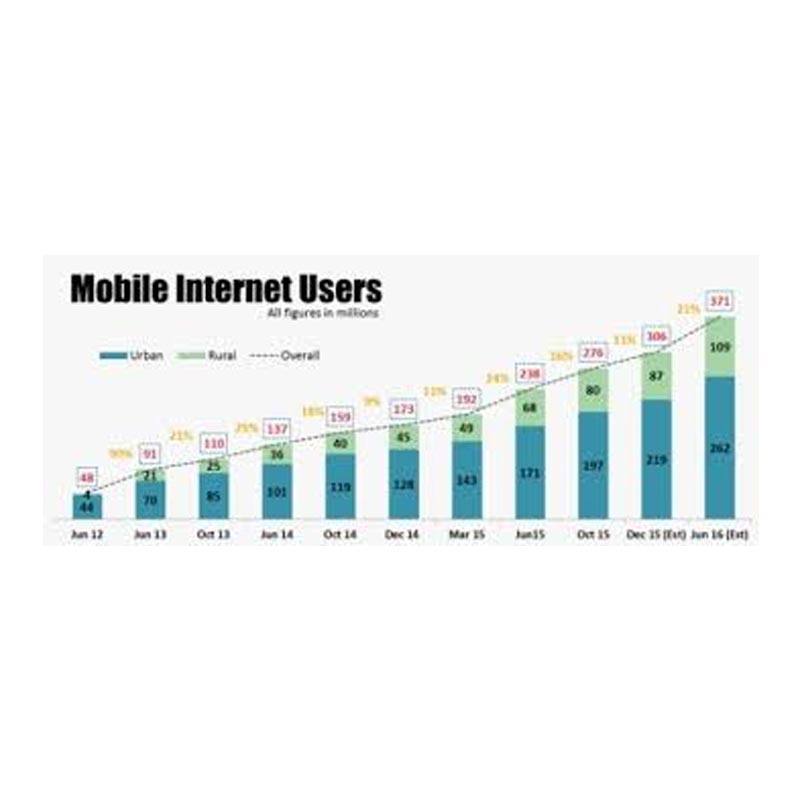
    BANGALORE: According to the joint research by the Internet and Mobile Association of India (IAMAI) and IMRB International, Internet users in India have reached 37 million in the month of September 2006, up from 33 million in March 2006. During the same period the number of “active users” has risen from 21.1 Million in March 2006 to 25 Million in September 2006. “Active User” is an internationally accepted and widely used category to define users who have used the internet at least one in the last 30 days.

    The numbers are a result of the largest “offline” survey so far carried out in India to estimate the “ever user” and “active user” categories.? The primary survey for the study was conducted in early 2006 amongst 16,500 households covering 65,000 individuals across 26 major metros and small towns in India, with additional coverage of 10,000 business and 250 cyber caf? owners. The survey did not include rural areas.

    According to the findings, youth are the main drivers of internet usage in India . College students and those below the age of 35 are the biggest segment on the Internet. Both these segments have the highest proportion of conversion of “Ever” Users to “Active” users of Internet.

    Besides the youth the internet hungry small towns are further fuelling the growth. As per the survey, smaller metros and towns are increasingly embracing the Internet evolution and are pushing growth from below. Smaller cities and towns have shown a whopping 142% YoY growth and now account for 25% of all internet users.

    Commenting on the survey Dr. Subho Ray, President, IAMAI says, “Although there is a marginal revision of the earlier IAMAI number for the year, given the rapid growth of internet business and government’s massive e-Governance programme, it was time to look into the numbers more stringently. This will help better business decisions on part of the industry as well as better resource planning by the government.”

    Predicting on the future development, Mohan Krishnan, Vice President and Country Manager, eTechnology Group@IMRB, says, “The next round of growth will be driven by new and innovative applications such as blogs, P2P, video on demand and online gaming. While the old favourites such as email, Chat and IM will drive first time users to the medium”.
    The study estimates that the Internet User base is likely to cross the 40 million mark by March 2007, when the “Ever” User base is likely to hit 42 Million and the Active User base is likely to hit 28 Million. By March 2008, the Ever User base should cross the 50 Million mark. The active user base would reach a staggering figure of 43 million users by the same time.

  • News broadcasters to form association

    News broadcasters to form association

    NEW DELHI: After the Indian Broadcast Federation (IBF – representing broadcasters) and the Indian Media Group (IMG – representing Indian media companies), Indian news broadcasters are forming their own “pressure group”.

    The proposed body is likely to be called the News Broadcasters Association of India. It will comprise only Indian-promoted news ventures. The likes of BBC and CNN have their own set of problems and issues and, hence, would not be part of this new proposed body that is likely to be registered soon.

    The agenda that the body has broadly laid out is to address specific news-related issues and take them up with the government. Everybody remains a member of the IBF, but as the IBF cannot take up specific issues, TV news networks have formed their own association.

    The first meeting of the grouping was held last week in Delhi in TV Today office. No office-bearers have been elected as yet though.

    Admitted a news broadcaster, “We felt our specific needs and issues need to be addressed without confusing them with general (broadcasting) matters. That’s what the intention is behind setting up the News Broadcasters Association of India.”

    An example of the kind of issues that news broadcasters might take up include the draft of the Broadcast Bill, recently prepared by a sub-panel of a 30-member committee overseen by I&B secretary SK Arora, which hints at stringent content regulation, particularly for news channels. If okayed by lawmakers in its present state, it could well be the end of sting operations and coverage of issues where high profile politicians and personalities are involved.

    Sample this part: “TV channels must not use material relating to a person’s personal or private affairs or which invades an individual’s privacy unless there is an identifiable public interest reason for the material to be broadcast.” Who decides what constitutes an individual’s privacy? The government or the regulator? What this means of course is that it’s all up for interpretation.

    It is this scope for interpretation that has news broadcasters seriously concerned. More so since the onus of proving identifiable public interest lies with the TV channel and not the other way round.

    The interests of the print media are addressed and protected by the Indian Newspaper Association. That is the role the News Broadcasters Association of India hopes to fulfil as far as the electronic media is concerned.