Category: Cable TV

  • LG earns Cablelabs certification for two-way interactive digital cable HDTV

    LG earns Cablelabs certification for two-way interactive digital cable HDTV

    MUMBAI: Paving the way to integrated digital cable-ready HDTVs with two-way interactive capability, LG Electronics recently showcased a TV platform in the US.

    The LG plasma HDTV has achieved certification status as Ocap-enabled interactive digital television set, including the multi-stream CableCard (M-Card) system, from a recently concluded certification by Cablelabs.

    LG’s 42-inch OpenCable plasma HDTV set (42PC1DN) was honoured with a 2007 CES Innovations Award — features built-in Ocap technology, M-Card capabilities and interactive capabilities, as well as high-definition content and interactive services like Video-on-Demand and Pay-Per-View. The LG 42PC1DN has been honoured as a 2007 CES Innovations Award recipient.

    This retail device can connect directly to a local cable TV system, and receive current advanced interactive cable TV services, as well as be ready for future interactive applications –without the need for a separate digital set-top box (STB). Ultimately, a common US platform for delivering interactive cable applications would be enabled by implementing the OpenCable specification, a process in which LG is an active contributor.

    The company adds that it is committed to commercialising retail interactive digital cable-ready TVs and STBs to accelerate the rollout of OpenCable and Ocap across the North American Cable industry. LG says that it has now have advanced devices capable of receiving and displaying advanced cable services such as program guides and video-on-demand (Vod) without requiring separate cable STBs.

    In parallel with ongoing inter-industry standardisation efforts, it will continue working with the cable industry to commercialise this platform.

    LG’s close collaboration with Cablelabs and cable TV operators has enabled the company to develop products that run cable services including an interactive programme guide, Vod and other interactive applications and services. “At the same time, LG is continuing to explore additional new features to maintain product leadership and be a market differentiator.

  • ‘Investors are waiting for Cas to roll out before they come up with definite valuations’ : Ravi Mansukhani – IMCL director-in-charge

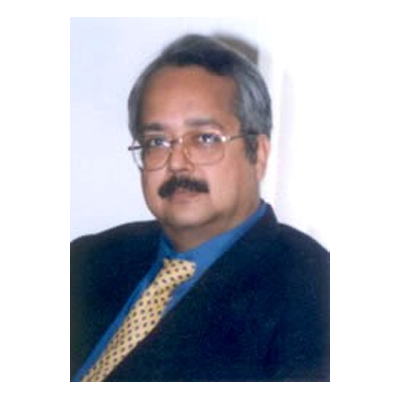
    ‘Investors are waiting for Cas to roll out before they come up with definite valuations’ : Ravi Mansukhani – IMCL director-in-charge

    Cable TV is in the midst of transition. We are seeing Cas being just implemented. Consumers are wanting set-top boxes (STBs) so that they can see their favourite pay channels. Multi-system operators (MSOs) are gearing up so that demand doesn’t outstrip supply. They know this is their last chance: if they don’t do it right, direct-to-home (DTH) will take over and they will become dinosaurs.


    In an exclusive chat with Indiantelevision.com’s Sibabrata Das, IndusInd Media and Communications Ltd director-in-charge Ravi Mansukhani discusses the dynamic changes taking place in the area of cable TV, the exciting prospects for digitisation, and the challenges that lie ahead as way of competition from emerging technologies.


    Excerpts:

    HTMT had earlier decided to consolidate its media businesses under InNetwork Entertainment Ltd (INEL). What made it change track and bring IndusInd Media and Communications Ltd (IMCL) as the umbrella entity?

    Suddenly the cable distribution business, which is with IMCL, has become big and is heading towards transparency under conditional access system (Cas). It has got a definite growth path now. That was not the case earlier and we thought we would bring everything under INEL which is the content company. The track has changed and content will sit on distribution. So we are merging In2Cable ( the broadband subsidiary) and INEL into IMCL. The parent company for the consolidated media business will be HTMT (an existing listed entity). The demerged IT/ITES entity will be listed under HTMT Technologies.

    While Zee Telefilms has demerged its media entity, your restructuring process is actually consolidating the media business. Is this because the different lines of media business are still having nascent revenues?

    We couldn’t have separated the different media activities as we don’t have size at this stage. We are only demerging the IT/ITES business from the media activities as we believe these have separate identities, will need independent focus, and can unlock value for the shareholders.

    Will HTMT (residual) also house the real estate business?

    The company will have the media businesses, Shop 24 Seven (shopping channel) and the real estate business. The demerger process is underway and a listing is expected by February-end after the restructuring process gets the necessary regulatory approvals.

    Isn’t this a strange mix for an investor in the company?

    There is some real estate property which was sitting there earlier in the company. Since we aren’t expanding on that at this stage, we are leaving it as it is. Real estate may become a play later.

    How much cash will be allocated towards expanding the media business?

    We will have Rs 5 billion for this. This will be used for new business initiatives, acquisitions and funding the expansion of the media and entertainment business.

    Like Zee’s Wire & Wireless India Ltd (WWIL), are you planning to make last mile acquisitions to expand your network?

    We are adopting a different business plan where we want to partner rather than buy out operators. WWIL, on the other hand, wants to acquire 51 per cent in cable networks. Our expansion plan includes offering to operators shares in HTMT (after demerger) as they form an integral part of our distribution chain. This will be based on the subscribers they declare. No decision has been taken as to the exact ratio that would be on offer.

    Will one share be issued to operators for every declared subscriber?

    We are working towards that.

    Do you think your strategy will be more acceptable?

    We have decided that is the best way to go forward, even in the non Cas (conditional access system) areas. By becoming shareholders, operators won’t perceive us as a threat. They can own their network while we make the investments on technology and digital cable. This way they can retain their customers, particularly as they face threat from DTH and other digital cable service providers. We are not exercising the buying option yet. If they want to sell, we may step in later. And by having ownership over the network, it would be in their interest to drive up ARPUs (average revenue per user) and launch value-added services.

    Will ARPUs fall?

    Initially, it will fall or stay flat. The subscriber ARPU in the Cas areas where we are operating is Rs 250. We see this going up to $10 (Rs 450) in two years and, perhaps, to $15 (Rs 675) in five years because of value-added services. Our topline is going to be rammed in the first year, but the bottomline is going to improve immediately as we will have an assured distribution margin.

    Would you prefer inducting a strategic rather than a private equity investor?

    We would favour a strategic than a pure financial investor. We feel inputs from a strategic partner would give us a competitive edge.
    But the possibility of roping in an investor would likely be after the listing of the two entities.

    We are not looking at customer acquisition via bouquet packages. For the ground to open up territorially for the MSOs, it will take time.

    Are investors keen to know about the content side of your story?

    Investors at this stage basically want to know our distribution plan. Our focus right now is on the distribution side of the business. Perhaps, by April we will have an investment plan for content and the other lines of media business.

    Have you initiated talks with global major Liberty which has shown interest in entering into India?

    There are a bunch of them who are interested in India’s cable story. But all the investors are waiting for Cas to roll out before they come up with definite valuations.

    Multi-system operators (MSOs) have announced bouquet packages. Do you see this as a price war to win consumers or local operators from rival networks?

    Our schemes are directed to make our existing consumers happy. We are not looking at customer acquisition via packages.

    Isn’t there a conscious effort to protect your turf from WWIL, which wants to poach operators to increase its thin presence in Mumbai, and DTH service providers like Tata Sky?

    We took care to offer a better quality package than WWIL or Tata Sky. We are offering six months of free subscription for consumers who have to pay just Rs 1500 (plus taxes) in the Cas areas. We are offering three bouquet packages – Star loaded (Sitara with 18 pay channels), Sony-led (Sona with 20 channels) and Zee-Turner (Zabardast with 35 channels). Under the STB rental scheme, we are offering the Optimiser package (Star and Sony bouquets) at Rs 120 (second TV set Rs 55) and the Super Saver scheme (Star, Sony and Zee bouquets) at Rs 190 (second TV set Rs 100). DTH has a high entry barrier as installation of the boxes are costlier than cable. And for the ground to open up territorially for the MSOs, it will take time.

    With WWIL intending to poach operators, do you have a truce on the ground with Hathway Cable & Datacom?

    We would like to keep the peace on the ground.

    With Cas already on, do you see a situation where demand for STBs will outstrip supply?

    We are confident of tackling it. We have in stock 168,000 STBs and have seeded over 40,000 boxes. We are installing more than 5,000 boxes a day. People are waking up as the pay channels are blacked out. We are ready to meet the surge in demand. We have also ordered for over 100,000 STBs from a Korean vendor.

    How keen are you to beef up the content side?

    We will put all our energies into distribution now. Once we have a solid distribution platform, then we are actually de-risking on the content front. We want to get into movie production and are looking at the distribution chain as well. We have earlier done movie financing and have funded around 14 movies from the current crop.

    Are you going to line up special channels for Cas subscribers?

    We are launching thematic channels without advertisement breaks. We have already started In Digital Premium which was made available first in Mumbai. It will also be seen in Delhi and we have movies in different themes – action-oriented, comedy and drama. We are planning to charge Rs 5-10 per movie. We will add more channels.

    What are your plans for CVO?

    The cable movie channel is highly popular and is licensed across 55 cities. But it has been stagnating over the last few years. With our distribution growing, it will bounce back into the growth path. We continue to acquire movies. Last year, we bought 150 movies.

    Revenues from cable internet and content have been depressed. How are you planning to promote your broadband business?

    We are revamping our broadband business. We will be aggressive on pricing. Our focus so far was on quality, not price. We never believed in LAN-based (local area network) internet. Now we will be doing that model. For the last two years, we concentrated on consolidating and upgrading our networks. Even we will start VoIP (Voice over Internet Protocol). We have this system connecting all our Hinduja offices across the globe. We will have to see how we can expand on that and launch commercially.

    What are your revenue projections this fiscal?

    We did Rs 1.6 billion last fiscal, with cable distribution accounting for Rs 1.38 billion, INEL Rs 170 million and In2Cable Rs 50 million. We are not sure how we would finally end up this fiscal as we expect the last quarter to be chaotic. But the topline should leapfrog by FY08.

  • Incablenet announces Rs 1500 STB scheme with free subscription for six months

    Incablenet announces Rs 1500 STB scheme with free subscription for six months

    MUMBAI: The price war is on. Hinduja-owned Incablenet announced its bouquet options to subscribers in the Cas (conditional access system) areas of Mumbai and Delhi, retaliating against rival offers from direct-to-home (DTH) service providers and other multi-system operators (MSOs).

    Subscribers can own their digital set-top box (STB) at Rs 1500 (plus taxes) and will be provided free cable TV subscription for six months on three bouquet packages. Incidentally, DTH operator Tata Sky has come out with an offer in Cas areas of free subscription for six months if customers book during the period 28 December-10 January.

    For those who want Incablenet’s Sitara (Star) package, 18 pay channels will be available including all the 12 Star India distributed channels. Besides CNBC TV18, CNBC Awaaz, CNN-IBN and BBC, customers will have the liberty to choose a single channel each from the Zee-Turner and SET-Discovery bouquets.

    In the Sona (Gold) package, Incablenet is offering 20 channels. This includes 13 Sony channels, CNN-IBN, CNBC TV18, CNBC Awaaz and two channels each from the Zee-Turner and Star bouquets.

    The Zabardast scheme has on offer 35 channels which include 33 Zee channels. Sunscribers can also choose a single channel each from the Sony and Star bouquets.

    Neither of the three packages have sports channels included in them. “We are offering consumers total choice from all the three distribution platorms. They can select a Star-loaded or Sony or Zee package. We have covered all the categories and consumers can plan their monthly cable bills,” said IndusInd Media and Communications Ltd director-in-charge Ravi Mansukhani.

    Wire & Wireless Ltd (WWIL) has on offer outright purchase of STBs for Rs 1800 inclusive of a one-year subscription for 33 channels. These include a load of Zee-Turner and SET-Discovery distributed channels like Zee TV, Zee Cinema, Zee Smile, Zee News, Zee Trendz, Zee Jagran, Sony, Discovery, Animal Planet, Animax, Pix, Sab and MTV. Only Star Plus from the Star bouquet is being offered. BBC, CNBC TV18, CNBC Awaaz and Cartoon Network are also available in this package.

    “We have a complete package including the regional channels. In Mumbai we are offering Zee Marathi while in Delhi it is Zee Punjabi and in Kolkata Zee Bangla. ETV Urdu and ETV Telugu are also available while consumers have a choice to take any other ETV channel of their choice. For Mumbai, ETV Marathi is free,” said WWIL CEO Jagjit Kohli.

    Under the STB rental scheme, Incablenet is offering the Optimiser package at Rs 120 which will have the Star and Sony bouquets. For the second TV set, the subscription is Rs 55.

    In the Super Saver scheme, the Star, Sony and Zee bouquets are available at a price of Rs 190. The second TV set will be priced at Rs 100.

    Subscribers do not have to pay a deposit amount on the Rs 45 rental scheme, Mansukhani said.

    Hathway Cable & Datacom has not come out with an outright purchase scheme for the STBs. Neither has the MSO included the Zee-Turner channels in its packages. “We haven’t decided yet on the STB purchase scheme. As for the Zee channels, once we arrive at a settlement with them, we will be creating a new package,” said Hathway Cable & Datacom MD and CEO K Jayaraman.

  • WWIL to pump in Rs 3 billion over 2 years in STBs

    WWIL to pump in Rs 3 billion over 2 years in STBs

    MUMBAI: Wire & Wireless India Ltd. (WWIL), the demerged cable outfit of Zee Group, is planning to invest Rs 3.28 billion on set-top boxes (STBs) over a period of two years to spread its presence in digital cable.

    This will comprise 46 per cent of its overall funding requirement of Rs 7.14 billion. The next big expenditure will be towards hardware. The multi-system operator (MSO) has earmarked Rs 2.21 billion for investments in hardware during the two-year period.

    “We have planned such investments for two years. We are bullish about digitalisation,” says WWIL CEO Jagjit Singh Kohli.

    Another area where WWIL will be pumping in big money is customer acquisition. The company plans to put in Rs 1.14 billion towards this. “We are aggressive on customer acquisition. We have ramped up 250,000 subscribers in recent months through aggressive acquisitions,” says Kohli.

    WWIL has made MSO acquisitions in Lucknow, Shimla, Agra, Nagpur, Pune Jalgaon and Indore. It is under negotiations with 15 MSOs in places like Meerut, Allahabad, Jaipur, Noida and Kohlapur.

    The company is planning to launch a headend-in-the-sky (HITS) platform and has booked transponders on Thaicom satellite. It has already lined up a debt of Rs 2.15 billion and plans to make an initial investment of Rs 5 billion.

    WWIL recently set up a digital headend at Worli in Mumbai. “We already have nine digital headends,” says Kohli.

  • WWIL acquires 51 per cent in Delhi MSO for CAS

    WWIL acquires 51 per cent in Delhi MSO for CAS

    MUMBAI: Wire & Wireless India Ltd (WWIL) is expanding its footprint in Delhi. The demerged cable company of Zee Group has acquired a 51 per cent stake in Satellite Channels, a multi-system operator (MSO) who was operating in the Cas (conditional access system) notified area of Delhi, for an undisclosed amount.

    WWIL has also signed up with Spectranet and Sanjay Cable Network. All these MSOs were disqualified for Cas as they were found not ready by the Telecom Regulatory Authority of India (Trai) for making the switchover to addressable system by 31 December.

    “We have bought 51 per cent in Satellite Channels and have signed up with Spectranet and Sanjay Cable Network,” WWIL CEO Jagjit Kohli tells Indiantelevision.com.

    Earlier, WWIL had acquired control over 5 Star which operates in Andheri, a western suburb of Mumbai. Kohli claims to have added 250,000 subscribers in recent months through aggressive acquisitions. WWIL is offering to cable operators a valuation of Rs 2,000-3,000 per subscriber where it will hold 51 per cent stake.

    “However, our focus now is to roll out the digital boxes. We will be soon introducing various packages,” Kohli says.

    WWIL will introduce a combo package where consumers who buy STBs on outright purchase and take annual subscription will be offered an attractive subsidy, Kohli says. This scheme will make available 100 TV channels. “We will be offering under this at least 20 pay channels. We will be subsiding the boxes,” he adds, while declining to spell out the pricing structure of the package.

    WWIL’s initial fund requirement is Rs 5 billion and the company plans to invest Rs 7.14 billion over two years. “We have already lined up a debt of Rs 2.15 billion,” Kohli says.

    WWIL is likely to list by mid-January or early February, he adds.

  • Hathway launches digital cable in Mysore

    MUMBAI: Hathway Cable & Datacom has launched digital cable TV service in Mysore through a fibre linkup from Bangalore.

    The multi-system operator (MSO) will have the Scientific Atlanta (SA) solution using the digital content manager (DCM) which supports gig interface (GbE ports) for transmitting the 130 channels over STM4 bandwitdh.

    On the recieving end, is the SA’s digital qam (XDQ). This is an ideal bridge between flexible IP and Giga bit ethernet based backbone networks and existing qam set top boxes.

    Hathway plans to launch the service soon in Nashik, the company said in a statement. Digital cable is already available in Chennai, Mumbai, New Delhi, Pune, Bangalore, Hyderabad, and Punjab.

    The digital set-top box (STB) will offer over 130 TV channels and other value added services like interactive gaming, the release added.

  • Hathway launches digital cable TV services in Mysore

    Hathway launches digital cable TV services in Mysore

    MUMBAI: Hathway Cable Network Pvt. Ltd is set to launch digital cable TV services in Mysore on 8 December, promoting the tagline ‘More entertainment than you dreamed possible with Hathway’s incredible Digital Box.’

    The digital set top box will offer over 130 TV channels and other value added services like interactive gaming, crystal clear picture, stereophonic sound, electronic programme guide with a low cost of ownership, informs an official release.

    Commissioner of Police, Mysore Praveen Sood has been invited as the chief guest and Commissioner of Mysore City Corporation Dr.K.N.Chandrashekar the guest of honour.

    Hathway’s digital cable TV services are presently available in Chennai, Mumbai, New Delhi, Pune, Bangalore, Hyderabad, Punjab and will soon be added to Nashik.
     

  • CAS rollout: MSOs look to channel package tiers

    CAS rollout: MSOs look to channel package tiers

    MUMBAI: Multi-system operators (MSOs) have initiated talks with some broadcasters for providing their bouquet of pay channels at special rates in the conditional access system (CAS) regime. This would enable cable networks to tier various channel packages for consumers.

    The Telecom regulatory Authority of India (Trai) has fixed the a la carte pricing of pay chanels at a maximum of Rs 5 under CAS. The MSOs want broadcasters to price their bouquets below the average of Rs 5 per channel.

    “We are in a very nascent stage of discussions. Some of the broadcasters have moved the courts and are, in fact, waiting for the verdict. We expect to have more definite proposals within a fortnight,” says Hathway Cable & Datacom managing director and CEO K Jayaraman.

    The MSOs will tier different packages to make it price friendly for consumers. “We will be working out packages based on a combination of genres. This will be in addition to the a la carte pricing which, with a cap at Rs 5, is expected to be quite popular,” says Jayaraman.

    Adds IndusInd Media and Communications Ltd (IMCL) director-in charge Ravi Mansukhani: “Once the broadcasters give us their bouquet pricing, we can work out our own bundling which will offer choice to consumers and make it more attractive than the a la carte pricing.”

    The stumbling block to such negotiations at this stage, however, is a number of court cases filed by broadcasters questioning the Rs 5 cap fixed by the sector regulator. Broadcasters feel the regulated pricing is unfair and will hurt their subscription incomes.

    Hathway and IMCL, meanwhile, will soon kick-off CAS awareness campaigns jointly. The estimated spend: Rs 10 million. Hathway plans to spend an additional Rs 5 million in the first phase, says Jayaraman. Hathway has already started marketing its digital drive in bus shelters, radio and other mass media platforms.

    “We are also planning to invest independently through various marketing initiatives. This will be in addition to the joint campaigns where the spend could be Rs 10 million,” says Mansukhani.

    The MSOs have started offering digital set-top boxes (STBs) and cable at an advance deposit of Rs 250 in the CAS notified regions of south Mumbai, Delhi and Kolkata. Consumers will have to pay a rent of Rs 45 per month only after 1 January, the scheduled date for implementation of CAS. If they are not happy, they can discontinue the service.

    “We have started seeding 1,000 STBs a day since 1 November. We expect this to further pick up,” says Jayaraman. Hathway is aggressively pushing for digital cable in both Mumbai and Delhi.

    IMCL has been slow to push the STBs to its consumers. “Once the marketing campaign gathers momentum next week, we hope to seed 1,000 STBs a day. The offtake should further speed up as we go forward,” says Mansukhani.

  • Asean, Casbaa, USPTO heighten awareness of broadcast IPR

    Asean, Casbaa, USPTO heighten awareness of broadcast IPR

    MUMBAI: The Asean Secretariat and US Patent and Trademark Office (USPTO), with the support and assistance of the Cable and Satellite Broadcasting Association of Asia (Casbaa), today launched a high-level, two-day seminar focusing on best practices in anti-piracy enforcement and intellectual property (IP) rights in broadcasting.

    The seminar marked the first time the Asean Secretariat, Casbaa and the USPTO have combined resources, bringing together government officials with pay-TV industry executives, local and international cable operators, content creators, regional regulators and IPR experts.

    Robert L. Stoll, Director, Office of Enforcement (USPTO) said, “A robust regulatory framework is crucial for protecting and promoting the flow of creative work of all of the individuals and companies in the broadcast business.”

    Rohazar Wati Zuallcobley, Deputy Director General, Malaysian Intellectual Property Office speaking on behalf of the Asean Working Group on Intellectual Property Cooperation said, “The television industry has enormous potential for growth in many Asean economies. However, we must act with urgency to strengthen the protection and enforcement of IP rights to fully realise that potential.”

    “We are pleased to support the USPTO and the Asean Secretariat in this joint initiative,” said Marcel Fenez, the Chairman of Casbaa. “Cooperation between government and the private sector plays a significant role in reducing piracy and driving the pay-TV sector’s contribution to economic progress within Asean countries.”

    Casbaa recently released estimates showing that annual losses from illegal pay-TV connections will reach US$1.13 billion in 2006.

    Key issues addressed at the forum included how to the structure regulatory regimes to successfully protect IP in broadcasting, the latest developments in anti-piracy technology and the challenges posed by new delivery platforms such as mobile TV and web casting.

  • Zone Reality gives viewers a slice of undercover life in ‘Spy’

    Zone Reality gives viewers a slice of undercover life in ‘Spy’

    MUMBAI: Zone Reality, the 24 hour channel dedicated to real life programming premieres a thrilling investigative series Spy which will be premiering today 8 November.

    This programme is an account of the psychological and physical experiences encountered by common men who receive a crash course in espionage by professional spies and proceed on to a final mission where their skills are put to test.

    This series unravels the actual procedures that are entailed in the work of professional undercover agents. Spy is a ten episode series which features the entire sequence starting from the selection of the spies, their preparation psychological travails and challenges faced by them while undergoing the process of transformation, tricks that they acquire and the final stages of elimination and triumph.

    Tvery episode is a natural progression of the art of spying. The first episode shows the selection of potential spies through and is a interesting portrayal of how these ordinary men and women are sent to an unknown location where they are put on to a real life investigative mission, to gauge their suitability as professional spies. The second episode shows how the selected recruits are taught the core tricks of the trade by former MI6 officers.

    The third, fourth, fifth and sixth episodes show how different missions require these spies to implement their core skill, i.e. of effortlessly blending into an environment. The seventh and eight episodes show how recruits learn the art of cultivating an agent – the core work of an intelligence officer, and the values of teamwork and collaboration. The ninth episode is about loyalty to their organisation and the final episode is about being able to complete their mission without being detected by authorities.

    The channel adds that an interesting feature of this series is that it gives viewers a thorough insight not only into the intricacies of investigative procedures but also acquaints them with various psychological aspects of human beings.

    Some more programming to look forward to this month includes˜One Shot and ˜Tuckerville. One Shotâ p remiering on 22 November 2006 is about the life of a celebrity event photographer. Tuckerville which starts on 27 November 2006 showcases the life of Tanya Tucker the celebrated bad girl of country music. It is a true reiteration of the fact that stardom comes with its own price.