Category: Cable TV

  • DAS: Kolkata cable TV rates rise; consumers resist

    DAS: Kolkata cable TV rates rise; consumers resist

    KOLKATA: At a time when some cable television viewers in Kolkata are worried about their TV sets going blank for not filling up consumer application forms (CAF) from 24 August, some are worried as they have been rudely presented with a hike in subscription prices of between 30 per cent and 50 per cent, for watching their preferred TV channels.

    Hitherto, the monthly tab for cable TV subscribers was between Rs 150-Rs 180 but with digital DAS, the sticker prices are slated to escalate for the same number of channels as earlier, disclosed Cable Operators Digitalisation committee of the Association of Cable Operators convener Swapan Chowdhury said: “It can go high up to Rs 325 plus service tax which is 12.36 per cent at present,” he said.

    “Now customers will have to pay extra,” he agreed.

    City based cable operators said the basic package would start at Rs 180 and then with the choice of the channel and packages, it would be Rs180, Rs 230, Rs 280 and Rs 325 respectively exclusive of service tax, going forward.

    Apart from the increased monthly subscription fee, the consumers will have to bear another Rs 10 as amusement tax charged by the state government.

    Explaining the various packages, the operators said in the basic DAS packages, the consumer might just be offered one sports channel like DD Sports but on upgrading to the second package he might have access to Star Cricket and Sony Six apart from DD Sports. “But now if the person is interested to watch Ten Sports, ESPN among others, he will have to pay more and go for the higher package,” the operators added. Cable TV subscribers are already experiencing sticker price shock and have expressed their ire against it.

    City based cable operators said the basic package would start at Rs 180 and then with the choice of the channel and packages, it would be Rs180, Rs 230, Rs 280 and Rs 325 respectively exclusive of service tax, going forward.

    Apart from the increased monthly subscription fee, the consumers will have to bear another 10 per cent as amusement tax charged by the state government.

    Explaining the various packages, the operators said in the basic DAS packages, the consumer might just be offered one sports channel like DD Sports but on upgrading to the second package he might have access to Star Cricket and Sony Six apart from DD Sports. “But now if the person is interested to watch Ten Sports, ESPN among others, he will have to pay more and go for the higher package,” the operators added. Cable TV subscribers are already experiencing sticker price shock and have expressed their ire against it.

    A cable operator on the condition of anonymity said in Barrack pore subscribers not only protested the hike in rental but informed the local police authorities that they were being cheated and especially after the Saradha scam. Citing his meeting with the authorities as a ‘peculiar meeting’ he said he was ordered by the police not to charge a penny more than Rs 180 a month.

    While cable TV operators in Shyam Bazaar and north Kolkata vicinity said the customers who are paying Rs 120 every month at present, when asked to pay Rs 150, raised a hue and cry. “We really do not know how to explain things and convince people,” they said.

    “All new emerging delivery platforms like DTH use CAS. Which is going to happen in the case of cable TV too with the spread of digitisation and addressable systems. Subscribers will pay for only the channels they want to watch,” explains a cable operator.

    On the other hand, Manthan Broadband Services director Sudip Ghosh feels that with the implementation of the DAS package, the monthly tariffs are likely to be rationalised. “These have been streamlined in a way that the consumer will pay according to his channel consumption.”
  • MCOF to hold seminar for LMOs

    MCOF to hold seminar for LMOs

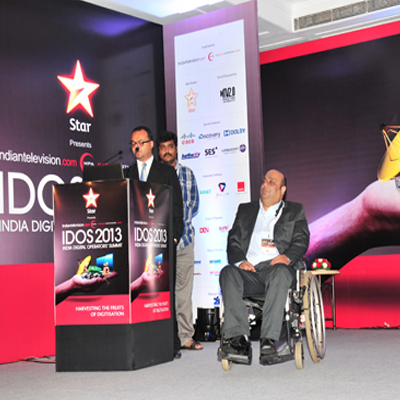
    MUMBAI: With Last Mile Operators (LMOs) viewing digitisation as a threat and legal tussles between them and Multi System Operators (MSOs) on the rise, the Maharashtra Cable Operators Federation (MCOF) has organised an educational and business seminar on ‘challenges and opportunities post DAS’ to address their growing concerns.

    To be held on 23 November at the Prabhodhankar Thakarey Krida Sankool in Vile Parle, Mumbai, the seminar will see the who’s who of the industry educate LMOs about the kind of business opportunities lying in wait.

    Addressing operators from Maharashtra, Andhra Pradesh, Gujarat and Goa will be Castle Media director Vynsley Fernandes, who will speak on ‘global industry standards and trends’; HSBC Securities (Telecom and Media) lead analyst Rajiv Sharma, who will touch upon the financial aspects; former Sun group CEO Tony D’Silva, who will discuss HITS (Headends in the Sky) technology, UPASS managing director Ravindra Deshmukh and PING Network founder Prashanto Das, who will talk about global trends in broadcasting.

    Also among the invitees are small scale industries and the State Bank of India (SBI) regional head.

    Says MCOF president Arvind Prabhoo: “There is a lot of confusion about digitisation and LMOs feel the business is going out of their hands but if you understand what digitisation is and how to go about it as well as reorient yourself to the changing scenario, then you don’t look at it as a challenge but as an opportunity. I want LMOs to know that digitisation is not a threat and remove the fear factor from their mind.”

    A few women cable operators are also expected to attend the seminar that will be conducted in both Hindi and English. Nearly 500 to 600 LMOs are likely to participate with registration fees fixed at Rs 500 per head. Leading Marathi and Gujarati newspapers will be carrying advertorials tomorrow and day after to promote the event.

    Apart from challenges and opportunities post DAS, the seminar will also cover topics such as maximizing broadband penetration, optimised network architecture in DAS and future proof, Value Added Services (VAS), identifying right equipment and spares, supply tie ups and employee training.

  • Kolkata’s cable TV ecosystem struggles to cope with CAF

    Kolkata’s cable TV ecosystem struggles to cope with CAF

    KOLKATA: Ritika Saha, a city based Gujarati engineer, recently installed a set top box (STB) at a cost of Rs 1,400 and has still not been able to mention in writing about her preference for channels. The reason: her cable operator has not yet approached her with a consumer application form (CAF).

    “I hardly stay at home. For news and updates, a cheaper DAS package is more than enough for me. If the local cable operator does not provide me with the form, I shall not have access to cable TV post August on account of no fault of mine,” says Saha, adding that her hectic schedule does not allow her to follow up with her operator.

    “Had I placed the order for the STB eight months ago, it would have cost me just about Rs 800. The prices of these STBs have sky rocketed in the past few months,” she rues, little knowing that the depreciation of the Indian rupee against the US dollar has led to the rise in import cost of these boxes.

    There are many in Kolkata who have not yet filled up their CAFs. This is the situation even after TRAI’s order to the cable TV ecosystem in Kolkata undergoing digitisation to complete the process of collecting subscriber details before 23 August Saha is not the only one. There are many in Kolkata who have not yet filled up their CAFs. This is the situation even after the Telecom Regulatory Authority of India’s (TRAI) order to the cable TV ecosystem in Kolkata undergoing digitisation to complete the process of collecting subscriber details before 23 August. “TRAI plans to crack the whip against any MSO that fails to abide by the deadline of submitting CAFs,” informs a Kolkata based cable operator.

    CAF collection rate in Kolkata currently is about 25 per cent and should be around 60-75 per cent by 28 August,” says Siticable Kolkata director Suresh Sethia. “The implementation of DAS and its performance is not upto the mark in Kolkata,” adds media analyst Namit Dave.

    According to a report issued by TRAI last month, only 20 per cent of the city’s subscriber details and choices for channels were put up in the subscriber management system as part of the digitisation process.

    “The MSOs and cable operators are likely to miss the deadline,” says the Association of Cable Operators’ cable operators digitalisation committee convener Swapan Chowdhury. “Achieving the target by 30 August is next to impossible. Kolkata will miss the deadline,” he adds.

    “There are many other teething problems. One, not many CAFs were in supply; Two, from past seven days only the MSOs are supplying the forms to people and three even feeding in customer details is time consuming. For an exercise so massive and with so many loopholes in the process, more time is needed,” informs Chowdhury.

    While one local service provider complains of not receiving any subscriber information and management forms from his MSO, there is another MSO who says that his cable operator continues to be lethargic and has been loathe to do anything even after the forms were given to him.

    Both the MSOs and LCOs will appeal to the TRAI to extend the deadline by 15-20 daysm Both, MSOs and LCOs will appeal to the TRAI to extend the deadline by 15-20 days. “The operators and MSOs can send the subscribers’ choices of package till 31 August. And the billing can start from 1 September,” informs Sethia. “Though the MSOs will not switch off channels, the decision has been left on TRAI.”

    While 30 lakh STBs have already been installed in Kolkata, the steeper sticker prices – following the rupees downslide- makes digitisation of another 200,000 cable TV homes in Kolkata nigh impossible.

    With the depreciation of the Indian rupee to Rs 61.70 (approx) against the dollar, the import price of STBs has gone up by Rs 500-Rs 600. And this extra burden has been passed on by the distributors to consumers, says Chowdhury, adding that for some in the low income category in Kolkata, digital cable TV looks unaffordable now. “Despite the extension of the digitisation deadline, 100 per cent achievement is not possible,” he informs.

    Abhishek Cable director Rajendra Prasad Agarwal, feels that out of 35 lakh cable TV subscribers, around 30 lakh have taken STBs. “Houses with four to five cable connections have not yet taken up set top boxes,” he says. Contradicting this claim is Sethia whose estimate is that 27 lakh homes have been digitised with no analog connections left in the metropolitan area of the city.With 11.5 lakh cable TV subscribers, SitiCable is a giant in Kolkata which offers 410 channels.

    Manthan Broadband Services, another big daddy has a 34-35 per cent marketshare with a 350 channel service. . “We have 6.5 lakh to seven lakh subscribers. The CAF rate is around 25 per cent as of now,” informs Manthan Broadband Services director Sudip Ghosh. According to industry sources Hathway Cable and Datacom and Digicable Network (India) have jointly achieved 5.5 lakh installations so far.

    While the current average revenue per user in Kolkata is around Rs 180-Rs 200, cable operators in south Kolkata charge anything from Rs 350–Rs 475. What’s more is that operators in Shyam Bazaar and north Kolkata have been complaining that customers who are used to monthly subscription fees of Rs 120 are yelping about a hike to Rs 150. MSOs get to keep only Rs 70 on an average out of what subscribers are paying to local cable operators. “The local operators make huge profits,” informs Ghosh.

    Turfs have been maintained in Kolkata with everyone maintaining their position and no mergers or acquisitions taking place, unlike in the neighbouring states of Shillong, Jaharkhand, Orissa and Assam where there has been a flurry of activity.

    When asked if DTH is making inroads in Kolkata, Chowdhury says, “Since the performance of the DTH is subject to weather conditions, some dissatisfied customers will definitely opt for a digital cable connection. This can happen more so if their queries are not well addressed by the DTH players.”

    So will Kolkata meet the 31 August deadline? Answers Dave, “For the next few weeks nearly 5,000 local cable operators and 14 MSOs, which provide service in DAS area will have a herculean task to perform.”

    Yes it’s something the entire Kolkata cable TV ecosystem will have to jointly and collaboratively work together to achieve. Failing which, cable TV subscribers will see their cable connections cut.

  • CBS-TWC in a tiff over digital services

    CBS-TWC in a tiff over digital services

    MUMBAI: The blackout dispute between CBS and Time Warner Cable has shifted from the TV set to the tablet.

    In their latest heated exchange, TWC claims that CBS wants to charge higher fees while shortchanging it on digital programming rights that it “has provided to others.”

    CBS contends that the cable-TV outfit is aiming to get digital rights for free or inhibit licensing deals with newer online rivals like Netflix and Amazon.

    The battle between the two companies, which has left CBS-owned TV stations dark in New York and other cities, underscores how the demand for digital rights, including the ability to watch shows on tablets and other mobile devices, is overshadowing the traditional cable bundle.

    On Monday, TWC honcho Glenn Britt offered to end the five-day blackout and pay a higher rate – $2 a month per subscriber, up from $1 now – in exchange for video-on-demand and digital rights to CBS and Showtime programming under the terms of their old contract.

    In response, CBS head Les Moonves argued that the terms of the 2008 deal no longer apply.

    “Those terms and conditions, better known as rights, were established in 2008,” Moonves wrote in his rebuttal. “That was before the introduction of the iPad. Netflix was still doing little but mailing out DVDs. Amazon was known simply for selling books.”

    Moonves wants to protect future digital revenue and doesn’t want TWC limiting his ability to sell shows such as The Big Bang Theory to whomever he sees fit.

    For its part, TWC wants to protect its turf. It doesn’t want CBS giving Amazon preferential treatment to air shows such as miniseries Under the Dome if it’s paying huge fees to carry CBS, according to those familiar with the talks.

    As one cable executive told The Post, “The program guys want all the Amazon revenue to be incremental, and the cable guys are saying we’re not doing that anymore. We want to compete and offer the same experience.”

  • AFs: Mumbai switch offs begin; Kolkata quo vadis?

    AFs: Mumbai switch offs begin; Kolkata quo vadis?

    MUMBAI: With Delhi under control now, the Telecom Regulatory Authority of India (TRAI) is focusing increasingly on the other two metros to ensure that all the consumer application forms (CAFs) come in to the MSOs.

    Following a meeting held on 2 August with MSOs operating in Mumbai and Kolkata, a decision has been taken that the time for carrots is over, now one needs to use the stick to get customers to get moving on their CAFs. And that stick is like Delhi is switching off their cable TV service, if the CAF is not yet in.

    “There will be no further extensions like in the past,” says a senior TRAI official. “In fact, the switch offs have already begun from 3 August. The process for switching off the set top boxes will take at least four to five days because we are talking about a huge number.”

    Hathway Cable & Datacom MD and CEO Jagdish Kumar agrees that his network has started switching off subscribers who are being tardy from 3 August. “But the process will be tedious,” he says. “So far, we have managed to collect 80 per cent of the forms duly filled.”

    Indiantelevision.com spoke to another three MSOs operating in the financial capital and all of them stated that CAF collection was between 70 and 80 per cent. Going by that yardstick, it appears as if cable TV subscribers don’t seem to be too disturbed about the stick, as the numbers mentioned by MSOs to indiantelevision.com even a month ago were in that range. Could they be opting for a DTH connection? We do not know, but a media observer, says that it could be a possibility.

    The TRAI official says that Kolkata should not expect to be treated with kid’s gloves. “When Delhi can meet the deadline why not Kolkata?” he questions. “We are sure that Kolkata will be able to meet the 23 August deadline as it does not have any other option.”

    Well cable TV operators and subscribers in Kolkata, that’s as ominous a warning as you can get!

  • Cox said to discuss merger with Malone-backed Charter

    Cox said to discuss merger with Malone-backed Charter

    MUMBAI: Cox Communications, the third-largest US cable provider, has held talks about combining with Charter Communications, according to reports on the matter.

    Cox president Pat Esser has discussed a deal with representatives from Liberty Media, which owns a 27 per cent stake in Charter. The structure of a potential deal hasn’t been determined; including which company might be the acquirer.

    Liberty and Charter are also still pursuing an acquisition of Time Warner Cable, the people said. Billionaire John Malone, who controls Englewood, Colorado-based Liberty, has said he wants Charter to get bigger so it can gain leverage in negotiations with TV networks, which have sought higher prices for the use of their programming.

    Cox has 4.8 million video subscribers, while Charter has 4.4 million, according to Craig Moffett, an analyst at Moffett Research LLC in New York.

    Malone sees mergers as an appealing way for the cable industry to cope with the lower video profit margins that have come from higher programming costs and fewer new customers.

    Malone’s strategy isn’t just about traditional cable. The high-speed internet connections that companies like Charter provide to US households are the key to the future of the TV industry, Malone said at the June meeting. He cited the growing viewership of streaming-video services, also known as over-the-top.

    Dissolving the trust is a step toward Cox gaining flexibility to merge the cable company.

  • CODA to push ahead with Maharashtra ent tax issue this week

    CODA to push ahead with Maharashtra ent tax issue this week

    MUMBAI: The ongoing struggle, regarding the entertainment tax, between the Cable Operators & Distributors Association (CODA) and the Maharashtra State government has reached the next level. After postponing the decision to blackout all Hindi, English and Marathi news channels on state revenue minister Balasaheb Thorat’s request a couple of weeks ago, the organisation met with him last week.

    “He has asked us to give a detailed presentation about the current cable TV scenario in the state, the revenue generation in the current tax regime and also compare it with what will happen when entertainment tax on subscribers and set top boxes will be brought down,” confesses Anil Parab.

    The Maharashtra regime currently levies entertainment tax on cable TV subscribers at the rate of Rs 45 per sub; CODA has been imploring and lobbying with the government to scale this down to Rs 15 or Rs 20 as is the practice in many other states and cities.

    According to Parab, the current rate is too high considering that transparency in the cable TV sector has really gone up and leakages have reduced with the introduction of set top boxes and digitisation. “The only only reason we had agreed to a hike to Rs 45 per sub was because there was under-declaration in the ecosystem and hence a perceived loss to the state exchequer. But with declarations of cable TV subs by cable operators and MSOs more than doubling, rate needs to be brought down as the burden on the industry is crippling us and really hurting our viability,” he reveals.

    CODA is slated to meet the minister this week and make its presentation. As of now, Delhi’s rate is Rs 20 while in other cities it is less than five per cent. “The current rate is too much. We would be happy with anything between Rs 15 and Rs 20,” says Parab.

  • DAS crosses 100% six weeks after analogue switch-off, but many homes still do not have STBs

    DAS crosses 100% six weeks after analogue switch-off, but many homes still do not have STBs

    NEW DELHI: The digitisation level in the 38 cities in fourteen states and one union territory of Phase II had touched 101 per cent including DTH homes as on 14 May, six weeks after the analogue switchoff.

    However according to the information & broadcasting ministry’s own statistics, around nineteen cities had not been fully digitised as on 7 May.

    Questioned about this anomaly, an I&B Ministry official told indiantelevision.com that the average was based on the fact that nineteen cities had crossed more than a 100 per cent seeding of set top boxes, with Hyderabad touching a figure of 206.18 per cent with cities like Ludhiana and Allahabad crossing 178 per cent and 167.04 per cent respectively.

    The official – who did not want to be named – added that this was because many of the households had more than one television and/or DTH connection, and the ministry had made a provision of 20 per cent TVs in shops and homes.

    The official clarified that a total of 1,60,13,059 total TV homes had to be digitised by making provision of 20 per cent for multiple TVs in houses and TVs in offices/shops. The total number of TV Households according to ministry statistics is 1,33,44,216.

    Coimbatore with 30.43 per cent stood at the bottom on 7 May, with Srinagar at 30.88 per cent, and Vishakhapatnam at 54.36 per cent. These figures include direct-to-home connections. It is therefore obvious fom these figures revealed by the government itself that a large proportion of TV subscribers in these 19 cities do not have either a DTH set top box or a cable TV set top box.

    Petitions challenging digitisation are currently pending in the Madras, Andhra Pradesh and Madhya Pradesh high courts. These affect the cities of Chennai, Hyderabad, Visakhapatnam Bhopal, Indore, and Jabalpur.

  • Kanpur LCOs forced to pay user charges for cable despite any provision by TRAI

    Kanpur LCOs forced to pay user charges for cable despite any provision by TRAI

    NEW DELHI: Although there is no reference to any charge being levied on right of way given to cable television operators to use electricity poles after launching of digital access system, the Kanpur municipal corporation has forced LCOs to deposit up to Rs 10,000 even as a final settlement has yet to come.

    Sources in the Information and Broadcasting Ministry as well as the Telecom Regulatory Authority of India denied to indiantelevision.com any mention of charges and said the law only spoke of facilitating the work of LCOs.

    Furthermore, LCOs and MSOs in Kanpur confirmed to indiantelevision.com that no such charge is being levied in the other cities in Uttar Pradesh – Allahabad, Lucknow, Agra, Ghaziabad, Meerut and Varanasi – covered in Phase II of DAS.

    The Kanpur municipal corporation had recently imposed user charges of Rs 0.50 per meter on cable operators who operate via Kesco, Nagar Nigam and telephone poles.

    The LCOs had gone on strike last week when Nagar Nigam officials set a deadline for depositing user charges and also cut the cable lines of some operators at various places.

    During the meeting with state chief minister Akhilesh Yadav, the operators urged him to make an inquiry as they were being heavily taxed, which included central tax, state tax or entertainment tax and now the new user charges. Yadav had then asked the divisional commissioner of Kanpur to make an inquiry and settle the issue.

    However, municipal commissioner N K Singh Chauhan told LCOs that the government had issued the order for charging the operators with user charges.

    Cable Operators Federation of India president Roop Sharma and All India Dish Antennae Aavishkaar Sangh president A K Rastogi strongly condemned the action. Rastogi said his organisation would help the LCOs in whatever manner possible.

  • Siti Cable gets Rs 810 mn first tranche from promoters

    Siti Cable gets Rs 810 mn first tranche from promoters

    NEW DELHI: Siti Cable Network has received the first tranche of Rs 810 million as part of the Rs 3.24 billion it is raising from promoter firms to fund digitisation and cut its debt.

    The balance amount will be released in appropriate time as the multi-system operator (MSO) plans to expand and digitise its network.

    Siti Cable had recently received approval of the Foreign Investment Promotion Board (FIPB) to raise Rs 3.24 billion from promoter entities.

    According to the approval, the company will issue 162 million warrants convertible into equivalent number of equity shares at a price of Rs 20 per warrant.

    The total promoter shareholding after conversion of all the warrants will rise to 73.08 per cent from 63.43 per cent. The public holding will drop to 26.92 per cent from 36.57 per cent.

    Siti Cable will invest in upgrading its digital infrastructure further and enter into newer strategic markets. The company believes that it is well poised to benefit from the ongoing digitisation implementation and penetrate the market at a faster rate.The company has implemented the first phase of digitisation of television signals in its key markets of Kolkata, New Delhi and Mumbai. In its Phase-II cities, the company is aggressively seeding the set-top boxes (STBs) to meet the deadline.

    Subscriber billing and collection has been initiated in Delhi and Mumbai. The company said it has made significant progress on billing and collections in Delhi and “is making a good progress in Mumbai too”.

    In Kolkata the company claimed it has overcome the initial resistance and the billing has started since mid February for over one million subscribers.