Category: Cable TV

  • MCOF’s Prabhu sounds the alarm for cable TV fraternity

    MCOF’s Prabhu sounds the alarm for cable TV fraternity

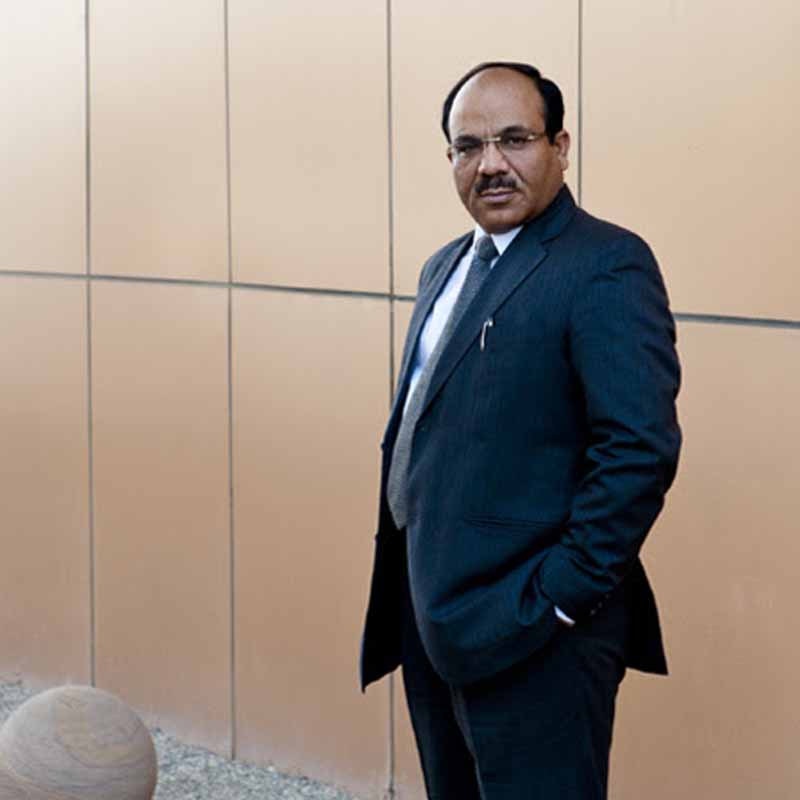
    KOLKATA: Although linear television remains the primary mode of viewing for most Indian households, cableTV  operators still face numerous challenges – what the rapid uptake of OTT services and the inflexible pricing regulations set by the regulator. And the situation is not getting any better for the tribe, says Maharashtra Cable Operators Foundation (MCOF) president Arvind Prabhu.

    He claims that matters took a grim turn with Covid2019 causing a 25-30 per cent drop in subscribers for the cable TV trade operators in the first four months of the crisis,

    mainly due to lack of fresh TV content, labour migration and the closure of commercial establishments. He further projects that only 5-10 per cent of these subscribers might come back.

    While a lot the of users had moved to OTT during the beginning of the pandemic, Prabhu says there are fewer chances of them returning  to TV as the platforms are already offering linear TV content, streaming live sports events.

    Read more news on MCOF

    How far is normalcy?

    There had been a challenge at the operational level too with the onset of this pandemic. However, the situation is normalising inch by inch, thanks to the stage by stage unlocks, and it is comparatively easier at this moment, says Prabhu. However, 60-65 per cent of workers are not coming to offices regularly.

    Given that cable TV is an essential service, the government should have looked at insurance for its staff, insists Prabhu. Moreover, vendor supplies have also slowed down. The scene is a little different in rural areas, where manpower is available but getting equipment is an issue. Hence, it would take another month or so to reach normalcy, he expresses.

    Due to restrictions in movement, the MSOs have been demanding online payments. While others claim that 70-80 per cent of subscribers have shipped out,  Prabhu dismisses these figures. He says it is the subscribers of the MSOs that is the cable TV operators themselves who have moved to digital payments; not the end subscribers. So far, cable TV operators have been collecting payments traditionally from 50-60 per cent of their subscriber bases.

    What are the long-term challenges?

    Putting aside the challenges imposed by Covid2019, cable TV operators have been in distress for a while now. With the Telecom Regulatory Authority of India (TRAI) introducing a cap on NCF under NTO 2.0, their worries have only increased. Prabhu claims that TRAI did not take into consideration the suggestions that were given following the NTO consultation paper. He goes on to add that MSOs manipulated NTO 1.0 and it failed to bring end-to-end transparency.

    However, the MCOF president acknowledges that former TRAI chairman RS Sharma did his best to help small cable TV operators. “If the new chairman (PD Vaghela) does not quickly help us to revive the overall economic situation, we will be in dire straits. What we ask of the new chairman is to look at all the correspondence sent by cable TV operator associations. He will immediately realise that there has been a serious breach of regulations,” says Prabhu, and he urgesVaghela to call a meeting of all stakeholders at the earliest so they can figure out a solution together.

    Way to a sustainable future:

    Prabhubelieves that there is a way for cable TV operators to stem the loss of subscribers to OTTs: provide broadband services as that would help them to survive in a changing ecosystem, and integrate the billing for those with cable TV. He also mentions that many operators have already started offering android boxes. On the cable TV side, operators are trying to reduce subscriber loss with long-term packages. Hence, they have requested MSOs to offer some discounts on those.

    Going forward, cable TV operators who focus on futuristic services like broadband and hybrid boxes will be able to sustain themselves, says Prabhu. He is optimistic that the new boxes will go beyond urban areas and see good traction in tier II, tier III cities. While these boxes are expensive at the moment, the cost is predicted to come down once demand picks up, leading to increased adoption in rural areas too. Prabhu also highlights that the industry needs government intervention, such as providing loans to the last mile players for investing in new technology.

    But broadband and hybrid boxes are not a sure-shot road to success. With the entry of deep-pocketed players in the segment, operators are worried about not having a level playing field. “It is important to find out how to control the big brother coming and taking away everybody’s job. Even if it takes over everything, there should be some alternative modes for us,” says Prabhu.

    Need of the hour:

    Alongside the long-term strategies, the operators are facing short-term issues as well. “First and foremost, there should be a signing of model interconnect agreements. Nobody has signed a model interconnect agreement, whatever was signed was two-three years ago. The ownership of a set-top box needs to be defined. If a consumer is buying then it is his property; if a cable operator is buying to give it to consumers it belongs to him.; if it is being rented or leased, then it is owned by MSOs. Clarity on that is needed,” he states.

  • Hathway profits up on lower revenue in second quarter

    Hathway profits up on lower revenue in second quarter

    BENGALURU: The Mukesh Dhirubhai Ambani controlled MSO and broadband internet services provider Hathway Cable and Datacom Limited (Hathway) reported consolidated profit after tax (PAT) at Rs 52.33 crore for the quarter ended 30 September 2020 (Q2 2021, quarter or period under review) against loss of Rs 2.42 crore for the corresponding year-ago quarter Q2 2020 (y-o-y). PAT for the period under review was 20.8 percent lower quarter-on-quarter (q-o-q) than the Rs 66.06 crore the company had posted for the immediate trailing quarter Q1 2021. However, consolidated operating EBDITA for the period under review at Rs 120.39 crore (27.9 percent of operating revenue) grew 14.7 percent y-o-y from Rs 105.71 crore (23.8 percent of operating revenue) and was also 1.9 percent higher q-o-q than the Rs 118.18 crore (28.2 percent of operating revenue) in Q1 2021.

    Hathway’s consolidated operating revenue fell 2.5 percent y-o-y in Q2 2021 to Rs 431.24 crore from Rs 442.11 crore in Q2 2020, but was 2.8 percent higher q-o-q than Rs 419.56 crore. Consolidated total income (total revenue) during the quarter fell 9.8 percent y-o-y to Rs 460.66 crore from Rs 510.77 crore, and was 5.6 percent lower q-o-q than Rs 488.22 crore.

    Broadband and CATV segment numbers for Q2 2021

    Hathway has two major segments – broadband internet services (BB) and cable television or CATV.

    BB segment saw operating revenue increase 10 percent y-o-y in Q2 2021 to Rs 153.34 crore from Rs 139.36 crore in the corresponding year ago quarter and grew 4.7 percent q-o-q from Rs 146.51 crore in Q1 2021. The segment’s operating result (operating profit) in Q1 2021 was Rs 6.68 crore as compared to an operating loss of Rs 25.10 crore in Q1 2020, but was 14.8 percent lower than the operating profit of Rs 7.84 crore in Q1 2021.

    CATV segment revenue declined 8.2 percent y-o-y in Q2 2021 to Rs 277.90 crore from Rs 302.75 crore in Q2 2020, but was 1.8 percent more q-o-q than the Rs 273.05 crore for Q1 2021 The segment reported more than two-fold increase in operating result (operating profit) – which grew 116 percent y-o-y in Q2 2021 to Rs 21.32 crore from Rs 9.87 crore in Q2 2020 and was 25 percent higher q-o-q than Rs 17.06 crore in the immediate trailing quarter/

    Let us look at the other numbers reported Hathway for Q2 2021

    All numbers in this report are consolidated unless stated otherwise.

    Total expenditure in Q2 2021 declined 19.9 percent y-o-y to Rs 407.90 crore from Rs 509.50 crore in the corresponding period of the previous year and was 4.7 percent lower q-o-q than Rs 427.92 crore in Q1 2021.

    Pay channel cost during the quarter under review declined 4.4 percent y-o-y to Rs 132.46 crore from Rs 138.55 crore, but was almost flat (up 0.2 percent) q-o-q as compared to Rs 132.18 crore for Q1 2021. Employee cost in Q2 2021 declined 3.6 percent y-o-y to 24.44 crore from Rs 25.36 crore, but was 0.6 percent higher q-o-q than Rs 24.30 crore in Q2 2020. Operational expenses in Q2 2021 grew 19.8 percent y-o-y to Rs 81.65 crore from Rs 68.18 crore and were 5.1 percent more q-o-q than Rs 77.67 crore in Q1 2021.

    Finance cost was less than one-twelfth (declined 91.8 percent) y-o-y to Rs 4.27 crore from Rs 51.87 crore in the corresponding quarter of last year and was a little more than one-eighth (declined 87 percent) than the Rs 32.96 crore in Q1 2021. Other expenses in Q2 2021 declined 31.5 percent y-o-y to Rs 72.30 crore from Rs 105.01, but were 7.5 percent higher q-o-q than the Rs 67.23 crore in Q1 2021.

  • SPNI goes head to head with Indore-based Digiana Projects  on “piracy”

    SPNI goes head to head with Indore-based Digiana Projects on “piracy”

    KOLKATA: The battles in cable TV land continue, what with life gradually coming to the new normal.  Sony Picture Networks India (SPNI) ,for instance, says it is cracking the whip on Indore-based MSO Digiana Projects for allegedly availing signals through clandestine means. SPNI has gone ahead and switched off the transmission of its TV channels to the distributor as it has allegedly not paid its dues, and is pirating its channels. While the broadcaster has filed a contempt petition in the Delhi high court, the MSO has petitioned the Telecom Disputes Settlement &  Appellate Tribunal (TDSAT) to come to its rescue.

    The court has taken cognisance of piracy and admitted contempt of court case against Digiana along with issuing a notice to submit its response to the said petition. The matter will be listed in the second week of November this year. 

    In its response to TDSAT, SPN has charged that Digiana is continuing piracy even after undertaking before the court that it will not illegally broadcast the network’s signals. The broadcaster stated that it is difficult to deal with such a partner who is choosing unfair means along with withholding a huge amount in arrears – Rs 3.03 crore.

    However, Digiana claimed in its petition that the number is inflated and actually stands at Rs 1.48 crore. TDSAT has not found any good grounds to accept the claim and asked the defaulter to produce further materials and evidence. The next date of hearing is 2 November. In the meantime, the tribunal has directed Digiana to pay Rs 2 crore within ten days of the notice for the restoration of SPNI channels. Apart from payment Rs 2 crore, TDSAT also directed Digiana to clear dues of all forthcoming invoices within a period of 15 days from the receipt of Invoice.

    When indiantelevision.com reached out to the MSO, a senior staff member said that they had requested SPN for a fee waiver due to loss of revenue in Covid2019 crisis. He claimed that instead of waiving fees, the broadcaster hiked its bouquet price, which made the entire situation more difficult for its management. He also added that SPNI did not properly inform the MSO about the disconnection.

    indiantelevision.com tried reaching the CEO of Digiana for comment but he was unavailable at the time of publication.

    This isn't the first time that Digiana is in the dock over illegal transmissions of a broadcaster's signals. Last year, the Madhya Pradesh police registered a case against Digiana Projects after investigations revealed that the MSO had been stealing and broadcasting the signals of Star India at about 26 locations across the country.

    Major broadcasters have frequently complained about unauthorised transmission. Even major MSOs have also raised their voice against illegal theft of signals. A number of complaints before the MIB and TRAI remain unsolved, a senior executive recently said.

    The latest controversy involving SPN and Digiana comes amid an ongoing stand-off between broadcasters and TRAI over the amended new tariff order (NTO 2.0). While the case is sub-judice, the overall instability in the industry due to Covid2019 has precipitated more conflicts regarding signing agreements, timely payments, piracy, etc.

  • Vynsley Fernandes becomes CEO NXTDigital

    Vynsley Fernandes becomes CEO NXTDigital

    Vynsley Fernandes has been known as the CEO of Hinduja group-owned Indusind Media & Communications which runs cable TV MSO InCable TV, a position he took up in August 2018. As of last month, his role and designations have changed: he has been redesignated as CEO of the theheadend in the sky (HITS) venture NXTDigital and president of IndusInd Media.

    Since joining, Vynsley or Vyns as he is known has managed to return the struggling NXTDigital businesses to profitability, thanks to better management at IMCL which he headed

    On a consolidated basis, revenues grew at NXTDigital by 65 per cent over FY19, from Rs 704.62crore to Rs 1,162.10crore; operating EBIDTA rose significantly to Rs 218.01crore against a loss of Rs 72.61crore; its PAT is a healthy Rs 110.05 crore as against a loss of Rs 303.43 crore in FY19.

    Thanks to the great showing, Vyns got elevated to CEO of NXTDigital with the additional responsibility of IMCL.

    Vyns updated his designation on linkedin today. 


  • Ashok Mansukhani bids adieu to NXTDigital

    Ashok Mansukhani bids adieu to NXTDigital

    KOLKATA: Ashok Mansukhani is departing from NXTDigital putting an end to a 24 year long association with the Hinduja group.The industry veteran will retire on 30 September. 

    According to a BSE filing, his term as managing director and key managerial personnel was extended on 29 April 2020  until NXTDigital's next annual general meeting (AGM). The company recently announced its AGM date to the BSE as 30 September 2020. 

    Mansukhani joined the Hinduja group in 1996 when was appointed as a director of the cable TV venture IndusInd Media & Communications. He was then appointed executive director before becoming its managing director. The group later went in for reorganisation of the business through a process of demerger, merger and further integration of Indusind Media and its HITS operation under Grant Investrade with their parent Hinduja Ventures, which he was heading. Hinduja Ventures was later rechristened as NXTDigital. Mansukhani oversaw the group and the companies through this entire process. 

    Read more news on Ashok Mansukhani

    His last postion with Hinduja Ventures was as managing director. Mansukani has over the years handled various senior responsibilities in the group’s media and corporate sphere.

    The Delhi University alumnius had spent the first half of his career in central government as an Indian Revenue Service officer.

    During the course of restructuring NXTDigiatl CFO Amar Chintopanth has been appointed as whole-time director.

  • TRAI’s Arvind Kumar prescribes broadband medicine for MSOs & LCOs

    TRAI’s Arvind Kumar prescribes broadband medicine for MSOs & LCOs

    KOLKATA: Digital is it. Across the country, and age groups, Indians are getting online, and consuming more high speed broadband data than ever before, whether it is for entertainment, education, commerce or banking. While the telcos have been serving their needs for a large part, the increasing maw for data and speeds has thrown up increasing opportunities for multi-system operators (MSOs) and local cable operators (LCOs)  even as their video distribution operations are seeing churn.

    The Telecom Regulatory Authority of India (TRAI) advisor Arvind Kumar spoke about this potential future of MSOs in a virtual fireside chat hosted by Elara Capital. Kumar said that a number of people want broadband services currently and they are looking at fibre-to-home services. According to him, it is not possible for a telecom service provider to satiate the demand of 300 million households even in the next ten years. 

    Read our coverage on TRAI 

    “Therefore MSOs must focus on providing a broadband connection with cable TV services. This is right for them. This makes a very good business case for the MSOs. Neither any TSP will be able to fight with them, nor DTH operators will be able to do so. The MSOs should focus on how to give broadband service at the same time along with cable services to retain subscribers,” Kumar added. He also mentioned that the Covid2019 crisis has proved the demand for broadband connectivity. 

    He is optimistic about the ability of MSOs to stave off the competition from DTH operators despite the latter having a technological edge. Kumar opined that MSOs can compete with DTH operators in terms of the quality of service, cost-effectiveness and broadband services. Considerably, reports came out after the implementation of the new tariff order indicate that MSOs are losing a large number of subscribers to DTH players.

    Read our coverage on MSOs 

    Along with other economic issues, MSOs face the issue of conflict with local cable operators (LCOs) quite often. According to Kumar, the two parties will keep getting at loggerheads with each other until they understand the whole game. He explained the need for LCOs to upgrade their thought process as well as technology. “The LCOs have to support MSOs to stay relevant in the game. Otherwise, both parties will lose their market share to other contenders,” he pointed out.

    Kumar emphasised that LCOs must concentrate on broadband plans and discuss with MSOs. They need to express the longing of coming into the overall picture. He also mentioned that Jio will get support from MSOs if they don’t receive it from the last mile operators. However, he added that LCOs have expertise in dealing with consumers, local authorities which is important to help any broadband operator.

    As per TRAI data, there were 19.38 million wired broadband subscribers in India as of 31 May 2020. The top service providers were BSNL (7.93 million), Bharti Airtel (2.41 million), Atria Convergence Technologies (1.64 million), Hathway Cable & Datacom (0.97 million) and Reliance Jio Infocomm Ltd (0.97 million). 

  • Arnab Goswami on counteroffensive after Sena ban threat; implores viewers

    Arnab Goswami on counteroffensive after Sena ban threat; implores viewers

    Mumbai: Arnab Goswami is fighting back. Like he probably has never done before. Yesterday, he reached out Republic TV and Republic Bharat viewers imploring them to not allow the Shv Cable Sena’s order to cable TV operators to stop  carrying both the channels on their networks.  Said Arnab Goswami: “Our journalism is for the people, our reporting is for your right to know and our channel reports for the nation. They are trying to block us from reaching you. They can't block us, you the people of India won't let them. Join us in this fight, support us in this fight, we need your support."


    He has asked viewers to sign a “Can’t block Republic” online.


    Arnab Goswami further highlighted: “We have refused to cow down when they try to gag us. We have refused to reveal our sources even when they have put our reporter Anuj and  our crew in jail for three days. And today we refuse to bow down just because they are issuing threats to cable operators in Maharashtra to block our channel Republic Bharat, and our network. This is an attack and an attempt to plunder the fourth pillar of democracy. the Shiv Sena wants us to squirm before them, they want to snatch our fundamental right to report. Under Article 19(1)A of the Constitution of India, Uddhav Thackeray, you have no right to do this. Our coverage speaks truth to power. The people of India did not stand for Emergency in 1975, and they will not stand for what the Sonia Sena is doing right now.”


    Earlier, in the day, the channel won a part reprieve from the Mumbai high court when it held that “the (…) Shiv Cable Sena is not a statutory authority to either supersede the license granted to the petitioners or to interfere in the contractual/statutory relationship between the petitioners and the cable network operators. The communication issued by it has, therefore, no effect in law.”


    But the court did not heed ARG Outliers’ appeal for the court to intervene and direct cable TV operators not to take the two channels off the air. While the government’s counsel said that the Shiv Cable Sena was an independent private entity from the Shiv Sena, ARG’s counsel said that how much ever it would have liked to place its appeal before the Telecom Disputes Appellate Tribunal, it could not do so as it was in recess and would restart only after 18 September.


    The Mumbai high court further added that the there was no evidence that cable TV operators had taken down the channels, and even if they do, it need not be solely  because the of Shiv Cable Sena’s threatening messaging.

  • Shiv Cable Sena asks cable operators to ban Republic channels in Maharashtra

    Shiv Cable Sena asks cable operators to ban Republic channels in Maharashtra

    KOLKATA: Amid rising political tension in Maharashtra,  the Shiv Cable Sena, an affiliate to Shiv Sena, has asked the cable TV operators to ban Republic Media Network in the state. 

    According to reports, the Shiv Cable Sena has issued a letter which is signed by Sanjay Raut’s brother Sunil Raut.  The letter sent to major operators claims that Republic has violated journalistic ethics and guidelines by repeatedly using the non-respectful language for CM Uddhav Thackeray, home minister and holding a ‘parallel court’.

    Following the letter, the network has issued a statement. “This is an attack and an attempt to plunder the fourth pillar of democracy. the Shiv Sena wants us to squirm before them, they want to snatch our fundamental right to report. Under Article 19(1)A of the Constitution of India, Uddhav Thackeray, you have no right to do this. Our coverage speaks truth to power. The people of India did not stand for Emergency in 1975, and they will not stand for what the Sonia Sena is doing right now,” it said in a statement.

    The network has also released a petition #CantBlockRepublic on Twitter "appealing to the people of India to come forward and join the fight for the right to report in a free democratic country."

  • NXTDIGITAL’s revenue grows by 3.4% to Rs.234.82 crore in Q1

    NXTDIGITAL’s revenue grows by 3.4% to Rs.234.82 crore in Q1

    KOLKATA: NXTDIGITAL announced its results for the first quarter of the current financial year – a quarter that was significantly impacted by the Covid2019 pandemic. Against this challenging backdrop, the company continued its growth story, with revenues for Q1 standing at Rs. 234.82 crores.

    On a consolidated basis, revenues grew by 3.4 per cent on a sequential basis over the previous quarter and 2.7 per cent over the same quarter of the previous year. The company posted an EBIDTA of Rs.50.36 crore for the quarter; posting a growth of 99 per cent on a sequential basis over the previous quarter and 2.6 per cent on a year-on-year basis. 

    The company has not only been able to maintain its subscriber base but even grow its video and data businesses, in spite of the serious negative sentiments of the pandemic. It has maintained its collection efficiency of over 99.5 per cent under its prepaid collection model.

    The board considered  a capital raising exercise in the agenda and has constituted a committee of directors to analyse and explore various options including Preferential Allotment, Rights Issue or such other means as the Board may consider appropriate for an amount up to Rs.500 crore.

    Performance Drivers

    NXTDIGITAL launched a series of key initiatives during Q1 to counter the challenges of the pandemic, while ensuring the safety of all its personnel, its franchisees and other ecosystem partners. The company looked to focus on three key aspects during the difficult quarter.

    Accelerated “digital payment” adoption by subscribers – the company worked actively to ensure nation-wide adoption of “digital” and “contactless” subscription collection models. Over 85 per cent of the franchisee base, today collects subscriptions from customers digitally, including using “Easebuzz”, a digital collection platform that NXTDIGITAL partnered with, even before the lockdown was implemented.

    Focused on content innovation to ensure subscribers remained connected and had access to their favorite content – launched innovative content packages like the “Vishesh Manorajan Pack” where customers could enjoy over 400 channels for a small fee; while facilitating a credit period for Local Cable Operators (LCOs) facing challenges to physically collect

    NXTDIGITAL Ltd. CEO Vynsley Fernandes reiterated that “As an essential service providing critical video and data connectivity, it was and is imperative to step up and deliver uninterrupted services to customers whilst ensuring, without exception, the safety of our personnel, our partners and the ecosystem. The performance in Q1 against the challenging backdrop is a reflection of those carefully thought out and implemented strategies, consistent innovation, and singular commitment to our customer base.”

    Vision for Growth

    NXTDIGITAL continues to focus on consolidating and growing its serviced subscriber base, expected to cross 10 million; including onboarding of more than 5 million of managed services customers. The potential base for managed services stands at over 69 million cable TV customers today – comprising smaller independent and regional MSOs. A significant portion of these customers are in semi-urban, semi-rural and rural markets; where the company has a growing presence by virtue of being able to deliver digital services to any part of the country through its HITS platform.

    It is also developing innovative products and solutions to leverage the onset of the festival season and help customers derive maximum value. The “NXTGO” solution is an innovative dongle-type device that can be plugged into an OTT Set Top Box (STB) or an Android-based television and provide immediate access to “live” television channels – securely. The “NXTCONNECT” STB, a next-generation solution, is a single device for customers to access “live” television channels, OTT content, social and other apps, games, and much more.

    The company is also working with partners to launch a Cloud-based mobile app – allowing customers to gain easy access to local services in their community, managed by NXTDIGITAL LCOs. The objective is to build a strong ecosystem of local merchants around the LCO – connecting merchants to consumers, seamlessly; thereby facilitating a new revenue stream for its thousands of LCOs.

  • Meghbela Broadband partners with MyBox to bring Android TV experience

    Meghbela Broadband partners with MyBox to bring Android TV experience

    KOLKATA: Meghbela Broadband, one of eastern India’s largest multi system operators (MSOs) and internet service providers (ISPs), has launched Android TV services to its customers through MyBox Android TV box.

    Customers with six-twelve months commitment plans will get an offer on Android Box. The company has also partnered with leading banks to offer zero-interest EMI schemes for its valuable customers.

    Spearheading this movement ahead Meghbela Broadband directors Tapabrata Mukherjee, and Indranil Bhattacharya have taken a step forward to revolutionize the entertainment arena. The directors also mention that apart from business, their paramount concern has been the health and safety of their customers. Hence, an additional health insurance scheme covering Covid2019 is included with the plan.

    Meghbela Broadband has induced technology and entertainment, wherein retail broadband users get much more than a superfast and uninterrupted internet through Android Box which is all set to propel its consumer experience to new heights. The product offering includes the choice of 100 to 150 live TV channels via Meghbela app and other premium OTT apps like Amazon Prime Video, Zee5, Hungama, Addatimes, Hoichoi, BongoTV, Hubhopper, and many more.