Category: Cable TV

  • MCOF seminar aims to educate LMOs

    MCOF seminar aims to educate LMOs

    MUMBAI: Constituted just over a year ago to protect cable operators and safeguard their business, the Maharashtra Cable Operators’ Federation (MCOF), today organised its first business and education seminar in Mumbai.


    Held in Hindi and English,around 400 Last Mile Operators (LMOs) travelled from neighbouring states like Gujarat, Andhra Pradesh, Goa and Karnataka for it.


    The first session was to educate LMOs about the importance of customer care and enhancing the quality of service. Vishwamangal Education CEO Suman Keluskar who deals in soft skills highlighted the need for LMOs to be well groomed as well as train their subordinates to be the same to make customers feel good.
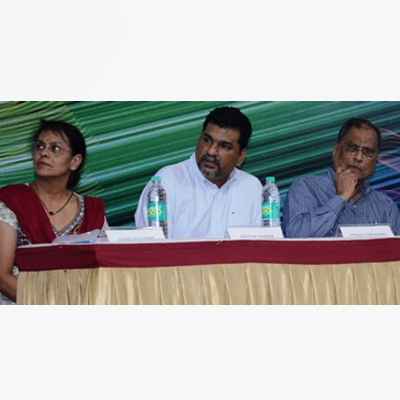
    Suman Keluskar, Vynsley Fernandes and Tony D’Silva spoke about customer care, global trends in cable TV and the upcoming HITS technology respectively


    “The reason why customers welcome a Pizza Hut boy is because he is nice to them,” she said, stressing that customers today were ready to pay for good service but for that to happen, LMOs needed to know the opportunities available to them as well as what customers were demanding. “Innovate in your production. Use the internet to advance yourself,” she said.


    Session two discussed how while LMOs across the globe have learnt to monetise their business, back home, it continues to be a loss-making one. Addressing the session, Castle Media director Vynsley Fernandes, started off by describing how developed countries such as the US, UK and Taiwan had faced the same issues that India is currently facing. But the cable ops dealt with them through innovation and have today grown to last mile digital system providers.


    “From the time the Gulf War happened and everybody wanted to watch TV, things are much different now. Multi-screen viewing is what is happening now,” he said.
    Citing the example of the US, where operators have increased their revenues despite a drop in the number of TV homes, and are expecting the ARPU to go up to $40 from $21 currently in the next five years, Fernandes reasoned this was because they had adapted to using TV along with the Internet and were offering viewers a multi-screen experience.


    He pointed out that concepts like Hybrid Broadband TV, second screen, catch up TV, time shift TV, TV on mobile etc. had already penetrated the US markets and helped cable operators exponentially.


    “Think long term as to whether you can monetise your product. Whenever you are investing in a technology, what is its future road map?” he urged, saying that the only challenge would come from OTT services such as Netflix and Hulu where movies and channels will go directly on the Internet without the need for an MSO or LMO. However, he was quick to add that this hasn’t met with much success in India, yet.

    While advertisers are approaching LMOs to target specific demographics on TV, the STBs taken up by LMOs are not so advanced, Fernandes said. Pointing out that in the US, LMOs provide a posse of services including entertainment, home monitoring, automation comfort, energy management and wellness assisted living, in India too, “an LMO should be the one-stop digital services’ stop for customers,” he concluded.


    Drawing upon his experience in broadcast and DTH to present his project on Headends in the Sky (HITS), former Sun TV CEO Tony D’Silva said this was a good prospect for LMOs to think about.


    D’Silva said that most consumers watch not more than 12 to 15 channels and so, it was necessary to create such packages and device-shifting technologies for the future.


    “You are at the threshold of a game change. Our main threat is the DTH players and we need to be above them and have a robust system,” he said, stressing that HITS was a much better option for LMOs than taking signals from MSOs. Under HITS, the agreements are directly with broadcasters, there are no carriage fees, and it would yield higher revenue (Rs 108) as compared to dealing with an MSO (Rs 59.5) or even independently (Rs 85).


    “The biggest cable company in the world today is Comcast. 17 million out of Comcast’s 22 million subscribers get supply services from HITS and Comcast gives its customers all the benefits that Fernandes spoke about,” said D’Silva, urging LMOs to adopt HITS through which they could choose and demand things as well as insert local channels, the revenue from which would be completely theirs.


    A local cable operator from Goregaon, Bernadette Dsouza, said: “I have come for the seminar to know about new opportunities as well as how to save my business from MSOs’ domination.”

    The good news is MCOF plans to hold such seminars in other states as well in the coming months.
  • LCOs give their views to parliamentary committee on IT

    LCOs give their views to parliamentary committee on IT

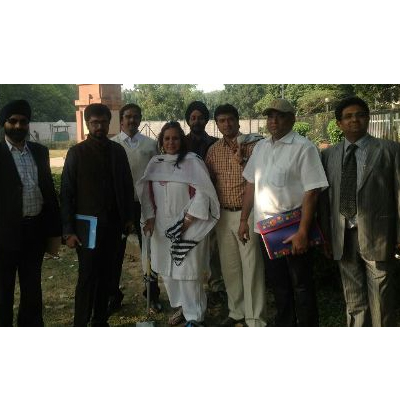
    MUMBAI: If one thought that the local cable operators (LCOs) would give up without a good fight for their rights, one was surely mistaken. When around 10 LCOs from across states met the Parliamentary Committee on Information and Technology today in New Delhi, they ensured that their voices were heard on digital addressable systems (DAS). The meeting that went on for two and half hours was attended by 20 members of parliament.


    While each LCO was heard by the committee, it was ABS 7 Star CMD Atul Saraf who said that the LCOs were not against digitisation, but against mandated digitisation. “Digitisation should be voluntary,” he said in the meeting.


    The LCOs represented the trials and tribulations of the cable TV consumer to the committee. “We spoke on consumer interest and what they had gained with digitisation,” informed Cable Operators Federation of India president Roop Sharma. The operators opined that the consumer should be able to choose his set top box (STB).


    Apart from Saraf and Sharma, the others who were a part of the committee included: Pramod Pandya, Swapan Chowdhary, Jeevan Khanna, Ajeet Singh, Sudhish Kumar, GS Oberoi, Gaurav Gupta, Chandradeep Bhatia and Paramjit Singh.


    “The consumer should be able to buy portable STBs which gives him access to internet, video-on-demand and other facilities. Why should every consumer be burdened with the same quality of STB. There should be a provision that if someone wants to buy an expensive STB they should be able to do so,” said Sharma.


    The operators also suggested that since it is the consumer who pays for the STB, they should be allowed to own it. “Also consumer should have the option to change STBs and his service provider. Currently if Hathway seeds a STB in a consumer’s house, they cannot switch to another MSO,” said Sharma to the committee.


    The LCOs also raised concern over their own existence. Many in the meeting felt that the LCOs have been left at the mercy of the MSOs. They also said that the process of billing and the power to switch off STBs should be with the LCOs and not MSOs.


    The operators put a point stating that TRAI should first successfully complete digitisation of phase I and II and then start the work in phase III and IV.


    On the issue of entertainment tax, the LCO representatives opined that there should be uniformity in taxation throughout. “Also we told them that entertainment tax should be collected per household and not per TV set,” informed Sharma.


    The MPs asked the LCOs for solutions to the issues with digitisation, to which the LCOs suggested that the long pending Broadcasting Bill and the DTH Act needs to be brought in to regulate and control the  the broadcasters and DTH players respectively.


    Also a point on implementation of vertical monopoly and cross media holding on immediate basis, before going ahead with further digitisation was made.
    The committee will also be meeting Information and Broadcasting Minister Manish Tewari in a couple of days, after which they will come out with a recommendation which will be submitted to the I&B Ministry.

  • Assam cable ops face pole problems

    Assam cable ops face pole problems

    MUMBAI: As many as 40,000 cable operators in Assam await a final decision on the issue of monthly payment for using electric poles to lay cable wires.


    It was in September that the Assam Power Distribution Company Limited (APDCL) sent out its first circular, making it mandatory for cable operators in the state to pay Rs 25 per electric pole per month, with the deadline being 7 October.


    The APDCL notice stated that all cable wires should be removed from electric poles. It further said: “Those using poles (will have to) pay Rs 25 per pole per month for services and also comply with safety measures as notified by the board,” according to Greater Guwahati Cable TV Operators’ Association (GGCTOA) general secretary Md Iquebal Ahmed.


    Significantly, while 80 per cent of the electric poles are used by cable operators, the remaining 20 per cent are used by telecom and broadband operators as well as the Assam police. Close to 31,000 electricity poles are being used by cable operators in Guwahati alone.


    Says Ahmed: “When we received the notice, even APDCL authorities were not aware of the safety guidelines that needed to be followed. Also, we were not too happy with the amount we were asked to pay. So we requested for an extension in the deadline for complying with the notice,” and added that the GGCTOA proposed holding a meeting with the APDCL chairman to present its viewpoint.


    Accordingly, a meeting was held on 22 October with 12 cable operators from across Assam, the APDCL chairman and other state heads.


    “Through the meeting, we communicated our concern over paying the Rs 25 per pole per month to APDCL. Considering that APDCL will earn revenue from many other service providers who are using the electric poles, we requested them to lower the rate. We also proposed licensing for cable operators, which will allow only those cable operators with proper documents to be given licenses to lay down cables on electric poles,” Ahmed reveals.


    It is learnt the Assam-based cable operators have suggested three options for payment: one – Re 1 per pole per month; two – slab system, where a cable operator will pay Rs 500 for 50 poles with an increase of Rs 300 per additional 50 poles used and three – the Meghalaya model which uses the slab system.


    “The process is already in place in Meghalaya for the past six years. There was an agreement between the board and cable operators to use the pole. The agreement has been so worked out that on an average – every operator pays Rs 5-6 per pole per month. Moreover, they are also being provided electricity for Rs 50,” said Ahmed.


    On APDCL’s part, a committee has been constituted to decide the rate. “Though we had fixed it at Rs 25 per pole per month, after the cable operators’ association applied for a revision in rate, we are now working on the final fee that they have to pay for using the electric pole,” expresses APDCL public relations officer Chandra Mudoi.


    Asked about the criteria that are to be used to decide the final rate, Mudoi highlighted that the effort was on to “compare the electric pole fee from other states, like Meghalaya.”


    But what led to the decision levying this fee on cable operators in the first place? “The cable wires strung over electric poles can cause electrical accidents. So we asked the cable operators to remove these, which they didn’t and so we asked them to pay rent. Also, other states take money from cable operators for using electric poles. And so it makes sense for us to charge them for using electric poles without any permission or even without safety measures,” elucidates Mudoi.


    With the committee expected to announce the new fee in the next few weeks, Mudoi is quick to point out that: “If the operators do not agree to the new rate, we will ask them to remove the cable wires from the poles.”


    Meanwhile, Ahmed says: “We have tried to explain to the committee that there are smaller operators whose area of business is smaller with lesser number of subscribers. And there are the bigger operators as well. The committee cannot have equal policies for both. Though currently we are in the status quo mode, we are using the electric poles like before and await the final decision.”


    Will their pleas be heard or will Assam Power short circuit them?

  • DAS Phase II MSOs get 29 November deadline for activating SMS

    DAS Phase II MSOs get 29 November deadline for activating SMS

    MUMBAI: The noose is tightening around those operating in digital addressable system (DAS) phase II areas. The Telecom Regulatory Authority of India (TRAI) today stated that MSOs have until 29 November 2013 – less than 10 days from today to complete the process of collecting the consumer application forms (CAFs) with information which includes the name, address, choice of channels and bouquets and entering the information into their subscriber management systems (SMS).  They have been directed to have the SMS operationalised by then and also submit a compliance report.


    The direction states that the SMS system has to comply with the digital addressable cable TV system requirements as mentioned in regulation 20 of the Telecommunication (Broadcasting and Cable Services) Interconnection (Digital Addressable Cable Television Systems) Regulations, 2012, for ensuring efficient and error-free service to the subscribers by recording and providing individualised preferences for channels, billing cycles or refunds.


    It is to be noted that the regulator had first on 26 April directed the MSOs to ensure that the SMS is operationalised and the signals of TV channels are transmitted to only those subscribers whose details such as name, address, choice of channel and bouquets etc are entered into the SMS. The MSOs were also directed to disconnect TV signals of the subscribers whose details were not entered into the SMS system and allow such subscribers to surrender their set top boxes. The MSOs had then been asked to furnish compliance report by 7 May.


    Again on 19 July, the Authority convened a meeting of the MSOs operating in Mumbai, Kolkata and other 38 cities covered under DAS phase-II to review the progress of implementation of DAS, wherein the MSOs were asked to collect the CAFs, complete in all respects, including choice of channels/ services and enter the complete details of the subscribers in the SMS by 20 September.  The regulator had even issued a letter on 23 July directing MSOs to ensure compliance and communicate the same to the LCOs and furnish the report in the given deadline. But with the MSOs failing to comply yet again, the regulator again held a meeting on 25 September with the MSOs to review the progress of implementation of digitization in DAS phase II cities. The MSOs in this meeting had requested for the extension of the deadline to 15 November. Once again, they slipped on that deadline.
    With the new sunset date being set as 29 November, can we expect compliance or another extension?


  • GTPL says Star Sports is simply acting tough

    GTPL says Star Sports is simply acting tough

    MUMBAI: Indiantelevision.com earlier today reported on Star Sports Network filing eight FIRs against GTPL Hathway in Maharashtra, Gujarat, Bihar and Jharkhand for illegal transmission of its channels during the recently concluded India-West Indies test series.


    But there’s actually a battle royale brewing between the sportscaster and the MSO, if sources are to be believed, and that there’s more to it than meets the eye.


    On its part, GTPL Hathway says it is unaware of any FIRs, and a senior executive has issued a rejoinder to Star Sports allegations and the notices it has been publishing since October.


    Says the GTPL Hathway executive: “We started switching off Star Sports channels in the areas which fall under DAS phase III from 16 October. It was after this that the channel put out a notice telling consumers that it will deactivate signals due to non-payment. The notice also stated that the consumers will be unable to watch Sachin play for the last time due to non-compliance by GTPL. It was just a way to malign our image and take awayconsumers. The channel started switching off signals from GTPL in the digitised areas in retaliation of our move to switch off signals in areas running on analogue signals.”


    GTPL says it is one of the first MSOs to implement digitisation in DAS phase III areas. “We have a large area to cover under digitisation and so we have already started the work. And it was due to this that we had to switch off some analogue channels to get more space for digital channels. The first option was Star Sports because the money that the network is asking is very high. Also in analogue, sport channels are carried on the last frequency and it is the last frequency that is required to be digitised first,” he informs.


    The legal notice is nothing but a retaliation to this, feels the GTPL Hathway executive. GTPL has a valid agreement with the network till March 2014.


    “The issues they have raised are frivolous. They are asking for subscriber reports, which is not relevant in our case, since we pay them the fixed amount for any number of subscribers,” he explains. “As far as the outstanding fee is concerned, we have had outstanding amounts in the past as well, but then we have always cleared the dues. We have had payment plans with Star Sports, which were agreed upon, but now they are going against it.”


    “It is just a move to get their channel started in the non-digital areas as well,” concludes the GTPL Hathway official.


    Will GTPL Hathway give in to the alleged pressure tactics?

  • Star Sports plays hard ball with Siti Cable

    Star Sports plays hard ball with Siti Cable

    MUMBAI: Star Sports has come out with a pan India notice against India’s Multisystem operator Siti Cable. The notice that was issued in select newspapers on 15 November as per the Telecom Regulatory Authority of India (TRAI) guidelines has hauled up the multiple system operator (MSO) on several grounds.


    “A huge outstanding and non-signing of agreement in both DAS as well as non-DAS markets are the two major reasons for this notice,” says Star Sports India COO Vijay Rajput.  “I would like to point out here that Siti Cable has not submitted subscriber reports for any of the DAS I and DAS II markets.  Also there have been instances of piracy. Earlier in October, we had filed an FIR against Siti Vision Digital, a joint venture unit of Siti Cable Network at Saifabad police station in Hyderabad, for illegal transmission of the Star Sports channels.”


     The sports network has come out heavily against Siti Cable for not playing with a straight bat.   “We have been following up with Siti Cable for all these issues but have not received a favorable response from its  officials. Therefore, as per the law of the land we have issued a 21 day public notice. We will avail all options available to us if in case Siti Cable fails to resolve the stated issues within the stipulated period,” adds Rajput.


     Star Sports had earlier played hardball with GTPL and yanked its channels off the cable network. Now it’s the turn of Siti Cable. Rajput says that he has been forced to take these steps. “These are the two specific cases that we are trying to address primarily due to non-payment and non-renewal of agreements.”


     So what is it that Siti Cable plans to do post this notice? Answers Siti Cable chief operating officer Anil Malhotra, “Well, this is a regular practice adopted by every broadcaster as per the TRAI regulation, when an agreement is about to end or has ended. The notice is a precursor to negotiation.”


     Malhotra claims that his cable network is already intalks with the sports channel for the renewal of contract. “We had signed the agreement last year in October-November. So the agreement is due for renewal and, so, this notice. We will amicably resolve the issue.”

    Star Sports says it is ready to revisit the matter if the MSO resolves the issues in the set deadline.

  • Kolkata MSOs to blackout TV tonight

    Kolkata MSOs to blackout TV tonight

    KOLKATA: Looks like cable TV consumers in Howrah will have to sacrifice on their favourite shows with few multiple system operators (MSOs) deciding to switch off signals if they do not receive duly filled customer application forms (CAFs) till end of the day today. The decision comes in view of the deadline set by the Telecom Regulatory Authority of India (TRAI) for submission of CAFs by 15 November.


    Around 40 per cent cable TV viewers in the city are subscribed to SitiCable. The MSO has not requested the regulator for any extension for CAF submission. SitiCable Kolkata director Suresh Sethia says, “We have already collected 90 per cent of CAFS. We expect the rest to be submitted today, if not, we will switch off signals from tonight.”


    Resonating the same is Manthan, which has installed 20-25 per cent STBs of the total five lakh STBs installed in the region.  “While a few have submitted CAFs, others will send it soon,” informs Manthan director Sudip Ghosh.


    The announcement is a shocker for many, as confusion over the city being a part of DAS phase II still remains. It is learnt that MSOs like KCBPL-GTPL among others are running analogue signals in DAS II areas.


    Industry insiders blame lack of an organisation for irregularities. “There is no such designated organisation that can regulate the system here,” says a source.


    The cause of ineffectiveness could also be because a few local cable operators (LCOs) have assured customers that they do not fall under DAS phase II and thus customers have not invested in the set top boxes (STBs).


    Talking about the prevailing confusion over DAS in Howrah, Sethia says, “Though most areas were covered during phase I, TRAI has to define whether the border of Howrah falls under phase II or not? There needs to be a clarification.”


    The city faces another issue. If Cable Operators Sangram Committee general secretary Apurba Bhattacharya is to be believed, subscribers who have submitted the duly filled CAFs are yet to see the change on their TV screens. “Even after filling the CAF and opting for preferred bouquet of channels, nothing has changed for viewers in Howrah,” he informs.


    Bhattacharya however believes that the MSOs will not switch off signals. “I foresee an extension in the cutoff date,” he says.


    Earlier a few LCOs had blamed festivities for slow down of work. “Since festivities are over now, both customers and LCOs should take the initiative and submit their details to MSOs,” opine city-based analysts.

  • LCOs challenge TRAI DAS order in High Court By Seema Singh

    LCOs challenge TRAI DAS order in High Court By Seema Singh

    MUMBAI: The Gujarat Cable Operators Association (GCOA) has approached the High Court of Gujarat against the Telecom Regulatory Authority of India (TRAI), the central government of India and state government against the ruling on digitisation.


    In the petition submitted to the HC, the petitioner has challenged the legality of Telecommunication (Broadcasting and Cable) Services Tariff and the Telecommunication (Broadcasting and Cable Services) Interconnection Regulations.


    In the current scenario, as defined by the regulator, the revenue share ratio between the MSOs and LCOs is 55:45 for free-to-air channels and 65:35 with respect to pay channels. The LCOs in Gujarat find it discriminatory and prejudicial to their interest.


    “We have challenged all the notifications passed by TRAI. This includes revenue share, consumer application forms (CAFs) and billing,” informs Gujarat Cable Operators Association president Pramod Pandya. The laws, according to Pandya are complicated and aim at completely removing the presence of LCOs from the cable industry. “We feel that every order passed till date with regards to digitisation is one-sided. All the laws have been drawn up against the LCOs,” he adds.


    The association on 2 September 2013 moved to the Supreme Court with the matter. The SC then ordered them to address the issue to the High Court first. “We then filed a petition to the Gujarat HC on 10 September,” he informs.


    The court during its 13 November hearing has asked the TRAI and government to declare the reasons for formulating the existing laws pertaining to tariff and interconnection in the next 15 days.


    “I don’t understand the basis of these laws. It is the LCOs who build the customer base and now all of a sudden we have been asked to transfer our rights to the MSOs,” says Pandya.


    The LCOs also feel that the issues relating to digitisation have never been discussed with the registered 60,000 cable operators.


    “None of the state cable operator associations were called before the process of digitisation was enforced.”


    The cable operators in Gujarat, say they are only asking for their rights. “If I don’t have a right, then why should I collect revenue or collect CAFs from consumers? We have built the customer base for all these years. The MSO give us the signal, for which we pay them a rent and then bill the customer. How can government all of a sudden ask us to not do the billing?” questions Pandya.


    According to the petition filed, of which indiantelevision.com has a copy of, the members of the petitioning association under the said provisions work under the MSOs as their revenue collecting agents while at the same time provide maintenance and services to the subscribers on behalf of the MSOs at their own cost since the entire cable network has been laid down by them over a number of years.


    The association has some 2500 cable operators as its members. “We are not targeting MSOs…they are only following what the TRAI has asked them to do.”


    The LCOs feel that their roles have been reduced to mere commission agents.


    “We are being forced to depend on the MSOs,” opines Pandya. Under digitisation, it is mandatory for the LCOs to collect and submit CAFs. “This is harsh and oppressive since it would compel the LCOs to share their subscriber’s base with the MSO’s making them more vulnerable,” says Pandya.


    He is clear that till there is no clarification on the notifications passed by TRAI, the cable operators in Gujarat will not even seed set top boxes. When asked if the operators will meet the CAF deadline he says, “It is a court case now. We have challenged every aspect of digitisation. So till this is resolved and the court passes an order on this, there will be no CAF collection or billing in Gujarat.”


    The association had in the beginning of DAS phase II approached the High Court, which had then given a stay order for 16 days for implementation of DAS. “The process of digitisation started only from 16 April in Gujarat. So far only four cities of Gujarat: Surat, Baroda, Ahmedabad and Rajkot have moved ahead on this,” he concludes.

  • Pay TV growth spurred by BRIC nations, says ABI Research

    Pay TV growth spurred by BRIC nations, says ABI Research

    MUMBAI: India is just a year into the process of digitisation, and, in another year, it is quite likely all of the nation’s 100-odd million cable TV homes will be having a set top box (STB) perched on top of their TV sets. The rapid spread of the STB and pay TV is ensuring that India increasingly pops up in research reports on pay TV as a major contributor of growth. Other countries which are also helping spike pay TV growth are Brazil, Russia and China.


    Take a dekko at the latest report released by international research firm ABI Research. It states that the pay TV subscriber base across the world surpassed 886.5 million at the end of Q3 2013, a six per cent YoY increase and generated $ 62.6 billion service revenue. Maintaining its Q2 2013 status, BRIC (Brazil Russia India China) nations were a major contributor and will continue to be in the future years, ABI has stated.


    The research predicts that by 2018, global pay TV subscribers will shoot to more than 1 billion out of which BRIC countries will be responsible for 68 per cent of total net additional subscribers.


    “Emerging markets are key drivers of global growth in pay-TV subscribers as developed markets are experiencing flat growth rates,” said ABI Research VP and practice director Jake Saunders.


    The US Pay TV market grew at less than one per cent as compared to Q3 2012, due to increasing cord cutting by cable TV subscribers who are switching over to cheaper OTT services such as Netflix and Hulu. According to the report, approximately 1.7 million subscribers were lost from cable TV last year in North America. However, revenues increased due to high ARPUs (Average Revenue per User) driven by increasing HD and advanced DVR (Digital Video Recorder) subscribers.


    European countries also showed marginal growth with less than two per cent increase than Q3 last year. Service providers in Spain lost over seven per cent of their pay TV subscribers and Italy over two per cent as compared to a year ago due to the weak economic environment. However, markets such as the UK, France and Germany along with other Western Europe countries saw IPTV subscribers increase by 1.9 million from Q3 2012 to Q3 2013.


    According to a 2012 report by the Singapore-based Media Partners Asia (MPA) overall pay TV subscribers in India were expected to cross 170 million in five years. Much like the US, India is also set to see revenue increase due to HD TV sets. India has one of the lowest ARPUs in the world at approximately Rs 140 ($ 2.2) but the industry is optimistic that it will grow to Rs 550 ($ 8.73) once digitisation is complete.

  • MSOs miss 15 November CAF deadline

    MSOs miss 15 November CAF deadline

    MUMBAI: Multi system operators (MSOs) have bought themselves some more time to collect duly filled consumer application forms (CAF) from cable subscribers across 38 cities falling under DAS phase II.


    The earlier deadline for CAF collection was today, that is, 15 November, and consumers failing to comply would have had their transmission cut off, even after possessing set top boxes. However, as learnt from several sources in the industry, MSOs failed to meet the timeline and are now seeking further extension.  


    While a few MSOs including Hathway Cable & Datacom have extended the deadline to 20 November, smaller Kolkata-based MSOs say the procedure will be complete by 23 November.


    It was the Telecom Regulatory Authority of India (TRAI) that had previously extended the original deadline from 20 September to 15 November. When contacted, TRAI principal advisor N Parameswaran said considering it was a national holiday today, “any decision on the final date would be taken only on 18 November.”


    “The MSOs have voluntarily decided to extend the date to 20 November,” informed Maharashtra Cable Operators Federation (MCOF) president Arvind Prabhoo, adding that the regulator had asked the MSOs to send a review of DAS phase I, covering points like billing and CAF, in the interim.


    Kolkata-based Manthan and Siti Cable confirmed that they have achieved 100 per cent CAF collection whereas the Cable Operators Digitalisation Committee of the Association of Cable Operators convener Swapan Chowdhury said a 100 per cent CAF was impossible to achieve in the City of Joy with so many festivities. “We have increased the deadline for duly filled CAF to 23 November,” he said.


    Cable Operators Federation of India president Roop Sharma opined that CAF collection is a difficult task at hand for operators.


    “Considering that the broadcasters have not yet declared the rates for the channels, it is difficult for the consumer to decide which ones they want to subscribe,” she said.
    Clearly, we have not heard of the last of CAFs, phase II – as yet.