Category: Cable TV

  • Maharashtra’s LMOs get favorable Bombay HC interim order

    Maharashtra’s LMOs get favorable Bombay HC interim order

    MUMBAI: Maharashtra’s last mile cable TV operators  (LMOs) have got some relief. The Bombay High Court today gave them interim relief to the LMOs from filing joint affidavits along with the multi-system operators (MSOs).

    The Court has given an interim stay on the amended GR. We can continue depositing the entertainment tax to the court, says Arvind Prabhoo

    The Maharashtra Cable Operators Federation (MCOF) had on 13 December moved the Court challenging the Maharashtra state government’s amended gazette resolution (GR) regarding entertainment tax. According to the amended GR, it was mandatory for the LMOs to file a joint affidavit with the MSOs while paying entertainment tax.

    “The case was heard today and the court has given us an interim stay on the amended GR. We can continue depositing the entertainment tax with the court,” inform MCOF president Arvind Prabhoo.

    The case comes up for further hearing next Monday, that is, 23 December.

  • MSO InCableNet gets Rs 300 crore cash infusion

    MSO InCableNet gets Rs 300 crore cash infusion

    MUMBAI: The folks at the Hinduja group-owned cable TV MSO InCableNet and InDigital must be a happy bunch. The reason:  Grant Investrade Limited (GIL), a wholly owned subsidiary of Hinduja Ventures, has decided to invest Rs 300 crore in the cable distribution business managed by InCableNet and InDigital in India.

    The capital infusion, according to a press note released by the company, is happening to take advantage of opportunities government mandated digitisation of cable TV.

    “Phase I and phase II of the Digital Addressable System (DAS) have already been completed and several consolidation opportunities are coming up. The capital will be used to expand the digital base of IMCL and to improve customer services,” said the release.

    Hinduja Ventures director Ashok Mansukhani when contacted said, “The purpose of promoter infusion through GIL is to help IMCL stabilise phase I and II which has completed set top box installations. It is up to IMCL management to also grow in new geographies for phase III and IV which are due to be digitalised by 31 December, 2014 either organically or inorganically.”

    The investment has come in at a time when there is a lot of buzz on whether the MSO is in the running to acquire or partner the Kolkata-based MSO Manthan Broadband. Unwilling to confirm or deny anything Mansukhani said, “There are of course plans to expand our geographical presence. Kolkata is an interesting city to venture into, but nothing as of now has materialised.”

    He further added, “We already have 22 joint ventures and would obviously like to expand. These things keep happening in the cable TV business.”

    The infusion of cash couldn’t have been more timely. Industry observers have been watching closely waiting for the MSO to get active.

  • MCOF takes Maharashtra govt to court on ent tax

    MCOF takes Maharashtra govt to court on ent tax

    MUMBAI: The Maharashtra Cable Operators’ Federation (MCOF) moved the Bombay High Court on 13 December challenging the Maharashtra state government’s amended gazette resolution (GR) regarding entertainment tax. The association will send a notice to the state government on 14 December.

    Both MCOF and the Nashik District Cable Operators Federation had in April challenged the first GR issued by the government on 7 March in the courts, according to which multi-system operators (MSOs) were made responsible for paying entertainment tax. Now, MCOF has challenged the second GR which the government released in November as an interim solution.

    “What we don’t understand is that how can the government come out with an amended GR when the first GR is already in court,” asks MCOF president Arvind Prabhoo.

    The association has filed the petition on two issues. “The first issue is on renewal of licence for last mile owners (LMOs) according to section 4(2)(b) of the Entertainment Duty Act, Bombay 1923. Second, is the amended GR, which makes it compulsory for the LMOs to file a joint affidavit with the MSOs to pay entertainment tax,” informs Prabhoo.

    The Maharashtra government issued the new GR, stating it was losing out on tax collections. “What is the need for a joint affidavit, when with digitisation the whole system has become transparent? Also when we are depositing the entertainment tax to the court, till no verdict is announced, why this GR?” he questions.

    MCOF has filed the petition to ensure that the government doesn’t indulge in anymore GRs till the verdict is declared. The earlier petition filed in April is up for hearing in the Bombay High Court on 10 January.

    “We hope that while the first issue is resolved in the coming hearing, our new petition comes up for hearing soon,” he adds. The case will be represented by advocate-High Court Sudeep Nargolkar.

    It should be noted, that the joint affidavit means that in case of any irregularity in paying the entertainment tax, both the MSOs and LMOs will be either jointly or separately made responsible.

    “We are ready to pay the tax directly to the government. Why should the LMOs suffer, if the MSO doesn’t deposit the entertainment tax to the government collected by the LMOs?” asks Prabhoo.

  • DAS: The Chennai conundrum

    DAS: The Chennai conundrum

    MUMBAI: The country may have entered the third and fourth phases of digitisation, but one of the major metros, Chennai, seems to be lagging behind in the digitisation process from phase one onwards. However, it is time for them to buck up as the Telecom Regulatory Authority of India (TRAI) may soon start cracking the whip on broadcasters, MSOs and LCOs in Chennai if they fail to comply with the digital addressable system (DAS) or digitisation norms, leading to severe repercussions.

    In a meeting organised on 9 December by the TRAI with the three stakeholders, the Regulator said that it has already notified the TV channels in Chennai that are still transmitting analogue signals. The deadline to implement DAS was 1 November 2012, but despite the entire framework such as interconnection, quality of service and consumer complaint redressal and tariff being in order, the stakeholders haven’t really followed the process,TRAI reiterated.

    One of the biggest hurdles in the implementation of digitisation is the dispute between the regulator, the information and broadcasting ministry and the Jayalalithaa-led Tamil Nadu government controlled Arasu Cable corporation that it should be given a DAS licence.

    Arasu Cable, that delivers cable TV services to almost half the subscribers in the city, was revived in 2011 and rapidly grew under the alleged patronage of the Jayalalithaa government.

    A TRAI consultation paper on monopoly in the cable TV sector released in June 2013 put it very aptly: “The Government of Tamil Nadu has incorporated Tamil Nadu Arasu Cable TV (TACTV) Corporation Ltd. on 02.09.2011 for distribution of cable TV in Tamil Nadu. It has taken over 27 Headends from the private MSOs. TACTV Corporation is providing cable TV services with most pay channels at a cost of Rs 70 per month to the public through local cable operators. Prior to this, another MSO, M/s KAL (Sumangali) Cable, which is a subsidiary of the Sun group, had dominance in the cable TV services in Tamil Nadu. However, KAL Cable continues to be dominant in Chennai city, where TACTV has not been registered as an MSO under DAS. Interestingly, channels of the Sun group, an integrated player providing both broadcasting and distribution services, were not available on the TACTV network for quite some time.”

    TRAI had then made it clear that Central and State government ministries, departments, companies and undertakings should not be allowed to enter into the business of broadcasting or distribution of television channels.

    The TRAI consultation paper had estimated that Tamil Nadu has 1.3 crore cable TV homes out of which 50 lakh are subscribers of Arasu. Other estimates are that Chennai has 38 lakh cable TV homes and seven lakh DTH homes. These estimates put Arasu’s subscriber base at 14 to 15 lakh.
    Recent reports claim that the dominant MSO had even ordered a large shipment of STBs in June this year, but has not gone ahead since it has not been issued a DAS licence. Since Arasu is still delivering analgoue signals, most other MSOs too have been tardy on switching over to DAS completely, fearing they would alienate their subscribers.

    In the meeting that the regulator had with the MSOs on 9 December, it ordered them to stop analogue signals and implement complete digitisation. It directed the MSOs to get the Subscriber Management System (SMS) in place with details of customers including their choice of channels.

    It also hurled another missive at broadcasters, clearly ordering them to provide their signals only to those MSOs that are registered for providing cable TV services through DAS. MSOs have been cautioned to ensure that only digital transmissions are provided through their network and Customer Application Forms (CAFs) are collected soon.

    TRAI has stated that it will closely monitor the progress of digitisation in the city and will also consider taking strict action against those who do not follow the protocol.
    Even customers have been advised to ensure that they receive cable TV connection only from operators supplying DAS signals or face a blackout of their TV screens.

    TRAI has also urged them to duly fill the CAFs at the earliest and submit them to their local operators. If they fail to do so, MSOs will be compelled to cut off transmission of those consumers, failing which they may will be in breach of law.

    In Chennai, out of the 38 lakh cable TV homes, only four lakh STBs have been seeded. This leaves nearly 34 lakh houses receiving analog signals.

    Will cable TV operators, broadcasters, and MSOs change the status quo and possibly face the ire of the state? They have not dared to challenge its might for the past year or so. On one side is the telecom regulator which is glaring down on them; on the other there is the state government has made its intentions clear when it asked the centre that Arasu be given a DAS licence. A conundrum if there ever was one.

    Will TRAI’s current warning turn out to be just what it is?

  • Hathway-MCOF show way forward on digitisation

    Hathway-MCOF show way forward on digitisation

    MUMBAI: The government-mandated DAS has been in limbo for a few months now. Even as set top boxes have rolled out in phase I and phase II towns, the issue of Consumer Application Forms (CAFs), despite claims by all, has yet to be resolved completely with the collections of these falling short of the mark. Then multisystem operators (MSOs) and last mile operators (LMOs) have been having a faceoff with the latter claiming ownership of their subscribers, while the MSOs have been insisting that they are pouring in investments hence they have the right to the cable TV viewer.

    But now a ray of hope seems to be emerging from behind the dark clouds with at least a couple of MSO working on what could be a model which could provide a solution to the vexatious problem of who owns the cable TV consumer: the MSO or the LMO? And in the process it would most likely give a real impetus to the realisation of the financial benefits of digitisation, and encourage its acceptance and spread nationally.

    Indiantelevision.com gives you an exclusive peep at what is being planned by one of the MSOs – the Viren Raheja-led Hathway Cable & Datacom – with the Arivnd Prabhoo-led Maharashtra Cable Operators’ Federation (MCOF).

    The two met on 5 December and agreedin principle that the MSO will share its subscriber management system (SMS) with its last mile operators – albeit in a limited capacity. Hathway, through this initiative, has taken a step forward in allowing the LMOs to bill the end consumers.

    “It is a great and welcoming move by Hathway,” says MCOF president Arvind PrabhooThe meeting between the duo was a result of the letter sent by MCOF to all MSOs, as a move to ensure smooth rollout of digitisation. It should be noted that MCOF had written to all MSOs after the Telecom Regulatory Authority of India (TRAI) gave MSOs the final deadline for starting gross billing by 15 December and submitting CAFs by 31 December.

    Calls to Hathway officials did not get a response. But sources close to India’s most evolved cable TV MSO admitted to indiantelevision.com that “yes, we have given the LMOs the right to bill and become the owners of their consumers. They are our trade partners and we want their rights to be maintained. And yes we want them to conduct their business using our SMS.”

    Hathway, apparently, has suggested two options to take things forward.

    The first is for smaller LMOs who who have a few 100 subscribers. The MSO says it could handle the billing for them. The LMO will function as the collection agent, earning a commission in the process for the subscribers who are part of his network. Hathway will be responsible for taxes in this case – including entertainment tax and service tax, wherever applicable.

    The second option is for larger LMOs with subscribers running into thousands and tens of thousands. These LMOs will be permitted to log online into the Hathway SMS with a unique ID and password and manage their subscribers, and even generate bills for them. If they choose this option, then they will be responsible for all the taxes and paperwork.

    Says the source close to Hathway.: “This system not only maintains the rights of the LMO over their consumers, but also makes the operation simpler for us. If we have to bill, activate, deactivate or change plans for all subscribers, we will have to set up those many call centres and infrastructure. It is easier for the customer as well, since for them the LMO is the touch point.”

    Hathway has been holding road shows all over Maharashtra to educate LMOs about its process and explaining to them that each of them can activate or deactivate boxes assigned only to them. Sessions have been held in Mumbai, Pune, Pimpri, Aurangabad, among other cities.

    However, there are still a couple of issues which have to be clarified and agreed upon between MCOF and Hathway. The first is in the area of revenue shares between the MSO and the LMOs. While Hathway has proposed a graded 60:40 to 57:43 split between MSO and LMOs, the latter would like it to be higher – say in the region of 45 per cent- in favour of the cable operators.

    The second issue that needs finalisation is: in whose name should the bill be raised – the LMO or Hathway?

    MCOF and Hathway are expected to meet this week to resolve these and any other issues that could crop up as well.

    “Hathway is the only MSO that has taken a step forward and has shown interest in resolving issues. Other MSOs have yet not approached us for any meeting,” says Prabhoo.
    Prabhoo need not worry. The floodgates may open sooner than he expects.

  • Cable TV subscribers unhappy with raised subscription fees

    Cable TV subscribers unhappy with raised subscription fees

    KOLKATA: Indiantelevision.com has done a series of reports on the concerns of local cable operators (LCOs) and multi system operators (MSOs) around the process of digitisation.

    However, what we haven’t touched upon yet is the response of city-based cable TV consumers to DAS, especially the 30 to 50 per cent increase in subscription charges over the past two months.
    Cable subscribers in Barasat, Hooghly, Khardah, some parts of Salt Lake and northern Kolkata – regions that fall under DAS 1 – are learnt to be fuming over LCOs’ decision to randomly increase subscription rates.

    So much so, some of them are refusing to pay subscription fees while others are willing to pay just the fees, sans the service tax and amusement tax components and without getting proper bills from the LCOs.

    Cable Operators Digitalisation Committee of the Association of Cable Operators convener Swapan Chowdhury says: “Customers were expecting to get the bills and now, on not getting the bills, are upset. Some are not willing to pay even the monthly rental.”

    Analyst Namit Dave feels customers who were used to paying on an average Rs 60 – Rs 90 during the analogue regime are uncomfortable shelling out higher viewing charges.

    According to cable ops in Shyam Bazaar and north Kolkata, customers who used to pay Rs 120 per month are raising a hue and cry when asked to pay Rs 150 as monthly rental.

    “We really do not know how to explain things and convince people,” said a cable operator.

    Barasat resident Tumpai Das argued that the sudden increase of subscription fee from Rs 150 to Rs 280 was unjustified.

    “The local cable operators have not added anything new in terms of quality in connection or channels. They have started collecting this amount for the past two months. If they are not controlled, soon they may hike again,” he rues.

    “We are not being issued a valid bill. When we ask for a bill, they just write it in a white paper and issue it. If the cable operators are not controlled, they would fleece us to any extent. We would have no other option but to opt for DTH connection if they hike the charges further,” says a retired teacher from Hooghly.

    Meanwhile, Cable Operators Sangram Committee general secretary Apurba Bhattacharya feels that going forward the situation is unlikely to change unless billing begins.

  • Cable TV subscribers unhappy with raised subscription fees

    Cable TV subscribers unhappy with raised subscription fees

    KOLKATA: Indiantelevision.com has done a series of reports on the concerns of local cable operators (LCOs) and multi system operators (MSOs) around the process of digitisation.

    However, what we haven’t touched upon yet is the response of city-based cable TV consumers to DAS, especially the 30 to 50 per cent increase in subscription charges over the past two months.

    Cable subscribers in Barasat, Hooghly, Khardah, some parts of Salt Lake and northern Kolkata – regions that fall under DAS 1 – are learnt to be fuming over LCOs’ decision to randomly increase subscription rates.

    So much so, some of them are refusing to pay subscription fees while others are willing to pay just the fees, sans the service tax and amusement tax components and without getting proper bills from the LCOs.

    Cable Operators Digitalisation Committee of the Association of Cable Operators convener Swapan Chowdhury says: “Customers were expecting to get the bills and now, on not getting the bills, are upset. Some are not willing to pay even the monthly rental.”

    Analyst Namit Dave feels customers who were used to paying on an average Rs 60 – Rs 90 during the analogue regime are uncomfortable shelling out higher viewing charges.

    According to cable ops in Shyam Bazaar and north Kolkata, customers who used to pay Rs 120 per month are raising a hue and cry when asked to pay Rs 150 as monthly rental.

    “We really do not know how to explain things and convince people,” said a cable operator.

    Barasat resident Tumpai Das argued that the sudden increase of subscription fee from Rs 150 to Rs 280 was unjustified.

    “The local cable operators have not added anything new in terms of quality in connection or channels. They have started collecting this amount for the past two months. If they are not controlled, soon they may hike again,” he rues.

    “We are not being issued a valid bill. When we ask for a bill, they just write it in a white paper and issue it. If the cable operators are not controlled, they would fleece us to any extent. We would have no other option but to opt for DTH connection if they hike the charges further,” says a retired teacher from Hooghly.

    Meanwhile, Cable Operators Sangram Committee general secretary Apurba Bhattacharya feels that going forward the situation is unlikely to change unless billing begins.

  • Unbundling channel rates a danger to TV ecosystem?

    Unbundling channel rates a danger to TV ecosystem?

    MUMBAI: In the midst of the digitisation process in India, several issues continue to be left unanswered. One such being the matter of unbundling of channels for which the Telecom Regulatory Authority of India (TRAI) issued a consultation paper asking suggestions from stakeholders regarding the same but no decision was reached after that. There is however a rift between MSOs and aggregators on the issue with the MSOs favouring it and aggregators being against it.

    The real question is whether or not it will benefit everyone including the broadcasters, MSOs, aggregators and finally the consumer. 

    A report on the situation in the US by investment banking and asset management firm Needham and Co’s entertainment analyst and MD Laura Martin says, unbundling of cable TV rates could well be a recipe for disaster for all concerned. In the report, Martin has taken a look at the issue from the consumer’s perspective and its consequences for them and for the ecosystem. 

    Martin’s report reveals that US households pay about $720 per year for 180 channels out of which they watch just 18. Consumers would like to pay $30 per month to watch these 16-20 channels. As compared to this, in India, annual rates are a paltry $30-$60 per annum for anywhere between 120 channels to 200 plus channels. 

    Martin argues that if consumers wanted to have all 180 channels as a la carte, their annual spending would increase to $1260, i.e, 75 per cent higher than the current price. 

    Here’s how it goes: cable TV channels in the US generate $56 billion from advertising and $45 billion from subscribers, while pay TV distributors pocket $30 billion, if one goes by last year’s figures. She estimates that if there was unbundling about 124 channels out of these 180 would be wiped out as they would not be in a position to have an average of the 165,000 viewers which Martin estimates are needed to break even on each cable TV channel’s $280 million per annum investment. Her view is that niche channels would simply disappear.

    The decrease in channel choices, points out Martin, would also mean that approximately $80 to $113 billion would be lost in consumer value and the government would lose $20 billion in taxes. It will also put the US, which is already dealing with a high unemployment rate of 7.3 per cent in October 2013, at a risk of losing 1.4 million additional jobs.

    She also warns that if these 180 channels do not create content that is engaging young Americans in the 18-34 year age group, there might be no traditional linear television left in 10 years. Viewers are resorting to cord-cutting and migrating increasingly to online for their entertainment to services such as Hulu, Netflix, Big Frame, Defy Media, Fullscreen, Machinima, Maker Studios,etc. According to a statistics portal Statistica, 43 per cent of Americans between the ages of 18 and 34 preferred Netflix as compared to 46 per cent of paid subscribers who chose cable.

  • DAS & the LCO fightback for survival

    DAS & the LCO fightback for survival

    It’s the festival of lights. And for many the festival of noise courtesy exploding fireworks. In the hope of reducing the number of those belonging to the latter tribe, we, at indiantelevision.com, decided to put a display of firecracker articles for visitors this Diwali. We have had many top journalists reporting, analysing, over the many years of indiantelevision.com’s existence. The articles we are presenting are representative of some of the best writing on the business of cable and satellite television and media for which we have gained renown. Read on to get a flavour and taste of indiantelevision.com over the years from some of its finest writers. And have a happy and safe Diwali!

    Written By Seema Singh


    (Seema today is senior manager – PR & Communication at the Broadcast Audience Research Council. She wrote this article in 2013.)


    Posted on : 05 Dec 2013 09:45 pm


    MUMBAI: With no one giving them any guarantees about their long term survival under the government-mandated DAS regime, small time local cable operators (LCOs) are banding together as cooperatives in pockets nationally, agglomerating funds, and setting up their own headends. From Bengaluru to Kolkata to smaller towns, this is being mirrored across the country.  Digitisation has spurred a new wave of entrepreneurialism in the cable TV business.

    “Analogue cable TV spread like wildfire in the 80s and early 90s thanks to small time business men who invested and toiled away to deliver satellite TV via cable to homes,” says a cable TV industry observer.

     “Now digitisation in its current form is designed to kill those very last mile operators, big or small,” points out  Maharashtra Cable Operators Federation (MCOF) president Arvind Prabhoo.

    “Some have given up and have joined hands with the MSOs, fearing the huge investments needed for digitisation and the backlash from the national MSO,” says the cable TV industry observer. “But don’t expect all the guys who have built the cable TV industry to what it is today to yield without a fight; hence the new wave of entrepreneurialism.”

    Take the case of the Bengaluru boys.  70 independent cable TV operators got together to set up their own cable TV headend and distribution infrastructure in March 2013.

    Explains one of the members – Sagar E Technologies’ executive director Sudhish Kumar: “There were two reasons: digitisation and revenue share. We had at several instances raised voice against the MSOs with regards to billing, ownership of set top boxes (STBs) and ownership of consumers. The TRAI suggested revenue share model showed that the revenue shared between the LCOs and MSOs will be 35:65 or 40:60. We were being given a small pie. The same was the case as far as cable TV carriage, placement fees or value added fees. We were to get nothing.”

    Branded as Mirai Communication, the consortium is registered as a private limited company and has 10 directors. Its headend is located in Electronics City, Bengaluru. It is through this that the operator provides feeds across Bengaluru. “In Bengaluru we cover areas like: Central Bengaluru, Central Railway Station, Whitefield and ITPL among others,” informs Kumar.

    And Kumar says its headend is future-ready technologically. “We have a Harmonic headend, costing Rs 3 crore, with a carrying capacity of 500 channels.” 

    Some 50,000 STBs imported from DTM, China with CAS from NSTV and SMS from Magnquest, have been seeded amongst its subscribers and the plan is to take the number to one lakh soon. Since some of the LCOs in the joint venture were link operators for the major MSOs in Bengaluru, their boxes have been replaced with the Mirai Communication STBs.

    “These are standard definition high quality MPEG4 boxes with one GB of DVR,” informs chief technology officer Sriram. The price tag of each box is between $16 and $19 (around Rs 1200). The final cost works out to Rs 2000- 2500. This includes CAS, cost of headend, import duty and the cost of STB.” 

    Issues with DAS implementation and revenue share got us together to setup our own headend says Sudhish Kumar

    The company has spent close to Rs 30 crore on the whole setup, which includes infrastructural help from Tata Teleservices, using the optical fibre it has laid across the garden city. “Though we have our own hybrid fiber-coax (HFC), we are using almost 400 km of Tata Teleservices underground OFC, since maintaining the network across the city is a huge task. It has given us drops at several points across the city through which the signal is made available to homes,” says Kumar.

    So what are the challenges the group has faced? “Well, the current 10 directors got along to form a team. We then proposed what we were planning to do to others in the city. It was a challenge to bring everyone to come together, but it has worked out well since,” he informs.

    Each of them was asked to choose between acting as a collection agent by becoming a link operator for a national MSO  becoming an owner by becoming a part of Mirai Communication. “Though it earlier seemed like a herculean task, with 70 operators coming together, we realised that we had to pay only Rs 2000-2500 per box. We were anyways paying Rs 1000-1500 to the MSOs for seeding boxes. So, now by paying extra Rs 1000-1500, we could own the STB and also keep our consumers intact,” explains Kumar.

    It was the Hyderabad based Fibre Optics that offered a one-stop solution and the challenge has not yet ended.  “It is an ongoing task. We have managed to get feeds from all broadcasters.  We are paying them for one lakh subscribers, when currently we have 50,000 subscribers. But, we hope to seed more boxes soon,” adds Kumar.

    What is the revenue share between the 70 cable ops who have formed the consortium? “Well! It is simple. The operator gets a share against the active boxes which are part of his own subscriber network,” he informs. Mirai Communication has started generating bills. “The revenue has started rolling out now,” he informs.

    Bengaluru’s operators are not the only ones, who have come together to setup their own headend. Following their footsteps are the 100 cable operators from Kolkata that recently announced the setting up of ‘Bengal Broadband’. As reported by Indiantelevision.com, the new entrant will be functional from FY2015 (LCO’s form ‘Bengal Broadband’ to be effective from FY15).

    Says Prabhoo, “LMOs all over India like in Bengaluru and Kolkata must group together and form a co-operative model in such a way that even the smallest LMO can survive and sustain. LMOs must register under small scale industry so that they can avail of collateral free bank loan up to Rs 1 crore.”

    We have seeded standard definition high quality MPEG4 boxes with one GB of DVR, informs Sriram
    While the State Bank of India already is providing such facilities, MCOF is also in talks with IDBI Bank and Canara Bank to offer the same. 

    “Time is running out for the MSOs and if they do not learn to act fairly soon enough then many co-operative headends will come up in most cities of India. One may find another 100-200 headends coming up with 200-300 different cooperatives formed and that will continue for a year or two and then there will be consolidation. And I see it happening. These are large cooperatives with a 500,000 or million universe,” adds Prabhoo.

    Kumar points out that they are already in talks with both independent MSOs across India and also LCOs in Mumbai, Delhi, Nasik, Kerala, Chennai, Hyderabad and Gujarat for setting up more such co-operative headends. “We are in talks with independent MSOs and asking them to collectively set up one headend for the entire country,” he concludes. 

    Change as we say is the only constant. Even in cable TV land. 
  • Close Kolkata LCOs appeal to MIB for 10 year license

    Close Kolkata LCOs appeal to MIB for 10 year license

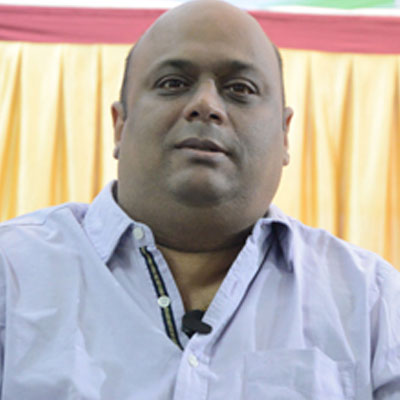
    KOLKATA: Since the time the process of cable TV digitisation started, if any faction has been really troubled, it’s the local cable operators (LCOs). To make their future secure, they have raised their voice time and again.

    In an attempt to form a united front and take up the common issues troubling them, around 8,000 Kolkata LCOs, who claim that mandatory digitisation has adversely affected their livelihood, are requesting the Parliamentary Standing Committee of Information Technology for 10-year license from the Ministry of Information and Broadcasting (MIB).

    One of the reasons that worry the LCOs the most is that they are registered with the post office and get only a year’s license at a time.

    “But the Multi System Operators (MSOs) get a 10-year license from the MIB,” says Cable & Broadband Operators Welfare Association (CBOWA) general secretary Swapan Chowdhury, who thinks that the present condition of licensing is unfair and is making LCOs uncertain about their future.

    “We have requested the authority to recommend the licensing provisions made in the ‘Recommendations on Restructuring of Cable TV Services’ dated 25 July, 2008 to be implemented for LCOs and MSOs,” he adds.

    The body has also appealed to Member of Parliament and Member of Parliamentary Standing Committee of IT, Tapas Paul to review the arbitrary rule and act of Digital Addressable System (DAS) in order to protect the cable operator’s fundamental rights of livelihood.

    Chowdhury thinks that the current revenue sharing model between the MSOs and LCOs is not viable for the cable operators and in due course of time it may even compel the LCOs to quit the business. In the current scenario, as defined by the regulator, the ratio of revenue sharing between MSOs and LCOs is 55:45 for free-to-air (FTA) channels and 65:35 for the pay channels. “The business model should be reconsidered to protect the livelihood of lakhs of people,” says Chowdhury and adds that CBOWA believes that the model is discriminatory and thus they have put in a request for that as well.

    Another thing that is bothering the LCOs is that the MSOs are not executing the terms in the agreement even though DAS has been implemented since February this year. CBOWA has also put in a request about this so that these issues can be addressed in the winter session.

    A cable TV analyst, Namit Dave thinks that the digitisation process is a massive exercise and requires all stakeholders – broadcasters, MSO and LCOs to work in collaboration. “It would be difficult to execute the herculean task if any of these parties don’t cooperate,” he concludes.