Category: Cable TV

  • MCOF and its MSO-LMO revenue sharing proposal

    MCOF and its MSO-LMO revenue sharing proposal

    MUMBAI: The struggle to find a solution on how multisystem operators (MSOs) and cable operators (LMOs – last mile owners) will work together in a digitised India continues.  The discussions between Maharashtra Cable Operators Federation (MCOF) and Hathway Cable & Datacom to come up with a workable arrangement had given some hope for a smooth rollout of MOS-LMO revenue shares, and consumer billing in Mumbai. But talks between the two seem to have come to a standstill for some time now. 


    Indiantelevision.com has got a hold of the proposed revenue share model which has been hammered out after a lot of thought and conversation: it takes into consideration operational expenses (OPEX) and the capital expenditure (CAPEX) of both the LMOs and MSOs.


    “It is as much in our interest as it is in the MSO’s to resolve the bottleneck, differentiate amongst subscribers and cater to their needs to optimise the network resources and push ARPUs up in the shortest time,” says MCOF president Arvind Prabhoo.  


    According to the proposed revenue sharing structure, the MSO: LMO share for free to air (FTA) channels should be 37 per cent : 63 per cent. For basic pay packages, the price range of which is Rs 150-Rs 250 (excluding taxes), the proposed revenue share is 45 per cent : 55 per cent; for advanced pay channels, which are in the price range of more than Rs 250, the revenue share proposed is 50 per cent : 50 per cent. For special/VOD packages, it is 75 per cent : 25 per cent and for HD channel packages it is 60 per cent: 40 per cent.


    “The best way for the industry to not only survive but prosper to its true potential is to work as a pure and true partnership business. MCOF will act as the collection management and settlement entity,” adds Prabhoo.  


    The MCOF model assumes that every MSO has two systems in place: the subscriber management system (SMS) and Financial Accounting System (FAS). The SMS hosts the entire subscriber details and is the basis of value chain reconciliation and audit.  


    “We have proposed that the MSO use this to generate end-customer bills with full details, factoring the LMO income share and taxes at various levels. These bills would be raised in the name of the LMO network and carry the tagline powered by the MSO,” says Prabhoo.


    The billing details, as per the proposal, will be pulled by MCOF and placed on the cloud and each LMO would gain access via the worldwide web using a mobile device or through a desktop.  The collection data is planned to  be captured in real time using MCOF approved technology, which is currently UPASS and updated on the MCOF cloud in real time and at the MSO-end either in real time or on an end of day basis.


    “We will work out the tax liability at LMO levels and guide them to use the technology to compile tax returns/challans. We will also reconcile the MSO-LMO accounts taking into account prepaid/post paid, online payments made to the MSO and unpaid customers,” informs Prabhoo.  


    Explaining the reason for the proposed revenue share, Prabhoo says, “The LMO has certain base expenses to cover, such as employees, office rent, repairs and replacements of shared infrastructure, audit and tax returns.”


    The effective OPEX for an LMO, according to MCOF for 1000 subscribers is Rs 109,500 a month. “The LMO’s per subscriber cost comes to Rs 109.5. We need at least Rs 109- Rs 110 to pay the employees and other costs. So this is the minimum and then comes profitability,” he highlights.


    The average CAPEX per subscriber is close to Rs 4000. Also, MCOF points that while the subscribers/employee ratio for an LMO is around 400, it is expected to be more than 5000 for a MSO. Thus making the OPEX element much higher for an LMO than an MSO.  


    Prabhoo feels that while the MSO is a wholesaler and LMO the retailer, the assumption of equal sharing as envisioned by the Telecom Regulatory Authority of India (TRAI) needs to be rectified and replaced by equitable sharing.


    “We have had detailed discussions with the TRAI on this and the matter will be reviewed sooner or later, but for sure it is not correct on TRAI to assume equal sharing by all three stakeholders,” he says.   


    The collection cost currently is entirely on the LMO while a good part of the monies flows to MSOs. This, according to MCOF needs to be allocated in the revenue share formula, if not actually computed and reimbursed. “For all practical purposes the LMO’s work load will increase as he acts as the marketing arm and administrative support system for the MSOs. Also, another round of set top box (STB) deployment/retrieval/repairs/replacement by HD boxes will entail quite a lot expense.”


    MCOF, in the email to MSOs, has also suggested that carriage fees should be clubbed with customer revenues, being a mathematical product of STBs in place and carriage fee per STB.


    MCOF has agreed that the UPASS technology, devices and connectivity costs will be borne by the LMOs. Also while integration, payment gateway, electronic processing and settlement system costs are incurred by the MSOs for direct connections or internet services, for any additional integration, the cost can be shared with the LMOs on a pro-rata basis.


    The LMOs are also suggesting carriage fee sharing as a loyalty bonus. “This can be mutually worked out,” says Prabhoo.  


    The new system will enable the MSO to see and monitor the exact collections made each month by the LMO and also the revenue due to the MSO, excluding taxes. While revenue will be booked in both books as per packages, the LMO will pay the MSO per month for all the collections made during the previous month after deducting taxes and the LMO share within seven days of the invoice being generated by the MSO.


    While MCOF is trying to move things forward, what’s stopping the MSOs? “Well! There are talks going on between the promoters of the MSOs. There is no consensus amongst the MSOs and that is what is taking time,” says a Hathway official on condition of anonymity.


    According to the official, the proposed revenue share by MCOF is acceptable, with minor changes. “But, all the MSOs operating in the state, have to come to a consensus, which I don’t see happening soon,” he says. The official feels that billing in Mumbai is most likely going to  be delayed further.


    SitiCable Network, which also has a presence in the country’s financial capital says it may soon conclude on how it will share revenues. “We are negotiating. We may announce our revenue share in a couple of days. Since, we have a small presence in the state, we are seeing what other MSOs are doing there,” explains  SitiCable Network chief operating officer Anil Malhotra.
  • Kolkata MSOs won’t change package price till June 2014

    Kolkata MSOs won’t change package price till June 2014

    KOLKATA: On 6 December last year, the Telecom Regulatory Authority of India (TRAI) met the multi-system operators (MSOs) in Kolkata to extend the deadline for initiating gross (consumer) billing from 10 December to 15 December.


    Now, the MSOs have assured cable TV subscribers that they will try and keep the package price unchanged till June this year, although they are contemplating a price rise post June.


    The MSOs have also requested subscribers to collect bills from local cable operators (LCOs) before dishing out the subscription fee for January. This is to bring in transparency in the billing process for the Kolkata Municipal Area (KMA).   


    It is further learnt that the MSOs are meeting regularly to discuss smooth rollout of gross billing in the KMA area, especially after having been asked by the West Bengal as well as central government authorities to expedite the billing process.


    Said Manthan Broadband Services director Sudip Ghosh: “We will continue with the package and we all are trying to keep the price of package untouched till June. The MSOs will try to absorb the cost themselves.


    According to Siticable Kolkata director Suresh Sethia, the entire process would take some time. “Customers are happy. Operators too want the billing to be in place. Also, we have put up advertisements in newspapers for consumer awareness regarding billing apart from local channels,” he said.


    As per TRAI regulations, subscribers get a period of 15 days from the date of the bill to make the payment.


    “In case the subscriber fails to make the payment after the expiry of the due date of payment, we will charge interest on the outstanding amount,” Sethia informed.


    Director of Den, Sanjoy Basu, opined that the new facility introduced as per the TRAI regulations would usher greater transparency in billing.


    With nearly 30 lakh cable homes, gross billing is definitely expected to regularise the hitherto ad-hoc system of billing.

  • Manthan Partners with Magnaquest Product SURE!

    Manthan Partners with Magnaquest Product SURE!

    MUMBAI: ManthanBroadband Services Pvt. Ltd, one of the leading MSOs in India, has signed up a 10-year deal with SURE!, a Magnaquest product, to provide comprehensive cloud-based Subscription Lifecycle Management that include Billing, CRM, and end-to-end Managed Services, the two companies announced today.

    In one of the first-of-its kind deal in the MSO space, Magnaquest will host the entire infrastructure of the application, and manage it for Manthan as part of their Managed Services Contract. This Software-as-a-service (SaaS) business model is backed by globally-proven Magnaquest Operations support.

    SURE!, Magnaquest’s award-winning and globally proven combination of BSS, OSS and Managed Services will align perfectly with Manthan’s installation goal of over 3.6 million STBs by 2014 across the states of Bengal, Orissa, Assam, Jharkhand and Meghalaya. SURE! will also complement the focus of Manthanin transforming the entire network to address next generation digitization requirements and provide best customer experience.

    Speaking about the global search for the right Subscriber Management, Billing and Managed Services partner, Mr.Gurmeet Singh, Director, Manthan Broadband Services, said, “We were looking for a provider of international quality, a solution that is robust for geometric expansion and growth, and at the same time, flexible to support us in various business approaches, fast innovation and dynamic market models. We were looking for a partner with a technology that would not fail, but also bring in domain-edge, strategic approach and business insights support to mutually-nurture in taking the right strides over a long period of time.”

    “The reasons for selecting SURE!, from Magnaquest, are many including their undisputed global leadership in Media & Entertainment domain for SMS, international-class solutions, a rapidly scalable technology, and even more significantly – the ability and willingness to completely take up the responsibility of planning, creating, deploying and managing our entire technology infrastructure, while meeting our future requirements as we grow in the new era of digitized Indian Pay TV market” he said.

    “Having evaluated various global players in the space and considered the value-edge in the offerings of all Subscription Lifecycle Management companies, we had no doubts in going ahead with SURE! because of its client-centric DNA, ability to think for our end-subscribers, speed and flexibility, optimized costs, its ‘Pay-as-you-grow’ model and, the brand promise,” Mr. Singh said. “We are sure SURE! will help us in our overall mission to become one of India’s most-loved provider of home and mobile entertainment connectivity.”

    “We are very excited to be chosen by Manthan, one of the fastest growing regional MSOs in the country, after a global search for a strategic technology and consulting partner. We are looking forward to a great relationship and supporting Manthan’s leadership in attaining their ambitious goals with our proactive and comprehensive value offerings. We have a promise to improve ARPU and enable loyalty from subscribers, growth readiness and total operations management. It is a partnership that can change the game for end-users, making their experience of entertainment connectivity truly world-class and best-in-class.,” said Rajiv Debbad, Director – Business Development, SURE!

    “We have delivered our subscriber management and billing solutionon SaaS platform to Manthanin flat 3 week’s time. We are amongst a handful of players in the world poised and ready to harness the Subscription Revolution underway. SURE! is more than a product, platform or suite of industry-focused niche solutions-set. It is a brand, a faith, a promise to optimize technology for the success of your business,” Mr. Debbad said.


  • DEN, Hathway and InCable get interim relief  on ent tax

    DEN, Hathway and InCable get interim relief on ent tax

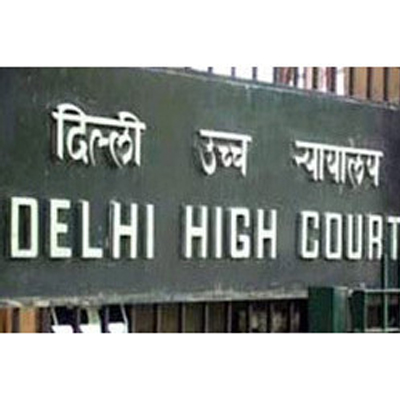
    MUMBAI: The big four  of Indian cable TV – DEN Networks, Hathway Cable and Datacom, InCable and Siti Cable – heaved a sigh of relief as 21 January ended. The reason: the Delhi High Court – which was hearing their appeal seeking to restrain the state government’s entertainment tax authorities from taking any coercive action against them for not paying entertainment tax – gave them relief, if at least for some time. The  HC passed an interim order, forbidding the tax folks  from taking any steps  against  three of the MSOs – Den, Hathway and InCable.


    The cases that were heard in one day saw the appeals of  DEN and Hathway being joined  together while InCable and Siti Cable presented its case separately.  With the order coming into effect, MSOs have been relieved of the duty of collecting entertainment tax from the LCOs and submitting it to the government till the judgment on the case is passed. The next hearing will be on 13 March.


    The respondent (the entertainment tax collection authorities) have been given four weeks to file its reply to the case. In the meanwhile, its hands are tied. However, what was not clear at the time of writing whether  the onus is back on the LCOs to pay the tax to the government.


    Although the MSOs are receiving the tax from LCOs, they claim they aren’t getting the full amount. Hence, the balance amount normally has to be coughed up by the MSO whether it is paid the same or not by the LCO. This is pretty unfair, they have stated.


    The  MSOs approached the Delhi HC as  the inexplicable  pressure was being thrust on them to cough up taxes.

  • Four national MSOs file writ petition against Ent Tax

    Four national MSOs file writ petition against Ent Tax

    MUMBAI: Entertainment tax has become a bothersome issue for both MSOs and LCOs. Right from the amount of tax levied to ownership of collection, state government mandates have got the two cable TV factions locking horns. While government regulations mandate MSOs to collect tax from the LCOs and submit it, the LCOs would rather take the onus on themselves.


    Four Indian national MSOs – Den, Hathway, Siticable and InCable have filed separate writ petitions in the Delhi HC to challenge several aspects of the entertainment tax being imposed as well as the tax collecting authority’s stance towards the MSOs in the state of Delhi.  The cases are all set to be heard today in a joint hearing.


    While Hathway Cable & Datacom was put through an enquiry on its own premises, others have decided to legally protect themselves before something similar happens to them. Siticable claims that it has been fulfilling all duties effectively. An ex parte order was taken out against it for non compliance in April and May 2013 which Siticable had appealed against. When that didn’t go very far, it decided to lodge its writ petition seeking redressal and  justice.


    Siticable’s first hearing was yesterday when the lawyer on behalf of the tax authority asked for a day’s time to come up with its side of the case. “We had deposited the tax and had also filled the form 10 as per requirements. Yet the authorities were after us. So we went to court to request that no coercive action be taken by them ,” says Siticable CFO Sanjay Goyal.


    Hathway is of the opinion that entertainment tax collection is a duty that has been undertaken by the LCOs for several years now and that is how it should be. Its writ petition states that the order passed against it was unreasonable.


    MSOs say that they are alright with collecting the tax and passing it on to the department but traditionally it had been the job of the LCO to do that. However, in case of  a lapse of payment by the LCO, the MSO should not be asked to cough up the remaining money is what they say.


    The case will come up for hearing today. Who knows whether the Delhi High Court will give a stay order or decide on its fate tomorrow itself.

  • Now, MSOs to collect entertainment tax in Maharashtra

    Now, MSOs to collect entertainment tax in Maharashtra

    MUMBAI: Cable operators in Maharashtra have been fighting tooth and nail to reduce the Rs 45 entertainment tax (ET) levied on them by the state government but nothing seems to be working. Now, in a fresh move, the state cabinet has approved an amendment which makes the multi-system operators (MSOs) responsible for the collection of ET from the Last Mile Owners (LMOs).


    Earlier, the onus was on the LMOs, who were supposed to collect the ET along with the service tax and give it to the state. In December, the Maharashtra Cable Operators Federation (MCOF) moved the Court challenging the Maharashtra state government’s amended gazette resolution (GR) regarding entertainment tax. According to the amended GR, it was mandatory for the LMOs to file a joint affidavit with the MSOs while paying entertainment tax. However, last month the Bombay High Court ordered an interim stay on the amended gazette resolution (GR) of ET.


    MSOs and LMOs are all wondering whether this amendment will come into effect or  will it be regarded as as contempt of court, since the High Court’s stay order is in place. As of now, no notification or communication has been issued to the parties involved. “We can only comment after the notification is passed. But we wonder what will happen since the matter is sub judice and the LMOs are stating that it is their business to deposit the tax,” says Hathway president Milind Karnik.
     

    Indusind Media (InCable) managing director  Ravi Mansukhani is puzzled about  the government’s move.  “”How can they pass this?,” he asks. “The case is pending in several courts.” But he adds that he is  “absolutely fine if the LMOs want to do it. It will be difficult for us to reach out to subscribers the way they do. The reason why the government has taken this step is  because it is easier to collect it from a few MSOs rather than so many LMOs”


    MCOF is looking at approaching either the High Court or the Supreme Court depending on the circumstances. “We will definitely not comply and will continue giving the tax to the High Court only,” says MCOF task manager Bobby Shah.


    The Maharashtra government expects MSOs in the state to give their customers bills that will include an additional Rs 45 as entertainment tax besides the service tax of 12.36 per cent following the notification. “Majority of people will have to shed more money for the cable TV service while a few will have to give marginally more than what they are currently paying,” says Shah.


    However, the operators are still protesting against the high ET rate and want it to be reduced. “The amendment is not bothering us much, but what is important is the high rate of entertainment tax that needs to be brought down,” says Cable Operators and Distributors Association (CODA) president Anil Parab.


    MOS ABS Seven Star CMD Atul Saraf says that he is fine with collecting ET from the LMOs. “But the amount needs to be reduced to just Rs 10 to Rs 15 so that the customer isn’t burdened with the extra cost,” he opines.


    Now, it’s a wait and watch situation if the Maharashtra cabinet’s decision is regarded  as contempt of court, or if it will come into effect from the date of notification! Whatever happens, it’s surely going to bring clarity on the revenue that the government earns. 

  • Chennai Corp cracks the whip on cable TV ops

    Chennai Corp cracks the whip on cable TV ops

    MUMBAI: A major crackdown on cable TV operators is taking place in Chennai. 


    The Chennai civic body, The Chennai Corporation has gone on a drive to collect infrastructure usage and registration charges from local cable TV operators in the city.


    Sources in Chennai revealed that around 16 companies were given legal status after they coughed up Rs 1 crore to the corporation. Currently, the civic body charges Rs 9,400 per km as infrastructure use rent to cable TV and telecom operators, though a proposal to hike it to Rs 32,000 is pending with the government. 


    The Chennai Corporation has been trying to clean up the city and had issued orders to its employees and staff to snap cables of the operators who did not pay up. It expects to collect another Rs 1 crore in the coming week. 

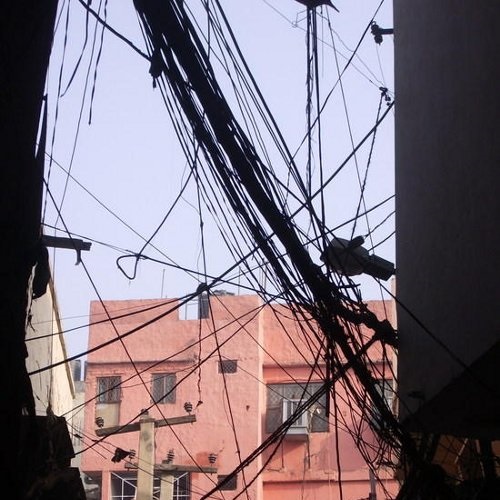
    The civic body is expected to next streamline the way the cables have been strung over head all over Chennai, say officials.

  • Kolkata MSOs anticipate cooperation from LCOs in two months

    Kolkata MSOs anticipate cooperation from LCOs in two months

    KOLKATA: The multi-system operators (MSOs) have started gross billing for the month of December from 7 January in Kolkata and are hopeful that the local cable operators (LCOs) who at present are showing some resistance will eventually fall in line in the next two months.


    The MSOs in the meanwhile are educating consumers about gross billing by publishing advertisements in newspapers. The ads request consumers to make the payment against a bill only.


    “We have started the billing process. Customers are happy, but the operators do not want the billing to be in place. There might be some resistance but eventually things will fall in line,” said Siticable Kolkata director Suresh Sethia.


    While another MSO said that the company is having meetings with operators and trying to convince them of the benefits of digitisation.


    “We are talking to the LCOs and asking them to hike the bill which will include amusement tax and service tax. Even consumers have to understand that they have to pay taxes now,” said the MSO.


    When the MSOs were asked about the disbursement of the bills, some said they have given the bills to LCOs in compact disk (CD), while others like SitiCable said that they have uploaded the bills on their system and the LCOs can easily take the printouts.


    However, the LCOs in Kolkata have made it clear that they will not distribute the bills unless the revenue sharing model and other details are discussed.


    Cable Operators Digitalisation Committee of the Association of Cable Operators convener Swapan Chowdhury said, “The MSOs who are giving the bills on CDs to LCOs need to give a hard copy of the bills as printing will also involve cost.”

    It seems the LCOs are serious about every single penny and are not in a mood to give up easily!

  • DEN’s Manchanda: Consumers will drive phase III & IV digitisation

    DEN’s Manchanda: Consumers will drive phase III & IV digitisation

    MUMBAI: The government mandate to digitise roughly 130 million Indian cable TV homes has been progressing in stops and starts over the past year. But with phase I and phase II  almost complete and billing starting or expected to start soon, industry is now gearing up for the third and final fourth phases. And India’s cable cowboy and leading MSO Den Networks’ CMD Sameer Manchanda believes that the process is going to be smoother and easier in the smaller towns and hinterland India. 


    “It is the consumer who wants digitisation in phase III and phase IV,” said DEN Networks CMD Sameer Manchanda in an interview to CNBC TV 18 today. “Seeing the success of phase I and phase II, it’s the consumer in these smaller towns and rural India who are pushing for the digitisation.” 


    The ministry of information and broadcasting has declared 31 December 2014 as the sunset date for analogue cable TV. And along with that TRAI has been prodding and pushing the rickety cable TV architecture to upgrade quickly.


    Manchanda told the business channel that the government mandate combined with the consumer push, will result in digitisation being completed nationally in the next 15 months, giving leeway for a three month delay.


    “We are one of the largest players, with a fairly high share of cable TV homes,” said Manchanda during the course of the interview.


    90 million of the 130 million TV homes nationally are delivered TV services via cable, he pointed out adding that  “while 20 million homes have already been digitised in phase I and II, around 70-75 million are left to undergo the process in phase III and IV,” he added. 


    DEN Networks has seeded around 5 million set top boxes – a 25 per cent share of this 20 million digitised universe – and will need to digitise another eight million analogue homes in phase III and phase IV areas.  “Of course we will be expanding and have raised money for the same. So we will be doing much more in the remaining phases,” he said. 


    Though Manchanda acknowledged the competition is coming in from the direct-to-home (DTH) players, he still believes that consumers prefer cable TV over DTH in digitised environment. “In the 42 towns which have so far been digitised, we have seen that 70-72 per cent is cable while 28-30 per cent is DTH, if you leave Chennai out. We do understand there is competition.  But what we have seen in phase I and II – and I believe the same will play out  in phase III and IV –  is that  in a digital universe viewers  are preferring cable TV,” he revealed.


    Cable, according to Manchanda, in the last one year, has added roughly 85 -90 per cent of the homes that got digitised in the 42 towns.


    Addressing the question on the coming in of 4G in India, Manchanda said, “As far as 4G goes, I see cable TV and 4G complementing each other. Digitisation has provided us the bedrock for further change like elsewhere in the world and deliver internet and broadband. So far, India has witnessed speeds like 512 kbps, but here we are talking of speeds of 100 mbps and beyond. And we will be leapfrogging technology like offering ethernet on wire or cable and Docsis 3.0. .We will be launching broadband in March-April. I see a complete revolution coming in with broadband and cable TV companies offering triple play services.”


    With television here to stay and going to HD and 3D and video getting denser, Manchanda believes the need for fixed bandwidth from consumers at home will rise. “Indian cable TV companies are in an advantageous position as they are the only ones having a wire going into homes – apart from MTNL and BSNL. Hence they will be moving in the way cable companies in the US, Korea have,” Manchanda told the channel. 


    Citing Comcast, the largest media and cable company which also offers telecom services as an example, Manchanda said that India is going to be moving in the same direction in the next three to five years. “It would change the way education, video and everything else on the internet is done,” he said.

  • Eutelsat KabelKiosk selects HTTV middleware to deploy HbbTV IPTV

    Eutelsat KabelKiosk selects HTTV middleware to deploy HbbTV IPTV

    MUMBAI: HTTV has announced that httvLink, its HbbTV open-middleware for connected TV STBs, has been selected by Eutelsat KabelKiosk to power its new wholesale HbbTV IPTV offering. This will be the first time worldwide, that HbbTV will be deployed on IPTV networks.

    KabelKiosk is the leading provider of ready to use TV products and services in Europe for network operators. It is operated by Eutelsat Germany, a 100 per cent subsidiary of Eutelsat S.A, one of the worldwide leading satellite operators.

    KabelKiosk will use HbbTV 1.5 compliant httvLink middleware and IP STB’s from leading Korean manufacturer, Kaon Media, for its new HbbTV IPTV offering. It will enable IPTV Network Operators (IPNO) such as cities carrier or local communities to provide advanced connected TV set top boxes to more than five million German households. These IPNO would be able to operate pay TV networks under their own brands by using KabelKiosk’s infrastructure and content.

    Eutelsat KabelKiosk will make the content available on HbbTV STBs as well as on iOS, Android smartphone, tablets, PCs and Mac.

    “HTTV is proud to have been selected by a leading provider such as KabelKiosk for this first HbbTV IPTV network wholesale offer” said HTTVCEO Regis Saint Girons in a release.  “This demonstrates that HbbTV is a flexible and powerful standard not only for free to air but also for PayTV and IPTV networks,” he added.

    “Our KabelKiosk platform is the engine of innovation in the German speaking cable and IP network markets. Therefore working with httv, one of the true digital TV software innovators, is a perfect match. Its leading position on HbbTV middleware has made it the natural choice to contribute to our new offer and to consolidate our technological leadership”, said Eutelsat Germany managing director Martina Rutenbeck.