Category: Cable TV

  • GGCTOA to pay Rs 3.5 lakh to APDCL as electric pole fee

    GGCTOA to pay Rs 3.5 lakh to APDCL as electric pole fee

    MUMBAI: After months of headbanging over the issue of electric poles, the Assam Power Distribution Company Limited (APDCL) seems to finally have a respite. After an order from the Guwahati High Court on 29 January, the Greater Guwahati Cable TV Operators Association (GGCTOA) has decided to pay Rs 10 as the electric pole usage fee for the month of February to APDCL. It was decided today at a meeting held in Guwahati.


    “We have resolved to pay the bill of APDCL in compliance to the High Court order,” says GGCTOA general secretary Md Iquebal Ahmed. The payment will be made by 25 February. “This is an interim arrangement as we do not want any contempt of court,” adds Ahmed.


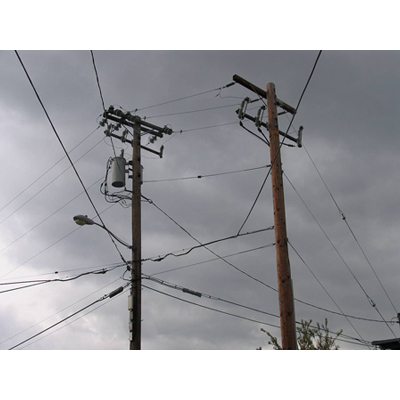
    Recently, APDCL fulfilled the demand of GGCTOA as they gave them the data of electric poles used by cable operators in the city. A survey conducted by APDCL revealed that 8,287 electric poles are used by cable operators in Guwahati electric division of North, 6,136 electric poles in central division, 8,311 electric poles in the south Guwahati, 7,275 poles in east division and 3,268 poles in the west division, the total tally coming up to 33,277.


    While GGCTOA has agreed to pay for now, they have written to APDCL for a clarity on the number.  “We have been given random figures of the five zones. We need clarity on the area where the poles are being used by cable operators. Also, data on the number of electric poles used by each cable operator needs to be specified,” informs Ahmed.


    To ensure smooth collection of payment, GGCTOA has come up with a temporary arrangement. “We are short of time and thus have asked the multi system operators (MSOs) to collect 12 per cent extra revenue from the local cable operators. We cannot collect it from the LCOs and so we have roped in the MSOs,” he informs.


    The association has to pay Rs 3.5 lakh for using close to 33,000 poles for a month. “Every LCO will be given a payment receipt by the MSO which will be issued in the name of GGCTOA. Also, the MSO will get a payment receipt from us,” says Ahmed, who feels that this process will ensure clarity on payment. “If any MSO collects extra money from any LCO, we will be able to track it through the receipts generated from our end and will ensure that it is refunded,” he adds.


    However, in the letter sent to APDCL, the cable operators association has questioned the basis of making GGCTOA responsible to collect the electric pole fee. “We have around 250 LCO members who are operating in their own capacity and utilizing the poles, without any information sharing regarding the infrastructure. So holding GGCTOA responsible is incorrect,” says Ahmed, who has appealed to APDCL on billing the operator directly and on the actual number of poles he uses.


    The association which is currently gearing up to collect the electric pole fee as ordered by the High Court will approach the court again on 28 February if APDCL doesn’t respond to its letter. While on its part, the Association will make the payment on 25 February.

  • Kolkata LCOs want to raise bills, pay tax themselves

    Kolkata LCOs want to raise bills, pay tax themselves

    KOLKATA:  It is their fight for staying relevant and thwart looming extinction due to digitisation. More than 2,000 local cable operators (LCOs) from Kolkata have joined forces to keep the last mile in their control.


    The LCOs, under the banner of Joint Forum of Cable Operators’ Association (JFCOA), have decided to mobilise support and start billing their customers themselves, instead of their multi-system operators (MSOs) doing it.


    The LCOs also want to start paying service tax themselves to the government authorities.


    “We will conduct several meetings among operators across the city to mobilise support ,” said JFCOA convener Swapan Chowdhury.


    JFCOA has decided to put pressure on MSOs to make the necessary provisions in their systems to enable billing from the cable operators’ end.


    “(This has been decided) in order to restrain MSOs’ ill intention to eradicate LCOs from the business,” said Chowdhury, after a conference which also attended by representatives of MSOs Meghbela Broadband Services and GTPL-KCBPL.


    With the implementation of digitisation of cable TV services in Phase I and Phase II, the MSOs have been made responsible for sending of bills to cable TV consumers.


    Indiantelevision.com had last month reported that Kolkata’s LCOs have come together to form the JFCOA in a bid to articulate their problems to MSOs and the Telecom Regulatory Authority of India (TRAI).

     
    The conference today discussed issues the LCOs have about billing, interconnect agreement, and the ratio of revenue sharing between LCOs and MSOs with the implementation of digitised delivery of television channels to television households.

      
    A member of the Cable Operators’ Sangram Committee said the LCOs have requested MSOs not to interrupt cable operators’ services till the various issues raised by them are resolved.


    The LCO suggested that there should be an interconnection agreement between the MSO and the LCOs to conduct business in the DAS regime. “In spite of a business relationship and business transactions between the two of them, no interconnect agreement has been followed till now, which is a violation of the law,” he said.

     
    Another LCO pointed out that MSOs were not executing the agreement with LCOs even though DAS had been implemented since February last year. “DAS agreement with cable operators should be completed by MSOs with immediate effect…” he demanded.


    Sujit Das, MD of AMBC, an MSO, said his company could not participate in the conference, but would still talk to affiliated LCOs and discuss issues raised via the forum.

  • Comcast acquires Time Warner Cable for $45.2 bln

    Comcast acquires Time Warner Cable for $45.2 bln

    MUMBAI: Comcast Corporation, the largest video, high-speed internet and phone services provider in the US, will acquire its competitor Time Warner Cable for $45.2 billion in all-stock deal.


    Through the merger, Comcast will acquire Time Warner Cable’s approximately 11 million managed subscribers. In order to reduce competitive concerns, Comcast said it is prepared to divest systems serving approximately 3 million managed subscribers.


    As such, Comcast will, through the acquisition and management of Time Warner Cable systems, net approximately 8 million managed subscribers in this transaction. This will bring Comcast’s managed subscriber total to approximately 30 million.


    Following the transaction, Comcast’s share of managed subscribers will remain below 30 percent of the total number of multi-channel video programming distributor (MVPD) subscribers in the US.


    Comcast Corporation  and Time Warner Cable today announced that their boards of directors have approved a definitive agreement for Time Warner Cable to merge with Comcast.


    Comcast will acquire 100 per cent of Time Warner Cable’s 284.9 million shares outstanding for shares of Comcast amounting to approximately $45.2 billion in equity value.


    Each Time Warner Cable share will be exchanged for 2.875 shares of CMCSA, equal to Time Warner Cable shareholders owning approximately 23 percent of Comcast’s common stock, with a value to Time Warner Cable shareholders of approximately $158.82 per share based on the last closing price of Comcast shares.


    The transaction will generate approximately $1.5 billion in operating efficiencies and will be accretive to Comcast’s free cash flow per share while preserving balance sheet strength. The merger will also be tax free to Time Warner Cable shareholders.


    Comcast said this transaction will create a leading technology and innovation company, differentiated by its ability to deliver ground-breaking products on a superior network while leveraging a national platform to create operating efficiencies and economies of scale.


    “The combination of Time Warner Cable and Comcast creates an exciting opportunity for our company, for our customers, and for our shareholders,” said Comcast’s Chairman and CEO Brian L Roberts. “Also, it is our intention to expand our buyback program by an additional $10 billion at the close of the transaction.


    The new cable company will generate multiple pro-consumer and pro-competitive benefits, including an accelerated deployment of existing and new innovative products and services for millions of customers.


    Comcast’s subscribers today have access to the most comprehensive video experience, including the cloud-based X1 Entertainment Operating System, plus 50,000 video on demand choices on television, 300,000 plus streaming choices on XfinityTV.com, Xfinity TV mobile apps that offer 35 live streaming channels plus the ability to download to watch offline later, and the newly launched X1 cloud DVR.


    Comcast is also a technology leader in broadband and has increased Internet speeds 12 times in the past 12 years across its entire footprint. Time Warner Cable owns cable systems located in key geographic areas, including New York City, Southern California, Texas, the Carolinas, Ohio, and Wisconsin.


    Time Warner Cable will combine its unique products and services with Comcast’s, including StartOver, which allows customers to restart a live program in progress to the beginning, and LookBack, which allows customers to watch programs up to three days after they air live, all without a DVR.


    Time Warner Cable also has been a leader in the deployment of community Wi-Fi, and will combine its more than 30,000 hotspots, primarily in Los Angeles and New York City, and its in-home management system, IntelligentHome, with Comcast’s offerings.


    The companies said the merger agreement between Comcast and Time Warner Cable is subject to shareholder approval at both companies and regulatory review and other customary conditions and is expected to close by the end of 2014.


    J.P. Morgan, Paul J. Taubman, and Barclays Plc acted as financial advisors to Comcast and Davis Polk & Wardwell LLP and Willkie Farr & Gallagher LLP are its legal advisors. Morgan Stanley, Allen & Company, Citigroup and Centerview Partners are financial advisors to Time Warner Cable and its Board of Directors, and Paul, Weiss, Rifkind, Wharton & Garrison LLP and Skadden, Arps, Slate, Meagher & Flom LLP are legal advisors.

  • Arasu has a provisional MSO licence to operate: Manish Tewari

    Arasu has a provisional MSO licence to operate: Manish Tewari

    NEW DELHI: The Tamil Nadu Arasu Cable TV Corporation, a multi-system operator (MSO) run by the TN government – has been claiming that the government has not given it an operational licence, thereby restricting it from transmitting digital signals to its subscribers. The MSO even filed a case in the Madras High Court in December, 2013 and got a stay over Telecom Regulatory Authority of India’s (TRAI) earlier order which stated that MSOs transmitting analogue signals in Chennai would be prosecuted.


    While the case is yet to get its second date of hearing, the Information and Broadcasting (I&B) minister Manish Tewari, in a response to a question in the Parliament, said that on 26 November, 2007 Arasu had applied for grant of MSO registration in conditional access system (CAS) notified area of Chennai. The Ministry had granted provisional permission on 2 April, 2008. It was on the condition that after TRAI recommendations are considered, the Ministry will decide whether state governments/PSUs and other entities can enter into broadcasting activities including MSO/Cable operations.


    Along with Arasu, four other MSOs in Chennai were also given CAS licences in 2006 including IMCL, Hathway Cable and Datacom, Kal Cable and JAK communications.


    In response to a question about licences given to private players in other southern states, Tewari said that CAS was implemented in the notified areas of Delhi, Mumbai and Kolkata on 31.12.2006; while in Chennai, it was implemented since 2003 under notifications of 14 January, 2003 and 31 July, 2006. Since CAS was implemented only in Chennai, no CAS permission was granted to MSOs in other southern states.


    The entire episode has in a way turned everything around. The case is pending in court till the time TRAI submits its response. So while TRAI – which is completely against the idea of govt. owned MSOs and awaits Ministry’s response to its recommendations – awaits the responses, it could mean that Arasu is free to operate. Moreover, it can even give digital signals or seed STBs as TRAI can’t take any action against it, given that the MSO has a temporary licence.


    The picture will be clear only after the Ministry brings out its regulation and the case in the Madras High Court proceeds.

  • Kolkata MSOs come together to address ground issues

    Kolkata MSOs come together to address ground issues

    KOLKATA: The multi-system operators (MSOs) alliance operating in the Kolkata Municipal (KM) Area plan to form a team comprising two members from each service provider. Since the billing process hasn’t kicked off the way it should have, the team would meet this week to discuss issues like billing, collection, disputes among operators among others.


    If the effort of this alliance fails, an external agency may be brought on board to sort the issues troubling the group.


    “First we will like to solve the issues through our team. We will consider a third party only if we fail to address them. The team comprising of decision makers and seniors would be formed this week,” said Siticable director Suresh Sethia.


    Another MSO brought to the fore the issues they come across while collecting subscription fee from operators like they bring up issues related to under billing, area disputes among others, etc. “But on many occasions we have found that the last mile operators (LMOs) are complaining unnecessarily. Our team will go to assess the situation and address it,” he said.


    “We are talking in order to work together in improving the ground,” said Advance Multisystem Broadband Communication (AMBC) managing director Sujit Das.


    To implement the gross (consumer) billing for the month of January and bring transparency in the process, the MSOs are meeting regularly and discussing its smooth rollout. “Billing is a mess as LCOs are not willing to collect,” said Corpus Media Labs head sales GK Viswanath.

  • Bengaluru MSOs to start gross billing, packaging from April

    Bengaluru MSOs to start gross billing, packaging from April

    MUMBAI: The multi-system operators (MSOs) in Bengaluru are determined to do all that is needed to be in the good books of the Telecom Regulatory Authority of India (TRAI). The latest is that 12 MSOs met today in Bengaluru to discuss the status of consumer application forms (CAFs), gross billing, local cable operators (LCO) agreements and packaging to ensure compliance with TRAI regulations on digitisation.


    “This was a coordination meeting where we discussed about gross billing and also packaging,” informs a highly placed MSO who was present at the meeting.


    The group of 12 MSO will soon come out with a joint advertisement that will be published in Bengaluru newspapers and will inform the consumers about gross billing and packaging.


    The same was done in Delhi when the MSO Alliance jointly came out with an advertisement in local newspapers on the issue of gross billing.


    “We are looking at forming a joint committee in order to ensure that the guidelines set by TRAI can be followed,” informs the source.


    The timeline to start gross billing was also discussed in the meeting. “Gross billing in Bengaluru will start not later than April 2014,” informs Hathway Cable & Datacom MD & CEO Jagdish Kumar Pillai. Another important issue raised was that of the LCO-MSO agreement. “There were discussions on the revenue share for LCOs, the package rates etc,” adds Pillai.


    A Bengaluru-based MSO on the condition of anonymity informs, “The MSOs discussed on getting into a truce so that none of the MSOs infringe on each other’s subscribers. No decision has been taken on this though. The MSOs have asked for a couple of days to come to a final decision.”


    Another point discussed was that each LCO has to pay Rs 90 per subscriber per month to the MSO for using its services. “Discussions on packaging took place, which should be in place by April,” adds the Bengaluru based MSO.


    Earlier this week, Hathway, which has around eight lakh subscribers in the city, had switched off set top boxes of close to two lakh subscribers as they had not filled CAFs. “We had switched off 2.5 lakh STBs. This was to ensure that we comply with the TRAI guidelines,” concludes Pillai. 

  • GGCTOA writes to APDCL, asks to disclose electric pole data for Guwahati

    GGCTOA writes to APDCL, asks to disclose electric pole data for Guwahati

    MUMBAI: The Assam Power Distribution Company Limited (APDCL) and Greater Guwahati Cable TV Operators’ Association (GGCTOA) still seem to be at loggerheads on the issue of the payment for the electric poles. After several meetings and deadlines, the issue remains unresolved.


    The issue began in September last year when APDCL asked the cable operators in Assam to pay Rs 25 per electric pole per month. The issue has just stretched since then, the last set deadline for cable operators to pay Rs 25 as electric pole fee was 22 January. It was then that GGCTOA approached the Guwahati High Court. The High Court, in the hearing held on 29 January, has asked both parties to come on a consensus by 28 February.


    “Let the required exercise be carried out as expeditiously as possible preferably within 28.02.2014, subject however, to the condition that petitioner shall pay the change of Rs 10 per pole for a period of one month i.e. up to 28.02.2014, which however is subject to the final outcome of the exercise required to be carried out in terms of the order and without prejudicing the rights and contentions of the parties. Needless to say that in the event of the prayer of the petitioners finds favour of APDCL authority, the said amount will be adjusted with future charge, if any, or refunded,” the Guwahati HC order reads.


    However, now GGCTOA has written to the APDCL and has asked to disclose the number of poles used by the cable operators. “We have written to the APDCL on 3 February and have asked them to arrange for a meeting and also give us the complete data of the number of polls used by the cable operators and amount that has to be collected, since we do not have any such data with us,” informs GGCTOA general secretary Md Iquebal Ahmed. 


    The cable operators have also agreed to pay Rs 10 per electric pole per month in the interim. “But for that we will need the data. Also, if in this interim the APDCL can bring down the electric pole fee to Rs 10 or less, we will be happy. If it doesn’t, we will again approach the court,” adds Ahmed.


    According to APDCL, 31,000 electric poles in Guwahati are being used by the cable operators. “The HC expects us to settle down issues before 28 February. We will decide on that in the coming days,” says APDCL public relation officer Chandra Mudoi, informing that they have received the letter from GGCTOA and will act on it soon.

  • IndusInd Media undergoing complete top management overhaul

    IndusInd Media undergoing complete top management overhaul

     MUMBAI: Hinduja Ventures Limited-owned IndusInd Media & Communications Ltd is going in for a complete overhaul of its top management.


     After having appointed Tony D’silva as the MD and CEO of IndusInd Media and also as Hinduja Venture’s Group CEO – media, the company is also looking at bringing in fresh faces in other key positions, sources said.


     D’silva’s appointment has combined the positions of the managing director and chief executive officer at IndusInd Media, which were earlier held by two persons – Ravi Mansukhani as the MD and Nagesh Chabria as the CEO.


     Ravi Mansukhani’s resignation has already been accepted by the company’s board of directors. Chabria’s position as CEO has become untenable with D’silva’s appointment.


     According to sources in the company, Chabria has resigned and is currently serving a notice period. Indiantelevision.com could not reach Chabria for a comment.


     The company sources also said IndusInd Media’s chief financial officer Dilip Panjwani and chief technology officer Vivek Garg too could be replaced soon.


    When contacted, Panjwani denied rumours that he has resigned. “This isn’t true. I haven’t resigned and neither am I serving my notice period,” he said.


     Hinduja Ventures reported that for the nine months ended 31 December, 2013, IndusInd Media and Communications had revenues of Rs 21.86 million, down 50 per cent from Rs 43.73 million a year ago.


    Surprisingly, IndusInd Media and Communications’ revenue for the quarter ended December 31, 2013 has been shown as nil.


     For the nine months ended 31 December, 2013, IndusInd Media Communications had a loss of Rs 84.47 million against profit before tax of Rs 16.72 million a year ago.


     The poor operational performance and the appointment of D’silva comes in the midst of IndusInd Media’s plans to launch new digital cable services like HD services, hybrid set-top boxes for cable TV and internet and other value-added services.


     IndusInd  Media has an estimated 8.5 million subscribers across 36 cities and offers over 350 channels in digital mode. It has a backbone of 10,000 kms of hybrid fibre optic network through which it also offers broadband services.

  • “IndusInd to soon start pre-paid cable TV services”:  Tony D’silva

    “IndusInd to soon start pre-paid cable TV services”: Tony D’silva

    Almost a-year-and-a-half ago Hinduja Ventures Limited (HVL) brought Tony D’silva – a man with more than four decades of experience across sectors such as media, FMCG and pharma – on board as the president of the company to spearhead its Headend in the Sky (HITS) business.


    Now, D’Silva has been given responsibility as MD & group CEO of IndusInd Media &  Communications Ltd (IMCL)  with long time  MD &  CEO of HVL’s flagship cable company Ravi Mansukhani stepping down earlier this week. As he takes on a bigger role, he is looking at betterment of the company with introduction of newer services. He sounds quite optimistic while suggesting prepaid model for billing and doesn’t hesitate in saying that he wants to give the local cable operators (LCOs), the rightful ownership of their subscribers.


    In an exclusive interview with Indiantelevision.com’s Seema Singh, D’Silva talks about his plans for InCable and HITS.


    Excerpts:


    What does becoming the MD and CEO of IMCL and CEO of Hinduja Group-media mean to you? How is this development going to change Hinduja Group’s media businesses and your life professionally? What are your immediate challenges?


    I have mixed feelings because the challenges are very steep. The future is exciting but there are grey areas to be covered before we achieve the state of growth with digitisation and monetisation. While I am looking forward to the challenges, I am wary of the fact that many hurdles need to be crossed. Bringing along processes is difficult and ultimately to monetise this business, the only way is to go prepaid.


    The industry must refocus itself to become customer friendly and start customer care services. Everybody in the digitised world is looking at increased revenues. The only way to make more money is by starting packaging, bundling and including small packages with regional and sports channels. The customers need to be segmented. Those who can afford to pay more can take higher priced packages, while those who can’t can opt for the basic pack. Unfortunately, there is a mental block in the mind of the consumers towards cable TV. They are not ready to shell out much for cable TV experience, but there is no such block to pay for broadband or triple play or video on demand (VOD).


    That’s where the entire industry should move. They should look at offering more value added services (VAS) and TV Everywhere services. This is what needs to be monetised. My focus will be on bringing the infrastructure to meet these requirements, putting procedures and making the whole business transparent so that every stakeholder in the value chain gets a share of the revenue.


    As the Group CEO – media and MD & CEO of IMCL, you will be responsible for restructuring the entire media business and value creation, how are you planning to do that? 


    We have two-three different businesses. My role is to monetise all these businesses so that the value of the group’s media businesses can grow. While phase I and II of digitisation was all about packaging, bundling etc, phase III and IV is all about HITS. I am very clear that ultimately it is the local cable operator who should own the network. Even in the HITS business, Grant Investrade Ltd (GIL) will be the white label which will be a pure technology service provider, with VOD and VAS.


    My aim is also to push the broadband segment which is lagging so far. We have a vast infrastructure for broadband which hasn’t been utilised. It is one area we will start developing now. We are not using that broadband, we are renting it out and they are monetising it. Now, we will restructure that segment as well.


    I will look at restricting the business to area specific responsibility. Our focus will be on customer care, which involves interface with customers through call centres and backend support. We will also focus on the LCO: MSO relationship as cable operators are another crucial part of our business model. The third is the broadband and new services.


    I would also want to make all our centres, profit centres.


    As far as HITS is concerned, it is a separate business with a different team and focus.


    Recently, Grant Investrade Ltd announced an investment of Rs 300 crore in the cable distribution business. How do you plan to utilise that investment? Will your approach for the growth of the company be different from your predecessor? How will you ensure HITS turns out to be profitable?


    The previous management did a great job. There is no other way than HITS to deal with phase III and IV. With HITS, the average cost of delivering data that comes to be Rs 18 per customer through optical fibre will go down to Rs 8.


    The HD box is the future and we will give HD boxes in the price of SD boxes. The operator in the HITS business is competing with DTH. The LCOs have the money but they face difficulty in buying bulk boxes. Thus, we are giving them the option of cash and carry. The operator has the option of buying boxes as per his need.


    My profit is by profit of numbers. As my subscribers increase, my cost will come down. Initially, I may incur losses but then it’s a volume game for me. If we are serious about digitisation, the government should have first cleared our HITS project. We are saying the LCOs can own the consumers and can do the packaging. We will help them seed boxes. It is different than JAINHITS. We have three to four different boxes and they get an option to choose.


    How much has been invested in HITS? Is more investment needed? When do you see the licence being cleared by the Information and Broadcasting Ministry?


    We have been waiting since 14 months to get the licence. We have already spent close to $10 million in the technology which is handled by Castle Media and people. Another $100 million will be invested in HITS project. This investment will happen once we get the licence.


    We are suffering because of the wait. When we started the project, the dollar rate was close to Rs 43, now it is Rs 63. Who will take the responsibility to pay for the escalation?


    There is a turf war going on between the LMOs and MSOs? Are you looking at resolving these issues?


    We are losing the focus in this fight, which is the customer. Industry is beginning to realise that just having subscriber numbers is not enough. We may not be the largest MSO in the country, neither am I aiming for that. My mission is to make InCable the most respected MSO in India. And that’s what the business model should be.


    By when will the VAS and VOD services come in to effect? Will HITS benefit IMCL? Do you think the customer in phase III and phase IV will readily pay for these services?


    A lot of this is application and we have a full fledged plan. Hopefully, when we launch HITS we will launch it with these services. These services will also be provided on InCable. IMCL will be HITS’ customer. The values and charges will be the same for IMCL as for other LCOs.


    The content requirement differs in phase III and phase IV and so HITS becomes an important platform. We will provide different packages based on the requirement. In fact we are encouraging LMOs and MSOs to strike their own deal with broadcasters.


    The customers in phase III and IV has money as well. We are targeting 20-25 per cent of the phase III and IV market through HITS. And that market is available.


    Phase III and IV need 90 million STBs. How many of these will be seeded by IMCL? Is DTH a competition for phase I and phase II? Will you set up new headends for phase III and IV?


    We will not seed STBs if our licence is not cleared.


    It is true that in phase I and II cities, the MSOs have to up their antennas and come up with VAS services. 70 per cent of the boxes are SD boxes when the market world over is moving to HD. Are we expected to replace all the boxes later? That will be an expensive proposition. Most part of DTH and mobile is pre paid, so we should move towards that. This will promote transparency. We should be launching prepaid in couple of months. HITS will be a complete prepaid model.


    No new headends will be set up in phase III and IV.


    In how much time can we expect changes at IMCL?


    I have given myself two months to at least start changing the process, procedures and start customer friendly actions by upscaling our call centres like those of DTH players.


    By when will the ARPUs for MSOs go up? What would the increase be? Do you see it rising to Rs 500 in the next one year?


    The customer will pay if you give him the services he wants. He has no restriction on the amount of money he pays for his mobile phone services. So there is no restriction on the money he pays. But don’t expect the ARPUs to go up if you do not upscale your services.


    With gross billing, will there be more transparency in the system? Are you ready to share the carriage fee with LCOs?


    I have serious concerns with gross billing. Who is responsible for service tax and entertainment tax? I do not have a problem if it is a prepaid model. The authorities have to realise that relevant issues need to be addressed before gross billing begins.

    As of today, the carriage fee has supported the business model for the MSOs. We get the money from there. If the model changes, we will be happy to share the carriage fee.


    Can we expect the launch of local cable TV channels from your end? Any numbers you are looking at?


    We already have local cable TV channels. But now, as per regulation, these channels need to be encrypted. In InCable, we are revamping the system and encrypting the local channels. We have a separate company that deals with these channels.

    In HITS, the local cable TV channels will be handled by the LCOs.


    How do you plan to strengthen your broadband service? Any expansion plans in newer regions? Is there a plan to launch Docsis 3.0 broadband? What will differentiate you?


    Broadband is one of the key to monetising. We have broadband, but not well utilised. We will use DOCSIS 3.0 and promote it now. We need to focus on the requirements.

     

  • Silverline Television Network to seed 25 lakh DEN STBs in WB

    Silverline Television Network to seed 25 lakh DEN STBs in WB

    KOLKATA: West Bengal is embracing the digitisation process open heartedly. So while earlier the MSOs from the state got together to speed up the gross billing in the city, now Silverline Television Network (STN), which distributes the services of DEN Cable TV in West Bengal, plans to seed close to 25 lakh set top boxes (STBs) in the state by December, 2014 in Digital Addressable System (DAS) phase III and IV areas.


    Silverline Television Network, a joint venture between DEN (51 per cent) and Silverline Broadband Services (49 per cent) was formed in 2011. STN has already installed four lakh STBs in the state in DAS Phase I and II with an investment of 150 crore. For the next installment, it has earmarked an investment of Rs 300 crore, which alongside the cost of the STBs, will also be used in increasing its network and fibre connectivity in the state.


    “We have seeded 3.60 lakh STBs in the Kolkata Municipal Area area and another 40,000 in the rest of West Bengal including 24 North Parganas and Hooghly. In phase III and IV of digitisation, we plan to install approximately 25 lakh more set top boxes in the state. By December 2014, we want to reach the target of 30 lakh STB,” remarked STN director Apurba Banerjee optimistically as he spoke about strengthening its presence within the state. “Our connectivity has already reached Siliguri, Bankura, Raichak, Bangaon and a part of Diamond Harbour,” he added.


    The company has one digital headend at present and offers 280 channels. When quizzed about the most popular package in phase I area, that is the KMC area, he said, the monthly subscription available at Rs 180 was quite popular initially. However, since TEN Sports wasn’t available in that, many switched to the Rs 230 monthly package.


    The cable TV analysts say the Phase III and IV of DAS is going to be smoother and easier as consumers in smaller towns have already started enquiring about the STB. “Going forward, it will be a smooth journey for DEN to install 30 lakh STBs in West Bengal,” remarks an analyst.


    DEN, a cable TV distribution company, reaches an estimated 13 million households in over 200 cities across 13 key states in India, like in Delhi, Uttar Pradesh, Karnataka, Maharashtra, Gujarat, Rajasthan, Haryana, Kerala, Madhya Pradesh and Uttarakhand among other markets. DEN Networks has seeded around 5 million set top boxes.