Category: Cable TV

  • Kolkata LMOs appeal to TRAI

    Kolkata LMOs appeal to TRAI

    KOLKATA: The last mile owners (LMO) in Kolkata have appealed to the Telecom Regulatory Authority of India (TRAI) to allow them to air events related to the region through their local cable TV channels. 
     

    The appeal has come after the Authority released its consultation paper to regulate the local cable TV channels of cable operators in June, this year. “We have appealed to the Authority to allow us to run the local video channels as we did during the analogue times,” informs Cable Operators’ Sangram Committee secretary Apurba Bhattacharya.


    In the consultation paper, TRAI had said that MSOs, LMOs, DTH operators, HITS and IPTV service providers (all called as distribution platform operators – or DPOs-  henceforth) are running local channels aka platform services (PS) that don’t have the MIB’s permission. And some channels that are transmitted by the DPOs through the PS channels have content similar to regular TV channels.

     
    DAS, according to TRAI has changed the context for DPOs and their PS as far as cable TV operators are concerned. The reason: with digitisation, it is only the MSOs who can transmit encrypted signals from their headends on cable TV networks; LMOs can no longer transmit their own local ground based channels. 


    “Cable TV operators have no intention to violate the rules and regulations set up by the most competent authority concerning local video channel,” informs Bhattacharya, who feels that the LMOs have never in the past 25 years violated any of the rules.


    According to Bhattacharya, digitisation has made local cable TV channels necessary, as it gets more localised and informative. “Cable TV subscribers through these channels can get information about the upcoming events, change of channel packages and TRAI recommendations,” he adds.


    To make their voices heard, cable operators in West Bengal, presented their plea not only through forums, but have also written letters to the TRAI. 


    During the analogue regime, these local cable TV channels were available on LCN five. “The channel is used not only to telecast popular movies, but also helps people get acquainted with important announcements of local law and order, events, traffic condition of the area, weather report and educational/academic programmes,” informs a cable operator. 

  • MSO in Belgaum booked for illegal piracy of Zee TV signals

    MSO in Belgaum booked for illegal piracy of Zee TV signals

    NEW DELHI: Karnataka police has registered a first information report (FIR) against Belgaum’s only multi-system operator, Riddhi Vision which is a joint venture of InCable, for illegal transmission of copyrighted content.


    The action was taken on a written complaint filed by Cable Star Copyrights Investigations, who is the distributor for Cable TV Rights all over India of Zee Entertainment Enterprises Limited (Zeel). 


    Karnataka police took cognizance under Section 37, 51, 52(A), 63, 68(A) of the Copyright Act for telecasting of the Hindi film ‘Khalnayak’ starring Sanjay Dutt and Madhuri Dixit on 20 July evening in Belgaum. The FIR was filed against the managing director and other directors of Riddhi Vision by Dr Chandragupt, superintendent of police in Belgaum. A spokesperson for Cable Star Copyrights Investigations told indiantelevision.com that the pirated content for which the rights were with Zee was being shown on the local channel run by the MSO.  


    The spokesperson added, “It has been a practice of various cable operators to run content and specially movies without obtaining permission from the content owners, and the industry has been demanding strict action.”


    He said Cable Star Copyrights Investigations is working for anti-piracy and distribution of Zee and other similar companies and has been a crusader against such piracy for several years and have previously lodged many such FIRs in various states.


    He said, “Such blatant transmission causes immense loss of revenue to the content owners and government. Cable Star Copyrights Investigations has also lodged many complaints against big cable operators in Maharashtra and other states, in which they are pressing for swift and strict action. Such police action would definitely be a right step towards stopping the menace of piracy, which has been the bane of entertainment industry.”

  • 106 MSOs registered says Javadekar; Arasu application under review

    106 MSOs registered says Javadekar; Arasu application under review

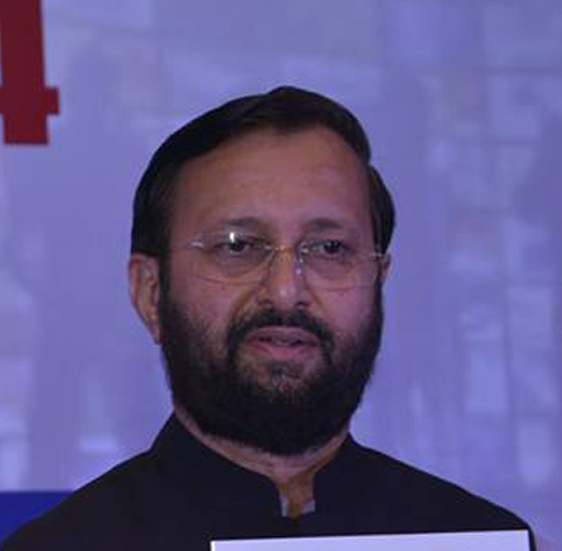
    MUMBAI: The government is doing well in the area of registering multi system operators (MSOs), especially in those areas where digitization has been implemented. This was stated by information & broadcasting minister Prakash Javadekar in a written reply in th Rajya  Sabha. He revealed that 106  MSOs have  have been granted permanent registrations by his ministry to enable them to operate in digital addressable system (DAS) zones.


    He added that the I&B ministry had received a letter from the Tamil Nadu chief minister J Jayalalithaa to also register the government run MSO the Tamil Nadu Arasu Cable TV Corp  Ltd to allow it to operate in the DAS notified areas of the southern state.


    He disclosed that his ministry was examining Arasu’s application in the light of the TRAI’s recommendations regarding the entry of government entities in the broadcasting and distribution activities.


    The TRAI has been consistent in its stand that state government entities should not be allowed to enter the business of broadcasting and distribution of TV channels. It had made these recommendations in its paper on Issues related to entry of certain entities into Broadcasting and Distribution Activities in December 2012, and reiterated them in its consultation paper on monopoly/market dominance in cable TV in June 2013.

  • Turner, HBO boost Time-Warner revenues in Q2

    Turner, HBO boost Time-Warner revenues in Q2

    BENGALURU: Time -Warner Inc (Time-Warner) reported three per cent y-o-y growth in revenue in the quarter ended 30 June 2014 (Q2 of 2014, or the current quarter) to $6.8 billion. The company’s adjusted operating revenue grew 17 per cent to $1.6 billion.


    Turner, Home Box Office (HBO) and Warner Bros segments contribute to Time Warner’s numbers.  Revenues were boosted y-o-y by Turner and (HBO) by 9.5 per cent and 16.5 per cent respectively, while Warner Bros showed a 2.4 per cent y-o-y de-growth in the current quarter.


    Turner results


    Turner reported revenue of $2,750 million in the current quarter as compared to $2,627 million in the corresponding quarter of last year. Turner’s subscription revenue grew 8.7 per cent y-o-y to $1,323 million in the current quarter from $ 1,217 million in the quarter ended 30 June 2013 (year ago quarter), while its advertising (ad) revenue grew 27 per cent in the current quarter to $1,284 million from the year ago quarter’s $1011 million. Turner’s content revenue in the current quarter grew 25.4 2 per cent to $89 million from the year ago quarter’s $71 million. The segment reported 15.3 per cent in adjusted operating revenue in the current quarter to $940 million, as compared to the year ago quarter’s $815 million.


     HBO results


    HBO’s revenue in the current quarter grew to $1,417 million from $1,216 million in the year ago quarter.  Its subscription revenue grew 9.7 per cent in the current quarter to $1,411 million from $1,040 in the year ago quarter. The segment’s content revenue grew 55.6 per cent to $274 million from $176 million in the year ago quarter. HBO’s adjusted operating revenue in the current quarter grew 22.7 per cent to $552 million from $450 million reported for the year ago quarter.


    Warner Bros


    Warner Bros revenue fell 2.4 per cent to $2,870 million in the current quarter from the year ago quarter’s $ 2941 million. Warner Bros theatrical product reported 5.5 per cent lower revenue at $1,494 million in the current quarter as compared to the $1,581 million reported for the year ago quarter. The segment’s television product grew by 5.9 per cent in the current quarter to $1,052 million as compared to the year ago quarter’s $993 million.


    Y-o-y, Warner Bros current quarter’s content revenue shrank 2.3 per cent to $2,731 million from $2,795 reported during the year ago quarter. Warner Bros advertising and subscription revenues were almost flat at $19 million and $33 million, respectively, in the current quarter as compared to the year ago quarter’s $18 million and $32 million, respectively.


    Time Warner completed the Time Warner cable spinoff last month and says it has repurchased 51 million shares for $3.5 billion year-to-date through 1 August 2014. The Time Warner board has authorised an additional $5 billion of share repurchases.


    Time Warner chairman and CEO Jeff Bewkes said, “We are off to a very strong start in 2014, with results that demonstrate both the returns we can achieve on our investments in great storytelling and the growth potential of our businesses. Excluding Time Inc., which we expect to spin off as an independent publicly-traded company this quarter, we grew first quarter Revenues by 10%, Adjusted Operating Income by 12 per cent, and Adjusted EPS by 26 per cent. In the first quarter, Warner Bros. picked up where it left off after a record-breaking year in 2013, with The LEGO Movie launching yet another franchise for us and leading all releases at the domestic box office. Combined with its promising slate of movies for the rest of the year and strong lineup of TV shows to be unveiled at the upfronts, Warner Bros. is positioned to have another excellent year in 2014. Home Box Office continues to be red hot, led by the debut of True Detective, the most-watched freshman series in HBO’s history. And the Season 4 premiere of Game of Thrones on April 6 drew HBO’s largest audience since The Sopranos finale. Turner also made history by bringing the NCAA Men’s Basketball Final Four to cable for the first time ever. The success of the NCAA Tournament also helped TBS maintain its position as ad-supported cable’s #1 network in primetime among adults 18-34 and 18-49. It also showcased the importance and vibrancy of our TV Everywhere initiatives, with a more than 40 per cent increase in streams for our March Madness Live service over last year. Another standout at Turner was Adult Swim, which again finished the quarter as the #1 ad-supported cable network in total day for Adults 18-34. And CNN reaffirmed that it is the place the world goes for authoritative coverage during major news events, with delivery in its key demographic up over 50 per cent in March. Further demonstrating our commitment to shareholder returns, during the quarter we returned almost $1.3 billion to our shareholders in the form of share buybacks and dividends.”

  • Hathway to raise Rs 300.80 crore from FIIs

    Hathway to raise Rs 300.80 crore from FIIs

    Updated: 04:32 PM

    MUMBAI: It continues to be the darling of investors globally. On 6 August 2014, the Indian MSO Hathway Cable & Datacom  got board approval to raise Rs 300.80 crore through a preferential allotment to two foreign institutional investors – the SmallCapWorld Fund (SWF) and American Funds Insurance Series. While it is proposing to allot  70,50,000 shares to SmallCapWorld Fund, American Funds Insurance is expected to mop up 23,50,000 equity shares.


    The price that has been fixed is Rs 320 per share and the preferential issue is subject to shareholder and other necessary approvals and compliance with applicable laws and regulations.


    Last year, Hathway had raised funds from Steadview Capital Mauritius, LTR Focus Fund, Massachusetts Institute of Technology (collectively Rs 100 crore), P6 Asia Holding Investment IV (Mauritius) (Rs 109.90 crore) at a share price of Rs 284 and the promoter Rajan Raheja group (around Rs 40 crore).


    Prior to that, in March 2012, Providence Equity Advisors and Macquarie Bank had bought out  News Corp’s 17.3 per cent stake in the MSO at collective a cost of Rs 358.39 crore through secondary market transactions.


    Hathway had in June announced the induction of four new independent directors on its board including private equity firm founder and CEO  Bramal Vasudevan, early stage VC firm Kae Capital head Sasha Mirchandani, law firm Trilegal’s partner Sridhar Gorthi and back office administrative services Lexvia Inc founder Devendra Shrotri. The four have been appointed for a five year term.


    The MSO has been amongst the more proactive players in the cable TV distribution, broadband and ISP spaces and is seen as a bellwether for the sector. It currently boasts of a cable TV subscriber base of 11.5 million with more than 8 million of them being digital. Its broadband reach is more more than 1.8 million Indian homes and it has more than 400,000 broadband subscribers.


    In the year ended 31 March 2014, Hathway notched up revenue of Rs 988.14 crore with a net loss of Rs 125.5 crore on a standalone basis.

  • Fox withdraws Time-Warner acquisition bid

    Fox withdraws Time-Warner acquisition bid

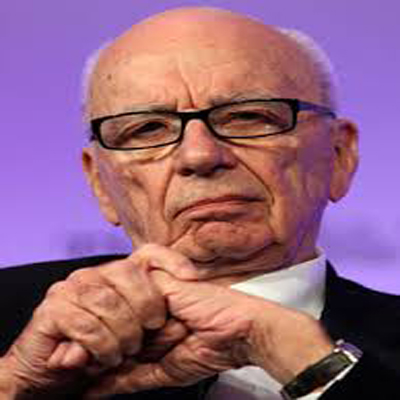
    BENGALURU:  Twenty-First Century Fox (Fox) withdrew its proposal to acquire Time Warner Inc.  Excerpts of the Fox press release – chairman and CEO Rupert Murdoch commented: “We viewed a combination with Time Warner as a unique opportunity to bring together two great companies, each with celebrated content and brands.  Our proposal had significant strategic merit and compelling financial rationale and our approach had always been friendly.  However, Time Warner management and its Board refused to engage with us to explore an offer which was highly compelling. Additionally, the reaction in our share price since our proposal was made undervalues our stock and makes the transaction unattractive to Fox shareholders.  These factors, coupled with our commitment to be both disciplined in our approach to the combination and focused on delivering value for the Fox shareholders, has led us to withdraw our offer.”


    “21st Century Fox’s future has never been brighter.  The strength of our leading franchises, combined with the power of our emerging growth businesses and the leadership positions of our international enterprises put us on a path for even greater success.”


    The Board today authorised a USD 6 billion share repurchase programme. The repurchase of an additional USD 6 billion of Class A Common Stock is expected to be completed in the next 12 months. 


    Murdoch continued, “This significant return of capital underscores the Company’s ongoing commitment to disciplined capital allocation and returning value to shareholders in a meaningful way.”


    Time Warner responded with a press release. Excerpts of Time Warner’s statement regarding the announcement by Twenty-First Century Fox that it has withdrawn its proposal to acquire all of the outstanding shares of Time Warner.


    “Time Warner’s Board and management team are committed to enhancing long-term value and we look forward to continuing to deliver substantial and sustainable returns for all stockholders.  Time Warner is well positioned for success with our iconic assets, including the world’s leading premium television brand, the world’s strongest ad-supported cable network group, and the world’s largest film and television studio.  We thank our stockholders for their continued support. Citigroup Global Markets Inc. is acting as financial advisor to Time Warner. Cravath, Swaine & Moore LLP is acting as legal advisor to Time Warner.”

  • Kolkata LMOs to join hands with smaller MSOs

    Kolkata LMOs to join hands with smaller MSOs

    KOLKATA: Cable TV industry in Kolkata is up for some change. The last mile owners (LMOs) who have for long been complaining about losing their consumers to the multi system operators (MSOs) because of digitisation, are now looking for different ways of retaining their customers. While it had started with setting up of cooperatives, the LMOs are now joining hands with the smaller MSOs, who are also DAS licence holders.


    As part of this arrangement, a group of LMOs will sign a Memorandum of Understanding (MoU) with the MSO. While the group will have access to the headend, SMS and other backend services of the MSO, it will be free to create its own packages and also bill the consumers. This will also help the LMO to own its customers.


    “We have already prepared an agreement with a DAS licence holder who will levy a minimum price against every set top box (STB) that we take from him. Joining of other LMOs is in progress,” said an enthusiastic LMO on condition of anonymity.


    According to market sources, some of the MSOs that may get into such an arrangement are Sristi Cable TV Network, Kailash Cable Network, Meghbela Cable & Broadband Services and Barasat Cable TV Network. The smaller MSOs are looking at increasing their topline and bottomline and strengthening their presence in the region by partnering with the LMO group.


    “LMOs will partner with DAS licence holders either by forming a cooperative or working independently with him using his network,” informs a cable TV industry source.


    Meetings in this regard had started a year ago between the two parties operating in the KM area which currently has close to 33 lakh digitised cable TV homes. The LMOs will not be swapping the STBs in the current digitised homes, but will try and capture the new homes which have not yet been digitised.  


    The partnership will give the LMO the power to bill its subscribers, create packages based on consumers’ choice, and get a share of carriage fees as well as ownership of STBs.


    Cable Operators Sangram Committee general secretary Apurba Bhattacharya while confirming the development said, “It is good that LMOs are looking for new business models to earn their living. The operators are happy to get into this space. We will run the business ourselves.”


    LMOs in Kolkata are moving to this arrangement, since setting up of a headend not only takes time, but is expensive as well. “Setting up the headend requires a lot of permissions and an investment of some crores, so it is better to get into partnership with existing DAS licence holders than to set up our own headend,” says a LMO.


    A last mile owner who is in talks with one of the smaller MSOs concludes, “During the analogue regime, the revenue share between the MSO and LMO was 20:80 but after digitisation, this has come down to 65:35. The business model is not at all lucrative anymore.”

  • Police case filed against two Hathway-linked LCOs in Kolkata for illegally carrying Star Sports 1 signals

    Police case filed against two Hathway-linked LCOs in Kolkata for illegally carrying Star Sports 1 signals

    NEW DELHI: Kolkata police has registered a first information report (FIR) against two local cable operators (LCOs) Akash Darpan and Titli Cable Service, both linked to multi system operator Hathway Cable and Datacom’s network for illegally re-transmitting signals of Star Sports1 on unencrypted frequencies.


    The FIR follows the raids conducted by the Kolkata police after a complaint was filed by Star on 22 July against ‘the deliberate illegal acts of Hathway.’


    Acting on the complaint, the police raided the control rooms of the LCOs and found that the signals of Star Sports 1 were being retransmitted in unencrypted mode on LCN No. 872 meant for local channels. The police registered an FIR No. 649/14 dated 22 July 2014 against Hathway and the two LCOs under sections 120-B/409 IPC and 37/51/63/65/69 Copyright Act.


    Star said in a press release that ‘in order to mislead and deceive it, Hathway has adopted an unlawful methodology whereby Hathway’s electronic programming guide (EPG) displays to the subscribers that the said TV channel is available on an a-la-carte basis. However, the said channel is available and enjoyed by Hathway subscribers even without opting for the said TV channel on an a-la-carte basis by the unlawful placement of the TV channel in unencrypted frequencies/forms.’


    The broadcaster also claims that because of the unlawful placement of the channel, the subscriber base of Star Sports1 is not captured on the SMS and Cable Access System of Hathway.  Consequently, the MSO does not pay any license/subscription fee, though the channel is available and viewed by the Hathway subscribers.


    Star investigated the issue and video recorded the unencrypted retransmission by Hathway on 19 July on being informed of the illegal retransmission. 


    Even earlier, Hathway had illegally carried Star Sports channels on unencrypted frequencies in the DAS notified city of Mumbai in gross violation of the provisions of sections 51 & 63 of the Copyright Act, the Cable Television Networks (Regulation) Act and the applicable Regulations of the Telecom Regulatory Authority of India. A legal notice on 27 February 2014 was issued by Star Sports India in this regard.

  • Fox moves to garner funds; Fox or Time Warner, who will blink first?

    Fox moves to garner funds; Fox or Time Warner, who will blink first?

    BENGALURU: It was a deal, the possibility of which they had announced in May 2014. The media pundits said that it was inevitable, now that Rupert Murdoch’s 21st Century Fox (Fox) bid to buy out Time Warner had been rejected by the latter in mid-July 2014.  Fox needed to sweeten the offer with a higher bid and with the proceeds from the BSkyB deal, the company would not have to go in for a very big addition to its debt.


    Fox has gone ahead and done just that. Last week on Friday, Fox through a press release announced that it will transfer Sky Italia and its 57.4 per cent interest in Sky Deutschland to BSkyB to create a pan-European digital television leader through the combination of these assets.


    The release said further: ‘In exchange for the transfer, 21st Century Fox will receive approximately $ 9.3 billion in value from BSkyB comprised of approximately $ 8.6 billion in cash and BSkyB’s 21 per cent interest in National Geographic Channels International, raising 21st Century Fox’s ownership stake to 73 per cent. In addition, 21st Century Fox will participate in BSkyB’s announced equity offering by purchasing approximately $ 900 million of additional shares in BSkyB to maintain the Company’s 39.1 per cent ownership interest. The net, after-tax cash proceeds to be received by 21st Century Fox upon completion of all the elements of this transaction will approximate $ 7.2 billion. The agreement is subject to regulatory approvals, the approval of BSkyB stockholders and customary closing conditions.’


    Confirming the deal, in a message to his staff, Sky CEO Jeremy Darroch said, “The three companies complement each other well. We all operate businesses that look similar and offer similar products, and of course we share the same brand. But our affiliation goes deeper than that. We may work in different countries, but our corporate culture and values are familiar. Our teams know each other well and have a history of working together. So I am confident that this is a combination that will work well.” Darroch added, “We expect this process to take several months to complete.”


    So far Fox has chosen not to directly comment about the rejection of its bid or move by the Time Warner board that would stymie any action by 15 per cent or more of Time Warner’s shareholders that could favour bids by Fox and force Time Warner to consider being taken over. Fox has not commented on the Writers Guild of America, West (WGAW) speaking against any agglomeration of media companies and more specifically the WGAW’s opposition to Fox’s proposal for taking over Time Warner.


    However, in an oblique statement, the Fox release quotes its chairman and CEO, the 83 year old Rupert Murdoch as saying, “Our renewed authorisation for our share buyback program will be executed regardless of any potential acquisition or investment activity by the company. 21st Century Fox’s number one priority is increasing shareholder value in a disciplined manner and as a result, we will only consider transactions that fully support this objective.”


    Bloomberg reported on Saturday that Fox  is open to giving Time Warner shareholders seats on the board of the combined company should its $ 75 billion takeover bid succeed, attributing this to people familiar with the situation. Media reports suggest that the offer for board representation could appear in a revised proposal and that one of the reasons for Time Warner’s rejection of Fox’s overtures is that its shareholders are being offered non-voting shares by Fox.


    So it is more of a question of ‘when’ and not ‘if’ a fresh proposal is made by Fox. We should hear soon more about the Fox –Time Warner takeover/merger saga that will take two to three years to consummate, if it happens.

  • Only 70 per cent of the Indian pay-TV market will be digitised by 2023: MPA report

    Only 70 per cent of the Indian pay-TV market will be digitised by 2023: MPA report

    MUMBAI: The process of digitisation in India currently seems to be stuck in limbo. Even with several deadlines being set, the country doesn’t seem to have progressed much even in digital addressable systems (DAS) phase II, let alone phases III and IV. A new report from Media Partners Asia (MPA) has predicted key findings about the cable and DTH industry in India between 2013 and 2023.


    It expects the next five years to be a period of robust growth of India’s pay-TV market. MPA projects that the pay TV industry in the country will grow from $7.4 billion in revenue in 2013 to $12.3 billion by 2018.


    The growth in revenue will be equal to an average annual growth rate of 11 per cent between the years 2013 to 2018. By 2023, it expects the industry to generate revenues of approximately $ 16.4 billion. The findings by MPA were published in the report ‘India Pay-TV and Broadband-Future Trends’.


    The study states that by the end of 2013, India had approximately 65 million paying digital subscribers. MPA projections indicate that only 70 per cent of the Indian pay-TV market will be digitised by 2023.


    The total number of TV households in India is currently pegged at around 160 million with nearly 20 million on terrestrial only. This will be the growth opportunity for alternative platforms as cable and DTH will find it unviable to penetrate into the interiors of the country. The Ministry of Information and Broadcasting (MIB) has given a deadline of 31 December 2014 for completion of digitisation. If one goes by the MPA report, India has a long way to go for 100 per cent digitisation.


    From 2015 to 2017 will see an upward trend as DAS will take off in phase III and IV areas. After 2017, the time will be for consolidation and monetisation as subscriber growth will decelerate.


    While the growth during 2009 to 2013 was driven by volume, the next five years will be led by average revenue per user (ARPU). At the end of the 2018, pay TV subscribers will hit 165 million and by 2023, it will be 180 million. This implies a long term penetration of 80 per cent.


    The growth will also give wide space for alternative platforms such as Doordarshan-owned Free Dish, headend-in-the-sky (HITS) and over-the-top media (OTT) apart from cable and DTH, which will address the need gap between TV households and pay TV subscribers.


    DTH industry revenues are expected to reach $4 billion by 2018 and $5.5 billion by 2023. This will be due to healthy subscriber additions from 2014 to 2016 and by improved churn and suspension management. The active DTH subscriber base is expected to grow from 37 million in 2013 to 60 million by 2018 and 70 million by 2023. Thus, DTH will have a 39 per cent share of the pay-TV market by 2023 and 56 per cent share of the digital market.


    MPA predicts that the total digital cable subscribers will be 50 million by 2018 and 55 million by 2023. Digital cable conversion will shoot up from 29 per cent in 2013 to 48 per cent by 2018 and 50 per cent by 2023. This will enable growth in cable broadband. It expects share of cable in the fixed broadband market to grow from 6 per cent to nearly 15 per cent from 2013 to 2023.


    The projected total pay-TV channel revenues for broadcasters, including advertising and subscription will grow from $3.3 billion in 2013 to $6 billion by 2018 and $8.3 billion by 2023.


    Meanwhile the pay-TV ad market is expected to grow at 8.6 per cent CAGR over 2013 to 2023 while broadcaster subscription revenues are expected to grow at 11.3 per cent over the same period. This will be due to improved macro-economic conditions, sub-segmentation of existing genres and new advertiser categories.


    “The Indian market is important because of its accessibility for global media distributors and investors and its high levels of pay-TV penetration. Ever changing regulations are destabilising but the government’s DAS mandate will be an important catalyst while improved supply side factors, including healthy financial markets and investments from international strategists are also critical,” says MPA India VP Mihir Shah.