Category: Cable TV

  • Hathway raises Rs 150.40 crore

    Hathway raises Rs 150.40 crore

    MUMBAI: After getting board approval of raising Rs 150.40 crore from preferential allotment of shares on 10 September, the multi system operator (MSO) Hathway Cable & Datacom has now issued a notice on BSE intimating the preferential allotment of 47,00,000 Equity Shares of face value of Rs 10 each of the company to CLSA Global Markets (CLSA).


     “The Board of Directors of the Company at its meeting held on 14 October 2014, have allotted 47,00,000 fully paid-up equity shares of face value of Rs 10 each (the Equity Shares) of the Company to the following allottee at a price of Rs 320 per Equity Share (inclusive of premium of Rs 310 per Equity Share) aggregating to Rs 150,40,00,000 (Rupees one hundred fifty crore forty lakh only) by way of a preferential allotment, ” the company statement said.


    “As per the provisions of the ICDR Regulations, the Equity Shares allotted to CLSA Global Markets PTE. Ltd shall be locked in for a period of one year, from the date of receipt of Trading Approval,” the statement added.


    After the board meeting, the MSO also revealed that, “Consequent to the Preferential Allotment, the issued, subscribed and fully paid-up Equity Shares of the Company has increased from 16,13,98,900 Equity Shares to  16,60,98,900 Equity Shares. The total shareholding of the promoter/promoter group entities in the company now stands reduced from 44.74 per cent to 43.48 per cent of the expanded share capital.”


    After the board meeting held on 9 September, the company had announced raising of Rs 300.40 crore. Capital Partners’ Smallcap World Fund and Global Small Capitalisation Fund bought a total of 94 lakh shares for the fund raising.

  • Kolkata MSOs to meet Star officials on 30 Oct, again

    Kolkata MSOs to meet Star officials on 30 Oct, again

    KOLKATA: The cable TV industry is on its way to some major changes. While the industry got a shock, after Star India decided to provide its channels to multi system operators (MSOs) only on the basis of Reference Interconnect Offer (RIO), the immediate reaction that came was of increased prices of cable TV services.


    The decision of Star to provide channels on RIO, led to MSOs in Kolkata requesting for a meeting with the broadcaster in order to re-consider the decision as well as for increasing the time frame for implementation of RIO deals.


    The meeting which took place on 28 October saw Star India officials proposing their incentive scheme, which the broadcaster had announced on 27 October, to the platform operators in the state. The incentives, as earlier reported by indiantelevision.com will be based on three criteria: the number of channels the MSO takes, the number of subscribers it distributes the channel to and the ease of access that it provides to the consumers for the Star channels.


     “We will decide on Star’s incentive scheme in the next two-three days. We will do all the permutation and combination and then take a call on whether we should go with the incentive scheme or opt for normal RIO,” said Siti Cable Kolkata director Suresh Sethiya.


    The city based MSOs, who do not want to lose their subscriber base, are currently working on the various modules of the proposed incentive and will meet the Star officials again on 30 October, after thoroughly reading the new scheme internally.  


    Sethiya further said, “Star has a bouquet of channels and if a cable TV home in Kolkata, does not wish to watch Marathi channels, he may not pay for it. We are working on the price.”


    Another city-based MSO on condition of anonymity said that Star has offered an incentive of around 60 per cent for its Hindi GEC Life OK, 9 per cent for Star Plus and 15 per cent for Star Jhalsa.


    Star Network comprising Star Plus, Life OK, Star Jhalsa, Star Movies, Star Sports, National Geographic among others, could lose its viewers in Kolkata, if the MSOs fail to offer the channels at an attractive price. “The ground is not prepared for RIO rates. We will negotiate with Star on 30 October again,” said the MSO.


    A local cable operator said that the customers are worried as they will have to pay a hefty price for cable TV services again in a short span of 10 months.


    If the MSOs do not agree to the incentives being given by Star, based on the three conditions, the consumer could have to shell anywhere between Rs 35-40 for two Star channels, a source said adding that if the consumer wants more of the broadcasters’ channels they will definitely have to pay more.


    With most MSOs removing the Star channels from the different packages and providing the same on a-la-carte, the prices of the package will go down by Rs 9, Rs 12 and Rs18 respectively for their different packages.

  • Germany’s Panaccess bets big on CAS in India

    Germany’s Panaccess bets big on CAS in India

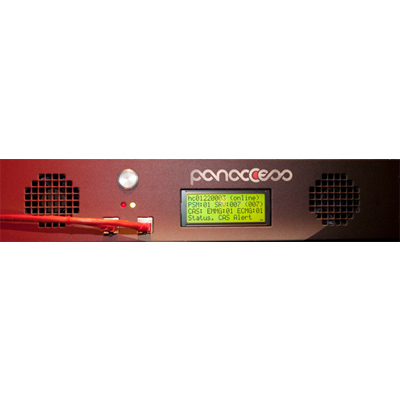
    KOLKATA: Panaccess, a German-headquartered company for CAS, SMS, billing and VoD, aims to promote CAS in India. The company is not only betting on business from the remaining phases i.e. III and IV, but is also approaching the multi-system operators (MSOs) in phase I and II.


    “There is good scope for CAS, SMS and billing in the next phases. And a few existing clients want to replace with our CAS and hence, we are approaching the MSOs in phase I and II along with newer ones,” informs Panaccess sales consultant GK Viswanath.


    “We have commissioned our conditional access system, subscriber management system and billing for a MSO in Pondicherry,” he answers, when asked about the work executed in the country.


    The company, which is slated to open a service centre in Bengaluru by April 2015, has already established its products and services in 32 countries across the world. It serves as a single window for a set of secured and revenue protected suite of solutions that complements and adds revenue streams to existing and new cable TV and DTH operations.


    After April, the company will start visiting all the major MSOs and plans to advertise a lot more as well. “We participate in all the major cable TV exhibitions etc,” he states.


    On the problems MSOs face with existing CAS system, he says, “They can resolve the problems by replacing with our CAS i.e. SMS and billing which are built in. Hence, there is no need for MSOs to go any anywhere else for these facilities. Apart from this, we also provide with solutions through broadband services.”


    In the coming months, the company, which currently employees around 15 people in the country, plans to recruit a few more.  “Next fiscal will see at least 10 for sales and 15 for technical and five for backend and five demonstrator appointments,” he says.


    On the extended deadline of cable TV digitisation in India from 2014 to 2016, he comments, “There are some people who had already started manufacturing STBs indigenously; they are the ones which have been affected by this decision.”


    “We can coordinate with the MSOs those who are planning to go for headends or STBs. We hope to capitalise the market early,” he concludes.


  • Q3-2014: Rating’s lower Comcast’s NBC Cable Networks Ad Rev; Cable Communications Ad Rev up

    Q3-2014: Rating’s lower Comcast’s NBC Cable Networks Ad Rev; Cable Communications Ad Rev up

    BENGALURU: A few days ago, Comcast Corporation (Comcast) reported a 4 per cent y-o-y growth in consolidated revenue (TR) in Q3-2014 to $ 16,791 million from US$ 16151 million in Q3-2013. However, q-o-q, the company’s revenue was almost flat with a fractional drop of 0.3 per cent from $ 16,844 million.

    As per the company’s press release, it receives advertisement revenue (Ad Rev) from two business streams:  Cable Communications and its subsidiary NBC Universal.

    Ad revenues from two segments that contribute to NBC Universal’s ad revenues include Cable Networks and Broadcast Television while NBC Universal’s other segments includes Filmed Entertainment and Theme Parks.

    Advertisement Revenue dropped in the earlier quarter Q2-2014 by 14.1 per cent as compared to Q1-2014 and it has dropped further q-o-q by 8.4 per cent in Q3-2014. Over the 11 quarter period (period under consideration) starting Q1-2012 (quarter ended 31 March, 2012) till Q3-2014 (quarter ended 30 September, 2014 or current quarter), the company’s Total advertisement revenue (Ad Rev) shows a downward linear trend in terms of percentage of TR.

    However during the period under consideration, the company’s Ad Rev in absolute dollar terms shows a slight upward trend, as do the Ad Rev from Comcast’s Cable Communication as well as NBC Universal business streams.

    For Q3-2014, as mentioned above, the company’s Ad Rev was down 8.4 per cent to $ 2,556 million (15.2 per cent of TR) from $ 2,789 million (16.6 per cent of TR) in Q2-2014, but was 3.1 per cent more than the $ 2,480 million (15.4 per cent of TR) in the corresponding year ago quarter.

    Over the 11 quarters under consideration, the company’s average Ad Rev in terms of percentage of Comcast TR has been reported at 17.3 per cent.  As mentioned above, the company’s Ad Rev in terms of percentage of TR was much lower during Q3-2014 at 15.2 per cent of TR and at 16.6 per cent of TR during Q2-2014.

    Also, for the period under consideration, the highest contribution by Ad Rev in terms of percentage of TR as well as absolute value in dollars was in Q3-12 at $ 3,403 million (20.6 per cent of TR), while the lowest figure for the same period was in Q1-2013 at 14.8 per cent of TR and $ 2,268 million. Please refer to figure 1 for details of Comcast’s Ad Rev during the eleven quarters under consideration.

    Cable Communications Ad Rev

    As shown in figure 1, Ad Rev from Cable Communications is at a lesser fraction of the company’s Total Ad Rev, averaging around 20.3 per cent of the company’s total Ad Rev during the period under consideration.  This trend however seems to be changing with Cable Communications Ad Rev increasing for the second quarter in a row. In Q3-2014, Ad Rev from Cable Communications was 1.3 per cent higher at $ 607 million (5.5 per cent of Cable Communications TR, 23.7 per cent of Comcast Ad Rev, 3.6 per cent of Comcast TR) than the $ 599 million in Q2-2014 (5.4 per cent of Cable Communications TR, 21.5 per cent of Comcast Ad Rev, 3.6 per cent of Comcast TR) and 12.2 per cent more than the $ 541million in Q3-2013 (5.2 per cent of Cable Communications TR, 21.8 per cent of Comcast Ad Rev, 3.3 per cent of Comcast TR).

    Impact of NBC Universal Ad Revenue on Comcast Revenue

    NBC Universal Ad Rev contributes around 80 per cent to Comcast’s Ad Rev. Obviously, a drop in Ad Rev by both or either of these NBC Universal’s segments will affect Comcast Ad Rev and Comcast TR.

    About 60 per cent of NBC Universal’s Ad Rev comes from Broadcast Television. Please refer to figure 2 below for the breakup of NBC Universal’s Ad Rev break-up. In Q3-2014, both of NBC Universal’s segments’ Ad Revs have de-grown. 

    NBC reported a fall of 11 per cent in Ad Rev in Q3-2014 to $ 1,949 million (32.9 per cent of NBC Universal TR, 76.3 per cent of Comcast Ad Rev, 11.6 per cent of Comcast TR) from $ 2,190 in Q2-2014 (36.4 per cent of NBC Universal TR, 78.5 per cent of Comcast Ad Rev, 13 per cent of Comcast TR), but was just 0.5 per cent more than $ 1,939 million in Q3-2013 (33.1 per cent of NBC Universal TR, 78.2 per cent of Comcast Ad Rev, 12 per cent of Comcast TR).

    Cable Networks, on the other hand reported a bigger drop of 15.8 per cent in their Ad Rev reported at $ 796 million (40.8 per cent of NBC Universal Ad Rev, 13.4 per cent of NBC Universal TR, 31.1 per cent of Comcast Ad Rev, 4.4 per cent of Comcast TR) from $ 945 million in Q2-2014 (43.2 per cent of NBC Universal Ad Rev, 15.7 per cent of NBC Universal TR, 33.9 per cent of Comcast Ad Rev and 5.6 per cent of Comcast TR), and 4.7 per cent less than the $ 835 million in Q3-2013 (43.1 per cent of NBC Universal Ad Rev, 14.3 per cent of NBC Universal TR, 33.7 per cent of Comcast Ad Rev and 5.2 per cent of Comcast TR). The company attributes lower Ad Rev from this segment to a drop in ratings.

    In Q3-2014, Broadcast TV Ad Rev fell 7.4 per cent in Q3-2014 to $ 1,153 million (59.2 per cent of NBC Universal Ad Rev, 19.5 per cent of NBC Universal TR, 45.1 per cent of Comcast Ad Rev and 6.9 per cent of Comcast TR) from $ 1,245 million in Q2-2014 (56.8 per cent of NBC Universal Ad Rev, 20.7 per cent of NBC Universal TR, 44.6 per cent of Comcast Ad Rev and 7.4 per cent of Comcast TR), but 4.4 per cent more than $ 1,104 million  in Q3-2013(59.2 per cent of NBC Universal Ad Rev, 19.5 per cent of NBC Universal TR, 45.1 per cent of Comcast Ad Rev and 6.9 per cent of Comcast TR).

  • Star’s incentives to MSOs

    Star’s incentives to MSOs

    MUMBAI: The industry could now move to a whole new module of distribution, if Star India is able to successfully attract MSOs to its new formula of distribution.

     
    The national broadcaster has from today decided to give incentives to the multi system operators (MSOs) for carrying its channels. The move will empower the viewer and platforms, usher in a new era of transparency, and boost the entire digitisation eco-system.

     
    Star India, which over the next three to four days will talk to all the platform operators for getting the deals in place, hopes it see the light of the day soon.


    According to Star India CEO Uday Shankar, the platforms and subscribers have one goal: to save money, while the broadcaster’s aim is to ensure that its content is available to as many people as possible. “We want to create an alignment between both the goals and so have created an attractive incentive plan,” says Shankar.


    The broadcaster has decided to incentivise platform operators, if they meet the three criteria: Firstly, provide more Star channels on its platform, secondly. give it to as many subscribers as it can and thirdly. give easy access by placing the channels in the top LCN on its platform. “The greater the reach of the channel, the cheaper the content would become for the operator,” informs Shankar.


    So why come up with this incentive? Answers Shankar, “Earlier, RIO was the default price on which negotiations took place between the broadcaster and platform operator. Negotiations are a process of give and take. However, because of some of the issues that cropped up in the TDSAT, the Tribunal said that broadcasters must make non-discriminatory deals. But how do you do deals which is equal in a scenario when two parties are completely different, in terms of size, importance of market etc. Hence, we decided that we will offer our content only on RIO.”


    RIO for the first time has been made the trading currency for deals between the broadcaster (Star) and the platform. “And now, in order to make sure that costs for the platform and the subscribers remain in control and manageable, we have decided to give incentives to platforms that help us achieve our goal of maximum reach,” he says.


     “We have done two things. One, made RIO the trading currency and because it is the common currency, it is non-discriminatory and secondly, have created a very transparent alignment between Star’s objectives and the platforms’ goals,” he adds.


    The revised RIO will be in force for one year with digital platforms in DAS areas. And as per the DAS Act, the broadcaster has the right to audit the subscriber details provided by the platform. This will help Star ensure that the MSOs are complying by the figures they present while doing the deal. 


    The one big question now is will the MSOs accept the new system? “The concept has been proven by the DTH operators over the years. They do not sell everything to every customer and instead make sharp packages. The consumer picks the package which is what is offered to them. At a broadcaster level, this is what we are aiming at doing. I think this will work for MSOs as well, if they were to make the packages and sell them.”


    Shankar expects the module to take off soon. “The only way to have Star content on one’s platform is through RIO and so I am sure the MSOs will take this up.”


    The MSO, if accepts all the three conditions: Of taking as many channels, of providing it to all its subscribers and give it on a certain LCN, the incentives could add up to giving the platform a discount of up to 60 per cent.


    “We need to understand that not all the channels will be taken by everyone. So if we take that, then some channels will have 100 per cent penetration, while some may have 80 per cent or 60 per cent penetration and on top of that if you layer it with LCN incentives, then the total benefit to the platform will be very lucrative,” informs Shankar.


    The MSOs, with these incentives, can put the Star channels back in their existing packages.


    So do we see this becoming an industry norm? Says Shankar, “This is a pricing issue and one cannot work as a group on this. We are doing it because of a set of issues that came to us. There were too many litigations and as Star we are clear that we want to be totally transparent of how we do business.”


    Platforms that still opt out of the revised RIO will have the option to choose and take channels as per the original list price.


    Click here to read the full RIO


    Click here to read about the rate card

  • Kolkata MSOs to meet Star to resolve RIO rates issue on 28 October

    Kolkata MSOs to meet Star to resolve RIO rates issue on 28 October

    KOLKATA: Multi system operators (MSOs) in Kolkata are likely to meet Star India representatives on 28 October to discuss the issue of RIO rates as per the outcome of the Telecom Disputes Settlement Appellate Tribunal’s (TDSAT) order of putting Star India channels on a la carte.


    On one hand, the package prices will go down by Rs 9, Rs 12 and Rs 16 respectively for different packages but cable TV consumers will have to spend an additional amount for watching their favourite Star channels if the MSOs put Star India channels on a la carte.


    Siti Cable Kolkata director Suresh Sethiya says, “We are meeting Star India officials on 28 October to find a solution. The rates should be fashioned in such a way that the broadcaster does not lose revenue and at the same time, consumers do not have to shell out huge amounts to watch cable TV.”


    Star Network comprising Star Plus, Star Jalsha, Star Movies, Star Sports, National Geographic and other channels, are likely to lose viewers if the MSOs remove the bouquet of Star channels from the packages and offer to subscribers on a-la-carte basis only, cable TV analysts claim.


    Initially, almost all the MSOs in Kolkata had agreed to remove the channels on the Star Network from basic, smart and premium packages and had issued advertisements across major newspapers notifying consumers about the same. “The ground is not prepared for RIO rates. If Star India comes on a negotiation, it is good for the industry,” says Advance Multisystem Broadband Communication (AMBC) managing director Sujit Das.


    While Manthan Broadband director Sudip Ghosh hopes that the negotiations between MSOs and Star Network would bear fruit.


    Though Star India had mailed the change to MSOs on 30 September, MSOs have cited the festive season for delay in implementing it.


    A source says, “Star Jalsha that currently reaches 100 per cent households here may lose around 40 per cent subscribers in a la carte as more than 50 per cent non-Bengali population in Kolkata would opt out.”

  • Q3-2014: Comcast income up 50 per cent y-o-y; NBC Universal’s posts TV Broadcasting strong results

    Q3-2014: Comcast income up 50 per cent y-o-y; NBC Universal’s posts TV Broadcasting strong results

    BENGALURU:  Comcast Corporation (Comcast) reported a 4 per cent y-o-y growth in consolidated revenue (TR) in Q3-2014 to $ 16,791 million from $ 16,151 million in Q3-2013. However, q-o-q, the company’s revenue was almost flat with a fractional drop of 0.3 per cent from $ 16,844 million.


    Talking about the latest earnings, Comcast chairman and CEO Brian L Roberts said, “I am pleased to report strong revenue, operating cash flow and free cash flow growth for the third quarter of 2014. Cable results highlight the consistent strength of high-speed Internet and business services, and video customer results were the best for a third quarter in seven years. We continue to focus on innovation and providing the best experience for our customers, and we are thrilled with the response to our superior X1 platform, which recently reached five million boxes deployed. At NBC Universal, we had another outstanding quarter with double-digit operating cash flow growth, driven by ratings momentum at NBC Broadcast and the successful opening of The Wizarding World of Harry Potter-Diagon Alley in Orlando.”


    Comcast’s consolidated operating expenditure (Expenditure) in Q3-2014 at $ 11,087 million was 2.5 per cent more than the $ 10,821 million in Q3-2013 and 0.4 per cent more than the $ 11,040 million in Q2-2014.


    Comcast’s Earnings per Share (EPS) for the third quarter of 2014 was $ 0.99, a 52.3 per cent increase from the $ 0.65 reported in the third quarter of 2013. EPS for Q2-2014 was $ 0.76, (excluding gain on a sale and transaction-related costs, EPS in Q2-2014 was $0.75). Excluding income tax adjustments and transaction-related costs in Q3-2014, EPS increased 12.3 per cent to $ 0.73.


    The company’s net income after taxes, attributable to Comcast in Q3-2014 increased 49.7 per cent to $ 2,592 million from $ 1,732 million in Q3-2013. Net Income attributable to Comcast Corporation in Q2-2014 was $ 1,992 million.


    Comcast Business Streams


    Two main business streams contribute to Comcast: Cable Communications (between 60 and 65 per cent of TR) and NBC Universal (between 35 and 40 per cent of TR). 


    Video, high speed internet, voice, business services and other businesses are a part of Cable Communications. Cable Communications Video Revenue consists of analogue, digital, premium, pay-per-view, equipment services and residential video installation revenue. Other Cable Communications Revenue include franchise and other regulatory fees, digital media centre, commissions from electronic retailing networks and fees for other services.


    NBC Universal comprises of Cable Networks, Broadcast Television, Filmed Entertainment and Theme Parks businesses.  


    Cable Communications


    Overall, Cable Communications reported a 5.2 per cent growth in Q3-2014 to $ 11,041 million dollars (65.8 per cent of TR) from $ 10,491 million (65 per cent of TR) in Q3-2013 and was almost flat (grew by 0.1 per cent) from the $ 11029 million (65.5 per cent of TR) in Q2-2014.


    Cable Communications Expenditure in Q3-2014 at $ 6,577 million was 5.3 per cent more than the $ 6,245 million in Q3-2013 and 1.7 per cent more quarter on quarter than $ 6,465 million.


    Here is what the company has to say about Cable Communications:


    ‘Customer relationships increased by 82,000 to 26.9 million during the third quarter of 2014, more than three-times the customer relationship net additions in the third quarter of 2013. At the end of the third quarter, penetration of our triple product customers increased to 36 per cent compared to 34 per cent in the third quarter of 2013. High-speed Internet customer net additions improved versus last year and were the strongest for a third quarter in five years. Video customer net losses improved 36 per cent year-over-year and were the best result for a third quarter in seven years. Voice net additions slowed, reflecting a focus on double play during the back-to-school season, as well as X1 availability that was more focused on triple play customers last year, making for a difficult comparison.’


    NBC Universal:


    Comcast’s NBC Universal grew 1.2 per cent in Q3-2014 to $ 5,921 million (35.3 per cent of TR) from $ 5,851 million (36.2 per cent of TR) in Q3-2013, but shrank 1.6 per cent from $ 6,016 million (35.7 per cent of TR) in Q2-2014. Operating Cash Flow increased 13.3 per cent in Q3-2014 to $ 1.4 billion as compared to $ 1.3 billion in Q3-2013, driven by strong results at Broadcast Television and Theme Parks, says the company.


    NBC Universal Expenditure in Q3-2014 at $ 4,505 million was 6.6 per cent lower than the $ 4,601 million in Q3-2013 and 1.7 per cent lower than the $ 4,582 million in Q2-2014.


    Cable Networks:


    NBC Universal’s Cable Networks’ revenue in Q3-2014 at $ 2,255 million was 0.7 per cent more than $ 2,239 million in Q3-2013, but 8.9 per cent lower than $ 2,476 million reported for Q2-2014.


    Cable Networks’ expenditure in Q3-2014 at $ 1,387 million was 0.1 per cent more than the $ 1,386 million for the corresponding quarter year ago and 11.2 per cent lower than the $ 1,562 million in Q2-2014.


    Advertising revenue from Cable Networks shrank 4.7 per cent to $ 796 million in Q3-2014 from $ 835 million in Q3-2013 and was 15.8 per cent lower than $ 945 million in Q2-2014.


    Cable Networks’ distribution revenue grew 5.1 per cent in Q3-2014 to $ 1,281 million in Q3-2014 from $ 1,219 million in Q3-2013 and grew 0.9 per cent from $ 1,270 million in Q2-2014.


    Its content licensing and other revenue shrank 3.8 per cent to $ 178 million in Q3-2014 from $ 185 million in Q3-2013 and fell a massive 31.8 per cent from $ 261 million in the immediate trailing quarter.


    Television Broadcasting:


    NBC Universal’s Television Broadcasting revenue grew 7.7 per cent to $ 1,770 million in the current quarter from $ 1,644 million in Q3-2013, but was 2.5 per cent less than the $ 1,816 million in Q2-2014.


    Television Broadcasting Expenditure in Q3-2014 at $ 1,628 million was 1.1 per cent more than the $ 1,610 million in Q3-2013 and 3.3 per cent more than the $ 1,576 million in Q2-2014.


    Television Broadcasting advertising revenue in Q3-2014 grew 4.4 per cent to $ 1,153 million from $ 1,104 million in Q3-2013, but was 7.4 per cent lower than the $ 1,245 million in Q2-2014. Broadcast Television content licensing revenue grew by 13.2 per cent from $ 355 million in Q3- 2013 to $ 402 million in the current quarter and was 16.9 per cent higher than $ 344 million in Q2-2014. Other revenue for Broadcast Television grew 16.2 per cent to $ 215 million in Q3-2014 from $ 185 million in Q3-2013, but was 5.3 per cent lower than $ 227 million in Q2-2014.


    Filmed Entertainment:


    NBC Universal’s Filmed Entertainment revenue in Q3-2014 was 15.3 per cent lower at $ 1,186 million from $ 1,400 million in Q3-2013 and 0.9 per cent more than $ 1,176 million in Q2-2014. The company attributes this drop to the tough competition with the strong box office performance of Despicable me 2 in Q3-2013.


    Filmed Entertainment Expenditure in Q3-2014 at $ 1,035 million was 14.5 per cent lower than the $ 1,211 million in Q3-2013, but 5.5 per cent higher than the $ 981 million in Q2-2014.


    Theatrical revenue in Q3-2014 at $ 265 million was 52.6 per cent lower than the $ 550 million in Q3-2013, and 35.9 per cent more than $ 195 million in Q2-2014. Filmed Entertainment content licensing revenue at $ 439 million was 15.8 per cent more than $ 355 million in Q3-2013 but 5 per cent lower than the $ 462 million in Q2-2014.


    Home Entertainment revenue at $ 321 million in Q3-2014 fell 10.6 per cent from $ 359 million in Q3-2013 and was 11.8 per cent less than the $ 364 million in Q2-2014. Filmed Entertainment’s other revenue at US$ 161 million in Q3-2014 was 58.3 per cent more than the $ 103 million in Q3-2013 and was 3.9 per cent more than the $ 159 million in Q2-2014.


    Theme Parks


    NBC Universal’s Theme Park revenue at $ 786 million was 18.9 per cent more than the $ 661 million in Q3-2013 and 27.8 per cent more than the $ 615 million in Q2-2014.


    Theme Park Expenditure in Q3-2014 at $ 384 million was 20.8 per cent more than the $ 318 million in Q3-2013 and 3.5 per cent more than the $ 371 million in Q2-2014.


    Click here for earnings presentation


    Click here for financial results
  • DEN to put Star channels on a la carte from November

    DEN to put Star channels on a la carte from November

    MUMBAI: It was first Hathway Cable & Datacom that complied with the Telecom Disputes Settlement Appellate Tribunal’s (TDSAT) order of putting Star India channels on a la carte, and now following it is multi system operator (MSO) DEN Networks.

    The MSO has, through a newspaper advertisement, informed its consumers that the Star channels will be removed from the packages and will be offered to subscribers on a-la-carte basis only. “The industry is moving towards a-la-carte channels and so are we. As per the regulation, we have to inform our consumers 15 days in advance before switching off a channel and putting it on a-la-carte. This is what we are doing,” says a source from the company.

    The advertisements have been issued in two newspapers in the DAS notified areas. The ad reads: “The Hon’ble TDSAT has upheld the affidavit by Star India Pvt Ltd and has allowed Star TV to offer its channels to us only on a-la-carte basis. In compliance to this order of the Tribunal and as per Star’s demand, we are being forced to remove the Star channels from our packages and offer them to subscribers only on a-la-carte basis and consequently all our packages are being changed.”

    The ad further says: “We deeply regret the inconvenience caused to our esteemed viewers and solicit your co-operation for due legal compliance. Please contact your local cable operator for your revised package details as well as to continue availing the Star channels of your choice on a-la-carte basis.”

    While Den has started informing the consumers with newspaper advertisements, it will also run TV scrolls to inform the subscribers of the changes in the packaging.

     The Star channels will be switched off from first week of November, post which Den subscribers will have to call the cable operator to be able to view the Star channels.


  • Siti Cable CEO VD Wadhwa appointed as president of the new All India Digital Cable Federation

    Siti Cable CEO VD Wadhwa appointed as president of the new All India Digital Cable Federation

    MUMBAI: In a significant move to organise the digital cable industry for the overall benefit of all stakeholders and to facilitate and further create momentum for digitisation for phase III and IV, major Indian multi system operators (MSOs) have come together under the aegis of the All India Digital Cable Federation (AIDCF).


    The newly formed federation held its first meeting on 15 October 2014 in New Delhi, which  was attended by all the leading MSOs i.e. Hathway, Den Network, Siti Cable, In Cable, Digi Cable, Fastway, GTPL, ICNCL and Manthan.  With the formation of new Digital Cable Federation, the earlier forum of MSO Alliance has been dissolved.


    The members have unanimously elected SITI Cable executive director and CEO VD Wadhwa as the president of the federation (AIDCF) for an initial term of two years.


    The federation will work towards the overall growth of this sector and create environment for not only complete digitisation of cable TV under regulatory guidelines but also will deliver the benefits of digital services including broadband and other value added services to the people of India thus fulfilling the dream of ‘True Digital India.’


    AIDCF will be the official voice for the Indian digital cable TV industry and will interact with ministries, policy makers, regulators, financial institutions and technical bodies. It will also provide a platform for discussion and exchange of ideas between these bodies and the service providers, who share a common interest in the development of digital cable TV in the country.


    It will collaborate with other industry associations such as IBF, CII, FICCI, ASSOCHAM association etc., with the objective of presenting an industry consensus view to the government on crucial issues relating to the growth and development of the industry.


    The federation has invited all MSOs who have minimum one lakh digital cable TV subscriber base and who are following TRAI QOS norms to become members, so that entire industry speaks in one voice and works for common objective.


    The members of federation will also work out the business model for phase III & IV digitisation and create the healthy business environment for all stakeholders.


  • AMBC targets installation of additional 1.6 lakh STBs by Dec 2016

    AMBC targets installation of additional 1.6 lakh STBs by Dec 2016

    KOLKATA:  The West Bengal based multi-system operator (MSO), Advance Multisystem Broadband Communication (AMBC), is aiming to install 1.6 lakh set top boxes (STBs) by December 2016.

    AMBC claims to be the first private limited company in cable industry that is still run by a professional management team built by cable operators only. Launched in 2000, the company has more than 450 LCOs affiliated with it at present. AMBC in the Kolkata municipal area (KMA) claims to have more than 1.83 lakh digital connections.
     
    The company has one digital headend, which caters to the Kolkata municipal area and three analogue headends. The analogue headends at Arambag and Birbhum were to be converted into digital ones with the implementation of DAS in analogue areas. The company had earlier earmarked Rs 5 crore for converting the analogue headends into digital ones, but now the company has ‘withdrawn the signal’ from some non-potential areas.
     
    In the DAS areas, AMBC has seeded STBs in Hooghly, Howrah, Nadia, Salt Lake and North 24 Parganas among others, while in locations like Burdwan, Birbhum and parts of Bankura, it has more than 2.5 lakh analogue cable TV connections.
     
    “We were preparing to seed STBs in phase III and IV, and are encouraging the LCOs to do as much as they can, but RIO arrangement of SIPL is becoming a major drawback,” said AMBC managing director Sujit Das.
     
    Das informed that the company had already accounted for stock and trade interest rate due to postponement of digitisation deadlines when his company had taken loans to procure STBs’.
     
    “We are looking for some loops in KMA,” revealed Das. “Actually we are trying to saturate our core market with topmost priority. A set back after making a new venture in a new market may spoil our name and deflect our target,” he shared.
     
     Speaking about the challenges in cable TV digitisation, Das said, “As the market is still directed mostly by the LCOs, we need to have their confidence first, and then the job will become easier. A confused ground partner can be harmful for the operation. We need to work with cooperation with the LCOs, not with compulsion.”
     
     “Value chain is also a big factor. For the remaining phases we need to start by breaking even,” he said.  “Only a la carte channels offer will not be feasible enough as LCOs have to bear high cost to carry the channels.”
     
    Das feels that the experiment of digitisation will be over before the next phase starts and the market will be mature enough to work with. “So we may reduce our capex loss in seeding of STBs and operational cost as well. In phase 1and 2 we all were riding on the tiger’s back.”
     
    When being asked to comment on the phase III and phase IV of DAS, he said the locations where the company has analogue presence are price sensitive market and the monthly subscription fee hovers around Rs 100-Rs 110. “Keeping in mind the price sensitive market, we might do various permutations and combinations while providing the channel package to consumers in DAS 4 areas. A price hike in small towns and rural Bengal will slow down STBs seeding,” he added.
     
     
    Ground networking and channel placing are major factors for acceptance of a signal to the consumers. AMBC also works with the best channel sequence, which is reviewed from time to time depending upon the feedback from the ground, Das informed.
     
    AMBC says that it gets immense support from its LCOs’ to deliver quality service and technical support to meet consumer demands.