Category: Cable TV

  • Siti Cable could go prepaid within three months

    Siti Cable could go prepaid within three months

    MUMBAI: National multi system operator (MSO) Siti Cable is looking at options of going prepaid.

    While the MSO will test the viability of the model in Delhi first, it will also replicate it in other states, at a later stage. “What we have seen is that whatever we do in the Delhi market, when replicated outside, works well,” says Siti Cable CEO VD Wadhwa.

    The prepaid model that Siti Cable is looking at will be based on the local cable operator (LCO) depositing an advance to the MSO and then collecting the same from the consumer.  “We have given the power of managing the subscriber management system (SMS) to the LCO, so they can change packages or switch on or switch off boxes of customers who do not pay them the cable TV bill,” informs Wadhwa.
    The LCO according to the prepaid model will get the signals from the MSO so long as his credit balance remains. “The LCO will have to keep renewing his credit balance to get uninterrupted services, the moment his balance becomes zero, we will disconnect the signal,” he says.

    The LCOs through this model will have to find the defaulters and take corrective action accordingly. The key to moving prepaid is to give access of SMS to the LCOs.

    Not only this, going forward the LCOs can also make the system prepaid at their end by billing the customers in advance. This will also help the LCOs find out defaulters.

    While Siti Cable also has the option of recharging through their website, they have realised it upsets the LCOs. “We have to build the trust between the LCOs and MSO and let the LCO handle the customers,” he opines.

    Wadhwa is hopeful that the system will be in place within three months.


  • Cisco powers Siti Cable’s DOCSIS 3.0 technology for broadband

    Cisco powers Siti Cable’s DOCSIS 3.0 technology for broadband

    MUMBAI: Siti Cable, that controls nearly 4.3 million digital cable TV subscribers, has chosen Cisco to boost its broadband. The tech company will provide DOCSIS 3.0 technology for its broadband service in the country.

    Through this, the MSO will be offering speed of up to 100 mbps. DOCSIS 3.0 can offer download speed of upto 300 mbps per subscriber and the upload capacity up to 100 mbps. As earlier reported by indiantelevision.com, this technology has been launched in Delhi and NCR.

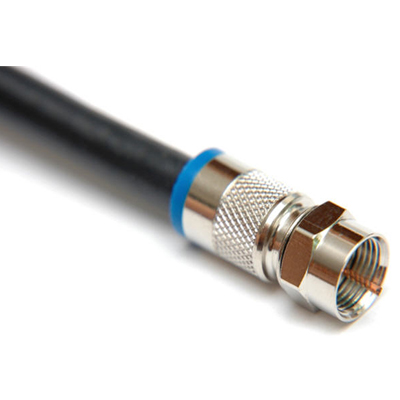
    Speaking on the association, Siti Cable CEO VD Wadhwa said, “It is an absolute pleasure to be introducing our broadband service. We plan to accelerate the deployment to capitalise on the enormous business potential this market currently holds. With the deployment of this technology, we are uniquely positioned to offer superior Internet browsing, video streaming, video surveillance and rich media content on the same coaxial cable that delivers high-quality digital cable TV signals. We will offer much higher speed at highly competitive price. We are confident that Cisco’s technological expertise will help us in the achievement of this goal.”

    Cisco India and SAARC service provider sales managing director Sanjay Kaul said, “It is commendable to see Cisco’s vision, to be the leading enabler of ICT (Information and Communications Technology) and broadband acceleration in India, coming closer to reality. We believe that the cable TV industry has the potential to transform the broadband industry in India and would like to congratulate Siti Cable for marking an important milestone on this roadmap.”


  • So who does DAS benefit and what does RIO have to do with it?

    So who does DAS benefit and what does RIO have to do with it?

    When the BJP government was last in power with Ms Swaraj at the helm of the MIB, the digitisation process was first mooted in its original form of CAS. The populist notion was to bring down cable prices with the false concept of pay for what you want, so pay less. But little did the government realise that the customer’s cable bill was so significantly subsidised because of ‘under declaration’ that the ‘spoilt’ consumer in the cheapest cable market in the world would either have to reduce his current offering by half or more or if he wanted the same channel line up, would actually have to pay twice as much!

    At that time, the broadcasters were resentful as reduced reach was imminent in an advertising driven market and for DPOs it was definitely not favourable as they would need to reduce the number of analogue channels to piggyback digital cable on some of the frequencies which was otherwise used for analogue channels. (This was because both digital and analogue had to be offered on the same network). And this reduction of analogue channels impacted their carriage potential and hence revenues.

    So who won? None of the key stake holders- broadcaster, DPO or consumer.

    So who does DAS in its new avatar benefit?

    Certainly not the consumer from his cable bill point which was the original populist premise. Sure, the DPOs and broadcasters, once the dust settles down. With the transparency of set top boxes and doing away with ‘under declaration’, the MSO can now collect from the ground higher revenues and hence a bigger chunk eventually to the broadcaster. (Cable revenues were significantly lower than DTH revenues even though cable homes far exceeded DTH homes.) Who else benefits? The government, for sure, by way of higher taxes.

    And the losers of course in the value chain would be no doubt the consumer now shelling out higher ARPUs. And of course the LCO who till now reigned king keeping the bigger chunk of collections.
    So what’s wrong with DAS?

    Fundamentally, the current consumer pricing structure, the RIO rates and the business model. If DAS was to benefit the consumer why is there no B to C model, why are there no retail prices with direct offers from broadcasters to consumers with pipeline commissions to DPOs. Why are RIO rates unrealistic? Why are DPOs free to do retail pricing? The problem is RIO is a regulatory created framework and broadcasters have maxed out after years of price freeze not knowing what to expect.  

    If DAS has to succeed then this whole pricing scenario has to be re-looked. How can the broadcaster market his product if the DPO controls retail pricing? Or given the RIO pricing (which will now be used as a basis for negotiation) will the broadcaster really allow the DPO to play the role of a wholesaler and buy in bulk and retail at attractive customer offerings significantly lower than RIO.

    When regulation hinders market dynamics, it creates more absurdities. Any consumer product needs an MRP. Packages or stand alone. RIO is definitely not helping this process. It’s best the two beneficiaries – the DPOs and the broadcasters finally come together, see eye to eye and work out what is the magical pricing so that packaging and pricing is offered by both and directly to the consumer. If the DPO truly acts as a wholesaler he can surely better any packages the broadcaster directly offers unless of course the broadcaster/channel can go it alone which no doubt will be the true test of content and certainly a success yardstick to measure addressability.

    So can the government bury RIO and keep the consumer in mind!  TV entertainment is mass and needs to be looked at (retailed) as a service similar to that of consumer products! Let’s have an MRP, let’s also have a distributor pricing better than MRP. There is scope for both models to co-exist- DPOs mixing it up and offering multi-broadcaster packages and broadcasters also retailing with negotiated discounts to DPOs for pipeline usage and payment gateway.

    A 100 million plus pay TV homes is a very robust subscription market!

    Lastly, with the BJP now back surely we hope they will complete what they chaotically started. With the honourable I&B Minister Arun Jaitley and MoS Rajyavardhan Singh Rathore now at the helm it certainly looks like MIB is priority and our industry will definitely be both in competent hands and in their cross hairs!


    (These are purely personal views of consultant Sanjev Hiremath and indiantelevision.com does not necessarily subscribe to these views.)
  • MSOs to put Star’s popular channels in base pack, regional in a-la-carte

    MSOs to put Star’s popular channels in base pack, regional in a-la-carte

    MUMBAI: As the deadline for signing deals with Star India for its channels on reference interconnect offer (RIO) ended on 10 November, MSOs are preparing various options to deal with the altered business plans.


    While the network is providing all its channels only on RIO, MSOs are finding out different ways to package the channels. India’s leading MSO Hathway is currently creating new packages that it will roll out soon. Says a source, “We will be redefining our packs and giving revised rates soon. Marketing on the same will commence as well. It will be something new for the trade.”


    While the base pack could include the popular channels from its bouquet, the regional channels will only be on a-la-carte. English, sports and others will be categorised in different packs. The channel had initially disconnected signals in October, but now the channels are switched on again.


    IMCL’s InCable on the other hand has also followed a similar pattern. The base pack will consist of Star Plus, Life OK and Star Pravah, the latter due to its large presence in the state of Maharashtra. The regional channels such as Star Jalsha, Star Vijay, Asianet, Suvarna etc will be on a-la-carte.


    “We have decided to put the popular channels on the base pack for three months to avoid unnecessary system overload due to people calling for it. Slowly, they will also be moved out into a-la-carte once we educate consumers. Soon we will also have proper EPRS, CAS and also net billing,” says IMCL group MD and CEO Tony D’silva. The MSO has taken Star’s incentives for channel penetration by putting three in its base pack.


    According to an official from Den Networks, the MSO has not yet signed the deal and is yet negotiating. Advance Multisystem Broadband Communciation (AMBC) in Kolkata will ensure all 26 channels will be given to consumers while another Kolkata based MSO said that the agreement with Star has been signed but it is evaluating the incentive schemes.

  • “India is not yet mature for RIO deals”: Sanjev Hiremath

    “India is not yet mature for RIO deals”: Sanjev Hiremath

    The current scenario in India is not very viable to allow for reference interconnect offer (RIO) to take off. No broadcaster would want to be on a RIO agreement because the moment you are on RIO, your distribution is affected. Broadcasters want their channels to be carried by all operators and also in good packs for maximum reach.


    Subscription too would be lower at least initially. The RIO rate X subscribers on CPS basis will mostly likely be lower than the existing negotiated price for that channel.


    India is not yet an addressable pay TV subscription market and RIO deals will not work anytime soon; neither for the broadcaster nor for the DPO. The addressable billing system, consumer communication and B to C marketing needs to kick-in. 


    Currently, broadcasters want reach and DPO wants carriage or at the least it does not want to pay for the channel and keep its content cost down. There is competition among DPOs too and cost of content is critical to all. RIO is a regulatory mandate in the absence of a deal and a good basis for negotiations. Money saved on carriage on RIO (as there is no carriage) can be used for discounts to structure deals. 


    In the immediate future, some channels will get impacted due to poor uptake or because of it being a niche or premium channel. Some of these channels will likely go on RIO especially stand alone ones. As and when billing for content gets established we move to a more mature market where broadcasters will get decent subscription revenues, niche channels will be able to survive and premium channels will make more money being a-la-carte on a CPS deal.


    We are in a transition phase of moving to the real objective of DAS, pay as per channels viewed/subscribed – in short, ADDRESSABILITY!


    (These are purely personal views of consultant Sanjev Hiremath and indiantelevision.com does not necessarily subscribe to these views.)

  • Bombay HC may hear Digicable license cancellation case next week

    Bombay HC may hear Digicable license cancellation case next week

    KOLKATA: The Bombay High Court may hear the Digicable Network license cancellation case next week most probably on Monday.

    Earlier as well, the Bombay HC had granted relief to the multi-system operator (MSO) when it extended the order cancelling its permanent registration till 5 November. “The case was adjourned as the MIB counsel had sought around four weeks’ time to file replies in the matter,” says an analyst.

    Jagjit Singh Kohli-promoted Digicable Network, which challenged the Ministry of Information and Broadcasting’s order on 13 September, had earlier got an ad interim stay against the order till 6 October.
    “The hearing has been postponed for the next two to three days,” said Kohli.


    The MSO had approached the court in September post which it got an ad interim stay till 6 October and subsequently till 5 November. The MSO had challenged the basis on which the security clearance was denied to the MSO.


    A similar case is being heard in the Kolkata High Court on the petition filed by its JV -Digicable Comm on its licence cancellation. That case has been postponed to 28 November. The Kolkata based MSO has got a stay order on its cancellation twice and this being the third time. The court observed that when the MSO received its DAS licence in 2013, it was subject to security clearance from Home Ministry and the same has been denied in the order passed in September 2014.


    In July, the ministry of information and broadcasting had cancelled the licences of Digicable Comm while in September the same was done for Digicable Network, on the basis of denial of security clearance by the Home Ministry.


  • With broadcaster backing, MSOs eye voluntary digitisation

    With broadcaster backing, MSOs eye voluntary digitisation

    MUMBAI: When the industry was moving in full force towards digitising phase III and phase IV cities, the Information and Broadcasting Ministry announced the postponement of digitisation till 2016. The news may have elated a few, but multi system operators (MSOs) and broadcasters have been critising the move. 


    “It is the MSOs who have to invest in digitisation,” says Siti Cable CEO VD Wadhwa and president of the newly formed All India Digital Cable Federation (AIDFC). In such a scenario, Wadhwa has suggested voluntary digitisation in these phases.

    The MSOs have a feeling that with delayed digitisation, the local cable operator (LCO) will not pay them the incremental money, since digitisation is not taking place.
     

    With delayed digitisation, broadcasters who were looking for a hike in their subscription revenue from the phase III and phase IV markets will also have to put a break to their dreams. 

    The MSO too is at loss. Currently, an MSO invests close to Rs 1500 per set top box and additional money on connectivity. “With this delay, the MSOs are not going to get any return on their investments for the next 15 months.  So whether I pay today or after 15 months, my interest cost will keep getting high, since I will be borrowing money and then investing,” informs Wadhwa.

    To tackle this situation, Wadhwa suggests that since the industry has to in any case move to digitisation in the next two years, they can start with voluntary digitisation.  “Broadcasters will have to back the MSOs to achieve this,” he says adding that Siti Cable is ready for voluntary digitisation, provided that broadcasters do not charge the MSO for the next 15 months.

    “Since the MSO is bringing in the money, the broadcasters should agree to not charge for next 15 months,” he says.

    Wadhwa also suggests that voluntary digitisation can be smooth provided the LCOs increase the cable bill in phase III and IV markets by Rs 50-Rs 60. “LCOs have till today been charging only Rs 150-Rs 180 from the consumer for some 60 channels. I would suggest that since with digitisation the number of channels will go up to 200-250, the LCOs should increase the bill by Rs 50-60 per subscriber.”

    Wadhwa is of the view that the LCOs can keep 50 per cent of the amount they increase in the cable bill. “With this, till digitisation is complete, while the ARPU for the MSO increases, the LCO can also get 50 per cent more on what he is currently getting,” he opines.


    In order to make this possible, Wadhwa will first try to bring consensus amongst MSOs and then will talk to all the broadcasters. “If the broadcasters support us, we will go ahead with voluntary digitisation.  We will also go to each state and talk to the LCOs,” he concludes. 


  • TDSAT gives a week’s time to Telengana MSOs to carry TV9

    TDSAT gives a week’s time to Telengana MSOs to carry TV9

    MUMBAI: The Telecom Disputes Settlement Appellate Tribunal (TDSAT) has directed the multi system operators (MSOs) in Telengana to resume the broadcast of news channel TV9 within a week from the passing of the order on 29 October.


    The case which had been filed by the Associated Broadcasting Corporation (ABC) against MSOs Hathway Cable & Datacom, Siti Vision Digital Media and others, had actually been shut in early October when TDSAT had directed the state MSOs to carry the channel. At that time, the Telengana state additional advocate general Ramachandra Rao had said that the government would provide security to the MSOs and LCOs for carrying the channel. This was subject to ABC not broadcasting content that would violate the law or put out defamatory content against the state of Telangana.


    However, the Central Government solicitor general Ranjit Kumar regretfully said that the assurance given by Rao ‘remained mere words on a piece of paper’. To this, Rao produced proof of letters sent to the Telangana Police director general asking them to ensure that ‘no untoward incident takes place as a result of the petitioner’s broadcast as per the TDSAT order.’


    However, counsel for the MSOs said that the police would come to rescue only after the MSOs had suffered damages from the mob. The answer to this would be to issue a public notice or a press release so that the MSOs could resume broadcast.


    The TDSAT has directed the State of Telangana to file an affidavit that as long as TV9 refrains from defamatory content against the state, its people, government and follows the Programme Code and the Advertisement Code, the government would provide security. It has also asked the broadcaster and the MSOs to publicise the order through electronic media.


    The MSOs will have to intimate the police about the date when they shall resume broadcast. TV9 has been switched off from the state of Telangana from several months due to its broadcast of content that even the TDSAT saw as ‘highly defamatory’.


  • MSOs to put Star India channels on a la carte

    MSOs to put Star India channels on a la carte

    MUMBAI: The multi system operators (MSOs) are gearing up for the big change. In order to meet the deadline given by the Telecom Disputes Settlement Appellate Tribunal (TDSAT), the leading MSOs under the umbrella of All India Digital Cable Federation (AIDCF) met in New Delhi today.


    “The main agenda of the meeting was to discuss how we will implement the order passed by the Tribunal,” says AIDCF president and Siti Cable CEO VD Wadhwa speaking to indiantelevision.com.


    During the meeting, the MSOs discussed the modus operandi for implementation of RIO by 10 November and also the challenges.


    “There are three major challenges: at the consumer level, at the local cable operator level and thirdly at the technology level,” adds Wadhwa.


    Every MSO, according to Wadhwa has different subscriber numbers. “All the packages have to be upgraded or downgraded. We will have to see if the system can support the changes for millions of subscribers,” he says.


    AIDCF has decided to put all the Star India channels on a la carte. “We cannot carry all the Star channels, since it is coming up to be very expensive. So we have decided to put all the Star channels on a la carte and will let the consumer decide which channels they want,” he informs.


    Wadhwa says that even after the incentives that Star is offering, the cost for the MSO has doubled. “Even if we take the maximum discounts, the channel prices are going up by 100 per cent,” he says.


    Not only this, AIDCF is forming a sub-committee which will be meeting Star India officials early next week. “The committee will meet the officials to explain to them the challenges we are facing. This system is viable for none,” he adds.


    All the MSOs will be signing the RIO deals with Star before 10 November and in the meanwhile start working on creating new packages. “We will decide the pricing of the channel based on the consumer demand for the channel,” he concludes.


    The MSOs will inform the consumers of the changes at individual level.


    The meeting was attended by Siti Cable, Hathway Cable & Datacom, Den Networks, Manthan, GTPL amongst others. 

  • AIDCF to hold a meeting to discuss Star’s RIO deal implementation

    AIDCF to hold a meeting to discuss Star’s RIO deal implementation

    MUMBAI: Just 10 days after its formation, the All India Digital Cable Federation (AIDCF) under the presidentship of Siti Cable CEO VD Wadhwa is all set meet for the second time on 31 October in New Delhi. The meeting will be attended by the leading multi system operators (MSOs) and has a set agenda for the day.


    The meeting which is being held just a day after the Telecom Disputes Settlement Appellate Tribunal (TDSAT) accepted Star India’s 10 November deadline for implementation of the RIO deal by MSOs is not co-incidental.


    “The platform operators are meeting in Delhi in order to decide on the modus operandi for implementation of the RIO deal, the deadline for which is 10 November,” says a MSO, who is likely to be a participant of the meeting.


    The TDSAT in its order has asked the MSOs to sign the RIO deals with Star before 10 November, failing which the broadcaster can disconnect its signals.


    The meeting is likely to be attended by Manthan, Siti Cable, GTPL, Hathway among others.