Category: Multi System Operators

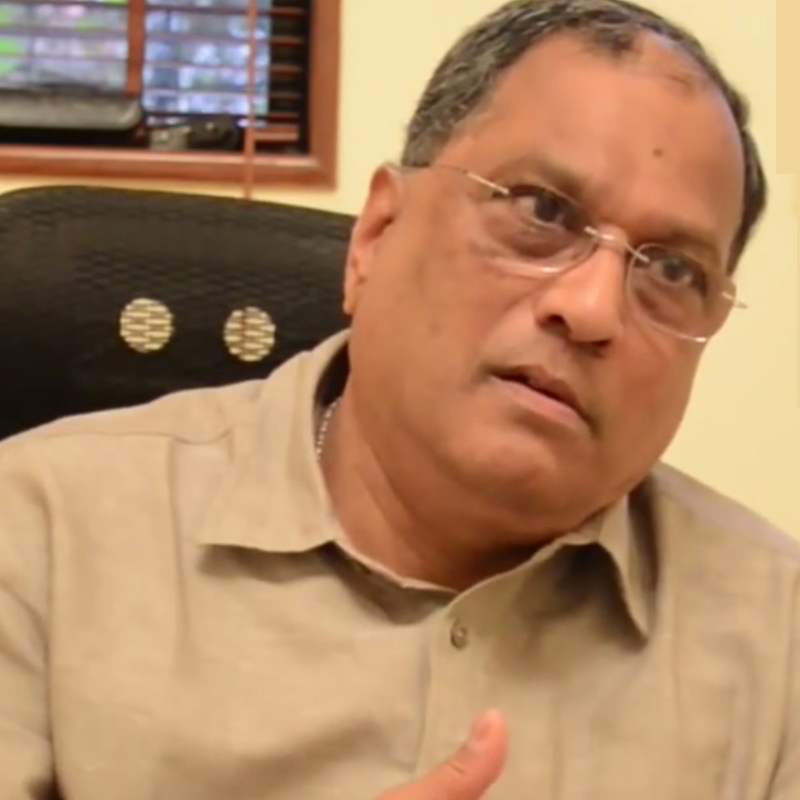
  • “IndusInd to soon start pre-paid cable TV services”:  Tony D’silva

    “IndusInd to soon start pre-paid cable TV services”: Tony D’silva

    Almost a-year-and-a-half ago Hinduja Ventures Limited (HVL) brought Tony D’silva – a man with more than four decades of experience across sectors such as media, FMCG and pharma – on board as the president of the company to spearhead its Headend in the Sky (HITS) business.


    Now, D’Silva has been given responsibility as MD & group CEO of IndusInd Media &  Communications Ltd (IMCL)  with long time  MD &  CEO of HVL’s flagship cable company Ravi Mansukhani stepping down earlier this week. As he takes on a bigger role, he is looking at betterment of the company with introduction of newer services. He sounds quite optimistic while suggesting prepaid model for billing and doesn’t hesitate in saying that he wants to give the local cable operators (LCOs), the rightful ownership of their subscribers.


    In an exclusive interview with Indiantelevision.com’s Seema Singh, D’Silva talks about his plans for InCable and HITS.


    Excerpts:


    What does becoming the MD and CEO of IMCL and CEO of Hinduja Group-media mean to you? How is this development going to change Hinduja Group’s media businesses and your life professionally? What are your immediate challenges?


    I have mixed feelings because the challenges are very steep. The future is exciting but there are grey areas to be covered before we achieve the state of growth with digitisation and monetisation. While I am looking forward to the challenges, I am wary of the fact that many hurdles need to be crossed. Bringing along processes is difficult and ultimately to monetise this business, the only way is to go prepaid.


    The industry must refocus itself to become customer friendly and start customer care services. Everybody in the digitised world is looking at increased revenues. The only way to make more money is by starting packaging, bundling and including small packages with regional and sports channels. The customers need to be segmented. Those who can afford to pay more can take higher priced packages, while those who can’t can opt for the basic pack. Unfortunately, there is a mental block in the mind of the consumers towards cable TV. They are not ready to shell out much for cable TV experience, but there is no such block to pay for broadband or triple play or video on demand (VOD).


    That’s where the entire industry should move. They should look at offering more value added services (VAS) and TV Everywhere services. This is what needs to be monetised. My focus will be on bringing the infrastructure to meet these requirements, putting procedures and making the whole business transparent so that every stakeholder in the value chain gets a share of the revenue.


    As the Group CEO – media and MD & CEO of IMCL, you will be responsible for restructuring the entire media business and value creation, how are you planning to do that? 


    We have two-three different businesses. My role is to monetise all these businesses so that the value of the group’s media businesses can grow. While phase I and II of digitisation was all about packaging, bundling etc, phase III and IV is all about HITS. I am very clear that ultimately it is the local cable operator who should own the network. Even in the HITS business, Grant Investrade Ltd (GIL) will be the white label which will be a pure technology service provider, with VOD and VAS.


    My aim is also to push the broadband segment which is lagging so far. We have a vast infrastructure for broadband which hasn’t been utilised. It is one area we will start developing now. We are not using that broadband, we are renting it out and they are monetising it. Now, we will restructure that segment as well.


    I will look at restricting the business to area specific responsibility. Our focus will be on customer care, which involves interface with customers through call centres and backend support. We will also focus on the LCO: MSO relationship as cable operators are another crucial part of our business model. The third is the broadband and new services.


    I would also want to make all our centres, profit centres.


    As far as HITS is concerned, it is a separate business with a different team and focus.


    Recently, Grant Investrade Ltd announced an investment of Rs 300 crore in the cable distribution business. How do you plan to utilise that investment? Will your approach for the growth of the company be different from your predecessor? How will you ensure HITS turns out to be profitable?


    The previous management did a great job. There is no other way than HITS to deal with phase III and IV. With HITS, the average cost of delivering data that comes to be Rs 18 per customer through optical fibre will go down to Rs 8.


    The HD box is the future and we will give HD boxes in the price of SD boxes. The operator in the HITS business is competing with DTH. The LCOs have the money but they face difficulty in buying bulk boxes. Thus, we are giving them the option of cash and carry. The operator has the option of buying boxes as per his need.


    My profit is by profit of numbers. As my subscribers increase, my cost will come down. Initially, I may incur losses but then it’s a volume game for me. If we are serious about digitisation, the government should have first cleared our HITS project. We are saying the LCOs can own the consumers and can do the packaging. We will help them seed boxes. It is different than JAINHITS. We have three to four different boxes and they get an option to choose.


    How much has been invested in HITS? Is more investment needed? When do you see the licence being cleared by the Information and Broadcasting Ministry?


    We have been waiting since 14 months to get the licence. We have already spent close to $10 million in the technology which is handled by Castle Media and people. Another $100 million will be invested in HITS project. This investment will happen once we get the licence.


    We are suffering because of the wait. When we started the project, the dollar rate was close to Rs 43, now it is Rs 63. Who will take the responsibility to pay for the escalation?


    There is a turf war going on between the LMOs and MSOs? Are you looking at resolving these issues?


    We are losing the focus in this fight, which is the customer. Industry is beginning to realise that just having subscriber numbers is not enough. We may not be the largest MSO in the country, neither am I aiming for that. My mission is to make InCable the most respected MSO in India. And that’s what the business model should be.


    By when will the VAS and VOD services come in to effect? Will HITS benefit IMCL? Do you think the customer in phase III and phase IV will readily pay for these services?


    A lot of this is application and we have a full fledged plan. Hopefully, when we launch HITS we will launch it with these services. These services will also be provided on InCable. IMCL will be HITS’ customer. The values and charges will be the same for IMCL as for other LCOs.


    The content requirement differs in phase III and phase IV and so HITS becomes an important platform. We will provide different packages based on the requirement. In fact we are encouraging LMOs and MSOs to strike their own deal with broadcasters.


    The customers in phase III and IV has money as well. We are targeting 20-25 per cent of the phase III and IV market through HITS. And that market is available.


    Phase III and IV need 90 million STBs. How many of these will be seeded by IMCL? Is DTH a competition for phase I and phase II? Will you set up new headends for phase III and IV?


    We will not seed STBs if our licence is not cleared.


    It is true that in phase I and II cities, the MSOs have to up their antennas and come up with VAS services. 70 per cent of the boxes are SD boxes when the market world over is moving to HD. Are we expected to replace all the boxes later? That will be an expensive proposition. Most part of DTH and mobile is pre paid, so we should move towards that. This will promote transparency. We should be launching prepaid in couple of months. HITS will be a complete prepaid model.


    No new headends will be set up in phase III and IV.


    In how much time can we expect changes at IMCL?


    I have given myself two months to at least start changing the process, procedures and start customer friendly actions by upscaling our call centres like those of DTH players.


    By when will the ARPUs for MSOs go up? What would the increase be? Do you see it rising to Rs 500 in the next one year?


    The customer will pay if you give him the services he wants. He has no restriction on the amount of money he pays for his mobile phone services. So there is no restriction on the money he pays. But don’t expect the ARPUs to go up if you do not upscale your services.


    With gross billing, will there be more transparency in the system? Are you ready to share the carriage fee with LCOs?


    I have serious concerns with gross billing. Who is responsible for service tax and entertainment tax? I do not have a problem if it is a prepaid model. The authorities have to realise that relevant issues need to be addressed before gross billing begins.

    As of today, the carriage fee has supported the business model for the MSOs. We get the money from there. If the model changes, we will be happy to share the carriage fee.


    Can we expect the launch of local cable TV channels from your end? Any numbers you are looking at?


    We already have local cable TV channels. But now, as per regulation, these channels need to be encrypted. In InCable, we are revamping the system and encrypting the local channels. We have a separate company that deals with these channels.

    In HITS, the local cable TV channels will be handled by the LCOs.


    How do you plan to strengthen your broadband service? Any expansion plans in newer regions? Is there a plan to launch Docsis 3.0 broadband? What will differentiate you?


    Broadband is one of the key to monetising. We have broadband, but not well utilised. We will use DOCSIS 3.0 and promote it now. We need to focus on the requirements.
     

  • Silverline Television Network to seed 25 lakh DEN STBs in WB

    Silverline Television Network to seed 25 lakh DEN STBs in WB

    KOLKATA: West Bengal is embracing the digitisation process open heartedly. So while earlier the MSOs from the state got together to speed up the gross billing in the city, now Silverline Television Network (STN), which distributes the services of DEN Cable TV in West Bengal, plans to seed close to 25 lakh set top boxes (STBs) in the state by December, 2014 in Digital Addressable System (DAS) phase III and IV areas.


    Silverline Television Network, a joint venture between DEN (51 per cent) and Silverline Broadband Services (49 per cent) was formed in 2011. STN has already installed four lakh STBs in the state in DAS Phase I and II with an investment of 150 crore. For the next installment, it has earmarked an investment of Rs 300 crore, which alongside the cost of the STBs, will also be used in increasing its network and fibre connectivity in the state.


    “We have seeded 3.60 lakh STBs in the Kolkata Municipal Area area and another 40,000 in the rest of West Bengal including 24 North Parganas and Hooghly. In phase III and IV of digitisation, we plan to install approximately 25 lakh more set top boxes in the state. By December 2014, we want to reach the target of 30 lakh STB,” remarked STN director Apurba Banerjee optimistically as he spoke about strengthening its presence within the state. “Our connectivity has already reached Siliguri, Bankura, Raichak, Bangaon and a part of Diamond Harbour,” he added.


    The company has one digital headend at present and offers 280 channels. When quizzed about the most popular package in phase I area, that is the KMC area, he said, the monthly subscription available at Rs 180 was quite popular initially. However, since TEN Sports wasn’t available in that, many switched to the Rs 230 monthly package.


    The cable TV analysts say the Phase III and IV of DAS is going to be smoother and easier as consumers in smaller towns have already started enquiring about the STB. “Going forward, it will be a smooth journey for DEN to install 30 lakh STBs in West Bengal,” remarks an analyst.


    DEN, a cable TV distribution company, reaches an estimated 13 million households in over 200 cities across 13 key states in India, like in Delhi, Uttar Pradesh, Karnataka, Maharashtra, Gujarat, Rajasthan, Haryana, Kerala, Madhya Pradesh and Uttarakhand among other markets. DEN Networks has seeded around 5 million set top boxes.

  • Hinduja Ventures media & communications segment q-o-q loss down for Q3-2014

    Hinduja Ventures media & communications segment q-o-q loss down for Q3-2014

    BENGALURU: IndusInd Media & Communications Ltd. (IMCL), a subsidiary of Hinduja Ventures Ltd. (HVL) and one of India’s largest integrated media companies contributed a lower loss to HVL’s balance sheet  during Q3-2014 as compared to the immediate trailing quarter.


     HVL reported almost half the loss (55.6 per cent) at Rs (-1.45) crore from its media and communication segment during Q3-2014, as compared to the Rs (-2.60) crore during Q2-2014. During the corresponding quarter of last year, HVL’s media and communications segment had reported a profit before tax of Rs0.41 crore. 


    However, this segment reported loss of Rs (-8.45) crore during the nine month period ended December 31, 2014 (YTD) as compared to a profit of Rs 1.67 crore during the corresponding period of last fiscal. During FY 2013, HVL’s media and communication segment had reported a profit of Rs 0.59 crore. 


    Let us look at the other figures vis-?-vis media and communications reported by HVL during Q3-2014


    HVL reported a 9.24 per cent increase in standalone total income of Rs 28.59 crore during Q3-2014 as compared to the Rs 26.18 crore during Q2-2014, but almost flat (1.07 per cent more) as compared to the Rs 28.31 crore during Q3-2013. YTD for the current fiscal, HVL reported a 9.8 per cent growth to Rs 81.39 crore as compared to the Rs 74.09 crore during the nine month period ended 31 December 2012. 


    During the quarter, HVL’s investment and Treasury segment was single largest contributor to revenue with revenue of Rs 28.58 crore, with Real estate and ‘Others’ contributing Rs 0.04 crore and Rs 0.0139 crore to revenue respectively. Contribution by HVL’s media and communication segment to revenue was NIL. Media and communication segment had contributed Rs 1.09 crore during Q2-2014 and Rs 1.46 crore during Q3-2013 to HVL’s total income.


    HVL reported PAT of Rs 23.54 crore during Q3-2014 as compared to the Rs 19.68 crore during Q2-2014 and Rs 23.83 crore during Q3-2013. 


    Capital Employed (segment assets minus segment liabilities) by HVL’s media and communication segment during Q3-2014 was more than triple (3.05 times) at Rs 295.79 crore as compared to the Rs 96.75 crore during Q3-2013, and  fraction (-0.18 per cent) lower than the Rs 295.31 crore during the immediate trailing quarter. 


    With an estimated 8.5 million subscribers across 36 major cities, HVL through IMCL offers over 350 channels in the digital mode. It claims to have a backbone of over 10,000 kms of hybrid fiber optic network through which it also offers broadband services with its national ISP license. IMCL has gone ahead with the first II Phases of the digital revolution being ushered in by Governments mandated policy of digitising the Cable Networks.  


    The Digital Addressable System (DAS) was introduced by Government on 1 November 2012 in phases and offers a unique opportunity to IMCL to make all its Subscribers addressable and monetize its subscription revenues manifold. HVL says that IMCL has planned new services for the digital cable foray, apart from the Broadband services like HD Services, Hybrid STBs for Cable and Internet, Value added services for Digital Cable.

  • Tony D’silva to spearhead Hinduja Group’s media business

    Tony D’silva to spearhead Hinduja Group’s media business

    MUMBAI: Cable TV industry is undergoing major changes and in this wave of change has come a shocker. IndusInd Media & Communications Ltd. (IMCL) managing director Ravi Mansukhani, has stepped down from his position. Mansukhani, who has been associated with IMCL for more than seven years, had earlier expressed the desire to relinquish his services, which was accepted by the board of directors in the board meeting held on 31 January.


    “Yes, I have stepped down,” confirmed Mansukhani without commenting further.


    The board has now appointed Tony D’silva as IMCL MD and CEO with immediate effect and also approved certain other key management changes. D’silva who is currently the president of Hinduja Ventures Limited (HVL) has also been re-designated as Group CEO- media of HVL. As Group CEO –media and MD and CEO of IMCL, D’silva will hold the responsibility to restructure entire media business and value creation.


    It is notable that HVL is restructuring its media vertical in order to enhance synergy across its various media initiatives. And to support this initiative, Rs 300 crore is being invested in the media business.


    D’silva has been associated with HVL for the past one and a half years and comes with more than four decades of rich experience spread across media, FMCG and pharma sectors holding senior positions. He has a creditable track record of setting up and scaling up media ventures. D’silva began his media foray in 1992 as Modi Entertainment CEO and in 1997 helped Zee TV launch its international business in UK. Upon his return to India in 2001, he joined Star as executive VP and consolidated its TV business. He joined the Sun Group in 2007 to set up Sun Direct DTH as CEO, and then took over as the Group CEO, overseeing its entire media business including TV, print and radio.

  • The LMO-MSO relationship will get clarified within six months: Sameer Manchanda

    The LMO-MSO relationship will get clarified within six months: Sameer Manchanda

    NEW DELHI: Digitisation has given an opportunity for cable to compete with direct-to-home (DTH). There was a time when digital meant DTH and cable was largely analogue. But now, there is competition between digital and digital. While world over, cable is supposed to provide premium products, here in India, DTH was and is considered as a premium product. Digitisation has given cable an opportunity to show its might to DTH, compete with it, and provide customers television without interruption and with broadband internet and Value Added Services (VAS).


    We are in a highly competitive work environment. For smaller players to emerge, they will need scale, pure execution and vision of where they want to see themselves. They should be thinking big and along with that, should have the patience to wait for at least 5-10 years. There will be hiccups and ups and downs, but as long as they manage and maintain the course, they will achieve their goal. Cable has a unique proposition. It has scale, is a mass product, has mass appeal, is bigger than DTH, and every home has been watching cable since 1991. So just believe in the vision.


    Cable is a technology; we just have to leap frog from analogue to a complete different pipe, and that will happen in the next 5-10 years. As we saw in the case of mobile, even cable will go the same way as the world has gone.


    I know that there is a lot of pain, and in the beginning years, we have all faced it and will probably face it for a little longer too. But in the next 10 years, everyone will benefit. And every stakeholder, be it small Multi System Operators (MSOs), Last Mile Owners (LMO) or national MSOs, each one will gain. The industry can only be as vibrant and strong as each of its players. So, one player cannot remain vibrant while the other isn’t. The whole industry has to be vibrant and so, we all have to take a step forward in unifying the cable industry and making it vibrant.


    The LMOs and MSOs have to think that they are partners. Right now, there is a turf war of economics. But it will wear off once they realise that the customer will go wherever he/she wants to. He will go to DTH or the IPTV platform or 4G or any other platform where he/she gets better service. So, the LMOs and MSOs have to understand that they have to be together.


    If you see, the MSOs are ploughing in a lot of investment; they are dealing with broadcasters and are taking risks. They are also the ones who are making the pipe much stronger, so if you look at that, there is a role that the MSO plays and then there is a role that the LMO plays.


    Today, the turf war is on economics. But in six to nine months, each player will understand the strengths and weaknesses of each party. And if they play to the strengths, the customer will get a better product and then he/she will pay much more than what he/she earlier paid. Because if you see that from 70 channels, they will have 300-400 channels, then there will be VAS and much more. So you will see that the LMOs will be making much more than what they are making today.


    The revenue share needs to be sorted and these are things that need discussion. The MSO is also in a tight position. He has to deal with broadcasters and also ensure that the customer management is better than DTH. There are investments that need to be made. So I think that both parties need to understand each other.


    The first effect of digitisation has already been felt and that has happened from the customers’ end. The customer today has moved from some 70 channels to 300 channels and all this with no interference. He/she has been given a box for a reasonable sum and in a few minutes, with no wire and antenna, he has started getting the digital experience. This has been the real effect of digitisation, which has unfortunately gone unnoticed. And this was the reason that 21 million homes, which could have chosen DTH, chose digital cable instead. So the effect of digitisation has been felt, but now because of switch offs, the LMO issue, and under investment by some players, the impact is marred. So there will be good and bad times for cable, but then in a couple of years, it will all be sorted.


    The entire chain of media will become vibrant. The broadcaster, LMO and MSO will gain. Currently, since everybody is looking at getting the most, there are wars, but this will get resolved in six months, it can’t take longer. I want to see the industry getting stronger, more vibrant. Customers should be so happy with cable that they start moving from other players to cable. We all want cable to be strong and the whole chain to be very vibrant.


    I am an optimist. Media has a great future in the next 5-10 years. No one part can say that he will gain while others don’t. All stakeholders will benefit. Even the customers will have the option of close to 1,000 channels. Yes, they will have to pay more for that, but at least, they will have the option to pay for what they want to watch, which was not there earlier. But unfortunately, this will need them to cough up a lot of money. There will be pain, but eventually, every stakeholder will have to think about 5-10 years later.


    (The remarks above are a part of the acceptance speech by DEN Networks Chairman & Managing Director Sameer Manchanda during indiantelevision.com’s The First Indian Digital TV Honours held in New Delhi on 28 January 2014)

  • National and local MSOs meet in Kolkata to discuss billing process

    National and local MSOs meet in Kolkata to discuss billing process

    KOLKATA: The multi system operators (MSOs) seem to be in full swing to bring the gross billing system in place. This time, to discuss the smooth rollout of gross billing in the Kolkata Municipal Area (KMA), the national representatives of MSOs that included SitiCable Network and Den Networks, along with the local players like Manthan and AMBC among few others met and signed a deal to expedite the process. 


    Kolkata has 30 lakh cable homes and most of them still get ad hoc bills from the MSOs. Thus, to implement the gross (consumer) billing for January, and bring transparency in the entire process, the MSOs have requested cable TV subscribers to ask for bills from the local cable operators (LCOs) before paying the monthly subscription charges.


    In fact, in order to ensure that the gross billing process is smooth in the KMA area, the MSOs from national and eastern regions meet regularly, especially after West Bengal and the central government authorities have asked them to speed up the process.


    “Today’s meeting was on the smooth rollout of the billing. Customers should ask for a bill from the LCOs before paying their bills every month,” said AMBC managing director Sujit Das.


    Siticable Kolkata director Suresh Sethia also brought to notice that the MSOs have conducted a check on the overall implementation of digital addressable system (DAS) including the billing and collection process.  


    According to the regulations set by the Telecom Regulatory Authority of India (TRAI), subscribers will get 15 days from the date of the bill to make the payment. “In case the subscriber fails to make the payment till the due date, we may charge interest on the outstanding amount,” said Sethia, also adding that in the recent meeting the MSOs have decided to be firm on these agendas.


    The seriousness of the MSOs is evident as most of them have uploaded the bills on the server, and some have even given the print outs to the LCOs so that bill collection can be done, remarked a city based analyst.

  • Once we move to gross billing, revenue will increase three-fold: V D Wadhwa

    Once we move to gross billing, revenue will increase three-fold: V D Wadhwa

    These are changing times for the Indian cable TV industry, what with gross (consumer) billing starting in phase I cities and 27 January being the last date for submission of duly-filled Consumer Application Forms (CAF), following which, multi system operators (MSOs) will need to start major switch-off of signals.


    In all of this, Essel Group-owned SitiCable Network, earlier known as Wire and Wireless (India) Ltd, has proved to be a game changer of sorts. Under the leadership of chief executive officer V D Wadhwa, the company has been at the forefront of change; whether it is giving access to the Subscriber Management System (SMS) to local cable operators (LCOs), launching local cable TV channels or the latest plan to launch a service on iOS and Android for consumers to view TV content on their Apple devices and smart phones.


    An alumnus of Harvard Business School and a fellow member of the Institute of Company Secretaries of India, Wadhwa served as managing director and CEO for business operations in India and SAARC countries with the Timex Group before taking charge as the CEO of SitiCable Network in May 2013.


    An avid squash player who dabbles in adventure sports, travelling and driving, Wadhwa took some time out from his busy schedule to speak to Seema Singh of indiantelevision.com on gross billing, setting up of cooperatives and the road ahead for SitiCable.


    How has phase I and II of digitisation been for SitiCable? How much has been invested and what have been the returns?


    We have approximately 10 million subscribers in the analogue universe. Of these, we have seeded 3.6 million Set Top Boxes (STB) in phase I and II of digitisation. The total investment so far has been to the tune of more than Rs 500 crore.


    As far as the returns are concerned, the investment has been done with a payback period of four years. Expecting anything in the short term is not a realistic scenario. No one gets returns on investments immediately.


    How many set top boxes will be needed for completing phase III and IV? What is the proposed investment for these phases? How are you looking at generating investment in the company?


    Phases III and IV of digitisation has a total universe of about 90 million. Of these, we are targeting 6-7 million homes. At a gross level, we will require an investment of Rs 1200 crore. On a net basis, we are expecting an investment to the tune of Rs 600 crore.


    The funding of Phase III will be largely done through warrants’ funding of Rs 243 crore, which is likely to be invested by promoters before March 2014. Balance funding requirement will be met through internal accruals and raising of further equity, as may be required.


    By when do you think you will be able to reap the benefits of digitisation? By what percentage do you see the revenue going up?


    The benefits of digitisation have already started trickling in and the full benefits will be visible from FY16.


    Once we move to gross billing, the revenue will increase over threefold of what it is currently. Right now, whatever revenue is booked in the books of accounts is on net and not gross basis. Last year for the year ended March 2013, our top line was Rs 483 crore. In the last two quarters, we have achieved revenue of over Rs 300 crore and this growth trend in the current quarter continues. Once gross billing starts, the revenue will increase to over three-fold. 


    Have you come to any consensus on revenue share and billing with Last Mile Owners (LMOs) in Maharashtra? Are you going to allow LMOs to bill in Mumbai? By when do you see billing starting in Mumbai?


    We have a 33 per cent revenue share with all our local cable operators (LCOs) and we do share 25 per cent of the carriage revenue with them, which is not the case with other Multi System Operators (MSOs). So, we are not facing any problem anywhere in the country. We have also given access to the Subscriber Management System to LCOs. Our approach is to consider the LCO as an integral part of the business and both the MSO and LCO have to co-exist. We, therefore, believe in empowering the LCOs by training them and providing them the backend support to enable them provide better customer services. This is the biggest advantage for SitiCable and this is helping us to significantly improve our subscription revenues as compared to other MSOs.


    Now that billing has started in Phase I cities, how has the response been? Do you think billing has succeeded in bringing in greater transparency? How is it helping the MSOs?


    It is too early to comment. The LCOs are not habituated to the system of gross billing. According to me, it will take at least two to three months for billing and collection to stabilise as per package. But there is gradual acceptance among the LCOs for the gross billing regime. .


    Also, I would like to add that in Delhi, between Hathway Cable & Datacom, DEN Networks and SitiCable, we have engaged Mckinsey to help us stabilise the gross billing and gross collection. They will ensure that all MSOs follow the common policy of billing, collection and dunning. Since gross billing started in December, it is expected to stabilise in the current quarter.


    The Telecom Regulatory Authority of India (TRAI) had given 27 January as the deadline to MSOs for collection of all Consumer Application Forms (CAFs) and feeding of details in the SMS for phase II cities. Are you switching off signals or is the process complete?


    We received 94-95 per cent CAFs in phase I cities and for the remaining, the signals have been switched off. So in that way, we have completed 100 per cent CAF in phase I and submitted the compliance report to the TRAI. For phase II, 91 per cent of CAF has been completed. The regulator for all these months has been patient in giving us extensions. And, I personally believe if the deadline goes on getting postponed, the work will never be completed. The ultimate solution for these problems is to switch off signals for those who have not filled the forms and that is what we are doing, which is in complete compliance with TRAI’s order. In fact, in the last one week, we have switched off 50,000 subscribers nationally. This is to ensure that compliance as per TRAI regulation is achieved.


    Where do you see entertainment tax headed? What led to taking the matter to court? Do you think the ruling will be passed in your favour? Do you believe that entertainment tax should be reduced?


    As per the law, the MSO is responsible for entertainment tax. We approached the Delhi High Court, since we have always been collecting and depositing entertainment tax, and we did not want to face any coercive action being taken by the tax authorities. As per our information and inputs received from the market, other MSOs are also collecting tax from LCOs regularly. While the H’ble high court has asked SitiCable to keep submitting the entertainment tax, the high court has given the stay against any coercive action being taken by the Tax Department against other MSOs since they have taken the plea that they are not invoicing and collecting tax so far. No decision has been taken on who will be responsible for collecting and paying the entertainment tax as yet.


    In SitiCable, we firmly believe that the payment of entertainment tax should be with the MSOs. Since the invoice is being raised by the MSO and the LCO is collecting the subscriber fee, I feel the power of collecting and depositing entertainment tax should be with the MSOs.


    I have a very different view on entertainment tax. I do not understand why a consumer needs to pay both service tax and entertainment tax. When we provide them with cable TV, what is it? Is it a service or entertainment? Even for movies, consumers pay only entertainment tax, then why is it that the consumer has to pay entertainment tax and service tax for cable TV. We have raised this issue on several occasions to both the Information and Broadcasting Ministry and the TRAI, but without any heed.


    The tax rate has to rationalise across the country. In UP, the monthly entertainment tax is 25 per cent of the subscription fee, while in Maharashtra, it is Rs 45; Delhi – Rs 20; Bengaluru – 6 per cent of the total subscription fee; and Kolkata, it is Rs 10. This differential tax structure will not allow the industry and gross billing to stabilise in these respective states.


    I am hopeful that the tax will come down once the process of digitisation is complete. Currently, the tax department is unable to gain significantly due to digitisation. With complete digitisation, there will be transparency and hence, more tax collection. Then there will be rationalisation of tax.


    By when do you think the process of digitisation will be complete?


    There is no reason why digitisation will get delayed. The I&B Ministry is dedicated and so is the TRAI. Even the MSOs are gearing up for funding, getting STBs and seeding them. So I don’t see any delay in completion of digitisation.


    Is the cable TV industry prepared to offer consumer service as available internationally?


    I think there is a long way to go for that. We are taking one thing at a time. Currently, the Indian consumer is not even habituated to gross billing and taxation. The Indian cable TV market has not matured enough to be able to offer services like those internationally. Once gross billing is stabilised and every one becomes habituated with the system, only then we can move forward.


    However, from the Value Added Services (VAS) point of view, we have started broadband service in the east and soon, we will be starting in the north. Also, we will be providing content on multiple screens to our subscribers.


    Is broadband a key play in your revenues going forward? How will it be delivered?


    Of course, broadband will play a key role. We will also soon introduce Docsis 3.0, which is the future. Besides broadband, by the end of this quarter, the content available on TV will also be available on iOS and Android platforms. The technical team is working on it and if there are no glitches, we will be launching the service on both the platforms together. We are the first cable TV operator to have thought of this service.


    Do you believe building local cable TV channels is the way forward? How much will you invest in this? And what is the monetisation opportunity?


    Local cable TV channels help in connecting with the consumers. We plan to launch four to five channels in each geography. While we have seven channels in central India, seven in Jaipur and four in Delhi, we plan to continue with this in other parts as well.


    Launching local cable TV channels does not cost much since we already have a studio facility in areas where we have a presence. Such endeavours give a competitive edge over the Direct-to-home operator, since they cannot operate a local channel with local content and the MSO, as they do not have the facility for launching a local channel or have a rather small presence.


    A local channel helps in giving out local news in local languages and most people prefer this. Then, advertisements help in generating revenue. So commercially launching such channels makes sense for the MSO.


    How do we see the national landscape panning out: will there be a few key national MSOs? Who will these be?


    Like in phase I and II of digitisation, the market will be dominated by four national MSOs: Hathway, DEN, SitiCable and InCable. It is only after complete digitisation that the country can expect foreign players to enter the market. These foreign players will bring better technology, transparency and competition. This will prove beneficial for the national players as well.


    How do you see the MSOs coping with phase III and phase IV? Will DTH benefit? Or will we see new local players emerging?


    While in phase III, the existing MSOs will play a major role and benefit, phase IV will witness DTH playing a major role. In phase IV, with towns having 5,000-10,000 households, it will not be commercially viable for cable TV operators unlike DTH players.


    Local players may emerge in some markets, but as seen in phase I and II, the industry has been going through consolidation since digitisation requires huge Capex. The local players emerge since they can manage initial investments. But, they are not technology ready to serve consumers. Also, this is a highly regulated industry, which will be difficult for them to cope with. Considering they do not get placement fee from broadcasters, they can operate for a maximum of one to two years. 


    What challenges do you anticipate in Phase III and Phase IV?


    Content is the biggest challenge. Currently, the ARPUs for phase I and II cities is not more than Rs 150. If it remains the same for phase III and IV, it will be difficult for us to operate in these towns. Broadcasters need to have differential pricing for these markets.

  • AMBC eyes 5 lakh cable homes by Dec 2014

    AMBC eyes 5 lakh cable homes by Dec 2014

    KOLKATA: West Bengal multisystem operator, Advance Multisystem Broadband Communication (AMBC), which began its journey with a set of LCOs and isolated cable operators from Hooghly District in February 2000, is looking at expanding its footprint from the current around 4 lakh to 5 lakh cable TV homes by December this year.


    What’s more? According to AMBC managing director Sujit Das, the MSO plans to bring at least 1,000 LCOs within its fold from the present over 450 LCOs affiliated to it.


    Das informed that AMBC enjoys more than 1.56 lakh digital connections in the Kolkata Municipal Area (KMA) in DAS regions where it has seeded set top boxes (STBs) including Hooghly, Howrah, Nadia, Salt Lake and North 24 Parganas among others. The Rs 180 monthly subscription pack is quite popular with customers among these 1.56 cable TV homes, he said.


    The company has one digital headend catering to the KMA and three analogue headends, of which the ones at Arambag and Birbhum will be converted into digital ones with the implementation of DAS in analogue areas. “We have earmarked Rs 5 crore for converting the analogue headends into digital ones,” Das informed, adding that the MSO has 2.5 lakh analogue cable TV connections in locations such as Burdwan, Birbhum and parts of Bankura.


    Asked to comment on phases 3 and 4 of DAS, Das said the locations where the company has an analogue presence happen to be price-sensitive with the monthly subscription fees around Rs 100 to Rs 110. “Keeping in mind the price sensitive market, we might do various permutations and combinations while providing the channel package to consumers in DAS 4 areas,” he added.


    In Das’ words, AMBC is the first private limited company in the cable TV industry built with cable ops only and still run by a professional management team. The MSO works with the best channel sequence, which is reviewed from time to time depending on feedback from the ground.


    On the subject of the tiff between MSOs and LCOs over the revenue share model agreement, Das said the company always tries to protect all its franchisee operators from the hazards of the cable industry. On a concluding note, he said AMBC is ready with CAS, STB and SMS to meet future requirements of the industry.

  • MSOs ask LCOs to collect CAFs from remaining cable homes in Kolkata

    MSOs ask LCOs to collect CAFs from remaining cable homes in Kolkata

    KOLKATA: That the Telecom Regulatory Authority of India (TRAI) has asked MSOs in Kolkata to start gross (consumer) billing from 15 December, 2013, indiantelevision.com had already reported. Word just in is that MSOs in the Kolkata Municipal Area (KMA) have requested local cable operators (LCOs) to expedite the process of collecting Consumer Application Forms (CAF) and channel package details from the remaining five per cent of nearly 30 lakh cable TV homes in the city.


    “We are asking the LCOs to cooperate and collect the remaining five per cent CAF so that we can start generating accurate bills against their names,” said SitiCable Network director Suresh Sethia, adding that the region had already collected 95-97 per cent CAF. 


    Manthan Broadband Services director Sudip Ghosh informed that apart from taking details from consumers in the prescribed handwritten format, “MSOs have also created a system in their servers, where LCOs could send CAF details to further advance the process of DAS.”


    Meanwhile, an official from GTPL-KCBPL said the company had got CAF and SAF details of only over five lakh customers out of the seven lakh active set top boxes (STBs). “Unless we get the CAF and SAF details, we cannot generate bills in the names of the customers,” he remarked. “But we will try to complete the process for the remaining 2 lakh customers and give bills to them in the next one or two months,” he added after a pause.


    According to few industry sources, while players like SitiCable and Manthan have said they have achieved 100 per cent CAF rate, it is possible they haven’t accounted for situations where certain households have two set top boxes and the consumers haven’t gone through the CAF process or homes that have been closed after the residents left the city and so on. Still, other sources questioned how MSOs can start the billing process when they haven’t yet started the package.

  • Kolkata MSOs won’t change package price till June 2014

    Kolkata MSOs won’t change package price till June 2014

    KOLKATA: On 6 December last year, the Telecom Regulatory Authority of India (TRAI) met the multi-system operators (MSOs) in Kolkata to extend the deadline for initiating gross (consumer) billing from 10 December to 15 December.


    Now, the MSOs have assured cable TV subscribers that they will try and keep the package price unchanged till June this year, although they are contemplating a price rise post June.


    The MSOs have also requested subscribers to collect bills from local cable operators (LCOs) before dishing out the subscription fee for January. This is to bring in transparency in the billing process for the Kolkata Municipal Area (KMA).   


    It is further learnt that the MSOs are meeting regularly to discuss smooth rollout of gross billing in the KMA area, especially after having been asked by the West Bengal as well as central government authorities to expedite the billing process.


    Said Manthan Broadband Services director Sudip Ghosh: “We will continue with the package and we all are trying to keep the price of package untouched till June. The MSOs will try to absorb the cost themselves.


    According to Siticable Kolkata director Suresh Sethia, the entire process would take some time. “Customers are happy. Operators too want the billing to be in place. Also, we have put up advertisements in newspapers for consumer awareness regarding billing apart from local channels,” he said.


    As per TRAI regulations, subscribers get a period of 15 days from the date of the bill to make the payment.


    “In case the subscriber fails to make the payment after the expiry of the due date of payment, we will charge interest on the outstanding amount,” Sethia informed.


    Director of Den, Sanjoy Basu, opined that the new facility introduced as per the TRAI regulations would usher greater transparency in billing.


    With nearly 30 lakh cable homes, gross billing is definitely expected to regularise the hitherto ad-hoc system of billing.