Category: Multi System Operators

  • Writer’s guild opposes media mergers: Fox Time Warner deal

    Writer’s guild opposes media mergers: Fox Time Warner deal

    BENGALURU: The chatter about moves, countermoves by both sides continues unabated around global media circles. Joining the fray against the Fox Time Warner merger is the Writers Guild of America, West(WGAW), which says that such deals could harm writers.


    As mentioned earlier, Time-Warner had rejected Rupert Murdoch’s 21st Century Fox (Fox) unsolicited offer allegedly worth about USD 76 billion cash and stock. 21st Century Fox had offered to buy Time Warner for USD 32.42 in cash and offered a ratio of 1.531 Fox class-A share for each Time Warner share. The Fox offer was worth about USD85-86 per share.


    Soliciting funds, the WGAW in an email sent to some of its members stated, “As writers, we face a landscape today that the founders of our guild would hardly recognize. For decades, there were dozens of significant buyers in television and movies. Then federal limits on mergers disappeared. FCC regulations requiring independent production in television were repealed.”


    “Now, those six conglomerates are threatening to swallow one another. “Think of that. Between them, Fox and Time-Warner would control 40 per cent of the industry’s writing jobs. What happens if more consolidation follows?  What happens if one mega-company ends up devouring them all?”


    “Giving to the Guild PAC is vital to your future,” the mail said. “The checks you write to your favourite Senate candidates cannot influence policy. But a powerful PAC, supporting candidates in the name of the WGA, gives us a fighting chance in the war against the corporate madness that threatens us all.”


    The mail added, “When our Guild speaks, Washington listens. But to make sure our voices are heard, we need power. Simply put, we need you. This, then, is our call to arms. In the industry as it exists today, writers no longer have the luxury of staying out of politics. Rather, more than ever, we need a voice in them.”


    Earlier, TV show runner and creator of the ‘Shield’ (2002-2008 for Fox Television Studios and Sony Pictures Television) and ‘Chicago Code’ (2011 for Fox Broadcasting Company) fame, Shawn Ryan had appeared before the Senate Committee on Commerce, Science, & Transportation to discuss the adverse effect of “weak net neutrality regulations” and media consolidation on the creative community.


    Before his appearance, Ryan had in a statement through the WGA said, “The reality of American media is that it is controlled by a handful of companies formed through two decades of consolidation .These companies own the television networks, the production studios and almost all of the scripted content that is available on television and in movie theatres. The cable companies that distribute this content are even more concentrated.”


    In February 2014, the WGAW had issued a statement opposing the friendly Comcast Time Warner Cable merger that is awaiting approvals. “Comcast’s proposed merger with Time Warner Cable is bad for everyone: content creators, programmers, suppliers, and consumers. As writers know all too well, media consolidation leads to already too powerful companies limiting competition. The WGA will fight to stop this ill-conceived merger.”


    Also, on June 24 this year, WGAW president Chris Keyser  testified against the proposed merger of AT&T and DirecTV. Chaired by U.S. Senator Amy Klobuchar (D-MN), the subcommittee’s jurisdiction includes oversight of antitrust law and competition policy, with that day’s hearing focused on the AT&T – DirecTV merger and its impact on competition and consumers. “They will use their power to force content providers to accept below market rates for their product,” stated Keyser in his testimony. “It is a stated goal of the merger to reduce affiliate fees. The problem is: it is those fees that have fueled the recent boom in creative programming – particularly on cable. Reduce those fees through the outsized power of monopoly – and the result is less creativity, less product, less innovation.”

  • Fox or Time Warner, who will blink first? Time Warner changes bylaws

    Fox or Time Warner, who will blink first? Time Warner changes bylaws

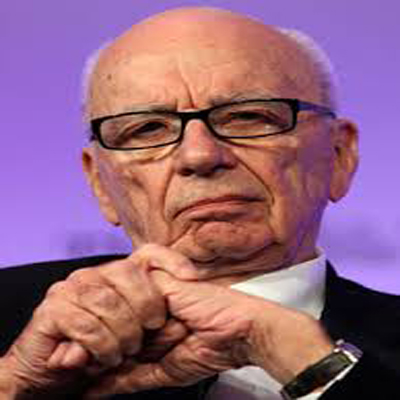
    BENGALURU: Reports fly thick and fast, some speculation, some part truth across the global media about the aftermath of Time Warner’s rejection of Twenty First Century Fox (Fox) unsolicited merger bid. What will the 83 year old tough as nails Fox ‘patriarch’ Rupert Murdoch do next? Known for his bulldogged tenacity once he sets his sights on a company, what and when (and not will it) will Fox up the ante to a reportedly manageable USD105 per share.


    Time Warner has in the meantime initiated evasive action to thwart attacks on its soft underbelly by eliminating a provision in its bylaws that earlier could let just 15 per cent of its shareholders call special meeting, so as to prevent it being forced to consider the Fox offer in case Fox resorts to this measure to force the issue. The bylaws now say that the CEO or a majority of the board can call a special meeting.


    There is a quiet buzz of Time Warner’s CEO Jeff Bewkes alleged animosity towards Murdoch and his hierarchical management bent. Under expert hatchet man Bewekes leadership, Time Warner has chopped the unwieldy behemoth created by the largest media deal ever by the AOL-Time Warner merger in 2000-01, and has delivered a total shareholder return of more than 150 per cent since 2008, almost tripling the return of the S&P 500 over the same period.


    Speculation is rife about Fox paring off its wholly-owned Sky Italia unit and its 57 per cent stake in Sky Deutschland AG to British Sky Broadcasting Group Plc., within the next two weeks for about USD 13 billion. US banks JPMorgan & Chase Company and Goldman Sachs Group Inc., will probably help Murdoch finance the bid say pundits. Fox and the British Sky Broadcasting Group had disclosed their talks about a possible transaction in May this year.


    For now, Fox’s bid has probably kept at bay bids from Time Warner’s suitors such as Google among others, unless of course, Google/others can better the approximate USD85 per share offer made by Fox.

  • Fox or Time Warner: Who will blink first – Time Warner’s attempt to get more money?

    Fox or Time Warner: Who will blink first – Time Warner’s attempt to get more money?

    BENGALURU: Both the companies have issued official statements about the offer and rejection. Twenty-first Century Fox (Fox) issued a short, cryptic  three sentence statement –“21st Century Fox can confirm that we made a formal proposal to Time Warner last month to combine the two companies. The Time Warner Board of Directors declined to pursue our proposal. We are not currently in any discussions with Time Warner.” Fox waited for the appropriate time and made the bid within a few days of Time Warner completing the spinoff of Time Inc., and hence made the target more affordable for Fox.


    Speculation continues across media circles globally with some industry pundits claiming that the rejection of the Fox offer was a coy attempt by the Time Warner brass to get more money for the company. Time Warner shares closed last week at above USD 86 per share, already above the estimated USD 85 per share offered by Fox. If Fox wants to build more clout with Pay TV providers it actually is left with little option except to raise its bid, considering the fact that AT&T has announced a USD 49 billion deal to buy DirecTV and the friendly Comcast-Time Warner Cable merger is awaiting approvals. Other suitors could also make a pitch for Time Warner, hence raising the ante further.


    As mentioned earlier, Time-Warner had rejected Rupert Murdoch’s 21st Century Fox offer allegedly worth about USD 76 billion cash and stock. 21st Century Fox had offered to buy Time Warner for USD 32.42 in cash and offered a ratio of 1.531 Fox class-A share for each Time Warner share.


    Time Warner had in a statement last week said that the company was confident that its board’s strategy continues to deliver stockholder value and was superior to any proposal Fox had to offer.


    Excerpts of the Time Warner release:


     In making its determination, the Time Warner Board considered, among other things, that: The execution of Time Warner’s strategic plan will continue to drive significant and sustainable value for Time Warner stockholders; The unique value of Time Warner’s industry-leading businesses including its portfolio of networks and its film studio and television production business is only going to increase; There is significant risk and uncertainty as to the valuation of Twenty-First Century Fox’s non-voting stock and Twenty-First Century Fox’s ability to govern and manage a combination of the size and scale of Twenty-First Century Fox and Time Warner; and there are considerable strategic, operational, and regulatory risks to executing a combination with Twenty-First Century Fox.


    Citigroup Global Markets Inc. is acting as financial advisor to Time Warner while Cravath, Swaine & Moore LLP is acting as legal advisor.


     In the meantime, the US Federal Communications Commission (FCC) has set a deadline of 25 August 2014 for those interested in filing comments or petitions to deny the friendly Comcast Corporation (Comcast)-Time Warner Cable Inc., merger. (Time Warner Cable was spun off from Time Warner in 2009). The deal would give Comcast 30 million U.S. homes; about 30 per cent of all the cable households and 40 per cent of the high-speed internet market. In a statement in February 2014, Comcast had said that the stock-for-stock transaction in which Comcast will acquire 100 per cent of Time Warner Cable’s 284.9 million shares outstanding for shares of Comcast amounting to approximately USD 45.2 billion in equity value. Each Time Warner Cable share will be exchanged for 2.875 shares of Comcast, equal to Time Warner Cable shareholders owning approximately 23 per cent of Comcast’s common stock, with a value to Time Warner Cable shareholders of approximately $158.82 per share based on the last closing price of Comcast shares. Comcast also plans to expand its buyback program by an additional USD10 billion.

  • Fox or Time Warner, who will blink first?

    Fox or Time Warner, who will blink first?

    BENGALURU: If it had gone through, it would have been the second largest media deal ever in the history and created a mega media powerhouse, but Time-Warner rejected Rupert Murdoch’s 21st Century Fox offer allegedly worth about USD 76 billion cash and stock. Time Warner CEO Jeff Bewkes said that its board had decided such a deal would not be in the ‘best interests’ of his company or its shareholders. 


     Industry experts however expect Murdoch to make an improved offer, considering the fact that the media landscape is undergoing huge shifts. Murdoch has to gain scale as Pay TV distributors such as AT&T and Comcast are getting bigger and bigger through acquisitions, also Murdoch — is not known for backing off once he has set his sights on a company.


    21st Century Fox had offered to buy Time Warner for USD 32.42 in cash and offered a ratio of 1.531 Fox class-A share for each Time Warner share. That, says Fox Business, a 21st Century property, equates to around USD 86 a share, or USD 76 billion. The combined company would sport revenues of USD 65 billion, and control a slew of television channels like Fox, TNT, and HBO, along with movie studios 20th Century Fox and Warner Bros.


    Over the past few years, Time Warner has shorn off non-core business such as cable, internet and publishing and comprises a group of television and movie companies and has seen its stock price triple over the last five years.


    Last month on completing the spin-off of Time Inc., Bewkes said: “The spin-off of Time Inc. completes the process we began several years ago to position Time Warner as the world’s leading video content company.  Our strategy reflects our commitment to delivering strong returns to our shareholders as we light up the world with the best storytelling.  The spin-off gives Time Warner even more focus as we continue to deliver on this strategy.”


    A few days before the Time Inc., spinoff, as part of the studio’s television growth strategy, Times Warner subsidiary Warner Bros. Television Group (WBTVG) had announced that, following receipt of regulatory approvals, it had completed its acquisition of all Eyeworks’ businesses outside the US, in 15 countries across Europe, South America, Australia and New Zealand, adding 13 new territories to its international network of production companies. The company said that the Eyework acquisition further strengthened Warner Bros.’ international television production capabilities and sees Warner Bros. take over all of Eyeworks’ international distribution activities for both formats and finished product.


    The largest media deal so far was the Time Warner-AOL merger in 2000-01 worth USD 164 billion and was once considered as one of the biggest ‘mistakes’ in corporate history by Bewkes.


  • Siti Cable Network looks to raise Rs 600 crore

    Siti Cable Network looks to raise Rs 600 crore

    MUMBAI: Essel Group’s subsidiary Siti Cable Network has decided to raise funds worth Rs 600 crore through the issuance of securities. This will be used for operations of the company.


    In a statement to the BSE, Siti Cable has said that it has received in-principle approval from its board of directors to raise funds through “issuance of securities such as Equity or Equity related instruments up to rupee equivalent of US$ 100 millions – through private placement / Qualified Institutions Placement (“QIP”) / External Commercial Borrowings (ECBs) with rights of conversion into Equity Shares / Foreign Currency Convertible Bonds (FCCBs) / American Depository Receipts (ADRs) / Global Depository Receipts (GDRs) or any other securities convertible into or exchangeable for Equity Shares or securities linked to Equity Shares.”


    This is subject to approval from shareholders and other such approvals. The board has also approved the draft of the postal ballot notice for seeking approval from members of the company including issuance of securities.


    The promoters had pumped in Rs 324 crore in three tranches between March 2013 to April 2014. This had increased the promoter shareholding to 72.82 per cent. These funds were being used for business expansion and debt reduction.


    The company’s CEO VD Wadhwa had in an interview to indiantelevision.com in January 2014 said, “Phases III and IV of digitisation has a total universe of about 90 million. Of these, we are targeting 6 to 7 million homes. At a gross level, we will require an investment of Rs 1200 crore. On a net basis, we are expecting an investment to the tune of Rs 600 crore. The funding of phase III will be largely done through warrants’ funding of Rs 243 crore, which is likely to be invested by promoters before March 2014. Balance funding requirement will be met through internal accruals and raising of further equity, as may be required.”

  • Cable TV veteran Nagesh Chhabria announces new national MSO; $200 million investment

    Cable TV veteran Nagesh Chhabria announces new national MSO; $200 million investment

    MUMBAI: The Indian cable TV market is about to witness the emergence of a major multisystem operator: one which is backed by industry veteran Nagesh Chhabria. The former Indusind Media CEO and promoter of Bhima Riddhi Digital Services, runs cable TV networks in several towns in Karnataka, Maharashtra,  and some regions of the Goa and Gujarat border, and has been a powerful force in the cable TV distribution space.


    Now Chhabria has signed an agreement with Atlas Consolidated LLC – a joint venture between Greenwich Equity Partners and Jagran Infra-Projects led by Sanjiv Mohan Gupta – to create a national MSO with about $200 million being pumped into it..
     

    The Agreement was signed sometime back and the formalities for formation of the new MSO are in process.  “The name of the MSO and its brand will be announced shortly,” informs Chhabria.


    Not disclosing the equity share Chhabria will hold in the JV, he says, “We may in the future, based on the decision of the new members of the board, plan to list the company.”


    The new entity plans to have a pan India network with a target base of six million subscribers in the next 18 months. And in order to achieve the target, it will take both: the organic and inorganic route. “When I say organic it will be through a fibre rollout and converting a large analog base into a digitised set up with a fixed revenue share in place,” informs Chhabria.


    On the inorganic route, the company may apply two models: one, buy out the last mile, so it has complete control and two, look to have a majority stake in an existing network with a ready base. “We have numerous tie-ups in place which will enable us to reach to our targets in the required timelines,” opines Chhabria.


    In late May Chhabria acquired a 50 per cent stake in Mumbai-based Bhawani Rajesh Cable & Digitech Services, with the option to take it up to 74 per cent.


    The JV will also grow its business through the acquisition route. “The networks we are acquiring will be announced shortly. Ground level assessments are taking place as we speak,” he adds.


    The new entity has chalked out a foolproof plan for its successful launch. “We have a 45 cities rollout plan which will be announced shortly,” says he.   


    According to a recent Deloitte report, currently there are 80 million non-TV households and Chhabria will at the appropriate time look at tapping  those households as well. “Eventually most of the non TV households in the future will have screens to consume entertainment and data.”


    To start operations, initially 25 digital headends across the length and breadth of the country will be set up. “It’s likely that in eight to 12 weeks from now the new company will be in place. There will be a simultaneous rollout in all parts of the country,” he informs.


    Greenwich Equity is an emerging markets fund, based in the United States with a focus primarily on infrastructure and media. Jagran has a storied pedigree in the production and entertainment space. Atlas was created as a joint venture between Greenwich Equity and Jagran Infra and is the holding company for all of Greenwich and Jagran’s investments in the cable and media space.


    Atlas Consolidated LLC managing director Sanjiv Mohan Gupta says, “We plan to be one of the significant players in the cable TV industry similar to what we did in the other media business.”


    Adds Greenwich Equity Group managing director Suhas Kundapoor, “We are excited to be in this space at this time and find that there is tremendous potential in this industry.”


    What is interesting to note is that the announcement for the JV has come at a time when the general sentiment towards cable TV industry is negative. Chhabria is quick to respond, “Sentiments are like seasons.  Sometimes sunny, sometimes gloomy. But investments are made on fundamentals. The fundamentals of cable TV industry are in place and have tremendous potential that will be unlocked in the coming future.”  


    For him, digitisation has thrown open huge opportunities and set top boxes with the right middleware give opportunities for advertisers and content marketers. “Beside subscriptions, we are geared to deploy numerous Video and Non – Video VAS along with Broadband services,” he adds.


    Chhabria and his company currently have a subscriber base of one million which will be brought into the new entity initially. “Cable TV industry in India still requires 140 million boxes to completely digitise the universe. We firmly believe there is tremendous potential in aggregating direct subscribers in phase III and phase IV. We are in talks with numerous players in the market to acquire their networks,” feels Chhabria.


     The MSO will not stop at the $200 million investment or at the six million subscriber base. “This is just the beginning. Future plans will be shared at the appropriate juncture,” concludes Chhabria.  


  • Arasu Cable to run subscriber awareness campaigns

    Arasu Cable to run subscriber awareness campaigns

    MUMBAI: The state owned multi system operator (MSO) from Tamil Nadu (TN), Arasu Cable, is looking at running awareness campaign for its subscribers. The campaign will urge them to demand printed receipts from their local cable operators (LCOs).


    The MSO is doing this in order to ensure that no one is charged more than the monthly fee of Rs 70. The campaign will begin with a poster campaign from Kancheepuram and will be displayed at government buildings, ration shops, government hospitals and schools, regional transport offices and civic body offices.


    Subscribers can lodge complaints over the phone on 044 28221233 if the LCO doesn’t provide a receipt or demands for more money. There are more than 65 lakh Arasu cable subscribers in TN. Printing books have already been handed to LCOs for the same.


    Arasu has been awaiting its DAS licence from the ministry for quite some time now. The MSO owned by the Chief Minister J Jayalalithaa’s AIADMK has been writing several letters to the central government to allow its licence go to go through so that it could switch over from analogue to digital.

  • Mumbai cops raid 7 Star Dot Com for “illegal” channel distribution

    Mumbai cops raid 7 Star Dot Com for “illegal” channel distribution

    MUMBAI: The heavy hand of the law is coming down on those involved in the distribution of TV signals. Last month, the cops swooped down on OTT services provider Jadoo TV’s offices in Hyderabad for allegedly pirating TV signals and streaming them over the internet illegally, following a complaint by Maa TV. Equipment was confiscated, staff arrested. 


    Yesterday, it was the turn of the Mumbai based independent multi system operator (MSO) 7 Star Dot Com. It was raided by a group of close to 15 police officials. Reason: illegal transmission of 10 international channels.


    The channels include HBO, HBO Family, BBC America, Sky Movie and Show Beyond among others. “We had got the information about the illegal transmission of channels. We monitored the platform from 3:30 pm onwards on 14 July and then conducted the raid, late in the night,” informs DCP Mahesh Patil.


    The raid was conducted by the Social Service Branch located in Crawford Market of south Mumbai. The decoders, transmitters and adaptors of the MSO have been confiscated. “We will now file a complaint with the Metropolitan Magistrate under the Cable Television Networks (Regulation) Act, 1995. The platform was telecasting the channels without having the licence for the same,” adds Patil.


    As per the procedure, a report will also be filed with the Information and Broadcasting Ministry. “We will file the case and the report in a couple of days,” he says. After studying the report, a show cause notice will be issued against 7 Star.


    One of the MSOs operating in Mumbai comments, “It is a good step which has been taken by the authorities. There should be a level playing field for all the platforms.”


    None of the 7 Star executives were available for comment.

  • Shareholders okay Hathway to up borrowings to Rs 1600 crore

    Shareholders okay Hathway to up borrowings to Rs 1600 crore

    BENGALURU: Indian multi system operator (MSO) Hathway Cable and Datacom has informed the bourses that it has received shareholder approval and passed special resolutions as under:


    (1) Special Resolution under Section 180(l)(c) of the Companies Act, 2013 for authorising the Board of Directors of the Company to borrow loans in excess of Paid up Capital and Free reserves of the Company subject to maximum of Rs 1600 crore.


    (2) Special Resolution under Section 180(l)(a) of the Companies Act, 2013 for authorising the Board of Directors for creation of Charge / Hypothecation / Mortgage on the movable / immovable properties of the Company for securing the borrowings of the Company subject to maximum limit of Rs 1600 crore.


    (3) Special Resolution under Section 186 of the Companies Act, 2013 for authorising the Board of Directors to invest or to provide loans and advances or give guarantees/ securities up to 100 per cent of free reserves and securities premium account or Rs 1,000 crore whichever is higher.


    Last June, the company had obtained shareholder approval for borrowing from time to time, as it may think fit, any sum or sums of money not exceeding Rs 1400 crore in aggregate or equivalent thereto in any foreign currency to meet fund requirements for effective implementation of Digital Addressable System (DAS) and broadband capital expenditure.


    The shareholders of the company in August 2013, had also given a nod to permitting the company to issue preferential equity shares aggregating Rs 109.9 crore for 38.7 lakh fully paid up equity shares to Asia Holding Investments IV (Mauritius) Limited and 14.05 lakh fully paid up equity shares aggregating at about Rs 39 crore to Hathway Investments Private Limited (which is a promoter group company) of face value of Rs 10 each at a premium of Rs 274 per share.


    Hathway’s consolidated EBIDTA for FY-2014 was Rs 311.19 core and Rs 274.1 crore in FY-2013. During FY-2014, Hathway reported a standalone loss of Rs 125.25 crore and a consolidated loss of Rs.111.111 crore as compared to a standalone profit of Rs 3.2 crore and a consolidated profit of Rs 15.7 crore in FY-2013.


    The company has paid Rs 92.52 crore towards finance cost in FY-2014 as compared to the Rs 46.14 crore in FY-2013.

  • Jayalalitha again seeks DAS licence for state-run Arasu

    Jayalalitha again seeks DAS licence for state-run Arasu

    NEW DELHI: After she failed to convince him through a memorandum presented last month, Tamil Nadu Chief Minister J Jayalalithaa has now written to the Prime Minister Narendra Modi to intervene to secure Digital Addressable System (DAS) licence for the state run TV Cable Corporation.


    The application has been pending with the state for three years but has not been cleared in view of the opinion by the Telecom Regulatory Authority of India (TRAI) that political party, state and centre-run TV channels or TV distribution networks should not be permitted in the country.


    The Regulator had given this opinion in 2008 and then reiterated it earlier this year after the Information and Broadcasting Ministry referred the matter to it for a second time.


     In her letter to Modi, Jayalalithaa said the previous United Progressive Alliance regime sanctioned licenses to nine Multi System Operators in Tamil Nadu but did not respond to the state’s plea. She claimed that her government had revived the ‘defunct’ Tamil Nadu Arasu Cable TV Corporation (TACTV), a state run TV Cable Corporation, after coming to power in 2011 to adhere to its commitment to provide inexpensive and quality Cable TV services.


    TACTV, an initiative of the previous DMK government at the height of family feud in the party’s first family involving M Karunanidhi and his grandnephews, Maran brothers, was however later put in cold storage after they patched up.


    TACTV was providing 100 channels for Rs 70 as against the Rs 150-250 charged by some other MSOs, she said in the letter. After the Cable Television Networks (Regulation) Act, 1995 was amended, paving way for DAS, TACTV took steps to commence operations in the digital mode in Chennai and applied to the Ministry for DAS license.


    Orders were also placed for the supply of Set Top Boxes, Conditional Access System and Subscriber Management System and installing of a headend at a cost of about Rs 50 crore, she told Modi.


    Jayalalithaa in her letter has asserted that as per the provisions of the Cable TV Network (Regulations) Act, 1995, and Rules thereof, TACTV is qualified for such a licence. She also alleged that she strongly suspects that the non-issuance of license by the previous UPA government was only to facilitate particular private business interests.