Category: Multi System Operators

  • Star’s incentives to MSOs

    Star’s incentives to MSOs

    MUMBAI: The industry could now move to a whole new module of distribution, if Star India is able to successfully attract MSOs to its new formula of distribution.

     
    The national broadcaster has from today decided to give incentives to the multi system operators (MSOs) for carrying its channels. The move will empower the viewer and platforms, usher in a new era of transparency, and boost the entire digitisation eco-system.

     
    Star India, which over the next three to four days will talk to all the platform operators for getting the deals in place, hopes it see the light of the day soon.


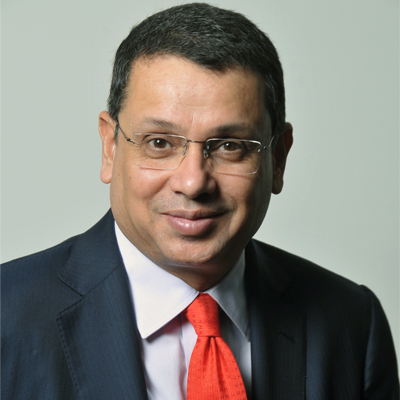
    According to Star India CEO Uday Shankar, the platforms and subscribers have one goal: to save money, while the broadcaster’s aim is to ensure that its content is available to as many people as possible. “We want to create an alignment between both the goals and so have created an attractive incentive plan,” says Shankar.


    The broadcaster has decided to incentivise platform operators, if they meet the three criteria: Firstly, provide more Star channels on its platform, secondly. give it to as many subscribers as it can and thirdly. give easy access by placing the channels in the top LCN on its platform. “The greater the reach of the channel, the cheaper the content would become for the operator,” informs Shankar.


    So why come up with this incentive? Answers Shankar, “Earlier, RIO was the default price on which negotiations took place between the broadcaster and platform operator. Negotiations are a process of give and take. However, because of some of the issues that cropped up in the TDSAT, the Tribunal said that broadcasters must make non-discriminatory deals. But how do you do deals which is equal in a scenario when two parties are completely different, in terms of size, importance of market etc. Hence, we decided that we will offer our content only on RIO.”


    RIO for the first time has been made the trading currency for deals between the broadcaster (Star) and the platform. “And now, in order to make sure that costs for the platform and the subscribers remain in control and manageable, we have decided to give incentives to platforms that help us achieve our goal of maximum reach,” he says.


     “We have done two things. One, made RIO the trading currency and because it is the common currency, it is non-discriminatory and secondly, have created a very transparent alignment between Star’s objectives and the platforms’ goals,” he adds.


    The revised RIO will be in force for one year with digital platforms in DAS areas. And as per the DAS Act, the broadcaster has the right to audit the subscriber details provided by the platform. This will help Star ensure that the MSOs are complying by the figures they present while doing the deal. 


    The one big question now is will the MSOs accept the new system? “The concept has been proven by the DTH operators over the years. They do not sell everything to every customer and instead make sharp packages. The consumer picks the package which is what is offered to them. At a broadcaster level, this is what we are aiming at doing. I think this will work for MSOs as well, if they were to make the packages and sell them.”


    Shankar expects the module to take off soon. “The only way to have Star content on one’s platform is through RIO and so I am sure the MSOs will take this up.”


    The MSO, if accepts all the three conditions: Of taking as many channels, of providing it to all its subscribers and give it on a certain LCN, the incentives could add up to giving the platform a discount of up to 60 per cent.


    “We need to understand that not all the channels will be taken by everyone. So if we take that, then some channels will have 100 per cent penetration, while some may have 80 per cent or 60 per cent penetration and on top of that if you layer it with LCN incentives, then the total benefit to the platform will be very lucrative,” informs Shankar.


    The MSOs, with these incentives, can put the Star channels back in their existing packages.


    So do we see this becoming an industry norm? Says Shankar, “This is a pricing issue and one cannot work as a group on this. We are doing it because of a set of issues that came to us. There were too many litigations and as Star we are clear that we want to be totally transparent of how we do business.”


    Platforms that still opt out of the revised RIO will have the option to choose and take channels as per the original list price.


    Click here to read the full RIO
     

    Click here to read about the rate card

  • Kolkata MSOs to meet Star to resolve RIO rates issue on 28 October

    Kolkata MSOs to meet Star to resolve RIO rates issue on 28 October

    KOLKATA: Multi system operators (MSOs) in Kolkata are likely to meet Star India representatives on 28 October to discuss the issue of RIO rates as per the outcome of the Telecom Disputes Settlement Appellate Tribunal’s (TDSAT) order of putting Star India channels on a la carte.


    On one hand, the package prices will go down by Rs 9, Rs 12 and Rs 16 respectively for different packages but cable TV consumers will have to spend an additional amount for watching their favourite Star channels if the MSOs put Star India channels on a la carte.


    Siti Cable Kolkata director Suresh Sethiya says, “We are meeting Star India officials on 28 October to find a solution. The rates should be fashioned in such a way that the broadcaster does not lose revenue and at the same time, consumers do not have to shell out huge amounts to watch cable TV.”


    Star Network comprising Star Plus, Star Jalsha, Star Movies, Star Sports, National Geographic and other channels, are likely to lose viewers if the MSOs remove the bouquet of Star channels from the packages and offer to subscribers on a-la-carte basis only, cable TV analysts claim.


    Initially, almost all the MSOs in Kolkata had agreed to remove the channels on the Star Network from basic, smart and premium packages and had issued advertisements across major newspapers notifying consumers about the same. “The ground is not prepared for RIO rates. If Star India comes on a negotiation, it is good for the industry,” says Advance Multisystem Broadband Communication (AMBC) managing director Sujit Das.


    While Manthan Broadband director Sudip Ghosh hopes that the negotiations between MSOs and Star Network would bear fruit.


    Though Star India had mailed the change to MSOs on 30 September, MSOs have cited the festive season for delay in implementing it.


    A source says, “Star Jalsha that currently reaches 100 per cent households here may lose around 40 per cent subscribers in a la carte as more than 50 per cent non-Bengali population in Kolkata would opt out.”

  • Q3-2014: Comcast income up 50 per cent y-o-y; NBC Universal’s posts TV Broadcasting strong results

    Q3-2014: Comcast income up 50 per cent y-o-y; NBC Universal’s posts TV Broadcasting strong results

    BENGALURU:  Comcast Corporation (Comcast) reported a 4 per cent y-o-y growth in consolidated revenue (TR) in Q3-2014 to $ 16,791 million from $ 16,151 million in Q3-2013. However, q-o-q, the company’s revenue was almost flat with a fractional drop of 0.3 per cent from $ 16,844 million.


    Talking about the latest earnings, Comcast chairman and CEO Brian L Roberts said, “I am pleased to report strong revenue, operating cash flow and free cash flow growth for the third quarter of 2014. Cable results highlight the consistent strength of high-speed Internet and business services, and video customer results were the best for a third quarter in seven years. We continue to focus on innovation and providing the best experience for our customers, and we are thrilled with the response to our superior X1 platform, which recently reached five million boxes deployed. At NBC Universal, we had another outstanding quarter with double-digit operating cash flow growth, driven by ratings momentum at NBC Broadcast and the successful opening of The Wizarding World of Harry Potter-Diagon Alley in Orlando.”


    Comcast’s consolidated operating expenditure (Expenditure) in Q3-2014 at $ 11,087 million was 2.5 per cent more than the $ 10,821 million in Q3-2013 and 0.4 per cent more than the $ 11,040 million in Q2-2014.


    Comcast’s Earnings per Share (EPS) for the third quarter of 2014 was $ 0.99, a 52.3 per cent increase from the $ 0.65 reported in the third quarter of 2013. EPS for Q2-2014 was $ 0.76, (excluding gain on a sale and transaction-related costs, EPS in Q2-2014 was $0.75). Excluding income tax adjustments and transaction-related costs in Q3-2014, EPS increased 12.3 per cent to $ 0.73.


    The company’s net income after taxes, attributable to Comcast in Q3-2014 increased 49.7 per cent to $ 2,592 million from $ 1,732 million in Q3-2013. Net Income attributable to Comcast Corporation in Q2-2014 was $ 1,992 million.


    Comcast Business Streams


    Two main business streams contribute to Comcast: Cable Communications (between 60 and 65 per cent of TR) and NBC Universal (between 35 and 40 per cent of TR). 


    Video, high speed internet, voice, business services and other businesses are a part of Cable Communications. Cable Communications Video Revenue consists of analogue, digital, premium, pay-per-view, equipment services and residential video installation revenue. Other Cable Communications Revenue include franchise and other regulatory fees, digital media centre, commissions from electronic retailing networks and fees for other services.


    NBC Universal comprises of Cable Networks, Broadcast Television, Filmed Entertainment and Theme Parks businesses.  


    Cable Communications


    Overall, Cable Communications reported a 5.2 per cent growth in Q3-2014 to $ 11,041 million dollars (65.8 per cent of TR) from $ 10,491 million (65 per cent of TR) in Q3-2013 and was almost flat (grew by 0.1 per cent) from the $ 11029 million (65.5 per cent of TR) in Q2-2014.


    Cable Communications Expenditure in Q3-2014 at $ 6,577 million was 5.3 per cent more than the $ 6,245 million in Q3-2013 and 1.7 per cent more quarter on quarter than $ 6,465 million.


    Here is what the company has to say about Cable Communications:


    ‘Customer relationships increased by 82,000 to 26.9 million during the third quarter of 2014, more than three-times the customer relationship net additions in the third quarter of 2013. At the end of the third quarter, penetration of our triple product customers increased to 36 per cent compared to 34 per cent in the third quarter of 2013. High-speed Internet customer net additions improved versus last year and were the strongest for a third quarter in five years. Video customer net losses improved 36 per cent year-over-year and were the best result for a third quarter in seven years. Voice net additions slowed, reflecting a focus on double play during the back-to-school season, as well as X1 availability that was more focused on triple play customers last year, making for a difficult comparison.’


    NBC Universal:


    Comcast’s NBC Universal grew 1.2 per cent in Q3-2014 to $ 5,921 million (35.3 per cent of TR) from $ 5,851 million (36.2 per cent of TR) in Q3-2013, but shrank 1.6 per cent from $ 6,016 million (35.7 per cent of TR) in Q2-2014. Operating Cash Flow increased 13.3 per cent in Q3-2014 to $ 1.4 billion as compared to $ 1.3 billion in Q3-2013, driven by strong results at Broadcast Television and Theme Parks, says the company.


    NBC Universal Expenditure in Q3-2014 at $ 4,505 million was 6.6 per cent lower than the $ 4,601 million in Q3-2013 and 1.7 per cent lower than the $ 4,582 million in Q2-2014.


    Cable Networks:


    NBC Universal’s Cable Networks’ revenue in Q3-2014 at $ 2,255 million was 0.7 per cent more than $ 2,239 million in Q3-2013, but 8.9 per cent lower than $ 2,476 million reported for Q2-2014.


    Cable Networks’ expenditure in Q3-2014 at $ 1,387 million was 0.1 per cent more than the $ 1,386 million for the corresponding quarter year ago and 11.2 per cent lower than the $ 1,562 million in Q2-2014.


    Advertising revenue from Cable Networks shrank 4.7 per cent to $ 796 million in Q3-2014 from $ 835 million in Q3-2013 and was 15.8 per cent lower than $ 945 million in Q2-2014.


    Cable Networks’ distribution revenue grew 5.1 per cent in Q3-2014 to $ 1,281 million in Q3-2014 from $ 1,219 million in Q3-2013 and grew 0.9 per cent from $ 1,270 million in Q2-2014.


    Its content licensing and other revenue shrank 3.8 per cent to $ 178 million in Q3-2014 from $ 185 million in Q3-2013 and fell a massive 31.8 per cent from $ 261 million in the immediate trailing quarter.


    Television Broadcasting:


    NBC Universal’s Television Broadcasting revenue grew 7.7 per cent to $ 1,770 million in the current quarter from $ 1,644 million in Q3-2013, but was 2.5 per cent less than the $ 1,816 million in Q2-2014.


    Television Broadcasting Expenditure in Q3-2014 at $ 1,628 million was 1.1 per cent more than the $ 1,610 million in Q3-2013 and 3.3 per cent more than the $ 1,576 million in Q2-2014.


    Television Broadcasting advertising revenue in Q3-2014 grew 4.4 per cent to $ 1,153 million from $ 1,104 million in Q3-2013, but was 7.4 per cent lower than the $ 1,245 million in Q2-2014. Broadcast Television content licensing revenue grew by 13.2 per cent from $ 355 million in Q3- 2013 to $ 402 million in the current quarter and was 16.9 per cent higher than $ 344 million in Q2-2014. Other revenue for Broadcast Television grew 16.2 per cent to $ 215 million in Q3-2014 from $ 185 million in Q3-2013, but was 5.3 per cent lower than $ 227 million in Q2-2014.


    Filmed Entertainment:


    NBC Universal’s Filmed Entertainment revenue in Q3-2014 was 15.3 per cent lower at $ 1,186 million from $ 1,400 million in Q3-2013 and 0.9 per cent more than $ 1,176 million in Q2-2014. The company attributes this drop to the tough competition with the strong box office performance of Despicable me 2 in Q3-2013.


    Filmed Entertainment Expenditure in Q3-2014 at $ 1,035 million was 14.5 per cent lower than the $ 1,211 million in Q3-2013, but 5.5 per cent higher than the $ 981 million in Q2-2014.


    Theatrical revenue in Q3-2014 at $ 265 million was 52.6 per cent lower than the $ 550 million in Q3-2013, and 35.9 per cent more than $ 195 million in Q2-2014. Filmed Entertainment content licensing revenue at $ 439 million was 15.8 per cent more than $ 355 million in Q3-2013 but 5 per cent lower than the $ 462 million in Q2-2014.


    Home Entertainment revenue at $ 321 million in Q3-2014 fell 10.6 per cent from $ 359 million in Q3-2013 and was 11.8 per cent less than the $ 364 million in Q2-2014. Filmed Entertainment’s other revenue at US$ 161 million in Q3-2014 was 58.3 per cent more than the $ 103 million in Q3-2013 and was 3.9 per cent more than the $ 159 million in Q2-2014.


    Theme Parks


    NBC Universal’s Theme Park revenue at $ 786 million was 18.9 per cent more than the $ 661 million in Q3-2013 and 27.8 per cent more than the $ 615 million in Q2-2014.


    Theme Park Expenditure in Q3-2014 at $ 384 million was 20.8 per cent more than the $ 318 million in Q3-2013 and 3.5 per cent more than the $ 371 million in Q2-2014.


    Click here for earnings presentation


    Click here for financial results

  • DEN to put Star channels on a la carte from November

    DEN to put Star channels on a la carte from November

    MUMBAI: It was first Hathway Cable & Datacom that complied with the Telecom Disputes Settlement Appellate Tribunal’s (TDSAT) order of putting Star India channels on a la carte, and now following it is multi system operator (MSO) DEN Networks.

    The MSO has, through a newspaper advertisement, informed its consumers that the Star channels will be removed from the packages and will be offered to subscribers on a-la-carte basis only. “The industry is moving towards a-la-carte channels and so are we. As per the regulation, we have to inform our consumers 15 days in advance before switching off a channel and putting it on a-la-carte. This is what we are doing,” says a source from the company.

    The advertisements have been issued in two newspapers in the DAS notified areas. The ad reads: “The Hon’ble TDSAT has upheld the affidavit by Star India Pvt Ltd and has allowed Star TV to offer its channels to us only on a-la-carte basis. In compliance to this order of the Tribunal and as per Star’s demand, we are being forced to remove the Star channels from our packages and offer them to subscribers only on a-la-carte basis and consequently all our packages are being changed.”

    The ad further says: “We deeply regret the inconvenience caused to our esteemed viewers and solicit your co-operation for due legal compliance. Please contact your local cable operator for your revised package details as well as to continue availing the Star channels of your choice on a-la-carte basis.”

    While Den has started informing the consumers with newspaper advertisements, it will also run TV scrolls to inform the subscribers of the changes in the packaging.

     The Star channels will be switched off from first week of November, post which Den subscribers will have to call the cable operator to be able to view the Star channels.


  • Siti Cable CEO VD Wadhwa appointed as president of the new All India Digital Cable Federation

    Siti Cable CEO VD Wadhwa appointed as president of the new All India Digital Cable Federation

    MUMBAI: In a significant move to organise the digital cable industry for the overall benefit of all stakeholders and to facilitate and further create momentum for digitisation for phase III and IV, major Indian multi system operators (MSOs) have come together under the aegis of the All India Digital Cable Federation (AIDCF).


    The newly formed federation held its first meeting on 15 October 2014 in New Delhi, which  was attended by all the leading MSOs i.e. Hathway, Den Network, Siti Cable, In Cable, Digi Cable, Fastway, GTPL, ICNCL and Manthan.  With the formation of new Digital Cable Federation, the earlier forum of MSO Alliance has been dissolved.


    The members have unanimously elected SITI Cable executive director and CEO VD Wadhwa as the president of the federation (AIDCF) for an initial term of two years.


    The federation will work towards the overall growth of this sector and create environment for not only complete digitisation of cable TV under regulatory guidelines but also will deliver the benefits of digital services including broadband and other value added services to the people of India thus fulfilling the dream of ‘True Digital India.’


    AIDCF will be the official voice for the Indian digital cable TV industry and will interact with ministries, policy makers, regulators, financial institutions and technical bodies. It will also provide a platform for discussion and exchange of ideas between these bodies and the service providers, who share a common interest in the development of digital cable TV in the country.


    It will collaborate with other industry associations such as IBF, CII, FICCI, ASSOCHAM association etc., with the objective of presenting an industry consensus view to the government on crucial issues relating to the growth and development of the industry.


    The federation has invited all MSOs who have minimum one lakh digital cable TV subscriber base and who are following TRAI QOS norms to become members, so that entire industry speaks in one voice and works for common objective.


    The members of federation will also work out the business model for phase III & IV digitisation and create the healthy business environment for all stakeholders.


  • Time Warner shareholders to vote today for share swap and Comcast merger

    Time Warner shareholders to vote today for share swap and Comcast merger

    BENGALURU: Comcast Corporation (Comcast) announced yesterday that, at its special meeting of shareholders held at The Kimmel Centre for The Performing Arts in Philadelphia, more than 99 per cent of Comcast shareholders voting supported Comcast’s proposal to issue 2.875 shares of Comcast class A common stock for every one share of Time Warner Cable common stock in connection with Comcast’s proposed merger with Time Warner Cable.

     
    The merger between Comcast and Time Warner Cable is subject to various regulatory approvals and other customary conditions and also requires approval by Time Warner Cable shareholders, who are expected to vote on the merger today, 9 October 2014.  Subject to satisfaction of these conditions, the merger is expected to close in early 2015, says Comcast.

     
    If the deal closes, the combined firm would serve 30 per cent of US cable TV households and about 40 per cent of US homes that have broadband internet service.

     
    In addition, Comcast will sell 1.4 million Time Warner Cable subscribers to Charter Communications for about $7.3 billion. Comcast would also divest 2.5 million subscribers to a new public company which will be owned 66 per cent by Comcast shareholders, and 33 per cent by Charter, which will manage its network and customers. Finally, Comcast and Charter will swap about 1.6 million subscribers with each other.
     

  • Indian MSO Radiant Digitek Network selects Pace pre-integrated software and STB solution

    Indian MSO Radiant Digitek Network selects Pace pre-integrated software and STB solution

    MUMBAI: Pace, a global leader for digital TV and broadband technologies, is pleased to announce that Indian cable MSO, Radiant Digitek Network has selected its pre-integrated middleware, conditional access and set-top box solution to deliver premium TV services to its subscribers. Pace’s pre-integrated solution is a cost-effective solution for operators who seek a high quality turnkey pay TV platform but don’t have the time or resources to manage multiple technology partners or complex systems integration work.


    With a heritage of reliable, high-quality hardware design Pace’s turnkey solution is fully DVB-C compliant and includes their high performance Standard Definition (SD) MPEG-2 cable set-top box (STB), Elements Middleware, and Titanium cardless CAS, enabling cable operators to deliver a feature-rich experience to viewers and build new revenues as the growth in digitisation in India continues.


    Radiant Digitek, a major cable MSO in the Rajasthan region in North India, has selected the turnkey Pace solution based on lower total cost of ownership, quality of service and improved time to market Pace could provide. The solution incorporates a wide range of EPG features, including favourites, channel list management, personal video recording and parental control.


    Lokesh Joshi, Director for Radiant Digitek Network comments: “We needed a solution that would enable us to quickly roll out digital services to our customers at a low total cost of ownership. The Pace end-to-end integrated solution has provided us with a one stop shop solution from a trusted partner who believe in a personalised quality of service.”


    Miguel Gil, VP and General Manager for Pace International Software and Services, comments: “Pace’s turnkey hardware and software solution is perfect for Indian cable operators looking for a flexible, cost-effective solution that is quick to deploy, while maintaining the high quality that customers have come to expect from Pace. As cable MSO’s look to exploit the opportunities from digitisation, Pace can enable them to quickly deploy an enhanced viewing experience and new services to subscribers at attractive economics.”

  • Witness yet another technological revolution at the Broadcast India show 2014

    Witness yet another technological revolution at the Broadcast India show 2014

    MUMBAI: Saicom Trade Fairs & Exhibitions Pvt. Ltd. is pleased to announce that the Broadcast India Show 2014 will be held at Bombay Exhibition Centre, Goregaon (E) in Mumbai, India on 15-17 October, 2014.


    Along with the grand exhibition, Broadcast India Show 2014 will also be holding a Conference on 15-16 October, 2014 at the same venue.


    The Broadcast India Show 2014 will once again be the platform from which the latest broadcast and film, pro-audio, video and radio, 3D and digital cinema, IPTV and Mobile TV, in their most futuristic shapes and forms will be on display. Technological mammoths from all corners of the world will return to the exhibition floor to demonstrate and discuss their creations, share their widened perspectives, and light fires underneath the trends that will come to define the future of technology as we wait to see it.


    Some of the world’s leading manufacturers like Panasonic, Sony, Blackmagic Design, Imagine Communications, RED, Avid, Adobe, Canon, Grass Valley, ARRI, AJA, GoPro, Atomos, Datavideo, Boston, Wasp3D, Carl Zeiss, Shure, RCS, Harman and many more will be present at Broadcast India Show 2014.


    One of the main highlights of the show this year is the REDucation Theatre, back for its second year after a successful stint last year. This time around, RED Digital Cinema has partnered with The New York Film Academy to offer an on-going series of workshop exploring the RED DRAGON 6K.


    AJA Video Systems will showcase the groundbreaking CION camera. Panasonic will launch the much anticipated Varicam, the star of a wide range of products and innovations that will make Film and TV production significantly easier. 


    The other attractions are the Great Britain Pavilion and the Production Village. The line-up of international exhibitors will be showcasing the state-of-the-art equipment and the cutting edge technology.


    The show will be host to 35 participating countries and to over 550 companies, many of them exhibiting at the show for the very first time.


    This is your once-in-a-year chance to visit Broadcast India show, so don’t miss out.

  • JAINHITS chooses ARRIS to meet demands of video digitisation

    JAINHITS chooses ARRIS to meet demands of video digitisation

    NEW DELHIJAINHITS, India’s first and only HITS-based Direct to Network (DTN) service, has selected set top boxes from ARRIS’s HMC portfolio to deliver digital video services across the nation. 


    According to the Telecom Regulatory Authority of India (TRAI), India is set to witness digitisation of approximately 100 million homes by the end of this year.


    Currently, JAINHITS offers more than 252 standard definition (SD) channels, following the launch of the nationwide ARRIS digital headend earlier this year, and plans to soon provide full high-definition (HD) services, which will be made available via the new ARRIS set-top boxes.


    “As we look to grow our services to meet the digital transition in India and introduce HD services later this year, we are pleased to extend our working relationship with ARRIS to add its set-top boxes to our offering,” said JAINHITS chairman JK Jain. “Our platform coupled with ARRIS set-top boxes will allow cable operators to provide 250 digital TV channels using just 12 frequencies as compared to the 106 they are using today. This will help them free valuable spectrum, and use this available spectrum to provide broadband services to increase ARPU and fulfill Prime Minister Narendra Modi’s dream of a digitally developed India.” 


    “ARRIS is driving the global transition to an all-digital content delivery platform – giving customers like JAINHITS a competitive advantage in delivering tomorrow’s services on today’s networks”, said ARRIS Asia Pacific senior vice president Tim Gropp. “JAINHITS benefits from our proven digital video portfolio and worldwide footprint, which enables us to deliver localised solutions and support.”


    JAINHITS is deploying HMC1010 SD set-top and the HMC2010 HD set-top from September 2014. Both are cost-effective digital terminal adapters (DTA) for operators looking to convert from an analog to a digital service. The compact and energy efficient design of all the HMC series set-top boxes, including the HMC1010 and HMC2010, minimizes energy consumption, reducing their impact on the environment.


  • Several Chennai-based MSOs get clearance for DAS

    Several Chennai-based MSOs get clearance for DAS

    NEW DELHI: A total of 119 Multi System Operators (MSOs), all over the country, have been granted permanent registration for 10 years to operate the digital addressable system (DAS).


    The MSOs had been given provisional permission earlier.


    Interestingly, many MSOs from Chennai have got permission except for Arasu as the latest recommendation of Telecom Regulatory Authority of India (TRAI) states that state-owned bodies should not be permitted, and also because of the denial of permission to Kal Cables and its subsidiary Sumangali.


    The nine MSOs, which have got permission as per the latest list released on 22 September, are Koduri Satyanarayana, Sri Sai TV Services of Khammam District of Telengana; Abhilash Communications of Adilabad for notified areas of phase  II and phase  III cities in PAN India; JPR Channel of Mumbai for Mumbai (phase I) and phase II areas in Maharashtra and Gujarat; Operator Digital Tamil Nadu for all the cities, towns and villages of phase II,III and IV in Tamil Nadu; VK Digital Network of Chennai for cities/towns/areas occurring against phase I, phase II, phase III, phase-IV; Saga Network Entertainment of Chennai for Tamil Nadu; Talachaer TV Home Cable Network of Talacher in Odisha for Angul District and Dhenkanal District, Odisha ; Voice and Vision Club of Singrauli in Madhya Pradesh for phase III and IV of Madhya Pradesh and Sonebhadra Districts of Uttar Pradesh; and Den Network Satellite of Mumbai for Maharashtra. 


    Digicable Network of Mumbai and Kal Cables of Chennai, which had received provisional licence’s, have been refused permission as it has failed to get the clearance of the Home Ministry.


    According to a list issued in late July, 16 MSOs had been refused permission. It also said that Kolkata based Digicable Communications had been denied permission after the break-up of the joint venture with Digicable Networks of Mumbai, which has received permission for Greater Mumbai, National Capital Territory of Delhi and Greater Kolkata.


    MSO sources, however, said that the approved list was in addition to the 140 whose names had been approved in March last year.